
Yuhan-Hoesa Capital Requirements and Compliance
A Korean limited company (유한회사, yuhan-hoesa) has no statutory minimum capital under the Korean Commercial Code. But if you want foreign-invested company (FDI) status — which most foreign-owned operating businesses do — each foreign investor needs to contribute at least KRW 100,000,000. Ongoing compliance for the entity itself is light. The heavy load comes later: customs as the Importer of Record, Coupang seller onboarding, Rocket Growth inbound rules, and Korean-language conversion work.
That is the short answer. The longer answer is what most founders actually need, because the entity is the cheap part of a Korea operation and the rest is where the calendar and the budget go.
What the yuhan-hoesa minimum capital actually is
The old Korean Commercial Code (KCC) imposed a KRW 10,000,000 minimum for a yuhan-hoesa. That requirement was removed under the amended KCC. In statutory terms today, a yuhan-hoesa can be formed with a nominal capital figure.
In practice, founders run into three different thresholds, and they are not the same thing:
- Statutory minimum — effectively none. You can technically register with KRW 1,000,000 or less. Tax offices and banks will push back, but the law does not stop you.
- Foreign-invested company (FDI) threshold — KRW 100,000,000 per foreign investor. This is the threshold that unlocks the D-8 investor visa, the foreign-invested company certificate, and most of the practical doors a foreign founder needs open.
- Practical operating threshold — whatever a Korean corporate bank needs to see to issue real-world transfer limits. New accounts often default to a KRW 1.3M daily transfer limit, which is far too low to operate a Coupang business. We have written about this separately in Korean corporate bank accounts: the last wall foreign founders hit.
The KRW 100M figure is not technically a "minimum capital" — it is the minimum foreign investment for FDI status. If you skip it, the company is legal but you lose the most useful foreign-founder benefits.
There is one more wrinkle worth flagging. Since May 2026, tax offices have been rejecting limited company registrations that combine a non-resident CEO, a virtual office, and 1M KRW of capital. That sequence used to work. It no longer reliably does. We covered the shift in Korea entity setup: May 2026 tax office crackdown, and also in why setting up a Korean entity as a non-resident foreigner got harder.

Ongoing compliance for the entity itself
Assume you have the yuhan-hoesa registered, an FDI certificate, a corporate bank account with real limits, and a tax representative in place. The recurring compliance load at the entity layer is reasonably contained:
- Quarterly VAT filings — output VAT minus input VAT, filed every three months. Korea VAT is a flat 10%, and for VAT-inclusive revenue the VAT portion is 1/11 of gross. Background in Korea VAT and tax for foreign shippers: a 2026 guide.
- Annual corporate income tax filing — usually March of the following year.
- Withholding tax filings — monthly, mostly relevant when you have local payroll.
- NTS reporting on related-party transactions — material once cross-border inter-company invoices grow.
- Articles of incorporation updates — when capital, directors, or address change.
- Statutory bookkeeping — Korean GAAP, in KRW.
For an operating Coupang business with one to five SKUs and no local payroll, this typically translates into a recurring monthly accounting and tax-rep budget in the low single-digit USD thousands per month. The cost scales with transaction volume and number of bank accounts, not with revenue. A standalone Korean tax representative service usually runs USD 1,000–3,000/year — see tax representative cost in Korea: what brands pay for how that fits.
The compliance most guides don't talk about: customs and IoR
This is where the published Korea-entry guides usually stop, and where the actual cost lives.
If your yuhan-hoesa imports inventory, it is the Importer of Record (IoR). That carries duties most founders underestimate:
- HS classification and duty payment — typically around 8% on the customs value, before VAT. Get the HS code wrong and you owe back duties plus penalties.
- Import VAT — 10% on (customs value + duty). It is recoverable as input VAT when you sell domestically, but it is cash out the door at the border.
- KC certification (KC 인증) for in-scope categories — electrical, electronics, children's products, certain home goods. The certificate must be in the importer's name on file. Timing and cost in KC certification cost and timeline 2026.
- MFDS or APQA registrations for food, cosmetics, supplements, and pet food. These attach to the importer.
- Record-keeping for customs audits — five years.
The practical effect: your yuhan-hoesa is not just a tax wrapper. It is the legal entity that is going to get a knock on the door from Korea Customs Service if a declaration is wrong. We have explained the IoR role in detail in what is an Importer of Record (IoR) in Korea?.
For brands not yet ready to take on this layer, the alternative is a partner-IoR model where someone else's Korean entity acts as importer and seller — covered for skincare in agency vs IoR vs entity: Korea skincare entry compared.
Coupang seller onboarding — the part that surprises CFOs
Most "ongoing compliance" lists for Korean entities miss this entirely. If you are setting up a yuhan-hoesa to sell on Coupang, the channel itself has a compliance and onboarding layer that is functionally part of your operating cost.
To list as a local seller on Coupang (the route to Rocket delivery, the trust badge, KRW pricing, and real conversion), the seller account must be tied to:
- A Korean business registration (사업자등록증) — your yuhan-hoesa.
- A Korean corporate bank account in the same entity name.
- A Korean phone number and Korean-resident contact for the seller console.
- KYC documents, including the representative director's identification.
- Category-specific clearances: KC certificate, MFDS approval, or HFF (health functional food) registration on file before listing.
Onboarding is rarely a one-day task. Coupang's KYC and bank verification can take one to three weeks even after the entity is fully formed. For categories like supplements and pet food, the channel will block the listing until the underlying registration is uploaded — see Korea supplement entry: 5–8 month timeline and selling pet food on Coupang: Korean SoR requirements.
“The entity is registered in two weeks. Getting it through Coupang's seller verification and into a Rocket Growth inbound slot is what takes the quarter.”
Isaac Lee — CEO, Kontactic
There is also an ongoing channel-side compliance load that does not feel like compliance until something breaks:
- Coupang's 쿠팡확인요청 (CVR) evidence burden on returns and chargebacks.
- KRW 50,000 evidence threshold and return-fee policy under Rocket Growth — see three Coupang policy changes that reset Rocket Growth margins.
- Settlement timing — Coupang's default is around the 20th business day of the following month, close to 60 calendar days out. Detail in Coupang settlement timelines: monthly vs weekly vs fast.

Korean-language PDP: a recurring production cost, not a one-off
Localized product detail pages (PDPs) sit awkwardly between "marketing spend" and "compliance." They are not legally required. But on Coupang, a Korean PDP is the difference between a listing that converts and one that doesn't, and a brand operating through a yuhan-hoesa will end up treating PDP production as a recurring operating cost.
Two things make this more than a translation exercise:
- Coupang's visual format. A conversion-optimized PDP is roughly a 20,000-pixel vertical visual asset — heavy on graphics, callouts, certifications shown as badges, and Korean-language reassurance copy. It is a design deliverable, not a string of translated bullets.
- Refresh cadence. Pricing changes, certifications renewals, ingredient updates, and seasonal positioning all require PDP edits. A static PDP ages out of competitive listings within a few quarters.
We get into the production reality in how to localize product pages for Korean e-commerce. For CFO planning purposes, budget PDP work as a per-SKU one-off plus a refresh allowance, not a sunk cost.
Rocket Growth, fulfillment, and returns — the operating layer
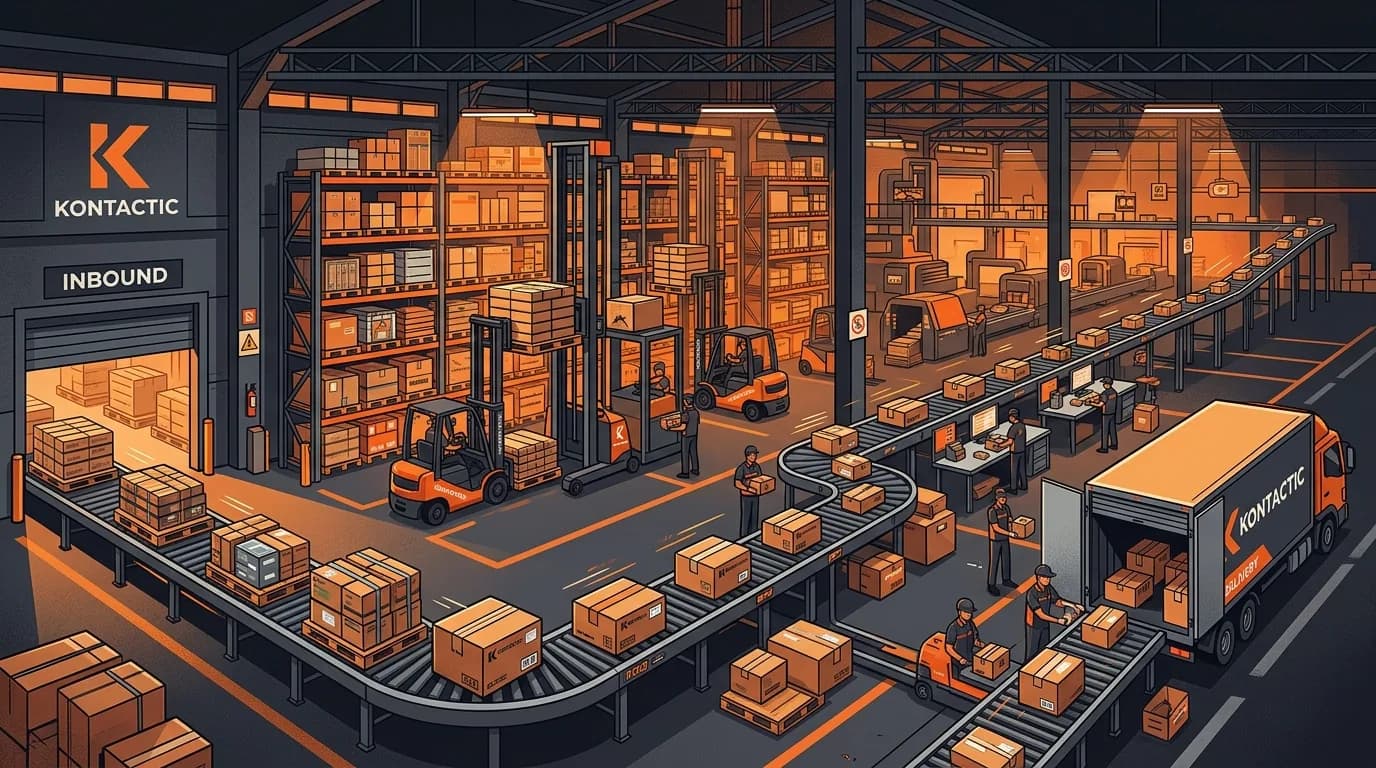
Once your yuhan-hoesa is registered, KC-cleared, Coupang-onboarded, and PDPs are live, the day-to-day compliance load shifts to fulfillment. Most foreign brands selling locally on Coupang use Rocket Growth (로켓그로스), Coupang's 3PL.
The operating obligations that touch the entity:
- Inbound documentation — packing lists, barcodes (Korean-format if required), country-of-origin marking, and category-specific labels in Korean. Errors trigger inbound rejections.
- Storage and fulfillment fees — billed to the seller account, deducted before settlement.
- Returns handling — Korea has consumer-favorable return rules. Returns processing fees, restocking decisions, and disposal of unsellable returns all sit on your P&L.
- Inventory accounting — Korean GAAP requires the yuhan-hoesa to recognize inventory at the warehouse, including any units still in transit and any units held at the Rocket Growth warehouse under your account.
Rocket Growth itself accepts as little as one unit per SKU inbound, so the warehouse is rarely the timeline gate — see Rocket Growth inbound minimums and real lead times. The gates are upstream: entity, KC, IoR, PDP.
Cross-border vs. local — the question behind the question
Most people searching for "minimum capital for yuhan-hoesa" are really asking: is the entity worth setting up at all, given what we want to do?
If your current volume to Korea is small and cross-border (Shopify shipments, DDP cartons, no Korean entity), the honest answer is often "not yet." Cross-border works as a validation channel and rarely needs the full local stack — we covered this trade-off in Rocket Growth vs. cross-border selling in Korea and in local vs cross-border Korea fulfillment: cost math.
Roughly, the math we see in practice:
- Under ~100 monthly Korean orders → cross-border usually wins.
- Cross-border ceiling is real — conversion stalls because of trust, freight time, and KRW pricing.
- Above that, the per-order economics flip toward local fulfillment via a yuhan-hoesa with IoR and Rocket Growth — see how Coupang IoR and 3PL change your Korea margins.
The yuhan-hoesa's KRW 100M FDI capital and its monthly compliance fees are real, but they tend not to be the deciding line item. The deciding line items are KC certification cost, PDP production, and how quickly you can get through Coupang seller onboarding.
How we think about sequencing this at Kontactic
In our experience, the brands that get to first sale fastest treat the yuhan-hoesa as one item on a list of about a dozen, not as the milestone. The sequence we tend to recommend:
- Decide cross-border vs. local based on volume and category compliance — not based on capital availability.
- If local, scope KC / MFDS / HFF early. These dominate the calendar.
- Form the yuhan-hoesa with FDI status (KRW 100M+) so the bank and Coupang doors open.
- Plan the corporate bank account as a separate, slow workstream.
- Begin IoR setup and customs paperwork in parallel with KC testing.
- Start Korean PDP production while certifications finalize — design takes weeks regardless of certification status.
- Onboard Coupang and Rocket Growth last, against finished certifications and a funded bank account.
That sequence is what we operate against under Spark, Flame, and Blaze — the three tiers of managed market entry we offer. The capital question is real but small; the rest is the work.
Need help scoping the real compliance load?
Tell us your category, your current cross-border volume, and your target channel. We will map your yuhan-hoesa, IoR, KC, and Coupang path against a realistic timeline and budget.
About the author
Korean and global e-commerce operators with 15+ years of cross-border experience, led by CEO Isaac Lee — KOTRA-certified consultant and official lecturer for Seoul City and the Korea Customs Service. We run Korea market entry for Western brands every day; this blog documents what we learn in the field.
More about Kontactic →Related Articles
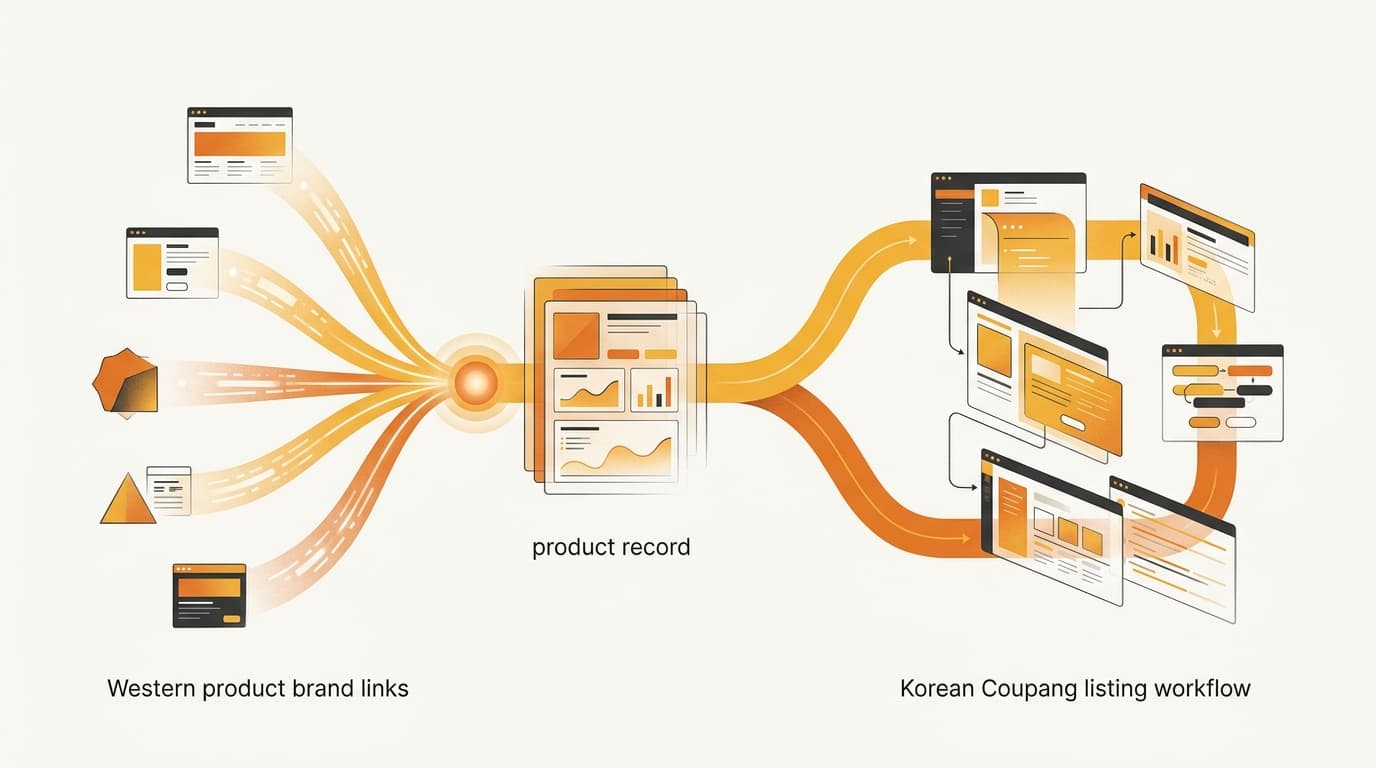
Product-Link Intake for Coupang: A Traceable Handoff
Kontactic Seller Center gives product-link intake a reviewable source record and a handoff into Coupang listing work before Korean copy or creative production starts.
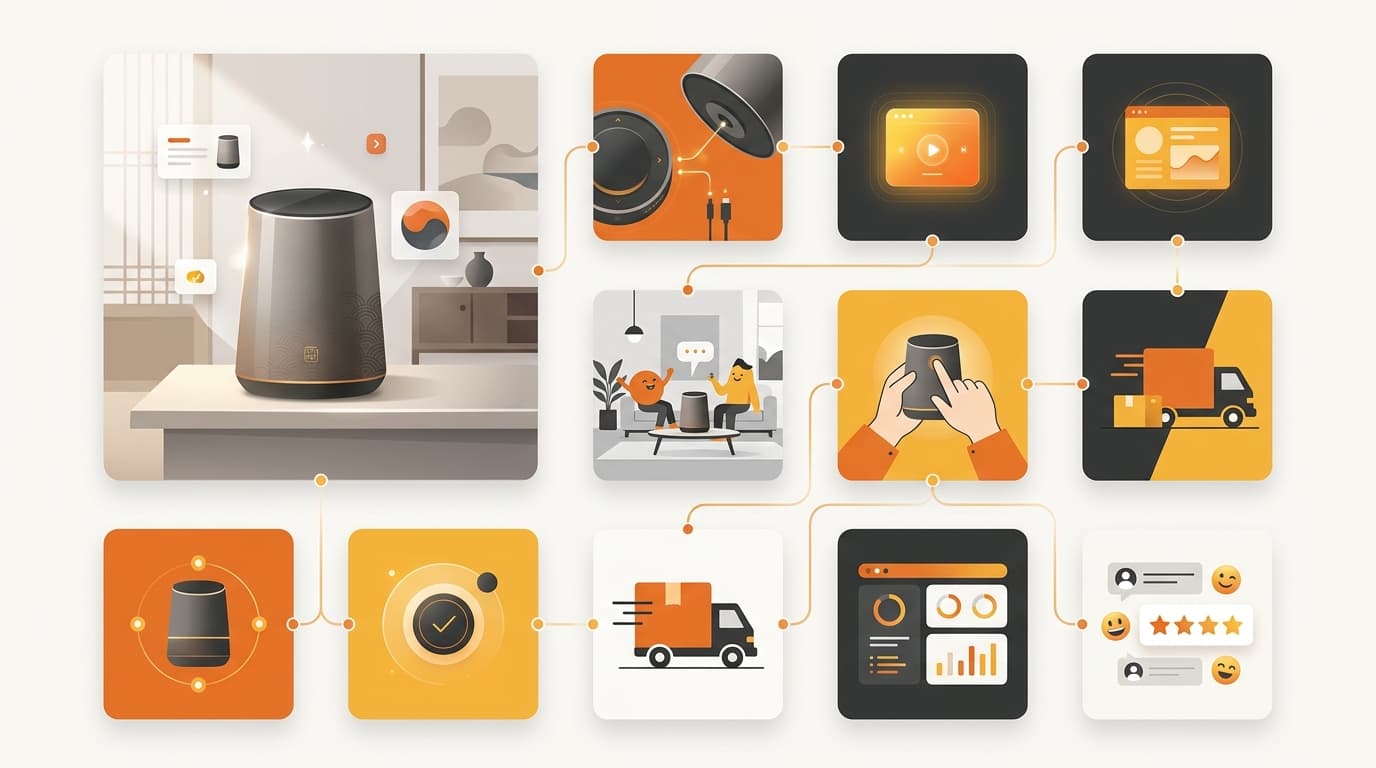
Coupang Image Gallery: How Kontactic Builds Each Set
Kontactic Seller Center builds each Coupang image gallery as one set: 1 primary image plus up to 9 supporting 1:1 tiles, all connected to the page builder.
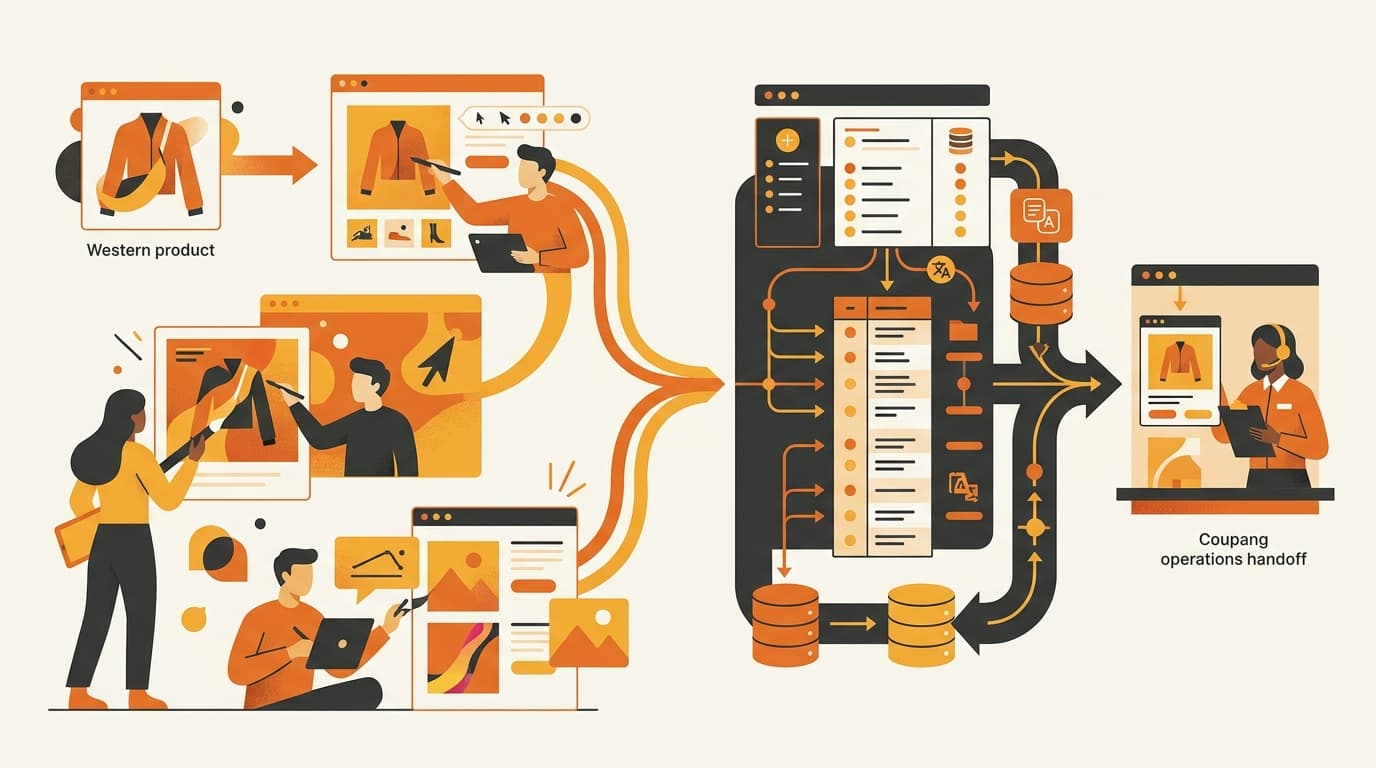
Coupang Product-Information Disclosure in Listings
Coupang product-information disclosure keeps marketplace data beside localized creative, giving operations a handoff without rebuilding listing information.