
How to Run a Midday Check-In on Korea Accounts
A midday check-in on a Korea account is a short, fixed-time daily review held at 12:00 KST. An operator scans the live account for small problems that quietly compound if ignored until the monthly report. It is not a status meeting and it is not a client call. It is a five-to-fifteen-minute pass over inbound status, ad pacing, settlement, cost funding, and any compliance flags, done the same way every day so that nothing sits unresolved for weeks.
We started writing this down because the habit is easy to describe and easy to underrate. Most Korea-entry problems are not dramatic. They are a stuck inbound shipment, an ad campaign burning budget on a dead SKU, or a VAT input credit that didn't reconcile — each cheap to fix on day one and expensive to fix on day thirty.
Why a fixed daily time, not a weekly report
The short answer is that Korea accounts fail on timing, not on strategy. A weekly or monthly report tells you what already happened; a daily pass at a set time catches things while they are still reversible.
Coupang's default settlement runs on roughly a two-month cycle — payment lands on the 20th business day of the following month, close to 60 calendar days after the sale. That single fact reshapes how you have to watch an account. If your ad spend, platform fees, and inventory costs are all moving daily but your cash confirmation is 60 days behind, you cannot manage the account off the settlement statement. You have to watch the leading indicators every day and reconcile the money later. We break down that lag in Coupang's settlement timelines.
A fixed 12:00 KST slot also forces a rhythm. Korean business hours, Coupang's operational clock, and a Western brand's home time zone rarely overlap cleanly. Picking one moment in the Korean trading day — the middle of it — means the operator sees a full morning of orders, inventory movement, and ad delivery before making any calls, and still has the afternoon to act.

What the check-in actually looks at
The check-in walks the same short list every day, in the order that a problem would hurt you soonest. None of these are strategic questions; they are all operational tripwires.
- Inbound and stock health. Is anything stuck at Coupang inbound verification, and is any live SKU trending toward zero? A label or certification issue caught at the desk is a same-day fix; discovered a week later it is a stockout. We wrote about that gate in Coupang inbound verification.
- Ad pacing. Is on-platform PPC spending against SKUs that are actually converting and in stock? Advertising is a daily cost, so a wasted day is a wasted day you never get back.
- Settlement and cost funding. Are operational costs — platform fees, storage, fulfillment, ad spend, VAT — tracking against expected revenue, and is there enough funded to cover the gap before the next payout?
- Returns and refunds. Coupang can refund a buyer the moment a return is scanned for pickup, before the unit is inspected. That timing gap is worth watching daily rather than discovering as a settlement surprise.
- Compliance flags. Any KC certification status change, any platform policy notice, any listing merge that could trigger a dispute.
For accounts running on our own tooling, most of this surfaces automatically — the daily diagnostics behind Sales Radar exist precisely so the human pass is a review, not a data-gathering exercise. The check-in is where a person decides what the signal means and who needs to act.
“Almost nothing that kills a Korea account is a surprise. It's a small thing you could have caught on the day it happened, sitting untouched until it isn't small anymore.”
Isaac Lee — Founder & CEO, Kontactic

Who acts on what the check-in finds
Here the cadence meets the contract. The check-in surfaces the issue, but who funds the fix and who carries the liability depends on which model the account runs — and that split is the same across Spark, Flame, and Blaze: the client bears every operational cost and carries product and advertising liability.
Because the client funds inventory, shipping, platform fees, and ad spend, the client bears the cost of wasted ad days and idle stock positions. Since ad spend runs before the first settlement lands, someone is funding it up front — a point we detail in who funds Coupang ad spend before your first payout — so early spend must be monitored daily to catch inefficiency.
The division of labor changes by tier, and the check-in respects it:
- Spark — Kontactic's Korean entity is the Importer of Record and Seller of Record. The client owns product strategy, marketing, and inventory decisions. The check-in flags operational signals; the client makes the calls.
- Flame — the client owns a Korean limited company (유한회사); Kontactic runs entity administration and commerce operations. Marketing strategy stays with the client. The check-in flags operational signals; the client makes the calls.
- Blaze — same as Flame, plus growth strategy and marketing execution. Kontactic acts on more of what the check-in finds, always subject to the client's approval on creative and claims.
Across all three, product ownership and product-level liability rest with the client at all times. The check-in doesn't move that line. It just makes sure a fixable problem gets seen while it is still fixable.

Common questions
Is the midday check-in a client meeting? No. It is an internal operational review of the account's live signals. Client conversations happen on a separate cadence; the check-in is what makes those conversations useful, because by the time we talk we already know what changed.
Why not just automate it entirely? Much of the data collection is automated. But deciding what a signal means — is this stockout risk real, is this ad campaign salvageable, does this policy notice need a response today — is judgment, and judgment is the part worth doing daily by a person.
Does the check-in replace the monthly settlement review? No. The daily pass watches leading indicators; the monthly review reconciles the actual money once Coupang settles roughly 60 days after the sale. You need both — one to act, one to true-up.
Want daily eyes on your Korea account?
Talk to Kontactic about how we run day-to-day operations for Western brands selling on Coupang — across Spark, Flame, and Blaze.
About the author
Korean and global e-commerce operators with 15+ years of cross-border experience, led by CEO Isaac Lee — KOTRA-certified consultant and official lecturer for Seoul City and the Korea Customs Service. We run Korea market entry for Western brands every day; this blog documents what we learn in the field.
More about Kontactic →Related Articles
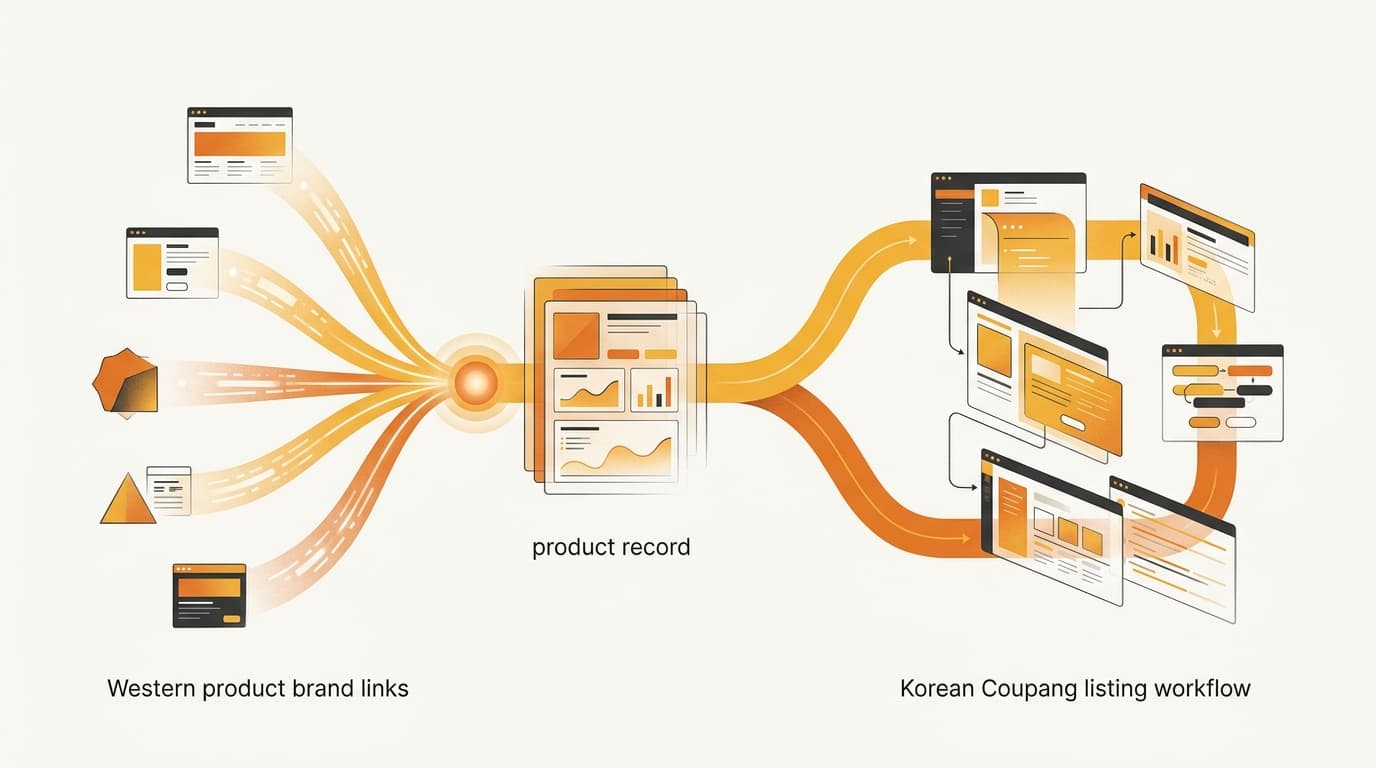
Product-Link Intake for Coupang: A Traceable Handoff
Kontactic Seller Center gives product-link intake a reviewable source record and a handoff into Coupang listing work before Korean copy or creative production starts.

Coupang Image Gallery: How Kontactic Builds Each Set
Kontactic Seller Center builds each Coupang image gallery as one set: 1 primary image plus up to 9 supporting 1:1 tiles, all connected to the page builder.
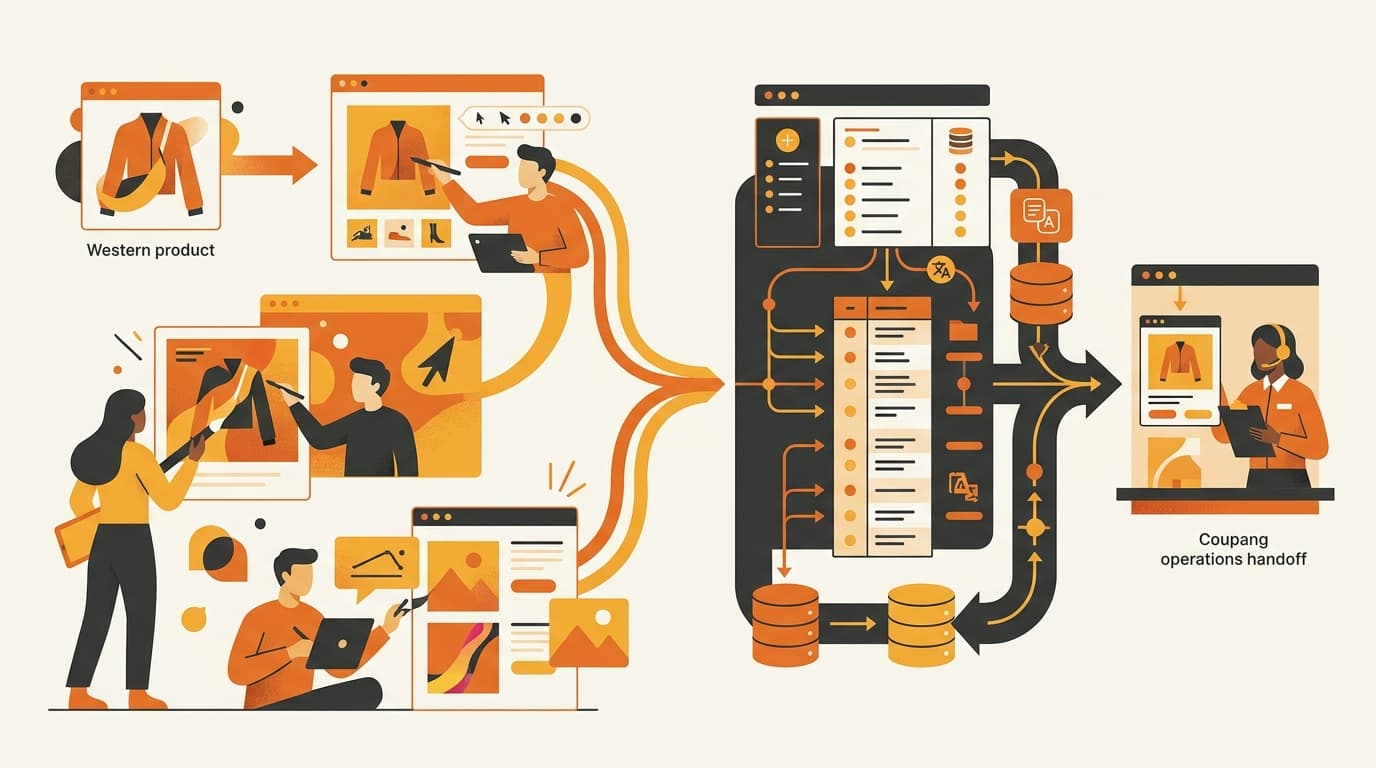
Coupang Product-Information Disclosure in Listings
Coupang product-information disclosure keeps marketplace data beside localized creative, giving operations a handoff without rebuilding listing information.