KC Certification Cost and Timeline 2026: Operator's Guide
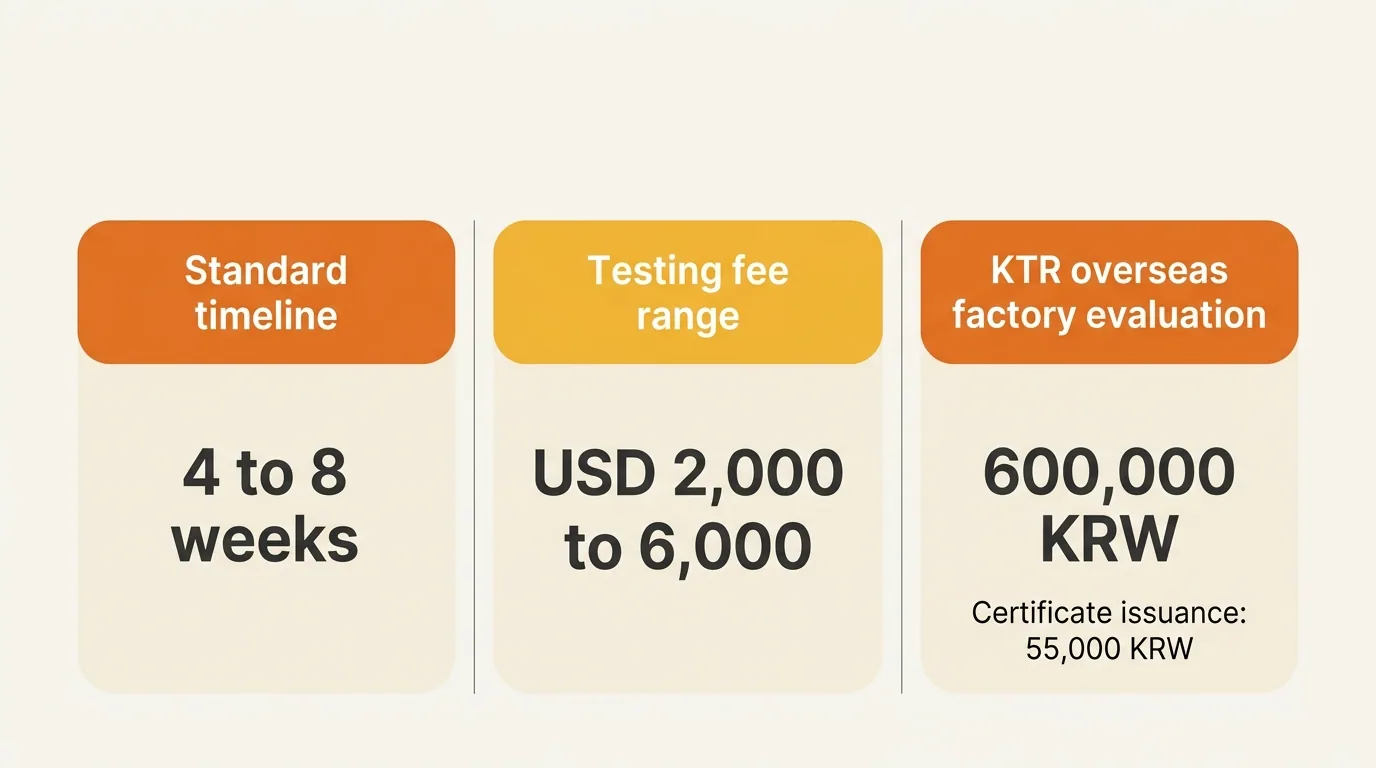
KC certification in 2026 typically takes 4 to 8 weeks from documentation submission to certificate issuance, and testing fees run roughly USD 2,000 to 6,000 depending on category. Those are the numbers most operators come here for. The harder question — and the one a launch budget actually depends on — is what happens before and after the lab work: who imports the goods, who holds the Coupang account, and how long the Korean storefront takes to convert.
This guide keeps the basics tight and spends most of its time on the parts that decide whether your KC certificate ever turns into Korean revenue.
What KC certification actually is in 2026
KC (Korea Certification) is the mandatory product safety mark administered under the Ministry of Trade, Industry and Energy and its affiliated labs — KTR, KTC, and others. It applies category by category. Electrical appliances, household items, wireless devices, children's products, and many consumer electronics fall in scope. Skincare, food, and supplements have their own separate regimes (MFDS, HFF, APQA) and do not use KC.
The certificate is product-specific, factory-specific, and tied to a registered applicant in Korea. That last detail matters more than most foreign brands realize. KC cannot float in a vacuum; it sits on a Korean legal entity that takes responsibility for the product. For cross-border-only sellers, that entity is typically an Importer of Record partner. For brands going local, it is usually their own Korean limited company (유한회사) or their service partner's.
If you are still scoping whether your specific device needs KC — and which sub-scheme — we wrote a more category-specific note on USB and battery-powered devices and when a foreign EMC report is enough. The short version: not every USB gadget needs KC electrical safety, but EMC almost always applies.
KC certification cost and timeline 2026: the real numbers
Here is what 2026 looks like for a standard consumer electronics or household item passing through a Korean accredited lab. Numbers are inclusive of public lab fees we have verified from KTR's published schedule plus typical commercial testing quotes.
- Testing fee: USD 2,000 to 6,000 per product, with home appliances and high-power devices at the upper end.
- KTR overseas factory evaluation: 600,000 KRW per inspection for products that require a factory audit.
- Certificate issuance: 55,000 KRW per safety certificate.
- Timeline: 4 to 8 weeks from submission of complete documentation and samples to certificate in hand.
The published fees are the easy part. The variability sits in three places. First, document preparation — Korean-language technical files, circuit diagrams, BOMs, and a Korean address for the applicant — frequently adds two to four weeks before testing even starts. Second, factory inspections for Type 1 (Safety Certification) products require scheduling a Korean inspector to your overseas plant, which is a calendar-driven, not money-driven, constraint. Third, retests after a fail are common on EMC and on insulation — and they reset the clock on the slipped item, not the whole certificate.
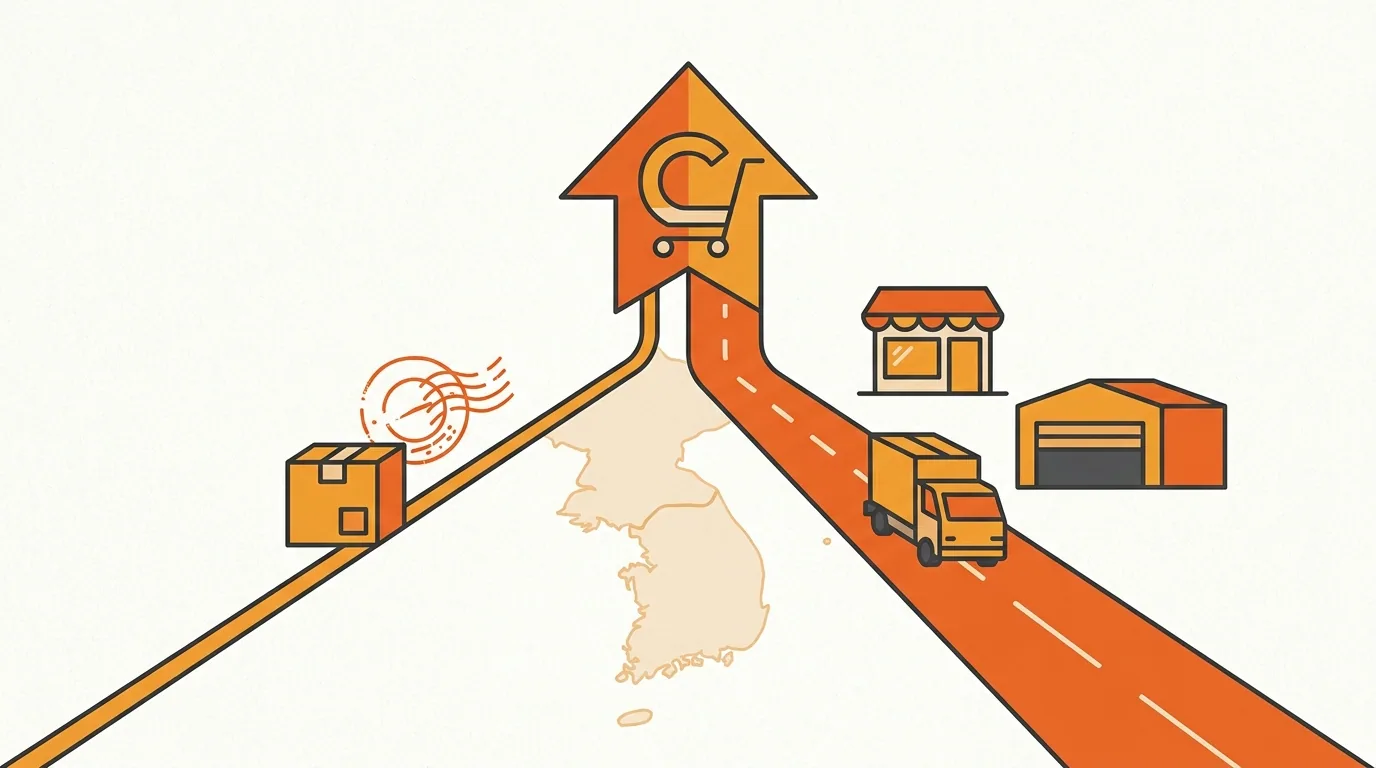
Brands that budget 8 weeks and assume one retest land roughly on time. Brands that budget 4 weeks and assume a clean pass on the first try usually slip into month three.
Cross-border vs local: KC isn't always the right first move
This is the angle most KC guides skip. Whether you need KC at all — and when — depends on which market entry path you are on.
If you are selling cross-border (shipping each order from your home warehouse to a Korean buyer who acts as the personal importer), KC enforcement is comparatively light at the per-order level. Korea's personal de minimis sits at USD 150 per shipment for duty-free clearance, and individual buyers absorb a lot of responsibility. We covered the boundaries of that rule in Korea de minimis: what the USD 150 threshold means. That said, the de minimis exception does not legalize selling uncertified KC-scope products into Korea at scale — it just means customs is unlikely to stop a single low-value parcel.
If you are going local — registering a Korean entity, importing in bulk, listing on Coupang with a Korean Seller of Record, and shipping from a domestic warehouse — KC certification is non-negotiable. Coupang will not list an uncertified product in a KC-scope category for Rocket delivery, and your IoR cannot clear the inbound shipment without it. This is the path where the 4–8 week KC timeline becomes the binding constraint on your launch date.
For a fuller breakdown of how these two paths affect margins and ops, Rocket Growth vs. cross-border selling in Korea is a good companion read. The short answer most operators arrive at: cross-border validates, local captures.
Coupang setup and seller onboarding: the gate after KC
Assume you have your KC certificate. You are not selling yet.
Coupang seller onboarding for foreign-owned operations involves three sequential layers. The seller account itself requires a Korean business registration and a Korean settlement bank account — both of which depend on having a Korean entity (or a partner whose entity holds the Seller of Record role). The Rocket Growth (로켓그로스) inbound process then requires SKU registration, barcode validation, KC certificate attachment to the listing, and a first inbound shipment that meets Coupang's receiving rules.
The Korean corporate bank account is the slowest piece. New accounts default to a low daily transfer limit and require an in-person visit. A few other practical points that catch foreign brands:
- Bank account workflow detail and timing are covered in Korean corporate bank accounts: the last wall foreign founders hit.
- KC certificate numbers must match exactly between your Coupang listing and the KATS/Safety Korea database. Typos here cause silent listing failures.
- Rocket Growth's minimum inbound is one unit per SKU, but the upstream work — entity, KC, IoR, PDP — is the real lead time. See Rocket Growth inbound minimums and real lead times for the operational detail.
If you are evaluating whether KC and Coupang fit together for your specific product, KC certification and Coupang: a Korean entity? walks through the interaction more carefully.
Localized PDP and Korean-language conversion
This is the part Western brands consistently underspend on, and it is the largest controllable variable in Korean e-commerce conversion. A Korean Product Detail Page is not a translated Shopify product page. It is a vertically stacked, image-heavy creative asset, often approaching 20,000 pixels in height, that does the work your video, FAQ, comparison chart, review wall, and lifestyle photography do separately on a Western site.
In practice, a Korean buyer scrolls. They expect ingredient panels, certification badges (including the KC mark where relevant), use-case photography, comparison tables against Korean competitors, and prominent review aggregation. Conversion rate differences between a translated PDP and a properly localized one are not 10–20% — they are often multiples.
Three things to budget for:
- Korean copywriter, not translator. A native marketer who understands Coupang search terms and Korean trust language.
- Long-form visual design. Plan for the 20,000-pixel canvas as a separate deliverable from your existing creative.
- Iteration after launch. First-version PDPs almost always underperform. Plan one redesign in the first 90 days.
KC sits inside this work, not adjacent to it. The certificate number, the KC mark, and the responsible party text all need to render correctly on the PDP and on the physical product/packaging.
Rocket Growth operations and launch sequencing
Once you are live, the operational shape of Coupang Rocket Growth becomes its own line of work. Storage fees, fulfillment/delivery handling, and returns handling are all separate cost lines that hit your settlement before remittance. Returns are the variable that surprises most foreign brands — Korean consumer expectations on return windows and condition tolerance are looser than in most Western markets.
We covered the 2025 policy changes that materially reset Rocket Growth margins in three Coupang policy changes that reset Rocket Growth margins. The headline: return fees, evidence thresholds, and burden-of-proof rules have shifted in ways that make Korean-language CS coverage non-optional. If you cannot respond in Korean within Coupang's response window, you will lose disputes you would have won in your home market.

Sequencing the launch
The other piece — and the one that determines whether your KC certificate ever earns back its cost — is sequencing. The wrong order looks like this: brand books a lab on day one, runs ads as soon as the certificate clears, and then realizes the PDP is weak, reviews are zero, and CPCs are bleeding budget into a non-converting listing.
The order that works:
- Scope KC and entity in parallel. Both have 4–8 week minimums; running them in series adds a month.
- Begin PDP design while testing is in progress. Copy, photo direction, and Coupang SEO research do not need a certificate.
- Inbound the first SKU shipment to Rocket Growth before any marketing spend. No ads until the listing is live and the inventory is checked in.
- Seed reviews organically before activating PPC. A listing with zero reviews loses to a listing with twelve, regardless of ad budget.
- Activate Coupang PPC and off-site marketing only once conversion is observable. We argued the broader principle in operational readiness before ad spend.
The reason this sequencing matters is bureaucratic, not strategic. Almost every gate — KC, entity registration, bank account, Coupang KYC, KATS database sync — is a deterministic process that returns either yes or "redo this step." Front-loading the deterministic work is the only way to make the strategic work (marketing) compound rather than bleed.
A useful test: write your full launch on a calendar with named owners and known lead times. If KC certification is the longest item, your plan is probably under-scoped on PDP and Coupang setup. If KC is the shortest item, you may be overpaying for expedited testing you do not need.
Putting the numbers together
For a single-SKU KC-scope launch on Coupang in 2026, a realistic budget envelope looks like this:
- KC testing and certification: USD 2,000–6,000, plus 600,000 KRW factory inspection and 55,000 KRW certificate issuance where applicable.
- Korean entity, IoR, and bank setup: handled in parallel; see Korea entry budget: KC cert + shipping costs for a fuller line-item view.
- Coupang Rocket Growth inbound and first-cycle storage fees.
- Localized PDP and Korean creative.
- Korean-language customer service capacity.
- Coupang PPC budget — held until the listing converts organically.
KC is one node in this graph. It is the one with the clearest published price and the most predictable timeline, which is why every guide starts there. The work that decides whether your Korean P&L is positive in year one is everything else.
Planning a 2026 Korea launch?
If you want a sequenced view of KC, entity, Coupang, and PDP for your specific product, we can walk through the timeline and the cost stack with you. Contact Kontactic to start a scoping conversation.
About the author
Korean and global e-commerce operators with 15+ years of cross-border experience, led by CEO Isaac Lee — KOTRA-certified consultant and official lecturer for Seoul City and the Korea Customs Service. We run Korea market entry for overseas brands every day; this blog records what we learn in the field.
Meet the Kontactic team →Related Articles
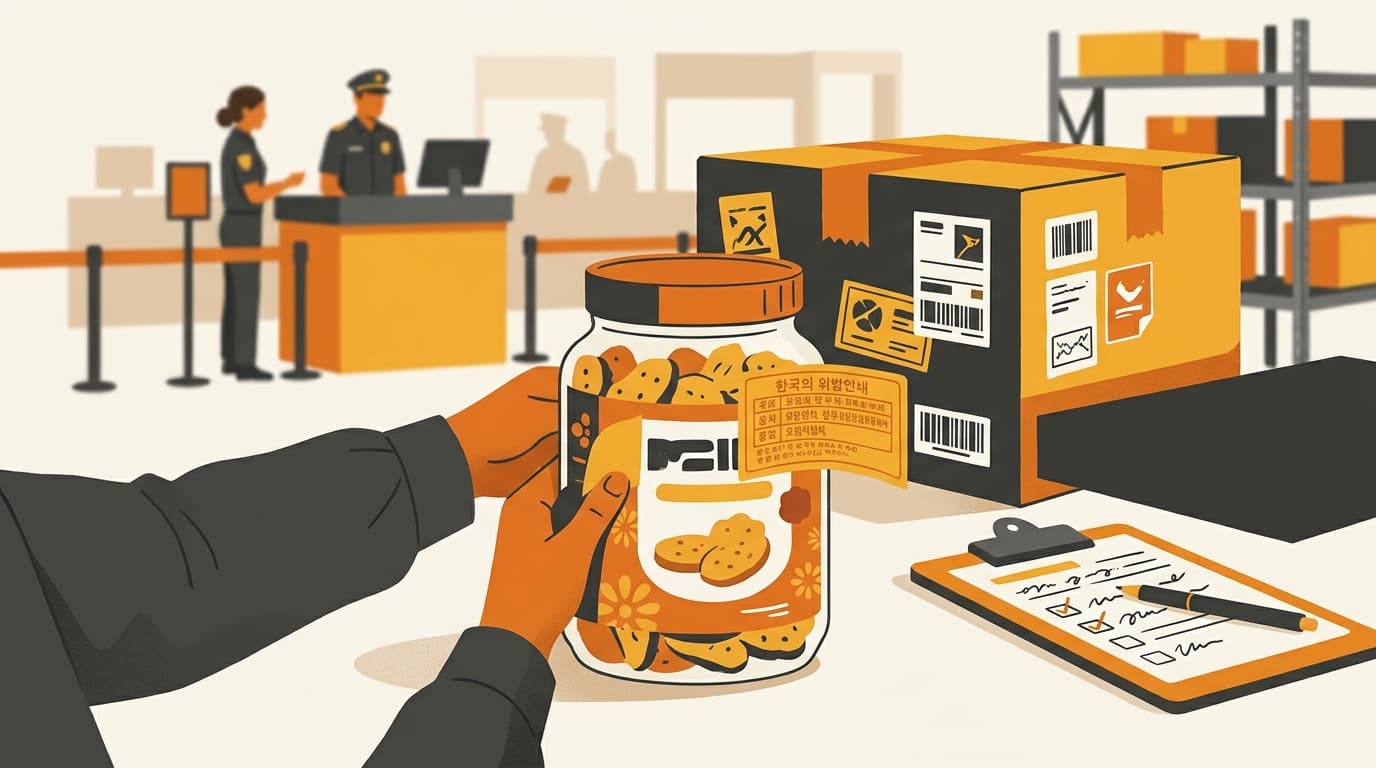
Imported Food Labels in Korea: Can Stickers Work?
Imported food labels in Korea can use a Korean sticker on the consumer unit before sale, but only when current MFDS rules allow it for that product and package.
Can USB-Powered Products Avoid Korea’s KC Safety Rules?
USB power does not automatically avoid Korea’s KC rules. Learn how KATS safety review, RRA EMC checks, and customs timing affect your shipment before import.
Can Coupang Buyers Pay Two Charges With Free Shipping?
On Coupang, free shipping can still leave the buyer paying two return charges: the original delivery cost and the cost of sending the parcel back to the seller.