
Who Pays for What in Korea: Operating Costs Explained
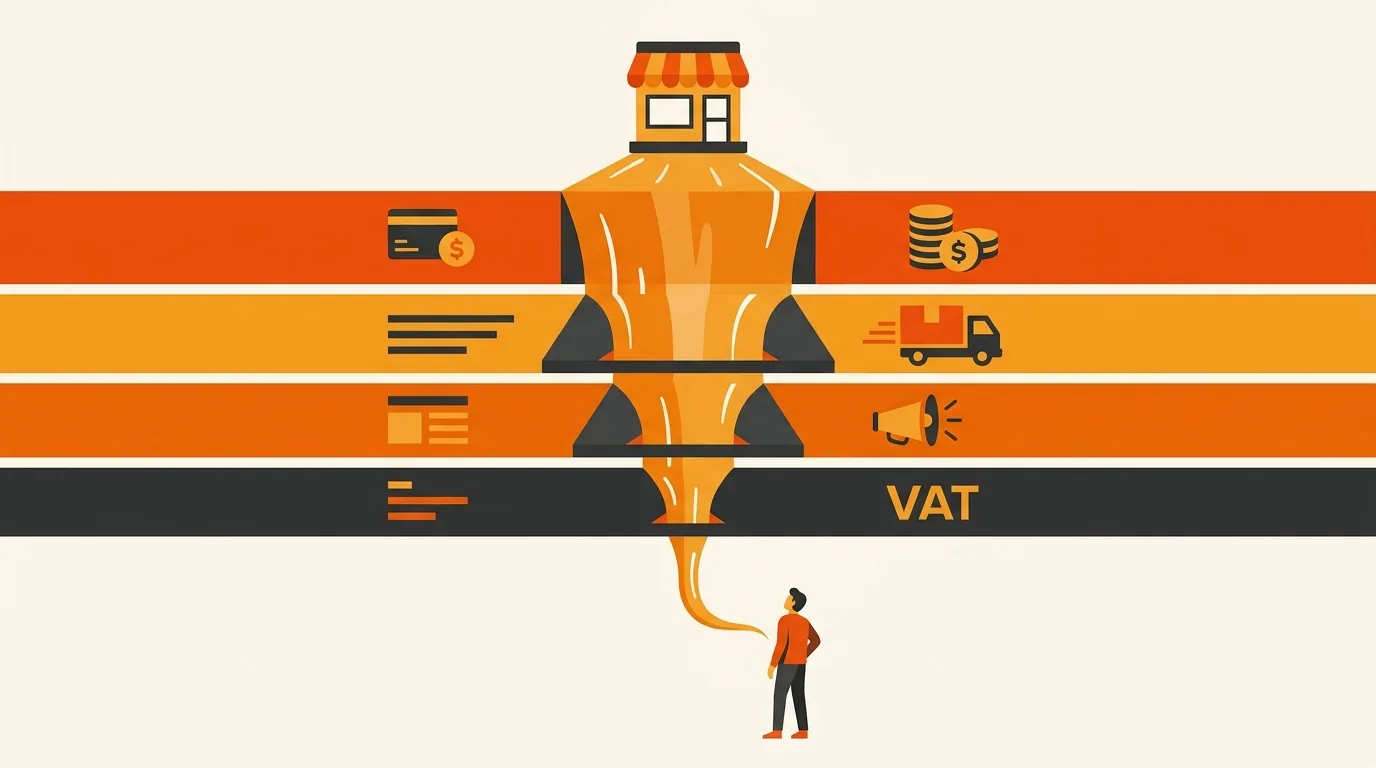
Every Korea operating model — selling through a partner's entity as Importer & Seller of Record, or running your own local entity through an operating agent — puts the same operational costs on the brand owner. Inventory, international shipping, Coupang platform fees, fulfillment, advertising spend, and VAT are all ultimately funded by the client. What changes between models is how those costs are funded and who signs the contracts, not whether they exist.
This piece is for founders weighing Kontactic's Spark and Blaze — or comparing us to other Korea entry partners — who want a clean answer to the question "what am I actually paying for, and to whom?"
The cost categories don't change. The funding mechanism does.
Whether you sell into Korea through our entity or through your own Korean limited company (유한회사), the underlying P&L looks similar. You pay for the goods, you pay to ship them, you pay the marketplace, you pay for ads, and you pay the tax authority. The legal structure determines the route the money takes.
Under Spark — where Kontactic's Korean entity is your Importer & Seller of Record — Kontactic is the legal seller. Operational costs are deducted from sales before the settlement reaches you. If those funds run short, you fund the shortfall directly.
Under Blaze — an operating agency arrangement (운영대행) — your own Korean entity is the seller. Costs are paid from the entity's revenue, or topped up directly by you when revenue isn't sufficient yet (which is almost always the case in the ramp phase).
Direct, our cross-border option for brands shipping from the US, Europe, Japan, mainland China or Hong Kong, sits outside this comparison. There is no Korean entity and no import by us: the brand is the seller on its own Coupang cross-border store (Coupang Global Fulfillment, CGF), Coupang pays the brand directly, the brand pays Coupang's own fees, and we invoice our commission monthly.
Operational costs in Korea entry are the recurring expenses required to import, list, fulfill, advertise, and tax-comply with goods sold in the Korean market. Across every Kontactic engagement model, these costs are borne by the client — only the funding path differs.

What sits inside "operational costs"
Our Spark and Blaze service agreements enumerate the same buckets. The list is worth memorizing before any Korea entry conversation, because most surprises later come from a founder who assumed one of these line items was the partner's responsibility.
- Inventory procurement — your cost of goods, paid to your manufacturer or contract producer.
- International shipping — moving inventory from your origin warehouse to a Korean import point. Air, ocean LCL, ocean FCL, or Coupang Direct LCL when applicable.
- Platform fees — Coupang's selling commission, deducted on every order.
- Other platform expenses — Rocket Growth storage, fulfillment and delivery handling, returns handling, and miscellaneous platform operating fees.
- Advertising spend — actual on-platform PPC budget on Coupang. The client pays 100% of actual spend; Kontactic operates the campaigns under your written approval.
- VAT — net VAT obligation (output VAT minus input VAT credits from import VAT on incoming inventory).
- Tax and accounting — corporate income tax, bookkeeping, statutory filings (Blaze, where you own the Korean entity).
None of these are negotiable cost categories. Korea is a 10% standard VAT jurisdiction with rigorous import documentation, and Coupang's economics are set by the platform — your operating partner cannot make them disappear. What a partner can do is run the operation efficiently, time the inventory replenishment well, and keep ad spend disciplined. That's where margin is actually defended. We've written more about this trade-off in How Coupang IoR and 3PL Change Your Korea Margins.
Spark: costs come out of settlement
Under Spark, Kontactic's Korean entity is the Importer & Seller of Record. Spark Subscription is the Coupang version, open to Coupang-approved sellers in mainland China; Spark Project covers one defined project — B2B supply to Korean trade buyers, a pop-up or exhibition, or a one-off import — for any nationality, quoted per project. For customs and tax, our entity holds title to the goods it imports and sells, and the sales contracts sit with us. Commercially, you keep control of pricing, your brand, and what happens to unsold stock — and you're paid for what sells.
Operationally, this means revenue lands in Kontactic's account first. Each settlement cycle, the operational costs above are deducted, and the remainder is remitted to you as Settlement Funds. If, in any given period, the costs exceed revenue (a common occurrence during the first few months of advertising-led ramp), you cover the shortfall directly. The contract is explicit on this point: insufficient settlement funds do not cap your liability for costs already incurred.
The advantage is speed. There is no Korean entity formation, no banking setup, no business registration certificate to chase. You sign, you ship, and you sell under our infrastructure. The trade-off is that the brand is selling under our entity, and under our agreement you are responsible for product compliance and indemnify us. The indemnity runs broad: defects, recalls, customs penalties, import holds, IP infringement, advertising claims, platform policy violations attributable to your products are all on you.
Blaze: costs flow through your Korean entity
Blaze centers on your own Korean limited company (유한회사). Kontactic does not hold equity. We operate the entity as your authorized agent (운영대행) — the seller account, the bank account, the import licenses, and the inventory all sit under your ownership. We take no access to the entity's bank accounts and sign no contracts in its name: the entity pays, remits and signs itself, and we prepare the paperwork.
That structural difference changes the funding flow. Operational costs are paid out of the Client Entity's revenue first. When revenue isn't yet enough — which is almost always the case until the entity has cleared a few full settlement cycles on Coupang — you fund the entity directly through capital injections from your headquarters. Kontactic does not advance working capital. We don't take ownership of inventory and we don't carry your operating costs on our balance sheet.
Once revenue starts flowing, the order of payment from the entity's cash position is roughly: platform fees and other platform expenses, VAT, advertising costs, and Kontactic's service fees (when paid via local KRW transfer from the entity). Whatever remains is profit available for distribution or reinvestment. For more on how settlement timing interacts with this — and why it can stretch your funding need — see Coupang Settlement Timelines: Monthly vs Weekly vs Fast.
There is one cost line that comes with your own entity and doesn't exist in Spark: the entity setup fee, a standalone service for brands that don't have a Korean entity yet.
This is a one-time, upfront payment that produces a fully functional Korean operating entity: the Corporate Registry filing, Articles of Incorporation, Business Registration Certificate, corporate and representative seals, SIM card, bank book, digital certificate, OTP, company card, applicable licenses including the import ID (수입통관고유부호), and a virtual office lease. After that, you own the entity outright, and under Blaze Kontactic runs its operations as your agent.
How Kontactic itself gets paid
Separately from operational costs, Kontactic's own service fees are paid by one of two methods, agreed in writing before operations start.
The first option is a local KRW transfer from your Korean bank account — practical when your own Korean entity is in place under Blaze and generating revenue, since the entity can simply pay the service fee in local currency from settlement proceeds.
The second option is a direct invoice in USD. Kontactic issues a monthly invoice to the client (or the client's parent company), and payment is made by international wire transfer in USD within fourteen calendar days of invoice issuance. This is the typical path when there is no Korean entity yet, or for parent-company clients that prefer to keep all payables in their home currency.
The two methods are interchangeable by mutual written agreement. We've had clients start on USD invoices during ramp and switch to local KRW transfers once their entity has steady revenue.
Where founders typically misread the model
Three patterns come up repeatedly in early conversations.
Confusing operating model with risk transfer. Several founders assume that letting a partner operate the entity moves product liability onto that partner. It does not. In every Kontactic service, product-level liability stays with the client: under Blaze you own the entity and the goods, and under Spark our agreement makes you responsible for product compliance and has you indemnify us. Defects, recalls, regulatory non-compliance, labeling failures, IP issues, and advertising claims all sit with the brand owner — even when Kontactic produced the creative under the client's approval. Working through the structural differences here is worth reading: Agency vs IoR vs Entity: Korea Skincare Entry Compared.
Underestimating the working-capital ramp. Coupang's default settlement cadence is slow enough that a brand running Rocket Growth at scale will float meaningful working capital before the first full payout cycle clears. Add a few weeks of advertising spend on top, and the funding requirement during months one through three is often higher than founders expect. This is independent of which Kontactic service you use — it's a function of the platform.
Treating the entity setup fee as the total Korea entry cost. The USD 3,000 fee covers formation. It does not cover inventory, your first import, your KC certification work if applicable, the air freight bill, or your initial PPC budget. Those are separate, and they're all on the client side of the line.

Common questions
Does Kontactic ever advance funds for inventory or ads? No. Operational costs are funded by the client at all times — either directly, through capital injection into the Client Entity, or via deduction from settlement funds in the Spark model. Kontactic does not provide working capital.
If I run out of cash during ramp, what happens? Under Spark, any shortfall between settlement funds and operational costs is invoiced to you and must be paid. Under Blaze, you fund the entity directly from headquarters. In either case, the partner does not absorb the gap.
Are advertising costs included in Kontactic's service fee? No. Kontactic's service fee covers operational management. The client pays 100% of actual Coupang on-platform PPC spend, and Kontactic must obtain written approval before launching campaigns or making material budget changes.
What about taxes and accounting under Blaze? The entity files its own VAT and corporate income tax. Kontactic provides reasonable cooperation with tax filing processes and third-party providers; statutory filings are paid for from entity revenue.
Can I switch between USD invoicing and local KRW payment later? Yes. The payment method can be changed by mutual written agreement at any time.
Talk to us before you choose
The cost structure is the same across every model — the operational reality is that you, the brand owner, fund the operation. What we help with is planning it correctly: the right option for your situation, an honest funding plan for the first six months, and, if you start cross-border and later choose to sell locally, a clear view of what moves over and what doesn't (reviews on cross-border listings, for example, stay there).
Get a clear funding plan for your Korea entry
Tell us where you are today — cross-border orders, ad spend, inventory plan — and we'll map the costs and the right Kontactic option for your situation.
About the author
Korean and global e-commerce operators with 15+ years of cross-border experience, led by CEO Isaac Lee — KOTRA-certified consultant and official lecturer for Seoul City and the Korea Customs Service. We run Korea market entry for overseas brands every day; this blog records what we learn in the field.
Meet the Kontactic team →Related Articles

Q1 2026 Coupang–Naver Shift: Your Channel Strategy
Coupang's Q1 2026 trust shock slowed growth, but Naver SmartStore captured real volume. Foreign brands should plan a two-channel model from day one in 2026.
Coupang Settlement Timelines: Monthly vs Weekly vs Fast
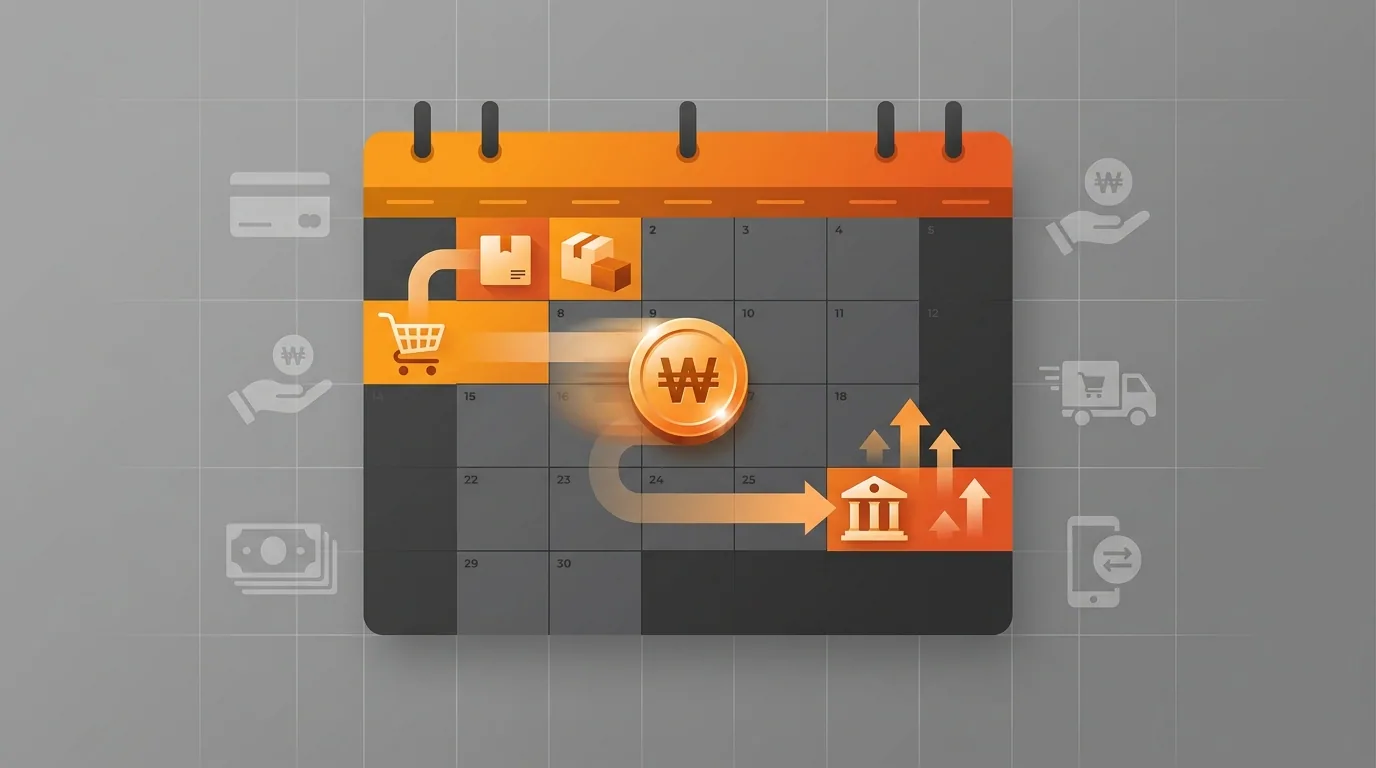
Coupang pays sellers on the 20th business day of the following month by default — close to 60 calendar days. Compare monthly, weekly, and fast settlement.

Selling Grills in Korea: Three Required Certifications
A cooking grill sold locally in Korea usually needs three separate certifications — electrical safety, EMC, and food-contact registration. Here is how each works.