
Why Setting Up a Korean Entity as a Non-Resident Foreigner Got Harder — and How to Actually Get It Done
A lot of founders still assume that forming a small company in Korea as a non-resident foreigner is a minor administrative step — something you knock out in a week before you start selling. Three years ago that was roughly true. Today it is not.
Over the past few years we have watched the same path that once took a couple of weeks turn into a multi-stage obstacle course: tax offices refusing to issue business registration certificates, banks declining to open corporate accounts, telcos refusing mobile numbers, and Coupang tightening KYC to the point where most unassisted foreign sign-ups simply fail. None of this is arbitrary. It is a system-wide reaction to a real wave of misuse. But the net effect for legitimate foreign brands is that Korea entry is now materially harder than the guides on the internet still suggest.
This post walks through what actually happens at each stage today, why it got this way, and what it takes to get through.
Why so many non-resident foreigners started forming Korean entities
Foreign interest in Korea as a destination market — not just a supply-chain stop — accelerated from roughly 2023 onward. As global commerce stabilized after COVID, Chinese sellers in particular began treating Coupang as "Korea's Amazon" and moved aggressively to list product. Coupang itself actively courted that audience.
Then the 2025 US tariff shock did something to the rest of the world's exporters: it made over-reliance on the United States feel like a concentration risk. Brands that had treated the US as their only serious export market started looking for a second developed-country beachhead, ideally one that was still relatively uncrowded. Korea — large, high-GMV, foreign-brand-friendly on the consumer side — fit the description. We have written separately about why Korean consumers actively pay a premium for foreign brands and why cross-border order volume tends to understate the real local opportunity; both of those dynamics were pulling foreign sellers in at the same time.
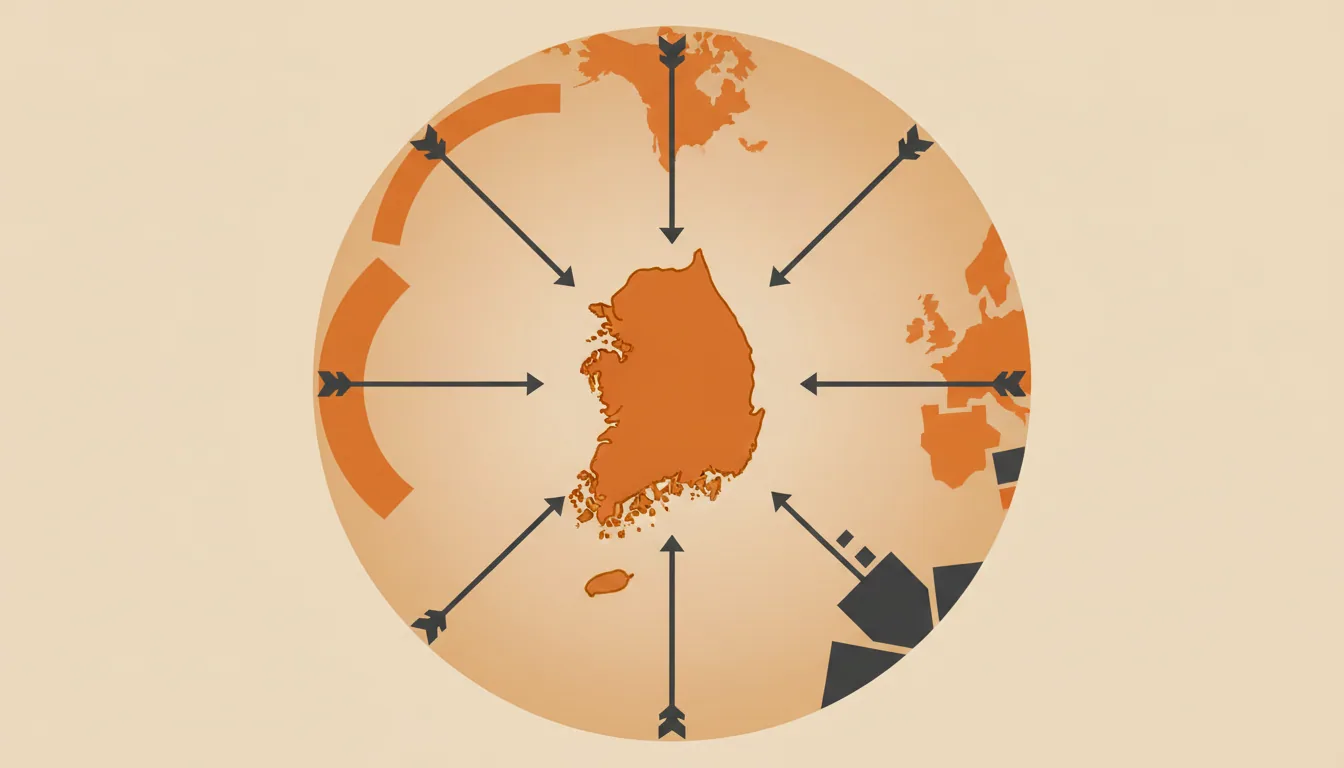
At that point most foreign entrepreneurs still thought of "setting up a Korean entity" the way Google or Apple would — a large project routed through a big-four accounting firm, with a matching price tag. The quieter reality was that Korean law allowed something much lighter: a small-capital 유한회사 (limited company) that a non-resident foreigner could form with a single shareholder and a single director.
The lightweight path: small-capital 유한회사 vs. formal FDI
It helps to separate two different routes, because they are often conflated.
The formal route is FDI (Foreign Direct Investment). An FDI-registered entity is filed through KOTRA or a designated foreign-exchange bank, includes a non-resident foreigner's securities acquisition report, and opens the door to investor visas and to most government support programs and corporate loans on roughly the same terms as a domestic Korean company.
The lighter route — the one this post focuses on — is a small-capital 유한회사 set up by a non-resident foreigner, typically without pursuing full FDI treatment. In practice:
- Capital is usually set somewhere between KRW 1,000,000 and KRW 10,000,000.
- A single non-resident shareholder can hold 100% of the company.
- A single director can serve as sole representative.
- The entity is fully valid — there is no second-class status attached to it.
Many foreign-affiliated companies in Korea, including serious ones, operate as 유한회사. The structure itself is not the problem. The problem is what started happening around it.
The abuse wave that triggered the crackdown
Once the lightweight path became widely known, a meaningful share of new non-resident 유한회사 entities started behaving badly. Three patterns showed up repeatedly:
- Import undervaluation. Declaring lower values at customs to reduce import duties and import VAT. This is exactly what Korean Customs is built to detect, and enforcement actions followed.
- Skipped product certifications. Korea is a heavily regulated import market. Depending on category, product-level certifications can include KC electrical safety, KC for household goods, KC for children's products, EMC/radio certification, KCS for safety goods, and KCW for water-contact products. A wave of sellers imported and listed product without the required certifications, drawing regulator attention. (We cover a narrower slice of this in our note on when a foreign EMC report can support a Korean Declaration of Conformity for USB- and battery-powered devices.)
- Tax non-compliance. This was the big one. Non-resident operators filing VAT late, filing VAT but not paying it, or ignoring corporate income tax altogether. Some entities ran for nearly a year with no serious filings at all before the local tax office caught up.
The National Tax Service and individual district tax offices noticed. So did the banks. So, eventually, did Coupang.
The tightening you are running into in 2026 is not aimed at you specifically. It is the residue of several years of non-resident shell entities misbehaving on taxes, customs valuation, and product compliance. Knowing that reframes the problem: you are not being blocked, you are being asked to prove you are not one of them.
Stage 1: Getting the business registration certificate (사업자등록증)
Incorporation registration at the court registry has itself gotten heavier — more supporting documents, more scrutiny — but the sharper bottleneck is one step later, at the tax office, when you try to convert a registered corporation into an actual operating business by obtaining the 사업자등록증.
What we are seeing on the ground:
- Some tax offices are simply refusing. A portion of district tax offices have taken the position that they will not issue business registration certificates to non-resident foreigners at all. This is not uniform policy — it varies by district and by the specific officer — but it is common enough that you cannot assume approval.
- Others require a full on-site inspection. Photos of the office, confirmation of signage, review of staff presence, office size verification, and review of the brand's website and catalog to assess whether there is genuine intent to operate in Korea. Only after passing that inspection does the certificate get issued.
Whether a refusal from a tax office is legally sound is debatable — without a business registration certificate you cannot operate, which is a heavy consequence. But in practice, arguing with a tax office from offshore is not a winning strategy.
Stage 2: The bank account problem
Assume you get the 사업자등록증. You still cannot run a business without a corporate bank account, and this is where many non-resident founders get fully stuck.
Two tasks have to happen at the bank, and both must be at a foreign-exchange bank (외국환은행) — in practice the major commercial banks like Shinhan, KB Kookmin, Hana, and IBK:
- Securities acquisition filing for the non-resident foreigner, since forming a Korean company means acquiring Korean shares.
- Corporate account opening for the new entity.
Banks are quietly reluctant to do either for small non-resident 유한회사. The reasons are not mysterious:
- They hear the same stories the tax offices do. They know the population of non-resident shell entities carries elevated fraud, AML, and voice-phishing (보이스피싱) risk, and when something goes wrong the bank is on the hook.
- Corporate accounts carry transfer limits and heavy internal procedures even for Korean nationals. Opening one for a non-resident foreigner with minimal Korean footprint is several times more sensitive.
- There is no meaningful branch-level incentive. Branch performance is measured on loans, credit cards, payroll accounts, and pension accounts — not on opening thin corporate accounts that carry tail risk.
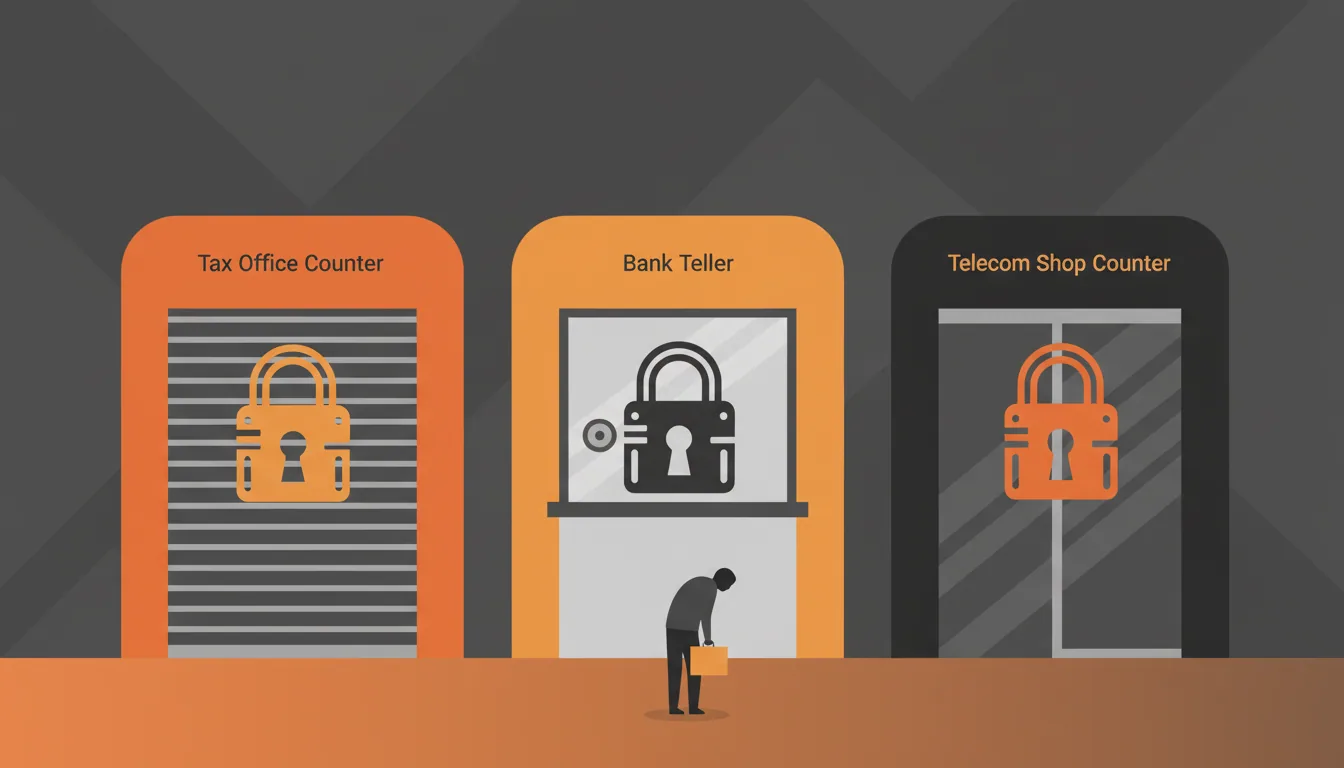
The result is a generalized chilling effect: head office discourages it, branch managers avoid it, and counter staff push back on the paperwork. Unless the bank has a trusted local counterparty introducing and vouching for the case, the default answer is no.
Stage 3: Phone numbers, e-commerce registration, customs code
Even with a certificate and a corporate account, you still cannot actually run. A few more gates:
- Korean mobile number (010). The three major carriers — SKT, KT, LG U+ — generally will not issue 010 numbers to non-resident foreigners directly. The practical path is an MVNO / secondary-network reseller that runs on top of one of the majors. The paperwork is heavier and the dealer relationship matters. Without a local contact, this is slow.
- Mail-order business filing (통신판매업 신고) has to be completed once you have the certificate, the account, and the number.
- Customs trader code (사업자 통관 고유 부호) has to be issued through Korea Customs' UNI-PASS system before you can legally import.
None of these are individually insurmountable. Collectively, as a non-resident with no local representative, they compound. Every one of them wants a Korean counterparty somewhere in the chain.
Stage 4: The final gate — Coupang KYC
This is where many foreign brands discover they have done three months of work for nothing.
Coupang has seen the same pattern everyone else has: a surge of foreign entities signing up to sell, with predictable downstream compliance issues. In response, Coupang has materially tightened seller KYC (identity verification). The standard public sign-up flow for foreign-owned accounts is, in most cases, blocked. If the account does get created, it tends to fail at the KYC verification step.
The consequence is blunt: you can complete every other step in this article — entity, certificate, account, phone, customs code — and still be unable to open a Coupang seller account through the normal path.
This is where being an official Coupang partner has a concrete operational meaning rather than a marketing one. Kontactic is a recognized official partner, and as part of that relationship we can whitelist qualifying foreign clients into the onboarding flow. Without that kind of partner relationship, getting onto Coupang as a newly-formed non-resident-owned entity is, in 2026, very difficult.
If you are weighing this against selling through a Korean entity we operate on your behalf, we walk through the comparison in Rocket Growth vs. Cross-Border Selling in Korea and in our full guide to selling on Coupang as a foreign brand.
What actually unlocks the path
Read the stages back to back and a pattern emerges. At every single counter — tax office, bank, telco, Coupang — the underlying question is the same: is there a credible, accountable Korean party standing behind this foreign entity?
That is why the setup work has effectively become relationship work. The things that move a non-resident 유한회사 from "rejected" to "approved" are:
- A local agent with an established track record at the relevant district tax offices and registry.
- A working relationship with at least one foreign-exchange bank that trusts the agent's referrals.
- MVNO / dealer relationships that will issue corporate mobile numbers on the strength of that agent.
- Official partner status with the platform you intend to sell on.
“Setting up a Korean entity as a non-resident foreigner is no longer a paperwork exercise. It is a trust-transfer exercise — and the trust has to come from somewhere credible on the ground.”
Isaac Lee — CEO, Kontactic
For context on why this sequencing matters before you spend on marketing — and why founders who skip it usually burn ad budget before their operations can convert it — see our note on operational readiness before ad spend. And if you are still working through who exactly the Importer of Record is in your structure, we break that down in What is an Importer of Record (IoR) in Korea?.

What to do with this
Three honest takeaways for founders considering the path:
- Do not treat Korean entity setup as a checkbox. It is now the single most common place where foreign brands waste three to six months.
- Decide early whether you need your own Korean entity at all. Many foreign brands are better served starting with an IoR & SoR arrangement under an established Korean operator, validating demand, and only then standing up their own 유한회사 once they know the market is real for them.
- If you do need your own entity, line up the agent relationship before you file anything. Every stage downstream — tax office, bank, telco, Coupang — will ask the same implicit question, and it is cheaper to answer it once than to be rejected four times.
Korea is still, genuinely, one of the best medium-sized developed-market opportunities for foreign consumer brands right now. The gate is just taller than it used to be. Going in with the right local footing is the difference between landing on the shelf and landing in a year-long compliance dispute.
Thinking about forming a Korean entity as a non-resident founder?
Talk to Kontactic before you file. We'll walk you through whether a 유한회사 is actually the right structure for you, what the current tax office and bank environment looks like for your profile, and how we handle the Coupang KYC step as an official partner.
About the author
Korean and global e-commerce operators with 15+ years of cross-border experience, led by CEO Isaac Lee — KOTRA-certified consultant and official lecturer for Seoul City and the Korea Customs Service. We run Korea market entry for overseas brands every day; this blog records what we learn in the field.
More about Kontactic →Related Articles

Coupang Rocket Growth Stock: Can an ERP Set It via API?
An ERP cannot set Coupang Rocket Growth stock through the Open API; replenishment starts when Coupang physically receives a new inbound shipment of stock.
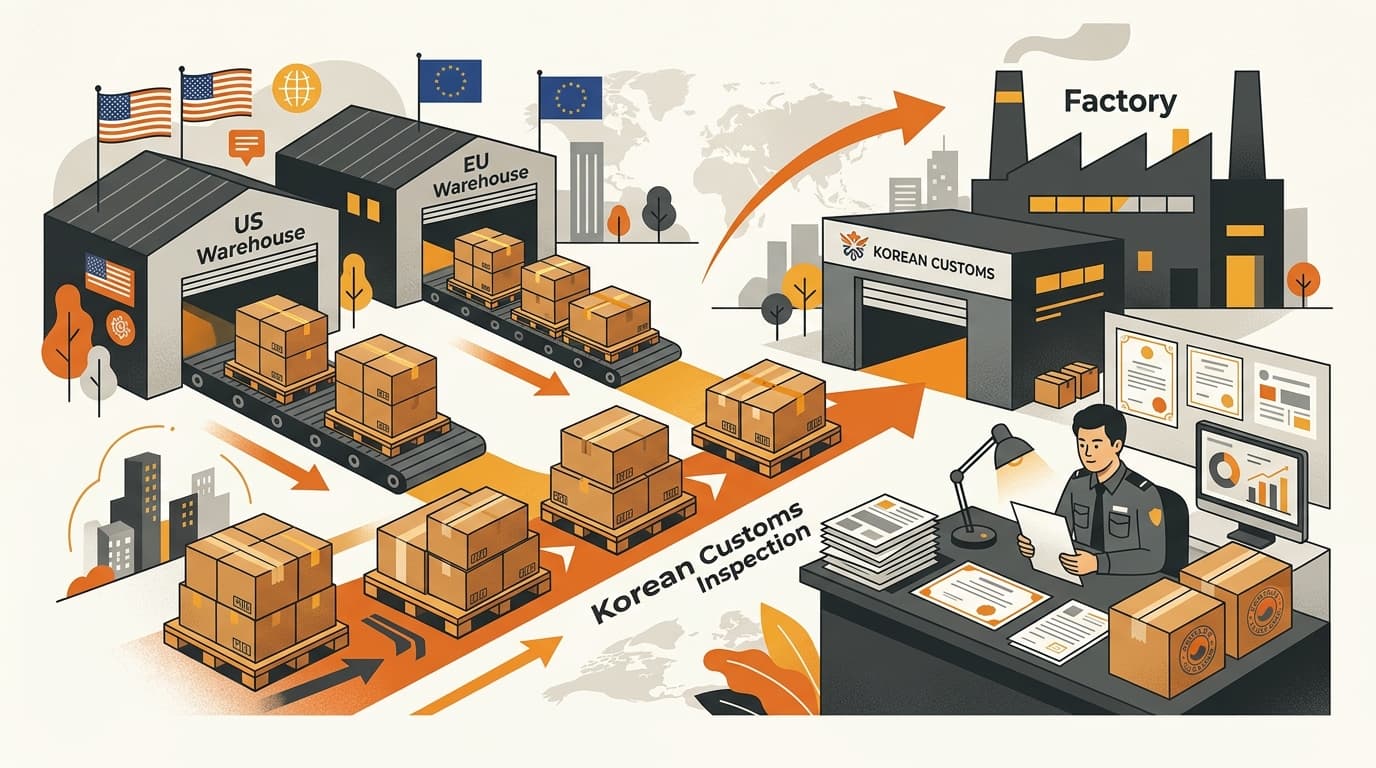
Korea FTA Duty: US/EU Warehouse Shipping Is Not Enough
A US or EU warehouse does not prove FTA origin in Korea. The importer must verify production, transit, and documents before claiming a lower customs duty rate.

Agentic Commerce: When AI Picks the Product, What Should Brands Selling in Korea Do?
AI shopping agents now search, compare, and sometimes buy for the shopper, and they recommend 1–5 products instead of a page of results. What Korea's Chamber of Commerce found in the US and Europe, and what it means for your product data in Korea.