
Rocket Growth vs. Cross-Border Selling in Korea: An Operator's Decision Framework
If your product is already being ordered from Korea through Amazon Global, Shopify international shipping, or a reshipper, you've got a decision to make. Not whether to take Korea seriously — the orders have already answered that — but how to serve that demand: continue selling cross-border, or go local through Coupang's Rocket Growth program.
Most articles on this topic describe the two models side by side and stop there. That's not enough to make an operating decision. This guide goes further: what each model actually lets you do, what foreign brands consistently underestimate, and a Korea-specific framework for sequencing the switch.
What "Cross-Border" and "Rocket Growth" Actually Mean
The two models are often compared as if they were interchangeable shipping options. They aren't. They are different commercial structures with different legal footprints, different consumer experiences, and very different revenue ceilings.
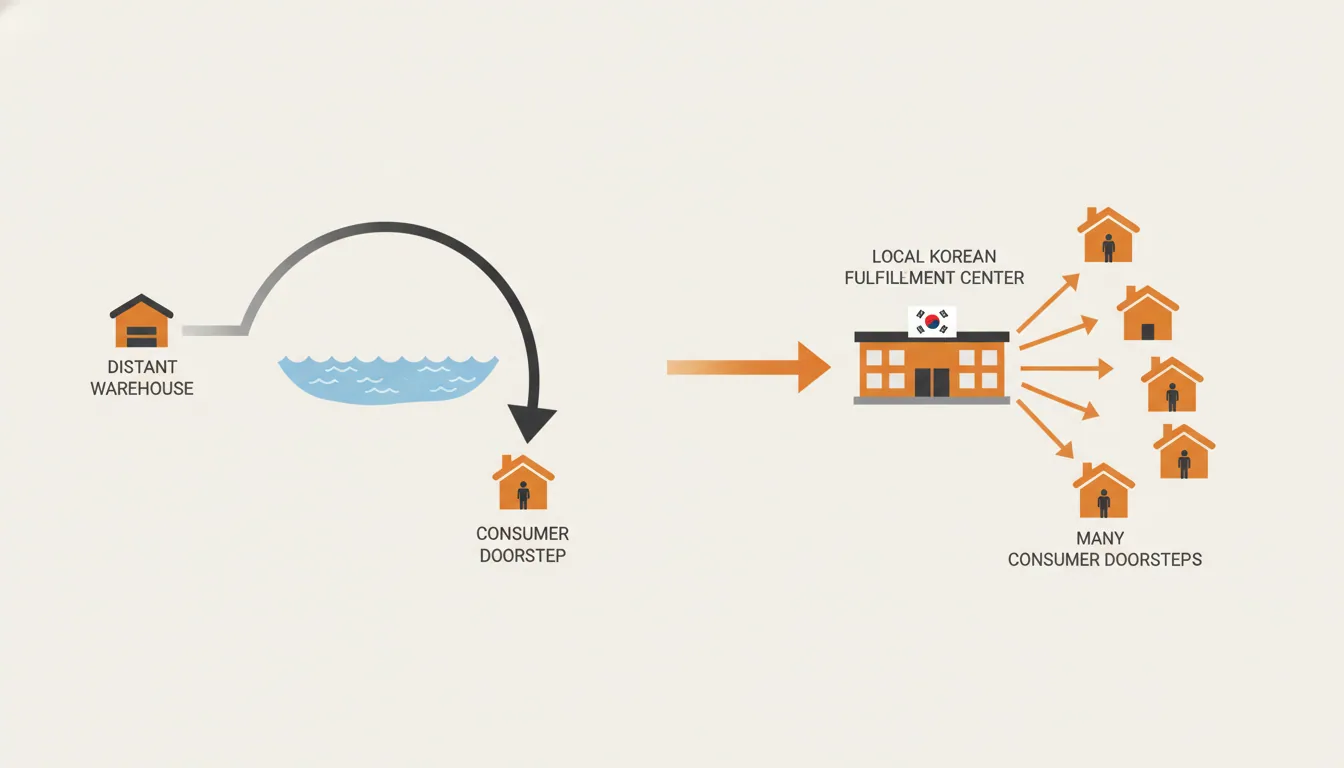
Cross-border selling means your product is sold from outside Korea and shipped to a Korean consumer on an international parcel. The buyer is typically the importer of record for their own shipment, customs is cleared per-parcel, and you have no Korean entity, no Korean VAT registration, and no local seller identity. You're visible to Korean consumers mostly through cross-border channels like Amazon Global and iHerb, through your own Shopify international checkout, or through Coupang's own cross-border program, Coupang Global Fulfillment (CGF), where Coupang delivers from a warehouse outside Korea in 3–5 days.
Rocket Growth (로켓그로스) is Coupang's 3PL and fulfillment program. Inventory is imported into Korea under a proper Importer of Record, stored in Coupang's warehouses, and delivered to consumers with Rocket Delivery speed — typically same-day or next-day. To use Rocket Growth, there must be a legal seller in Korea: either your own Korean entity (유한회사) or a partner's Korean entity acting as Importer of Record and Seller of Record on your behalf.
The key difference isn't shipping speed. It's that Rocket Growth puts your product inside the Korean commerce system, where the majority of Korean consumers actually shop. Cross-border keeps you outside it.
The Demand Signal, and the Ceiling You Hit Without Rocket Growth
Cross-border sales from Korea are one of the cleanest product-market fit signals a Western brand can get. Korean consumers shopping cross-border accept longer shipping times, per-parcel customs, limited Korean-language support, awkward returns, and no access to their default marketplace. When they buy anyway, the underlying preference for the product is strong.
If Koreans are buying your product through friction-heavy cross-border channels, that is not the size of your Korean market. That is the size of the slice willing to tolerate friction. Going local removes the friction and exposes the rest.
The ceiling on cross-border is structural, not a marketing problem you can solve with better ads:
- You are outside Coupang's next-day delivery. The majority of Korean e-commerce runs through Coupang, and Coupang shoppers expect Rocket Delivery. Most cross-border channels don't put you on Coupang at all, and Coupang's own cross-border program (CGF) delivers in 3–5 days, not next day.
- Delivery expectations don't match. Korean consumers routinely receive orders the same day or the next day domestically. A 7–14 day cross-border arrival feels slow by local standards.
- Returns are painful. International returns are expensive and slow. Without a local returns flow, conversion on any higher-priced SKU suffers.
- No Korean-language trust layer. Product pages, reviews, and customer service are typically not fully localized on cross-border channels.
- Price legibility is poor. Duties, shipping, and FX make the final price unpredictable for consumers.
That ceiling is why brands with healthy cross-border demand still see dramatic step-changes when they launch locally with Rocket Growth: they move from serving the friction-tolerant minority to serving the default Korean shopper.
What Foreign Brands Usually Underestimate
This is the section most comparison articles skip. The model switch is not just "ship in bulk instead of ship per parcel." It's a move from consumer-level commerce to commercial-level operations in Korea. Foreign brands consistently underestimate six things.
1. Import compliance is category-specific and unforgiving. Electronics, cosmetics, food and supplements, children's products, and many other categories have category-specific certification regimes, including KC Certification where applicable. You can't ship product into a domestic Korean warehouse without the right paperwork, and "we'll figure it out in customs" is not a workable plan.
2. Inbound terms have to be settled before the goods ship. For local selling, someone has to pay duties and import VAT when inventory clears into the designated Korean facility — the shipper on Delivered Duty Paid (DDP) terms, or the Korean importer on Delivered at Place (DAP) terms, as your contract sets. Deciding who pays is a mandatory operating step once you cross from cross-border into local fulfillment.
3. IoR and SoR are real legal roles. The Importer of Record is legally responsible for the goods entering Korea, and the Seller of Record is the legal seller on the marketplace. These are not clerical designations. They determine who the Korean authorities, Coupang, and consumers look to when something goes wrong. You either need your own Korean entity to hold these roles, or a partner whose entity does.
4. Rocket Growth has its own unit economics. Storage, fulfillment, returns handling, and other operating fees come out of your margin. These are separate from Coupang's selling commission. Brands that sized their Korean P&L on cross-border pricing often find their unit margins compress once Rocket Growth costs are layered on top of platform fees and Korean VAT.
5. Korean-language CS is a conversion lever, not overhead. Response speed, tone, and review management materially affect sales velocity on Coupang. Treating CS as a cost center rather than a growth input is a common mistake.
6. Listings have to be built for Korean shoppers, not translated. A literal translation of a U.S. or European product page rarely performs. Korean product detail pages are long, image-heavy, benefit-led, and trust-signal-dense. The localization work sits between marketing and operations and usually falls between the cracks.
“Cross-border tells you whether Korean consumers want the product. Rocket Growth tells you whether your operation can actually serve them.”
Kontactic — Managed Market Entry Operator

A Korea-Specific Decision Framework
Here is how we'd actually think about the choice. The decision is rarely "cross-border or Rocket Growth" in the abstract. It's "what should we do in the next 90 days, and what are we committing to do in the 6–12 months after that?"
Stay on cross-border when…
- You're still validating whether Korean demand exists at all. Don't import inventory to answer a question cross-border can answer for you.
- Volumes are low enough that the fixed cost of entity setup, certification, and inventory pre-positioning doesn't earn back in a reasonable horizon.
- Your category faces a heavy certification burden (for example, strict KC Certification pathways) and you haven't budgeted the lead time.
- You are not yet prepared to operate in Korean — product pages, CS, and review responses — at the level Korean consumers expect.
Move to Rocket Growth when…
- Cross-border demand is consistent and growing without any local marketing spend. That's a structural signal, not a spike.
- Your category is one where delivery speed and local returns materially change conversion. Beauty, health and wellness, food, and consumables almost always fit.
- You can commit real inventory to Korea. Rocket Growth loses its advantage if stockouts are frequent.
- You have a plan — internal or via an operator — for IoR, SoR, VAT filing, customs coordination, Korean CS, and listings.
Separate "fast" from "foundational"
A useful clarifying move is to split the work into what can start immediately versus what requires full local infrastructure:
- Fast (weeks): Launching under a partner's Korean entity that already holds IoR and SoR authority; publishing localized Coupang listings; running initial Korean-language CS; beginning a first Rocket Growth inbound for a small SKU set.
- Foundational (months): Establishing your own Korean entity (유한회사), completing category-specific certifications, setting up VAT filing and settlement/remittance flows, building a durable marketing engine including Coupang PPC and off-site channels, and structuring review campaigns.
Many brands we work with start fast and build foundational in parallel. Kontactic's services map onto the same split. Spark puts a brand's goods under Kontactic's Korean entity as Importer and Seller of Record, so the brand doesn't set one up: on Coupang through Spark Subscription, which is open only to Coupang-approved sellers in mainland China, or for one defined project, such as B2B supply, through Spark Project. Blaze is for brands that want their own entity, with Kontactic operating Layer 1 (Entity Administration), Layer 2 (Commerce Operations), and Layer 3 (Growth Strategy & Marketing). And for brands that want to stay cross-border, Direct runs the brand's Coupang cross-border store on CGF — for brands shipping from the US, Europe, Japan, mainland China or Hong Kong.
Launch Sequencing: The Part Most Guides Skip
Marketing timing is where brands burn money if they move in the wrong order. A good Korea launch sequence looks roughly like this:
Phase 0 — Pre-inbound (before a single unit arrives in a Korean warehouse). Finalize certification. Lock inbound terms (DDP or DAP). Draft Korean product pages with real category keywords, not translations. Decide which SKUs go first; a narrower initial catalog converts better than a full range.
Phase 1 — Soft launch on Rocket Growth. Your listings should go live only when inventory is actually in Coupang's warehouse and Rocket Delivery is active. Premature listings without Rocket Delivery badging train the algorithm and consumers on the wrong signal. Run light, controlled PPC to start gathering keyword data and early reviews. Keep pricing stable; don't open with aggressive discounting you can't sustain.
Phase 2 — Review and ranking build. Early reviews disproportionately affect long-term ranking on Coupang. Structured review campaigns, CS responsiveness, and a clean returns flow matter more than paid media in this window. This is also when Korean-language listing iteration pays off the most.
Phase 3 — Scale. Once reviews, ranking, and unit economics stabilize, scale PPC, expand SKUs, and layer off-site marketing to drive branded search back into Coupang. This is where most of the 10–20x step-change over cross-border baselines actually materializes.
Phase 4 — Optimize and expand. Broaden to other domestic channels once Coupang is healthy. Cross-border channels can be retired or repositioned as reach channels rather than primary revenue.
Don't turn off cross-border the day you go live locally. Run both in parallel long enough to confirm Rocket Growth inventory depth, fulfillment quality, and CS flow are actually stable. Then migrate the demand.
The Bottom Line
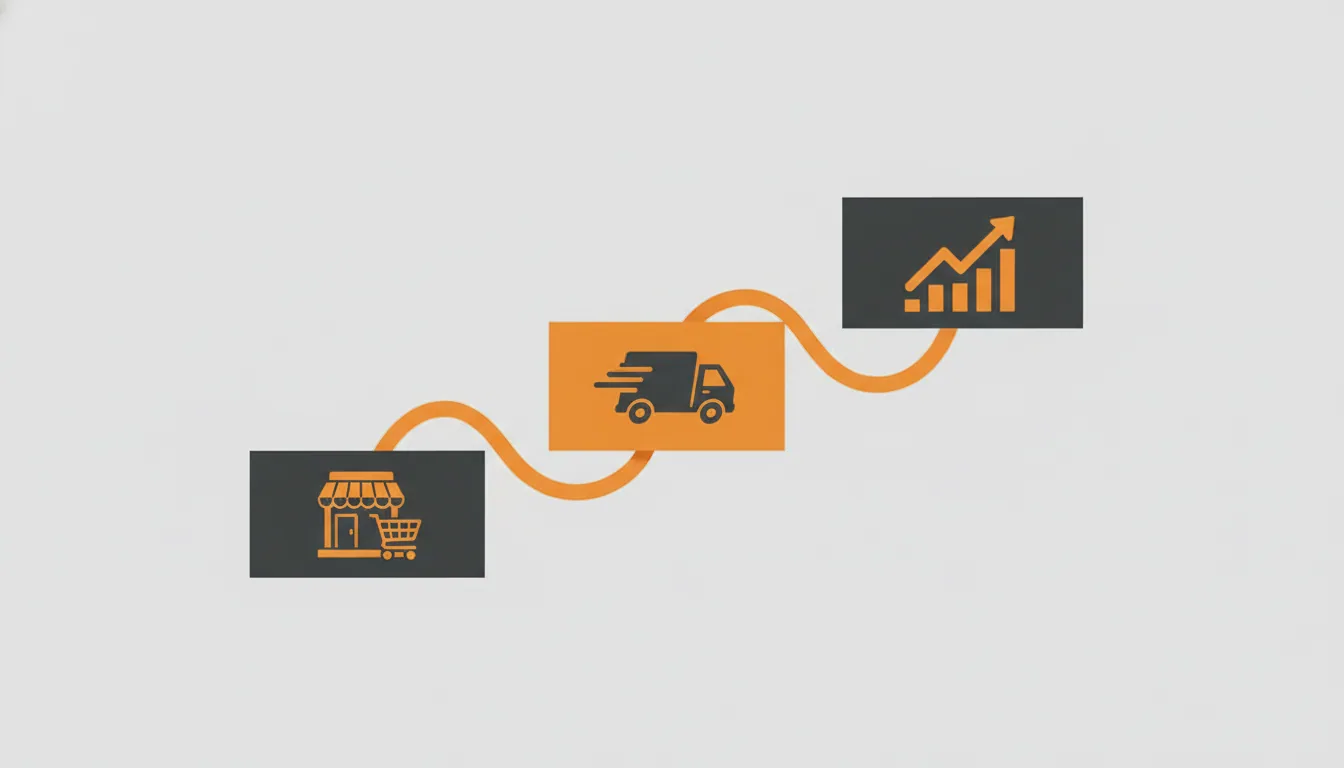
Cross-border selling and Rocket Growth are not competing options, and neither has to come first. Cross-border is a light way to prove the demand exists. Rocket Growth — with the right entity, certification, and operational stack behind it — is how that demand becomes a real Korean business, and a brand that already has Korean demand, partners, or an entity can start there on day one.
The brands that win in Korea treat the transition as an operating project, not a marketing initiative. They accept that import authority, selling authority, localized listings, Korean CS, and inventory depth have to be solved before scale is attempted. And they sequence the launch so that every phase has the infrastructure it needs before the marketing spend arrives.
If you already have the demand signal, the question isn't whether to localize. It's how fast you can do it without breaking the parts that don't forgive mistakes.
Planning your move from cross-border to Rocket Growth?
Kontactic operates the full local stack for Western brands entering Korea — entity, import authority, Coupang operations, and growth. Tell us where you are and we'll map the fastest safe path.
About the author
Korean and global e-commerce operators with 15+ years of cross-border experience, led by CEO Isaac Lee — KOTRA-certified consultant and official lecturer for Seoul City and the Korea Customs Service. We run Korea market entry for overseas brands every day; this blog records what we learn in the field.
More about Kontactic →Related Articles

Coupang Rocket Growth Stock: Can an ERP Set It via API?
An ERP cannot set Coupang Rocket Growth stock through the Open API; replenishment starts when Coupang physically receives a new inbound shipment of stock.
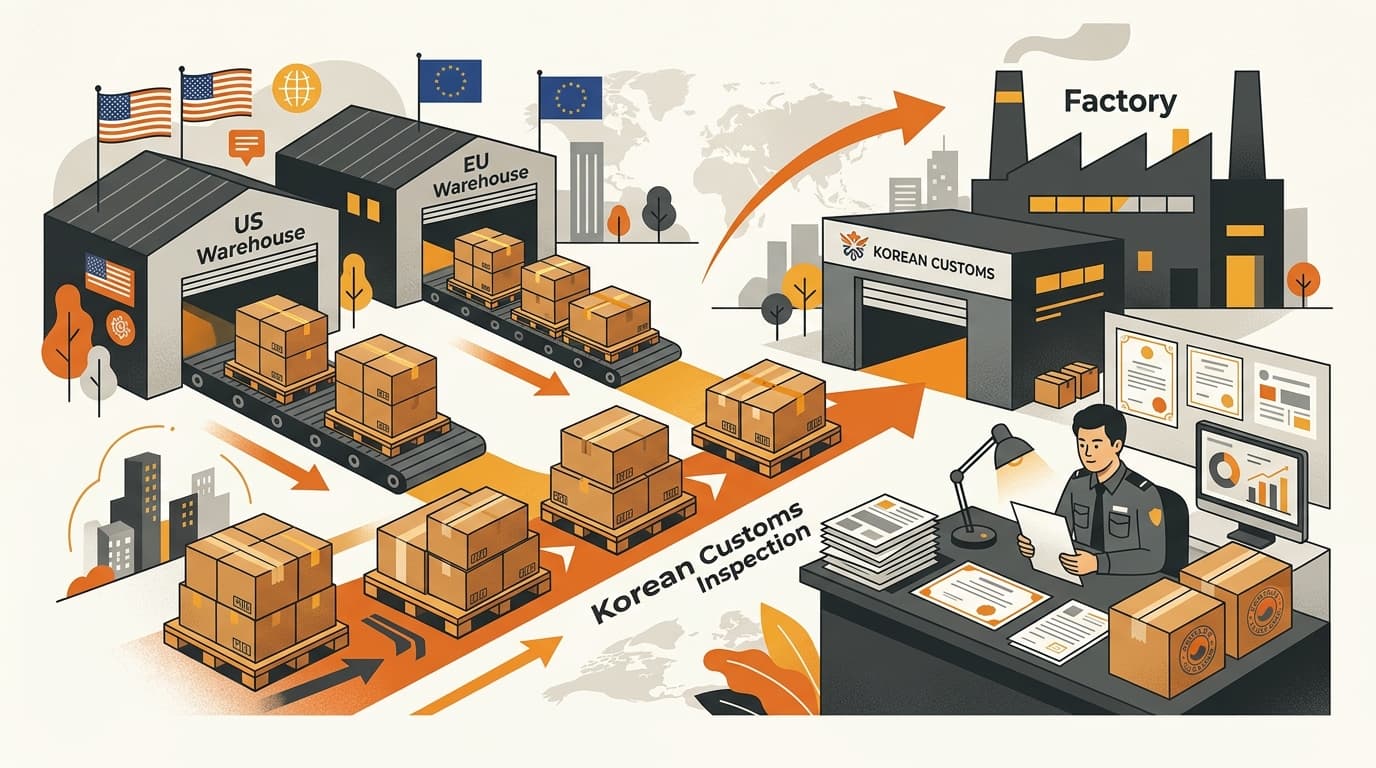
Korea FTA Duty: US/EU Warehouse Shipping Is Not Enough
A US or EU warehouse does not prove FTA origin in Korea. The importer must verify production, transit, and documents before claiming a lower customs duty rate.

Agentic Commerce: When AI Picks the Product, What Should Brands Selling in Korea Do?
AI shopping agents now search, compare, and sometimes buy for the shopper, and they recommend 1–5 products instead of a page of results. What Korea's Chamber of Commerce found in the US and Europe, and what it means for your product data in Korea.