Selling Pet Food on Coupang: Korean SoR Requirements
The short answer is yes — if you want to sell pet food locally on Coupang with Rocket-speed delivery, Korean-language listings, and Coupang-handled returns, you need a Korean Seller of Record. That role is filled one of two ways: your own Korean limited company (유한회사), or a partner's Korean entity acting as SoR on your behalf. You can also list cross-border without a Korean SoR via Coupang Global Marketplace, but that is a different product, a different customer experience, and — for pet food specifically — a different regulatory posture.
This guide is for founders and heads of international at Western pet brands who already see Korean cross-border orders trickling in and are trying to decide what to actually do about it.
What "Seller of Record" means on Coupang
The Seller of Record (SoR) is the entity Coupang lists as the seller on the product page and in the receipt. It is the entity that issues the tax invoice, takes the consumer-facing legal responsibility, and receives settlement funds from Coupang.
There are two practical configurations for a foreign pet brand:
- Your own Korean entity is the SoR. You incorporate a 유한회사, register for VAT, open a Korean bank account, get a mail-order sales registration number, and onboard to Coupang WING. You — or your operating partner — run it.
- A partner's Korean entity is the SoR. You ship inventory DDP to that partner's entity, which acts as Importer of Record and Seller of Record. You don't incorporate in Korea.
These two are the local paths. If you're not ready to incorporate and don't have a Korean operating partner yet, there's a third option: cross-border listings (Coupang Global Marketplace), where the SoR is your foreign entity and the product ships internationally on each order. That's fine for validation; it is not the same business as a local Coupang listing.
Pet food is a licensed import category, not a regular one
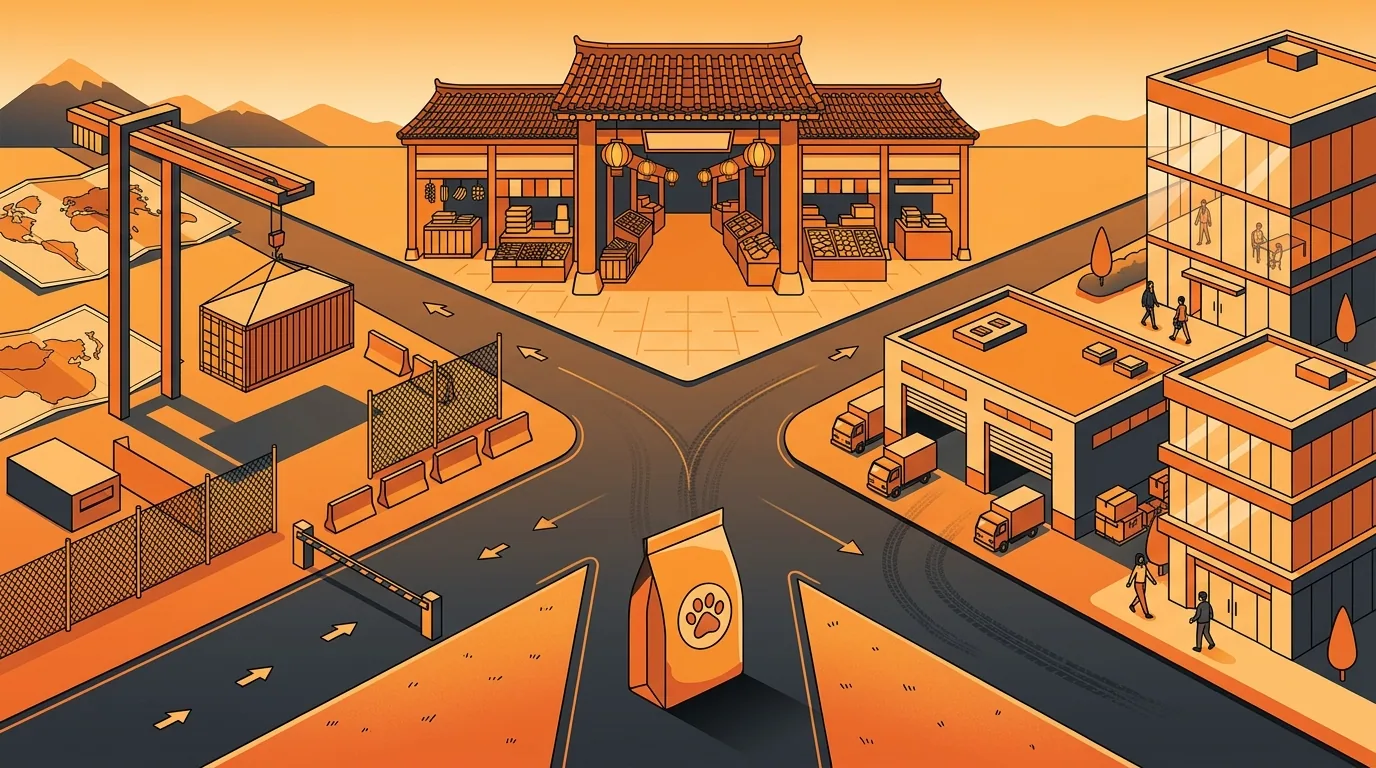
Before deciding on SoR structure, understand that pet food is not a freely importable category in Korea. It sits under animal-health and food-related regulation, which means import registration and labeling obligations beyond what a generic consumer-goods import would face. Treatments, ingredients of animal origin, and feed-grade classification all matter, and the rules can shift by HS code and source country.
In practice, this is similar in shape to how Korea handles human food and hygiene products — a licensed import lane with category-specific filings — and the work doesn't go away just because you're listing on Coupang. We've written separately about how this licensed-import logic plays out for food and hygiene products entering Korea, and the same instinct applies here: assume there is a registration step, plan for it, and don't let your launch timeline depend on it being fast.
Don't confuse KC Certification with pet-food import registration. KC (KC 인증) covers electrical and consumer-product safety. Pet food sits under a different regulatory track — animal feed and food-related rules — administered by different agencies. Some of your accessories (a smart feeder, a USB-charged water fountain) might separately need KC or EMC compliance.
Cross-border vs. local: choose by where your demand actually is
Most founders ask the SoR question before they've answered the prior one: should you even be listing locally yet?
Cross-border on Coupang Global Marketplace is genuinely useful as a validation channel. It lets you see whether Korean consumers will actually pay your price for your SKUs, in your category, before you commit to entity setup, import registration, and inventory at a Korean 3PL. But cross-border has structural ceilings — multi-day delivery, limited returns, English-leaning listings — that cap how big the channel can grow. Korean consumers overwhelmingly buy locally, and the gap between cross-border revenue and local revenue for the same brand is often an order of magnitude or more. We've laid out the full reasoning in why cross-border orders understate your Korea opportunity.
The decision rule we use with brands:
- Validate cross-border first if you have no Korean order history and want a low-commitment read on demand.
- Go local if you already see consistent cross-border orders, repeat buyers, or unsolicited inbound from Korean retailers and creators.
For most pet food brands with proven Western cross-border demand, the answer is to go local — but to sequence the work properly so you don't pay for inventory and ad spend before the operations can convert it.
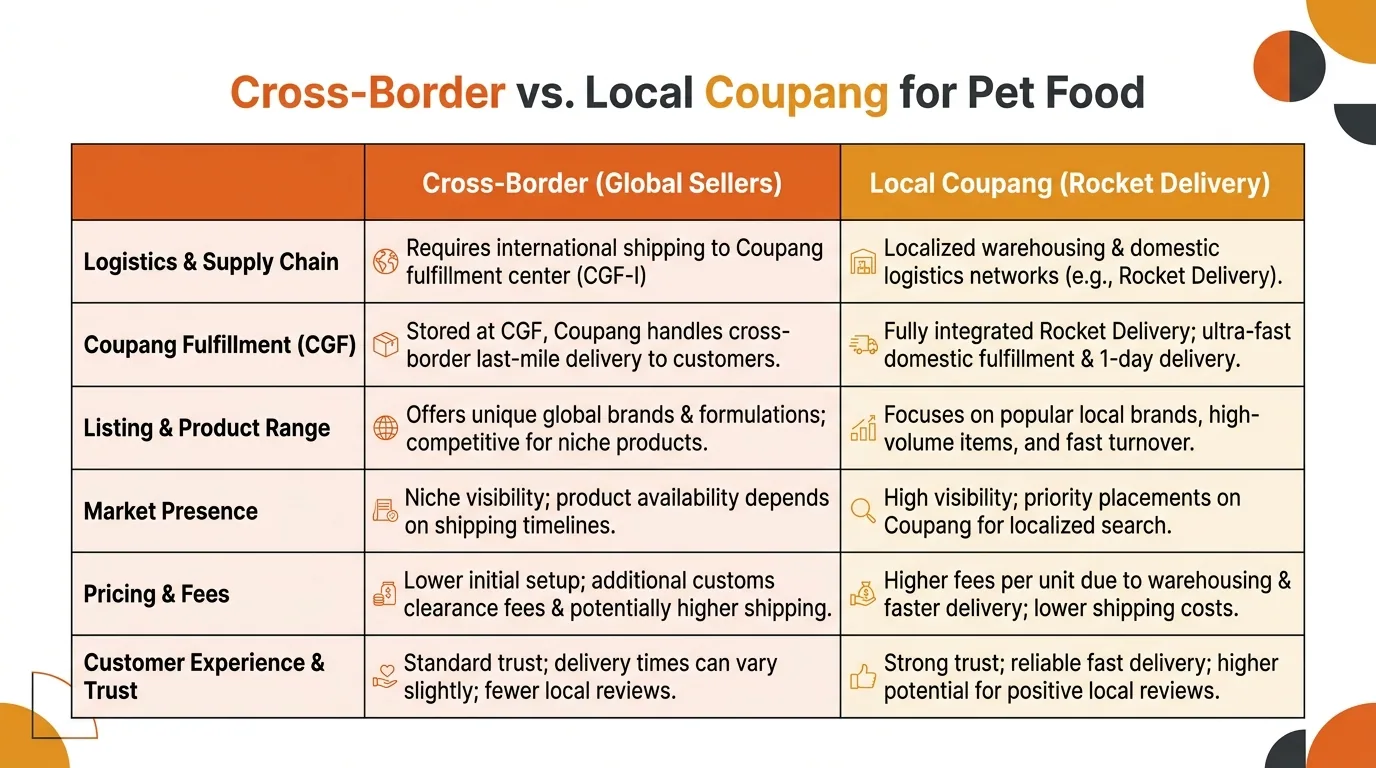
We've written a fuller decision framework on Rocket Growth vs. cross-border selling in Korea for brands trying to time the switch.
Demand validation and timing
Top guides on Coupang for foreign sellers tell you how to register an account. They rarely tell you when to do it. For pet food, the timing inputs we look at are:
- Cross-border order density — are you seeing Korean orders monthly, weekly, or daily? Repeat buyers matter more than absolute count.
- Korean search interest — Naver and Coupang search trends for your brand or close substitutes in Korean.
- Comparable-brand local presence — if your category peers already sell on Coupang locally with reviews and Rocket badges, the demand path is proven; you're choosing whether to compete in it.
- Inventory math at landed cost — DDP freight plus Korean import duties plus VAT plus Coupang Platform Fees plus Rocket Growth fulfillment. Pet food is heavy, low-priced-per-kg, and frequently bought; that combination is unforgiving on freight and storage costs unless you've negotiated DDP carefully and chosen SKUs that reward case-pack purchases. If unit economics only work at high volume, you need confidence in demand before you commit.
In our experience, brands underestimate point 4. The pet food category looks like a strong fit for Korea on the demand side — recurring purchases, premium positioning, willingness to pay for quality — but the unit economics are tighter than founders expect once weight-based fulfillment fees and case-pack pricing enter the model. Run the landed-cost spreadsheet before you run the launch plan.
Localized PDP and Korean-language conversion
This is where most foreign brands lose conversion — long before the ads even run.
Coupang's local marketplace is overwhelmingly Korean-language. A Korean shopper opening your product page expects:
- A localized Product Listing: translated title, bullet specs, and description optimized for Coupang search.
- A full-length Product Detail Page (PDP) — a tall, image-heavy, conversion-optimized vertical layout that's standard in Korean e-commerce, typically 20–30 screens of scrollable content. This is graphic design work, not translation.
- Korean-language reviews, Korean-language Q&A responses, and Korean customer service.
A direct translation of your US PDP will read as foreign, and Korean shoppers notice immediately. For pet food specifically, the PDP needs to communicate sourcing, ingredient origin, feeding guidance, and any Korea-specific labeling — in a layout that signals "this brand takes Korea seriously."
PDP creation is a separate, one-time deliverable in our model — it sits alongside the operating layers rather than inside them — because it is craft work that materially moves conversion. You can run a local Coupang listing without a full PDP, but conversion will be lower than it should be, and ad spend will compound the problem.
Marketing and launch sequencing
The most common founder mistake we see is starting paid spend before the operation is ready to convert it. We've covered this at length in operational readiness before ad spend, and pet food is one of the categories where it bites hardest because the buying cycle is repeat-purchase: a poor first experience kills lifetime value, not just the first order.
A workable sequence:
- Entity, IoR, and import registration in place. Your Korean SoR exists, your pet food import filings are accepted, and your DDP inbound is clearing customs.
- Inventory landed at Rocket Growth. Coupang's 3PL (로켓그로스) is holding stock and ready to fulfill same- or next-day.
- Localized PDP live. Listing copy, full PDP, KR-language CS macros, and review-response templates are ready.
- Soft launch. Organic listing live, a small seed of reviews via permitted review campaigns, CS volume monitored.
- Paid Coupang search and display. Spend turned on only after conversion rate is measured against a real PDP, not a placeholder.
- Off-Coupang amplification. Naver SEO, creator seeding, and external channels.
Skipping straight from step 1 to step 5 is how brands burn six-figure budgets and conclude — wrongly — that Korea didn't work.
“Foreign brands don't usually fail in Korea because of compliance. They fail because they turn on ad spend before the PDP, the reviews, and the fulfillment can carry the traffic.”
Kontactic editorial — Operating notes

Rocket Growth, fulfillment, and returns
Once you're a local SoR, fulfillment is the operating reality you live with daily. Most foreign brands selling pet food locally use Rocket Growth (로켓그로스) — Coupang's third-party logistics service that handles warehousing, last-mile delivery, and returns processing. Rocket Growth is what gives your listing the same-day/next-day delivery badge that Korean shoppers filter on.
Operationally that means:
- You ship DDP into the Rocket Growth warehouse, not to your own facility.
- Storage, fulfillment, and returns each have fees that net against your settlement.
- Returns are processed by Coupang on your behalf, which is a service quality lift for shoppers and an inventory-reconciliation responsibility for you.
These are the Other Platform Expenses that sit between your gross revenue and your net remittance, alongside Coupang's selling commission and 10% VAT.
To bring it back to the original question: to sell pet food on Coupang locally with Rocket Growth, yes — you need a Korean SoR. Either incorporate a Korean limited company (유한회사) and run it, or work with an operating partner whose entity acts as SoR while you stay a foreign brand on paper. To sell pet food on Coupang Global Marketplace cross-border, your foreign entity is the SoR — but you're operating a different, capped channel.
The harder question, and the one most search results don't answer, is which path to be on right now and how to sequence the move. That's a function of your existing demand signal, your unit economics at landed cost, and your readiness to run a localized PDP and a Korean-language CS function from day one. If you'd like a longer view on how Korean brands themselves think about this transition, our note on why Mardi Mercredi finally joined Coupang is a useful adjacent read.
Mapping your Coupang path for pet food
If you're weighing cross-border vs. local Coupang for a pet food brand, we can walk through the SoR, import registration, and sequencing decisions on a short call.
About the author
Korean and global e-commerce operators with 15+ years of cross-border experience, led by CEO Isaac Lee — KOTRA-certified consultant and official lecturer for Seoul City and the Korea Customs Service. We run Korea market entry for overseas brands every day; this blog records what we learn in the field.
Meet the Kontactic team →Related Articles
Can Coupang Buyers Pay Two Charges With Free Shipping?
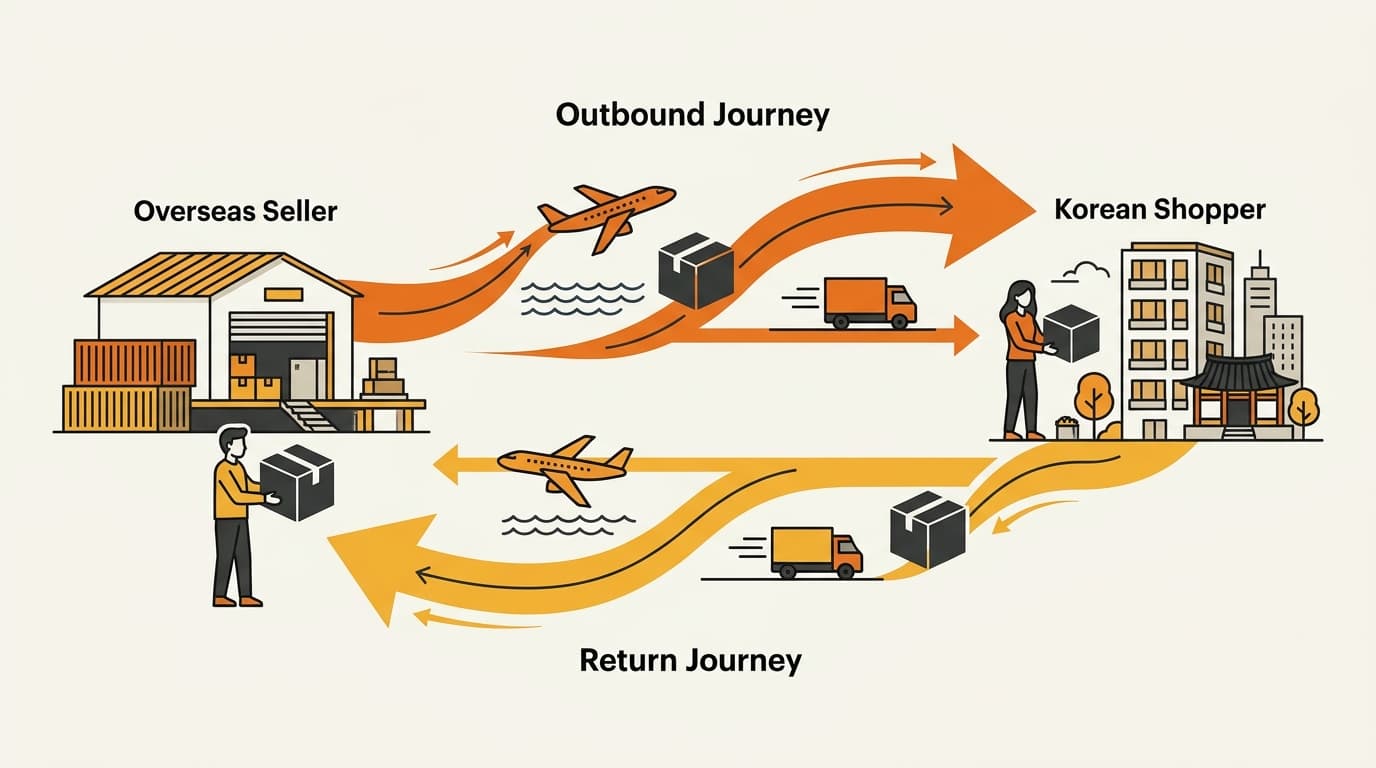
On Coupang, free shipping can still leave the buyer paying two return charges: the original delivery cost and the cost of sending the parcel back to the seller.
Coupang Product IDs: One ID Cannot Cover Every Variant
One Coupang product ID cannot cover every ERP variant; keep your brand SKU as the main key and map listing, option, edit, and order values to each SKU.

Coupang Rocket Growth Stock: Can an ERP Set It via API?
An ERP cannot set Coupang Rocket Growth stock through the Open API; replenishment starts when Coupang physically receives a new inbound shipment of stock.