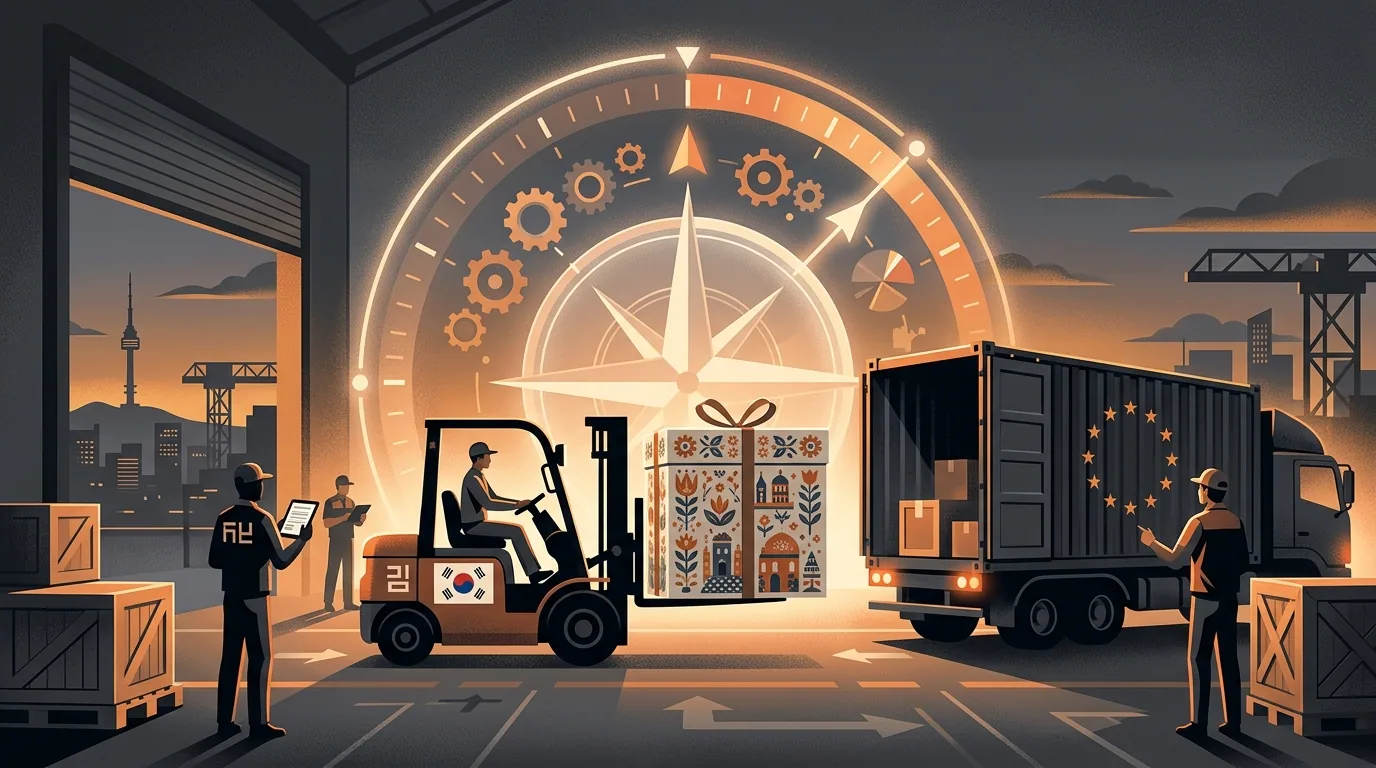
Coupang Launch Timeline: Home Goods & KC Certification
The short answer: a European home goods brand launching on Coupang should plan for roughly four to seven months from the day you start KC certification scoping to your first paid order. Some SKUs (a non-electrical ceramic vase) can be live in eight to ten weeks. Others (an espresso machine or a food-contact kitchen tool) realistically take six months or more. The variance is almost entirely on the compliance side, not the platform side.
This guide walks through the full sequence — what can run in parallel, what genuinely blocks, and the operational tradeoffs that EU brands tend to discover only after orders start moving.
What "home goods" actually means for KC certification
Home goods is not a single regulatory category in Korea. It is a portfolio of SKUs that fall into very different compliance buckets, and your timeline depends on the worst case in your first launch assortment.
In practice, a typical EU home goods catalogue splits into four buckets:
- Mains-powered electricals (lamps, kettles, fans, vacuums) — require KC electrical safety certification, often KC EMC, and testing at a Korean-recognized lab. This is the slowest path.
- USB- or battery-powered devices (small humidifiers, rechargeable lights) — generally avoid KC electrical safety but still need EMC compliance via a Declaration of Conformity. We've written about when a foreign EMC report is enough for these devices.
- Food-contact and kitchenware (cookware, cutting boards, mugs, utensils) — fall under MFDS food-contact registration, not KC. Different lab, different paperwork, similar lead time. For a fuller breakdown of how Korea treats food-contact and hygiene categories, see our note on importing food and hygiene products into Korea.
- Unregulated soft goods (textiles, ceramics without electrical components, decorative objects) — no certification required to clear customs or list on Coupang, though Coupang may still require basic product safety self-declarations for children's items.
The first practical question, before anyone touches Coupang, is which bucket each SKU lives in. In our experience, EU founders usually assume their entire catalogue is "the same" from a Korean compliance standpoint. It rarely is.
Phase 1: KC scoping (weeks 1–4)
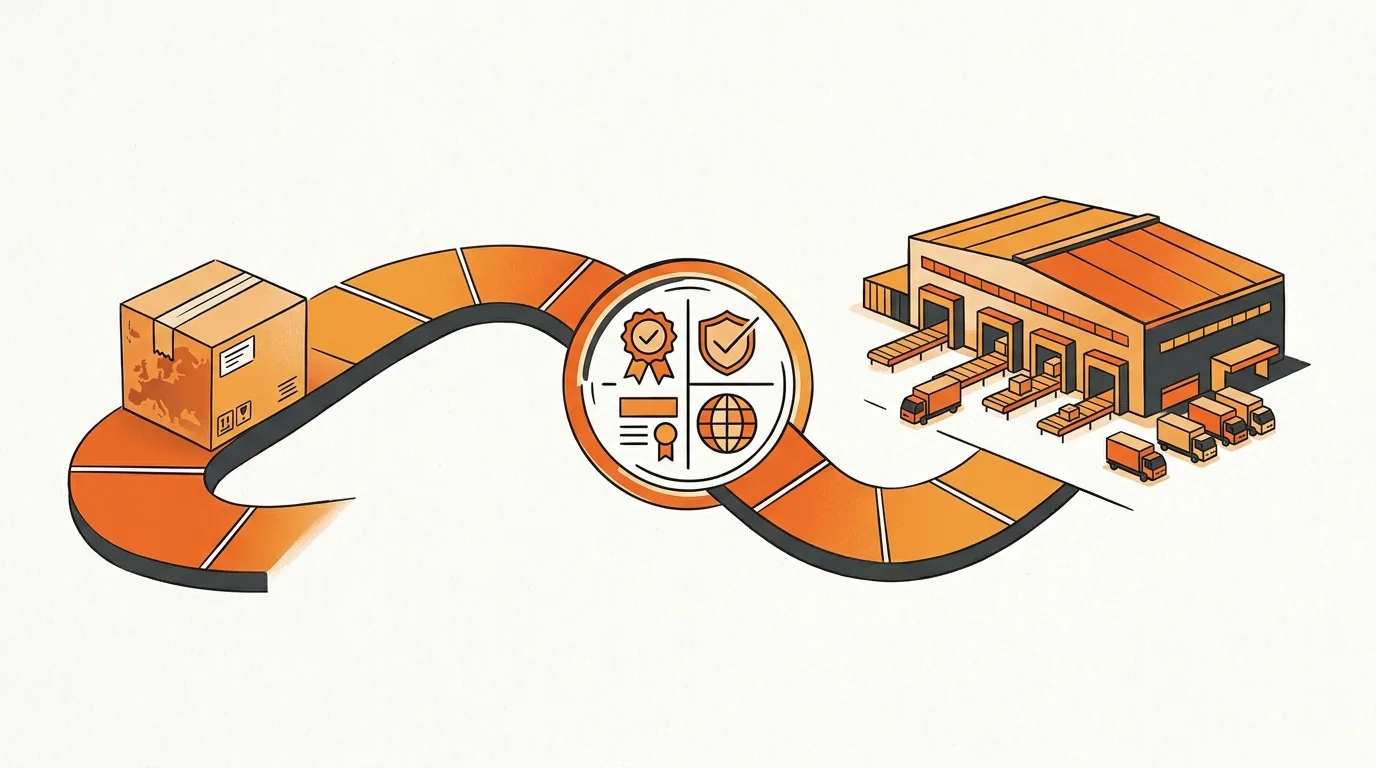
Before you commit to a Korean entity, an Importer of Record, or a Coupang strategy, you need an HS-code-level read on every SKU you intend to launch. This is the cheapest mistake to fix and the most expensive one to skip.
Scoping work in this phase typically covers:
- HS code classification per SKU
- Mapping each HS code to its Korean regulator (KATS for KC, MFDS for food-contact, KCC for radio/wireless)
- Identifying whether existing EU test reports (CE, EMC, LVD) can be reused or referenced
- A first read on whether any SKU is going to be a problem child — the one that drags the launch from four months to seven
The output of phase one is not a certificate. It is a defensible launch list — which SKUs go in the first wave, which get held back, and which get dropped because the certification cost exceeds the realistic Korean revenue.
For brands that want to validate Korean demand before locking in this scope, we generally recommend doing some cross-border selling first to read the signal, then scoping for the SKUs that actually move.
Phase 2: Entity and IoR setup (weeks 3–12, parallel)
This phase runs in parallel with phase one, not after it. The fastest launches we see are the ones where founders start entity work the same week they start KC scoping.
A local Coupang launch under your own brand requires both a Korean business entity (typically a Korean limited company, 유한회사) and an Importer of Record. Foreign-resident founders increasingly hit friction here that didn't exist five years ago — see our note on why setting up a Korean entity as a non-resident foreigner got harder and the related issue of Korean corporate bank accounts as the last wall.
Two practical realities in this phase:
- Entity registration itself is fast (roughly 10–14 business days at the court registry once documents are in order). Bank account opening is what stretches the calendar.
- You can use a partner IoR before your own entity is fully operational. This is the lever most EU brands miss — you do not have to wait for your own entity to be bank-ready before product physically lands in Korea. For a single-SKU pilot, selling under an IoR partner without a Korean entity is a legitimate accelerator.
Phase 3: Certification execution and listing build (weeks 8–24)
This is the heaviest phase and the one with the most variance. KC electrical safety testing at a Korean-recognized lab typically runs 6–12 weeks once samples arrive in country. Food-contact registration with MFDS runs in the same range. Unregulated SKUs skip this entirely.
While certification is in flight, the commerce work happens in parallel:
- Korean-language product titles, descriptions, and Coupang SEO
- Localized Product Detail Page (PDP) design — the long, image-heavy 20,000-pixel vertical format Korean shoppers expect
- Coupang seller account setup tied to the Korean entity
- Pricing decisions (KRW pricing, VAT-inclusive)
The PDP is the part most EU brands underestimate. Korean conversion rates on a translated EU listing — even a competently translated one — are a fraction of what they are on a native-built PDP. See our analysis of this in the Korea market entry agency post for EU brands.
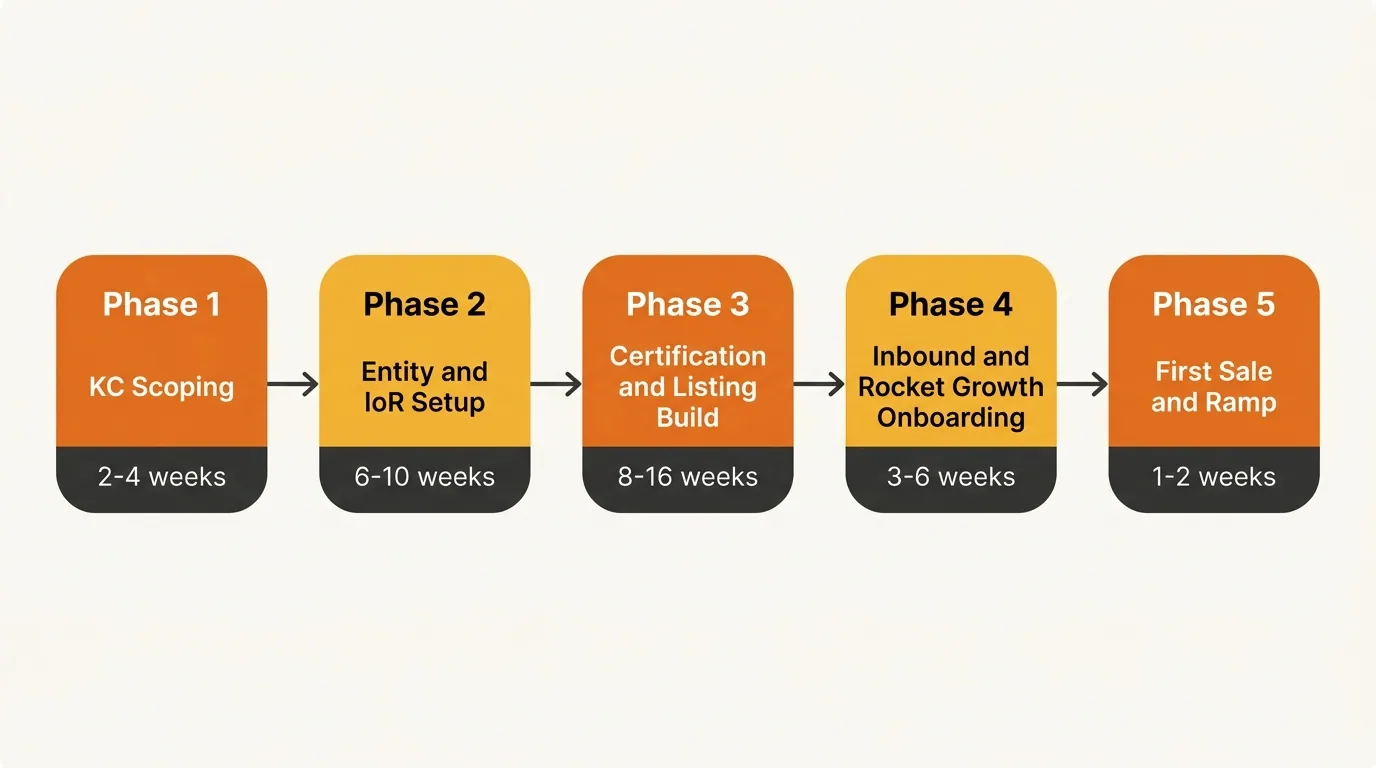
Phase 4: Inbound and Rocket Growth onboarding (weeks 16–22)
Once certifications are in hand and listings are built, the physical product moves. For a Coupang local launch, the typical path is DDP shipment from Europe to a Coupang Rocket Growth (로켓그로스) fulfillment center, where Coupang takes over warehousing, last-mile delivery, and returns processing.
Onboarding to Rocket Growth is a structured process — barcode formatting, inbound appointment, packaging spec compliance — and usually takes three to six weeks once the first inbound is scheduled. The work itself is bureaucratic. The friction comes from edge cases: a barcode that doesn't scan, a master carton that exceeds the weight cap, a SKU that Coupang's system tries to auto-merge with an existing listing.
The auto-merge issue is worth flagging specifically. Coupang's catalog system can match your new listing to an existing third-party listing of the same product, and that creates real downstream issues for foreign brands — we covered this in how Coupang item matching can trigger trademark complaints.
For founders weighing whether to go local at all versus stay cross-border longer, our Rocket Growth vs cross-border decision framework walks through the math.
Phase 5: First sale and the realistic post-launch timeline
First sale is not the finish line. It is the start of the operational phase that EU founders consistently underestimate.
A few things change once orders start flowing:
- Settlement timing. Coupang does not pay you on order date. The default is roughly the 20th business day of the month after the sale — close to 60 calendar days from order to cash. Compare options in our breakdown of Coupang settlement timelines.
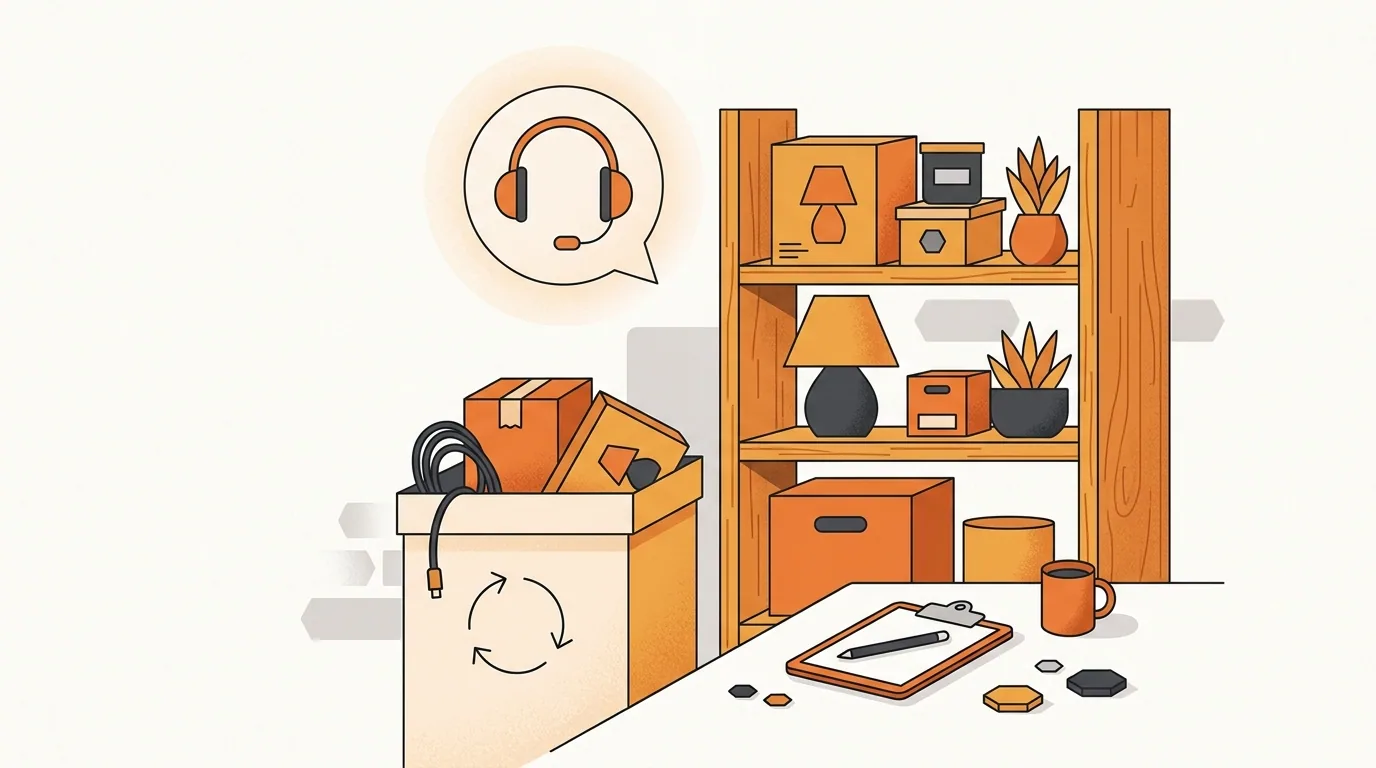
- Returns and CS in Korean. Korean buyers expect Korean-language customer service with same-day or next-day response, and they return at a higher rate than US or EU baselines for some home goods categories.
- Per-unit margin shifts. Going local typically improves volume dramatically but compresses margin per order — see the math in our IoR and 3PL margin guide and the more recent piece on three Coupang policy changes that reset Rocket Growth margins.
- Ad spend timing. Running ads on day one of launch is almost always wasted budget. We've argued this at length in operational readiness before ad spend.
The brands that launch well treat the first 30–60 days post-launch as a tuning window, not a growth window. Fix the listing copy, fix the PDP friction points, fix the return reasons — then turn on ads.
What to expect realistically
For a clean EU home goods launch — say, a six-SKU assortment with two electrical products and four unregulated soft goods — a realistic plan is:
- Months 1–2: KC scoping, entity formation kickoff, IoR partner selected, samples shipped to Korean lab
- Months 2–4: Certification testing in flight, PDP build, Coupang account setup, first inbound forecast
- Months 4–6: Certifications issued, listings live, first inbound to Rocket Growth, soft launch
- Months 6–7: Tuning, organic ranking, first paid ad campaigns
The brands that miss this window almost never miss because of Coupang. They miss because phase one was rushed and a SKU's compliance status surprised them in month four.
Cross-border vs. local: a decision framework for home goods specifically
For home goods, the cross-border vs. local question splits more cleanly than it does for, say, cosmetics. A few rules of thumb from our work:
- If your average order value is under USD 30 and the product is heavy or bulky (small homewares, candles, ceramics), cross-border shipping economics are brutal. Going local is usually the only viable path.
- If your AOV is over USD 100 and the product is light (premium textiles, small decorative objects), cross-border can work for a long time before local entry becomes worth the operational load.
- If even one SKU in your line requires KC electrical safety, the certification cost is sunk regardless of channel — at that point, the marginal cost of also launching the rest of the catalogue locally is small.
- If you have no Korean demand signal yet at all, neither model is the right starting point. Validate first. Reading the Korean market through high-engagement user data covers how we approach the validation question.
“The brands that win on Coupang aren't the ones with the fastest certification timeline — they're the ones who sequence certification, entity, listing, and inbound so the bottlenecks overlap instead of stacking.”
Kontactic operations team — Internal note
Mapping your Coupang launch sequence
If you're scoping a Korea launch and want a realistic month-by-month plan for your specific home goods catalogue, get in touch — we'll walk through the compliance, entity, and Rocket Growth sequencing with you.
About the author
Korean and global e-commerce operators with 15+ years of cross-border experience, led by CEO Isaac Lee — KOTRA-certified consultant and official lecturer for Seoul City and the Korea Customs Service. We run Korea market entry for Western brands every day; this blog documents what we learn in the field.
More about Kontactic →Related Articles

Korean KC for a Detachable Device Charger: Not Automatic
Does Korean KC cover a detachable charger? Not automatically. The final bundle and adapter evidence must match the Korean commercial SKU before import.
Can Coupang Handle Every Korean Buyer Inquiry? No—Seller Duties
Coupang may handle platform and fulfillment contacts, but sellers still own product questions, cancellations, returns, exchanges, and order exceptions.

Rocket Growth: Why Outbound and Return Locations Matter?
Rocket Growth stores and ships inventory, but sellers still need outbound and return records before product registration; each has a distinct seller-side role.