
Korea Pet Food Entry: Costs & Compliance 2024
Pet food entry in Korea costs less than most think — but only if you sequence the work correctly. A foreign pet food brand entering Korea pays for five things: import compliance and labeling, an entity or Importer of Record, marketplace operations on Coupang, fulfillment via Rocket Growth (로켓그로스), and Korean-language conversion assets.
Each line item has a known shape, but the order in which you spend matters as much as the totals. The brands that struggle in Korea usually got the sequence wrong, not the budget.
This guide is for founders and heads of international with proven Korean cross-border demand. You need a real cost-and-compliance breakdown before committing to a local entry. It keeps the basics every other 2024 guide covers — entity, VAT, KC — and adds the three angles those guides skip: cross-border versus local path, localized Product Detail Page (PDP) conversion, and launch sequencing.
Cross-border vs. local: the path decision most guides skip
Market-research firms usually rank highest on Korean pet food searches. They describe the size of the prize but not the operating model that captures it. The first real cost decision is whether to sell cross-border (parcel-by-parcel from your home warehouse) or to go local (clear customs in bulk, store inventory in Korea, sell as a Korean Seller of Record).
Cross-border keeps your existing operations intact. You ship one parcel per order, the consumer is the Importer of Record on small consignments under the de minimis threshold, and you avoid most Korean filings. The trade-off is conversion: shipping is slow and expensive, returns are painful, and you are not eligible for Coupang Rocket — which is the default consumer expectation in Korea.
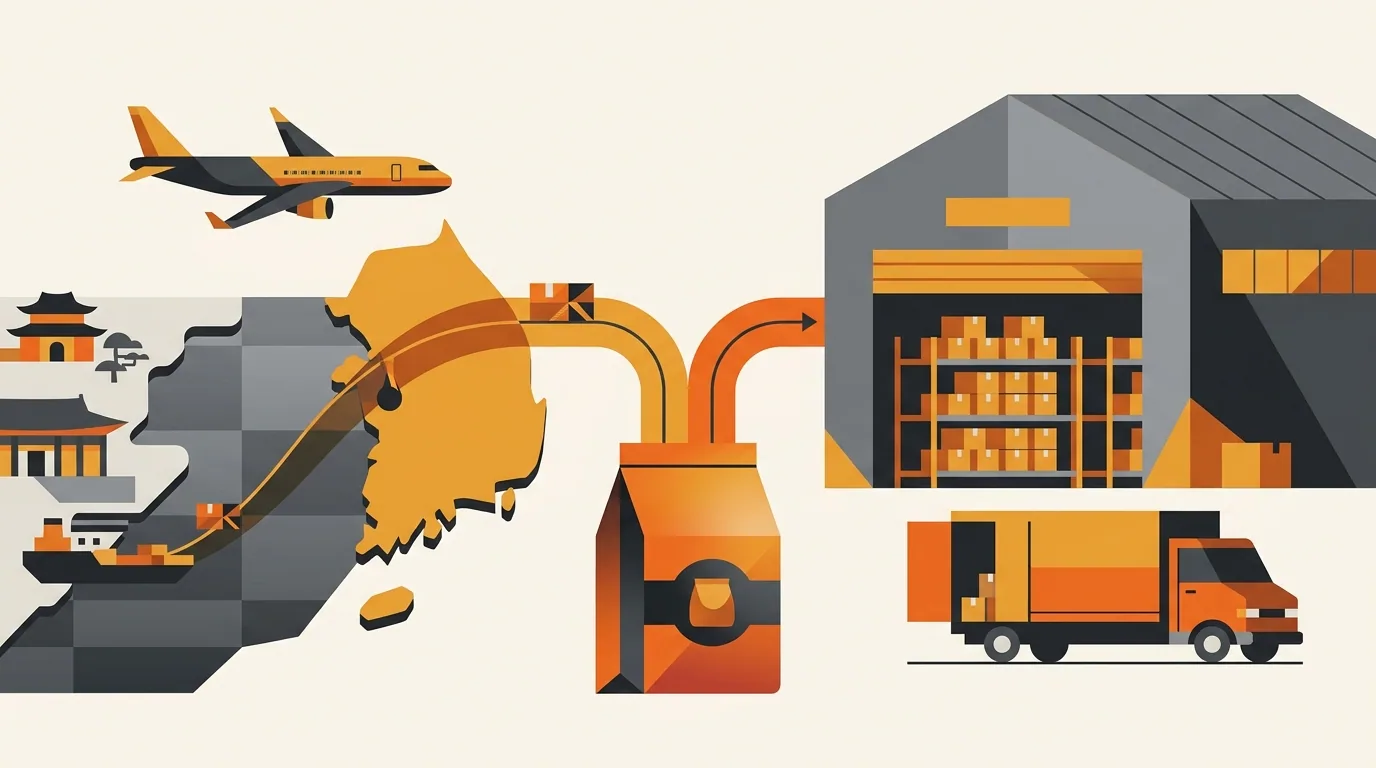
Local means a Korean entity (or a partner acting as Importer and Seller of Record), DDP shipments in pallet quantities, and inventory pre-positioned in Coupang Rocket Growth warehouses. Per-unit margin drops because of platform fees, fulfillment fees, and VAT. Order volume typically lifts substantially — we cover the math in How Coupang IoR and 3PL Change Your Korea Margins.
For pet food specifically, the local path becomes attractive earlier than for most categories. Pet food is heavy, repurchased on a monthly cadence, and price-sensitive — three properties that punish cross-border shipping economics. If your existing Korean cross-border revenue is already meaningful, Rocket Growth vs. Cross-Border Selling in Korea walks through how we frame the switch.
What pet food compliance actually requires
Pet food in Korea is regulated as feed (사료) under the Ministry of Agriculture, Food and Rural Affairs (MAFRA) and the Animal and Plant Quarantine Agency (APQA), not as a general consumer good. That puts it in a different compliance lane from skincare, electronics, or supplements, and means KC certification is not the right framework — it applies to electrical and child-safety categories. For pet food, the controlling steps are quarantine clearance, feed import notification, and Korean-language labeling that matches the registered ingredient and nutrient declarations.
In practice, this means:
- Quarantine pre-clearance for any animal-origin ingredients, with country-of-origin and facility eligibility checked against APQA's approved establishment list.
- Feed import notification filed before each shipment, declaring ingredient composition, guaranteed analysis, and manufacturer information.
- Korean-language label affixed before customs release, including product name, ingredients in Korean, guaranteed analysis, feeding guidelines, manufacturer, importer, country of origin, expiry, and storage instructions.
Brands often arrive with a US or EU label and assume an English-plus-sticker approach will pass. It will not, in our experience — the importing entity is on the hook if the Korean text does not match the registered formula. For the broader food and hygiene framework, see Importing Food and Hygiene Products into Korea.
The other point most guides flatten: certification clears the product, but it does not make you a local seller. To list on Coupang as a Rocket Growth seller, you also need a Korean Seller of Record. That is a separate question from compliance, and we cover it specifically for this category in Selling Pet Food on Coupang: Korean SoR Requirements. The general entity-vs-certification confusion is unpacked in KC Certification and Coupang: A Korean Entity?.
A line-item cost map for 2024–2026
Treat the following as a structural cost map, not a quote. Actual amounts depend on SKU count, ingredient origins, shipment frequency, and channel mix.
One-time setup
- Korean entity formation (or onboarding to a partner's IoR/SoR), including bank account work — opening corporate accounts is often the slowest step.
- Feed product registration and label translation per SKU.
- First DDP freight to Korea (ocean LCL or FCL; air for sample/launch SKUs).
- Coupang account onboarding and Rocket Growth inbound preparation.
- Localized PDP design per SKU (the long, scrollable 20,000-pixel detail page that drives Korean conversion).
Recurring per-shipment
- Customs duty and 10% VAT on landed value (VAT is recoverable through your Korean entity if you have one and is settled at filing).
- APQA quarantine inspection fees and feed notification handling.
- 3PL inbound and Rocket Growth storage fees.
Recurring monthly
- Coupang platform commission on gross sales.
- Rocket Growth fulfillment, returns handling, and other operating fees.
- Korean-language Tier-1 customer service.
- Marketing — both Coupang on-platform PPC and off-site.
- Service fees if you use a managed operator (Spark, Flame, or Blaze in our model).
For a clean breakdown of who funds what under a managed model — and the specific items that always sit on the brand side regardless of tier — read Who Pays for What in Korea: Operating Costs Explained.
Localized PDP and Korean-language conversion
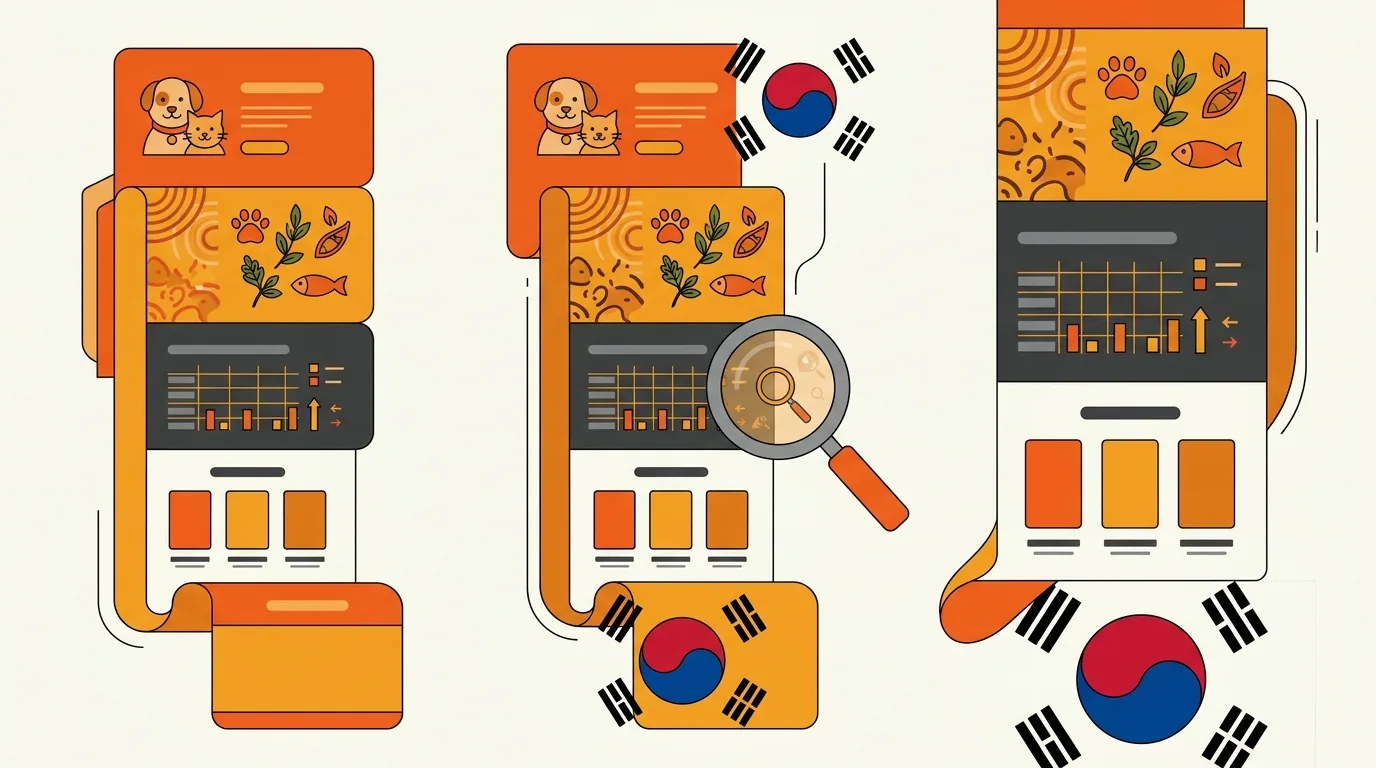
This is the angle the market-research pages never touch. It shapes whether your unit economics work. A Korean Coupang listing is not a translated Amazon listing. The standard text-based product listing — title, bullets, specs — is the floor. The PDP is a separately designed, full-length visual page that runs roughly 20,000 pixels tall, stitching together hero imagery, ingredient storytelling, feeding charts, before/after panels, comparison tiles, and review highlights.
For pet food, the PDP has to do three jobs at once:
- Trust transfer. Korean buyers research foreign pet food carefully. Show certifications, manufacturing region, and ingredient sourcing visually, not as a wall of translated copy.
- Functional differentiation. Premium Korean pet food competes on functional claims — joint, dental, kidney, weight, coat. Your PDP needs a Korean-native articulation of which problem your formula solves, written by someone who reads pet category copy on Coupang every week.
- Feeding clarity. Korean households skew toward small dogs and indoor cats. A US feeding chart calibrated for 30 kg dogs misses the Korean market, where most pets are under 10 kg. Localize portions and life-stage guidance.
The cost of a high-quality PDP is real, but it amortizes across every order. Cutting this line item is the most common false economy we see in pet food entries.
Marketing and launch sequencing
Order matters. Spending on Coupang PPC before your listing is correctly localized, your inventory is in a Rocket Growth warehouse, and your reviews are seeded burns budget without compounding. The sequencing we recommend, in order:
- Compliance and entity in parallel. Feed registration timelines and entity timelines run in parallel, not sequentially. Start both on day one.
- Inbound the launch SKU set in pallet quantities. Air-freight a small launch quantity if you need to compress; ocean DDP for restock.
- PDP and listing live before any ad spend. A live but unoptimized listing with no PDP burns CPC.
- Seed reviews and operational baselines. First 30–60 days are about review velocity, fulfillment SLA, and CS response time, not GMV.
- Then turn on PPC and off-site. Once organic conversion is provable, paid acquisition compounds. Before that, it leaks.
We expand on this principle outside of pet food in Operational Readiness Before Ad Spend. The same logic applies here, with one wrinkle: pet food repurchase rates mean your first 90 days of reviews disproportionately shape lifetime channel economics.
The fastest way to waste your Korea pet food budget is to spend on ads before your PDP, your inventory in Rocket Growth, and your Korean CS are all live. Sequence the operational layer first.
Putting it together
A realistic Korea pet food entry budget in 2024–2026 is not a single number — it is a structured stack: compliance (feed registration, labeling, quarantine), import economics (DDP, duty, VAT), local operations (entity or IoR/SoR, Coupang account, Rocket Growth), conversion assets (PDP, Korean CS), and a sequenced marketing layer that turns on after the operations work.
Skip any of the layers and the others underperform. Get the order right, and the category does most of the work for you.
Market context: how big is Korean pet food, really
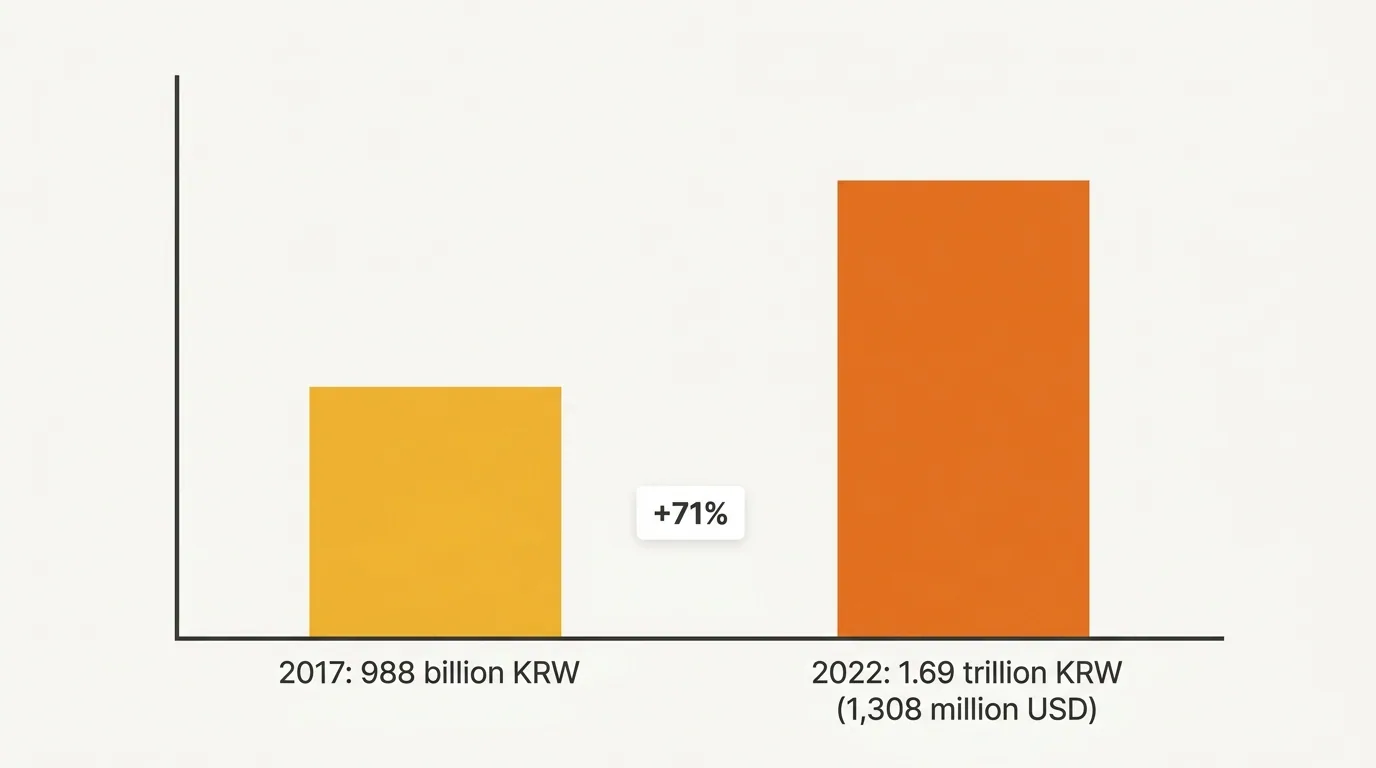
The most reliable public number comes from the USDA Foreign Agricultural Service. In 2022, Korea's dog and cat food market was 1.69 trillion KRW (about 1,308 million USD), up 71% from 988 billion KRW in 2017. Private trackers since then have published 2024–2026 estimates between roughly USD 1.2 billion and USD 1.86 billion depending on segmentation, but the direction is consistent: a still-growing premium category, with the highest growth concentrated in functional, fresh, and ingredient-led products.
For a foreign brand, the practical takeaway is not the headline number. Premiumization keeps absorbing imported product — but only when it is locally listed, locally labeled, and locally fulfilled. Cross-border alone caps you well below the curve.
Pricing your Korea pet food entry
If you want a structured cost map for your specific SKU set, ingredient origins, and channel mix, send us your product list and current Korean cross-border data. We will come back with a sequenced plan.
About the author
Korean and global e-commerce operators with 15+ years of cross-border experience, led by CEO Isaac Lee — KOTRA-certified consultant and official lecturer for Seoul City and the Korea Customs Service. We run Korea market entry for Western brands every day; this blog documents what we learn in the field.
More about Kontactic →Related Articles

Korean KC for a Detachable Device Charger: Not Automatic
Does Korean KC cover a detachable charger? Not automatically. The final bundle and adapter evidence must match the Korean commercial SKU before import.
Can Coupang Handle Every Korean Buyer Inquiry? No—Seller Duties
Coupang may handle platform and fulfillment contacts, but sellers still own product questions, cancellations, returns, exchanges, and order exceptions.

Rocket Growth: Why Outbound and Return Locations Matter?
Rocket Growth stores and ships inventory, but sellers still need outbound and return records before product registration; each has a distinct seller-side role.