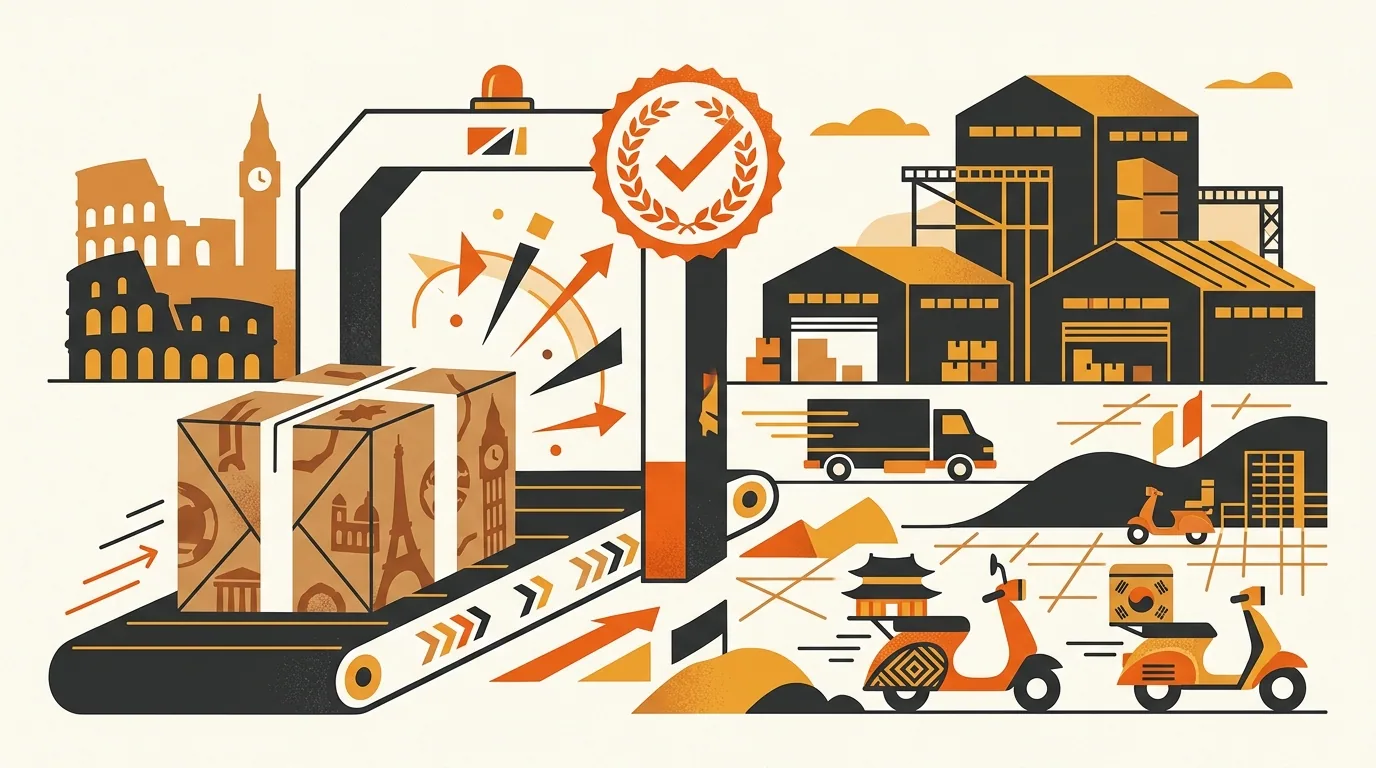
Korea Market Entry Agency: KC + Coupang for EU Brands
A Korea market entry agency that bundles KC certification with Coupang fulfillment is a single operator that handles import compliance, marketplace operations, and Rocket Growth (로켓그로스) logistics under one engagement. For EU brands, the appeal is obvious: instead of stitching together a customs broker, a certification consultant, a Coupang account manager, and a 3PL, you sign with one party. That operator owns the launch end to end.
The hard part is figuring out which version of "bundled" actually fits your stage. Some agencies bundle advisory work but hand off operations. Others operate Coupang accounts but don't touch certification. A few — the ones this query is really searching for — combine all of it: Importer of Record (IoR) authority, KC compliance research, marketplace listing, Korean customer service, and fulfillment.
This article is for the founder or head of international at an EU brand who already has cross-border traction in Korea and is now evaluating whether to go local. We'll cover what to look for in a bundled operator, how localized Product Detail Pages (PDPs) actually drive conversion, how Rocket Growth changes your fulfillment math, and a decision framework for cross-border vs. local Coupang entry.
What "bundled" really means in Korea
Most "Korea market entry" pages flatten the work into a five-step list. In practice, the work splits into three distinct layers, and each one can be insourced or outsourced separately.
Entity administration. Customs filings, VAT registration, bank administration, and serving as the IoR (the entity legally responsible for importing goods into Korea). This is bureaucratic work that depends on whether you set up a Korean limited company (유한회사) or use a partner's entity.
Commerce operations. Coupang account management, listing creation, Korean-language customer service, inventory coordination with Rocket Growth warehouses, and catalog maintenance. This is daily operating work.
Growth. Coupang PPC, off-site marketing, review campaigns, and conversion optimization. This is performance work that only matters once the first two layers are stable.
A real bundled operator does all three, or at minimum the first two. An advisory firm that helps you "navigate the Korean market" is doing none of them — they're producing a deck. That distinction matters enormously when a customs officer rejects your shipment at Incheon and someone needs to actually pick up the phone in Korean.

How KC certification actually fits into a launch sequence
KC certification (KC 인증) is category-specific mandatory safety certification required under Korean law. It is not a single test — it's a family of regimes (electrical safety, EMC, children's products, food-contact materials, etc.) that apply differently depending on your HS code and product specifics.
Brands underestimate two things about KC. First, it is not always required. Many cosmetics, apparel, and accessories products don't fall under any KC regime — they instead need MFDS notification, food import licensing, or no certification at all. Second, certification is a launch dependency, not a launch blocker. The right sequence is:
- Compliance research first. Identify which regulations actually apply to your specific SKUs. This is plain-English research work, not yet testing.
- Entity / IoR decision. Decide whether you'll use your own Korean entity or a partner's IoR. This affects who signs the certification application.
- Testing and registration. Where required, samples are sent to a Korean-accredited lab. Foreign test reports sometimes carry over — sometimes they don't, depending on the scheme.
- Coupang listing. Once certification is in hand (or confirmed not required), the listing can go live with the certification number visible.
- Inbound shipment. DDP (Delivered Duty Paid) inbound to the IoR's address, then transfer to Rocket Growth.
We've covered the certification-vs-entity interaction in more detail in KC Certification and Coupang: A Korean Entity?, and the EMC-specific carryover question in KC Certification for USB and Battery-Powered Devices.
A bundled agency that promises "KC certification in two weeks" without seeing your product is selling a timeline, not a service. Real compliance research starts with the product spec sheet and the HS code — not with a quote.
The missing piece: localized PDP and Korean-language conversion
This is where most Korea-entry guides go silent. They explain how to create a Coupang seller account and how to set up logistics, then assume the listing converts itself. It doesn't.
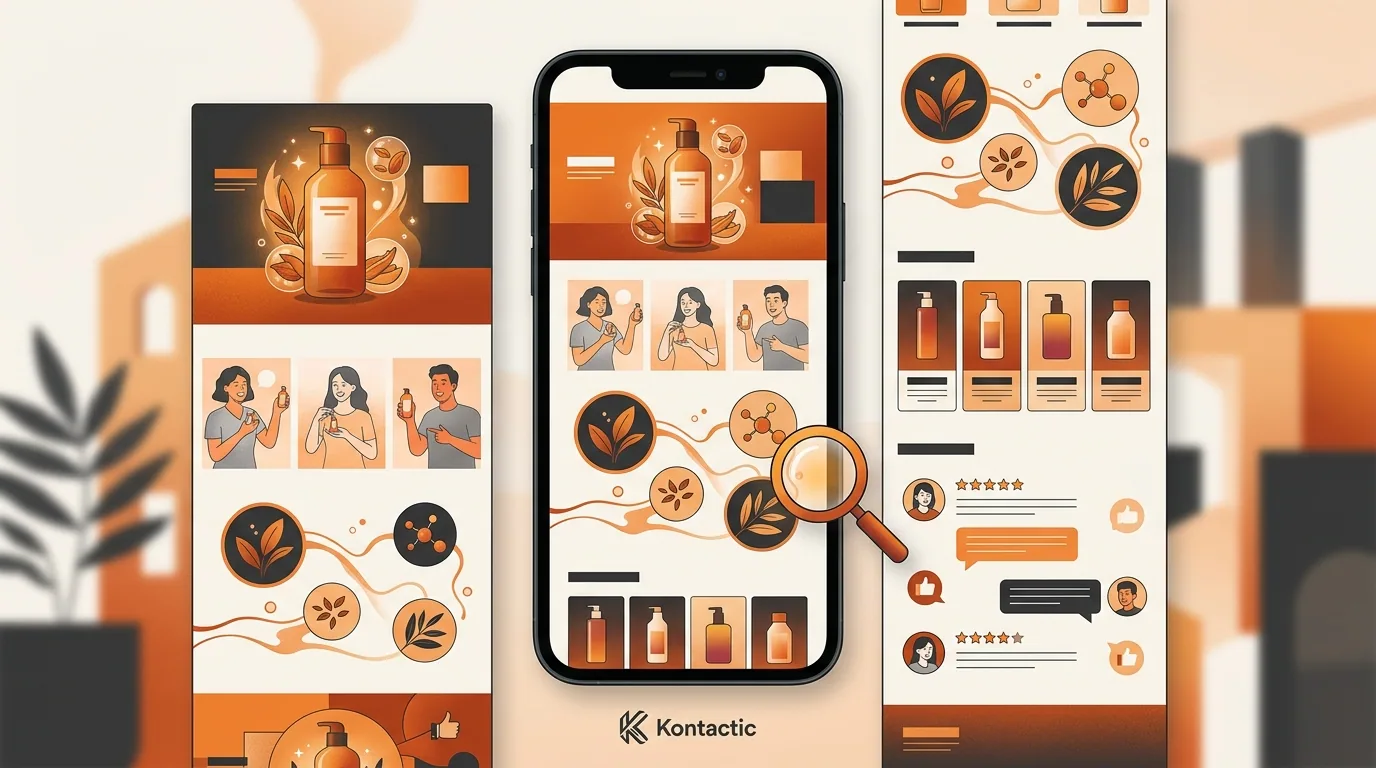
A Korean Coupang Product Detail Page is a different artifact from a Western product page. Where Amazon listings are short and bullet-driven, a high-converting Korean PDP is a vertically stacked, image-heavy story — typically around 20,000 pixels tall — designed for mobile scrolling. It includes hero imagery, lifestyle photography, ingredient or spec callouts, comparison panels, social proof, and a Korean-language Q&A block.
What an EU brand usually has in hand:
- English product copy written for European retail
- Photography shot for white-background marketplaces
- A brand voice tuned for European consumer expectations
What converts on Coupang:
- Korean copy that uses category-conventional vocabulary (not literal translation)
- Vertical lifestyle imagery with Korean models or Korean home contexts
- Trust signals Korean shoppers actually look for: certification badges, origin country, return policy specifics
- Mobile-first layout — Coupang traffic is overwhelmingly mobile
“Translation is the cheapest part of localization. The expensive part is rewriting the page so a Korean shopper who scrolls for fifteen seconds knows exactly what category you compete in.”
Kontactic editorial team — Commerce Operations
A bundled operator that doesn't produce localized PDPs is leaving conversion on the table. Standard text-based listings get you indexed; a full PDP — sometimes 20,000 pixels of conversion-tuned creative — is what closes the sale once paid traffic starts flowing.
Rocket Growth, fulfillment, and returns — the part nobody warns you about
Rocket Growth (로켓그로스) is Coupang's third-party logistics service. You ship inventory in DDP, Coupang stores it, picks, packs, delivers same-day or next-day, and handles returns. From the listing's perspective, your products earn the Rocket badge that Korean shoppers filter for.
The mechanics that surprise EU brands:
Storage fees compound. Rocket Growth charges storage by volume and time. Slow movers eat margin quietly. The right inventory cadence is "thin and frequent" rather than one large container per quarter.
Returns are processed at Coupang's discretion. Korean consumer protection rules favor the buyer. Returns are inspected by Coupang's warehouse staff and either restocked or marked unsellable. Damaged-on-return inventory cannot be re-shipped overseas easily — it usually has to be disposed of locally.
Inbound must be DDP. Coupang will not act as your importer. Your IoR — either your Korean entity or your agency's entity — has to clear customs, pay duties and the 10% VAT, and deliver to the Rocket Growth warehouse. EXW or FOB inbound terms simply don't work.
Settlement is slower than Western marketplaces. Coupang settles on the 20th business day of the following month. That's roughly 60 calendar days from sale to cash. Plan working capital accordingly. We've broken down the alternatives in Coupang Settlement Timelines: Monthly vs Weekly vs Fast.
For a deeper operator's view of when Rocket Growth makes sense versus continuing on cross-border, see Rocket Growth vs. Cross-Border Selling in Korea.
Entity setup: control vs. speed
The single biggest tradeoff an EU brand faces is whether to set up its own Korean entity or use an agency's entity as the IoR and Seller of Record (SoR).
Your own Korean limited company (유한회사). Maximum control. You own the Coupang account, the bank account, the customs ID, the brand. You also own the operational burden — and as we've documented in Why Setting Up a Korean Entity as a Non-Resident Foreigner Got Harder, the path has gotten meaningfully harder over the past two years. Tax-office pushback and bank KYC are now the bottleneck, not the corporate registry.
Agency-entity model (IoR/SoR partner). The agency's Korean entity acts as IoR and SoR. You ship DDP to the agency, the agency lists on Coupang under its master account, and you receive net remittance after platform fees, VAT, and service fees. Faster to launch, lower upfront cost, but the agency owns the legal seller relationship.
The tradeoff is real and not always obvious. Brands that intend to build long-term Korean presence and run multiple SKUs usually want their own entity eventually. Brands testing one product line, or running a 12-month commercial pilot, often prefer the agency-entity path. We compare the two paths cost-side in Who Pays for What in Korea: Operating Costs Explained, and we explain the IoR concept itself in What is an Importer of Record (IoR) in Korea?.
A decision framework for cross-border vs. local Coupang entry
Here is the practical test we use with EU brands:
Stay on cross-border if:
- Korean cross-border orders are still validating product-market fit
- Your monthly Korean order volume is below the threshold where local fulfillment economics work in your favor
- You're not ready to commit to inventory in-country
- Your category requires complex certification that hasn't been confirmed yet
Go local (Rocket Growth) if:
- Cross-border demand is consistent and growing month-over-month
- You can commit to at least one Rocket Growth inbound cycle of inventory
- Your category's certification path is clear (or already complete)
- You want the Rocket badge, same-day delivery conversion lift, and access to Coupang's full advertising suite
The middle ground — running cross-border and local in parallel during a transition — is workable but operationally messy. Most brands pick one and commit.

What to ask a prospective Korea market entry agency
If you're shortlisting agencies — Kontactic included — these are the questions that separate operators from advisors:
- Who is the legal Importer of Record on day one? Your entity, theirs, or a hybrid?
- Do you produce localized Korean PDPs in-house, or subcontract? Ask to see three examples in your category.
- How do you handle KC certification for products where the regulatory regime is ambiguous? The honest answer involves "we research first," not "we always certify."
- What does the cash flow look like — when do I get paid, and what is deducted before remittance?
- What happens to my Coupang account if we end the engagement? This question reveals whether the agency is building your asset or theirs.
The right agency has a clear answer to all five. The wrong one redirects to a sales deck.
The EU brands that do well in Korea treat the agency relationship the way they'd treat hiring a country GM — with the same level of operational scrutiny — not the way they'd treat a vendor RFP.
A final note on sequencing
The most common mistake we see is brands trying to launch ad spend before the operating layer is ready. Korean Coupang PPC is efficient, but it's only efficient on top of a stable PDP, working fulfillment, and live customer service. We wrote about this sequencing problem at length in Operational Readiness Before Ad Spend.
The short version: certification → entity/IoR → listing → fulfillment → customer service → ad spend. In that order. Skipping ahead burns money.
Evaluating a bundled Korea operator?
If you're an EU brand weighing KC certification, Coupang onboarding, and Rocket Growth fulfillment under one engagement, we're happy to walk through your specific category and stage. Talk to Kontactic.
About the author
Korean and global e-commerce operators with 15+ years of cross-border experience, led by CEO Isaac Lee — KOTRA-certified consultant and official lecturer for Seoul City and the Korea Customs Service. We run Korea market entry for Western brands every day; this blog documents what we learn in the field.
More about Kontactic →Related Articles

Rocket Growth: Why Outbound and Return Locations Matter?
Rocket Growth stores and ships inventory, but sellers still need outbound and return records before product registration; each has a distinct seller-side role.
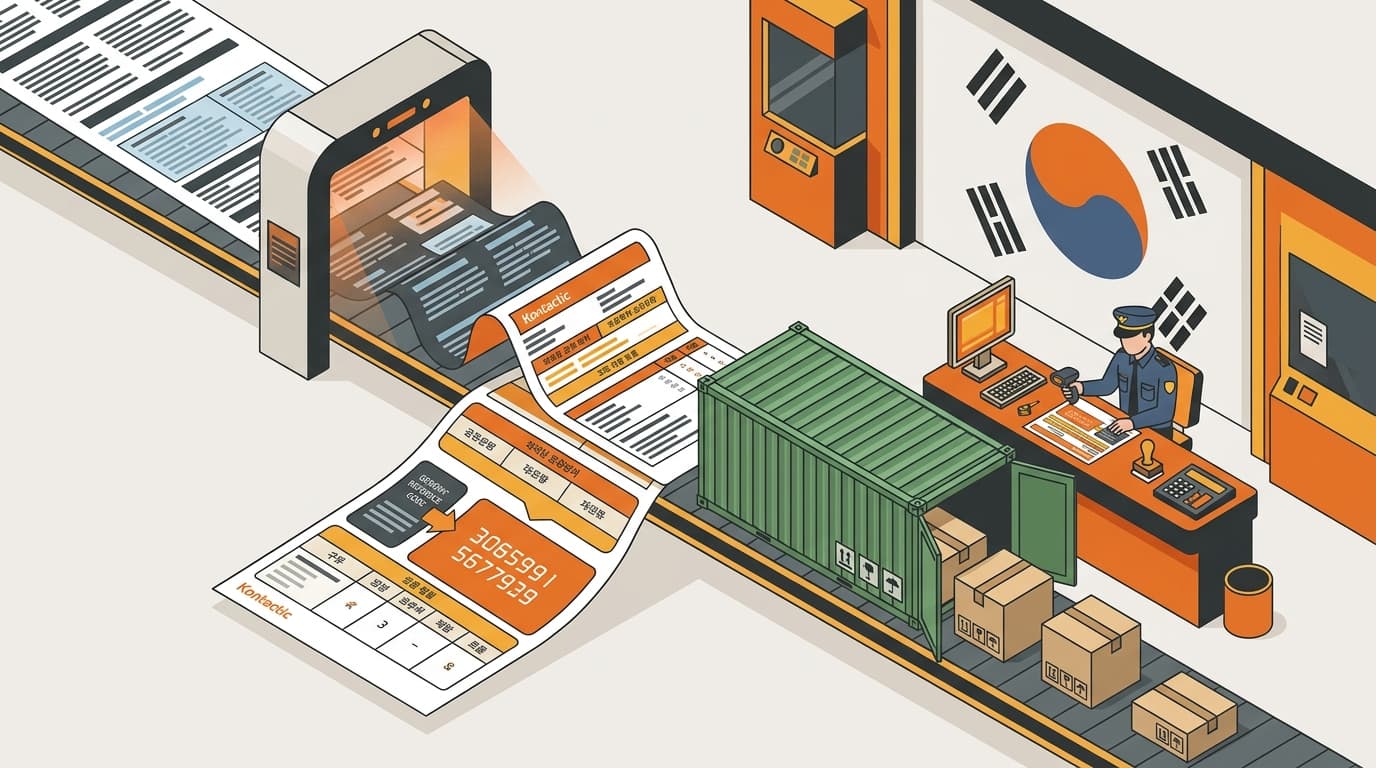
Korean HS Code: Can You Reuse US/EU HS Codes? Not Always
A US or EU HS code is a useful starting point, not a portable Korean classification. Learn how Korea’s HSK affects duty, FTA treatment, and import controls.

Korean Biocide Approval: Why Coupang Claims Still Count
No. Korean biocide approval cannot be avoided by hiding a “kills bacteria” claim from the bottle; a Coupang listing can still evidence intended biocidal use.