
Operational Readiness Before Ad Spend: A Founder's Note on Sequencing Korea Entry
A pattern we keep seeing
Every few weeks, a Western brand reaches out to us with the same story: Korean consumers are already buying their product cross-border, they are excited about the opportunity, and they are ready to commit serious budget to advertising in Korea. Then, somewhere in the second or third conversation, the real question surfaces — who is going to receive that traffic, convert it, ship it, and handle the Korean-language customer service behind it?
This post is a short founder note on that sequencing problem, and why we have built Kontactic's services around solving it in a specific order.
Demand is the starting line, not the finish line
The brands in this story already have hard evidence of Korean demand — cross-border orders with Korean shipping addresses, Korean buyer history, or equivalent signals. That evidence is what we ask for before we run a brand's own Korean entity with Blaze, and Blaze is the only service where we ask for it. A brand without it can still start light: with Direct, we run its Coupang cross-border store, with no Korean entity and no demand evidence needed (for brands shipping from the US, Europe, Japan, mainland China or Hong Kong).
But demand evidence is the starting line, not the finish line. Having Korean buyers click "buy" on Amazon Global or a Shopify international checkout proves the product resonates. It does not prove the brand is ready to capture that demand locally.
Cross-border orders from Korea tell you the product works. They do not tell you your Korean operation works — because your Korean operation does not exist yet.
Why ads without operational readiness underperform
Korean e-commerce, and Coupang in particular, rewards operational tightness in ways that are easy to underestimate from the outside. A few realities we see repeatedly:
- Listings in Korean are not translations. Product detail pages, keywords, and storefront design need to be built natively for how Korean consumers search and evaluate. Running traffic to a weak PDP is an expensive way to learn this.
- Fulfillment speed is a conversion lever. Without inventory already inbound to Coupang's Rocket Growth (로켓그로스) system, you are competing against sellers who can deliver next day. Ads that drive shoppers to a slower listing convert worse, full stop.
- Customer service is Korean-language by default. Inbound inquiries through phone and messaging channels need to be handled in Korean, quickly. An unanswered question is a lost sale and a review risk.
- Account health is fragile early on. Coupang's policy notifications, return handling, and seller standing all need active monitoring from day one. An ad-driven spike on an unmonitored account is how small issues turn into suspensions.
Every dollar of ad spend that hits a listing, a fulfillment path, or a CS flow that is not ready is a dollar spent teaching the algorithm that your product underperforms. That is a lesson the algorithm remembers.
The sequencing we recommend
When we lay out an entry plan with a founder, we walk through three operational stages in order. Advertising belongs squarely in the third.
1. Entity and import authority
Before anything sells, someone has to be the Importer of Record and the Seller of Record. With Spark, that is Kontactic's own Korean entity, so the brand does not form a company: on Coupang for Coupang-approved sellers in mainland China (Spark Subscription), or for one defined project such as B2B supply or an event (Spark Project). With Blaze, the client owns a Korean 유한회사 — one it already has, or one we set up through our entity setup service — and we administer it end-to-end as its operating agent.
Neither path can be skipped. Without a valid IoR and SoR, there is no inventory in Korea and no storefront to run ads to.
2. Commerce operations
This is the layer most foreign brands underestimate. Marketplace onboarding, Korean listings with SEO, storefront design, inventory coordination from forwarder through Rocket Growth, Korean-language CS, returns handling, listing maintenance — this is the machine that actually converts demand into revenue. In Blaze, this is our Layer 2 scope, and it runs whether or not any advertising is active.
About the author
Korean and global e-commerce operators with 15+ years of cross-border experience, led by CEO Isaac Lee — KOTRA-certified consultant and official lecturer for Seoul City and the Korea Customs Service. We run Korea market entry for overseas brands every day; this blog records what we learn in the field.
More about Kontactic →Related Articles

Korean Business Registration: How Kontactic Checks
Kontactic checks your Korean business registration certificate against the prepared address and representative, then keeps the setup open if either value differs.
Does My Korean Importer Need a License for This Product?
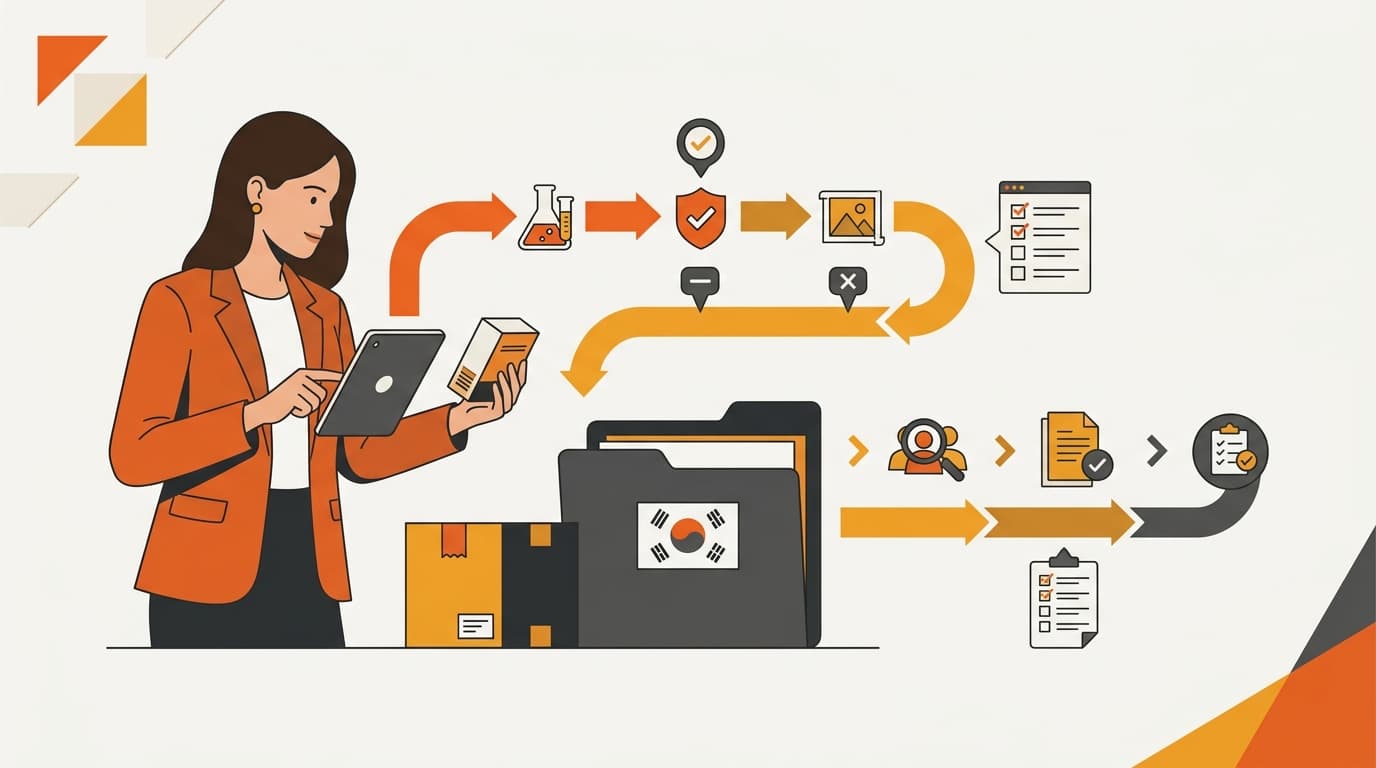
A Korean importer may need a license or permit even when product documents are complete. Seller Center separates the two checks and lists what to prepare next.
Import a Product Into Korea, But Can't Sell on Coupang?
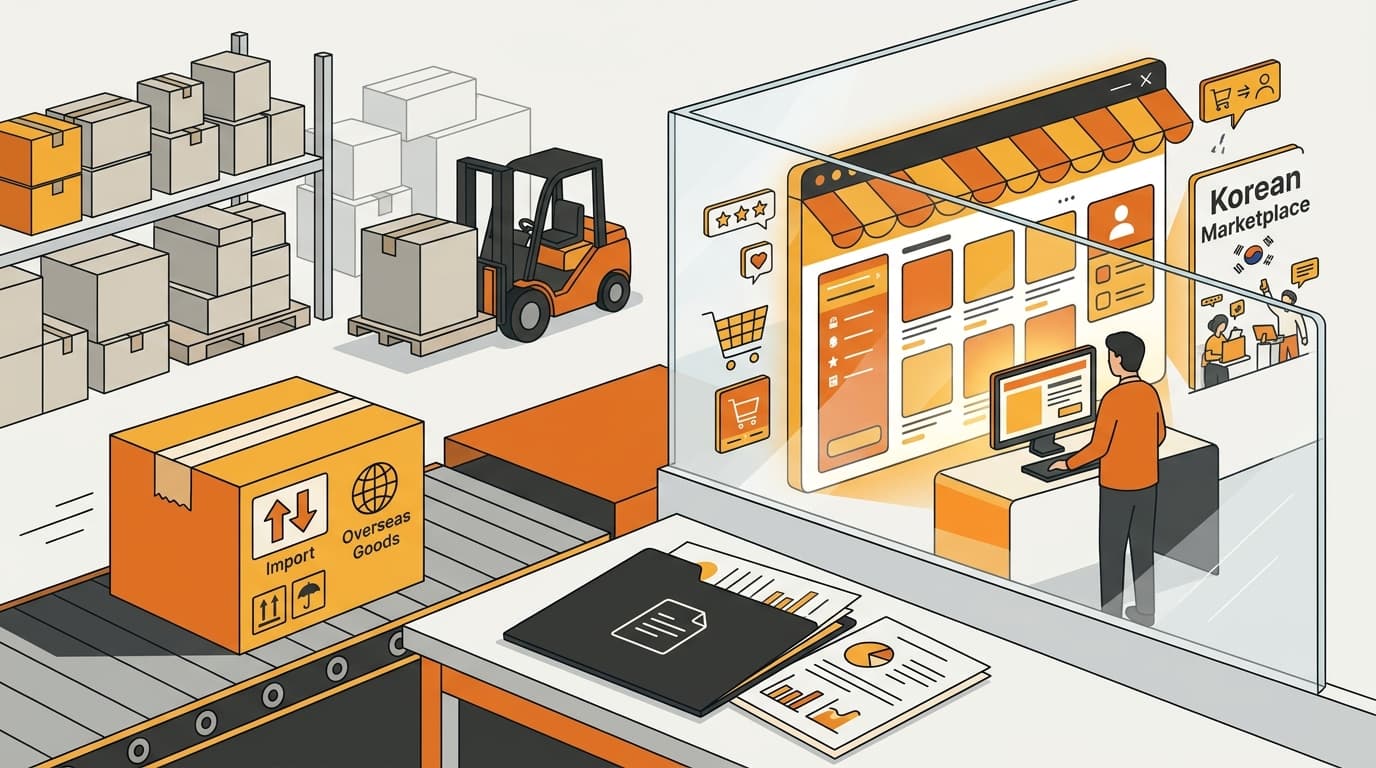
Importing a product into Korea does not guarantee Coupang sales. Learn how SKU review separates import permission, online-sale rules, and importer permits.