
Reading the Korean Ecommerce Market Through High-Engagement User Data
Most foreign brands evaluating Korea start with the same question: which platform has the biggest GMV? It is a reasonable question, and the answer is reasonably well known. But it is also the wrong starting point.
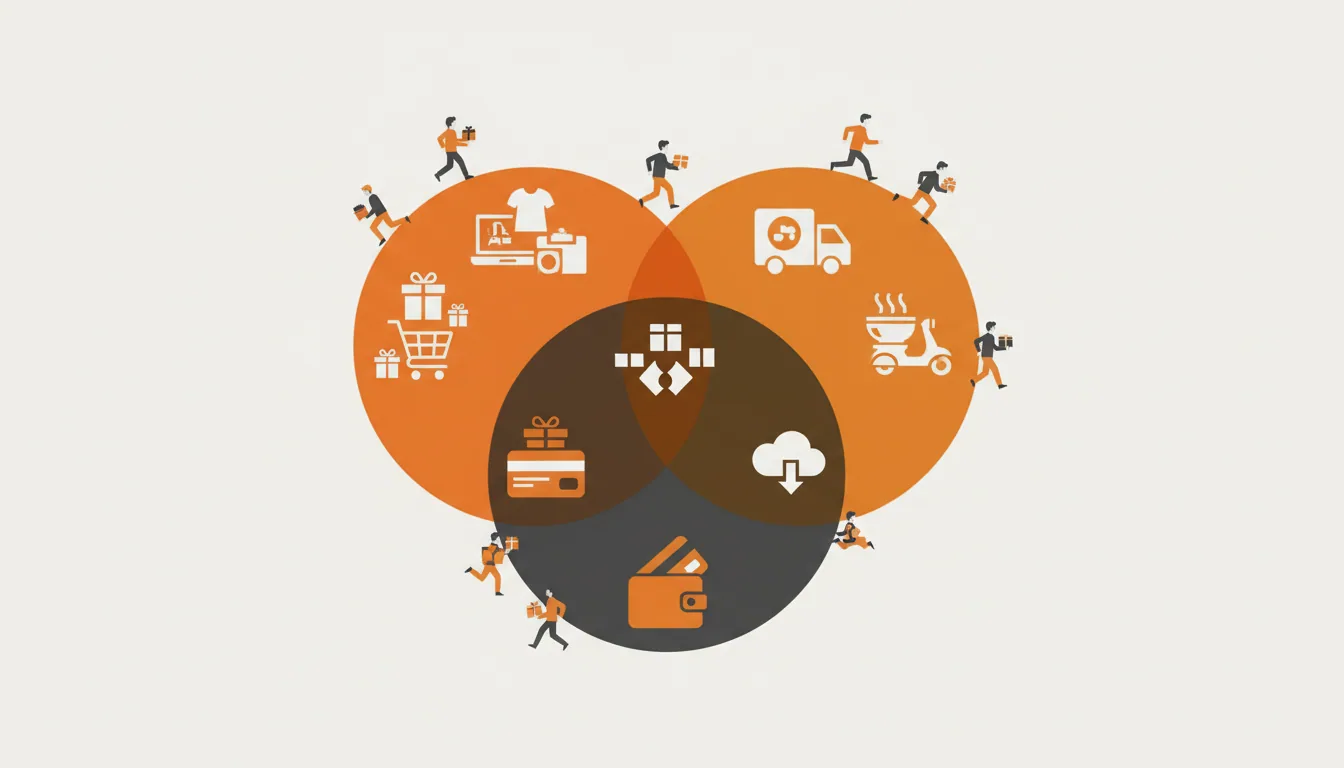
Korean ecommerce is not one market. It is a set of overlapping markets — general merchandise, fresh grocery, fashion, beauty, delivery-adjacent quick commerce, and an increasingly blurred middle layer — each with its own heavy users, its own repeat cadence, and its own tolerance for foreign products. The brands that get Korea right are the ones who read who is actually engaged on each platform, not just who is transacting somewhere at least once a quarter.
Market research reports that segment Korean ecommerce by high-engagement user behavior — the kind produced by data houses like IGAWorks' Data Forecast line — are useful precisely because they force this shift in perspective. You stop looking at a ranking table and start looking at user overlap, frequency, and category affinity. That is the view that actually predicts what will happen when your product lands on a Korean shelf.
This post is about how we read that kind of data at Kontactic, and how we translate it into decisions for foreign brands.
The limits of headline market-share thinking
GMV rankings describe the past. They tell you which platform processed the most transactions in the last quarter. They do not tell you:
- Whether the users who bought there would repeat for your category.
- Whether those users are price-led, convenience-led, or brand-led.
- How many of them also live inside a competing app on any given day.
- Whether foreign brands actually perform in that surface.
For a Korean operator running scale, the first question is "where do we defend margin?" For a foreign brand entering Korea, the first question is very different: "where is there a concentrated base of engaged users whose behavior matches the proposition of my product?" Those are not the same question and they do not produce the same answer.

Rank order tells you where the money moved last quarter. High-engagement user data tells you where the next purchase is most likely to happen. For a new entrant, the second question matters far more.
What "high-engagement user" data actually shows
The reports worth reading on the Korean ecommerce market typically do three things at once:
- Segment by behavior, not demographics. Users are grouped by how often they open the app, how deep their session goes, whether they browse or search, and how they respond to promotions — not by age band alone.
- Measure overlap across apps. Korean consumers are famously multi-homed. A single user can be active in Coupang, a fashion vertical, a grocery quick-commerce app, and a delivery super-app in the same week. Overlap data tells you who competes for the same attention, which is almost always more useful than who competes for the same SKU.
- Track cohort retention over time. The interesting number is rarely "who acquired the most users last month." It is "whose users are still opening the app 90 days later."
Once you see Korean ecommerce through this lens, a few patterns tend to become visible. Coupang sits at the center of everyday consumption — the household-staple, replenishment, next-day rhythm. Fashion and beauty verticals (Musinsa, Zigzag, Olive Young's app) capture deeper discovery sessions but with less replenishment weight. Delivery super-apps have become legitimate commerce surfaces for certain categories. And the cross-border corner — still the primary entry point for most Western brands — behaves like a distinct segment with its own patience profile.
How we translate this into foreign-brand decisions
None of this is interesting unless it changes a decision. For us, high-engagement user analysis tends to inform three practical calls.
1. Whether Coupang is the default starting point
For the majority of foreign brands we work with, the answer is yes — and data keeps confirming why. Coupang concentrates the broadest base of engaged, repeat buyers across everyday categories, and its Rocket logistics reshapes what Korean consumers expect from "available." For brands in grocery-adjacent, household, consumables, and commodity-plus categories, skipping Coupang usually means skipping the market. Our complete guide to selling on Coupang as a foreign brand walks through what that actually looks like operationally.
There are categories where the answer is more nuanced — fashion, prestige beauty, some hobby verticals — and in those cases the engagement data for the specialized apps genuinely matters.
2. Whether cross-border is a test or a decision
Brands that already have organic cross-border orders from Korea often dismiss them as too small to matter. That is usually a mistake. Cross-border volume is a demand signal operating through a very leaky funnel — long delivery times, higher prices, limited product assortment. We've written about why cross-border orders understate your Korea opportunity, and high-engagement user data generally supports that read: the users willing to tolerate cross-border friction are exactly the profile that will convert aggressively once you are on a domestic shelf. The decision framework for Rocket Growth vs. cross-border selling is the next question after you accept that.
3. Where to deploy advertising spend — and when
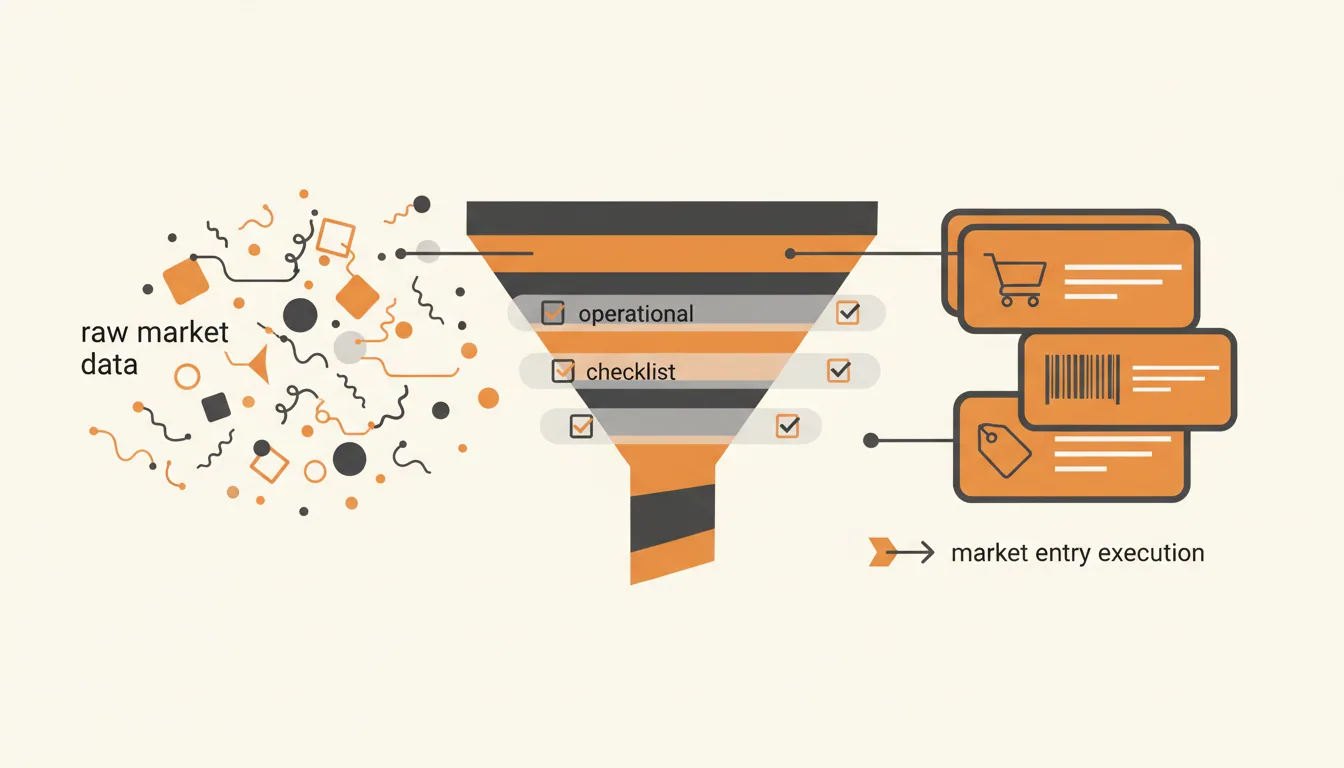
This is where market data gets most often misused. A report that says "Platform X has Y million high-engagement users in your category" is not a media plan. It is a context document. The foreign brands that lose money in Korea usually lose it by buying audiences before their listings, PDPs, pricing, compliance, and fulfillment are ready to convert those audiences. We've made this argument in detail in a founder's note on sequencing Korea entry, and the data-forecast style of research only reinforces it: engaged users are valuable precisely because they are demanding. You only want to meet them once you are ready.
“Market research tells you where the users are. Operational readiness decides whether you can keep them when you get them.”
Kontactic — Commerce operations team
A note on foreign-brand premium
One pattern that does not usually appear on the front page of a market-share report, but shows up clearly in engagement and willingness-to-pay data, is that Korean consumers are genuinely willing to pay a premium for well-positioned foreign brands. We've written separately about why Korean consumers pay premium for foreign brands, and it is worth keeping in mind when you read Korean ecommerce research. Domestic brands often compete on price and speed because they have to. Foreign brands frequently have room to compete on proposition — if the operational foundation is in place.
How to use a Korean ecommerce data report without getting lost
If you are handed a research report on Korean ecommerce user behavior — whether from IGAWorks' Data Forecast line or another credible source — a useful reading protocol is:
- Start with your category, not the platform ranking. Go to the cohort and category pages first. Ignore the leaderboards.
- Look at overlap between platforms your category touches. That tells you where you are actually going to compete for attention.
- Focus on retention curves, not install numbers. Repeat users convert the economics of any Korea operation.
- Translate insights into a sequence, not a shopping list. Which platform first, which listing first, which advertising layer last.
- Stress-test against friction. Every platform in the report has its own listing requirements, compliance expectations, and operational cadence. The strongest audience in the world does not help a listing that cannot go live.
Used this way, a good data report sharpens the questions you bring to an operator. It does not replace the operator.
Closing thought
The most common mistake we see is foreign brands reading Korean ecommerce reports as confirmation — "Korea is big, Coupang is big, let's go" — instead of as narrowing. The whole point of high-engagement user analysis is that it narrows the field. It tells you which 15% of the market is worth 80% of your attention in year one, and which platforms you can responsibly defer. The brands that make Korea work are the ones that take that narrowing seriously, then invest the operational effort to actually show up where the engagement is.
Planning Korea entry based on real user behavior?
If you have a Korean ecommerce data report in hand and want help turning it into a sequenced operational plan — entity, compliance, listings, advertising — we can help you pressure-test it. Reach out to the Kontactic team.
About the author
Korean and global e-commerce operators with 15+ years of cross-border experience, led by CEO Isaac Lee — KOTRA-certified consultant and official lecturer for Seoul City and the Korea Customs Service. We run Korea market entry for overseas brands every day; this blog records what we learn in the field.
More about Kontactic →Related Articles

Coupang Rocket Growth Stock: Can an ERP Set It via API?
An ERP cannot set Coupang Rocket Growth stock through the Open API; replenishment starts when Coupang physically receives a new inbound shipment of stock.
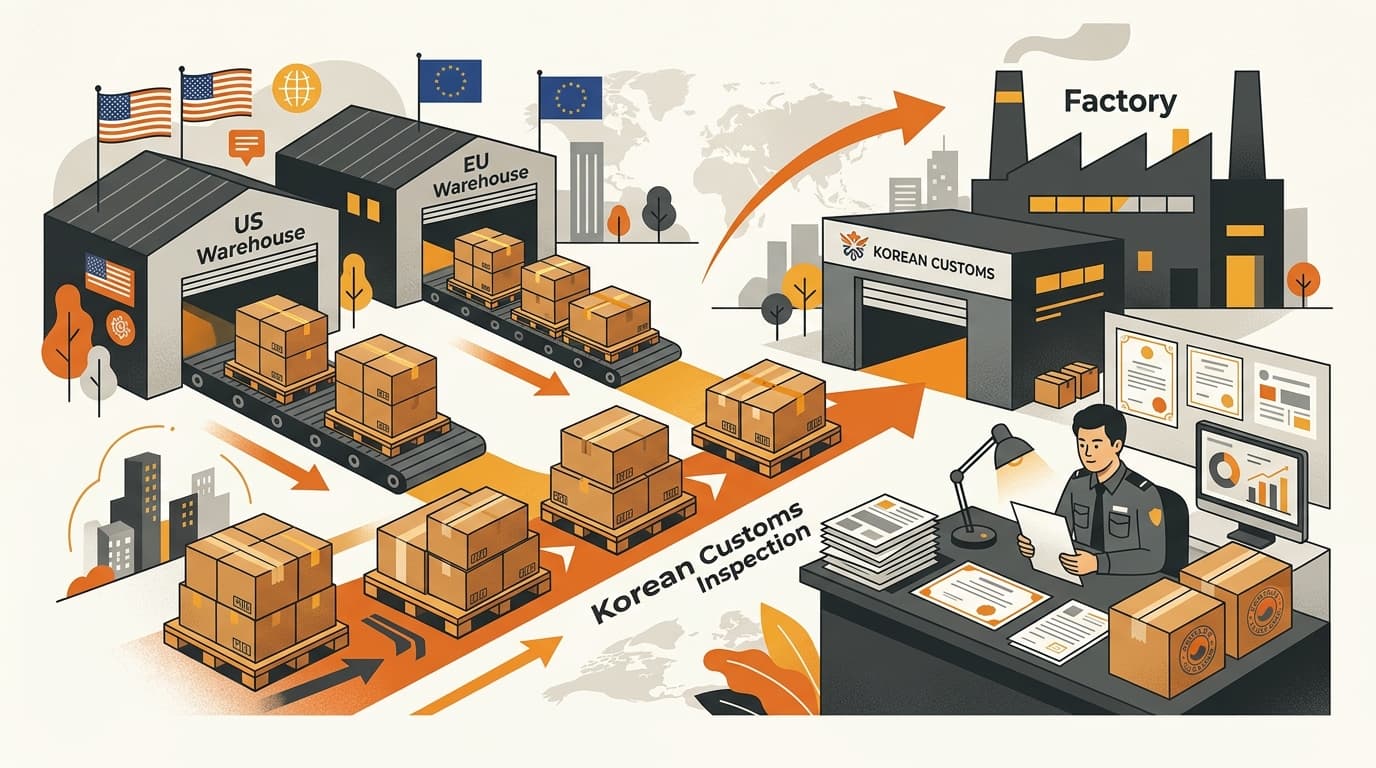
Korea FTA Duty: US/EU Warehouse Shipping Is Not Enough
A US or EU warehouse does not prove FTA origin in Korea. The importer must verify production, transit, and documents before claiming a lower customs duty rate.

Agentic Commerce: When AI Picks the Product, What Should Brands Selling in Korea Do?
AI shopping agents now search, compare, and sometimes buy for the shopper, and they recommend 1–5 products instead of a page of results. What Korea's Chamber of Commerce found in the US and Europe, and what it means for your product data in Korea.