Korea Entry Budget: KC Cert + Shipping Costs
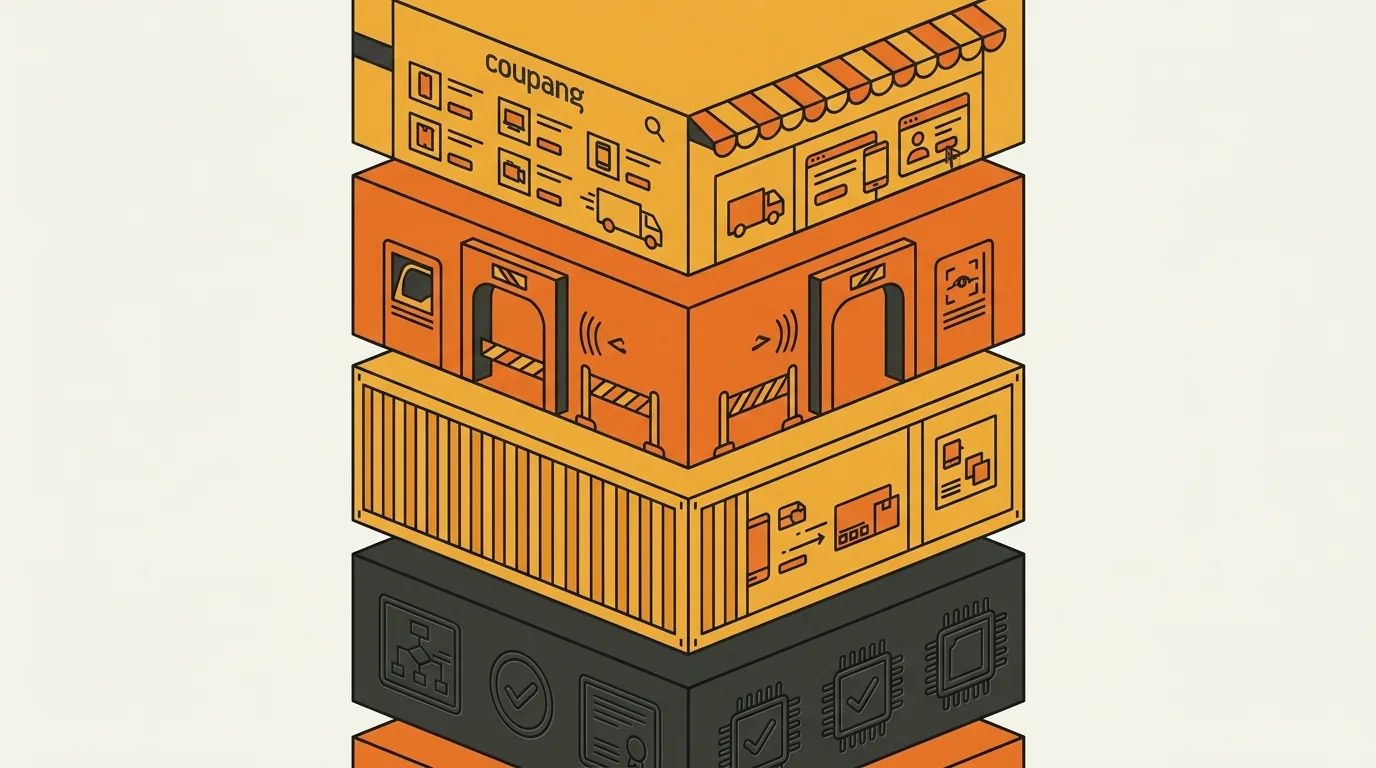
An end-to-end budget to KC certify and ship consumer electronics into Korea breaks into six cost blocks: KC certification, DDP freight, customs duties and 10% VAT, Importer of Record fees, Coupang and Rocket Growth operations, and a localized Product Detail Page. The certification piece is usually the most quoted; the PDP is the most underestimated.
This article walks through each block with the numbers we can publish, flags the ones that genuinely depend on your product, and shows how the blocks fit into a launch sequence so the budget makes operational sense, not just spreadsheet sense.
What "end-to-end" actually has to cover
When an ops lead searches for a "total cost to KC certify and ship consumer electronics to Korea," what they usually mean is: what number do I take to the CFO so we don't get surprised in month 4?
A defensible budget for a single SKU launch covers, at minimum:
- KC certification and product prep — testing, certificate issuance, factory inspection, KC marking, Korean-language label, manual translation
- Inbound freight to Korea on DDP terms (or equivalent), air or sea
- Customs duties (HS-code dependent) and 10% VAT on the landed value
- Importer of Record (IoR) filing per shipment, plus any retainer
- Coupang seller setup, Rocket Growth onboarding, and ongoing platform fees
- A localized Product Detail Page (PDP), plus returns, storage, and CS operations
- A first-year ad budget sized to the category
Skipping any of these doesn't reduce the cost. It just moves the surprise later in the project.
The single most common budgeting mistake we see: treating KC certification as the project, and treating Korean-language PDP, Rocket Growth ops, and ad spend as "we'll figure it out after launch." By the time the certificate is in hand, the SKU is already six weeks behind on revenue.
KC certification: what we can actually publish as numbers
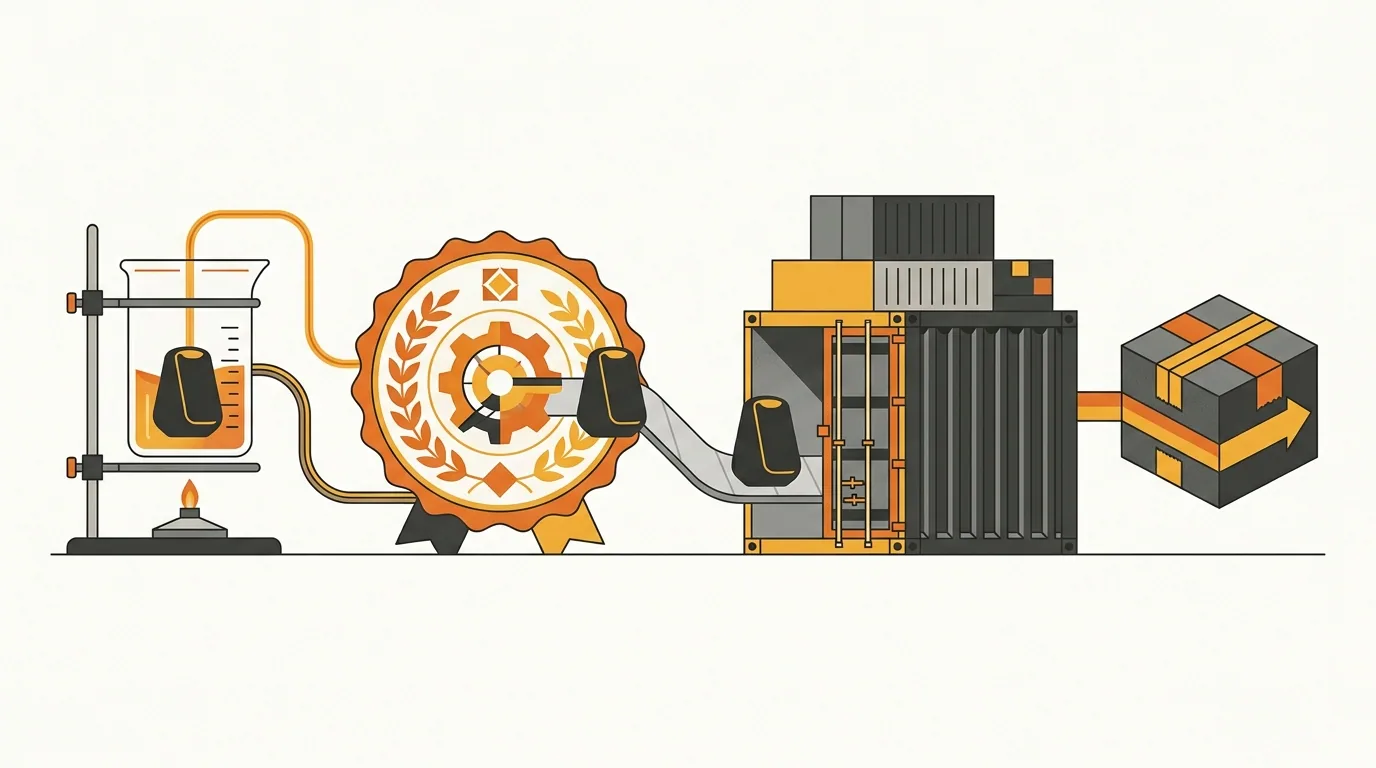
KC certification (KC 인증) is the mandatory Korean safety and EMC framework administered under KATS. For most consumer electronics — anything that plugs into a wall, charges a battery, or uses Wi-Fi or Bluetooth — you will face some combination of KC Safety, KC EMC, and KC RF.
Test fees are genuinely product-specific. They depend on the standard your product falls under, how many models share a single test report, whether you can reuse a foreign EMC report, and whether the lab needs sample destruction. Anyone who quotes you a single flat "KC certification price" without seeing the product spec is guessing.
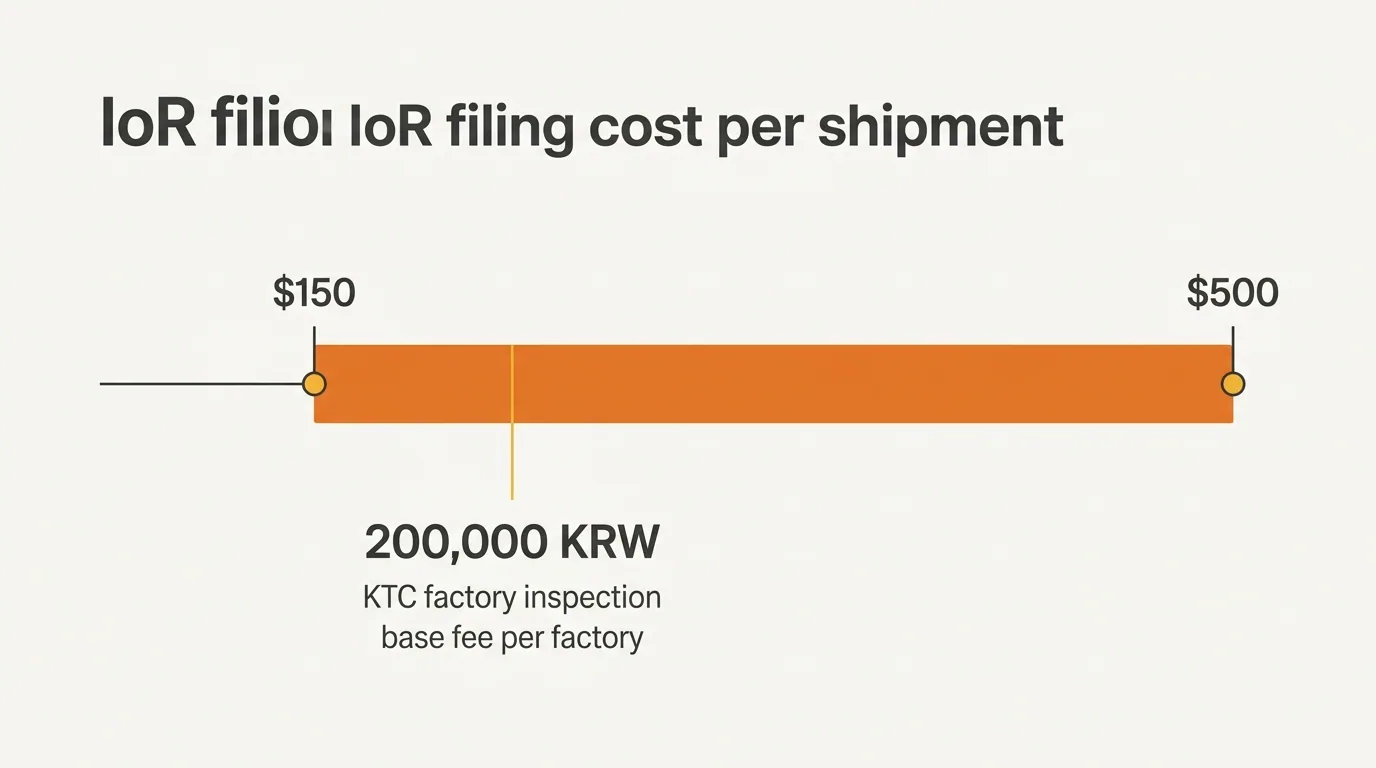
What we can publish are the structural fees from the testing bodies themselves. KTC (한국기계전기전자시험연구원), one of the designated KC testing agencies, publishes its factory inspection base fee for electrical appliances:
That is the base per factory, before travel cost, and before the actual lab testing of your product. Travel cost for the inspector is negotiated and depends on the factory's location. For a factory in mainland China or Vietnam, expect international travel and accommodation to be billed through.
On top of that you have:
- Lab testing fees — the largest variable line item, ranging from low thousands of USD for a simple battery-powered device to tens of thousands for a complex multi-radio product
- Certificate and service fees — administrative fees from the certification body
- KC mark labeling and Korean manual translation — small but mandatory
For a deeper look at when a foreign EMC report is enough, see our note on USB and battery-powered devices. And before you formally apply, pre-testing against the exact Korean standard is almost always worth it — Korea's certification labs do not run an appeals process you can rely on.
One contextual point worth noting: KC enforcement has tightened on cross-border channels too. AliExpress's K-Venue began blocking non-KC-certified electrical and electronic products in April 2025. This isn't a new law, but it signals that the days of selling regulated electronics into Korea on cross-border alone — without a KC number — are closing fast.
Freight, duties, VAT, and the IoR line item
Once the product is certified, you have to physically import it. Most foreign brands ship DDP (Delivered Duty Paid) to Korea, which means freight, insurance, customs duties, and import taxes are all on you, not on the Korean Seller of Record.
The line items here:
- Ocean or air freight from origin to Incheon/Busan — sea LCL is typical for first shipments. If you're shipping from China, Coupang's Direct LCL service is worth pricing against your forwarder; we covered the USD 70 per CBM rate for China-to-Korea LCL separately.
- Customs duty — HS-code dependent. Many consumer electronics fall under duty rates of 0–8%, but check the specific code.
- VAT (부가가치세) — 10% of landed value at import. This is recoverable if your Korean entity is VAT-registered, but you front the cash.
- Importer of Record filing — a per-shipment fee charged by your IoR partner.
For the IoR line item specifically, our Korea IoR fees breakdown for consumer electronics puts the per-shipment filing in a clear range:
That is the filing itself. If you're using an IoR partner that also handles compliance retention, KC documentation custody, or product liability coverage, expect a monthly retainer on top.
Coupang setup, Rocket Growth, and returns operations
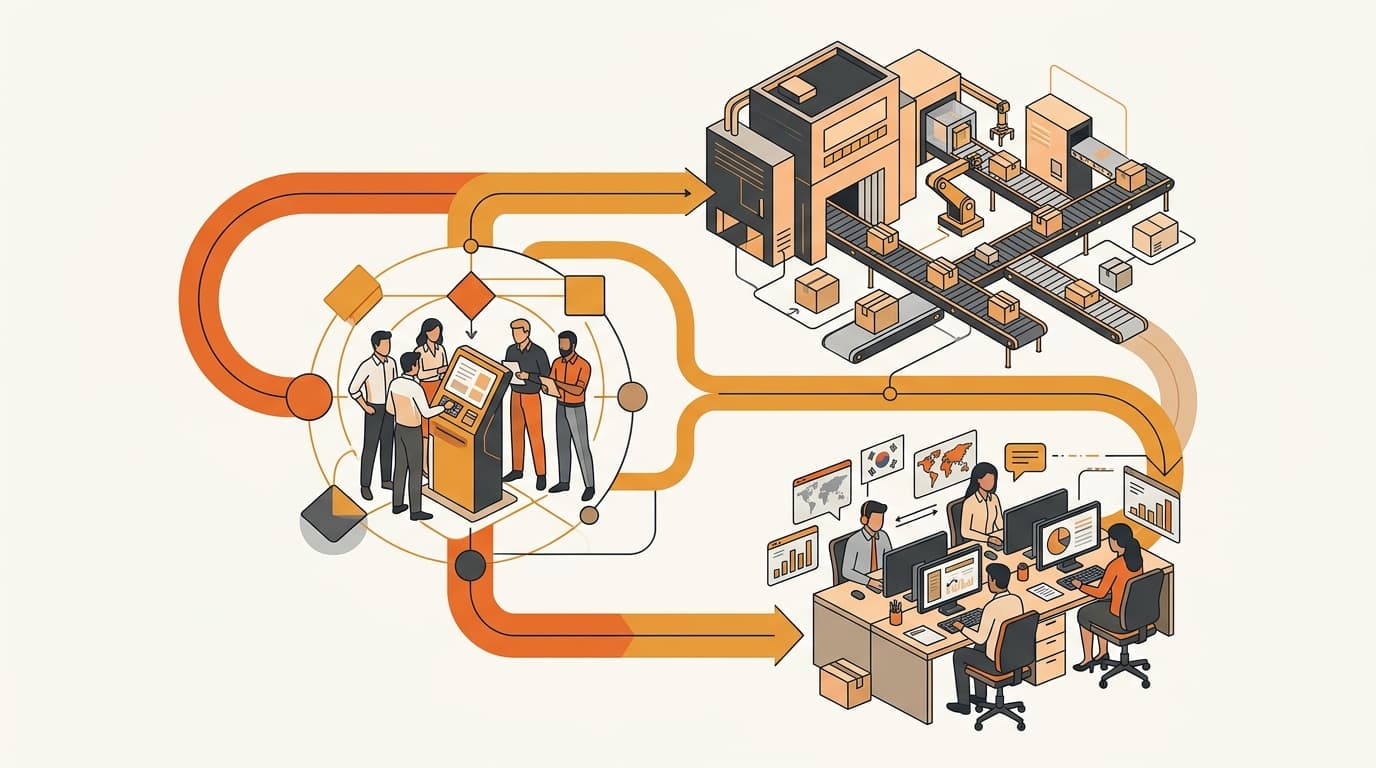
KC clears your product for Korea. It does not make you a local Coupang seller. We unpacked that distinction in a separate piece on how KC certification, your Korean entity, and Rocket Growth interact.
For budgeting, the platform side breaks into three buckets:
1. One-time onboarding. Setting up the Coupang seller account under your Korean entity (or your IoR/operations partner's entity), Rocket Growth onboarding, barcode and packaging compliance, and initial inbound to Coupang's fulfillment center.
2. Ongoing platform and 3PL fees. Coupang charges a category-dependent selling commission on Gross Sales Revenue. Rocket Growth charges separately for storage, fulfillment, and returns processing. This structure typically lowers per-unit margin 5–15% but lifts orders 8–10×. For most consumer electronics SKUs, that math wins. But it has to be in the budget.
3. Returns and CS. Korean consumers expect frictionless returns. For electronics specifically, return rates can spike on perceived defects, language confusion in the manual, or expectation mismatch from the PDP. Recent Coupang policy changes — Rocket Growth return fees, the KRW 50,000 evidence threshold, and CVR burden of proof — have reset the real return-handling math, and your budget should reflect the post-2025 reality, not pre-2025 numbers.
The line foreign brands keep forgetting: localized PDP
Here is the gap competitor pages on this topic almost universally miss.
A Coupang Product Detail Page (PDP) for a consumer electronics product is not a translated Amazon listing. It is a long-form, vertically scrolling visual page — typically around 20,000 pixels tall — built specifically for Korean consumer behavior. Hero imagery, spec callouts, lifestyle scenarios, comparison tables, pain-point framing, social proof, and a final CTA, in that approximate order, in Korean, designed to be skimmed on a phone.
A localized PDP is a graphic-design and copywriting deliverable, not a translation task. It is also where most of your Korean conversion is decided. Two SKUs with identical certification, identical pricing, and identical Rocket Growth eligibility can see 3–5× different conversion rates based purely on the PDP.
PDP costs are project-based, not per-shipment. Plan for it as a one-time line item per SKU at launch, with refresh budgets in year two as you A/B test.
“Foreign brands routinely budget six figures for KC certification and freight, and four figures for the PDP. Then wonder why the launch underperforms. The PDP is what the Korean shopper actually sees.”
Kontactic editorial — Commerce Trends

How compliance research fits into the launch sequence
In practice, the budget items don't run in parallel. They sequence, and the sequence determines cash flow.
A reasonable order for a consumer electronics SKU:
- Compliance research first. Confirm which KC certifications apply (Safety, EMC, RF), confirm the HS code, confirm whether any KC reuse is possible from existing foreign reports. This is a couple of weeks and a small advisory cost. Skipping it is how brands end up paying for tests they didn't need or missing tests they did need.
- Korean entity and Coupang seller setup in parallel with KC testing. The entity work has its own friction — see our note on why setting up a Korean entity as a non-resident foreigner got harder — and on Korean corporate bank accounts as the last wall foreign founders hit. Start early.
- PDP production during testing. The lab work is your dead time. Use it to build the Korean-language PDP, photography, and translated manual.
- First DDP shipment + IoR filing once KC is issued and the entity can act as Importer of Record.
- Rocket Growth inbound and listing go-live.
- Ad spend last. Operational readiness before ad spend — we've written about why founders should sequence Korea entry that way.
If you compress this into a single Gantt chart, the cheapest critical-path month is the month you spend on compliance research. The most expensive month is the one you spend on ads against a PDP that wasn't ready.
Cross-border vs local: the budget version of the question
Some brands ask whether they can skip half this budget by staying cross-border. The honest answer: yes, you can skip the entity, the IoR retainer, the Rocket Growth setup, and (until recently, on most platforms) sometimes even the KC step. You will also skip most of the demand.
Korean consumers who buy cross-border are a fraction of the addressable market. The majority shop on Coupang in KRW, expect Rocket Delivery, and never see a brand that lives only on a cross-border channel. Going local — KC certified, locally imported, listed on Coupang with Rocket Growth — typically multiplies cross-border revenue by an order of magnitude or more. We laid out that decision more fully in Rocket Growth vs. cross-border selling: an operator's framework.
The right way to read the end-to-end budget isn't "this is a lot of money to enter Korea." It's "this is the price of being visible to the 90% of the market that doesn't shop cross-border."
For a first-SKU launch, build the budget as: KC certification (your biggest variable), freight + duties + VAT, $150–$500 per shipment IoR filing, Coupang and Rocket Growth setup and ongoing fees, one localized PDP, and 6–9 months of operating runway including initial ad spend. If any of those is missing from your spreadsheet, the spreadsheet is wrong.
What to validate before you sign off on the budget
Before you take the number to the CFO, pressure-test it against five questions:
- Does the KC line item include factory inspection travel cost, not just the lab test? (KTC's 200,000 KRW base is per factory, plus travel.)
- Is the freight line item DDP, with the 10% VAT and HS-specific duty calculated on the landed value, not the FOB?
- Is the IoR line item a per-shipment number ($150–$500 typical) and a retainer, not just one of them?
- Is there a Korean-language PDP line item separate from translation?
- Is there a returns and CS allowance modeled against current Coupang policy, not 2024 numbers?
If you can answer yes to all five, the budget is probably defensible.
Need a defensible Korea launch budget?
Kontactic builds end-to-end Korea entry plans for foreign consumer electronics brands — KC certification scoping, IoR, Coupang, Rocket Growth, and the PDP. Tell us about the SKU and we'll come back with a real number.
About the author
Korean and global e-commerce operators with 15+ years of cross-border experience, led by CEO Isaac Lee — KOTRA-certified consultant and official lecturer for Seoul City and the Korea Customs Service. We run Korea market entry for Western brands every day; this blog documents what we learn in the field.
More about Kontactic →Related Articles

Korean KC for a Detachable Device Charger: Not Automatic
Does Korean KC cover a detachable charger? Not automatically. The final bundle and adapter evidence must match the Korean commercial SKU before import.
Can Coupang Handle Every Korean Buyer Inquiry? No—Seller Duties
Coupang may handle platform and fulfillment contacts, but sellers still own product questions, cancellations, returns, exchanges, and order exceptions.

Rocket Growth: Why Outbound and Return Locations Matter?
Rocket Growth stores and ships inventory, but sellers still need outbound and return records before product registration; each has a distinct seller-side role.