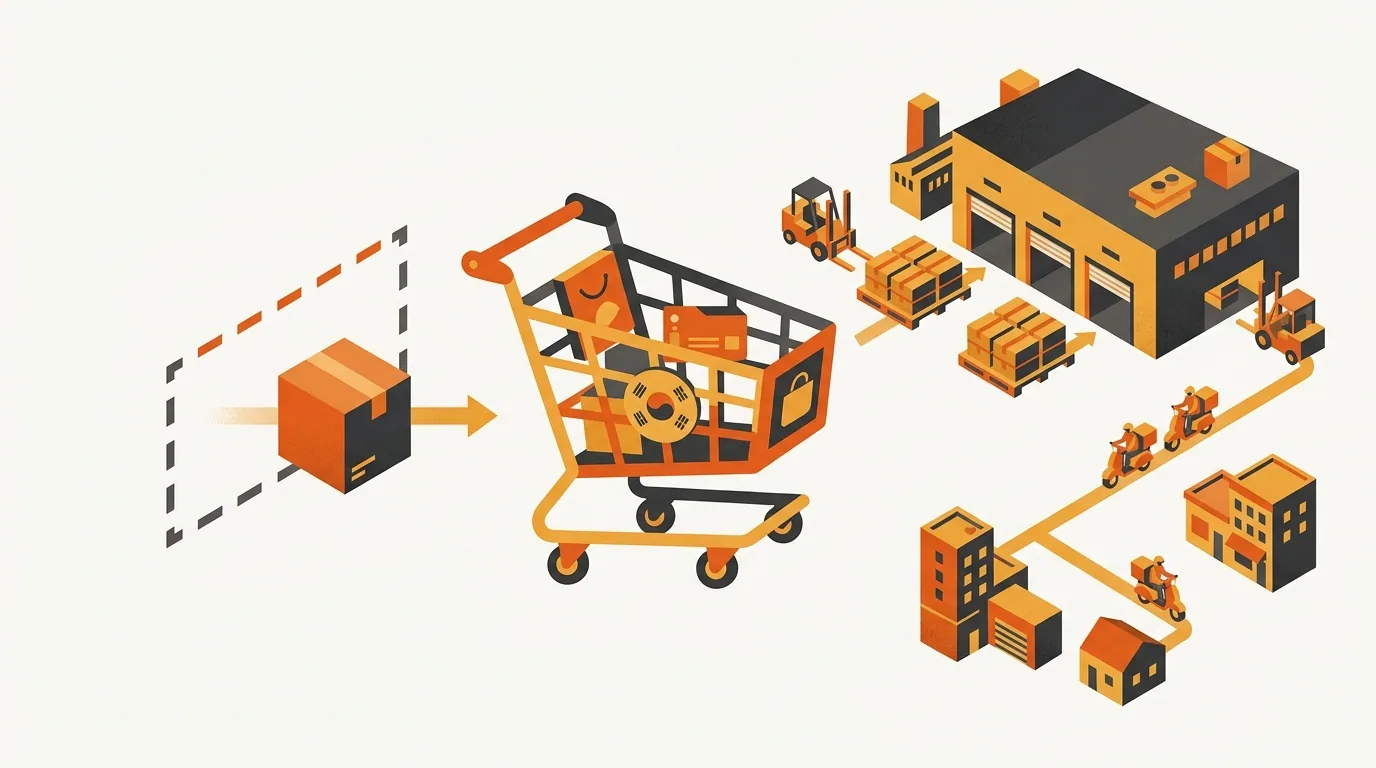

Agency vs IoR vs Entity: Korea Skincare Entry Compared
Skincare brands entering Korea usually pick between an agency partner, an IoR-only setup, or a full local entity. Here is how the three models actually differ in practice.

Insights & Guides
Expert analysis, tactical guides, and market insights for brands selling in Korea.
109–120 of 121 articles

Skincare brands entering Korea usually pick between an agency partner, an IoR-only setup, or a full local entity. Here is how the three models actually differ in practice.

Coupang Direct LCL is a consolidated China-to-Korea ocean freight service for Rocket Growth sellers at USD 70 per CBM — below the typical LCL market.

If you have Korean customers buying cross-border, the question is which Korea market entry path fits — not which agency looks slickest.

Switching to Coupang local fulfillment via IoR and Rocket Growth typically lowers per-unit margin 5–15% but lifts orders 8–10×. Here's the margin math.

Yes — to sell pet food locally on Coupang with Rocket delivery, you need a Korean Seller of Record. Here's how to choose between your own entity and a partner.

Mardi Mercredi spent years refusing Coupang to protect its brand image. Its 2026 listing reveals what K-fashion brands underestimate about scaling in Korea.

KC certification clears your product for Korea but doesn't make you a local Coupang seller. Here's how certification, entity, and Rocket Growth actually interact.

Small European skincare brands can sell locally in Korea using an Importer of Record partner. No entity setup needed—here's how the process works in practice.

If your product is food, food-contact, or a hygiene item, Korea treats it as a licensed import category — not a regular one. Here's what registration actually involves, and how foreign brands typically handle it.

Korean ecommerce is not one market but several overlapping ones, each with its own high-engagement user base. Here is how we read that signal at Kontactic when helping foreign brands decide where to place their first bet.

Cross-border selling validates demand in Korea. Rocket Growth captures it. Here's how to decide which model fits where you are — and what foreign brands usually underestimate when they switch.

Forming a small Korean limited company as a non-resident foreigner used to be straightforward. Tax-office pushback, bank refusals, and tougher Coupang KYC have changed that — here is what the path actually looks like today.

Book a discovery call with our team and get a personalized roadmap for your Korean market entry.
Or email us directly at contact@kontactic.com