
Best 3PL in Korea: Picking the Right Skincare Partner
The best 3PL in Korea for a European skincare brand is rarely the warehouse with the cheapest pick-and-pack rate. It is the partner whose operations align with Coupang's Rocket Growth (로켓그로스) inbound rules, with Korean cosmetics labeling expectations, and with the Korean-language product detail page that actually converts. Get those three layers wrong and the warehouse economics don't matter — your inventory sits cold.
This guide is for founders and heads of international at European skincare brands with proven cross-border demand into Korea. You're now shortlisting an operational partner. We assume you've read the textbook overviews. Here is the framework we'd use ourselves.
What "3PL in Korea" really means for a European skincare brand
In most European markets, a 3PL is a logistics line item. You sign with a warehouse, integrate the API, and the rest is yours to run. Korea doesn't work that way for foreign skincare brands.
To sell skincare locally — meaning in Korean won, with two-day Coupang delivery and Korean-language customer service — you need an entity acting as Importer of Record, a cosmetics registration filed with the regulator, a Coupang seller account in good standing, and a 3PL that can either operate Rocket Growth on your behalf or hand off cleanly to it. A pure warehouse provider covers maybe 20% of that stack.
That is the first reframing. When you type "best 3PL in Korea for European skincare brand fulfillment" into Google, what you're really searching for is who can run the Korean operation end-to-end so my product gets to a Korean buyer's door in two days, with a Korean-language page, under a compliant import.
The candidates fall into three groups:
- Pure warehouses. Domestic Korean 3PLs that can store and ship pallets. They will not handle Coupang, customs, or your PDP.
- Global 3PL networks (e.g. ShipBob, byrd-style providers). Strong tech, weak on Korean platform-specific operations like Rocket Growth inbound or Coupang's CVR (쿠팡확인요청) returns workflow.
- Korea entry operators. Combine the entity, customs, Coupang setup, fulfillment via Rocket Growth, and the localized PDP. Kontactic sits here, as do a small number of others.
For most European skincare brands that are pre-launch in Korea, the third group is the only one that gets the operation live in a sensible timeframe.

The operational tradeoffs that show up only after launch
Most "how to pick a 3PL" articles are written before anyone has actually run a brand in Korea. They list features, not tradeoffs. Here are the four tradeoffs we see European skincare brands discover in month one or two.
1. Coupang owns the customer relationship in a way that overrides your 3PL's SLA. If you fulfill via Rocket Growth, Coupang sets the delivery promise, handles customer-facing communication, and accepts returns at its own discretion. Your warehouse's pick-pack accuracy still matters, but Coupang's policies — including the 2025 changes to return fees and the KRW 50,000 evidence threshold — define the real margin math. You don't get to negotiate.
2. Inbound rejection is the most common avoidable cost. EU cosmetics inbounding to a Korean 3PL usually fail not on freight but on labeling. Outer carton barcodes, Korean ingredient labels affixed to the unit, and lot/batch consistency with what was declared at customs — any of these can trigger a hold. We've written specifically about what breaks when European cosmetics are inbounded to a Korean 3PL. It's almost always fixable, but only if someone on the ground notices before the cartons go to the warehouse floor.
3. Settlement timing is not negotiable. Coupang pays sellers on the 20th business day of the following month under the default schedule — close to 60 calendar days from sale. If your 3PL invoices monthly and your supplier wants payment-on-shipment, you are financing the gap. Coupang's settlement timelines deserve a look before you size the working capital.
4. The customer service load is in Korean, and it's heavier than European brands expect. Korean buyers ask detailed product questions before purchase, often through Coupang's Q&A surface. Slow or auto-translated responses kill conversion on the listing. A 3PL doesn't solve this; an operational partner does.
The order of operations matters more than the vendor shortlist. A great warehouse paired with a half-finished Coupang account and a Google-translated PDP will underperform a mediocre warehouse paired with a properly localized listing. Sequence is the lever.
Coupang setup and seller onboarding — the part most 3PL guides skip
If your 3PL doesn't own the Coupang seller account, you do — and that means your Korean limited company (유한회사) is the Seller of Record, your Korean corporate bank account receives settlement, and your team handles KYC, tax invoices, and the seller dashboard in Korean.
In practice, three Coupang onboarding details trip up European skincare brands repeatedly:
- Category registration. Skincare lives under a specific Coupang category that requires cosmetics import documentation and, depending on the SKU, an MFDS Functional Cosmetic notification. The wrong category guess means the listing gets suppressed or capped.
- Brand registration on Coupang's brand store program. Without it, your listings are merge-prone via Coupang's automatic item matching, which can lead to trademark complaints that foreign sellers can't easily respond to.
- KYC and bank-account flow. Coupang's KYC pulls the Korean entity's business registration and bank account. If the corporate bank account was opened with a low daily transfer limit (often KRW 1.3M for new foreign-owned entities), settlement will technically arrive but downstream transfers stall.
This is why a pure 3PL — domestic Korean or global — usually can't onboard you to Coupang. The 3PL is downstream of decisions made during entity setup. If you haven't made those decisions yet, choose a partner who can.

Localized PDP — where conversion actually happens
European skincare brands routinely underestimate how different a Korean product detail page is from a Shopify or Amazon listing. The Coupang PDP is a single image-heavy scroll — roughly 20,000 pixels of vertical visual content — designed for a Korean consumer who decides in 30 seconds whether your product is worth their time.
The PDP is not a translated brochure. It is a conversion asset, and the practical components are:
- A hero block that signals category fit immediately (toner vs. serum vs. essence — Korean consumers parse these strictly).
- Before/after or texture imagery shot to Korean visual conventions, not European editorial conventions.
- Ingredient highlights with claims compliant to MFDS labeling rules.
- Social proof formatted the way Korean buyers expect — reviews, badges, certifications.
- A clear "made in [country]" block, because country-of-origin is part of the premium signal European brands enjoy in Korea.
Without a Korean-native PDP, you'll see clicks and not orders. The fulfillment SLA is irrelevant if the listing doesn't convert. For details on how this plays out by operating model, see the agency vs. DIY comparison for cosmetics and agency vs. IoR vs. entity for skincare.
“A great warehouse paired with a half-finished Coupang account and a Google-translated PDP will underperform a mediocre warehouse paired with a properly localized listing.”
Kontactic — Operations team
What can be done fast — and what requires full local infrastructure
A useful way to shortlist 3PL candidates is to separate work by speed. Some of it can be solved in weeks. Some of it can't.
Can move fast (weeks, not months):
- Translating and re-shooting a PDP, once a Korean designer is engaged.
- Opening a Coupang seller account, once the Korean entity and bank account exist.
- Negotiating warehouse rates with a Korean 3PL.
- Booking DDP freight from Europe to Incheon.
Requires full local infrastructure (months):
- Setting up the Korean limited company as a non-resident foreigner — a process that has gotten harder.
- Opening a Korean corporate bank account with usable transfer limits.
- MFDS cosmetics importer registration and, for functional claims, the functional-cosmetics notification.
- Coupang seller KYC, brand registration, and Rocket Growth inbound approval.
- The IoR-only path as an alternative if you'd rather skip entity setup entirely.
A "best 3PL in Korea" search treats the warehouse as the constraint. In reality, the entity and Coupang side is the constraint, and the warehouse is the easy part.
A Korea-specific decision framework
Here is the shortlist logic we'd use for a European skincare brand with proven cross-border demand:
- Decide the model first. Are you running through your own Korean entity, through an IoR partner, or staying cross-border for now? Each implies a different 3PL conversation. We've laid out the three models in the agency-vs-IoR-vs-entity comparison.
- Decide who owns Coupang. If you own the seller account, your 3PL only needs to inbound to Rocket Growth correctly. If a partner owns it, the 3PL is bundled into that operation.
- Score candidates on Korea-specific competence, not generic 3PL features. Ask: Have you inbounded EU cosmetics to Rocket Growth in the last 12 months? How do you handle a CVR return dispute? Can you produce a Korean PDP? If the answer is no to two of three, move on.
- Confirm who funds what. Inventory, ads, platform fees, and VAT are always the brand's cost. How funding flows under different operational models is worth confirming line by line.
- Verify the bureaucratic layer is covered. This is the part the 3PL itself won't handle — IoR, MFDS, KC where applicable, bank account, tax invoices. Either your 3PL partner or your operations partner must own it.
In our experience, the brands that overweight warehouse selection underweight Coupang. They sign with a great-looking domestic 3PL, ship product, then spend three months wondering why their listings aren't converting and their settlement isn't clean. The brands that get this right pick a partner already operating in all the slots, and treat the warehouse as a component — not the strategy.

Get a Korea launch plan, not a warehouse quote
If you have proven cross-border demand and want to know whether your shortlisted 3PL can actually run the full Korean operation, we can review your plan and point out the gaps.
About the author
Korean and global e-commerce operators with 15+ years of cross-border experience, led by CEO Isaac Lee — KOTRA-certified consultant and official lecturer for Seoul City and the Korea Customs Service. We run Korea market entry for Western brands every day; this blog documents what we learn in the field.
More about Kontactic →Related Articles
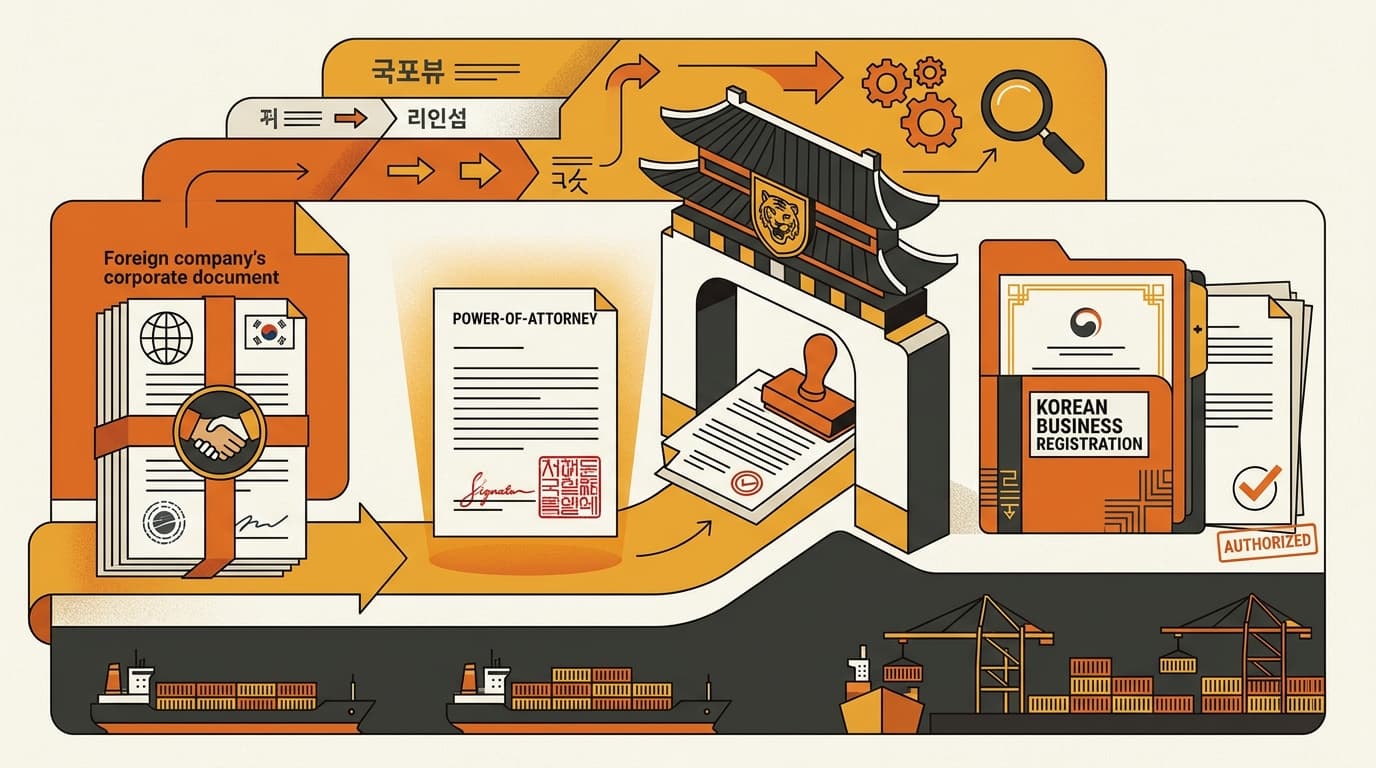
Korean Importer Registration: Why a POA Is Not Enough
A power of attorney cannot establish Korean importer registration; corporate-authority proof and Korean importer records are still required for the filing.
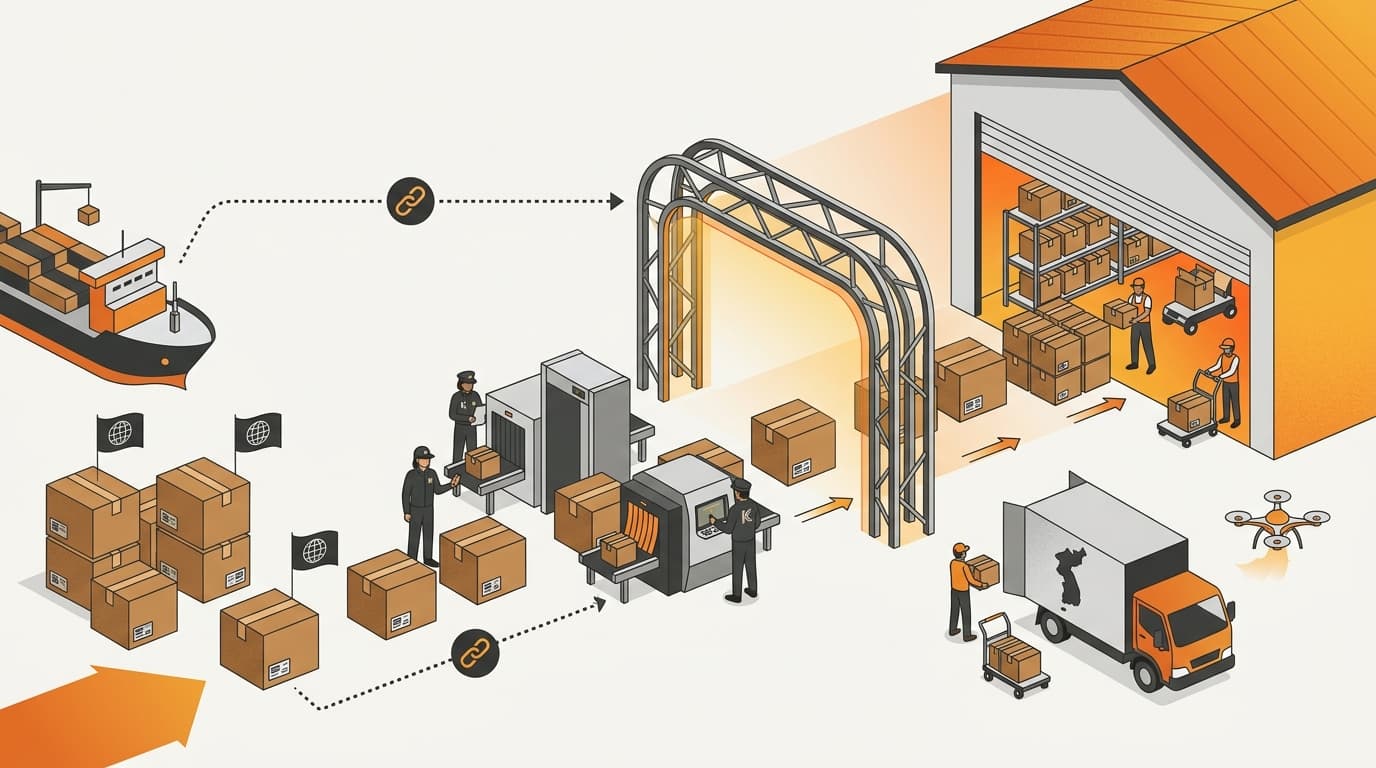
Can You Delay Korea Import Duty on Consignment Stock?
No. Korea import duty and import VAT are normally assessed when consignment stock is cleared for domestic circulation, not when a Korean customer buys one unit.

Children’s Product KC: Does “Ages 13+” Avoid the Rules?
No. In Korea, “Ages 13+” is only one factor; design, intended use, packaging, and child-directed marketing can still trigger children’s-product KC rules.