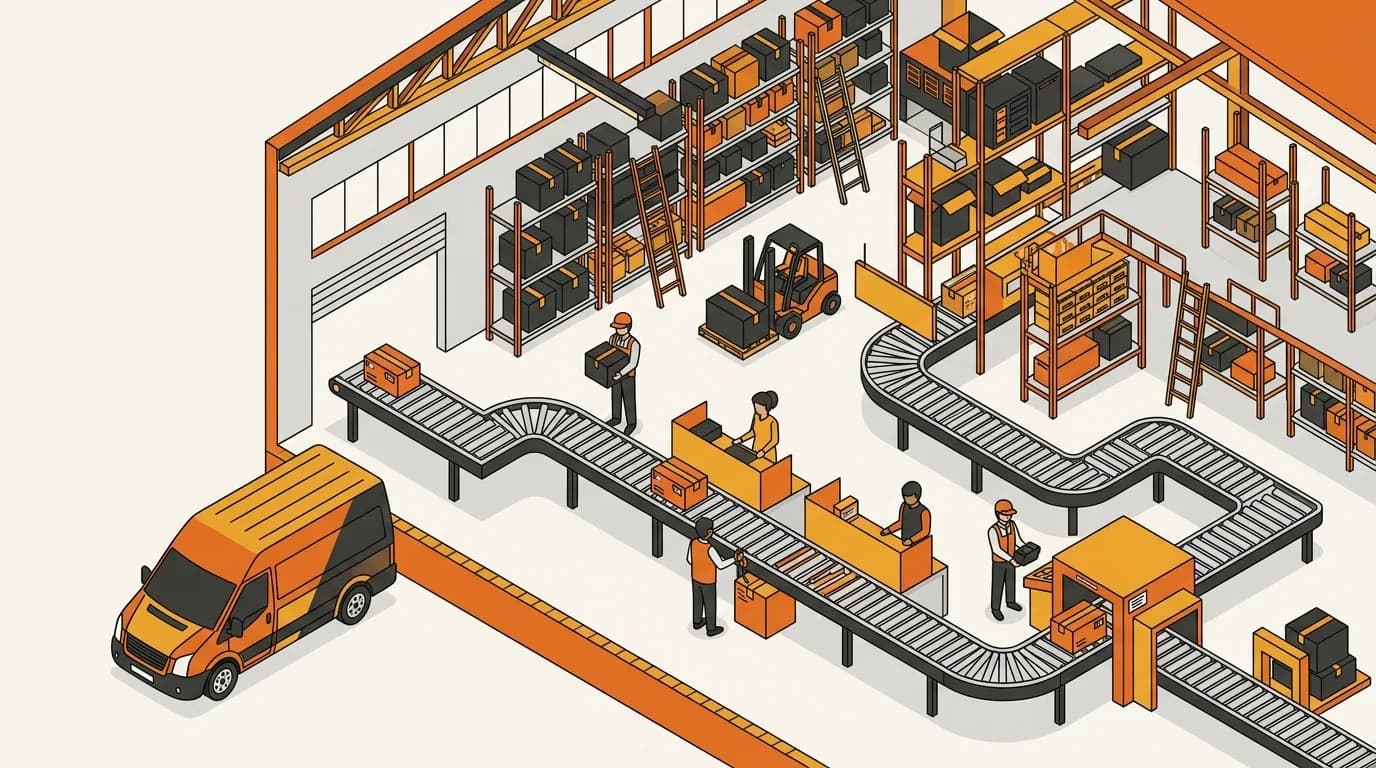
How to Choose a 3PL in Korea as a Small European Brand
A small European brand searching for a "third-party logistics provider in Korea" usually wants one thing: a warehouse that receives their pallets, ships to Korean consumers, and handles returns. The short answer is that a classical 3PL can do that part. Nippon Express, Mitsui-Soko, and CJ Logistics all have Korea operations. But for a small consumer brand selling direct to Korean shoppers, the warehouse is rarely the binding constraint. Coupang onboarding, KC compliance, and a Korean-language product page are.
This article keeps the operational basics short and goes hard on the parts that the contract-logistics websites skip.
What "3PL in Korea" actually means for a small brand
In Korean logistics vocabulary, 3PL (third-party logistics) traditionally refers to contract logistics. A provider takes over warehousing, inbound customs clearance, inventory management, picking, packing, and outbound delivery on your behalf. The big names — CJ Logistics, Nippon Express Korea, Mitsui-Soko, Samskip, EUSU — are excellent at this for B2B flows and larger D2C operations.
For a small European brand doing perhaps a few pallets a quarter, classical 3PL is usually overkill on contract complexity and underkill on the parts that actually drive sales: marketplace integration, Korean-language conversion, and compliance.
In practice, most small foreign brands end up with one of two operational shapes:
- Coupang Rocket Growth (로켓그로스) as the de facto 3PL — Coupang itself warehouses, fulfills, and handles returns under its Rocket Delivery promise. You ship DDP to a Coupang-designated inbound center.
- An independent 3PL plus Coupang seller fulfillment — A separate warehouse stores your goods and ships to consumers using a domestic courier. You list on Coupang but not under Rocket.
Both work. The first is faster to launch and gives you the Rocket badge that Korean consumers actively filter for. The second gives you more control over packaging and channel-mix flexibility. We cover the tradeoff in detail in our operator's framework on Rocket Growth versus cross-border.

The bureaucratic layer the 3PL won't handle
Classical 3PL pages describe themselves as covering "import to customs clearance." That sentence hides three responsibilities that are legally distinct in Korea and that no warehouse provider will take on as a single bundle:
- Importer of Record (IoR / 수입자) — The entity legally responsible for the import. Customs duties, import VAT, and product compliance liability sit here. A 3PL is not your IoR by default.
- Seller of Record (SoR) — The entity identified as the seller on Coupang. Korean consumer protection law, tax invoicing, and platform settlement all attach to the SoR.
- VAT (부가가치세) — Korea applies a standard 10% VAT to imports and to domestic sales. For VAT-inclusive revenue, the VAT portion is 1/11 of gross sales — about 9.09%. Your IoR pays import VAT at the border; your SoR collects sales VAT and files with the National Tax Service (NTS).
A 3PL does not become your IoR. A 3PL does not become your SoR. If you are a non-resident European brand without a Korean entity, you need a partner — or your own Korean limited company (유한회사) — to take those roles. We explain the practical paths in agency vs IoR vs entity for Korea skincare entry, and the funding flow side in who pays for what in Korea.
Coupang setup and seller onboarding — the part most 3PL guides skip
Coupang is where roughly the majority of Korean e-commerce demand lives. If your goal is to sell to Korean consumers, a 3PL without a Coupang plan is a warehouse hoping for orders.
Coupang seller onboarding has three layers that European brands underestimate:
- Business verification (KYC) — Coupang requires a Korean business registration number, a Korean corporate bank account, and a Korean tax invoice (세금계산서) capability. Each of those depends on having a Korean entity or a partner SoR. The bank account part is harder than it sounds; we wrote about it in Korean corporate bank accounts as the last wall foreign founders hit.
- Catalog and listing setup — Standard product listings on Coupang are text-driven: Korean title, bullet specifications, attributes, and SEO-relevant keywords. This is distinct from the visual PDP.
- Rocket Growth enrollment — If you want Rocket Delivery on your products, you enroll specific SKUs in Rocket Growth (로켓그로스), ship them to Coupang's fulfillment center, and pay the platform's storage, handling, and returns fees on top of the standard selling commission.
A classical 3PL provider has no role in any of those three steps. They will receive your container, but they will not register your Coupang account, write your Korean listing, or argue with a Coupang category manager about why your product needs a specific tag.
KC certification and product compliance — what gates the inventory
Korean product safety law is category-specific. Some product categories require KC Certification (KC 인증) before they can be legally sold in Korea — typically electrical and electronic products, children's products, certain household appliances, and some personal-care devices. Cosmetics, food, supplements, and pet food have their own regulatory regimes (MFDS for cosmetics and food, APQA for pet food).
A 3PL will receive non-compliant inventory and store it. That doesn't make it sellable.
For a small European brand, the practical sequence is:
- Map every SKU to its Korean regulatory category before you book freight.
- For KC-required categories, scope whether your existing EU test reports (CE, EMC) can be reused under Korea's Declaration of Conformity, or whether a full Korean-lab test is required. We cover the EMC-specific case in KC certification for USB and battery-powered devices.
- For cosmetics, supplements, food, or pet food, get the registration started early — these timelines can run several months and run in parallel with logistics setup.
- For complex bundles (a grill, for example), expect multiple separate certifications — electrical safety, EMC, and food-contact registration are three different agencies and three different reports.
The KC and MFDS work is what most brands underestimate. The freight is the easy part.
The Korean PDP — where conversion actually happens
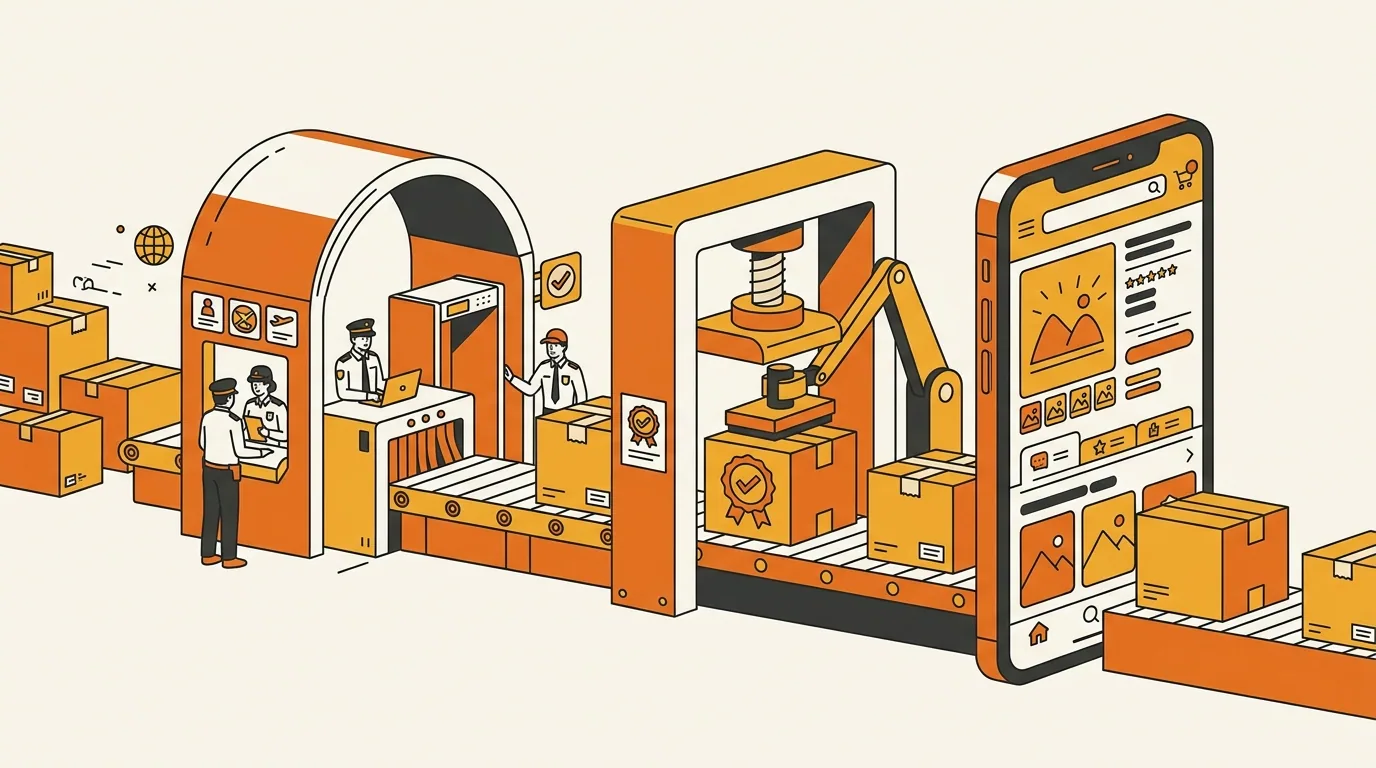
Korean consumers shop differently. On Coupang, the Product Detail Page (PDP) is not a short text block with a few photos. It is a long, visually rich, scroll-heavy page — roughly 20,000 pixels of vertical visual content — that combines product photography, infographic-style benefit explanations, comparison charts, usage scenarios, ingredient or spec breakdowns, and trust signals.
The Coupang listing (Korean title, bullet specs, search keywords) is what gets your product found. The PDP is what gets it bought.
For a small European brand, three points matter:
- PDP creation is a separate workstream. It is not a translation job. It is graphic design plus Korean e-commerce copywriting, and it is not part of standard Coupang seller onboarding or 3PL services. Plan budget and timeline for it explicitly.
- Translation alone almost never converts. Direct translations of European product copy read as foreign and stiff to Korean shoppers. Successful PDPs reorder benefits, lead with social-proof framing, and use the visual conventions Korean consumers already trust.
- The PDP feeds back into compliance. Health claims, certification logos, country-of-origin statements, and ingredient lists on a PDP are reviewable by both Coupang and Korean regulators. Mistakes here can pull a listing.
A 3PL will not write your PDP. A translation firm will not understand Coupang's visual grammar. This is a specialized step.
Launch sequencing — the order that makes the operations pay back
Once a small European brand decides to go local in Korea, the temptation is to run everything in parallel. That sequencing rarely works.
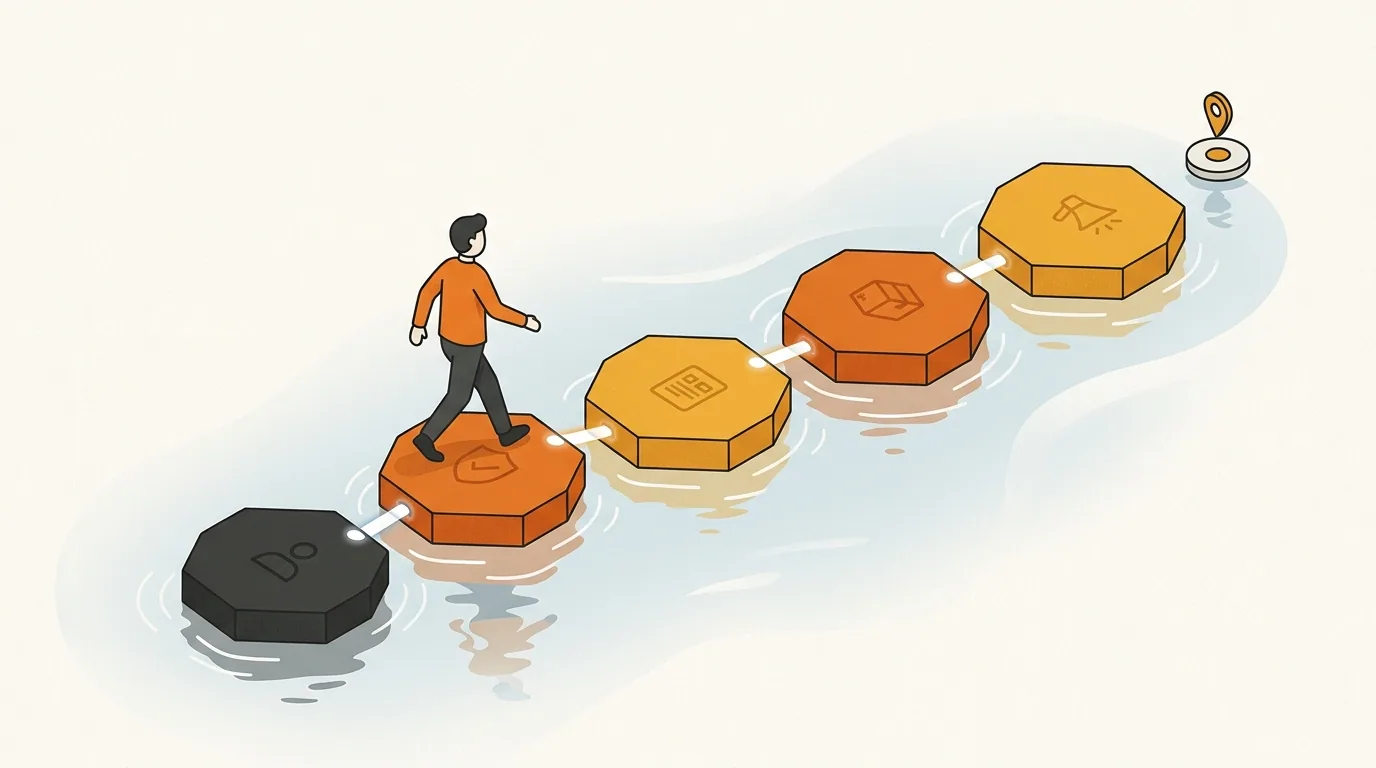
A more realistic order:
- Compliance scoping (weeks 1–4). Map every SKU to its regulatory category. Start any required Korean registrations — KC, MFDS Functional cosmetic review, food import registration, APQA. These run in the background.
- Entity and SoR/IoR setup (weeks 1–8 in parallel). If you are establishing your own Korean limited company, the entity, tax registration, and corporate bank account together take roughly two months in current conditions. If you are using a partner as SoR/IoR, this collapses into the partner's onboarding timeline.
- Coupang seller account and catalog (weeks 6–10). Cannot start in earnest until the SoR's business registration is in hand.
- Freight and inbounding (weeks 8–14). DDP shipment from Europe to the Coupang Rocket Growth inbound center, or to your independent 3PL. EU cosmetics brands in particular should plan around the predictable problems at the 3PL inbound stage — labeling, MFDS review status, and barcode mismatches.
- PDP and listing live (weeks 10–14). PDP design runs in parallel with inbounding; you want both to land at the same time.
- Marketing and paid acquisition (weeks 14+). Only after the listing is live, the PDP converts, and Rocket Growth shows in-stock status. We've written before on why operational readiness should precede ad spend.
A small brand that follows this sequence will be selling in Korea inside one quarter to two quarters of decision. A brand that signs a 3PL contract first and figures out everything else later usually stalls.
So — do you need a 3PL, or something else?
If you are a small European brand at the "evaluating Korean 3PL" stage, the more useful question is: what operational shape do you want?
The classical 3PL question — "which warehouse?" — is the right question for a brand that already has Coupang set up, KC squared away, and a Korean PDP converting. For everyone else, the warehouse is the last decision, not the first.
A Coupang Rocket Growth-first setup gives a small brand the fastest path to Rocket-eligible listings, with Coupang itself acting as the fulfillment provider. A classical 3PL setup gives more control but requires you to solve seller-account, listing, and conversion separately. For most small European brands we work with, the first shape is the right starting point, with a classical 3PL added later as channel mix expands.
“A 3PL contract is a warehouse decision. A Korea entry is an operational stack decision. Conflating the two is the most common reason small brands lose six months.”
Kontactic — Operations team
Planning a Korea launch as a small European brand?
If you are evaluating 3PL, Coupang Rocket Growth, and compliance in parallel, we can help you sequence the work. Tell us about your product and timeline.
About the author
Korean and global e-commerce operators with 15+ years of cross-border experience, led by CEO Isaac Lee — KOTRA-certified consultant and official lecturer for Seoul City and the Korea Customs Service. We run Korea market entry for Western brands every day; this blog documents what we learn in the field.
More about Kontactic →Related Articles
Can You Delay Korea Import Duty on Consignment Stock?
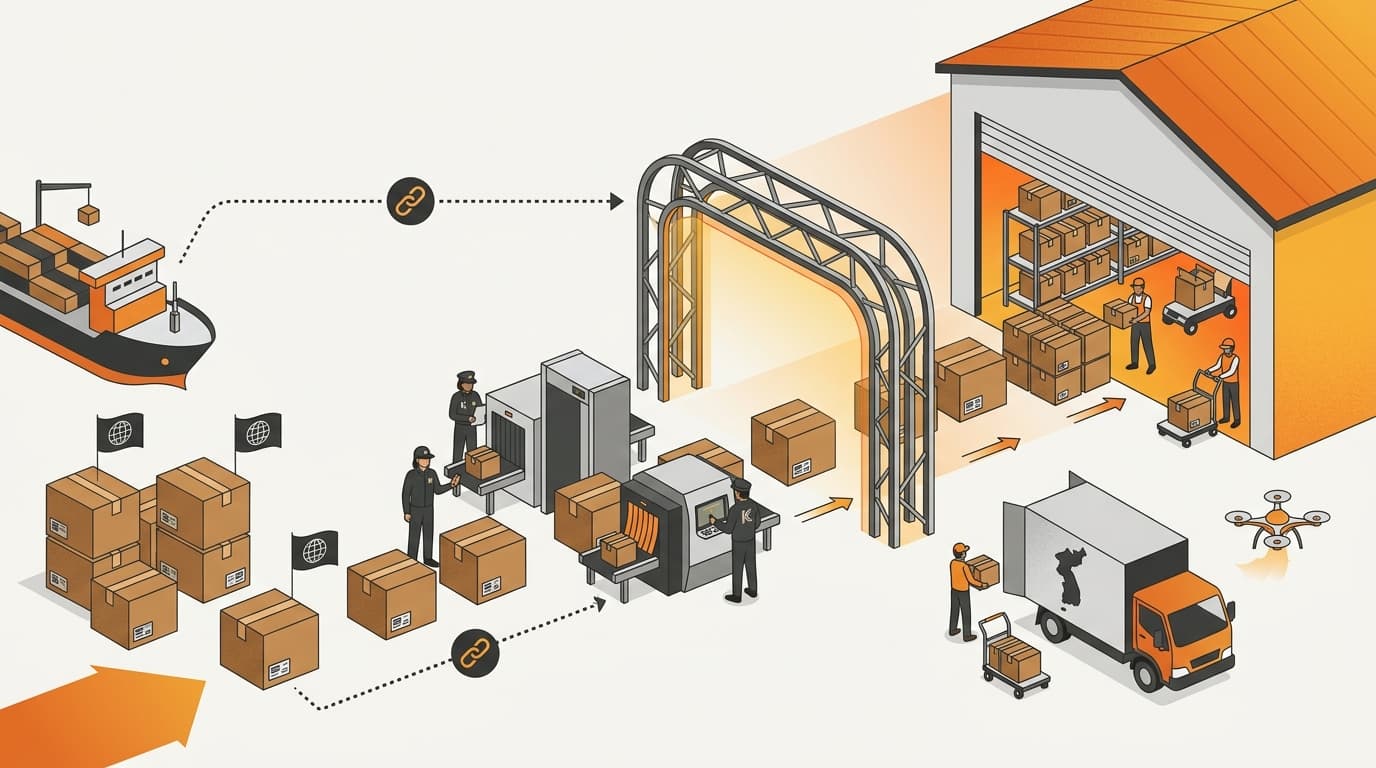
No. Korea import duty and import VAT are normally assessed when consignment stock is cleared for domestic circulation, not when a Korean customer buys one unit.

Children’s Product KC: Does “Ages 13+” Avoid the Rules?
No. In Korea, “Ages 13+” is only one factor; design, intended use, packaging, and child-directed marketing can still trigger children’s-product KC rules.

Korean KC for a Detachable Device Charger: Not Automatic
Does Korean KC cover a detachable charger? Not automatically. The final bundle and adapter evidence must match the Korean commercial SKU before import.