How Much Does 3PL Setup Cost in South Korea for a Small Brand?
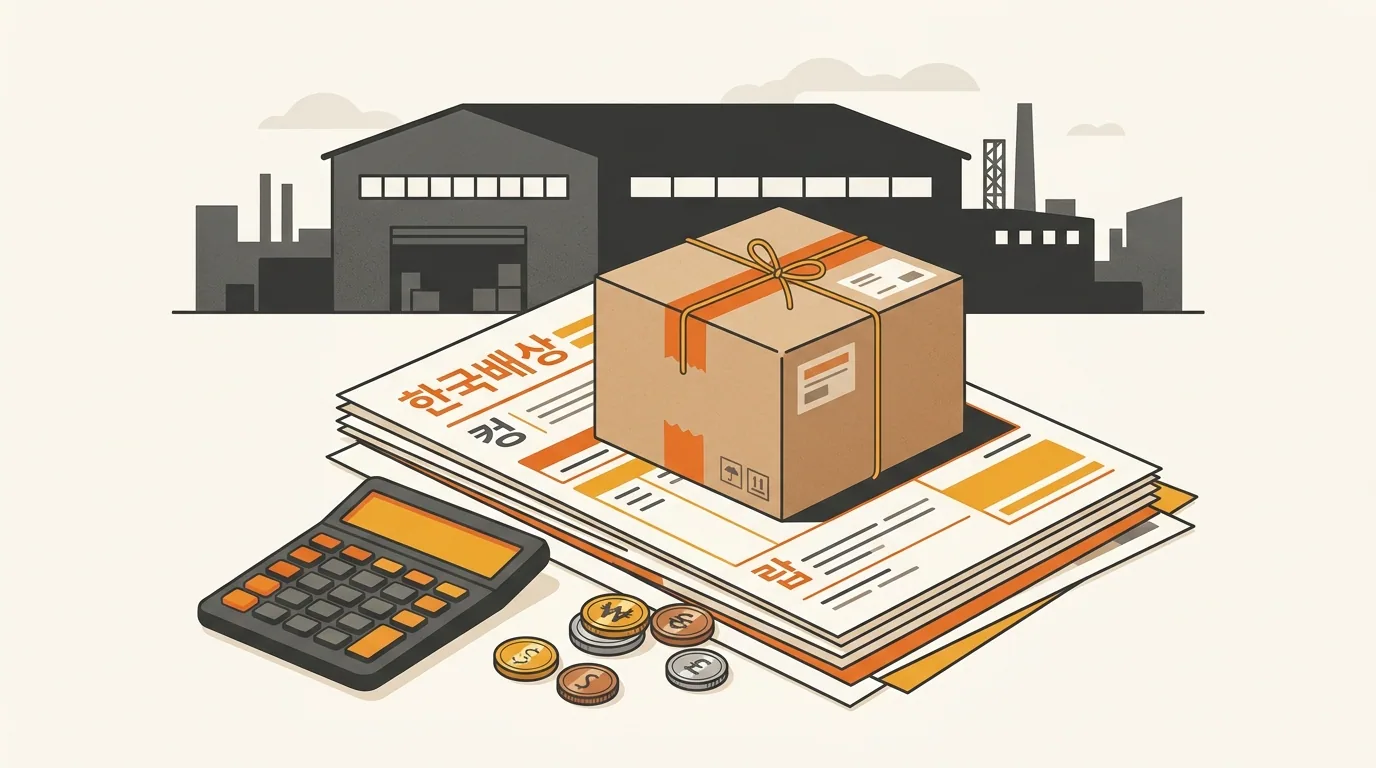
Setting up 3PL fulfillment in South Korea for a small brand typically lands somewhere between USD 15,000 and USD 60,000 in first-year fixed costs — not because the warehouse is expensive, but because you are also paying for an Importer of Record, customs clearance, KC or MFDS compliance where it applies, Coupang onboarding, and Rocket Growth fees stacked on top. The per-CBM storage quote you get from a Korean 3PL is the smallest line item in that bill.
Most "Korea 3PL cost" guides quote that per-CBM rate and stop. This piece walks through every line item a small brand should model before pitching Korea expansion internally — and flags where foreign brands usually underestimate.
What you're actually buying when you "set up 3PL in Korea"
For a foreign brand, Korean 3PL is not a standalone procurement decision. You cannot ship a pallet to a Korean warehouse and start selling. Korea requires a domestic entity to act as both Importer of Record and Seller of Record before goods can clear customs and appear on a Korean marketplace. The 3PL warehouse sits downstream of those two roles.
So when an SMB ops lead types "how much does it cost to set up 3PL fulfillment in South Korea" into a search bar, the honest answer is: the warehouse rate is the easy part. The expensive parts are the legal, regulatory, and platform infrastructure that has to exist before the warehouse can receive your first carton.
In Korea, you can't separate the 3PL question from the IoR, SoR, and platform onboarding questions. A small brand modeling Korea entry needs to budget all four together, or the P&L will be wrong by a multiple.
A realistic small-brand budget breaks into roughly five buckets:
- Entity or partner setup (IoR + SoR)
- Product-level compliance (KC certification, MFDS registration, labeling — category-dependent)
- Inbound logistics (DDP freight, customs duties, VAT)
- 3PL and platform fulfillment (Rocket Growth or independent 3PL)
- Listing, content, and operations (Coupang setup, PDP, customer service)
Each of those interacts. Skipping one delays the others.
Importer of Record and customs: the line item that doesn't show up on a 3PL quote
Under Korean law, every import shipment has an IoR — the entity that files customs documentation, pays import duties and VAT, and is legally liable for what enters the country. A foreign brand without a Korean entity cannot be its own IoR. Instead, you either set up a Korean limited company (유한회사) to act as IoR, or you contract an IoR partner to do the work on your behalf.
The IoR pays, on every shipment:
- Import duty (HS-code-dependent; 0% to 13% is the typical range for consumer goods, but it varies)
- VAT (부가가치세) at 10% of the customs-assessed value
- Customs broker fees
- Any category-specific clearance fees (MFDS lab testing for food and cosmetics, KC verification for electricals)
The 10% VAT matters more than founders expect. If you're shipping DDP under Incoterms 2020, your forwarder will collect it from you at clearance. A Korean VAT-registered entity (your own, or your IoR partner's) can offset that input VAT against the output VAT it later collects from Coupang sales. A cross-border seller without a Korean entity cannot — that 10% is permanently lost.
This is the first place where the "use a partner IoR" math gets real. The partner's fee can look high until you realize they are doing your VAT recovery, your customs declaration, your KC compliance interface, and your post-clearance product liability paperwork. We cover the structural choice in detail in What is an Importer of Record (IoR) in Korea? and the pricing logic in Korea IoR Fees: What Consumer Electronics Brands Pay Annually.
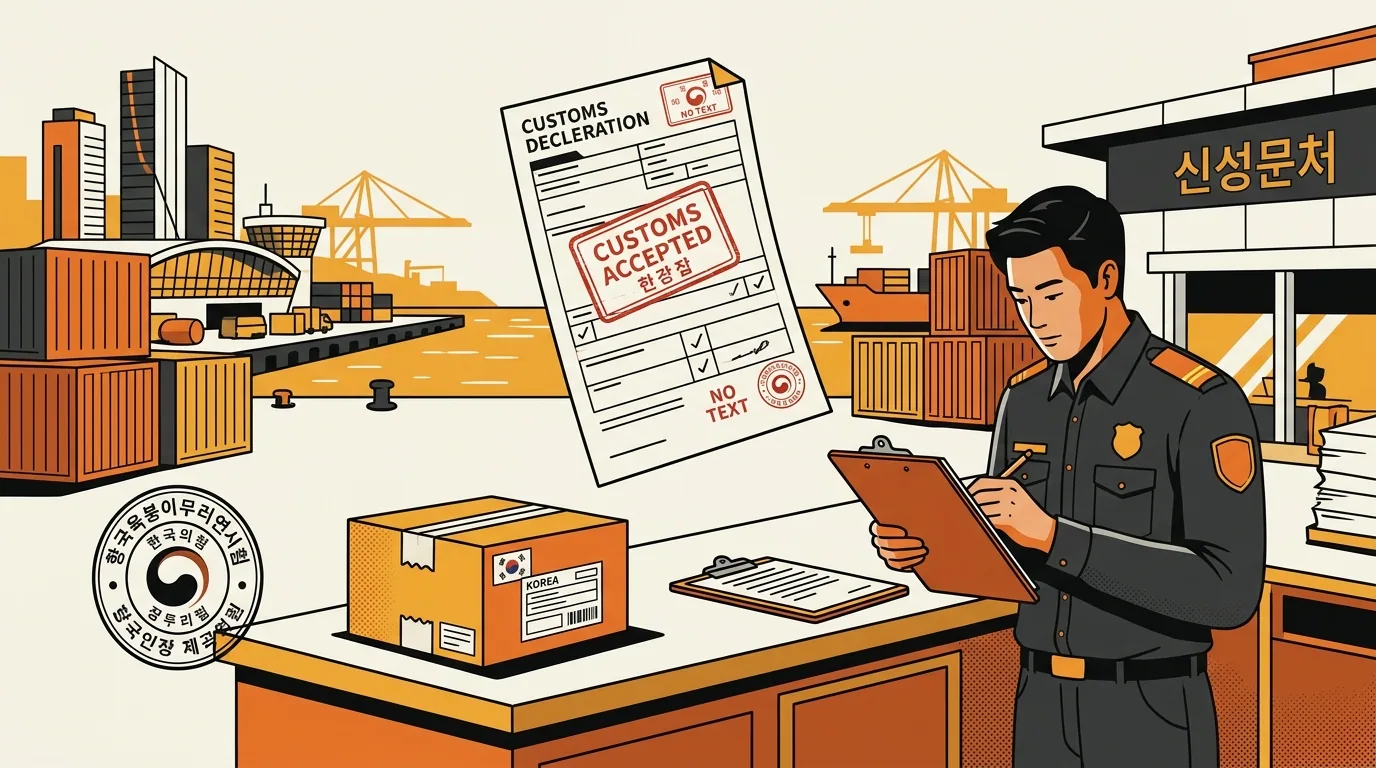
In practice, foreign brands underestimate two IoR cost components:
- Category compliance. KC Certification (KC 인증) for electricals, MFDS Functional review for cosmetics, feed registration for pet food. These are one-time but can run several thousand to tens of thousands of USD depending on the category. None of it is bundled into a 3PL quote.
- Per-shipment customs broker work. Each inbound container or LCL shipment triggers a clearance event with its own broker fee. Small brands that plan monthly air freight replenishments end up paying these fees twelve times a year, not once.
Coupang Rocket Growth: the 3PL most small brands actually use
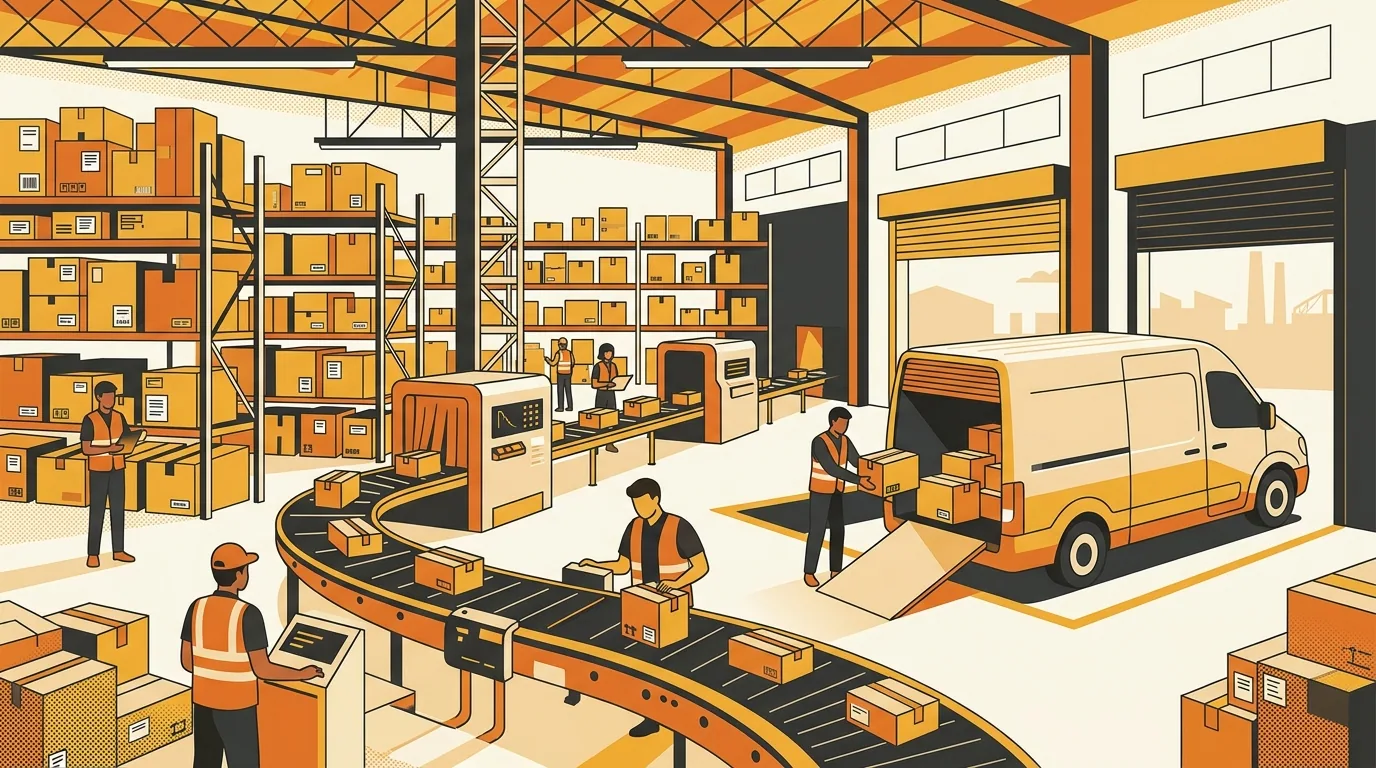
For brands selling on Coupang, the default 3PL is Coupang Rocket Growth (로켓그로스) — Coupang's own third-party logistics service that handles warehousing, last-mile delivery via the Rocket network, and returns processing. It is not the only Korean 3PL option, but for a small brand it is usually the right one. It plugs directly into the marketplace, gets the "Rocket" delivery badge that drives conversion, and removes the need to negotiate a separate fulfillment contract.
Rocket Growth fees are not a flat rate. They stack:
- Inbound handling when your cartons arrive at the Coupang warehouse
- Storage fees charged per unit per day, weighted by SKU dimensions
- Fulfillment / delivery handling fees charged per order picked, packed, and shipped
- Returns handling fees charged when a customer returns the unit
- Platform commission charged by Coupang on the sale (separate from Rocket Growth fees)
For a small brand, the Rocket Growth bill in any given month is a function of three variables you do not fully control: SKU dimensions, sell-through velocity, and return rate.
A slow-moving, bulky SKU can spend three months in the warehouse and still incur a returns fee if it eventually sells and gets returned. The same SKU shipped cross-border from your home country would have avoided both the storage and return charges.
Coupang has also tightened Rocket Growth policy meaningfully over the past year. Return-fee structures changed, evidence thresholds for damage disputes were introduced, and the seller's burden of proof on quality complaints shifted. We mapped what changed and how to think about the new margin math in Three Coupang Policy Changes That Reset Rocket Growth Margins.
Rocket Growth quotes that come back as "roughly X% of revenue" are averages, not contracts. The actual blended fee load on your SKU depends on its cube, its return rate, and how long it sits. Model two or three SKUs individually before extrapolating.
There is also the inbound leg. If you're shipping from China to a Korean 3PL, Coupang now offers a Direct LCL consolidation service at USD 70 per CBM that undercuts most independent forwarders. We covered the operational details in Coupang's Direct LCL: China-to-Korea Forwarding for Sellers. For brands shipping from the US or EU, ocean LCL or air freight from your home market still applies, plus DDP customs work at the Korean side.
Coupang setup and seller onboarding
Setting up a Coupang seller account is not what foreign brands assume. You need a Korean business registration number, a Korean corporate bank account, a Korean phone number on file, and a Korean customer service channel. Coupang's KYC process verifies all of this against domestic databases.
A US LLC with a US bank account cannot directly become a Coupang seller. There has to be a Korean SoR — either your own entity or a partner's — in the chain.
That SoR is either:
- Your own Korean entity, which you register, capitalize, and operate. The Korean limited company (유한회사) is the standard form. Setup runs in the multi-week range and is heavier than founders expect — see Why Setting Up a Korean Entity as a Non-Resident Foreigner Got Harder — and How to Actually Get It Done and Korean Corporate Bank Accounts: The Last Wall Foreign Founders Hit for what actually breaks.
- A partner's Korean entity, under an arrangement where the partner is the registered SoR and operates the Main Seller Account on your behalf. This is the Spark-style model Kontactic offers, and it removes the entity-formation timeline entirely.
Either way, there's a one-time setup effort: Korean-language product listings, basic Coupang SEO, category placement, image localization, and KC labels where required. The Product Listing layer (translated title, description, specs) is typically included in service partnerships. The full Product Detail Page (PDP) — that approximately 20,000-pixel vertical, conversion-optimized visual page Korean shoppers expect — is usually a separate one-time deliverable. Without a PDP, traffic comes in but doesn't convert.
Cash flow is the part nobody mentions in setup-cost discussions. Coupang's default settlement schedule pays sellers on the 20th business day of the following month — close to 60 calendar days from sale. A small brand financing inventory, ad spend, and Rocket Growth fees in the meantime needs working capital that most P&Ls don't model. The breakdown is in Coupang Settlement Timelines: Monthly vs Weekly vs Fast.
Cross-border vs. local: the decision that determines whether you need a 3PL at all
A small brand can sell to Korean consumers without ever setting up a 3PL. Cross-border — shipping individual parcels from your home country to a Korean buyer who clears them as personal imports — is a valid path. It's how most foreign brands first discover Korean demand exists.
The trade-offs are well-defined:
- Cross-border: No Korean entity, no IoR, no KC certification for most categories. Per-unit margins look good on paper, but conversion is slow and you lose the Rocket delivery badge.
- Local (with 3PL): Korean entity or partner, full IoR/SoR stack, Coupang Rocket fulfillment. Per-unit margin drops 5–15% from platform and Rocket Growth fees, but order volume typically lifts 8–10×.
We modeled the margin shift in How Coupang IoR and 3PL Change Your Korea Margins. For most small brands with proven Korean cross-border demand, the math works out. For brands that haven't validated demand yet, the local stack is premature.

The 3PL question is almost never the first question. The first question is whether you have enough cross-border signal to justify the IoR, SoR, and Rocket Growth stack at all. For a fuller framework on the timing of that switch, see Rocket Growth vs. Cross-Border Selling in Korea: An Operator's Decision Framework.
What small brands consistently underestimate
Foreign brands entering Korea consistently underestimate four cost components — usually discovered after the founder has already committed to a launch date:
- The 10% VAT working-capital drag until VAT recovery cycles align. Even with a registered entity, your input VAT on imports lands months before the corresponding output VAT comes back via filings.
- Returns operations. Korean consumers return more than US or EU consumers, and Rocket Growth charges per returned unit. A 12% return rate on a small-margin SKU can erase profitability entirely.
- Korean-language customer service. Coupang requires it. A solo founder cannot answer Korean-language inquiries on a 24-hour SLA from a Western timezone. It's either a hire, an outsource, or a partner.
- The localized content layer. Korean shoppers scroll. The 20,000-pixel PDP isn't a vanity asset — without it, your conversion rate on Coupang traffic will not match domestic competitors who built theirs from day one.
For a deeper view of how these costs allocate between the brand and an operating partner, Who Pays for What in Korea: Operating Costs Explained walks through the funding flows under the three common Korea-entry models. For a worked budget at the line-item level, Korea Entry Budget: KC Cert + Shipping Costs covers the parts most guides leave out.
Build Your Own 3PL Budget: The Variables That Matter
A small brand pitching Korea expansion internally is usually better served by a range than a point estimate. The cost of "setting up 3PL fulfillment in South Korea" varies meaningfully by:
- Product category (KC, MFDS, feed registration costs vary by 10×+)
- SKU dimensions and weight (Rocket Growth storage and shipping fees are dimensional)
- Order volume forecast (per-order fees scale; per-month retainers and minimums don't)
- Whether you set up your own entity or use a partner SoR
- Your home country (DDP freight cost and lead time)
The version that fits in a board deck is a table with two scenarios — cross-border for the first six months while validating, then local Rocket Growth from month seven once monthly orders cross a threshold. That sequence isolates the 3PL setup cost as a conditional investment, not a sunk one.
Need a real Korea 3PL cost model for your brand?
We help foreign brands build line-item Korea entry budgets — IoR, customs, Rocket Growth, Coupang, and the cross-border-to-local switch — based on your actual SKUs and volume. Tell us what you're shipping and we'll come back with numbers.
About the author
Korean and global e-commerce operators with 15+ years of cross-border experience, led by CEO Isaac Lee — KOTRA-certified consultant and official lecturer for Seoul City and the Korea Customs Service. We run Korea market entry for Western brands every day; this blog documents what we learn in the field.
More about Kontactic →Related Articles

Children’s Product KC: Does “Ages 13+” Avoid the Rules?
No. In Korea, “Ages 13+” is only one factor; design, intended use, packaging, and child-directed marketing can still trigger children’s-product KC rules.

Korean KC for a Detachable Device Charger: Not Automatic
Does Korean KC cover a detachable charger? Not automatically. The final bundle and adapter evidence must match the Korean commercial SKU before import.
Can Coupang Handle Every Korean Buyer Inquiry? No—Seller Duties
Coupang may handle platform and fulfillment contacts, but sellers still own product questions, cancellations, returns, exchanges, and order exceptions.