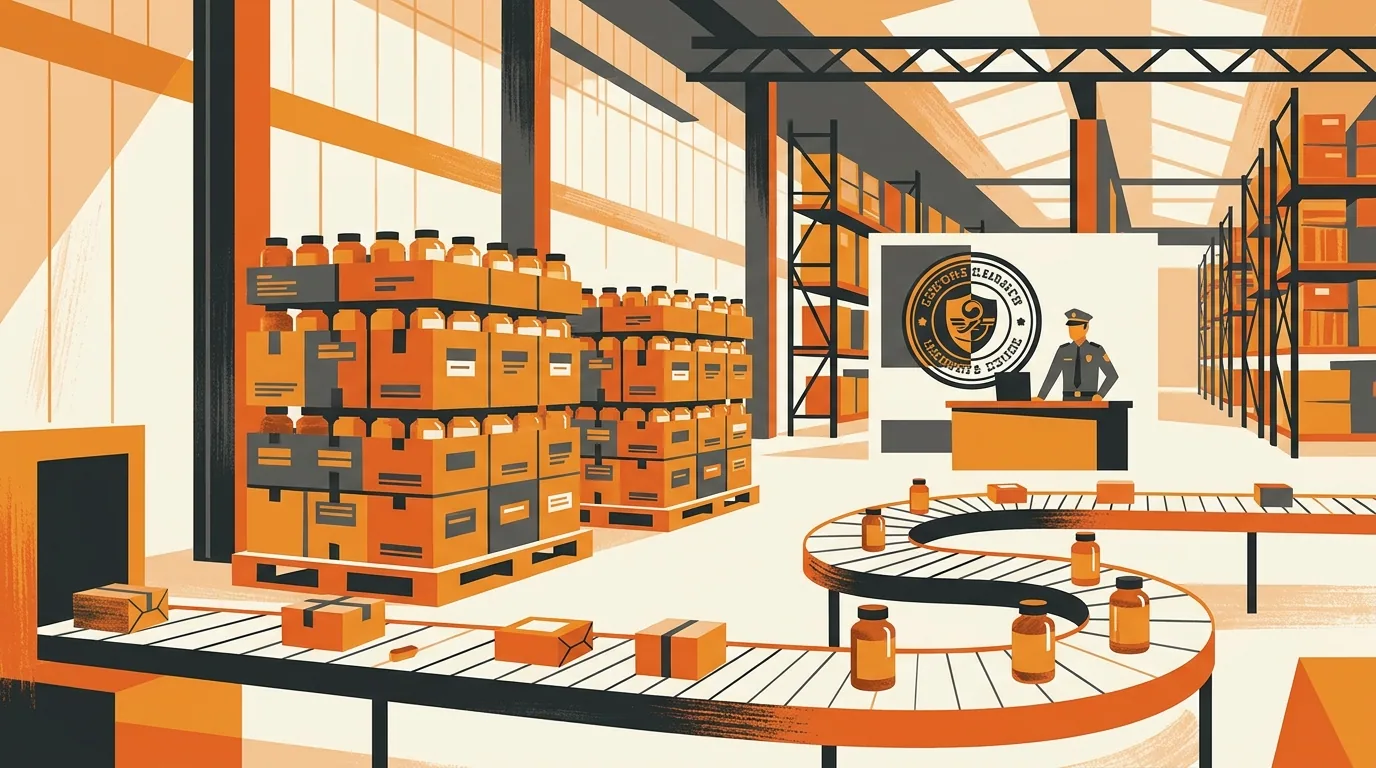
Korea 3PL for Health Supplements: Tax & Returns Guide
A Korea 3PL for health supplements must do far more than warehouse and ship. It has to coordinate Health Functional Food (HFF) registration, manage import VAT recovery, handle Coupang Rocket Growth returns, and align settlement timing. Most classical 3PLs cover only warehousing and inland delivery — leaving the compliance layer to you.
Most foreign supplement brands start by searching for a 3PL because they assume warehousing and last-mile delivery are the binding constraint. In our experience, they almost never are. The binding constraints are Health Functional Food (건강기능식품) registration, the identity of the Importer of Record, returns handling on Rocket Growth, and how VAT moves through settlement. This guide walks through each — and ends with a framework for separating what a classical 3PL can do fast from what requires a different kind of operator.
What "3PL" actually covers — and what it doesn't
The short answer is that a classical Korean 3PL handles inland transport, warehousing, pick-and-pack, and sometimes customs brokerage. Nippon Express Korea, Mitsui-Soko Korea, HanEx Fulfillment, and Shinwon all fit this shape. They run large-scale warehouses near Incheon, Gimpo, and Busan, and they can store and ship supplement inventory at the appropriate temperature range.
What they generally do not do:
- Act as the Importer of Record (IoR) for your supplement category.
- Hold or apply for Health Functional Food (HFF) product registration with MFDS.
- Open or operate your Coupang seller account as Seller of Record.
- Manage Korean-language customer service for returns and complaints.
- Build a Korean Product Detail Page (PDP) that actually converts.
- Settle VAT on your behalf or remit Coupang proceeds to your overseas account.
That gap is where most foreign brands lose time. The 3PL is ready, the cartons are in the warehouse, and the listing is live — but the SKU cannot move because the HFF certificate is in someone else's name, or because Coupang requires a Korean business registration number that nobody has been assigned to open.

Health Functional Food: the gate before the warehouse
Health supplements imported into Korea are not a regular consumer category. Most are regulated as Health Functional Foods (건강기능식품, HFF) under MFDS, which means three things in practice.
First, the product itself has to be eligible. Generic vitamins, minerals, and many botanicals fall under the recognized HFF list. Novel ingredients, proprietary blends, or anything with claims attached often require an individually recognized functional ingredient review, which is a separate and slower process.
Second, the importer must be registered as a Health Functional Food importer (건강기능식품 수입업) — not just any company with a business license. A classical 3PL does not hold this status. It is a regulatory credential tied to a single Korean entity.
Third, every batch typically requires document review or testing at the border. A clean importer history shortens this. A new importer's first few shipments are reviewed more conservatively.
For a realistic view of what this looks like end-to-end, our Korea supplement entry timeline walks through the 5–8 month sequence from application to first sale.
If your 3PL says they handle "supplements" but cannot point to the Korean entity that will appear on the HFF importer registration, that part of the workflow is not actually solved. It just hasn't surfaced yet.
Import tax handling: what "tax" really means here
Foreign brands ask about "import tax handling" expecting one number. There are several distinct flows.
Customs duty depends on the HS code. Many supplement formulations land in low single-digit percentages, but specific botanicals or animal-derived ingredients can carry higher rates or additional quarantine review (APQA for some categories).
Import VAT is paid at the border on landed value plus duty. Korea's VAT rate is a flat 10%.
When the product sells on Coupang, you also collect sales VAT on the retail price. This sounds like double taxation — but the import VAT is recoverable as a credit if the same Korean entity paid the import VAT and files the quarterly VAT return. That alignment is critical. For VAT-inclusive Korean revenue, the VAT portion is 1/11 of gross sales (approximately 9.09%).
This is where the choice of IoR shapes the cash math. If a classical 3PL acts only as a customs broker on your behalf, the import VAT often gets paid by an arrangement that is hard to reconcile against Coupang settlement statements. If a Korean entity — yours, or a partner's — is both the IoR and the Coupang Seller of Record, the import VAT becomes a real input credit against the sales VAT you collect.
For a fuller breakdown of which costs sit where across entry models, see Who pays for what in Korea: operating costs explained.
Coupang returns and Rocket Growth: the part that resets margins
Once the SKU is live, supplements behave differently from electronics or apparel in one specific way: Korean consumers return them at high rates when there is any expectation mismatch — flavor, capsule size, labeling clarity, perceived efficacy. Coupang's Rocket Growth (로켓그로스) absorbs the operational handling of those returns, but the cost falls on you.
Three Coupang policy shifts in 2025 changed the math here, and most foreign brands don't see them until the first monthly settlement statement. The detail is in three Coupang policy changes that reset Rocket Growth margins, but the short version: return fees, an evidence threshold, and a shifted burden of proof on the seller (쿠팡확인요청) now matter materially.
A classical 3PL can warehouse returned inventory, inspect it, and decide whether to re-shelve or scrap. It cannot file the evidence trail Coupang requires to dispute a return claim — that is a Korean-language operations job, run inside the seller account, with timestamps that start from the moment Coupang notifies the seller.

Settlement timing: when the cash actually arrives
This is the operational fact foreign brands underestimate most often.
Coupang's default settlement schedule pays sellers on the 20th business day of the month following the sale — close to 60 calendar days from the sale event. You can move to weekly or fast settlement, but each comes with tradeoffs. Our breakdown of Coupang settlement timelines walks through the three modes and when each makes sense.
Why this matters for a 3PL conversation: a classical 3PL has no view into Coupang settlement. The 3PL invoices you for storage, pick-and-pack, and inbound handling on its own schedule, usually monthly net 30. Your supplement business will likely be paying 3PL fees, Rocket Growth fees, and import VAT before the matching sales revenue lands. The working-capital gap is real and it is consistent. It needs to be planned, not absorbed.
A Korea-specific decision framework
Here is how to separate what a classical 3PL can do fast from what requires deeper local infrastructure.
A classical 3PL is enough when:
- You already have a Korean entity registered as an HFF importer.
- You already operate a Coupang seller account under your Korean entity.
- You have Korean-language CS and a Korean PDP in place.
- You just need warehousing, pick-and-pack, and inland delivery.
You need more than a 3PL when:
- You do not have a Korean entity, or your entity is not HFF-registered.
- You have no Coupang Seller of Record relationship.
- You have no in-Korean labeling or PDP workflow.
- You want a single operator accountable for landed cost, Coupang growth, and remittance — not a stack of vendors you coordinate from abroad.
“The 3PL is rarely where Korean supplement launches fail. It's the layer above it — HFF status, IoR identity, and the Coupang seller account — that decides whether the inventory ever moves.”
Kontactic operations team — Korea market entry
What foreign supplement brands underestimate
A short list, based on what we see repeatedly:
- HFF importer registration is a status, not a service. It cannot be added on later by the 3PL. It has to exist on day one.
- Korean labeling is a separate workflow from PDP. MFDS requires specific Korean-language labeling on the physical package — ingredient list, daily intake guidance, importer name and address, manufacturing/expiry dates. This is upstream of the listing. A PDP cannot fix a label.
- A Korean Seller of Record is required to sell locally on Coupang. A 3PL does not provide this. The options are your own Korean entity or a partner's entity. For the broader decision logic, see Korea market entry for supplement brands: a decision guide.
- Customer service in Korean is non-optional. Coupang's seller scoring penalizes slow or non-Korean responses. A US-based CS team responding overnight in English will hurt your listing's visibility.
- Returns are a forecast input, not a back-office cost. Plan a returns rate per SKU and price for it.
In practice, the brands that succeed treat the 3PL as one of six or seven moving parts — not as the operator. The operator is whoever owns the Korean entity, the HFF registration, and the seller account. The 3PL plugs into that.
This is the same logic our 3PL guide for small European brands applies to apparel and home goods, with the supplement-specific wrinkle that HFF status sits upstream of every other decision.

What to ask any Korean 3PL before signing
A short due-diligence list that surfaces the gaps quickly:
- Are you registered as a 건강기능식품 수입업체, or do I need that registration on a separate entity?
- Who is the Importer of Record on the customs declaration — your entity or mine?
- Do you handle MFDS document review and Korean-language labeling, or is that out of scope?
- How do you handle Rocket Growth inbound coordination — is that included or a separate fee?
- What is your process for receiving and inspecting returns from Rocket Growth?
- Can you map your monthly invoice line items (storage, pick-and-pack, returns handling) to the corresponding Coupang settlement statement and explain any gaps?
- Who responds to Coupang's evidence requests on return disputes — and in what language?
If the answer to most of these is "not us," the 3PL is fine for what it is. It just isn't the operator.
Where Kontactic fits
Kontactic operates as a Managed Market Entry Operator for foreign brands entering Korea. For supplements, that usually means one of two shapes: selling under our Korean entity as IoR and Seller of Record so you can launch without setting up your own entity, or operating your own Korean entity end-to-end while we run the commerce and growth layers. The 3PL is a vendor inside that operation, not the operation itself.
Vetting Korean 3PLs for your supplement brand?
Tell us the SKUs, the certificates you already hold, and where you want to land. We will map which parts a classical 3PL can cover and which parts need a different operator.
About the author
Korean and global e-commerce operators with 15+ years of cross-border experience, led by CEO Isaac Lee — KOTRA-certified consultant and official lecturer for Seoul City and the Korea Customs Service. We run Korea market entry for Western brands every day; this blog documents what we learn in the field.
More about Kontactic →Related Articles
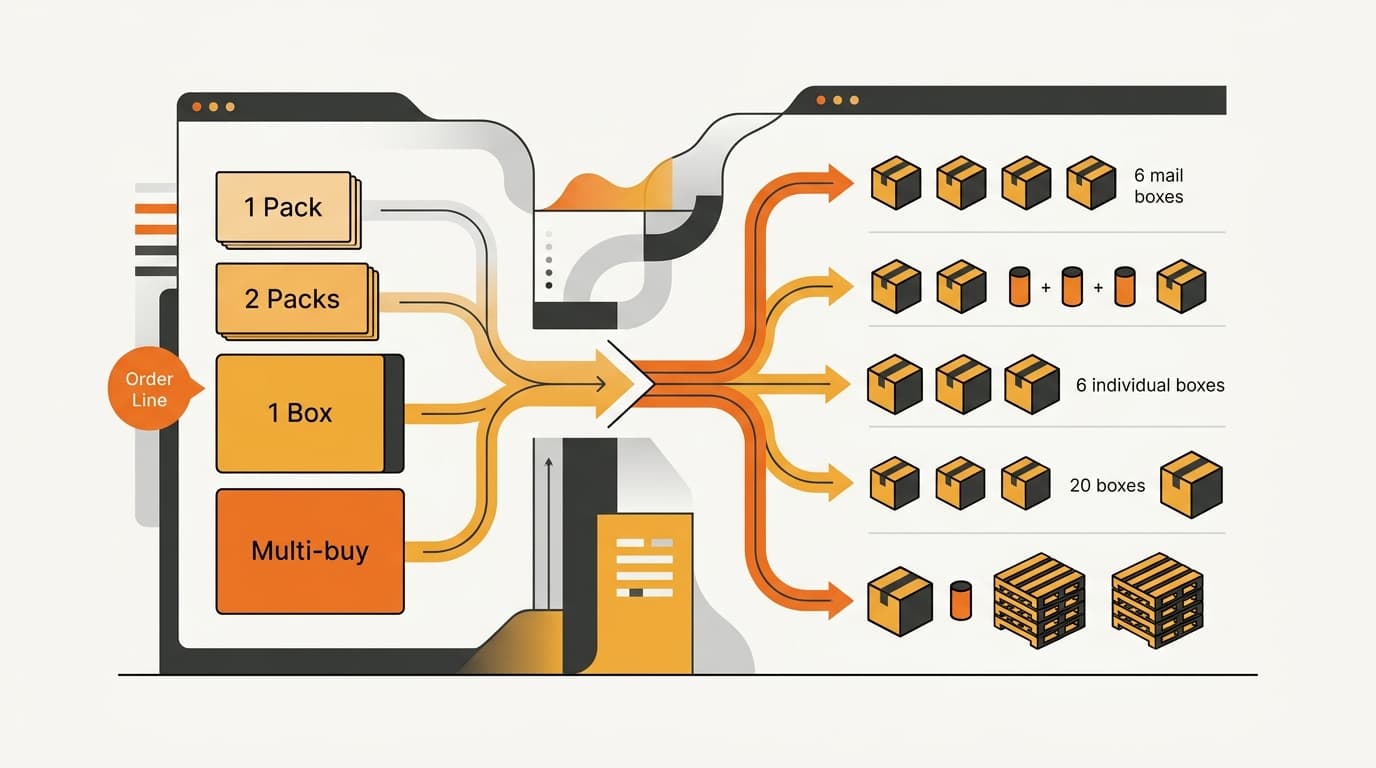
Coupang Order Lines: One Line Is Not One Unit
A Coupang order line can represent a generated quantity option, so your connector must map it to a base SKU and physical quantity before stock movement.
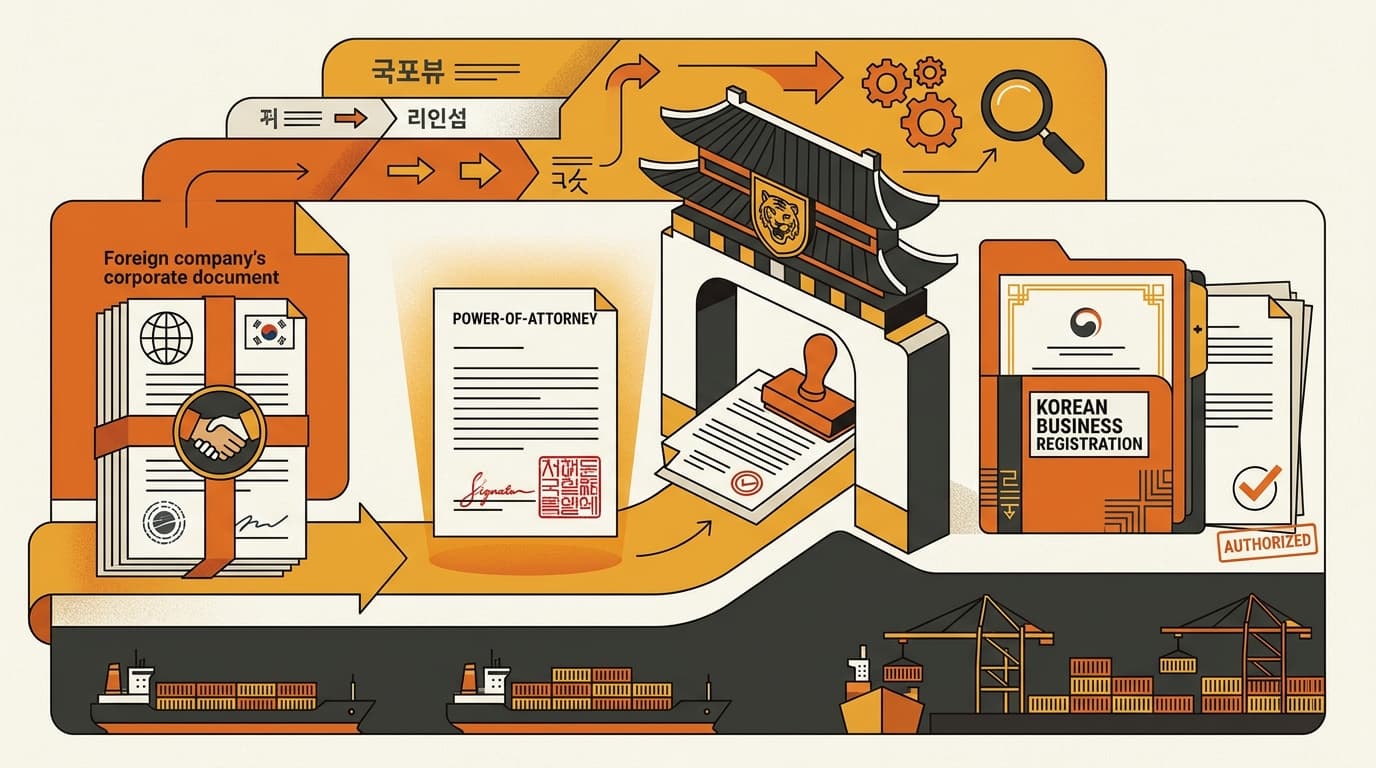
Korean Importer Registration: Why a POA Is Not Enough
A power of attorney cannot establish Korean importer registration; corporate-authority proof and Korean importer records are still required for the filing.
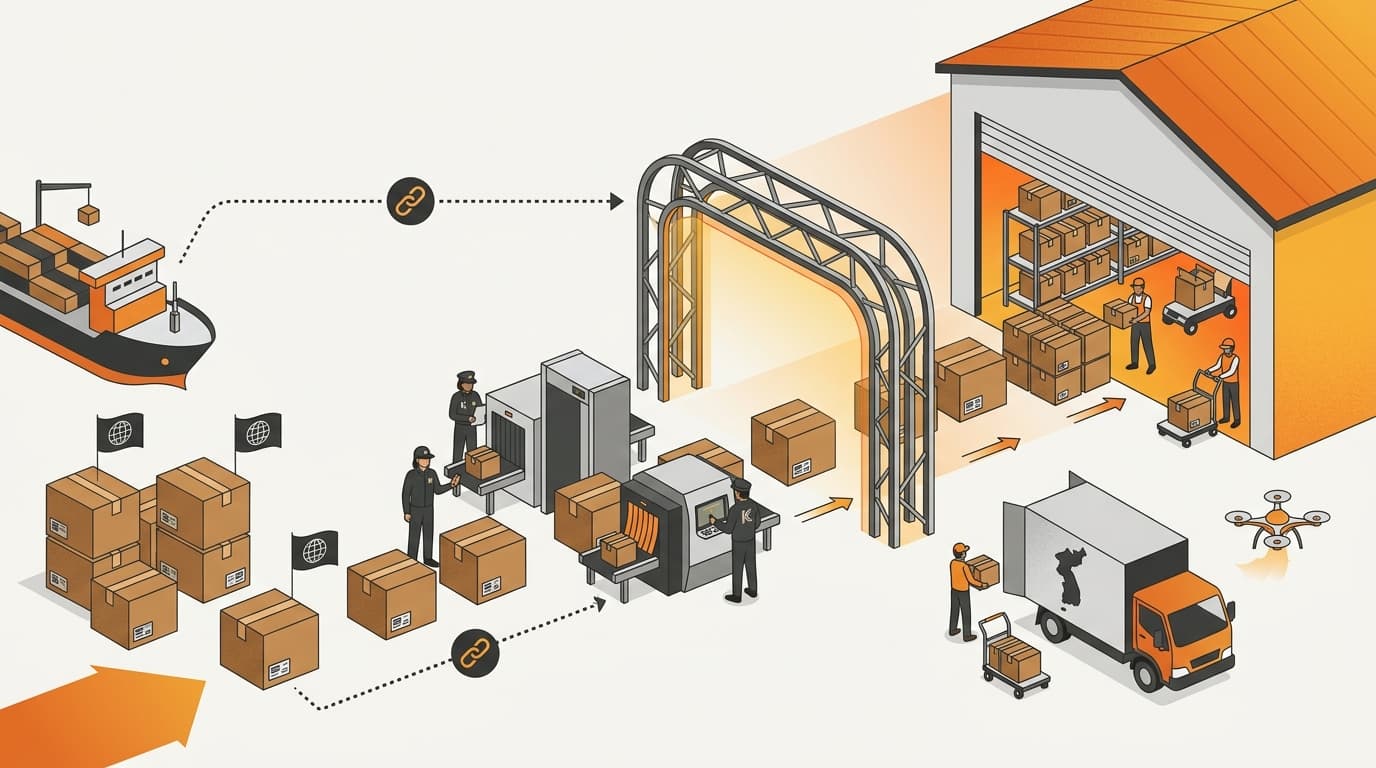
Can You Delay Korea Import Duty on Consignment Stock?
No. Korea import duty and import VAT are normally assessed when consignment stock is cleared for domestic circulation, not when a Korean customer buys one unit.