
Korea 3PL for Foreign Consumer Electronics Brands
A Korea 3PL for foreign consumer electronics brands is not a warehouse decision — it is an operating-model decision. The 3PL only works if the structure around it works: a Korean entity or Importer of Record to clear customs, KC certification on the product, a Coupang seller account in the right name, and a Korean-language product detail page that actually converts. Most comparison sites rank warehouses. The harder question is which 3PL pattern fits which entry path.
This guide is written for the operations lead at a US or EU electronics brand who already has cross-border demand from Korea and is now evaluating fulfillment options for going local. We will keep the useful basics — Rocket Growth, IoR, VAT, Coupang onboarding — but add the part most pages skip: how the cross-border versus local choice changes which 3PL even makes sense.
What the 3PL question is really asking
When a founder searches "Korea 3PL options for foreign consumer electronics brands," they are rarely looking for a list of warehouse vendors. They are trying to answer a different question: what does our Korean fulfillment stack need to look like to sell on Coupang at scale, without tripping on customs, KC, or VAT?
That stack has four layers, and the 3PL only sits on one of them:
- Customs and import. Who is the Importer of Record (IoR)? Who pays the duties and 10% VAT?
- Seller of Record (SoR). Whose name is on the Coupang listing?
- Fulfillment. Coupang Rocket Growth (로켓그로스), a private 3PL, or both?
- Conversion layer. Korean-language listing, Korean PDP, Korean customer service.
A 3PL in the narrow sense only solves layer 3. If you pick a warehouse before deciding layers 1, 2, and 4, the warehouse decision is usually wrong.
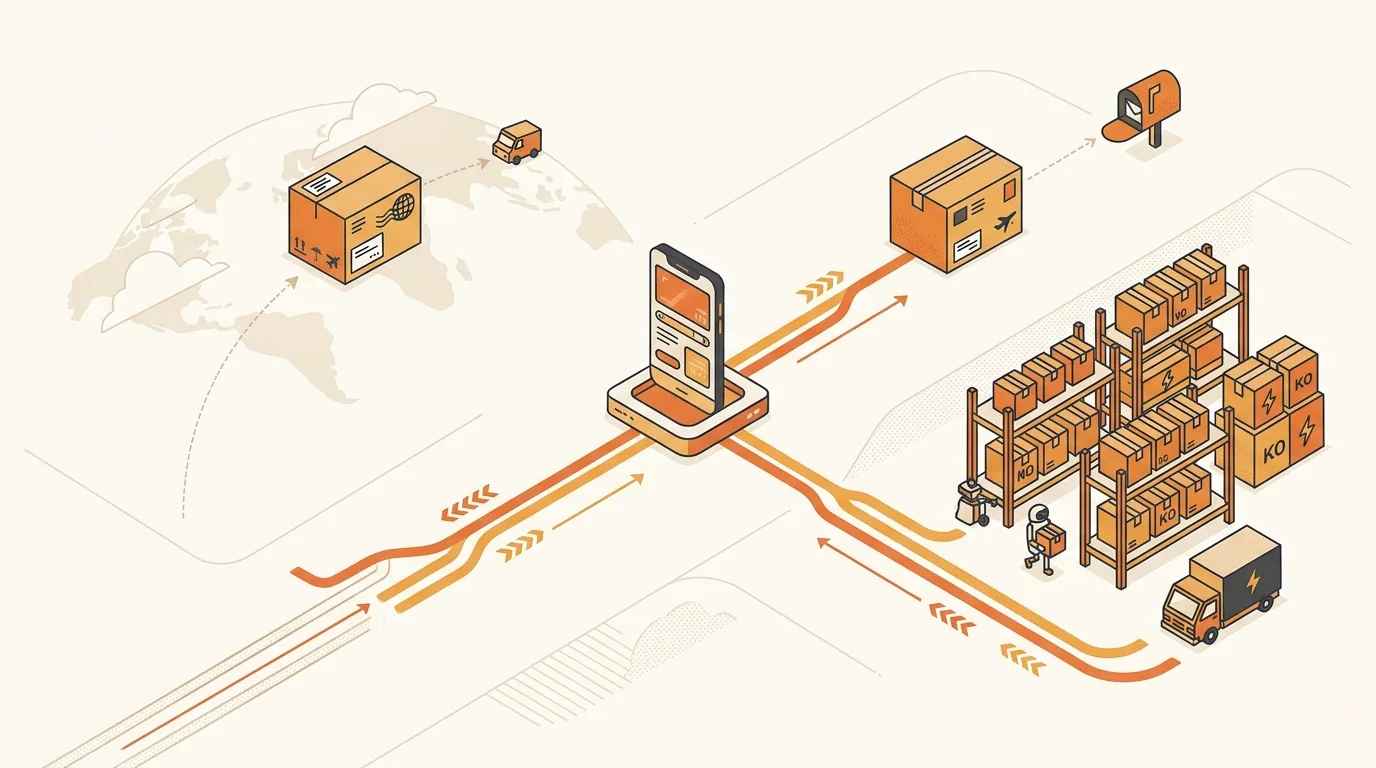
Cross-border vs. local: the choice that decides your 3PL
This is the angle most competing pages miss. Foreign consumer electronics brands enter Korea on one of two tracks, and they imply completely different fulfillment needs.
Cross-border fulfillment. Orders are taken in the brand's home country and shipped to Korean customers directly by international parcel. There is no Korean entity, no Korean inventory, and usually no KC certification on file in Korea — each shipment clears as a personal-use import under the buyer's customs ID (PCCC). A "3PL in Korea" is mostly irrelevant here. What you actually need is a forwarder, a cross-border platform, or a Korean-language storefront overlaid on home-country fulfillment.
Local fulfillment. Inventory is imported in bulk DDP, cleared through a Korean Importer of Record, stored in a Korean warehouse (often Coupang Rocket Growth), and delivered domestically with next-day Rocket Delivery. This is where 3PL selection becomes a real decision — because the 3PL is now part of the legal import chain, not just a logistics vendor.
The two are not mutually exclusive. We typically see brands validate demand cross-border, then graduate to local fulfillment once orders justify the compliance cost. The detailed mechanics of that transition are covered in Rocket Growth vs. cross-border selling in Korea and the margin math in how Coupang IoR and 3PL change your Korea margins.
If you cannot answer "who is the Importer of Record" and "who is the Seller of Record on Coupang" in one sentence each, your 3PL shortlist is premature. The 3PL inherits whoever is upstream of it.
The KC certification layer that 3PLs do not handle
Consumer electronics is the category where Korea's safety certification regime bites hardest. KC Certification (KC 인증) is the category-specific mandatory safety mark required under Korean law. For electronics, the relevant tracks are usually KC electrical safety (for mains-powered devices) and KC EMC (Electromagnetic Compatibility, for almost everything with a circuit board, including USB- and battery-powered devices).
A 3PL will store and ship your inventory. It will not:
- Run the KC test campaign at a Korean accredited lab
- File the Declaration of Conformity in the IoR's name
- Defend a customs hold if the labeling does not match the certificate
This is the operational gap foreign brands underestimate. The product can sit in a Korean warehouse and still be unsellable on Coupang if the KC mark, model number, and importer name on the rating plate are not aligned. For lower-risk USB- and battery-powered devices, a foreign EMC report can sometimes be reused — we walk through that test in when a foreign EMC report is enough. For products that require KCS lab testing, the constraint is harder — see KCS certification: pre-test before applying in Korea.
Treat KC as a parallel workstream to 3PL selection, not a follow-on. The shipment that arrives in your 3PL's inbound dock without a valid KC mark is a shipment your IoR cannot clear.

Rocket Growth as a 3PL — and what it leaves out
For most foreign consumer electronics SMBs, the default Korean fulfillment choice is Coupang Rocket Growth (로켓그로스) — Coupang's third-party logistics and fulfillment service, which provides warehousing, next-day Rocket Delivery, and returns processing. Rocket Growth is operationally a 3PL, but it only fulfills Coupang orders. Inventory is sent to Coupang fulfillment centers, and Coupang handles the delivery promise.
What Rocket Growth covers:
- Inbound receiving and put-away at Coupang fulfillment centers
- Rocket-badged next-day delivery to Korean consumers
- Returns intake and basic disposition
- Storage, fulfillment/delivery handling, and returns handling fees (Other Platform Expenses, deducted from settlement)
What Rocket Growth does not cover:
- Acting as IoR or customs broker — your entity or partner does that
- Non-Coupang channels (Naver SmartStore, your own DTC, B2B)
- KC certification, MFDS or any product-specific compliance
- Korean PDP design and Korean SEO copy on the listing
A brand that wants Coupang-only distribution can run Rocket Growth as the entire 3PL layer. A brand that wants Coupang plus Naver SmartStore — increasingly the prudent default given the Q1 2026 Coupang–Naver shift — needs either two parallel fulfillment setups or a private 3PL that ships to both. There is no one-vendor answer.
The conversion layer: Korean PDP and listing
The 3PL gets the box to the door. The Korean Product Detail Page decides whether the box ever gets ordered.
On Coupang, the "listing" and the "PDP" are two different artifacts:
- The Product Listing is the text-based listing — localized title, description, specifications, and Coupang SEO. This is what Coupang's search and category browse use.
- The Product Detail Page (PDP) is the full-length, conversion-optimized visual page — approximately 20,000 pixels of vertical rich-media graphic design that Korean consumers scroll through before adding to cart.
Foreign electronics brands routinely ship a translated English PDP to a Korean 3PL and wonder why conversion is flat. Korean consumers expect a long-form visual narrative: lifestyle hero, feature panels, scenario shots, certification badges, spec table, FAQ. A literal translation of a US Shopify page reads as foreign and unfinished.
“The 3PL inherits whatever upstream decisions you have already made. If the PDP is weak, faster delivery only buys you faster bad reviews.”
Kontactic editorial — Commerce Trends
This is the part competing 3PL directories simply do not address. A Pohang warehouse ranking does not change the fact that the listing has to convert in Korean before the warehouse matters.
What you can do fast vs. what needs full local infrastructure
Founders often ask which steps can be parallelized and which are gating. A rough split:
Fast (weeks, can run during entity setup):
- Cross-border test selling to validate Korean demand at premium pricing
- Korean keyword research and competitor PDP teardown
- KC scoping — is your product KC electrical safety, KC EMC, or both?
- DDP freight quoting and HS code classification
Slow (months, gating for local launch):
- Korean entity registration as a non-resident foreigner — see why setting up a Korean entity got harder and the corporate bank account wall
- KC test campaign at a Korean accredited lab
- Coupang seller onboarding KYC and Rocket Growth inbound scheduling
- Localized PDP production at the 20,000-pixel vertical scale
A useful sequencing reference for electronics specifically is Korea entry for US electronics: IoR, distributor, or entity and the cost stack in Korea IoR fees for consumer electronics.

How to actually shortlist a Korea 3PL for electronics
If you have read this far, the shortlist criteria should be visible:
- Does it integrate with Coupang Rocket Growth? For most foreign electronics SMBs, Coupang is the volume channel. A 3PL that cannot inbound to Coupang or operate in parallel with it is a poor fit.
- Does it work with your IoR? The 3PL receives goods that have already cleared customs in someone's name. That name has to match the Coupang seller and the KC certificate holder.
- Can it handle returns at Korean consumer expectations? Korean buyers return more aggressively than US buyers, and Coupang's policy environment around returns and evidence thresholds has shifted — see three Coupang policy changes that reset Rocket Growth margins.
- Does it have a path for a second channel? If you plan to add Naver SmartStore, your 3PL has to ship multi-channel without a full reconfiguration.
The 3PL is not the bottleneck for foreign electronics brands entering Korea. KC, IoR, entity, and PDP are. Pick the 3PL last, after those four are decided — not first.
Planning a Korea launch for your electronics brand?
Kontactic operates the full stack — entity, IoR, KC scoping, Coupang Rocket Growth, and Korean PDPs — for foreign consumer electronics brands. Tell us where you are in the sequence.
About the author
Korean and global e-commerce operators with 15+ years of cross-border experience, led by CEO Isaac Lee — KOTRA-certified consultant and official lecturer for Seoul City and the Korea Customs Service. We run Korea market entry for Western brands every day; this blog documents what we learn in the field.
More about Kontactic →Related Articles
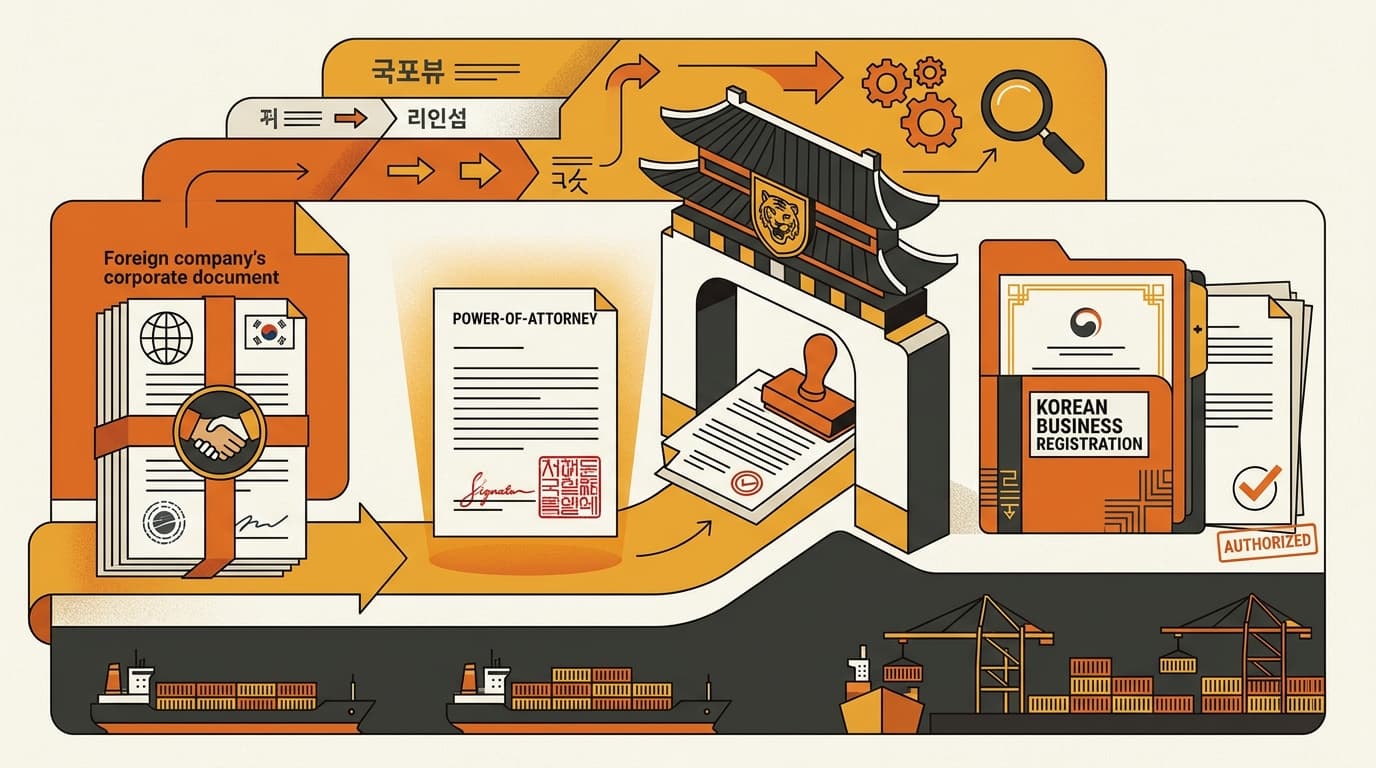
Korean Importer Registration: Why a POA Is Not Enough
A power of attorney cannot establish Korean importer registration; corporate-authority proof and Korean importer records are still required for the filing.
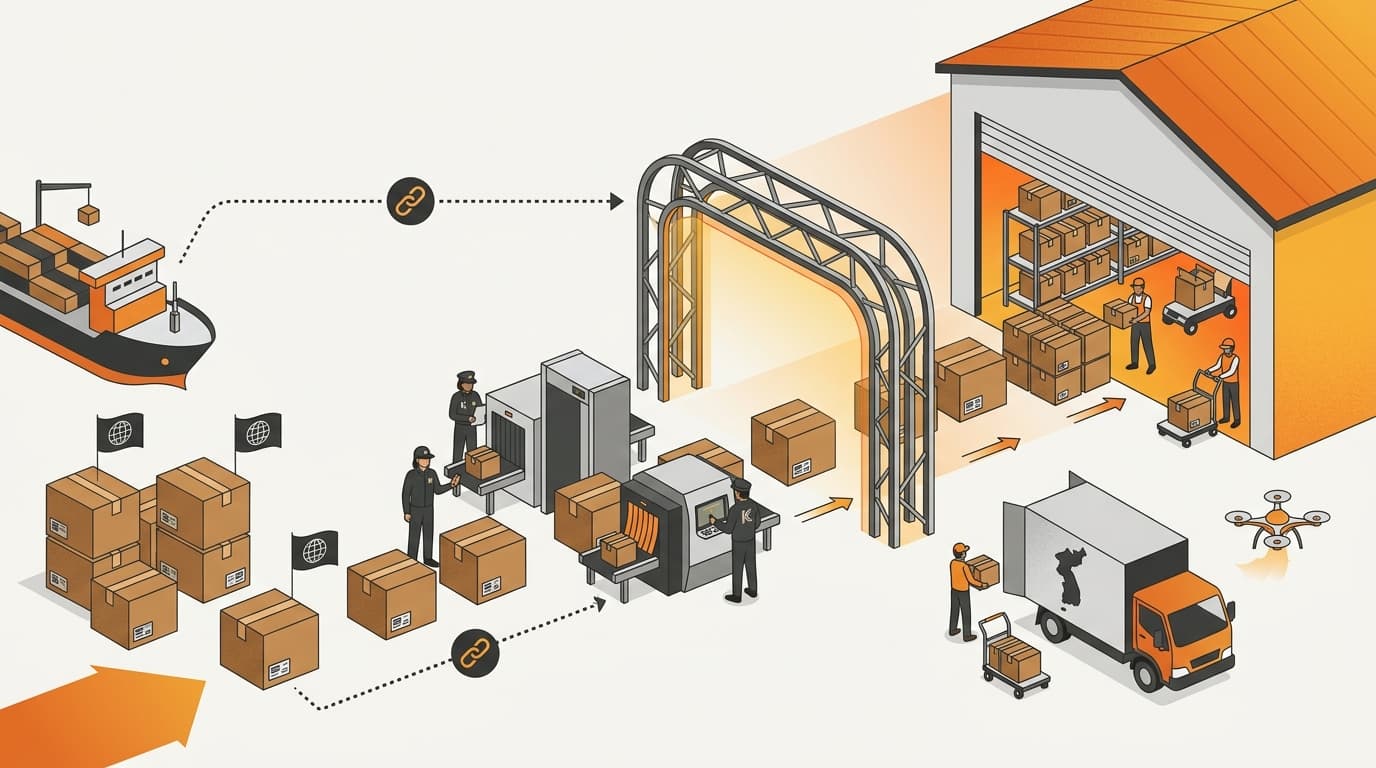
Can You Delay Korea Import Duty on Consignment Stock?
No. Korea import duty and import VAT are normally assessed when consignment stock is cleared for domestic circulation, not when a Korean customer buys one unit.

Children’s Product KC: Does “Ages 13+” Avoid the Rules?
No. In Korea, “Ages 13+” is only one factor; design, intended use, packaging, and child-directed marketing can still trigger children’s-product KC rules.