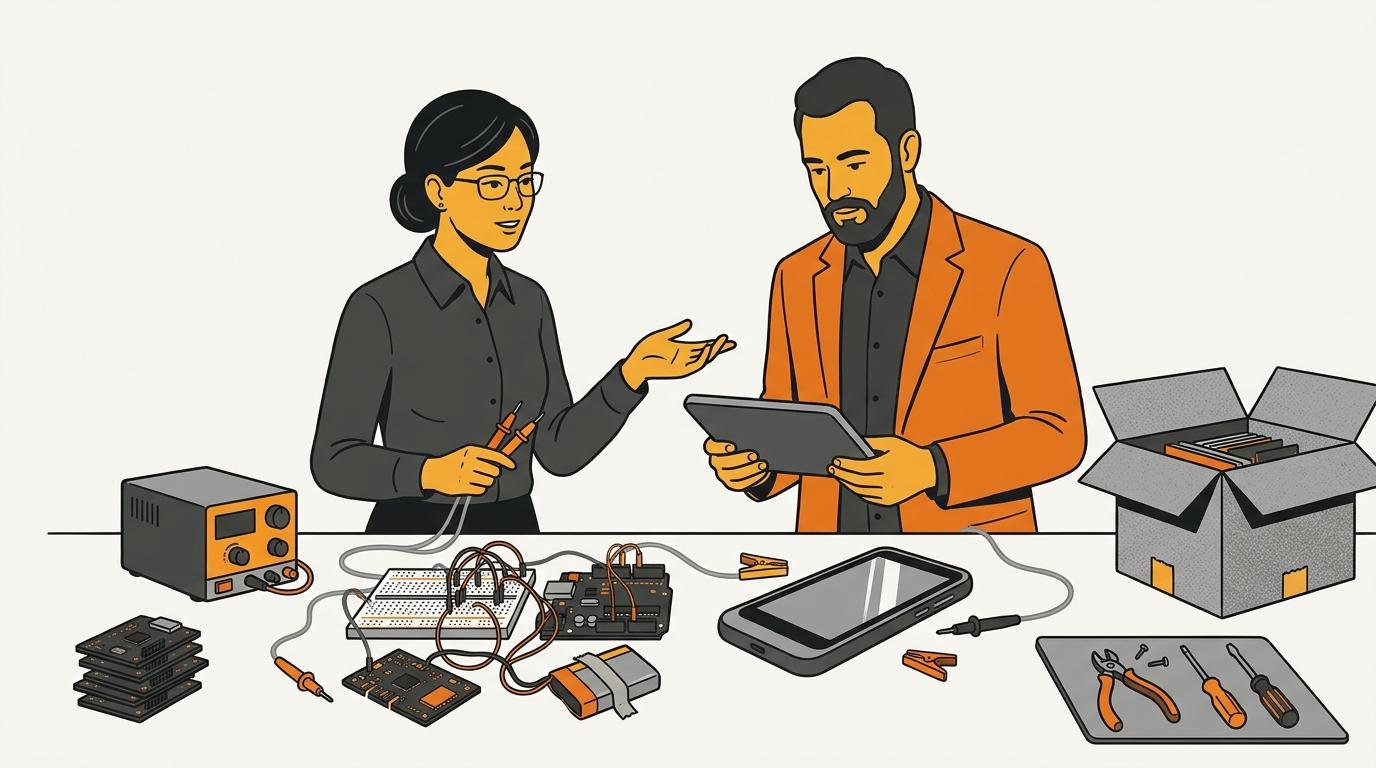
KC Testing in Korea: Can You Submit a Prototype?
Yes—but only for the right kind of test. You can send an early prototype for engineering or pre-compliance checks. For formal KC work, use the final production model or a production-intent sample that matches it. Ask the Korean test body to confirm which sample the test will cover before you pay.
A report on a different prototype does not automatically cover the product you later import and sell.
The short answer: test the version you will sell
KC (Korea Certification) is Korea’s system for checking whether products meet Korean rules. Different products need different tests or approval steps.
A lab may accept an early prototype to find design problems. That check can show that a circuit overheats, a battery enclosure needs changes, or a radio signal needs work. It does not prove that a later production unit meets the same requirements.
The word “prototype” does not decide the answer. The sample must match the product you will import: its parts, ratings, software, enclosure, factory, model number, labels, and intended use.
If any listed detail changes, ask the lab whether the report still covers the product. The details include the battery, adapter, radio module, antenna, firmware, enclosure, factory, and model number.
There is no safe rule that every Korean laboratory rejects prototypes. There is also no safe rule that every laboratory accepts them for final KC work. The product category, required Korean review, and purpose of the test decide the answer.
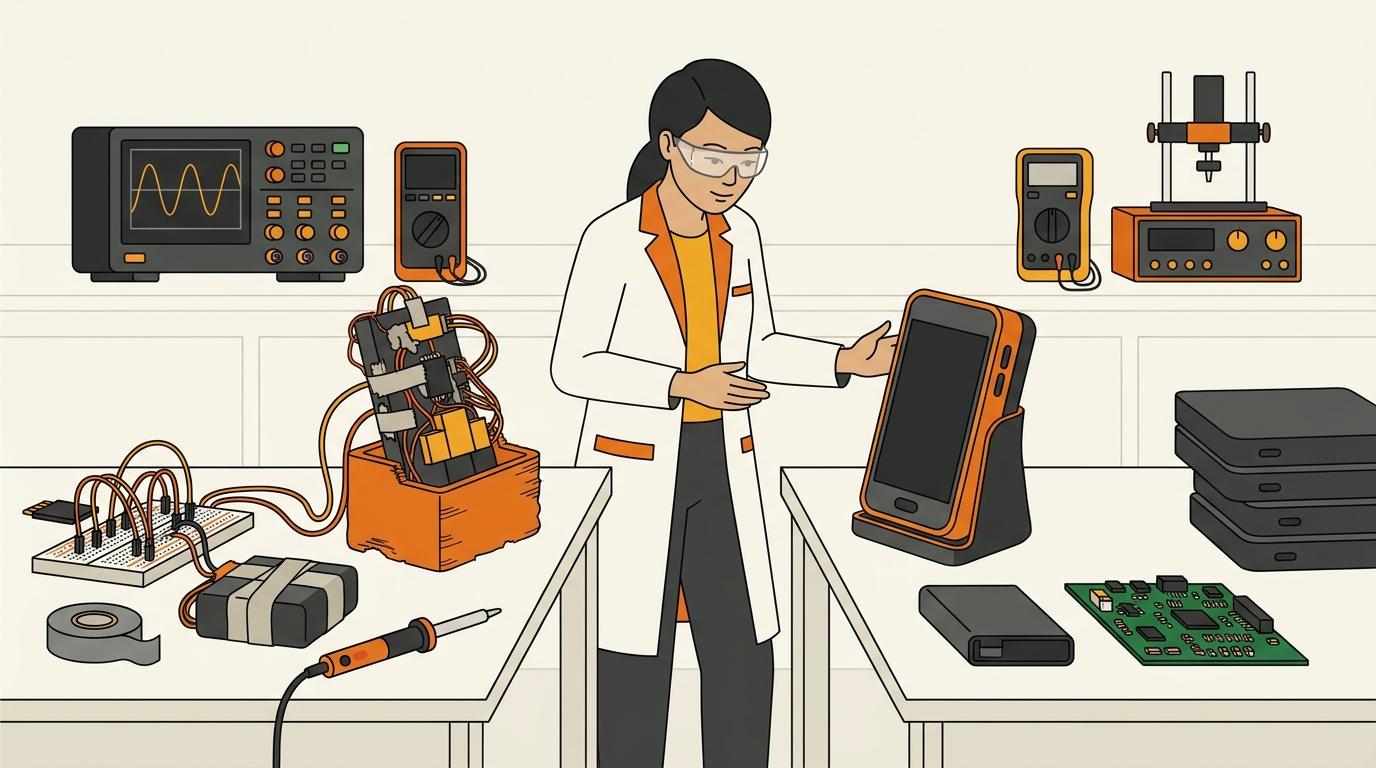
What counts as the final model for KC testing?
“Final model” does not always mean waiting for the first large production run. A production-intent sample may be suitable when it uses the same design and parts as the product you will sell. Ask the laboratory to confirm that in writing.
Use these four sample stages to frame the conversation:
- Proof of concept: This answers one narrow question, such as whether a mechanism moves or a circuit produces the expected output. It may use a development board, temporary wiring, substitute material, or a 3D-printed enclosure. It is useful for design work, not a final product-safety submission.
- Engineering prototype: This is closer to the intended product but may still use temporary parts or unfinished software. It can support pre-compliance checks. Do not treat that result as approval for the later sellable model.
- Production-intent sample: A production-intent sample uses the planned printed circuit board (PCB), battery or power supply, enclosure, radio parts, firmware, labels, and factory. This is usually the right point to ask whether the laboratory can perform the formal KC test.
- Production model: This is the unit made through the actual production process. It gives the clearest match between the tested sample and the inventory you will import.
Consider a rechargeable children’s night-light with Bluetooth. The prototype uses a generic battery pack and a development radio board. The production version uses a custom battery pack, a different radio module, a new antenna position, and changed firmware. The outer shell looks the same, but the important test conditions changed. The original prototype result cannot be assumed to cover the production version.
A change may not require a full retest. Ask the laboratory or the responsible Korean authority whether the existing report still covers the model. Do not let the seller’s product team make that decision alone.
For any Korean sale path, the tested sample, documents, and sellable stock must describe the same model.
Classify the product before you book a laboratory
Before asking whether a prototype is acceptable, identify the Korean review the product needs. The word “KC” can include several different checks.
Electrical and battery products
Start with the power source and the product’s function. Mains-powered products and some electrical products may need Korea’s product-safety checks through the Korea Agency for Technology and Standards (KATS).
A USB-powered or battery-powered product does not automatically avoid Korean review. It may still need electromagnetic compatibility (EMC) checks, and its product category may create another obligation. USB power does not automatically avoid Korea’s KC rules explains why the connector alone is not enough to classify the product.
For testing, freeze the adapter, battery pack, charging circuit, battery-management parts, cable, motor, heating element, and protective enclosure. A sample with different power components is not the same test sample.
Radio and EMC products
A product with Bluetooth, Wi-Fi, cellular, or another radio function needs a separate review of radio and electromagnetic compatibility requirements. The National Radio Research Agency (RRA) reviews radio and electromagnetic compatibility. KATS may also require a separate safety check.
The final radio module, antenna, firmware, operating settings, and power level should match the sample. A factory report for a module does not automatically settle the compliance of the finished product. Bluetooth KC and RRA conformity are separate checks.
Children’s products
A product can be treated as a children’s product based on its design, size, likely use, packaging, or child-directed presentation. Writing “for adults” on a page does not settle the question when the product is designed for children.
Children’s products need separate KC checks. Depending on the product and risk level, the review may involve safety certification, safety confirmation, or a supplier’s conformity confirmation. The final materials, construction, components, and covered variants must match the product placed on sale. Korea’s three children’s-product KC types gives a comparison of the three types.
Household chemicals
A household chemical is not automatically a KC product. First check Korea’s rules for household chemical safety confirmation and biocidal products. The formula, active substance, intended use, claims, spray method, and package can change the required review.
A dirt-only cleaner and a product claiming to kill bacteria may not follow the same review. If the product also contains an electrical or radio device, review the chemical and electrical sides separately. Safety confirmation and biocide approval in Korea explains why the product’s function and claims matter.
Classify the product before selecting the sample. A rechargeable Bluetooth toy may need both a children’s-product review and radio review. A household spray with a battery-powered dispenser may need chemical review plus electrical or EMC review.
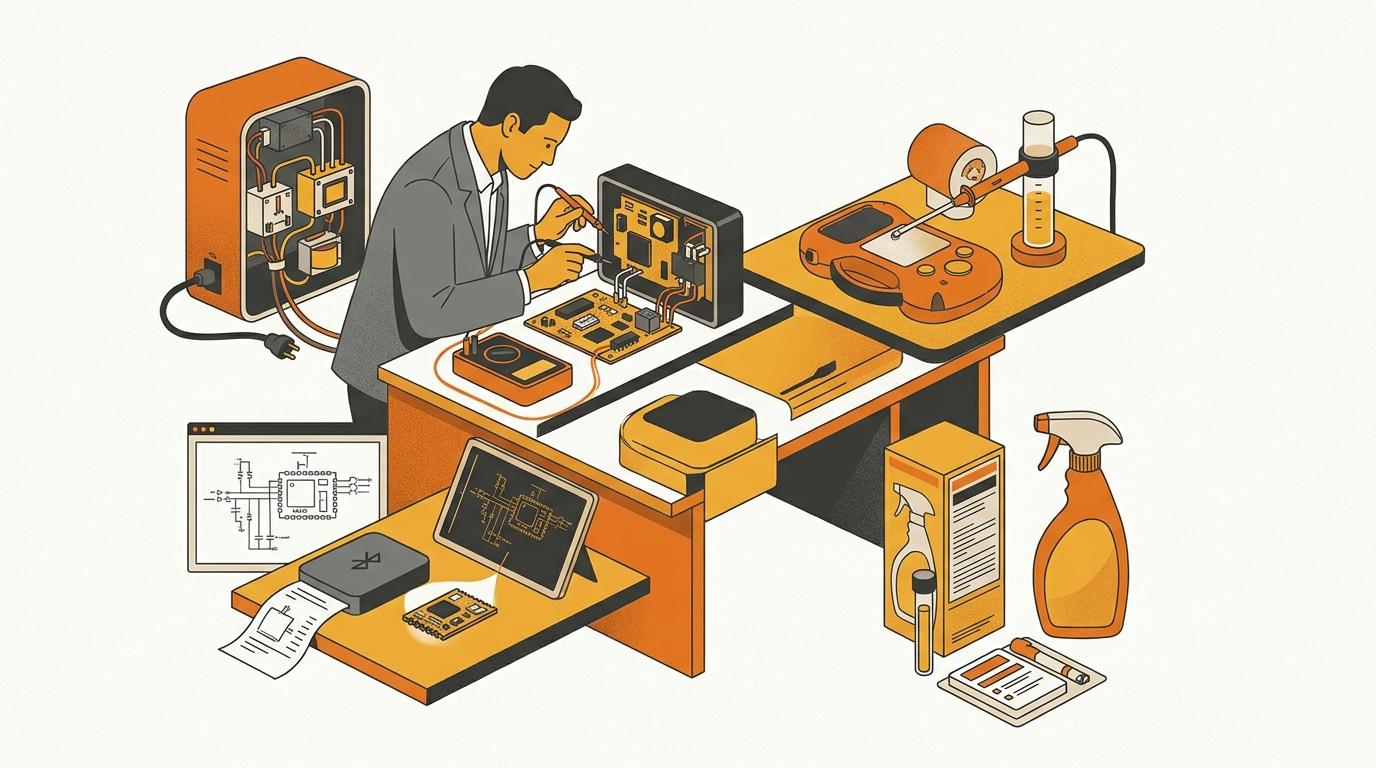
Who is named on the KC paperwork?
Do not assume that the importer always holds the certificate, or that the factory always holds it. The required Korean review decides who applies, which manufacturer is named, what the importer must do, and which documents Korean sale needs.
Keep these roles separate:
- Applicant: The party asking the laboratory or authority to run the test or review.
- Manufacturer: The factory and production site that make the product.
- Brand or private-label seller: The party whose name, model, claims, and packaging appear on the product.
- Importer or local seller: The party bringing the goods into Korea or selling them through a Korean channel.
These parties can be different. A test report may identify the factory and model, while a Korean importer must submit, keep, or present the document for local sale. Another review may use a supplier’s conformity confirmation instead of a third-party certificate.
Ask the test body or compliance specialist these questions before testing:
- Who will be the applicant?
- Whose name will appear on the certificate, report, or declaration?
- Which manufacturer and factory address are covered?
- Is the brand’s model number included?
- Can the document support the planned Korean importer and seller?
- Which component or model changes require a new review?
A factory certificate is not automatically transferable to a private-label product. The approved model, factory, version, and product configuration must match. CE, FCC, or UL documents may support a Korean review but cannot replace the applicable Korean process.
The brand remains responsible for the product it sells. A local importer, test laboratory, or operating partner can help prepare or file documents, but that does not make a mismatched production unit compliant.
What to prepare before sending a sample
Send the laboratory enough information to understand exactly what it is testing. A box containing an unnamed prototype creates uncertainty before the first test starts.
Use this preparation list:
- Write one product definition. State the exact model number, version, intended use, target age group, variants, claims, and planned way to sell in Korea. Do not send one sample while the listing team describes another.
- Freeze the production design. Prepare the bill of materials and circuit drawings. Add the input and output ratings, adapter, battery cell or pack, charging parts, protective parts, enclosure, cables, and main mechanical materials.
- Freeze software and radio details. List the firmware version, radio module, antenna, operating settings, and any connected functions. Tell the laboratory if the software is still changing.
- Prepare the physical product file. Include product photos, dimensions, user instructions, warnings, labels, packaging, model markings, and the manufacturer’s name and production address. Korean-language labeling is a separate product task, not just a translation step.
- Add category-specific material. For a children’s product, list the materials, construction, age use, and variants. For a household chemical, prepare the formula, active substances, intended use, claims, spray method, and package details.
- List every variant. Do not assume that a new size, color, material, battery, adapter, or enclosure is covered. Ask which variants fit the same test.
- Keep a controlled sample. Mark the sample with the model and version. Keep a matching reference unit and note every change after testing.
Foreign reports can help the Korean laboratory understand the design, but they do not replace Korean KC, safety, or RRA requirements. You still need to identify which Korean review applies to the product you will sell.
Before approving the order, ask: “Is this an early design check, or will it support formal Korean testing for this exact model?” If it is an early check, ask what must be repeated after the design is final.
Product testing and marketplace approval are separate. Importing a product into Korea does not guarantee that Coupang will let you sell it.
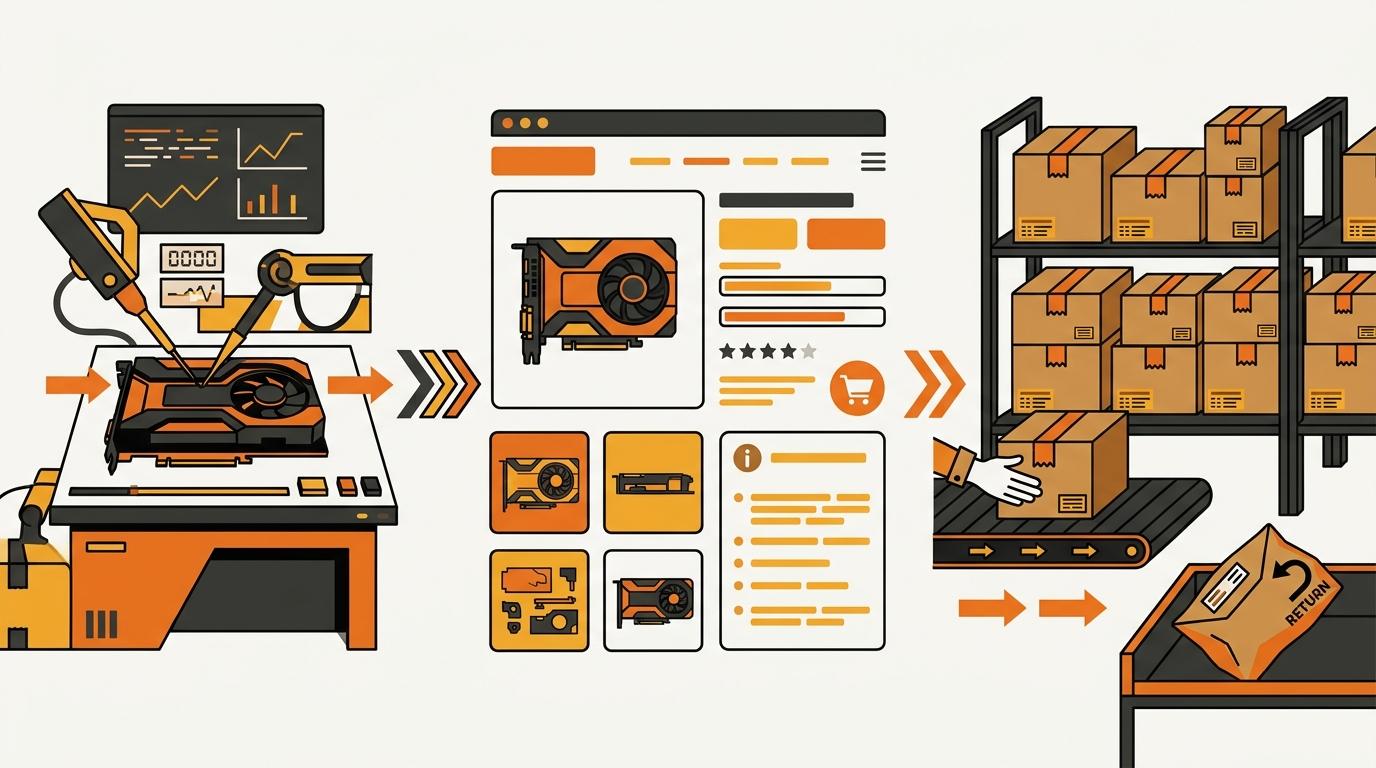
Use this yes-or-no checklist before booking KC testing
Put this in writing before booking: “Will this result cover the exact model we will sell in Korea, or is it only an early design check?”
Submit an early prototype now when:
- You want to find design, heat, battery, EMC, radio, fit, or material problems.
- You clearly label the work as engineering or pre-compliance testing.
- You are not treating the result as final approval for a different production model.
- You have told the laboratory which parts may still change.
Wait for a production-intent or final model when:
- You need the result for Korean import or sale.
- The battery, adapter, charging circuit, radio module, antenna, firmware, enclosure, formula, or claims are still changing.
- The production factory or private-label model is not final.
- You are preparing a Korean product listing or import shipment from the test result.
- The Korean label, package, model number, or product-information page still describes a different version.
Check your KC review before you submit a sample
Share your product type, power or radio details, final factory status, and planned way to sell in Korea. Kontactic can help identify the product review, documents, and sample to prepare before testing.
About the author
Korean and global e-commerce operators with 15+ years of cross-border experience, led by CEO Isaac Lee — KOTRA-certified consultant and official lecturer for Seoul City and the Korea Customs Service. We run Korea market entry for overseas brands every day; this blog records what we learn in the field.
Meet the Kontactic team →Related Articles
Coupang Global Fulfillment Reviews: Do They Carry Over?
Coupang Global Fulfillment reviews stay with the cross-border listing. Learn what resets when the same product moves to a Korean entity, seller, and listing.
Korean Biocide Approval: Is a Dirt-Only Cleaner Covered?
A dirt-only surface cleaner usually avoids Korean biocide approval, but it may still need Korea’s safety check and report before commercial import for sale.
Do Children’s Products Need KC in Korea If Adults Don’t?
An adult version may not need a KC mark in Korea, while the children’s version may need supplier conformity confirmation and a KC mark before it goes on sale.