Korean Biocide Approval: Is a Dirt-Only Cleaner Covered?
A surface cleaner sold only to remove dirt normally does not need Korean biocide approval. It may still be a safety-confirmation household chemical product. If so, an approved Korean testing body may need to check it. The manufacturer or Korean importer may also need to file a report before selling commercial stock.
The short answer: look at purpose first
Imagine a Western brand selling a kitchen surface spray in Korea. The product removes grease and dirt. Its instructions tell customers to spray the surface and wipe it clean. The bottle does not claim to kill bacteria, control mold, or repel insects.
That use normally points away from Korean biocide approval. The importer should ask a second question: does the cleaner fall into one of Korea’s designated household-chemical categories?
If it does, the product may need Korea’s safety-confirmation process even though it is not biocidal. The product’s English name is only a starting point. Korea looks at what the finished product is made and sold to do. A bottle called “surface cleaner” can enter biocide review if its instructions or sales claims give it an organism-control purpose.
Why “cleaner” does not settle Korean biocide approval
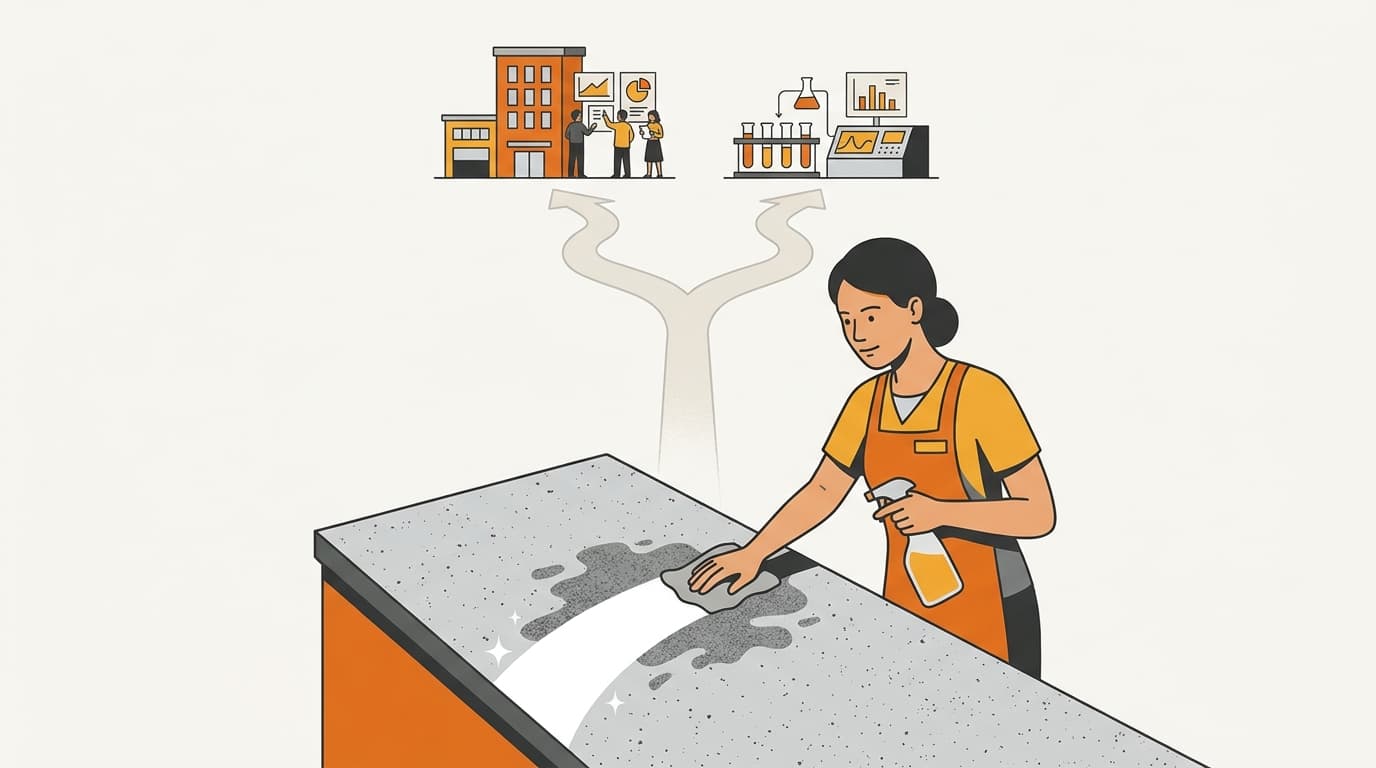
A biocidal product (살생물제품) is made or sold to kill, repel, or control harmful organisms. Bacteria, mold, and insects are common examples.
That definition focuses on purpose. It does not depend on whether the bottle sits in a cleaning aisle or carries the word “cleaner.”
Use this simple comparison:
A dirt-only cleaner removes grease, dust, or stains. A product that kills bacteria, controls mold, or repels insects raises the biocide question.
The second product may clean and control organisms at the same time. Its cleaning function does not cancel its control function.
Claims can appear in more places than the front of the bottle. Check the back label, instructions, Korean label, product page, advertising, and package images. A claim added for Korean sales can change how Korea reviews the product, even if the original English pack only said “cleaner.”
This is why a marketplace listing cannot be treated as separate from the product. Korean Biocide Approval: Why Coupang Claims Still Count explains the same point for claims made on a Coupang page.
Do not treat these statements as automatic answers:
- “The product is sold as a household cleaner in the US.”
- “The product has no word that says biocide.”
- “The formula contains a preservative, so it must be a biocide.”
- “The formula contains no obvious disinfectant ingredient, so no Korean review is needed.”
Each statement leaves out the product’s full use and claims.
The separate safety check for household chemicals
Korea uses the category safety-confirmation household chemical products (안전확인대상생활화학제품). It covers household chemicals in designated categories that must meet Korean safety standards.
A covered surface cleaner normally follows a different process from a biocidal product. The basic steps are:
- Check the Korean category. Confirm whether the finished cleaner belongs to a designated household-chemical category under current Ministry of Environment rules and guidance.
- Complete the safety check. Have an approved Korean testing body check the product.
- Make the required report. The manufacturer or importer submits the report before the product is made or imported for sale.
The exact category and document requirements depend on the product. Not every cleaner follows the same filing steps. A product can need this safety-confirmation process without needing approval as a Korean biocidal product.
If the product is made or sold to kill, repel, or control harmful organisms, an ordinary household-chemical safety report may not be enough. The importer must check whether the product needs biocide approval.
Ask these as two separate questions: does the cleaner need the household-chemical safety check, and does it make a biocidal claim? The practical difference is set out side by side in Safety Confirmation vs. Biocide Approval: Which Korea Track?.
What Korea reviews: the finished product and every claim
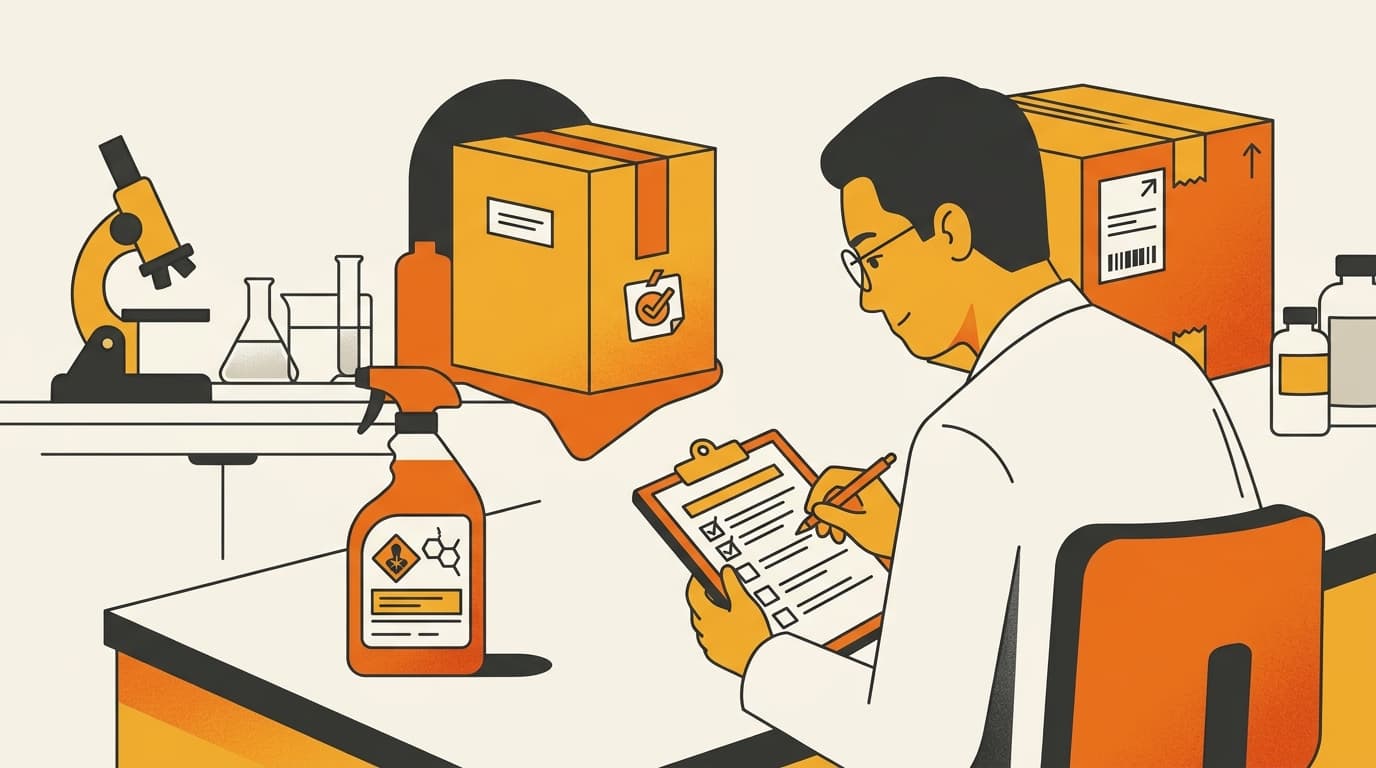
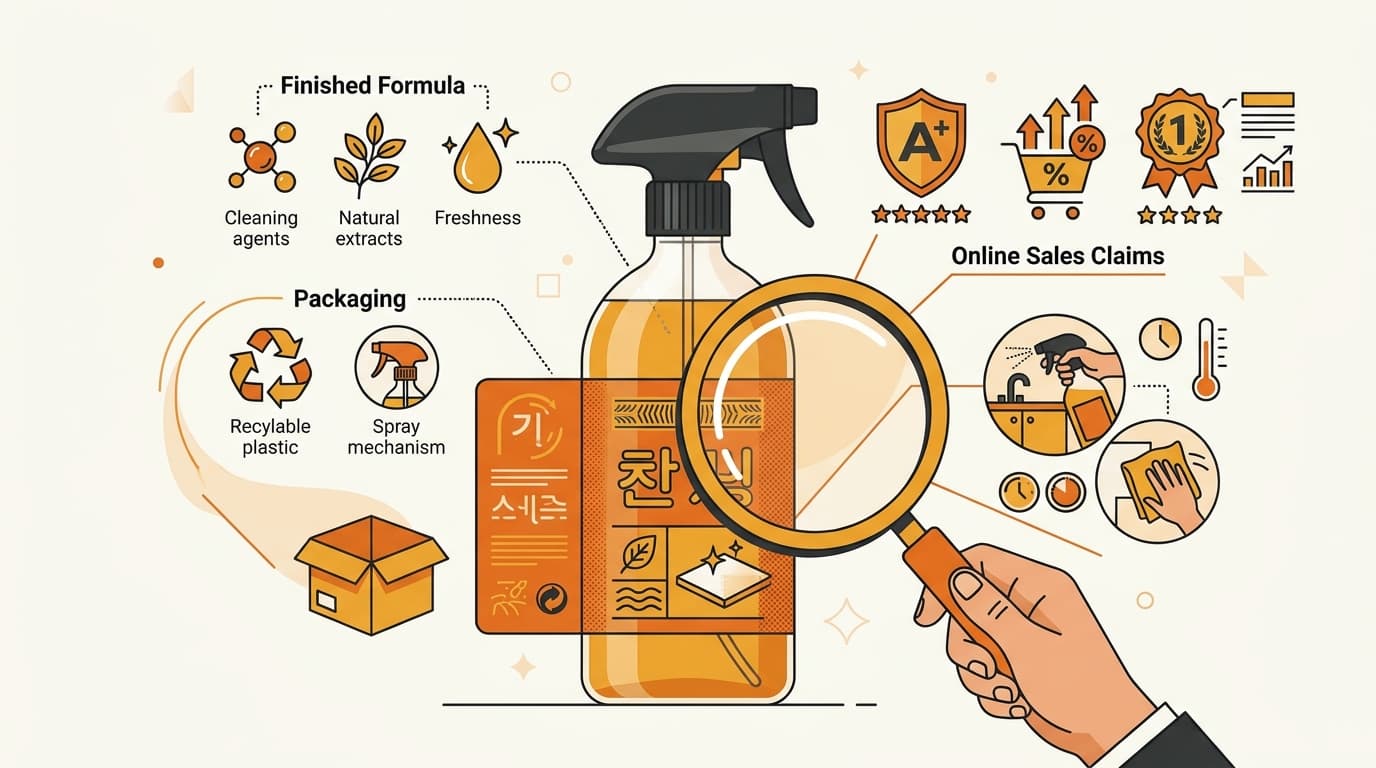
Do not classify the product from one ingredient or one English phrase. Review the complete product together:
- Intended use: What job does the brand tell the buyer the product performs?
- Finished formula: What is actually in the product that will enter Korea?
- Package and instructions: What do the customer-facing directions tell the buyer to do?
- Korean label and product page: What does the Korean customer see before purchase or use?
- Sales claims: Does any text promise to kill, repel, prevent, or control an organism?
A preservative used to protect the liquid does not decide the category alone. It may keep the product stable during storage. That role differs from selling the product to control bacteria or mold on a surface.
Now compare two versions of the same cleaner. Version A says it removes grease and dirt from a countertop. Version B keeps the same product name but says it kills bacteria or controls mold. Version B makes an organism-control claim. Recheck which Korean approval steps apply. Calling it a cleaner does not remove the biocide question.
The Korean translation matters too. A translation that adds stronger claims can create a different product presentation from the original English label. Review the final Korean wording before it appears on the package, product page, or advertisement.
The same function-over-name issue appears in other household chemicals. For example, Is Your Air Freshener a Biocidal Product in Korea? looks at why a product’s function and claims matter more than its shelf name.
What US and EU documents can—and cannot—do
US or EU labels, registrations, and laboratory reports can help prepare a Korean compliance file. They may explain the formula, show earlier testing, or clarify how the brand describes the product in another market.
They do not replace Korea’s own safety check and required report. If the product is biocidal, they also do not replace Korean biocide approval. A foreign registration is not Korean permission to import the product for sale.
Start with Korea’s current Act on the Safety Management of Household Chemical Products and Biocidal Products on law.go.kr. Then check the Ministry of Environment’s current product-category guidance. The category, the finished formula, and the claims must match the product you plan to ship.
A foreign laboratory report can also describe a different product version. Check the formula, packaging, instructions, and claims against the Korean version. If any of those change, ask whether Korean review must start again.
What to finish before commercial stock ships
Before sending ordinary stock to Korea for sale, work through these points in order:
- Write one clear intended-use sentence. “This product removes grease and dirt from hard household surfaces.” Keep the Korean marketing claim no stronger than that sentence.
- Collect every claim. Include the bottle, outer box, instructions, Korean label, product page, images, advertisements, and sales messages.
- Review the finished formula. Identify what each important ingredient does. A preservative does not prove that the product is biocidal. The absence of one ingredient does not prove that no review is needed.
- Check the designated Korean category. Use current Ministry of Environment guidance to see whether the cleaner is a safety-confirmation household chemical product.
- Choose the Korean process. A cleaner in a designated household-chemical category may need the safety check and report. A product made or sold to kill, repel, or control harmful organisms needs review under the biocide rules.
- Confirm the filing party. The required report comes from the manufacturer or importer. Decide which party will submit it and which exact product version the submission covers.
- Finish the Korean step before shipping for sale. Do not send commercial stock first. Do not treat the safety check, report, or Korean biocide approval as paperwork to fix after arrival.
Do not rely on the words “ordinary cleaner” as a shipping decision. Confirm the product’s purpose, claims, Korean category, and required Korean step before the importer brings stock into Korea for sale.
Common questions about Korean cleaner compliance
Does a preservative make a surface cleaner a biocidal product?
No. A preservative that protects the liquid does not decide the category alone. Korea still needs the finished formula, intended use, package, and claims reviewed together.
If the English label only says “cleaner,” can the product skip Korean biocide approval?
If the Korean label, instructions, product page, or advertising says the product kills, repels, or controls harmful organisms, it may need Korean biocide approval. The bottle can still say “cleaner.”
If the cleaner is not biocidal, does it avoid all Korean chemical filing?
If it falls into a designated safety-confirmation household-chemical category, an approved Korean testing body may need to check it. The manufacturer or importer may also need to file a report before making or importing it for sale.
Can a US or EU laboratory report replace Korea’s safety check?
No. Foreign documents may help prepare the Korean file, but they do not replace Korea’s safety check and report. They also do not replace Korean biocide approval when the product has a biocidal purpose.
What if the product both removes dirt and kills bacteria?
The killing claim puts the product into the biocide question. Do not assume that an ordinary-cleaner safety report is enough. Confirm the Korean biocide approval process before shipping stock for sale.
Who submits the safety-confirmation report?
The required report is made by the manufacturer or importer. Agree who will submit it. Make sure the filing matches the formula, package, Korean wording, and claims that will be sold.
Check the route before shipping
If you need to review a cleaner’s formula, claims, Korean label, and import requirements before commercial stock ships to Korea, contact Kontactic.
About the author
Korean and global e-commerce operators with 15+ years of cross-border experience, led by CEO Isaac Lee — KOTRA-certified consultant and official lecturer for Seoul City and the Korea Customs Service. We run Korea market entry for overseas brands every day; this blog records what we learn in the field.
Meet the Kontactic team →Related Articles
Do Children’s Products Need KC in Korea If Adults Don’t?
An adult version may not need a KC mark in Korea, while the children’s version may need supplier conformity confirmation and a KC mark before it goes on sale.
Can a Korean Coupang Page Replace a Cosmetic Label?
A Korean Coupang page can explain an English-only cosmetic, but it cannot replace required Korean details on the bottle, tube, jar, or box before sale in Korea.
Imported Food Labels in Korea: Can Stickers Work?
Imported food labels in Korea can use a Korean sticker on the consumer unit before sale, but only when current MFDS rules allow it for that product and package.