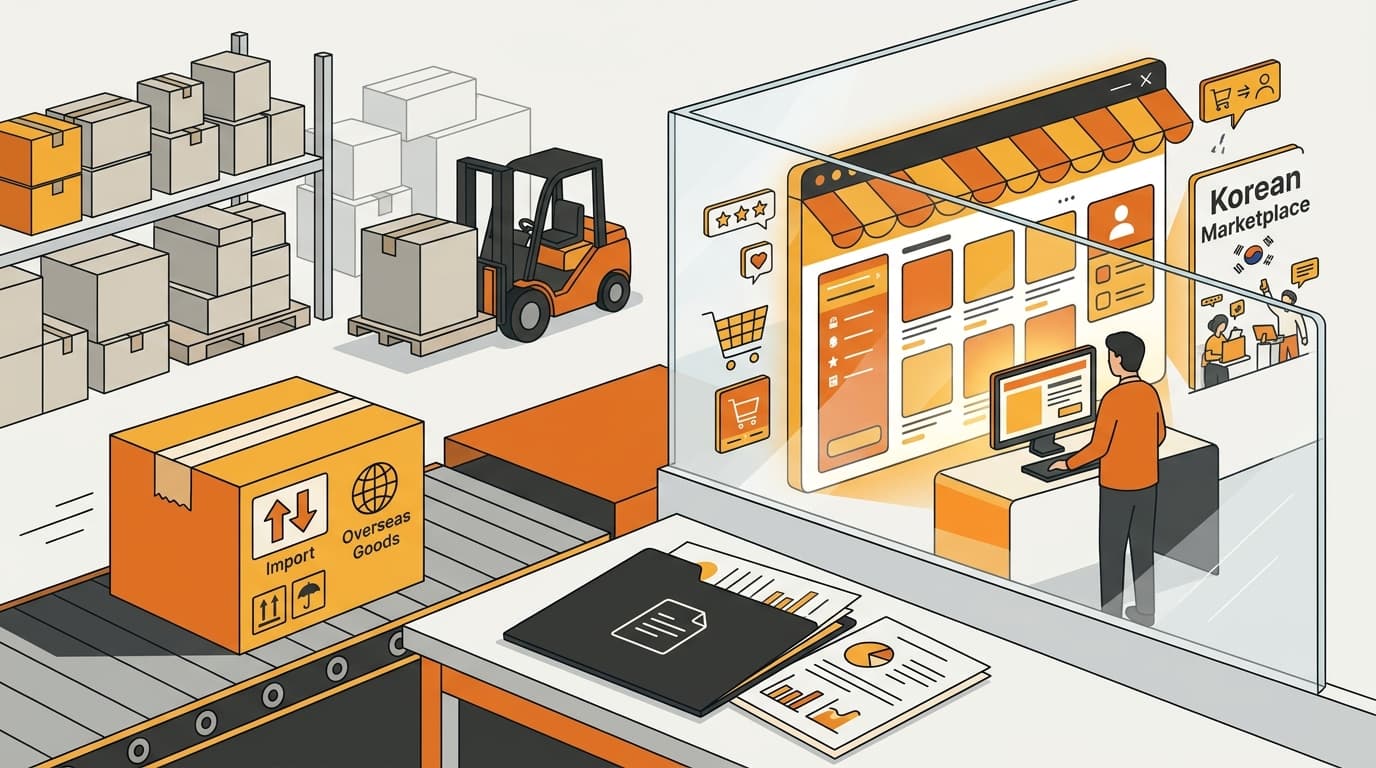
Import a Product Into Korea, But Can't Sell on Coupang?
A product may be allowed into Korea and still be unable to sell on Coupang. Permission to import, permission to sell, and permission to sell online are separate questions. The Korean importer, not the product, may need the permit.
A product can enter Korea without being ready for Coupang
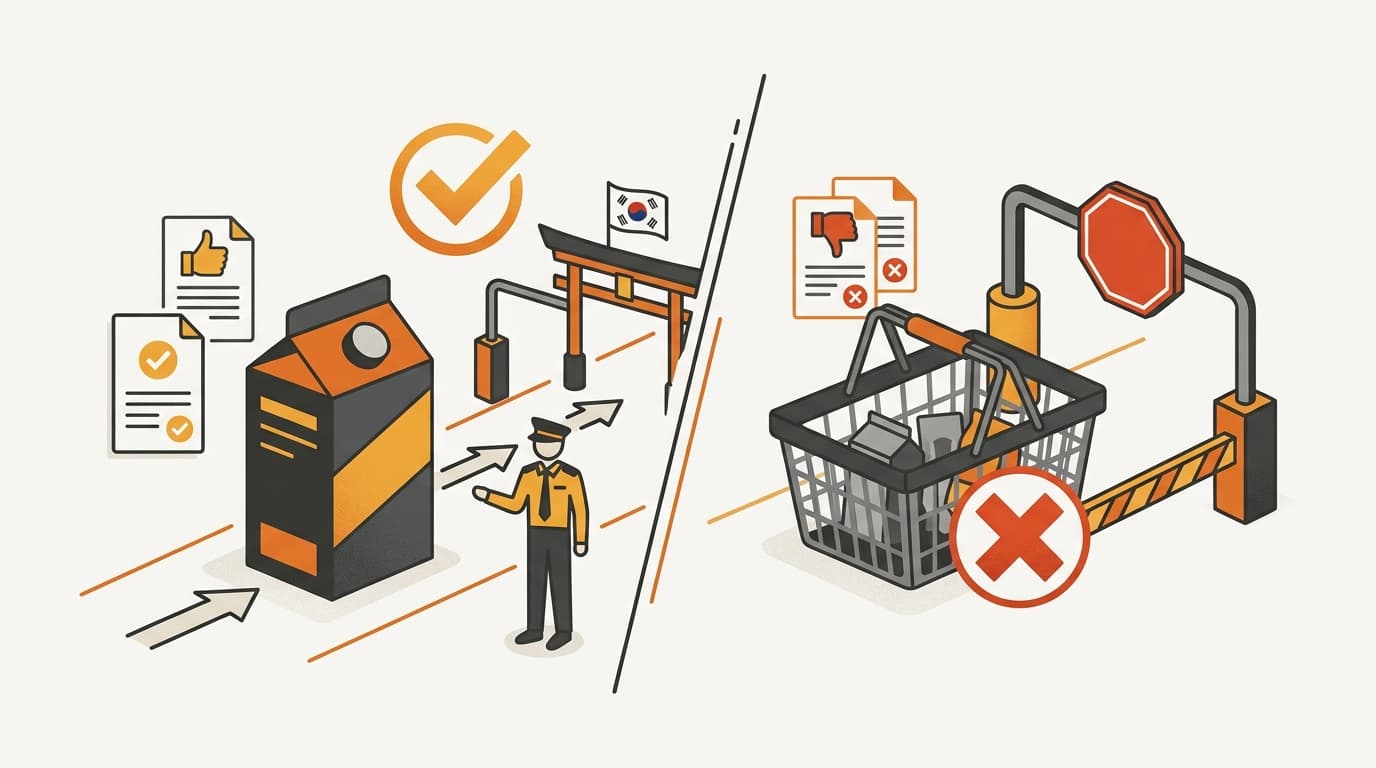
Importing and selling are not one decision. Each SKU—the exact product or variant—needs three answers:
- Can the SKU be imported? This asks whether the product may enter Korea.
- Can the SKU be sold? This asks whether the product may be offered for sale in Korea.
- Can the SKU be sold online? This asks whether an online-sales restriction applies to a channel such as Coupang.
A product can pass the import check and still fail the online-sale check. Certification may be one part of the answer, but it is not the whole answer. KC Certification and Coupang: A Korean Entity? explains why product certification and local marketplace selling are separate questions.
Check all three answers before local warehouse intake. The result tells you whether the next step concerns the product, the online channel, or the Korean importer.
What Kontactic Seller Center checks for each SKU
You submit a SKU for review before moving stock to Korea. The review is not limited to the question, “Does this product need a certificate?” It checks the import and sales questions separately.
| Review question | What the seller learns |
|---|---|
| Can the SKU be imported? | Whether the import question raises a prohibition or restriction. |
| Can the SKU be sold? | Whether sale in Korea is allowed. |
| Can the SKU be sold online? | Whether an online-sales restriction applies, including on Coupang. |
The review also checks permits held by the importer. The rule may apply to the product or to the Korean party importing it.
The seller needs to know what is restricted and who must prepare the named license, permit, or product document. The result names the rule and tells the seller what to prepare. It does not label every result as a certification issue.
Check this before warehouse intake. If the result points to an importer permit, prepare the license or permit it names before sending more stock.
When the missing requirement belongs to the importer
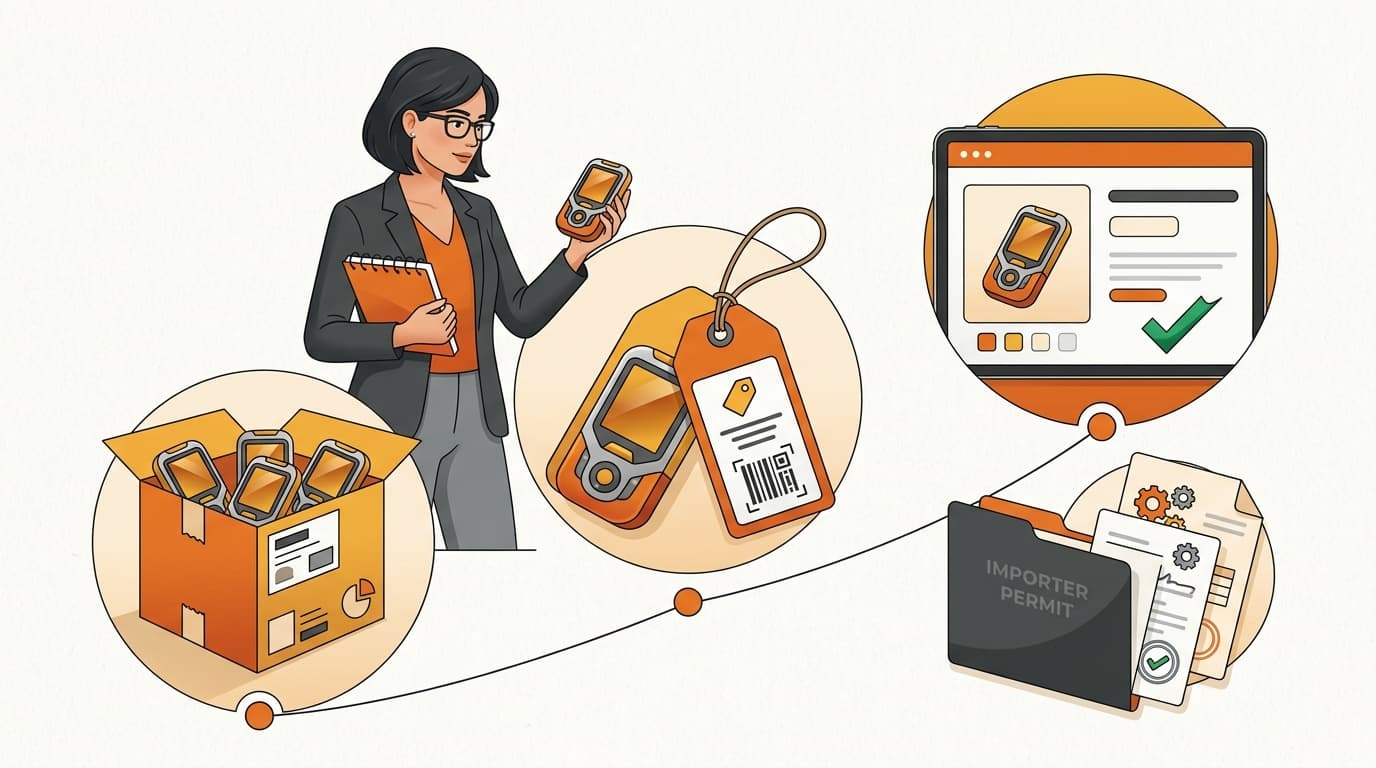
Not every negative result describes the product itself. Some results describe the Korean importer.
If the issue belongs to the importer rather than the product, the result says so. It identifies the license or permit involved and tells the seller what to prepare. That differs from a result saying that the product itself is not allowed for online sale.
This changes the next step. For a product-level restriction, the seller must examine the rule for that SKU and its intended sale. For an importer-level requirement, the seller must check the Korean party handling the import and prepare the named license or permit.
An Importer of Record (IoR) is the party taking the importer role in Korea. If that role is still unclear, What is an Importer of Record (IoR) in Korea? explains the basic responsibility. The SKU review adds a practical check: does the importer hold the permit needed for this product and activity?
Do not ask for another product certificate when the result points to an importer permit. A product document may not solve a requirement that applies to the importer. Conversely, an importer permit does not remove a separate online-sales restriction. Each requirement needs its own answer.
What the seller receives instead of a generic warning
The result tells the seller what to prepare next. It includes:
- A plain explanation of what is allowed or restricted.
- The legal clause behind the result, meaning the part of the Korean rule that supports it.
- The preparation step the seller needs to take.
- A comparison with the original Korean text.
- A saved explanation of the result.
If a SKU is not allowed for online sale, the result says so. It names an online-sale restriction instead of returning only a broad “certification warning.” The seller can then read the rule behind it.
The Korean text comparison gives the team a way to check the explanation against the source wording. A local reviewer can compare the saved explanation with the original Korean text. The explanation makes the decision easier to share without hiding the rule that supports it.
The regulation map is a starting point. Review the exact product and sales channel before importing it.

Worked example: the same SKU moves from cross-border to local sale
Consider a Western brand that has already received orders from Korean customers through cross-border selling. The brand now wants to place the same SKU into a local Coupang sales setup.
- The brand identifies the exact SKU or variant it wants to move locally.
- It submits that SKU for review.
- The review checks whether the SKU may be imported, sold, and sold online.
- The result says the SKU may be imported, but it is not allowed for online sale.
- The seller reads the legal clause behind the result and compares it with the original Korean text. The seller can now tell whether the issue is a missing certificate or an online-sales restriction.
- If the result instead says the issue belongs to the importer, the seller sees the license or permit involved and the preparation step.
The next action follows the result. The seller either addresses the online-sales restriction or prepares the named importer permit before moving local stock.
What to check before sending local stock
Use the review before treating a SKU as ready for local Coupang sales:
- Submit the exact SKU. Review the product or variant you actually plan to sell.
- Read the three answers separately. Do not combine import, sale, and online sale into one general “approved” label.
- Look for an online-sales restriction. If the result says online sale is not allowed, address that restriction before planning a Coupang listing.
- Check who must prepare the requirement. If the result points to the importer, follow the named license or permit guidance.
- Keep the rule with the explanation. Save the explanation and compare it with the original Korean text.
- Decide whether the SKU is ready for Coupang. Do this only after the online-sales question and any importer requirement have a clear answer.
Common questions
Does a review for one variant cover the whole product line?
Do not assume it does. The review is for the exact SKU—the product or variant planned for sale. Submit the variant you want to move locally.
Can the team share the result with colleagues who do not read Korean?
Yes. The saved explanation can be provided in English, Chinese, or Japanese. A local reviewer can compare it with the original Korean text.
Next step: submit the exact SKU before sending local stock, then follow the rule or permit named in the result.
Check a SKU before local inbound
If you need to know whether a product can be imported, sold, and sold online in Korea, contact Kontactic about the review.
About the author
Korean and global e-commerce operators with 15+ years of cross-border experience, led by CEO Isaac Lee — KOTRA-certified consultant and official lecturer for Seoul City and the Korea Customs Service. We run Korea market entry for overseas brands every day; this blog records what we learn in the field.
More about Kontactic →Related Articles

What Happens After Your Korean Coupang Page Is Finished?
After your Korean Coupang page is finished, see the real page, follow the same instructions in Seller Center and email, and get reminders only if needed.

Korean Tax and Import Paperwork: What Kontactic Handles
Korean tax and import paperwork: you provide entity details, supporting documents, and import papers; Kontactic completes the local submissions for a shipment.

How Do I Renew My Korean Entity Service Before It Lapses?
See how Korean entity service renewal works: billing starts three months before the end date, with warnings two and one months ahead so HQ can respond in time.