
Coupang Global Fulfillment Reviews: Do They Carry Over?
Reviews and ratings on a Coupang Global Fulfillment (CGF) listing do not move to a later Korean listing.
The local listing starts with its own review history. This remains true when the product, brand, and packaging stay the same.
Treat CGF reviews as channel-specific. They can show whether Korean shoppers want the product, but they do not become reviews on a later local listing.
What CGF does before you go local
CGF is Coupang’s cross-border program for overseas sellers. Your stock sits in a CGF warehouse outside Korea. Coupang picks and packs each order. It clears the parcel through customs and delivers it to the Korean shopper as a personal import in 3–5 days.
Coupang also handles returns and Korean-language support for a CGF order. Korean shoppers may call this service Rocket Jikgu (로켓직구). CGF is the program name. This differs from Coupang’s local fulfillment service, which stores and fulfills stock inside Korea.
Coupang accepts cross-border sellers shipping from the United States, Europe, Japan, mainland China, or Hong Kong. The stock must come from one of those accepted regions. An overseas warehouse in another country does not qualify under this program.
CGF LITE uses a different stock pattern. Instead of storing inventory in a CGF warehouse, you ship each order to a consolidation warehouse within 48 hours. Both are cross-border sales. Their reviews and ratings do not become reviews on a local Korean listing.
You remain the brand’s seller and exporter on your own Coupang cross-border seller account. You supply the stock and product information. Coupang pays the brand directly. Budget separately for Coupang’s category commission, fulfillment, and storage fees. Any agency fee sits outside those Coupang charges.
This setup lets you test Korean demand without a Korean limited company (유한회사) or a brand-side importer. In the personal-import model, the Korean shopper imports through Coupang’s process. This is not the same as placing commercial stock in Korea.
For broader context on Coupang entry choices, see How to Sell on Coupang as a Foreign Brand: Complete Guide.
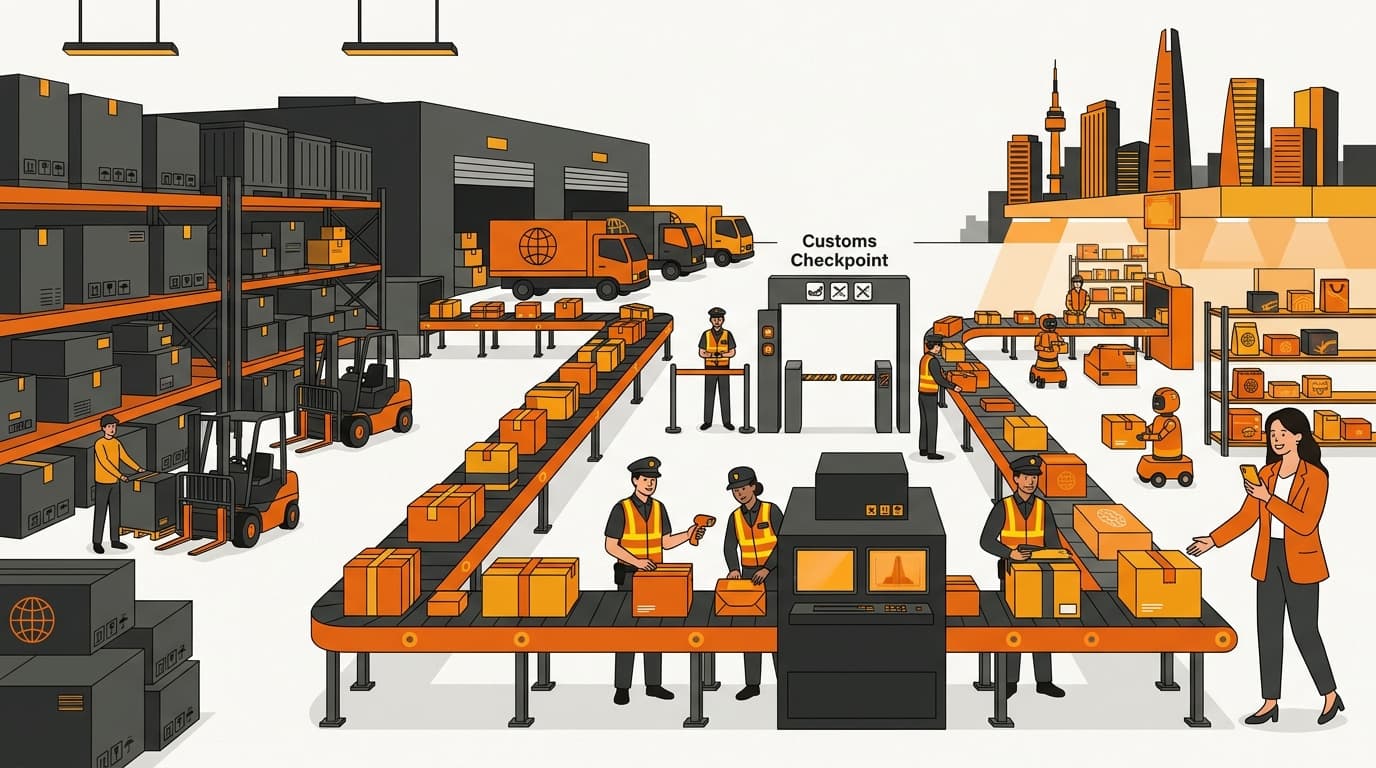
Why the reviews and ratings reset
Coupang keeps reviews on the cross-border listing separate from reviews on the local listing. Product reviews stay on the CGF listing, while seller ratings stay with the cross-border seller account.
That separation follows the seller and listing setup. It does not change because the physical product has the same model number or packaging.
Coupang’s Global Seller Services Agreement says Coupang may use tools that let customers rate products and seller performance. This explains why the ratings exist. It does not promise that they move to a new Korean seller account or entity.
Imagine a European travel-bag brand that sells through CGF. Korean shoppers leave product reviews and seller ratings on the cross-border listing. The brand later imports the same bag through its Korean entity and creates a local listing. The bag may be identical. The local listing still starts without the CGF review history.
Use the old comments as product research. They can show which features Korean shoppers value, which questions they ask, and which claims need clearer Korean copy. That helps the team prepare the local page. It does not transfer feedback inside Coupang.
Do not put the CGF review count into the local launch forecast. Plan as if the local listing has no inherited reviews. If Coupang offers a supported migration for a specific account structure, get that confirmation before counting on it. The standard assumption should be a fresh local review history.

What changes when a Korean entity takes over
Moving to local selling changes the seller and importer setup. It does not merge the cross-border listing with the local listing.
Seller of Record (SoR) means the legal seller named in the sale. Importer of Record (IoR) means the entity that files the import declaration and pays import duties and import value-added tax (VAT).
Under CGF, the Korean shopper imports through Coupang’s personal-import process. The brand does not place stock into Korea as the local importer.
If a Korean entity or local partner imports commercial stock, the agreement must name who sells the goods and who imports them. The local setup also needs a clear owner for the Korean product page, customer service, returns, and local inventory.
Coupang’s local fulfillment service can store stock, deliver orders, and process returns inside Korea. It is not CGF. A local launch therefore needs its own seller setup, delivery promise, and return process.
These roles matter to the listing and order history. A Korean entity does not repair the review gap. It creates a new local selling setup. Who Is the Importer of Record When You Sell on Coupang? explains why the importer role cannot simply be assigned to a freight forwarder.
Local compliance is a separate launch gate
Local compliance is separate from review history. Before moving stock into Korea, check the exact product, model, bundle, label, and seller structure.
KC Certification (KC 인증) is Korea’s conformity mark for designated products. It covers more than one safety check. Electrical and household products and children’s products can fall under the Korea Agency for Technology and Standards (KATS). Wireless products and electromagnetic compatibility (EMC) can involve the Radio Research Agency (RRA).
A wireless product may need both a KATS review and an RRA review. The answer depends on the exact model and final bundle. A file showing European conformity (CE) marking, US Federal Communications Commission (FCC) compliance, or Underwriters Laboratories (UL) safety testing may help with Korean review. None replaces the Korean process.
Food, cosmetics, household chemicals, and other regulated goods can have separate Korean import, registration, and labeling rules. When a brand moves from CGF to a Korean entity, it should check the product category again. A CGF listing is not proof of local approval. See KC Certification: Can CE, FCC, or UL Replace It? for that distinction.
Use this order before committing local stock:
- Name the local SoR and IoR.
- Check each local product against KC and any category-specific Korean rule.
- Confirm the Korean package disclosures and other required documents.
- Match the local product page to the approved model, bundle, and claims.
These checks are separate from review transfer. A brand can plan to earn local reviews and still delay the listing because the product or importer is not ready.
Local and cross-border selling use different stock and seller setups. For a wider comparison, see Local vs. Cross-Border Selling in Korea: An Operator’s Decision Framework.
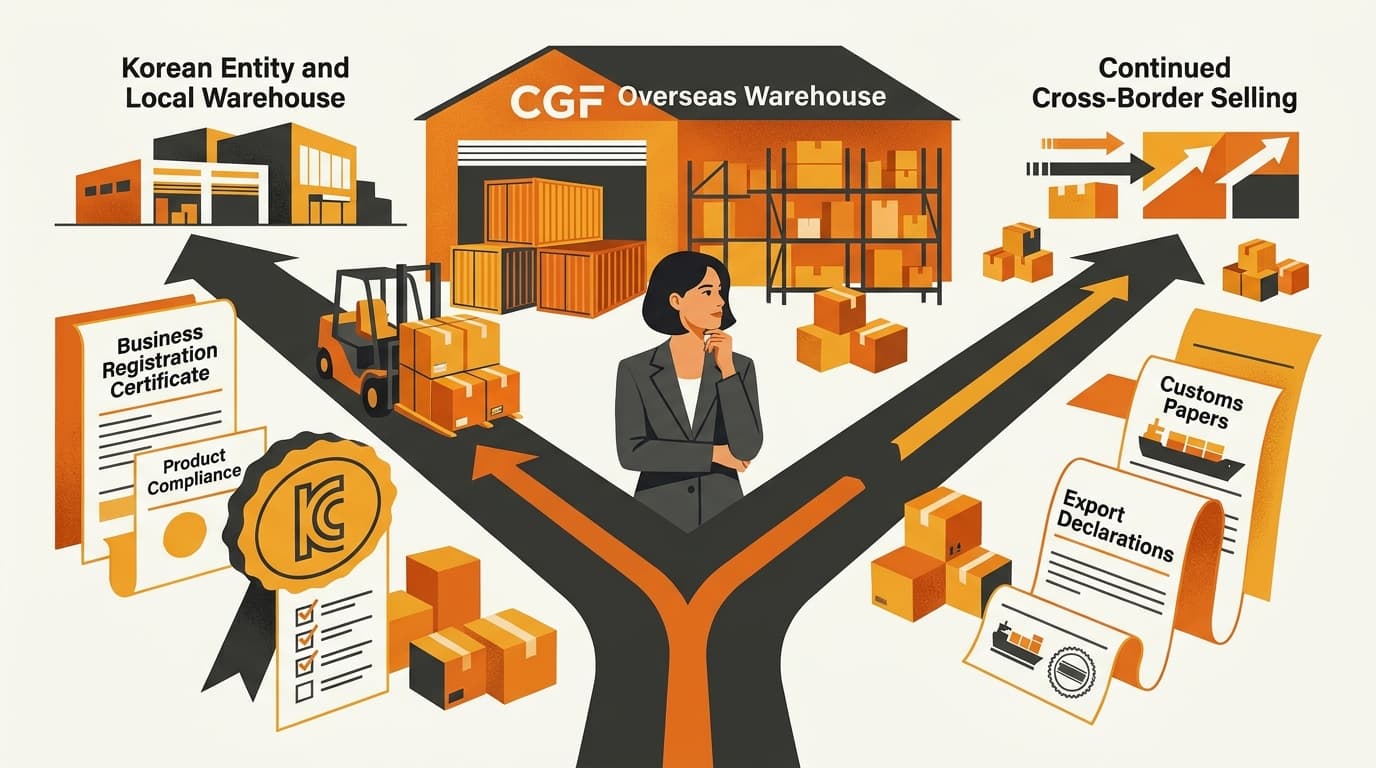
How to plan the switch without miscounting your reviews
Treat the move as a new local launch. This checklist keeps the two selling models separate:
- Save the CGF baseline. Keep the cross-border listing, product information, prices, delivery promise, review count, and seller rating in your own files. Use them for comparison, not as promised local content.
- Choose the legal roles in writing. Write down who sells, imports, owns the inventory, receives Coupang’s payment, pays duty and VAT, and handles returns.
- Check each local product. Confirm KC or the category-specific rule, Korean package disclosures, importer registrations, and the exact model or bundle before shipping.
- Build the Korean listing as a new launch. Prepare Korean product information, images, pricing, and customer-service instructions. Do not add an inherited review count.
- Plan the first local reviews. Use Coupang’s permitted review process for Korean orders. Do not tell the team that CGF feedback will appear on the local page.
- Separate the numbers. Report CGF sales and reviews separately from local sales and reviews. This shows whether the local listing improves instead of hiding the reset in one total.
- Ask Coupang about account handling before launch. Do not assume that an old cross-border listing can redirect to a local seller, or that both listings will display the same product history.
For example, an apparel brand may start with CGF to learn whether Korean shoppers buy its products. If it later needs Korean stock and a local seller, it should budget for a new launch. That budget should include compliance work, import VAT, local fulfillment, and new local reviews. The first CGF launch still helps the team choose products and improve the Korean page. It does not supply the local star rating.
Planning a CGF-to-Korea transition?
Contact Kontactic to map the seller, importer, compliance, inventory, and Coupang listing steps for your products before you move to a Korean entity.
About the author
Korean and global e-commerce operators with 15+ years of cross-border experience, led by CEO Isaac Lee — KOTRA-certified consultant and official lecturer for Seoul City and the Korea Customs Service. We run Korea market entry for overseas brands every day; this blog records what we learn in the field.
Meet the Kontactic team →Related Articles

Korean Biocide Approval: Is a Dirt-Only Cleaner Covered?
A dirt-only surface cleaner usually avoids Korean biocide approval, but it may still need Korea’s safety check and report before commercial import for sale.

Do Children’s Products Need KC in Korea If Adults Don’t?
An adult version may not need a KC mark in Korea, while the children’s version may need supplier conformity confirmation and a KC mark before it goes on sale.

Can a Korean Coupang Page Replace a Cosmetic Label?
A Korean Coupang page can explain an English-only cosmetic, but it cannot replace required Korean details on the bottle, tube, jar, or box before sale in Korea.