Bluetooth KC vs RRA Conformity: Need Both in Korea?
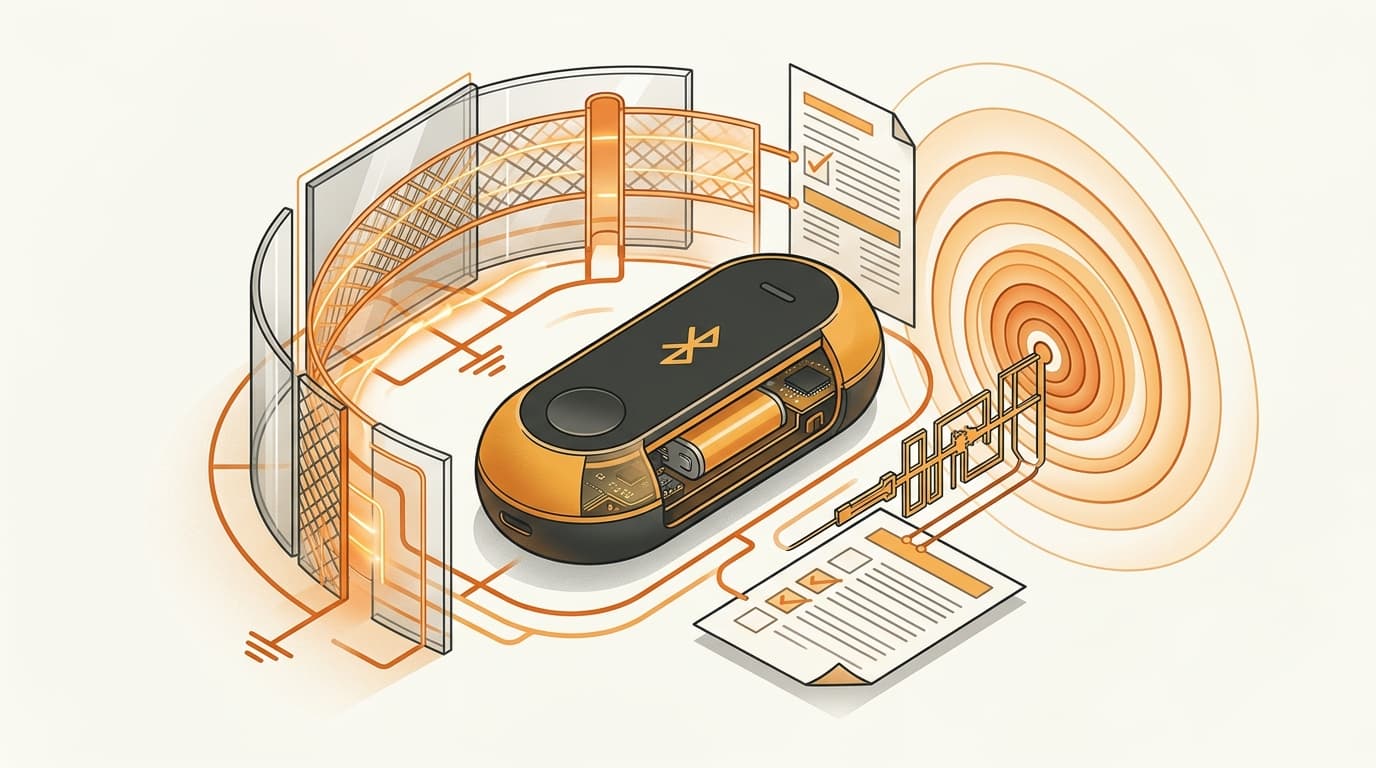
A Bluetooth device in Korea may need both RRA conformity assessment and a KATS safety review. RRA covers the Bluetooth radio and EMC function; KATS covers the finished electrical product when its category falls under a safety route. A module approval or RRA result does not replace the KATS determination.
KC safety and RRA conformity answer different legal questions
The word “KC” creates the first trap. It is often used as if it were one universal approval for every product, but Korean compliance is divided by product type and legal regime.
KATS administers electrical-product safety under the Electrical Appliances and Consumer Products Safety Control Act. RRA and the Central Radio Management Office enforce radio-frequency and electromagnetic-conformity requirements under the Radio Waves Act. The authorities, statutory questions, records, and evidence are therefore not interchangeable.
KATS safety track: The product-safety question for the finished electrical appliance or consumer product. Depending on the exact Korean classification, the outcome may be safety certification, safety confirmation, a supplier’s declaration, or no KATS safety track.
RRA conformity assessment: The radio-frequency and electromagnetic-conformity question for covered equipment, including the Bluetooth function unless an applicable statutory exemption or different classification applies.
For a Bluetooth product, separate the analysis this way:
| Question | KATS safety track | RRA conformity track |
|---|---|---|
| What triggers review? | The product category, electrical characteristics, intended use, and applicable safety rules | The radio function, including Bluetooth, plus the applicable RF and EMC classification |
| What is being assessed? | The finished electrical product and its covered configuration | The equipment’s radio and electromagnetic-conformity characteristics in its final integration |
| What can the outcome be? | Safety certification, safety confirmation, supplier’s declaration, or no KATS safety track | Required conformity assessment or an applicable statutory exemption |
| What does existing evidence prove? | Only the product and safety route covered by that evidence | Only the radio/EMC equipment and integration covered by that evidence |
That separation explains the answer to the title. A mains-powered Bluetooth appliance may need both tracks. A different Bluetooth product may need RRA conformity but fall outside KATS safety certification. Neither conclusion can be made from the Bluetooth feature or a generic KC logo alone.
Does every Bluetooth device need both?
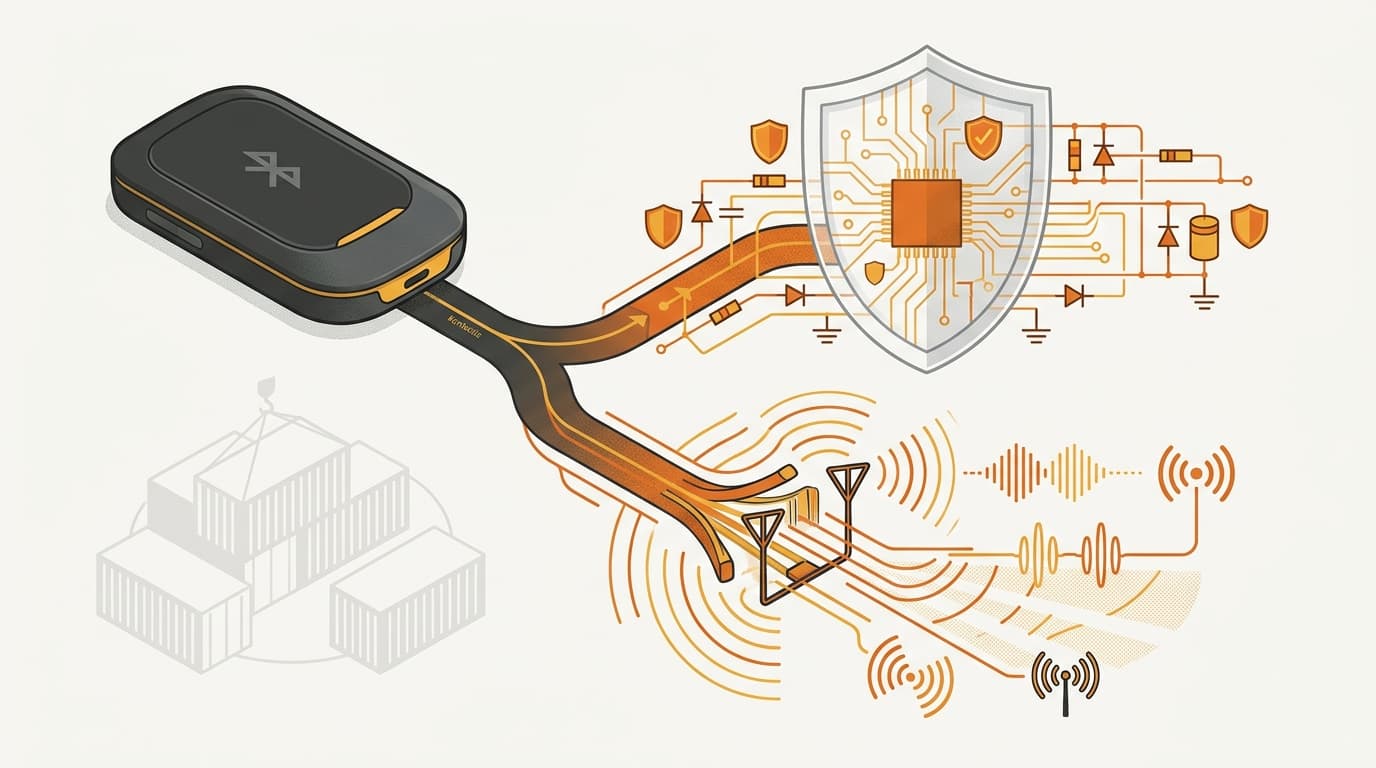
No. The safe rule is not “Bluetooth means two certificates.” The safe rule is: Bluetooth normally brings the radio function into an RRA conformity review, while the finished electrical product must be classified separately under the KATS safety regime.
The KATS result can vary because the relevant question is what the finished product is, how it is powered, and how it is intended to be used. The same wireless capability can appear in products with very different electrical designs and market classifications.
Consider the differences without treating these as automatic legal conclusions:
- A mains-powered Bluetooth speaker or appliance: Its electrical design and product category may create a KATS safety obligation, while its Bluetooth radio creates a separate RRA question. Both must be mapped before testing.
- A USB-powered or battery-powered device: Its power arrangement may change the KATS classification, but USB or battery power is not a blanket exemption. The Bluetooth function still requires an RRA review unless an applicable exemption applies.
- A non-Bluetooth electronic product: The absence of a radio does not automatically remove every RRA issue. Certain non-wireless equipment can still have electromagnetic-conformity obligations, while KATS classification remains a separate question.
- A product sold with a power adapter: The adapter may have its own applicable safety status. That status does not automatically establish conformity for the host device.
This is why a supplier’s sentence—“the product is KC certified”—is not enough. Ask which authority, which route, which exact model, and which configuration the statement covers. If the answer only identifies a module, adapter, or older hardware revision, the finished Korean-market SKU remains unresolved.
USB and battery designs deserve an evidence review rather than an assumption based on their input voltage. For the narrower question of when a foreign EMC report can support a Korean review, see KC Certification for USB and Battery-Powered Devices: When a Foreign EMC Report Is Enough.
Freeze the exact Korean-market configuration before testing
Classification starts with the final SKU, not with the brand name or a broad product family. A “Bluetooth speaker” description is not enough for a reliable Korean route decision because small configuration changes can alter the evidence that must be reviewed.
Before testing or filing, freeze at least these facts:
- Exact model and hardware revision. Record the model number that will actually be imported and sold in Korea. Do not use a family name if several revisions share the same marketing name.
- Power arrangement. Document AC or DC input, internal battery, USB power, charging behavior, and whether a power adapter is included in the Korean package.
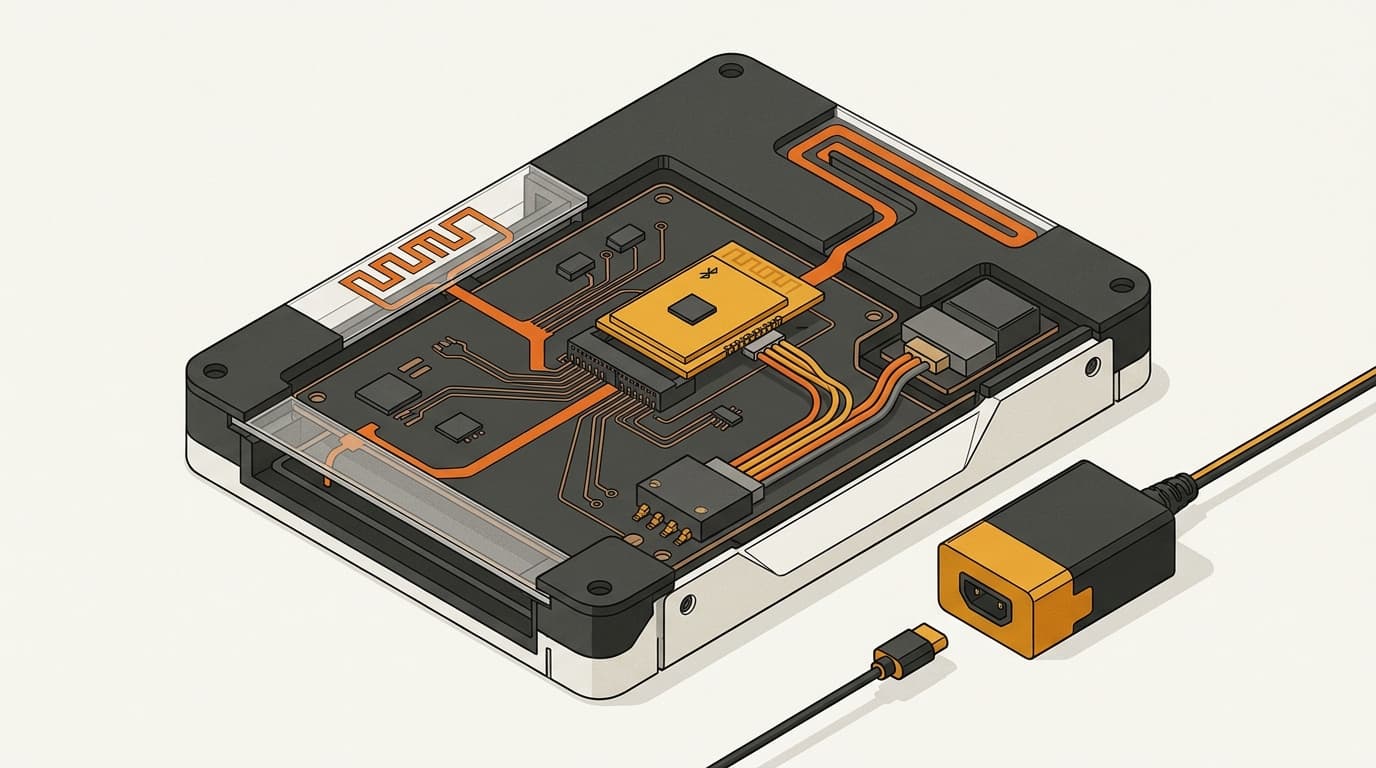
- Radio configuration. Identify the Bluetooth module, antenna configuration, antenna placement, and relevant firmware or radio settings. The approved integration conditions matter as much as the module label.
- Host design. Keep the enclosure, circuit-board arrangement, ports, wiring, and other elements that can affect electrical safety or electromagnetic behavior aligned with the assessed unit.
- Intended use and product context. A consumer accessory, household appliance, and device intended for a particular environment may not be treated identically just because all contain Bluetooth.
- Supporting evidence. Gather product specifications, module documentation, adapter evidence where relevant, prior test reports, and the product documents that will be used for the Korean filing or sale.
The goal is to make the Korean configuration reproducible. If the factory later changes the antenna, enclosure, firmware, power supply, adapter, or host board, do not assume the original evidence still covers the result. Ask whether the change affects the applicable route or requires additional testing or filing.
A useful internal control is a one-page configuration record linking the model number to the radio module, antenna, power arrangement, adapter, and hardware revision. It gives the test lab, importer, and production team the same object to discuss. It also makes database results easier to compare against the physical goods.
A pre-approved Bluetooth module does not approve the finished host
A pre-approved Bluetooth module can be valuable evidence, but module approval is not approval of the finished product. The relevant question is whether the module evidence covers the way the module is integrated into the Korean-market host under the applicable RRA route.
Review the module’s approved integration conditions against the finished design. In particular, check:
- whether the antenna type and configuration match;
- whether the antenna location and enclosure are consistent with the approved arrangement;
- whether firmware and radio settings stay within the documented conditions;
- whether the power arrangement and host board match the assessed integration; and
- whether the final product adds design elements that can change RF or EMC behavior.
A host enclosure, antenna position, power circuit, or firmware change can alter RF or EMC behavior. Not every change triggers a new process, but each change needs a scope review before you reuse the old evidence.
The same logic applies to a power adapter. A KC-marked adapter may address the adapter’s own applicable safety requirement, but it does not certify the host’s electrical design or its Bluetooth radio and EMC conformity. Treat the adapter and host as separate pieces of evidence unless the applicable Korean documentation clearly covers the complete product configuration.
Foreign documents need the same discipline. CE, FCC, UL, or another overseas report may help a Korean lab or filing review, but it does not automatically replace the Korean conformity route. Korea KC Certification: Can CE, FCC, or UL Replace It? explains why foreign evidence can support an assessment without becoming a universal substitute for it.
Use this sequence from classification to lawful sale
Once the configuration is fixed, work through the two tracks as separate workstreams:
- Freeze the sellable SKU. Lock the model number, hardware revision, radio configuration, power supply, adapter bundle, and Korean packaging before relying on test evidence.
- Map KATS and RRA independently. Record the KATS product classification and resulting route. Separately record the RRA radio/EMC route or the basis for an applicable exemption. Do not let a completed answer in one column stand in for the other.
- Build an evidence pack. Assemble specifications, wiring or product information relevant to the safety review, module and antenna documents, power-supply evidence, prior reports, and the configuration record. Identify every mismatch before filing.
- Confirm the Korean testing or filing path. Determine which evidence must be generated or submitted in Korea and whether any existing report can support that process. If an exemption is being considered, substantiate it against the applicable rule rather than treating it as a supplier assumption.
- Resolve failures and documentation gaps. A failed test, incomplete report, changed component, or required factory or follow-up step can change the calendar and the final scope. Close the issue against the frozen SKU, not against a generic product description.
- Apply the required markings and release controls. Use the markings and identifiers required for the applicable route, and make sure production units match the assessed configuration before import and lawful sale.
There is no responsible fixed timeline for this sequence. The calendar depends on classification, test scope, failures, documentation gaps, and any factory or follow-up requirements. A short radio review can still be delayed by an unresolved host change; a safety filing can still fail if the submitted model does not match the product in the box.

Verify the exact model before import—and remember that clearance is not approval
Before shipping, verify the exact model and configuration in two separate official systems. Check the KATS record in the Safety Korea product-safety database. Check the radio/EMC record in the RRA conformity-assessment search.
Search by the product and model that will actually enter Korea. Then compare the result with your configuration record: model number, hardware revision, Bluetooth module, antenna arrangement, power design, and included adapter. A database entry for a module is not necessarily an entry for the host. A result for an earlier model is not evidence for a later revision.
If the public record is absent, ambiguous, or inconsistent with the goods, pause the shipment and resolve the mismatch with a qualified Korean test lab or conformity specialist. A supplier screenshot, generic KC artwork, or verbal assurance is not a substitute for evidence tied to the exact SKU.
The import consequence can be immediate. If a required assessment is missing or cannot be substantiated, customs or another enforcement authority may delay or stop clearance and hold the goods. KC Certification Required: Customs Holds Electronics explains why a regulated electronic shipment may be held rather than released for a later fix.
Entry into Korea does not finish the compliance question. Post-import surveillance can still result in corrective measures, withdrawal, recall, or other sanctions. Customs clearance is a border event; it is not proof that the product was lawfully assessed and sold.
Common questions about Bluetooth KC and RRA in Korea
Does every Bluetooth product need KATS safety certification?
No. KATS determines whether the finished electrical product falls under safety certification, safety confirmation, a supplier’s declaration, or no KATS safety track. Bluetooth alone does not decide that outcome.
Does every Bluetooth product need RRA conformity assessment?
Bluetooth normally brings the radio function into the RRA conformity-assessment analysis, subject to applicable statutory exemptions and the exact equipment classification. The conclusion must cover the finished integration, not just the radio chip.
Can a pre-approved Bluetooth module clear the host product?
No. The module evidence can support the review only when its integration conditions match the host’s antenna, enclosure, firmware, power arrangement, and other relevant design details. The host still needs its own scope determination.
Does USB or battery power remove the Korean review?
No. USB and battery power do not create a blanket KATS or RRA exemption. They can affect classification, so document the final power arrangement and assess both tracks separately.
Can CE, FCC, UL, or a generic KC mark prove compliance?
Not by itself. Foreign evidence may support a Korean review, and a KC mark without matching model and route records does not show that both KATS and RRA obligations are covered.
Does customs clearance prove the product is compliant for sale?
No. Goods can clear and still face post-import surveillance, corrective measures, withdrawal, recall, or other enforcement action if the required conformity cannot be substantiated.
Need to map a Bluetooth SKU before shipment?
Send us the exact model configuration and existing conformity evidence. Contact Kontactic to discuss which Korean KATS and RRA questions need to be resolved before import or sale.
About the author
Korean and global e-commerce operators with 15+ years of cross-border experience, led by CEO Isaac Lee — KOTRA-certified consultant and official lecturer for Seoul City and the Korea Customs Service. We run Korea market entry for overseas brands every day; this blog records what we learn in the field.
More about Kontactic →Related Articles

Coupang Rocket Growth Stock: Can an ERP Set It via API?
An ERP cannot set Coupang Rocket Growth stock through the Open API; replenishment starts when Coupang physically receives a new inbound shipment of stock.

Korea FTA Duty: US/EU Warehouse Shipping Is Not Enough
A US or EU warehouse does not prove FTA origin in Korea. The importer must verify production, transit, and documents before claiming a lower customs duty rate.

Agentic Commerce: When AI Picks the Product, What Should Brands Selling in Korea Do?
AI shopping agents now search, compare, and sometimes buy for the shopper, and they recommend 1–5 products instead of a page of results. What Korea's Chamber of Commerce found in the US and Europe, and what it means for your product data in Korea.