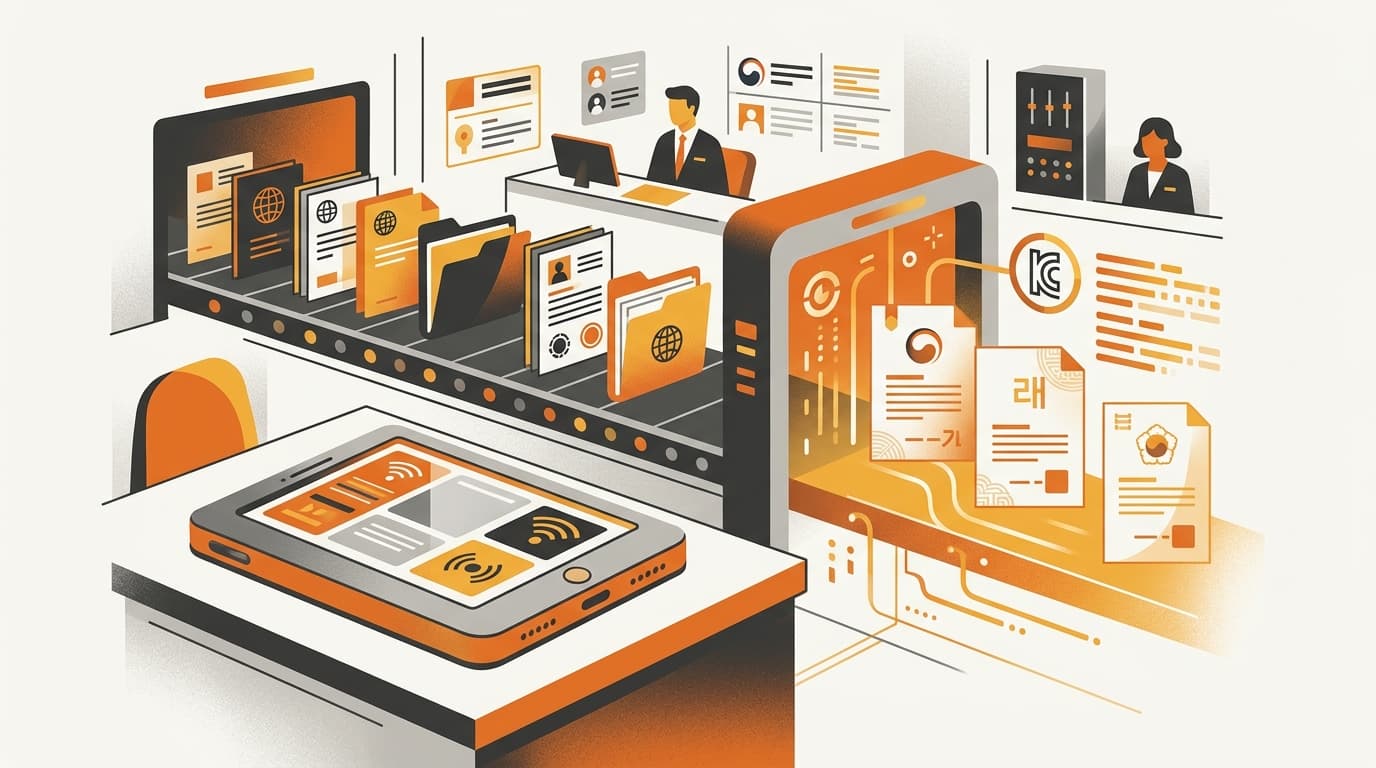
Korea KC Certification: Can CE, FCC, or UL Replace It?
No. A CE mark, FCC grant, or UL listing does not automatically replace the Korean KC safety or EMC/RF conformity process. Those documents may support a Korean assessment and sometimes reduce duplicate testing. Korea still determines the requirements based on the product’s Korean legal category and the exact model configuration imported and sold.
Operational rule: Treat CE, FCC, and UL files as a starting evidence dossier—not as permission to import, list, or advertise a product as KC-compliant in Korea.
Why foreign approval marks do not transfer to Korea
The marks answer different legal questions. A CE mark belongs to the European Union’s conformity framework. An FCC grant or equipment authorization addresses applicable United States radio-frequency requirements. A UL listing is a private safety testing or listing outcome. None of those marks is itself a Korean statutory KC approval.
That distinction matters because a foreign approval is not a universal statement that a product is safe or compliant everywhere. It is evidence assessed against a particular jurisdiction’s rules, standards, product definition, test conditions, and responsible party. Korea makes its own classification and conformity decisions.
| Existing foreign document | What it generally demonstrates | What it does not establish in Korea |
|---|---|---|
| CE mark and supporting technical file | Conformity with applicable EU requirements for the product and configuration assessed | That the product follows the Korean category, standards, filing route, or marking requirements |
| FCC grant or equipment authorization | US authorization for the applicable radio-frequency configuration | Korean radio or EMC conformity under the Radio Waves Act |
| UL listing or safety report | Evaluation against the private scheme and conditions covered by the listing or report | Korean electrical-product safety conformity under the applicable Korean route |
A logo on the housing or packaging is therefore the weakest part of the dossier for a Korean reviewer. The useful material is the underlying report, declaration, grant, listing record, technical file, and configuration information. Even those documents must be checked against Korean requirements.
Start with the Korean statutes on law.go.kr. The relevant laws include the Electrical Appliances and Consumer Products Safety Control Act and the Radio Waves Act. The Korean Agency for Technology and Standards (KATS) and the National Radio Research Agency (RRA) publish the administrative guidance that helps explain which Korean route applies.
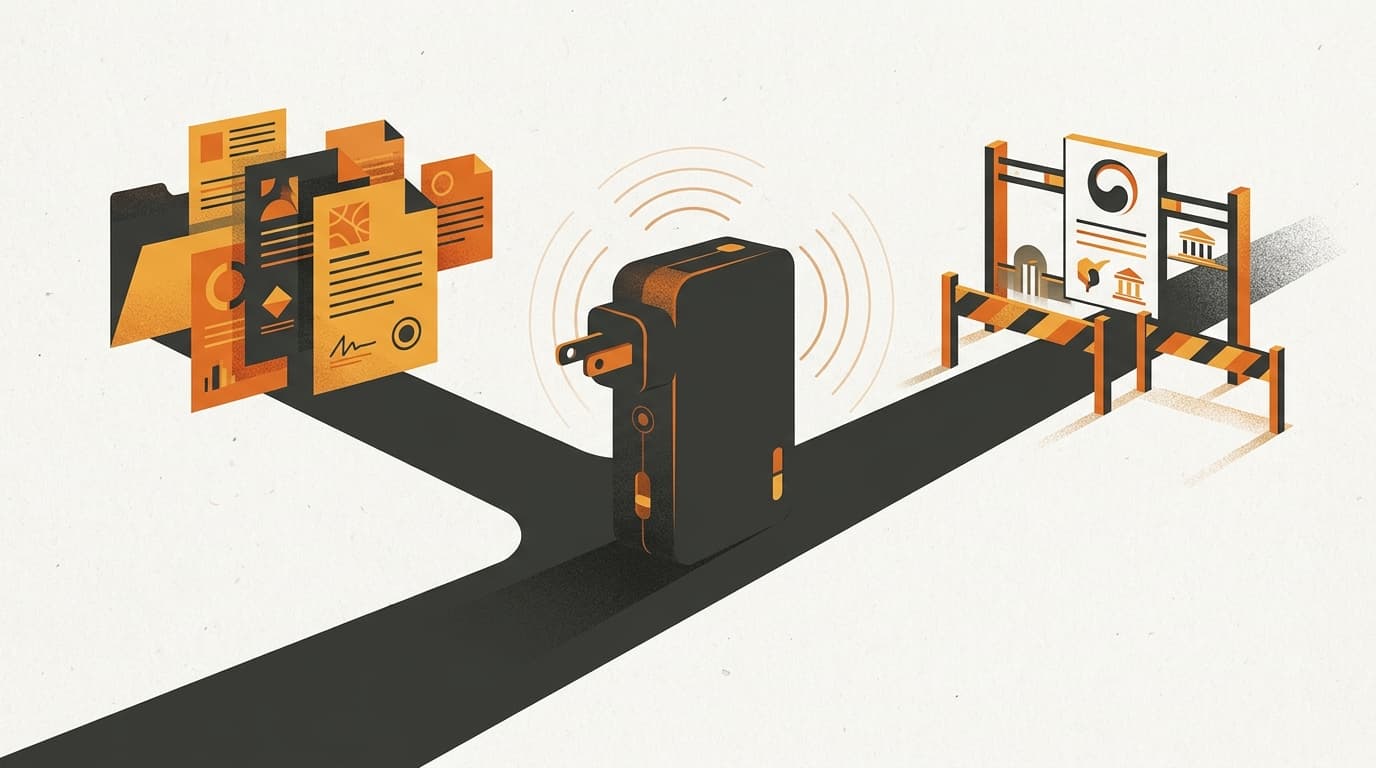
Korea separates electrical safety from EMC and radio conformity
The first question is not “Which foreign mark do we already have?” It is “Which Korean rule applies to this product?”
For an electrical or electronic product, the Korean assessment may involve more than one regulatory question:
Electrical-product safety: KATS administers the relevant safety framework under the Electrical Appliances and Consumer Products Safety Control Act. The applicable Korean category and assessment route determine what evidence, testing, certification, or confirmation is required.
EMC and radio equipment: The RRA conformity-assessment system under the Radio Waves Act covers applicable electromagnetic compatibility and radio-equipment requirements. Wireless functions can bring a product into this analysis even when the brand already has an FCC authorization.
These are separate checks. A product can have a substantial electrical-safety file and still need a Korean EMC or radio conformity assessment. Conversely, evidence about a device’s radio performance does not by itself resolve Korean electrical-product safety requirements.
The product may need one route, the other, or both. That decision depends on the product’s function, electrical characteristics, wireless capability, and Korean legal classification—not on whether the box already carries CE, FCC, or UL symbols.
For a closer look at the safety side, see which of Korea’s three KC safety-certification types fits an electrical product. For wireless products, the distinction between Korean KC safety and EMC requirements is the relevant question, not simply whether the device has passed an FCC process.
Do not collapse safety and EMC/RF into one checkbox. A foreign safety listing, an EU EMC report, and a US radio authorization may each cover a different part of the evidence. None tells you, on its own, which Korean filing or assessment is still required.
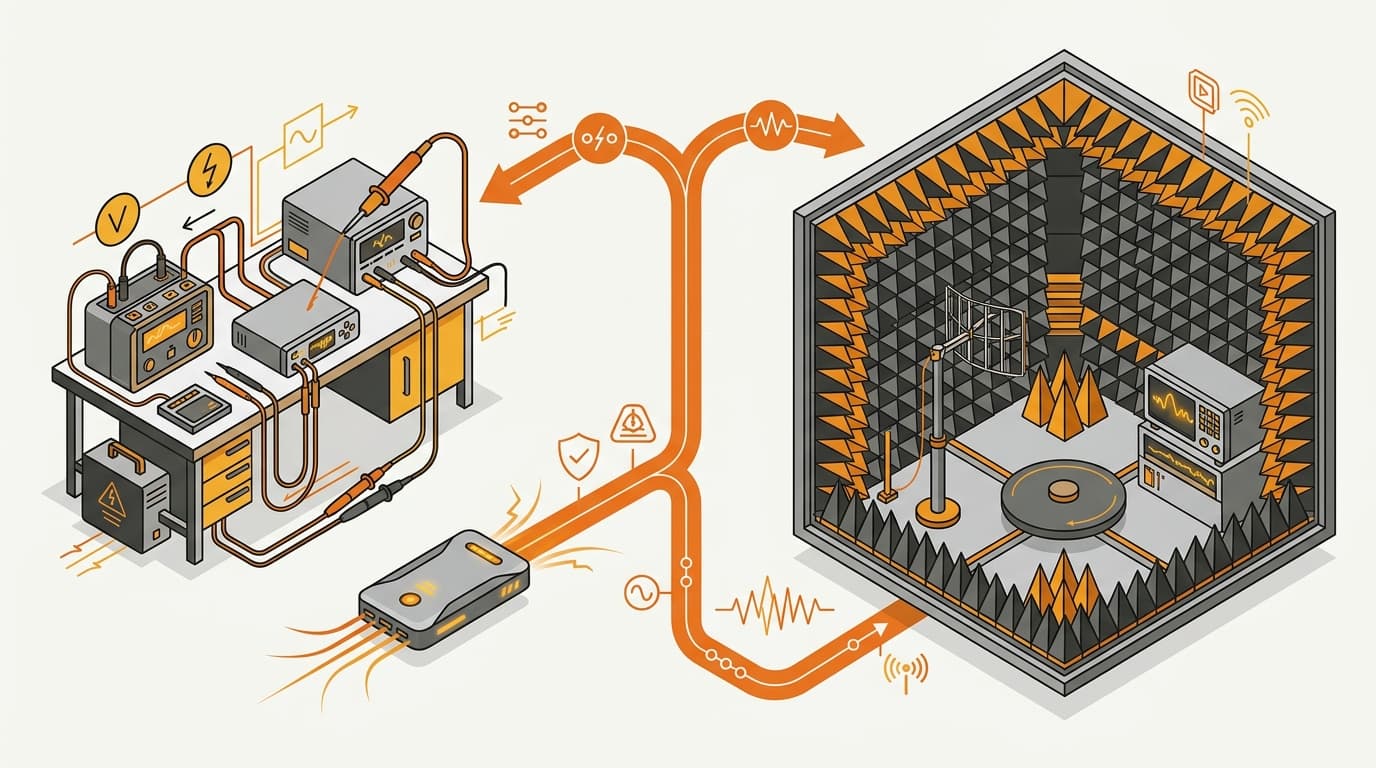
When CE, FCC, or UL reports can still help
Foreign documentation can be valuable. The practical question is not whether Korea recognizes the logo; it is whether the relevant Korean testing or certification route can use the underlying evidence.
The relevant Korean body or laboratory may accept an eligible foreign report as supporting evidence. It may reduce duplicate testing only when the laboratory, standards, methods, and product configuration meet Korean requirements. That acceptance must be established for the specific case. It cannot be inferred from the country where the report was issued or from the approval mark printed on the product.
Think of the three files this way:
- CE documentation: The technical file, declaration, and supporting test reports may give a Korean reviewer useful evidence about safety or EMC characteristics, depending on what was assessed. The CE mark alone does not identify which EU requirements were applied or whether they align with the Korean route.
- FCC documentation: An FCC grant can document the US-authorized radio configuration. The associated reports may help a Korean reviewer understand the transmitter and test results, but US authorization is not Korean radio or EMC conformity.
- UL documentation: A UL listing or safety report may provide third-party evidence for the product or components covered by the listing. It remains a private safety scheme, and the covered standard, conditions, and model scope may not match the Korean safety requirements.
Before relying on a foreign report, ask five practical questions:
- Does the report identify the exact model, hardware revision, and configuration being imported?
- Was the testing performed by a laboratory and under a standard or method that the Korean route can use?
- Does the report cover the final power supply, battery, wireless module, antenna, and other relevant accessories?
- Is the report complete and current enough for the Korean body or laboratory to review its scope?
- Has the relevant Korean body confirmed what can be reused and what must be repeated or supplemented?
The fifth question is the one brands skip. They see a familiar standard number or a respected laboratory name and assume equivalence. A Korean reviewer may instead find a different test method, an incomplete configuration, a different rated input, or a product category that requires a separate Korean filing.
The outcome can be favorable: valid evidence may reduce repeated work. It can also be limited: the same evidence may support only one part of the Korean assessment, leaving gap testing or additional documentation. Both outcomes are normal. Neither is automatic.
The same configuration question appears in when a foreign EMC report may be enough for a USB- or battery-powered device. The answer depends on the Korean route and the evidence in the file, not on the device’s power source alone.
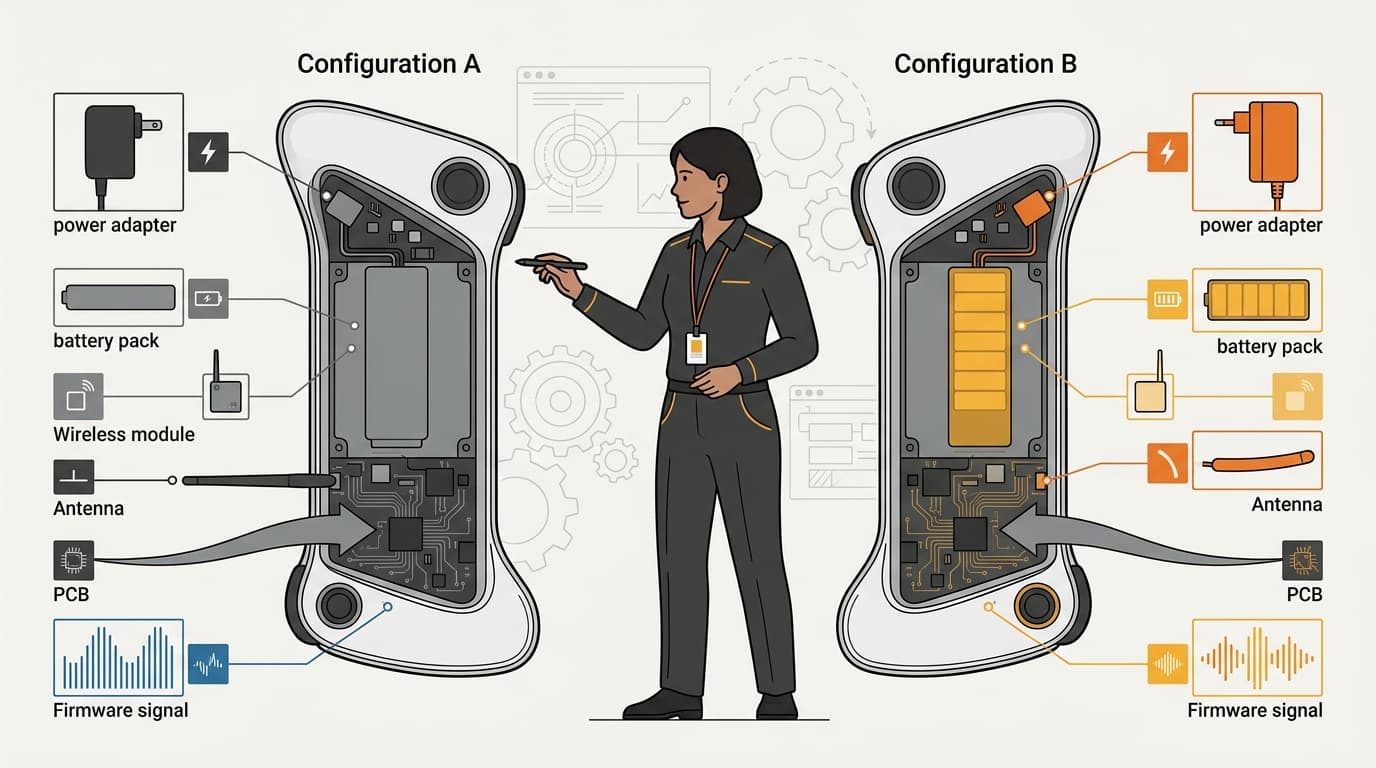
Why exact product configuration controls the answer
A report is useful only within its documented scope. The model in the Korean file needs to correspond to the product that will actually be imported and sold.
That sounds obvious until a launch version is compared with the tested version. A brand may keep the same product name while changing a component that affects safety, emissions, or radio behavior. Each of the following can change the equivalence analysis:
- a different power adapter;
- a different battery pack;
- a new wireless module;
- a changed antenna;
- a revised PCB;
- firmware that affects radio behavior; or
- a different rated input.
A different power adapter can alter the safety and electromagnetic profile of the finished product. A new wireless module or antenna can change the radio configuration covered by an FCC file. A PCB revision or firmware change can make an earlier test report less representative. Even when the external housing and marketing name are unchanged, the technical scope may no longer match.
The reverse problem also occurs. A report may cover a product family, but the Korean model may include an accessory, power configuration, or radio option that was outside the tested family. “Same series” is not a sufficient conclusion unless the report and the Korean route define that family broadly enough.
Freeze the sellable configuration before asking whether a foreign file can be reused. Record the model number, hardware revision, adapter, battery, wireless module, antenna, PCB, rated input, and relevant firmware version. Then compare that record with the test reports and approval documents line by line.
If there is a mismatch, do not conceal it by using the older model number. Ask whether the difference requires additional testing, a revised filing, or a new Korean assessment. The answer depends on the Korean category and the technical effect of the change.
A practical sequence before importing or listing
Use the foreign file early, but do not treat it as permission to launch. A defensible sequence is:
- Freeze the final configuration. Identify the exact model and the hardware, power, battery, antenna, wireless, PCB, rated-input, and firmware details that will be sold in Korea.
- Classify the product under Korean rules. Determine whether the product falls within the applicable KATS electrical-safety framework, the RRA EMC/radio framework, or both. Do not let the existing foreign mark decide the classification.
- Assemble the complete foreign dossier. Gather CE technical-file material, declarations, test reports, FCC grant and supporting records, UL listing documents or reports, and the configuration information that connects each document to the final model.
- Ask the relevant Korean body, laboratory, or certification route about reuse. Provide the actual reports and final configuration rather than a list of logos. Ask which evidence is accepted, which tests are missing, and which Korean filing or conformity step remains.
- Complete the gaps. Perform any additional testing, Korean assessment, filing, or evidence updates required for the classified route. A report that helps with EMC does not necessarily close the safety side, and the reverse is also true.
- Apply Korean marking and documentation after the required process is complete. Use the Korean conformity status and documentation that actually applies to the final imported model.
- Only then schedule the operational launch. Align the import paperwork, inbound plan, product listing, and marketplace claims with the Korean conformity record. For the customs consequence of missing required evidence, see why electronics can be held when KC certification is required.
This order prevents a common and expensive reversal. A brand may ship inventory because its foreign approval looks complete. It may then discover that Korea requires a missing test, an unregistered configuration, or another document before launch.
Korea Customs Service guidance is the right place for customs-document questions. KATS and RRA guidance is the right place for the underlying safety and radio/EMC route. Marketplace instructions can explain an inbound or listing requirement, but a marketplace checklist does not turn a CE, FCC, or UL file into Korean conformity.
Reusing foreign evidence can shorten work, not guarantee a date
A valid foreign report can reduce duplicate effort. It cannot create a guaranteed Korean launch timeline.
The schedule depends on the Korean product category, report equivalence, and configuration differences. Gap testing, filing requirements, and laboratory or certification-body capacity can also affect timing. A brand with a complete matching dossier may face a much simpler review than a brand with only a mark or a high-level declaration. The exact outcome still has to be determined through the applicable Korean route.
Be especially cautious of a promise that an existing CE, FCC, or UL approval guarantees a fixed number of days. The approval may be old, the tested model may differ, or the Korean body may require a test that the foreign file never covered. Reusing evidence is a possible efficiency, not a substitute for classification and confirmation.
The correct planning question is: “Which Korean steps remain after the existing evidence is reviewed?” That question produces a real work plan. “We already have CE/FCC/UL, so are we done?” does not.
Common questions about CE, FCC, UL, and KC
Does a CE mark let me import an electronic product into Korea?
No. A CE mark shows that the product was handled under the applicable EU conformity framework; it does not by itself establish the Korean safety, EMC, or radio conformity required for the product’s Korean category.
Does an FCC grant replace Korean EMC or radio conformity?
No. An FCC grant documents US authorization for the applicable radio-frequency configuration. Its underlying reports may support a Korean review, but Korean conformity under the Radio Waves Act must be assessed separately when applicable.
Does a UL listing replace KC safety certification?
No. UL documentation can be useful safety evidence for the model and conditions it covers, but a private UL listing is not a Korean statutory KC safety approval.
Can Korea accept a foreign test report?
Sometimes. Acceptance or reuse depends on the Korean category, the report and laboratory, the standards and methods, and the match between the tested configuration and the product sold in Korea. Confirm the position with the relevant Korean body, laboratory, or certification route before relying on it.
What if only the adapter, battery, module, antenna, PCB, rated input, or firmware changed?
Do not assume the old file still covers the product. Any of those changes can affect the safety, EMC, or radio scope, so compare the final configuration with the report and ask whether additional assessment is required.
Does an existing foreign approval guarantee a faster Korean launch?
No. Reusable evidence may reduce duplicate work, but timing still depends on Korean classification, equivalence, configuration gaps, required testing or filing, and laboratory or certification-body capacity.
The practical answer remains narrow: CE, FCC, and UL documentation can start the Korean review, but only the applicable Korean conformity process can finish it.
Check your product’s Korean conformity path
Bring the final model configuration and your existing CE, FCC, or UL dossier to a Korea entry specialist before you ship or list. Kontactic can help you identify which Korean assessment questions need answers.
About the author
Korean and global e-commerce operators with 15+ years of cross-border experience, led by CEO Isaac Lee — KOTRA-certified consultant and official lecturer for Seoul City and the Korea Customs Service. We run Korea market entry for Western brands every day; this blog documents what we learn in the field.
More about Kontactic →Related Articles
Can You Reject a Coupang Exchange? Only Two Reasons
Coupang exchange rejection is limited to SOLDOUT or WITHDRAW. Learn when each code applies—and what to do when a seller simply prefers a refund instead.
Coupang Order Lines: One Line Is Not One Unit
A Coupang order line can represent a generated quantity option, so your connector must map it to a base SKU and physical quantity before stock movement.
Korean Importer Registration: Why a POA Is Not Enough
A power of attorney cannot establish Korean importer registration; corporate-authority proof and Korean importer records are still required for the filing.