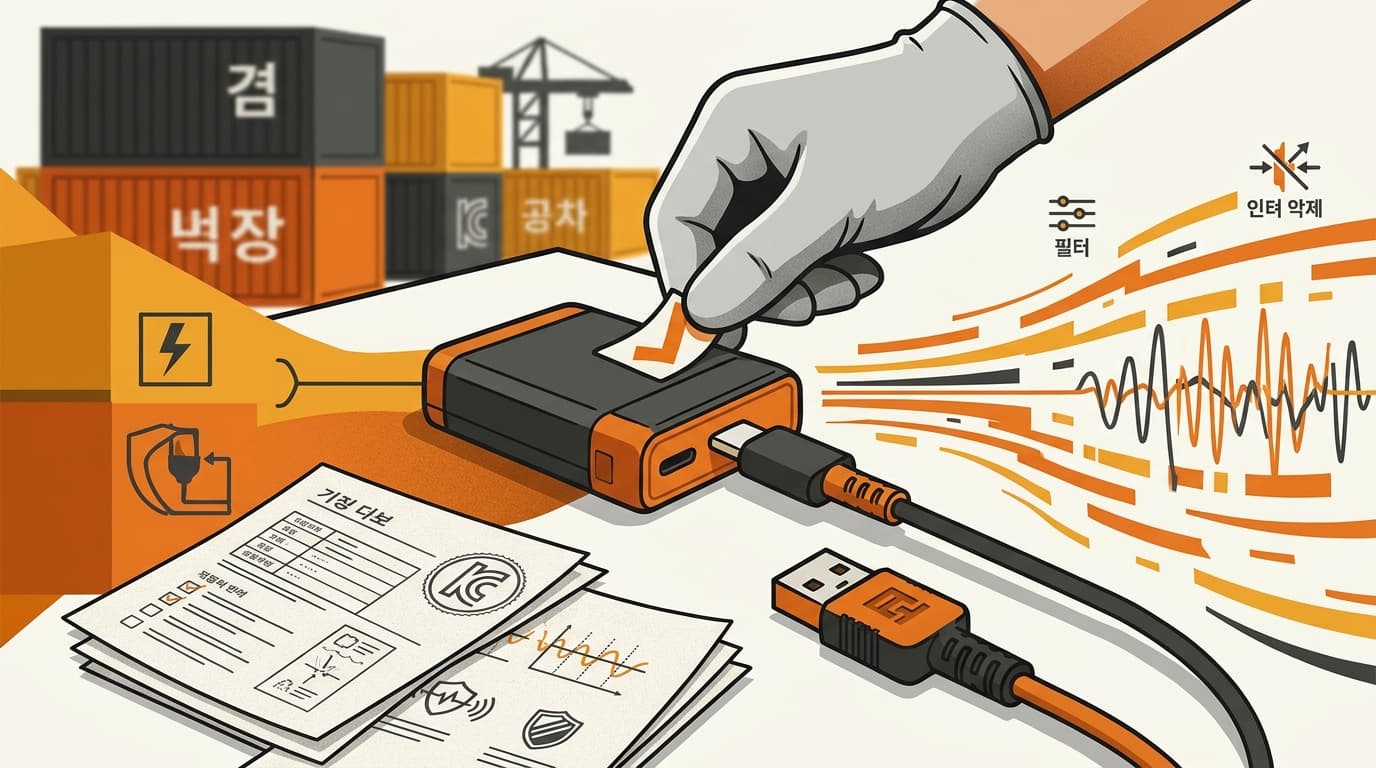
Can USB-Powered Products Avoid Korea’s KC Safety Rules?
No. A USB connector or low-voltage input does not automatically take a product outside Korea’s KC product-safety rules. The Korean Agency for Technology and Standards (KATS; 국가기술표준원) examines the product’s type, function, construction, power arrangement, and exact Korean version. The National Radio Research Agency (RRA; 국립전파연구원) may separately require an electromagnetic compatibility (EMC) check even when the product has no wireless radio.
KC is Korea’s product-safety approval and marking system. The Electrical Appliances and Consumer Products Safety Control Act sets the requirements. Under the Act, a product may need safety certification, safety verification, or a supplier declaration after the required checks.
Why USB power does not decide the KC safety requirement
USB describes how power enters the product. It does not describe the product’s Korean safety category.
Some low-voltage main units may fall outside Korea’s electrical-appliance safety list. Other low-voltage products remain subject to the rules. KATS looks at the product type, function, design, power source, and exact model sold in Korea.
Take a USB-powered desk fan. A brand may think, “It does not plug into a wall, so KC cannot apply.” That skips the important facts. The fan has a motor, a housing, moving parts, a stated use, and a defined input. The USB connector is only one fact. A Korean testing or certification body must examine the whole product before the brand chooses the required safety path.
The package matters too. If the product comes with a wall adapter or battery, include those parts in the review. Removing the adapter from the box can change what is tested, but it does not automatically clear the main unit. Calling the adapter an accessory does not settle the question. See Korean KC for a detachable device charger: Not Automatic for how the charger and main product must match the Korean package.
The legal text is available through law.go.kr; search there for the Electrical Appliances and Consumer Products Safety Control Act. KATS publishes product-safety guidance through its official site. Use those sources with a Korean testing or certification body. Do not classify the product from the USB connector alone.

What KATS checks before choosing a safety path
KATS starts with the product, not the marketing phrase “USB-powered.” Before anyone tests it, write down the facts for the exact Korean version:
- The exact model and version.
- The product’s main function and intended use.
- Input and output power.
- The adapter or battery supplied in the Korean package.
- The final hardware and software.
- Any wireless functions.
- Construction details that affect how the product works or is used.
These details can change the required safety checks. A product’s voltage is only one item in the list.
Depending on the product category, the required path may be safety certification, safety verification, or a supplier’s own declaration after the required checks. A supplier’s own declaration does not mean “no testing.” The supplier must complete the required checks and use the Korean mark and labels for that category.
Consider two versions of the same USB desk light. Version A is a bare unit with a USB lead. Version B includes a wall adapter and different firmware. If Korean buyers receive Version B, testing only Version A may not satisfy the requirement for Version B. Ask the testing or certification body to review the version you will actually ship.
This is also why a product name is not enough. “USB lamp,” “USB fan,” or “USB accessory” describes a sales label. It does not give KATS the product facts needed to select the safety requirement.
KATS is the official starting point for the product-safety list, but the final answer depends on the exact model and package. If a factory changes a board, adapter, battery, enclosure, or software after testing, stop and ask whether the prior checks still cover the version you will ship.
Why a wired USB product may still need RRA EMC review
No Bluetooth, Wi-Fi, or cellular function does not answer the EMC question.
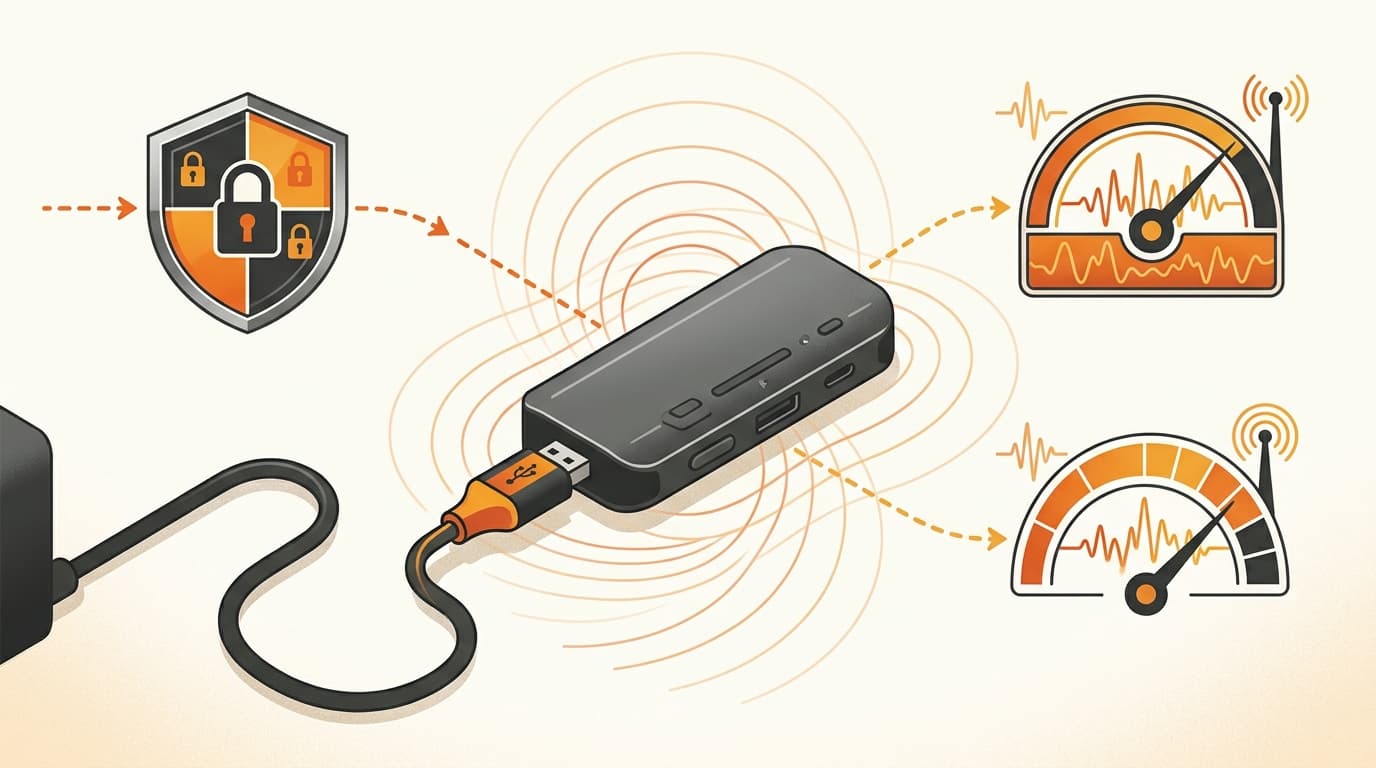
EMC means electromagnetic compatibility. The check asks whether a device creates harmful electrical interference and whether it keeps working around electrical noise. RRA handles the required EMC and radio checks under the Radio Waves Act.
RRA EMC conformity is separate from the KATS safety requirement. A wired device may need an RRA EMC check even without a radio, and passing the RRA check does not replace the KATS checks.
| Question | KATS safety review | RRA EMC and radio review |
|---|---|---|
| What is checked? | Whether the product meets the required safety rules. | Whether it creates harmful interference and works around electrical noise. |
| Who handles it? | KATS under the Electrical Appliances and Consumer Products Safety Control Act. | RRA under the Radio Waves Act. |
| Is wireless needed? | No. The product facts decide the safety requirement. | Wireless functions can add radio checks, but a wired product may still need EMC review. |
| Can one check replace the other? | No. | No. |
A USB-powered desk fan with no wireless function shows the point. The seller must ask two questions: which KATS safety checks the fan needs and whether RRA requires EMC conformity. “No Bluetooth” may answer the radio-function question, but it does not answer the EMC question.
The RRA official site is the place to check current conformity-assessment guidance. For a wireless example of the two separate Korean checks, see Does a Wireless Device Need Both KC Safety and EMC?. The same separation matters for a wired device when RRA EMC applies.
What to finish before shipping the Korean version
The safe order is simple: decide the product requirements, complete the checks, then ship. Do not place the order or ship the container until you know which checks the product needs.
- Freeze the Korean product. Record the model number, input and output power, supplied adapter or battery, intended use, wireless functions, and final hardware and software.
- Ask for the KATS safety requirement. Give the Korean testing or certification body the exact product and package. Ask whether the product needs safety certification, safety verification, or a supplier’s own declaration after the required checks.
- Ask RRA separately about EMC and radio checks. Do not treat a KATS answer as an RRA answer.
- Complete the required checks on the shipped version. If factory documents are incomplete, samples change, or hardware or software changes, ask whether the body needs more information or retesting.
- Finish Korean mark and label details before commercial import. Keep the supporting proof tied to the exact model and package that will enter Korea.
There is no single legal turnaround for every product. Allow weeks or longer when testing, factory documents, sample changes, or retesting are needed. Start before the purchase order or container shipment, not when goods reach the port.
For foreign EMC reports, see KC Certification for USB and Battery-Powered Devices: When a Foreign EMC Report Is Enough. Review the shipped version before it leaves the factory.
What missing proof can do at Korean customs
Missing a required approval or conformity check is not a small paperwork gap. If a product needs a safety approval or conformity check, the importer must be able to show it. Korea Customs may delay or refuse release while the importer supplies proof or fixes the issue.
The Korea Customs Service is the official place to verify customs requirements. Customs release does not give permission to sell a product that fails the rules. Korean authorities can still order a stop-sale, correction, or recall and impose legal penalties.
Imagine the desk light from the earlier example. The factory ships the version with a wall adapter and updated firmware, but the file covers only the bare version. Customs asks for proof for the product in the box. The importer may need to clarify the product, provide more documents, or complete more testing before the shipment moves. If the goods are released later, that release still does not make an unfinished product legal to sell.
Before commercial import, keep proof for the exact product and package. Finish any required KATS safety checks, RRA EMC review, and Korean mark and label steps.
For a closer look at the customs consequence for electronics, see KC Certification Required: Customs Holds Electronics.

Common questions about USB, low voltage, KC, and EMC
Does a USB-C connector automatically remove a product from KC?
No. USB-C is a connector type, not a Korean safety category. KATS still needs the product type, function, construction, power details, and exact Korean version.
Does low voltage mean that only EMC needs review?
No. Some low-voltage units fall outside the electrical-appliance safety list, but others remain subject to it. RRA EMC is separate, so low voltage does not settle either question.
If the product has no Bluetooth or Wi-Fi, can I skip RRA?
No. A wired product can still need RRA EMC conformity, even without Bluetooth or Wi-Fi. Ask a Korean testing body before shipping.
If I remove the wall adapter, is the main product exempt?
No. Removing the adapter changes the package under review. It does not automatically clear the main unit, and calling a part an accessory does not decide the Korean requirement.
Can I fix a missing KC or EMC check after customs release?
Do not plan on that. Customs may delay or refuse release while the importer supplies the missing proof or completes the checks. Release is not permission to sell. Finish the required checks and Korean mark and label details before commercial import.
Check your USB product before shipping to Korea
If the required KATS safety checks or RRA EMC review are unclear, contact Kontactic to review the exact model and Korean package before commercial import.
About the author
Korean and global e-commerce operators with 15+ years of cross-border experience, led by CEO Isaac Lee — KOTRA-certified consultant and official lecturer for Seoul City and the Korea Customs Service. We run Korea market entry for overseas brands every day; this blog records what we learn in the field.
Meet the Kontactic team →Related Articles
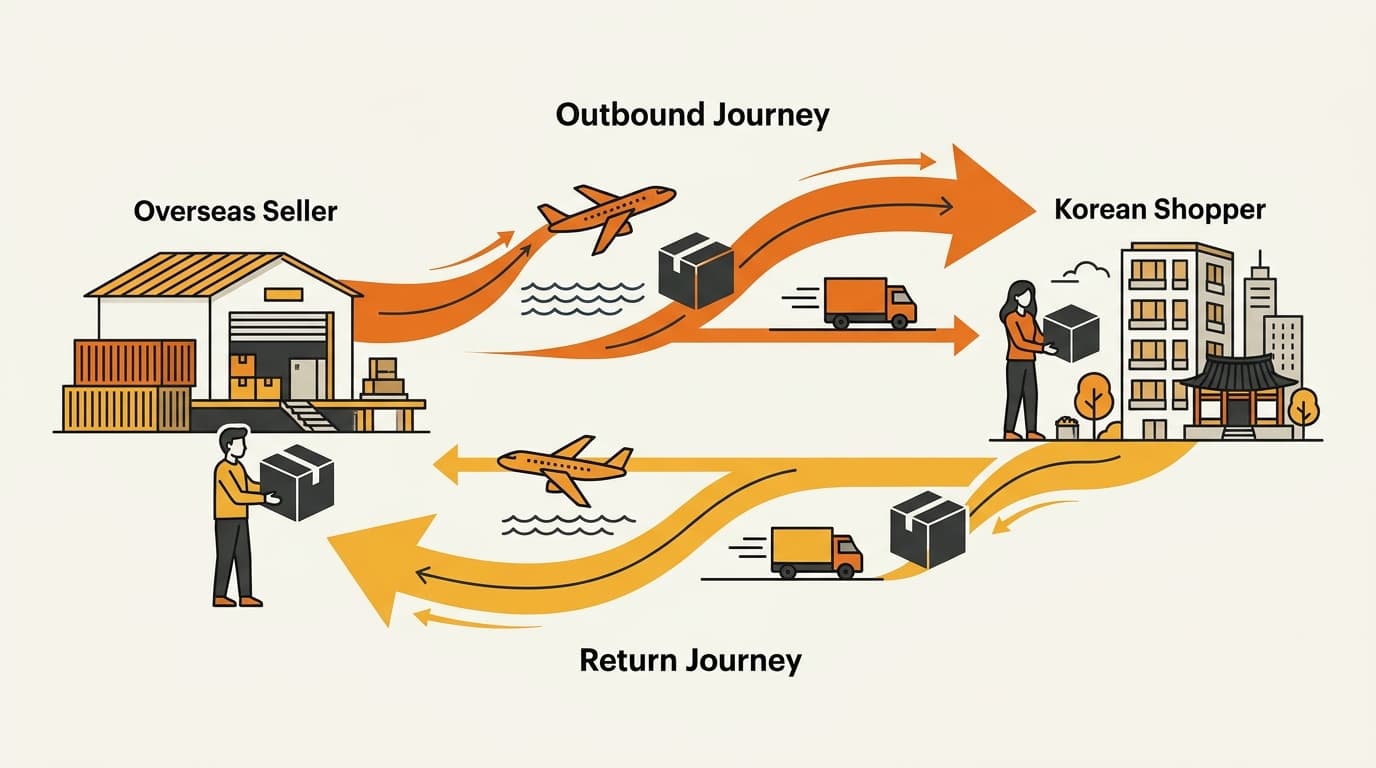
Can Coupang Buyers Pay Two Charges With Free Shipping?
On Coupang, free shipping can still leave the buyer paying two return charges: the original delivery cost and the cost of sending the parcel back to the seller.
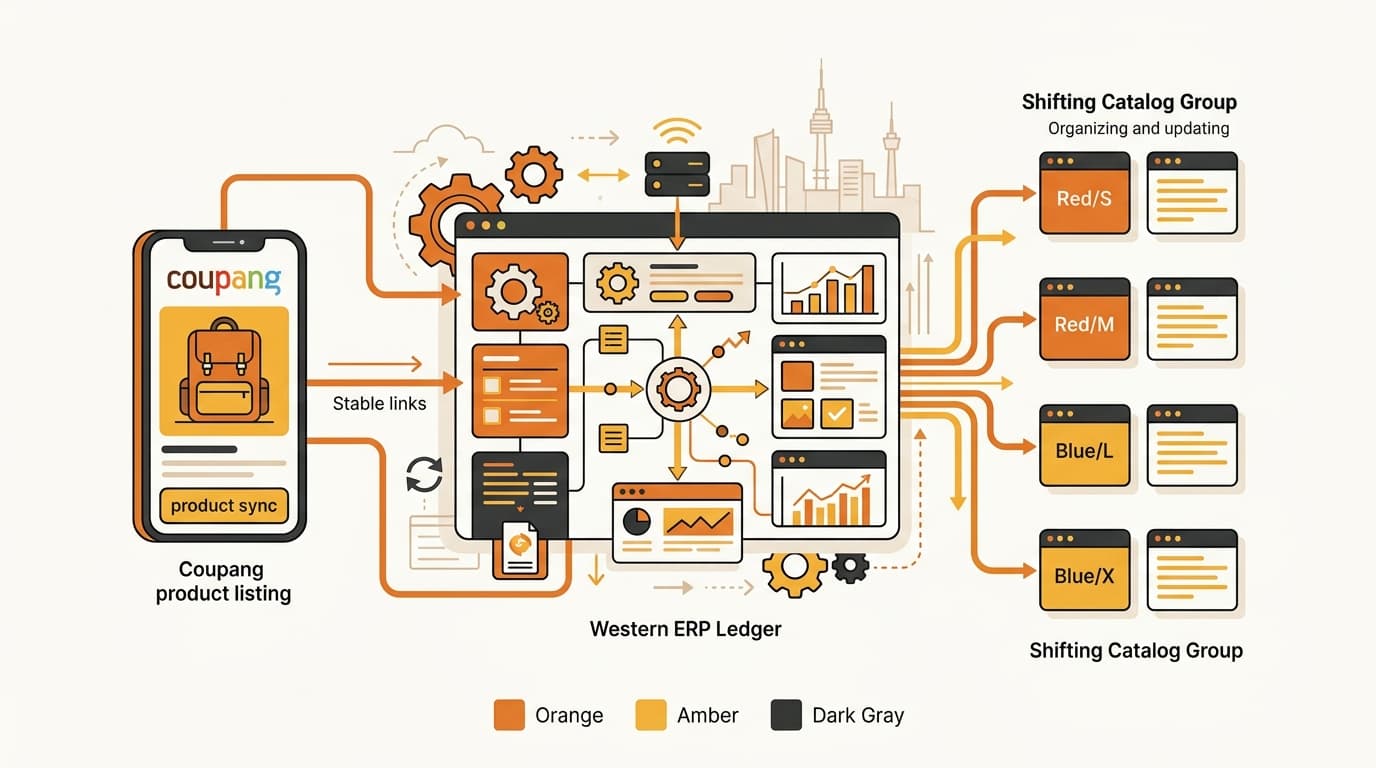
Coupang Product IDs: One ID Cannot Cover Every Variant
One Coupang product ID cannot cover every ERP variant; keep your brand SKU as the main key and map listing, option, edit, and order values to each SKU.
Coupang Rocket Growth Stock: Can an ERP Set It via API?
An ERP cannot set Coupang Rocket Growth stock through the Open API; replenishment starts when Coupang physically receives a new inbound shipment of stock.