Do Children’s Products Need KC in Korea If Adults Don’t?
Some children’s products need a KC mark even when the adult version does not. An adult version may follow a general safety standard without a KC mark. In Korea, a child version can need a different safety process: the Special Act on the Safety of Children’s Products may require supplier conformity confirmation before sale.
Why adult and children’s versions can split in Korea
KC is Korea’s product-safety conformity mark. It is not one test for every product. Korea chooses the process by product category and intended use.
For some adult goods, Korea uses a general safety standard. The product must meet that standard, but it may not need to display a KC mark. It still falls under Korean safety rules.
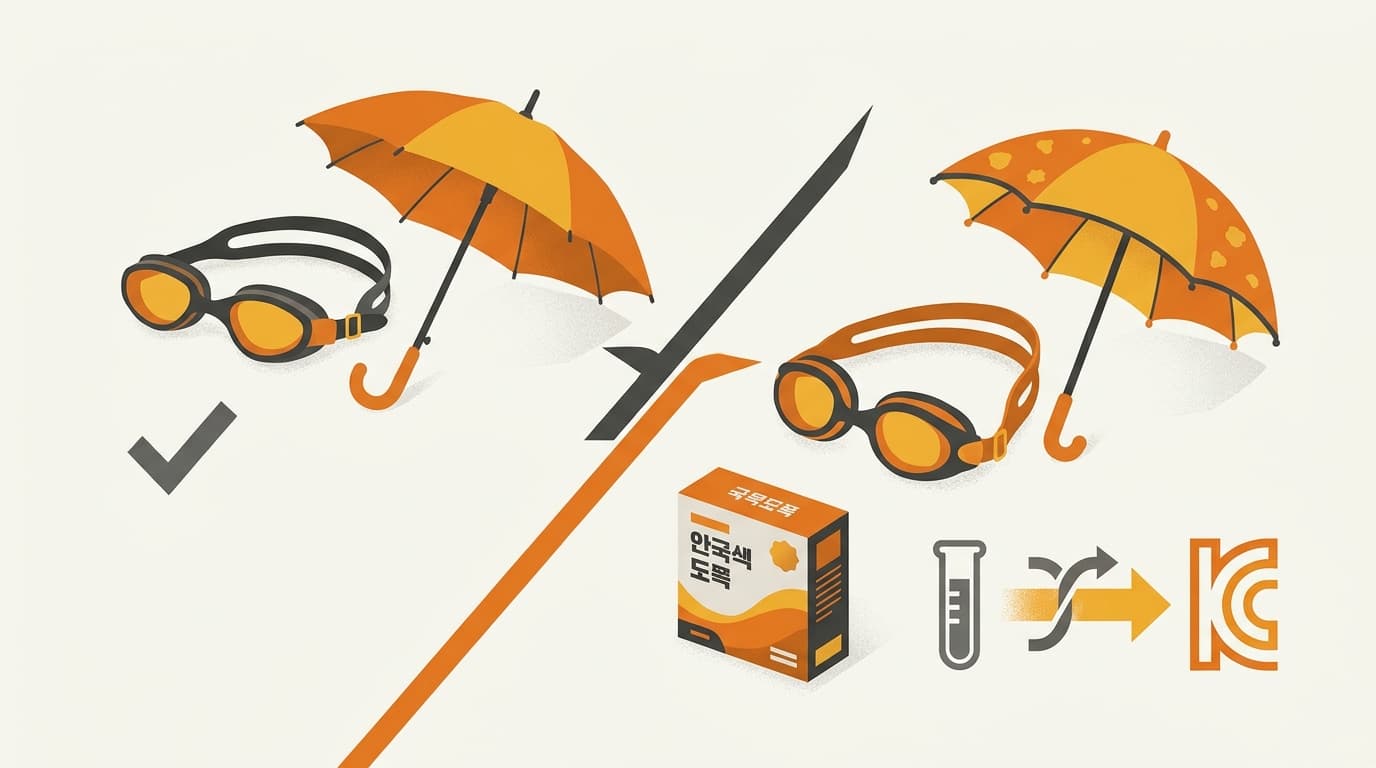
The children’s version can fall under a separate children’s-product law: the Special Act on the Safety of Children’s Products. It is not limited to toys. The rules can cover children’s apparel, textiles, footwear, and child-use gear. They can cover ordinary goods too, including eyeglass frames, umbrellas, swimming goggles, and furniture or mattresses.
Korea looks at who will use the product and the category used for its Korean sale. A foreign brand cannot point to an adult version and reuse its no-KC conclusion. The product may look almost the same, come from the same factory, or sit in the same global product family. The Korean children’s category can still change the step required before sale.
You can verify the legal basis in the Korean Law Information Center. Search for the Korean name 어린이제품안전특별법, the Special Act on the Safety of Children’s Products. For the current product list and standards, use the KATS Safety Korea portal. KATS is Korea’s Agency for Technology and Standards.
For the wider question of how Korea decides whether an item is a children’s product, see Is Your Product a “Children’s Product” Under Korean Law?.

Four ordinary products that show the split
KATS examples make the split clear. These products do not all look like toys, but their children’s versions can be treated differently from their adult versions.
| Product type | Adult version | Children’s version |
|---|---|---|
| Eyeglass frames | May fall under a general safety standard without needing to display a KC mark. It must still meet the adult safety standard. | May be a children’s product that requires supplier conformity confirmation and the KC mark. |
| Umbrellas and parasols | May follow the adult safety-standard treatment without displaying a KC mark. | May require supplier conformity confirmation and the KC mark as a children’s product. |
| Swimming goggles | May fall under the adult safety-standard rule without needing to display a KC mark. | May move into the children’s-product rule and require supplier conformity confirmation plus KC marking. |
| Furniture or mattresses | May follow the adult safety-standard treatment without displaying a KC mark. | May require the children’s supplier-confirmation step and the KC mark. |
The word may matters. These examples show the adult-versus-child split. They do not replace the current Korean category list for your exact product.
Consider an overseas brand that sells swimming goggles in adult and child versions. The adult product may fall under a safety-standards category and may not need to display a KC mark. The team then assumes the smaller child version can use the same conclusion.
That is the mistake to avoid. If the child version is sold for children, check it against the current KATS children’s-product category. If the category uses supplier conformity confirmation, the responsible manufacturer or importer must compare the product with Korea’s children’s safety standard. The same manufacturer or importer must complete the confirmation before sale. The KC mark is still required on that path.
If KATS places the child version in safety certification or safety confirmation instead, the testing and pre-sale steps change. The adult paperwork does not decide which children’s step applies.

What supplier conformity confirmation means
Supplier conformity confirmation is a check against a Korean children’s safety standard. The responsible manufacturer or importer completes that confirmation before sale. It is not a third-party safety certificate, but the KC mark is still required on this path.
Two mistakes are common. A brand may hear “supplier confirmation” and rely on the overseas factory’s adult paperwork. That paperwork does not replace a check against the Korean children’s standard. A brand may also hear “not a third-party certificate” and assume that no KC mark is needed. That assumption is wrong for this path.
Before launch, identify the responsible manufacturer or importer. That party must match the product to the Korean standard named for its category and complete the confirmation. An adult equivalent that sold without a KC mark does not make the children’s product ready for sale.
Children’s products do not all use the same KC process
Supplier conformity confirmation is one possible process for a children’s product. It is not the answer for every item sold to children.
Korea can use three children’s-product processes:
- Safety certification: The product goes through a certification process with its own testing and pre-sale requirements.
- Safety confirmation: The product goes through a confirmation process with its own testing and pre-sale requirements.
- Supplier conformity confirmation: The responsible manufacturer or importer compares the product with the Korean safety standard and completes the required confirmation. The KC mark is still required.
Toys, children’s apparel, and child-use gear can fall into safety certification or safety confirmation instead of supplier conformity confirmation. The exact product list and current KATS safety standard decide the answer.
Knowing that an item is sold to children does not tell you which process applies. It tells you to check the children’s-product rules.
For a fuller comparison of the three tracks, see Korea’s 3 Children’s-Product KC Types: Which Fits Your Item. Do not ask whether the item looks like a toy. Ask which Korean category covers it and which step is required before sale.
How to check each child SKU before import and Coupang listing
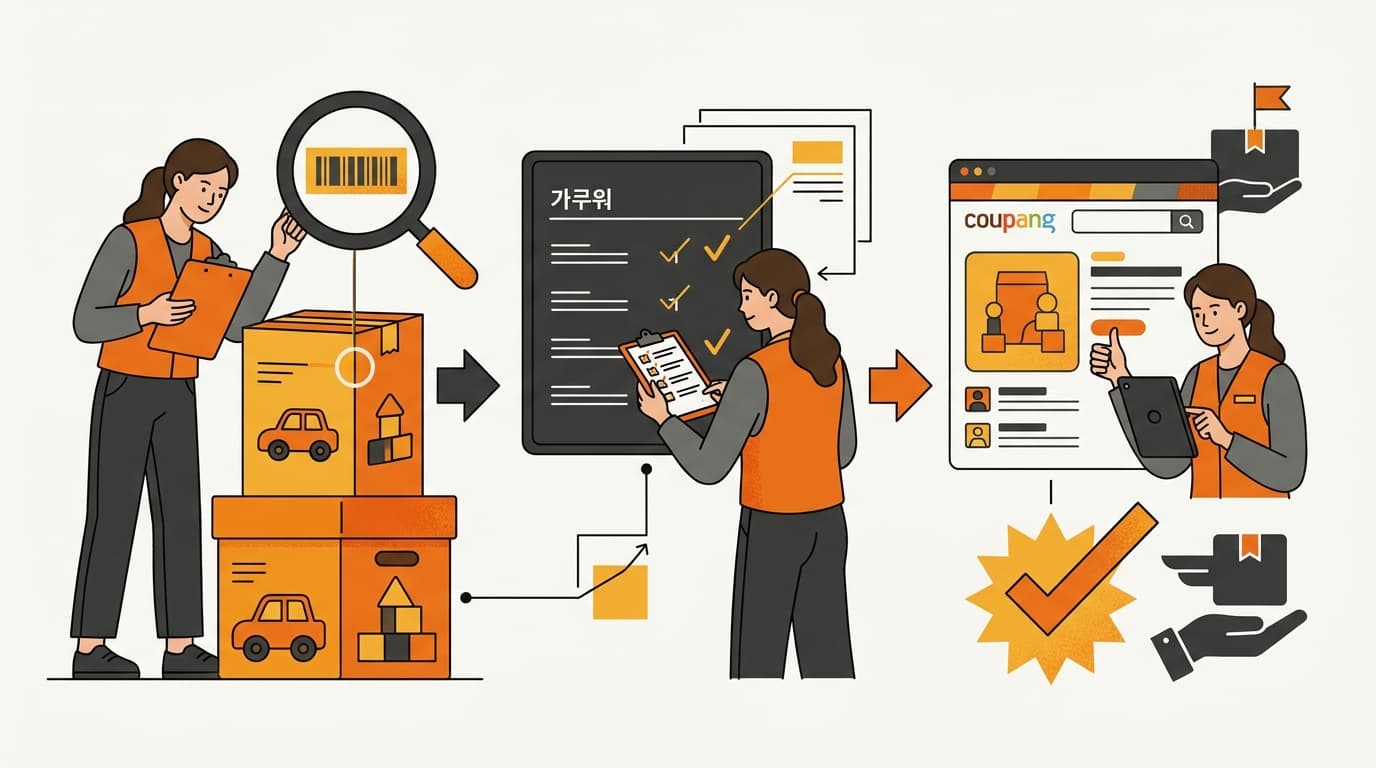
Use a separate check for every child SKU, or child product code, you plan to sell. The goal is to identify the Korean category before stock moves or a product page goes live.
-
Describe the product as sold in Korea. Write down who will use the product and the Korean product category you plan to use. Review the product page and the way the item is presented, not only the name used by the overseas factory.
-
Open the current KATS category list. Use the Safety Korea portal and match the exact product type to the current children’s-product list and safety standard. Do not rely on an old spreadsheet or an adult category chosen for a different market.
-
Compare the adult and child SKUs separately. The adult version’s no-KC treatment is a starting question, not a conclusion for the child version. Ask the same category question again for the child SKU.
-
Identify the required Korean process. Confirm whether the child SKU needs safety certification, safety confirmation, or supplier conformity confirmation. The answer also tells you who must test or confirm the product.
-
Check the Korean product information and mark. Your product category tells you which Korean information the item must show and whether it must display the KC mark. Do not make the adult package your template without checking the children’s rule.
-
Resolve the step before launch. Check the product before commercial import and before preparing the Coupang listing. Complete the required pre-sale step before launch. If that step is unfinished, do not offer the product as a children’s item. Can You Sell a Children’s Product With KC Pending? explains why a pending status is not a launch shortcut.
-
Recheck changed child SKUs. Check the child product separately if it has a different product code or you market it as a different child-use item. Do not assume the adult product’s paperwork covers it. Children’s Product KC: Are All Colors and Sizes Covered? explains why a variant’s coverage needs its own scope check.
Common questions about adult and children’s KC
Is the adult version still regulated when it has no KC marking duty?
Yes. The adult version must still meet its own general safety standard. “No KC mark” does not mean “no safety requirement.”
Which official sources should a brand check?
Use law.go.kr for the Special Act on the Safety of Children’s Products and the KATS Safety Korea portal for the current product list and standards. Check those sources for each child SKU before commercial import planning and Coupang listing.
Check the Korean path for each child SKU
If you need to compare an adult treatment with the children’s category before import or a Coupang listing, contact Kontactic for a product-by-product review.
About the author
Korean and global e-commerce operators with 15+ years of cross-border experience, led by CEO Isaac Lee — KOTRA-certified consultant and official lecturer for Seoul City and the Korea Customs Service. We run Korea market entry for overseas brands every day; this blog records what we learn in the field.
Meet the Kontactic team →Related Articles

Can a Korean Coupang Page Replace a Cosmetic Label?
A Korean Coupang page can explain an English-only cosmetic, but it cannot replace required Korean details on the bottle, tube, jar, or box before sale in Korea.
Imported Food Labels in Korea: Can Stickers Work?
Imported food labels in Korea can use a Korean sticker on the consumer unit before sale, but only when current MFDS rules allow it for that product and package.
Can USB-Powered Products Avoid Korea’s KC Safety Rules?
USB power does not automatically avoid Korea’s KC rules. Learn how KATS safety review, RRA EMC checks, and customs timing affect your shipment before import.