
Safety Confirmation vs. Biocide Approval: Which Korea Track?
The short answer is this: if your product cleans, coats, sticks, or deodorizes without killing or repelling anything living, it runs on Korea's lighter safety-confirmation track for household chemical products. If it kills, repels, or renders harmless any organism — a disinfectant, an insect repellent, a mold remover, an antibacterial spray — it runs on the far heavier biocidal product approval track, where the active substance itself must be approved before the finished product can be. Both tracks live under the same law, but they are not the same amount of work, and the gap between them is measured in launch timelines.
Get the fork wrong in the easy direction and you over-engineer a launch you could have shipped faster. Get it wrong in the hard direction — selling something with a biocidal function without the required approval — and you are committing a serious violation, not a paperwork slip. This is why you confirm the track before you commit to a date, not after.
Both tracks sit under one law — the Ministry of Environment's, not MFDS
The governing statute is the Act on the Safety of Household Chemical Products and Biocides (생활화학제품 및 살생물제의 안전관리에 관한 법률), administered by the Ministry of Environment (환경부). You can read the current text at Korea's national law portal, law.go.kr.
This matters because Western brands routinely assume "chemical compliance" is one process handled by one agency. It is not. This regime is completely separate from the MFDS (식약처) rules that govern cosmetics and quasi-drugs, and separate again from KC certification for electrical goods and children's products. A product can touch more than one regime — but for detergents, softeners, coatings, adhesives, deodorizers, disinfectants, and repellents, the Ministry of Environment is the one that decides how you get to market. If you have ever tried to work out how each SKU maps to the right Korean regulation, this is the branch that catches most household-chemical inventory.
So before anything else: confirm that your product is captured by this Act at all, and by which of its two tracks. Everything downstream — data burden, labeling, timeline — follows from that single decision.
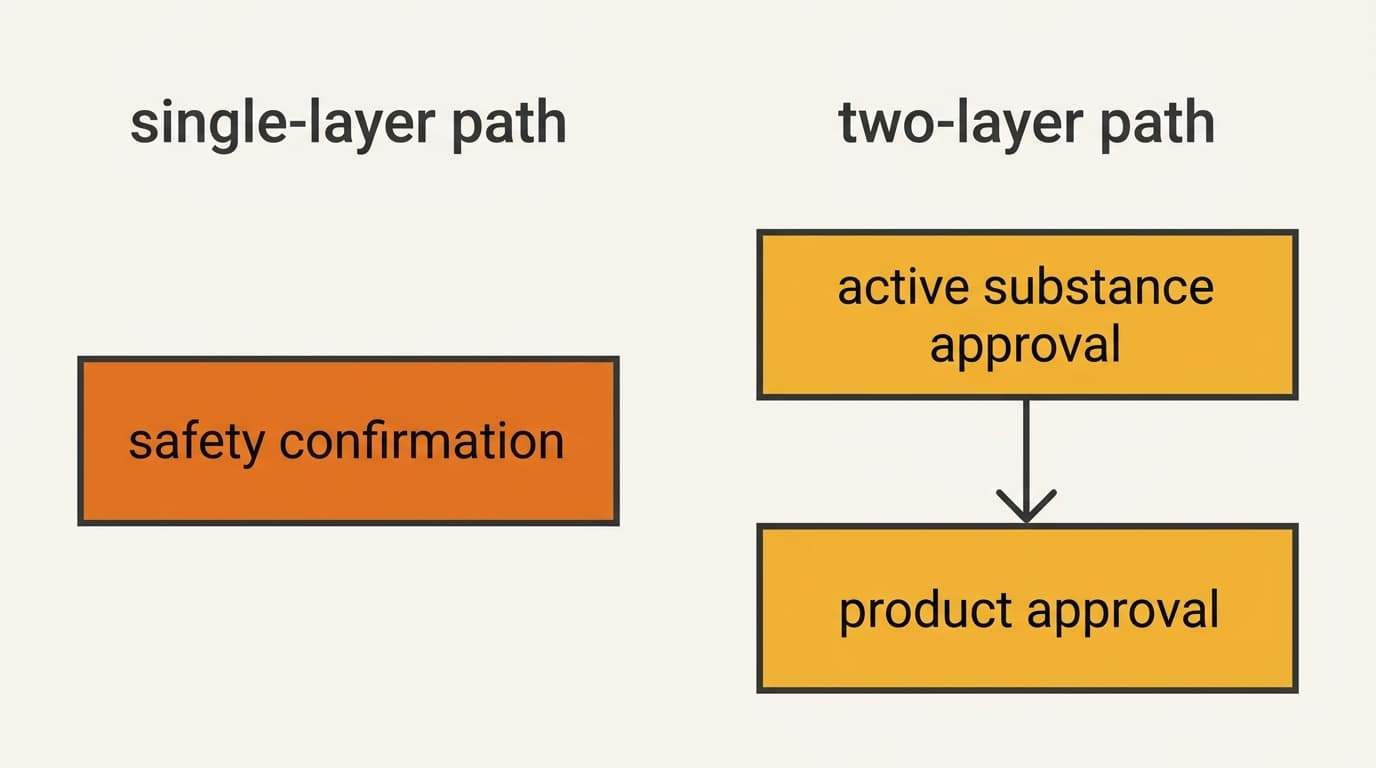
The fork: safety-standard household chemical product vs. biocidal product
The single question that decides your track is functional, not categorical: does the product kill, repel, or render harmless a living organism?
- No biocidal function → safety-standard household chemical product. Cleaners, laundry detergents, dish soaps, fabric softeners, coatings, adhesives, and deodorizers that simply mask or absorb odor without acting on microbes all fall here. These are "designated" household chemical products that must meet Ministry-set safety standards.
- Yes, a biocidal function → biocidal product. Disinfectants, sanitizers, insect repellents, mold removers, and antibacterial sprays act on organisms. That single property moves them onto the biocide track regardless of how they're merchandised.
The trap is that shelf category and marketing category do not decide this — the biocidal function does. Two products that look identical on a store page can be on different tracks because one carries an antibacterial claim and the other doesn't. This is the same logic that governs whether an air freshener is a biocidal product in Korea: the classification hinges on the active substance and its function, not the aisle it would sit in back home.
Biocidal product — under Korea's household chemical and biocides Act, a product intended to kill, repel, deter, or render harmless any harmful organism through the action of an active substance. If that describes your product's function, you are on the biocide track no matter what it's called on the label.
Track one: safety confirmation — the lighter route for cleaners and coatings
A designated household chemical product does not need substance-level pre-approval. What it needs is to conform to the Ministry's safety and labeling standards and to complete the confirmation-style process required before sale.
In practice this means verifying that your formula meets the designated safety standards for its product type — restricted or prohibited substances, concentration limits, and the like — and that your packaging carries compliant Korean-language labeling and the required safety information. It is a confirmation-and-reporting shape of process, not a multi-year evaluation. For a cleaner, a detergent, or an adhesive with no biocidal claim, this is generally the faster path, and you can reasonably plan a launch calendar around it.
The important caveat: "lighter" does not mean "skippable." Selling a foreign-packaged product into Korea without the compliant Korean labeling and mandated safety disclosures is itself a violation, even on this track. The confirmation route is faster, not optional.
Track two: biocide approval — a two-layer gate you don't fully control
The biocide track is heavier because it is stacked. Approval happens at two levels, and you cannot reach the second until the first is cleared.
- The active substance must be an approved biocidal active substance. The Ministry maintains a list of approved active substances by product type. Substance-level approval rests on a substantial safety and efficacy data package, and it is assessed for the substance itself — not for your specific formulation.
- Only then can the finished biocidal product be approved. Product approval sits on top of an already-approved substance. If the substance in your formula is not yet approved for your intended use, you cannot simply file the product and wait; you are dependent on the substance's approval status, which is outside your control and can run on a multi-year horizon.
This two-layer structure is the single biggest reason biocide timelines defy tidy planning. A cleaner's timeline is largely your own to manage. A disinfectant's or repellent's timeline is hostage to where its active substance sits in the approval pipeline. That's why the honest answer to "how long?" for a biocidal product is "it depends on the substance first" — and why any specific week or month figure quoted before you've checked the substance status is a guess.

The "treated articles" trap that reclassifies ordinary goods
Here is where brands that thought they were on the easy track get pulled onto the hard one. An everyday consumer product can be swept into the biocidal regime purely because of a function and a claim.
An "antibacterial" textile, a shoe insole marketed as odor-killing through an antimicrobial agent, a scented item that claims to repel insects — these are treated articles. If the product incorporates a biocidal substance to give it an antibacterial, antimicrobial, or repellent property, and especially if you advertise that property, the claim can trigger biocide-regime obligations even though you shipped it thinking of it as an ordinary good.
The practical defense is to audit your claims before your formula. Two things reclassify a product: what's in it, and what you say it does. A brand can sometimes stay on the lighter track by not making a biocidal claim it can't support — but if the biocidal substance and effect are genuinely present, the marketing choice won't save you. This is exactly the kind of edge case worth catching during SKU-level screening before anything ships, rather than after a listing is live.

Common questions
Does the Ministry of Environment regime replace KC certification or MFDS review? No. It is a separate obligation. A product can be captured by this Act and still owe other certifications depending on what it is. Being on the household-chemical or biocide track does not exempt you from KC or MFDS where those also apply — and a claim-driven cosmetic reclassification, like a whitening serum becoming a functional cosmetic, runs under an entirely different agency.
My product cleans and disinfects. Which track? The disinfecting function is a biocidal function, so a dual-purpose "cleaning disinfectant" is generally pulled onto the biocide track. The heavier requirement wins when both functions are present.
Can I list first and sort out compliance later? No. Selling a biocidal product without the required approval is a serious violation, and selling any household chemical product without compliant Korean labeling and safety information is a violation on its own. Both tracks gate sale, not just import.
Where can I verify my active substance's status? Substance-level approval status is administered by the Ministry of Environment (환경부) under the Act you can read at law.go.kr. Because the answer turns on your specific active substance and intended use, verify the current substance list before you set any launch date — it is the input that determines whether you're looking at a confirmation process or a multi-year approval runway.
Is labeling really required on both tracks? Yes. Korean-language labeling and required safety disclosures apply whether you're confirming a cleaner or approving a disinfectant. A foreign-packaged product with no compliant Korean label is non-compliant regardless of track.
Not sure which track your product is on?
Tell us what your product does and claims, and we'll help you confirm whether it runs on Korea's household-chemical safety-confirmation route or the biocide approval track — before you set a launch date.
About the author
Korean and global e-commerce operators with 15+ years of cross-border experience, led by CEO Isaac Lee — KOTRA-certified consultant and official lecturer for Seoul City and the Korea Customs Service. We run Korea market entry for overseas brands every day; this blog records what we learn in the field.
Meet the Kontactic team →Related Articles

Can USB-Powered Products Avoid Korea’s KC Safety Rules?
USB power does not automatically avoid Korea’s KC rules. Learn how KATS safety review, RRA EMC checks, and customs timing affect your shipment before import.
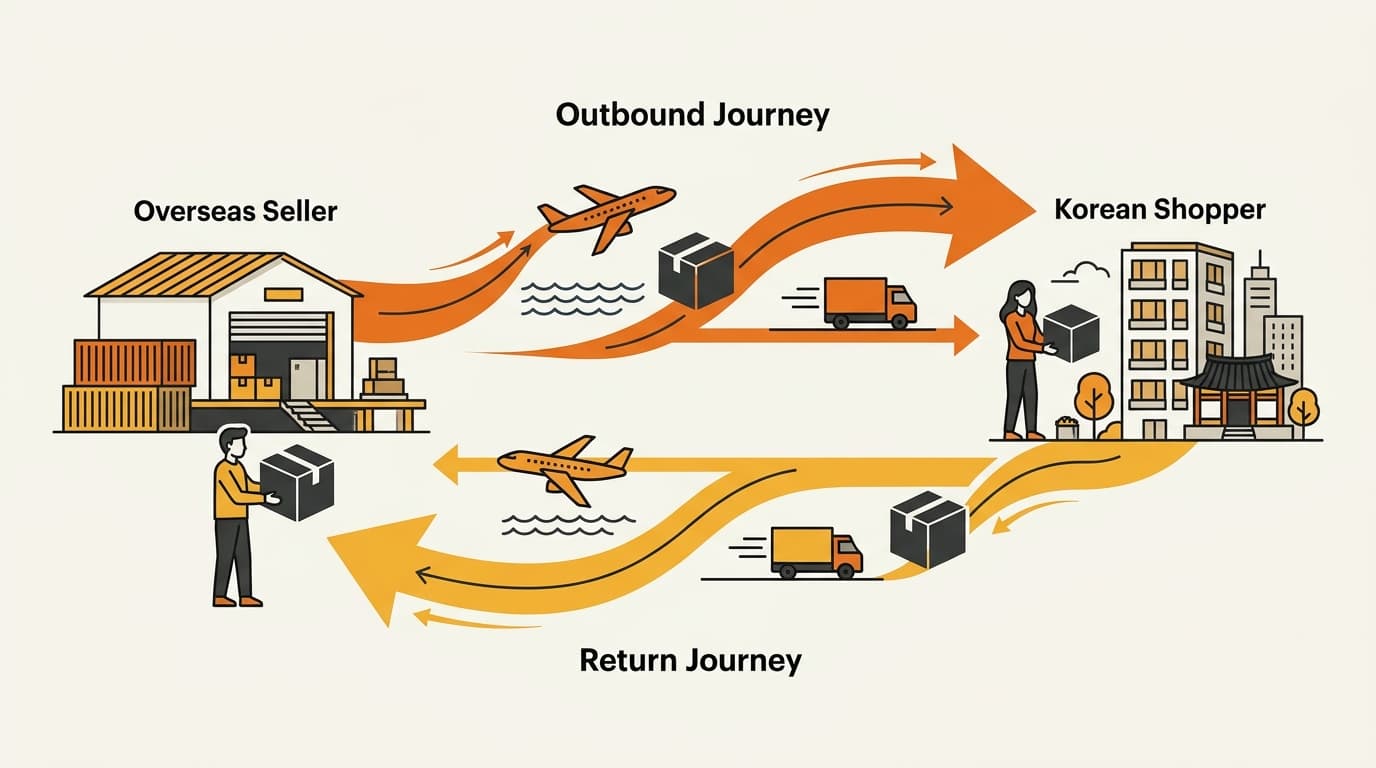
Can Coupang Buyers Pay Two Charges With Free Shipping?
On Coupang, free shipping can still leave the buyer paying two return charges: the original delivery cost and the cost of sending the parcel back to the seller.
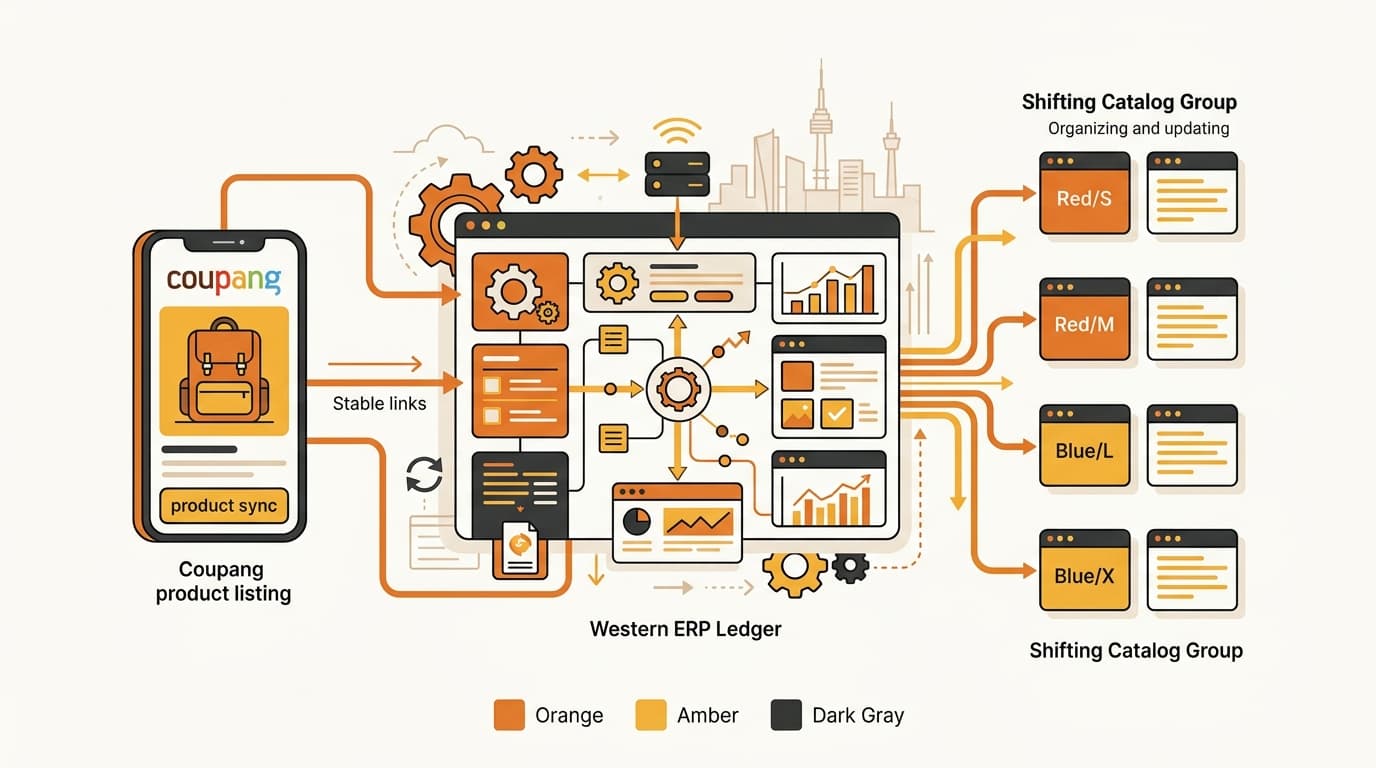
Coupang Product IDs: One ID Cannot Cover Every Variant
One Coupang product ID cannot cover every ERP variant; keep your brand SKU as the main key and map listing, option, edit, and order values to each SKU.