Coupang's Direct LCL: China-to-Korea Forwarding for Sellers
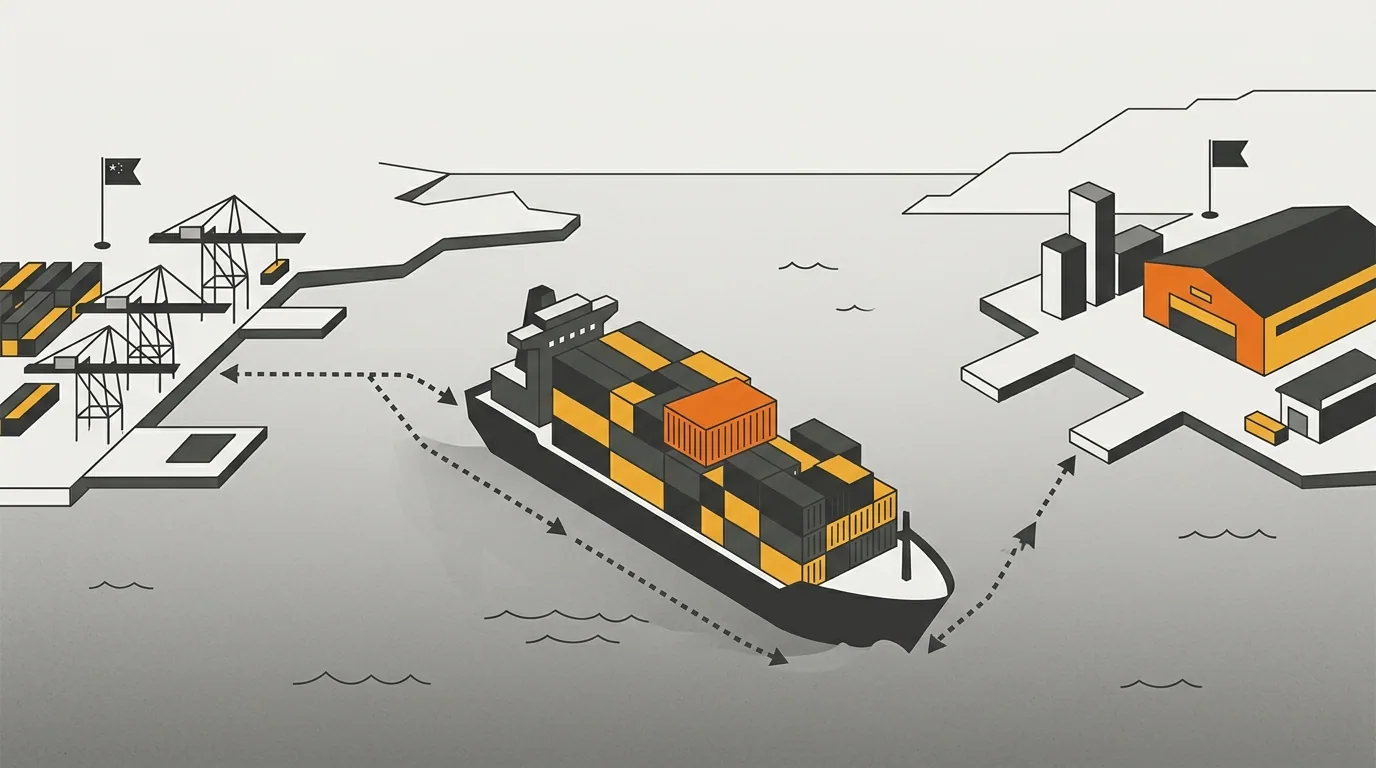
Coupang is building a China-to-Korea forwarding service for Rocket Growth sellers. Internal Coupang materials shared by a Rocket Growth seller describe it as "Direct LCL (Less than Container Load)" — consolidated ocean freight from Chinese ports straight into a Coupang fulfillment center, priced below the standard LCL market. The operator behind it is not Coupang itself, but a Korean-registered Chinese forwarding partner.
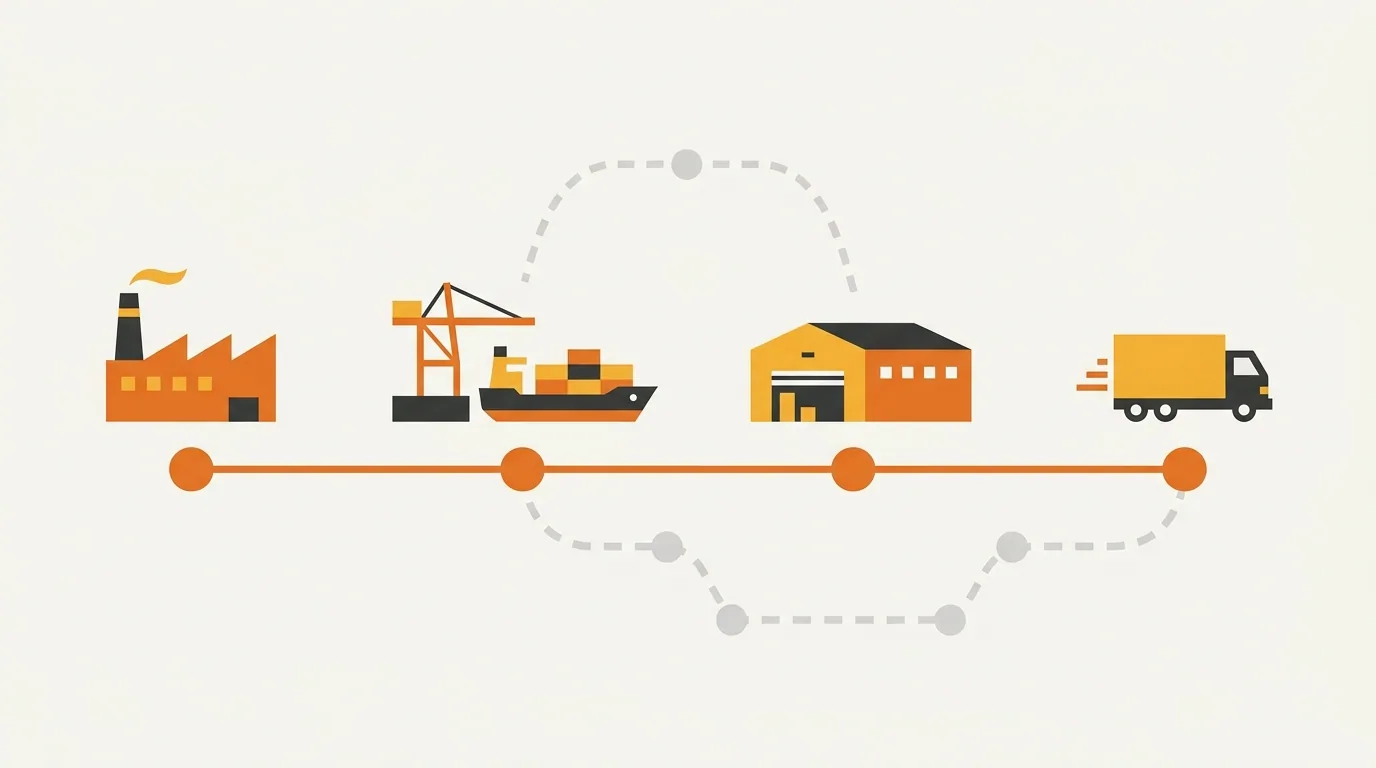
Coupang already controls Korean fulfillment and last-mile; pulling international freight into its lane is the next logical step in vertical integration — collapsing what is today a four-vendor procurement chain (forwarder, bonded warehouse, customs broker, inbound logistics) into one platform-controlled lane.
Coupang Direct LCL is a consolidated less-than-container-load ocean freight service from Chinese ports (initially Weihai and Shenzhen) to Coupang's Korean fulfillment centers, marketed to Rocket Growth sellers. The branded service is operated by TONDA Global Logistics (통다글로벌로지스틱스), not by Coupang directly.
What Coupang is actually offering
The service consolidates freight from multiple Coupang sellers leaving China — primarily through Weihai and Shenzhen — into a single container, then ships that container directly to a Coupang logistics center in Korea. Two operational details matter here:
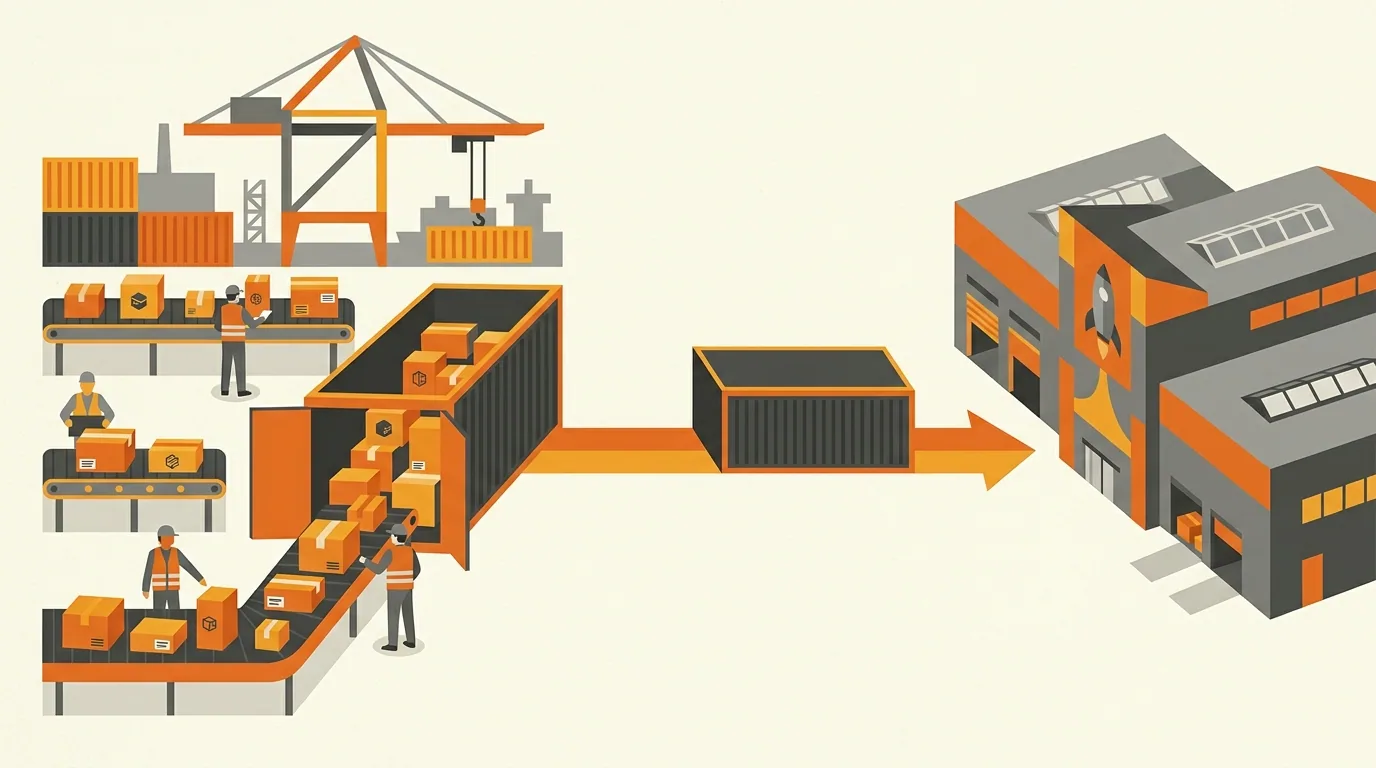
- No intermediate bonded warehouse step. In the standard Rocket Growth inbound flow, a seller's goods clear customs, sit briefly in a domestic bonded or 3PL warehouse, and then get trucked to Coupang's fulfillment center. Direct LCL collapses that into a single inbound move. The pitch is shorter lead times and one fewer logistics handoff.
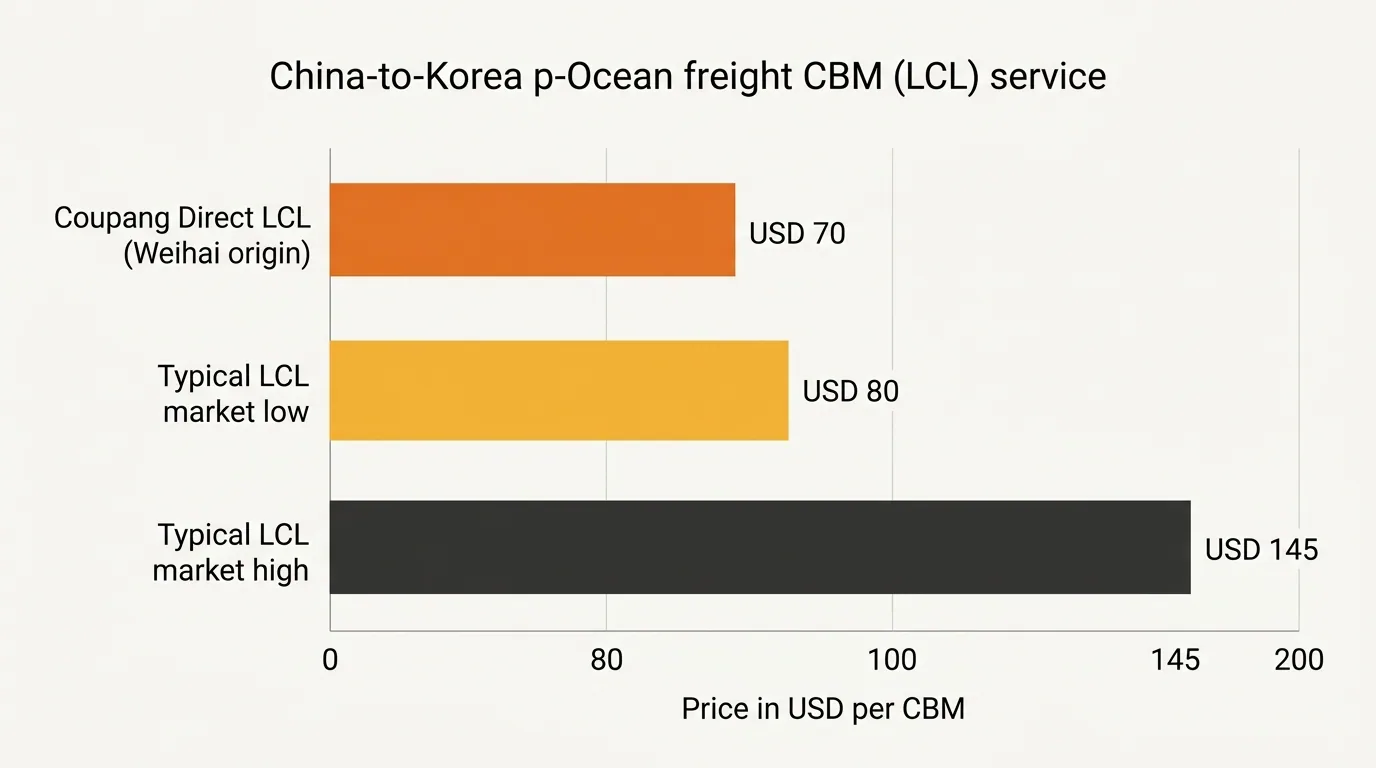
- Below-market pricing as the hook. According to the materials, the rate is USD 70 per CBM from Weihai. Typical China-Korea LCL falls in roughly the USD 80–145 per CBM range. The price gap is the lure to pull Rocket Growth sellers onto the Coupang-managed lane rather than their incumbent forwarder.
That pricing is aggressive enough to be read as customer acquisition, not as a margin-seeking logistics business in its own right — at least at this stage.
Coupang isn't actually operating the freight
This is the part most readers will skim past, but it matters for anyone evaluating the service.
The actual operator is TONDA Global Logistics (통다글로벌로지스틱스), an international freight forwarder registered as a Korean entity in 2023. TONDA specializes in China-Korea ocean freight and ecommerce volume out of Shandong province (which includes Weihai). The company reported approximately 44 billion KRW in revenue in 2023, its first year of registered operation in Korea — meaningful scale for a freight forwarder focused on a single trade lane.
In short: Coupang owns the seller-facing brand and the relationship. TONDA handles the operational freight movement.
This is a strategically clean structure for Coupang. It can offer the service, control pricing, and bundle it with Rocket Growth onboarding without committing capital to ships, customs licenses, or warehouse leases on the China side. If volumes scale past a threshold, the playbook is well-known — bring it in-house. If they don't, the partnership unwinds without much sunk cost.
“The cleanest tell that a platform is moving into logistics isn't the press release. It's the seller-facing pricing — set just below market, with onboarding friction stripped out.”
Kontactic Editorial — Commerce Trends desk
Why Coupang wants this segment
Rocket Growth's seller economics today require a foreign or China-sourcing brand to coordinate four separate things: sourcing, an international forwarder, a Korean bonded warehouse or 3PL, and the inbound move into Coupang's fulfillment center. Each handoff is a place where new sellers stall.
If you've read our decision framework on Rocket Growth vs. cross-border selling, the sequencing problem is familiar. Sellers who validated demand cross-border and want to move local often underestimate the freight + customs + warehousing layer between "I have stock in China" and "my product is on a Coupang shelf." That gap is exactly what Direct LCL is trying to close.
From Coupang's side, the goals are straightforward:
- Lower the onboarding threshold for new Rocket Growth sellers. Fewer vendors to negotiate with, one less pricing surface to research.
- Capture a leg of the seller's logistics spend that currently leaks to outside forwarders.
- Extend the existing fulfillment + last-mile network upstream into the international segment — turning what is today a domestic 3PL story into an end-to-end first-mile-to-last-mile story.
Coupang already operates the middle mile (Korean fulfillment centers) and the last mile (Rocket delivery). Direct LCL is the first-mile move.
What this means for foreign brands sourcing in China
If you are a Western brand that manufactures in China and sells in Korea — directly or via a Korean entity — the practical question is whether to plug into this lane.
The case for using it:
- The CBM pricing is genuinely below market on the Weihai lane.
- Fewer logistics counterparties to manage, which matters more than people admit when you're running a small Korea operation remotely.
- Direct delivery to the Coupang fulfillment center removes a customs-to-warehouse-to-FC chain that often slows replenishment.
The case for hesitation:
- You are concentrating an additional dependency on Coupang. The same platform that controls your store, your fulfillment, and your settlement timing now also controls your inbound freight. If your relationship with Coupang sours — over item matching disputes, price compliance, or a category policy change — you'd rather your freight contract sit elsewhere.
- The service is operated by a third party (TONDA), so the SLAs and claim processes are theirs, not Coupang's. Read the terms before you assume Coupang's customer service standards apply to a damaged pallet.
- Lane coverage is currently China-origin only, primarily Weihai and Shenzhen. If your factory ships from Yiwu, Ningbo, or somewhere outside Shandong/Guangdong, the consolidation economics may not work the same way.
In our experience, the right call depends on volume. If you're moving one or two pallets every few weeks, the price advantage is real and the operational simplification is valuable. If you're moving dozens of pallets monthly, your existing forwarder relationship probably already negotiates rates near or below USD 70 per CBM, and the dependency cost outweighs the saving.
It's also worth thinking about this in the context of your overall margin structure. As we covered in how Coupang IoR and 3PL change your Korea margins, moving onto Coupang's local infrastructure usually compresses per-unit margin by 5–15% in exchange for an 8–10× lift in orders. Adding Direct LCL to that equation tightens the margin further on the cost side, but also tightens the dependency.
The Amazon comparison, and why it's the right one
The closest analog is Amazon. Amazon obtained an NVOCC (Non-Vessel Operating Common Carrier) license in 2016 and now operates Amazon Global Logistics (AGL), offering ocean and air freight services to Amazon sellers globally. The trajectory is familiar: start with a partnership-based forwarding offer, build seller adoption, then license up and bring the logistics in-house when volumes justify the capital.
Coupang is roughly a decade behind that timeline, but on the same arc. Direct LCL through TONDA looks like step one, not the destination. If Rocket Growth's China-origin volume keeps growing, the eventual move is for Coupang to take an NVOCC license itself — or to acquire its way into one.
For foreign brands, the strategic read is this: Coupang is positioning to own more of the value chain that connects an overseas factory to a Korean consumer's doorstep. That makes it a more capable platform partner. It also makes it a more concentrated point of dependency. Both things are true at once.
Common questions
Is Coupang Direct LCL available to foreign brands without a Korean entity? The service is being marketed to Rocket Growth sellers, which means a Korean Seller of Record is already required upstream. Foreign brands without a Korean entity would access this only through a partner who acts as Seller of Record on Coupang. If you're evaluating that path, our guide to selling on Coupang as a foreign brand walks through the entity options.
Does this replace KC certification or other import compliance? No. Direct LCL is a freight and consolidation service. Your products still need to meet Korean import requirements — KC certification where applicable, MFDS registration for food and cosmetics, customs declarations — regardless of which forwarder moves them. Operational sequencing matters here, and as we've argued in our note on operational readiness before ad spend, compliance and entity work should be cleared before freight optimization.
Can I switch to Direct LCL after I'm already operating on Rocket Growth? Based on the materials shared, yes — it's positioned as available to existing Rocket Growth sellers, not just new onboardings. Practically, you'd need to renegotiate your inbound flow with your current forwarder and adjust your replenishment timing to match the consolidated container schedule.
Is the USD 70 per CBM rate guaranteed? The figure comes from Coupang's internal seller-facing materials and reflects the Weihai origin lane. Real freight pricing varies by season, container availability, and consolidation timing. Treat it as the headline rate, not a contractual quote.
Thinking through Korea sourcing and fulfillment?
If you are weighing whether to route China-origin inventory through Coupang's lane or keep an independent forwarder, we can help you map the trade-offs against your volume, margin, and entity setup. Talk to Kontactic.
About the author
Korean and global e-commerce operators with 15+ years of cross-border experience, led by CEO Isaac Lee — KOTRA-certified consultant and official lecturer for Seoul City and the Korea Customs Service. We run Korea market entry for overseas brands every day; this blog records what we learn in the field.
Meet the Kontactic team →Related Articles
Imported Food Labels in Korea: Can Stickers Work?
Imported food labels in Korea can use a Korean sticker on the consumer unit before sale, but only when current MFDS rules allow it for that product and package.
Can USB-Powered Products Avoid Korea’s KC Safety Rules?
USB power does not automatically avoid Korea’s KC rules. Learn how KATS safety review, RRA EMC checks, and customs timing affect your shipment before import.
Can Coupang Buyers Pay Two Charges With Free Shipping?
On Coupang, free shipping can still leave the buyer paying two return charges: the original delivery cost and the cost of sending the parcel back to the seller.