
Korea Cosmetics Entry: Agency vs DIY Compared
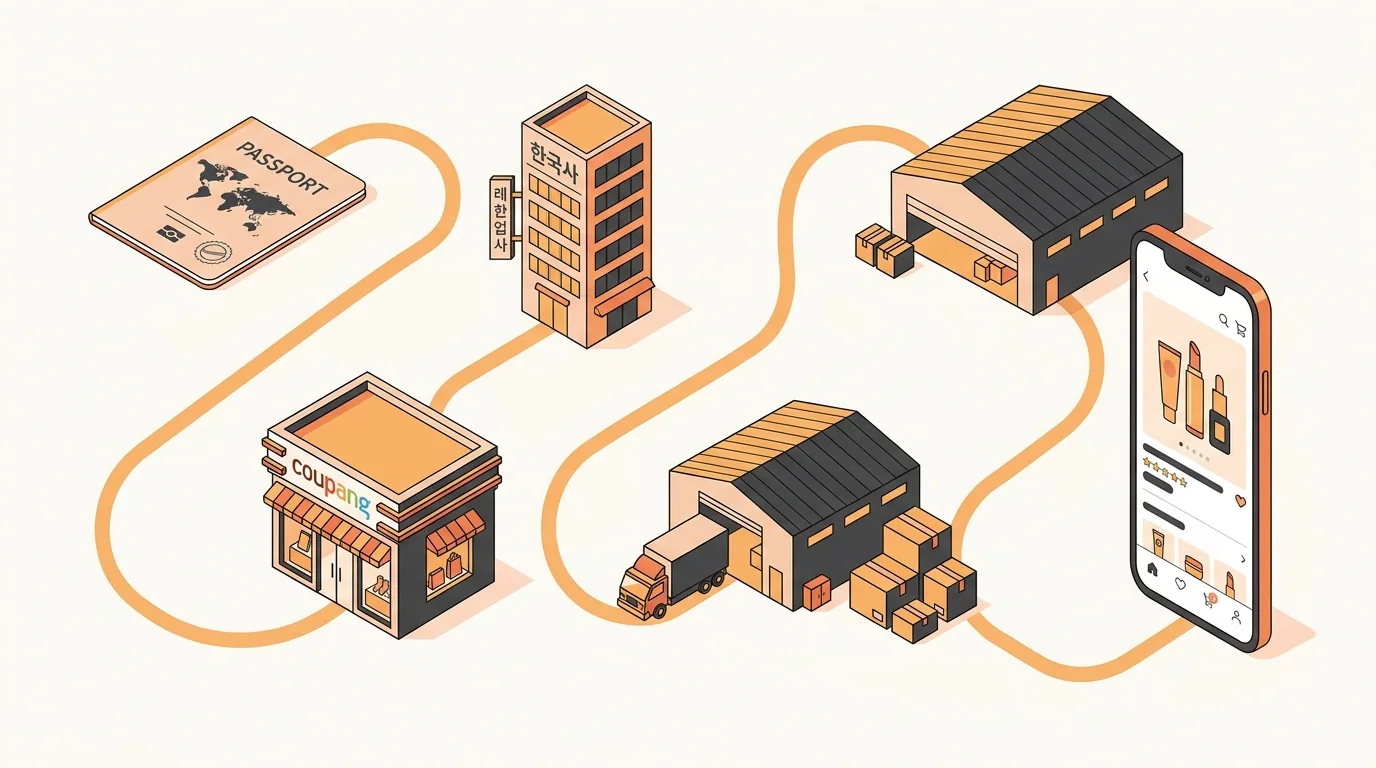
A third-party market entry agency in Korea handles the operational layer between your brand and the Korean consumer — entity setup, Importer of Record duties, Coupang onboarding, listings, fulfillment, and customer service. Doing it yourself means hiring those functions in-house, usually after registering your own Korean limited company (유한회사). For most Western cosmetics brands, the answer is not binary. It depends on how local you need to be, and how soon.
This guide is for brands with proven Korean cross-border demand. We will walk through the decision the way an operator does: cross-border vs local, Coupang setup, Korean PDPs, Rocket Growth fulfillment, and product compliance. No build-vs-buy framework is universal, but the variables below are the ones that actually move the answer.
The build-vs-buy question is really a "how local" question
Korea's cosmetics market rewards localization more than almost any category. The country recently overtook France as the largest cosmetics exporter to the United States, and the same churn that produces hits also produces casualties — the LA Times reported that more than 8,800 Korean cosmetics brands went out of business in a single year. Foreign brands enter that environment from a structural disadvantage: no domestic distribution, no Korean-language storefront, no local CS, and no Coupang seller account.
The agency-vs-in-house question is downstream of a more fundamental one: how local do you need to be to capture the Korean consumer you can already see in your cross-border data? If the answer is "fully local" — Coupang, Rocket Delivery, KRW pricing, Korean returns — then the operating burden is meaningful no matter who carries it. The choice is about who owns each step, not whether the steps exist.

Cross-border versus local: the path you pick changes everything else
Before comparing agencies and in-house teams, decide which path you are actually operating on. The two are not interchangeable.
Cross-border means the consumer in Seoul places an order with your US or EU storefront, your 3PL ships internationally, and the buyer pays customs on arrival (or you absorb it via DDP). It validates demand cheaply but caps your reach — most Korean shoppers default to local platforms with same- or next-day delivery and refuse the friction of cross-border returns.
Local means a Korean entity is the Seller of Record on Coupang, inventory is in-country, deliveries run on Rocket, and your prices are in KRW with 10% VAT included. The cost base is higher, but the addressable market is the entire local Coupang audience, not just the small minority who will tolerate cross-border friction.
We have written about this in depth in our operator's framework on Rocket Growth versus cross-border and on why cross-border orders understate the real opportunity. The short answer: cross-border is for validation, local is for scale, and an agency's value is overwhelmingly on the local side. If you are staying cross-border for now, you do not need an agency — you need a freight forwarder and a payment gateway.
What "doing it yourself" actually contains
When founders say "we'll do it ourselves," they usually mean one of two things: hire a Korean general manager and run a small Seoul team, or steer the operation remotely with one or two local contractors. Both are valid. Both also commit you to the following work:
- Registering a Korean limited company (유한회사) as a non-resident foreigner — a process that has become materially harder over the last two years due to bank KYC and tax-office pushback.
- Acting as your own Importer of Record, which means clearing customs, paying VAT and duties, and holding regulatory accountability. Read our IoR primer if you have not yet.
- Opening and operating a Coupang seller account under that entity, including Coupang's KYC and the ongoing back-office work.
- Building or commissioning the Korean-language PDPs, listings, and ad creative.
- Funding inventory, ad spend, and operating costs in KRW from a Korean bank account.
Each step is straightforward bureaucracy with its own queue. The queues do not parallelize as cleanly as a Gantt chart suggests.
For a fuller breakdown of the three operating models — agency, IoR-only, or full local entity — see our comparison built specifically for skincare brands entering Korea. The structural choices are nearly identical for color cosmetics.
Coupang setup and seller onboarding
Coupang is the dominant local platform and, for most cosmetics brands going local, the unavoidable starting point. Setting up as a seller is not difficult, but it is gated.
You need a Korean entity, a Korean business registration certificate, a local bank account, and a Korean phone number tied to a Korean ID for the account verification step. Coupang's KYC has tightened — the platform increasingly cross-checks ownership and operating reality, not just paperwork. Foreign-owned entities can pass, but the verification path runs through your Korean entity's actual representative director, not your overseas parent.
Once the seller account is live, the operational rhythm is platform-specific: SKU registration, image and listing approval, item matching mechanics that can trigger trademark complaints if you are not careful, and the settlement timeline — Coupang's default settlement is on the 20th business day of the following month, which is close to 60 calendar days from sale to cash. That cash flow profile is one of the most underestimated variables in build-vs-buy. An agency does not change Coupang's payment calendar, but a good one will help you size working capital against it.
A complete walk-through of the steps lives in our foreign brand guide to selling on Coupang.
Localized PDPs and Korean-language conversion
This is the part agencies tend to oversell and in-house teams tend to underestimate.
A Coupang Product Detail Page in cosmetics is not a translated Shopify page. It is a long-form vertical visual — roughly 20,000 pixels of stacked imagery, ingredient stories, before/after panels, certification badges, and Korean review-style copy that mirrors how Korean buyers actually evaluate skincare and makeup. Done well, it is the single highest-leverage conversion asset on your storefront. Done poorly, it tanks performance no matter how strong the underlying product is.
Three things about Korean-language conversion that catch foreign brands off guard:
- Translation alone is not localization. Direct translation of US marketing copy reads stilted in Korean and reduces trust. Korean cosmetic copy has its own conventions — ingredient-led claims, sensory descriptors, and explicit fit-for-skin-type framing.
- Visual hierarchy is different. Korean PDPs are scrolled, not scanned. Information density is higher. Western minimalist layouts often feel underbuilt to Korean shoppers.
- PDPs are usually not included in the standard retainer. Whether you go agency or in-house, treat PDP creation as a separate one-time deliverable per SKU, not a marketing freebie.
For brands going the Importer of Record route without a full local entity, see our walkthrough for small skincare brands — the PDP economics work the same way.
Rocket Growth, fulfillment, and returns
Rocket Growth (로켓그로스) is Coupang's third-party logistics arm — warehousing, last-mile delivery, and returns processing inside Coupang's network. For a foreign cosmetics brand going local, it is usually the right default fulfillment model. Korean consumers expect Rocket Delivery; without it, conversion drops sharply.
The mechanics: you ship inventory DDP into Korea, transfer it to a Coupang-designated warehouse, and Coupang handles pick, pack, ship, and returns. You pay storage fees, fulfillment fees, and returns handling fees out of your settlement. Margins compress relative to cross-border on a per-unit basis, but order volume typically lifts by an order of magnitude — we have seen the margin math compress 5–15% while orders rise 8–10× in the right categories.
Returns are worth a separate note. Korean buyers return cosmetics at higher rates than apparel and at much higher rates than US benchmarks for the same SKU. Some of that is platform behavior; some is the Korean consumer's expectation that Coupang will accept the return without friction. You do not control that decision. You do control how cleanly your PDP sets expectations, which is the single biggest lever for return-rate management on a localized cosmetics listing.

Product compliance: cosmetics-specific, not the same as KC
A common confusion: KC certification is the safety mark for in-scope categories like consumer electronics and certain children's products. Cosmetics are not in KC's scope. They are regulated by the Ministry of Food and Drug Safety (식품의약품안전처, MFDS) under Korea's Cosmetics Act, and certain functional cosmetics (whitening, anti-wrinkle, sun protection) require additional MFDS notification before sale.
In practice, this means:
- A Korean entity (or a Korean-licensed responsible person) must be on file as the cosmetics importer.
- Product labeling has to be in Korean and meet MFDS content requirements — ingredient list, manufacturer, importer, expiry, batch.
- Functional cosmetics need their MFDS dossiers in order before listing.
Our broader piece on importing food, hygiene, and licensed-category products into Korea covers the regulatory mindset; cosmetics sits in that licensed-category mental model rather than the KC one.
This is where agency vs in-house typically makes the biggest operational difference. A founder running it remotely without a Korean operator usually underestimates the back-and-forth with MFDS-style paperwork. A small in-country team or an experienced agency closes the loop in days; a remote founder closes it in weeks.
So which model fits
We are biased — Kontactic operates the agency model — but the honest comparison looks like this:
- Cross-border only, validating demand: neither. Use a forwarder and a Korean payment option. Skip the agency conversation entirely.
- Going local, plan to scale, no Korean staff: agency or hybrid. The bureaucratic surface area (entity, IoR, Coupang KYC, MFDS, PDPs, Rocket Growth ops) is too wide to run remotely.
- Going local, already have or plan to hire a Seoul lead: in-house with selective outsourcing for compliance and PDP production.
- Going local, mid-size brand, mature ops elsewhere: start with an agency to compress time-to-revenue, then internalize after 12–18 months once the playbook is documented.
A useful gut check: if your team has not yet sequenced operational readiness before ad spend, the agency route protects you from the most common failure mode — burning Korean ad budget against a storefront that cannot yet convert it.
The build-vs-buy question rarely has a clean answer at the point of entry. What it does have is a clean sequence: validate cross-border, decide if local is worth the operating commitment, and only then choose who carries the load. Skipping the first two steps is how foreign cosmetics brands end up in Korea expensively and quietly.
Talk through your Korea cosmetics entry plan
If you are weighing an agency against an in-house build for Korea, we are happy to walk through the specific operational tradeoffs for your category and stage. No pitch deck — just an operator conversation.
About the author
Korean and global e-commerce operators with 15+ years of cross-border experience, led by CEO Isaac Lee — KOTRA-certified consultant and official lecturer for Seoul City and the Korea Customs Service. We run Korea market entry for Western brands every day; this blog documents what we learn in the field.
More about Kontactic →Related Articles
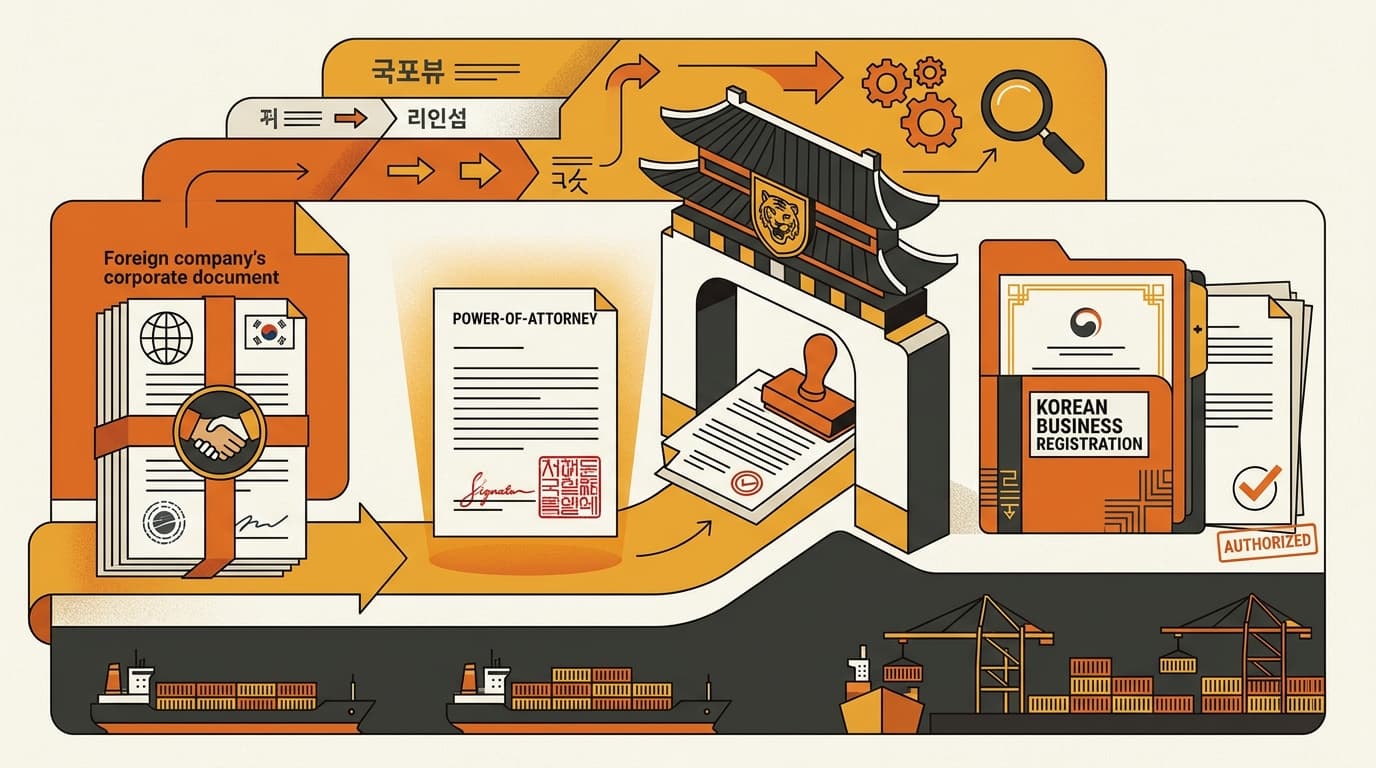
Korean Importer Registration: Why a POA Is Not Enough
A power of attorney cannot establish Korean importer registration; corporate-authority proof and Korean importer records are still required for the filing.
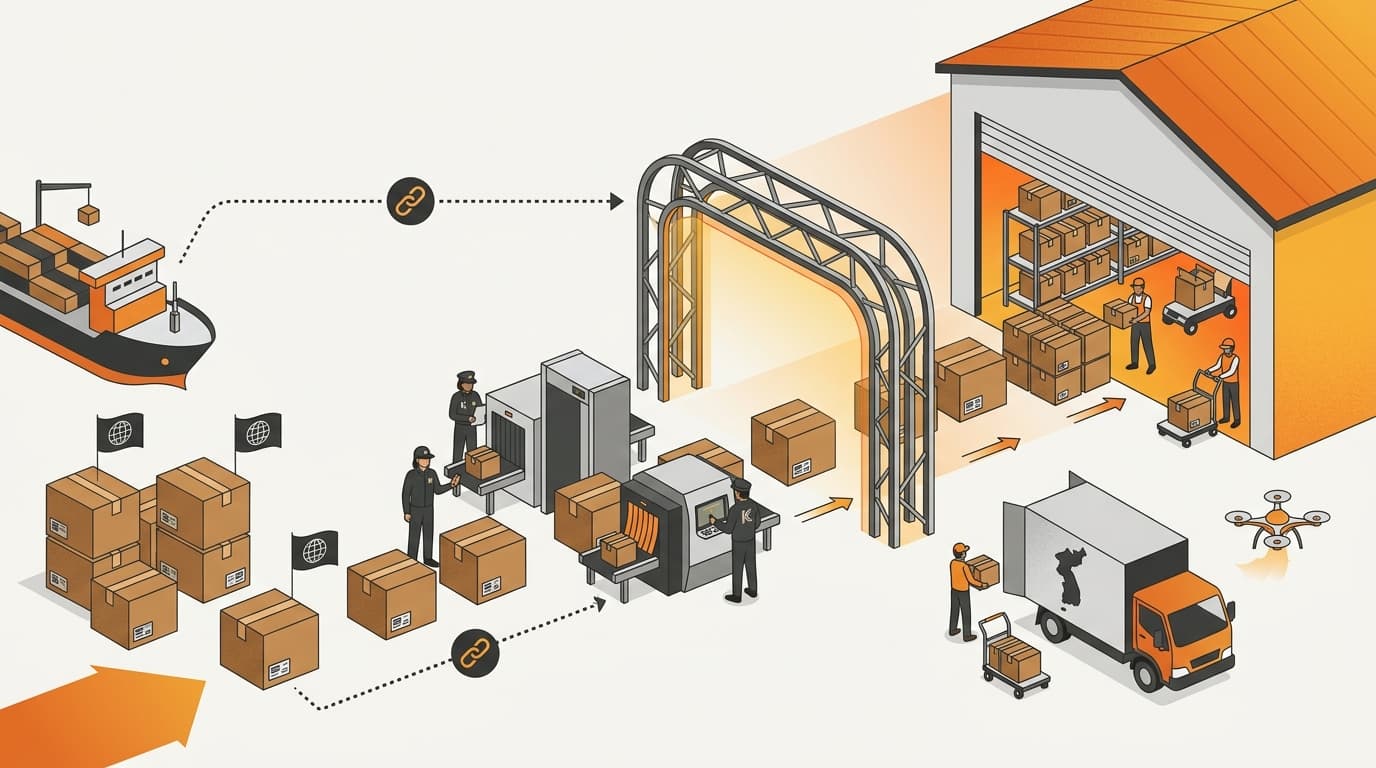
Can You Delay Korea Import Duty on Consignment Stock?
No. Korea import duty and import VAT are normally assessed when consignment stock is cleared for domestic circulation, not when a Korean customer buys one unit.

Children’s Product KC: Does “Ages 13+” Avoid the Rules?
No. In Korea, “Ages 13+” is only one factor; design, intended use, packaging, and child-directed marketing can still trigger children’s-product KC rules.