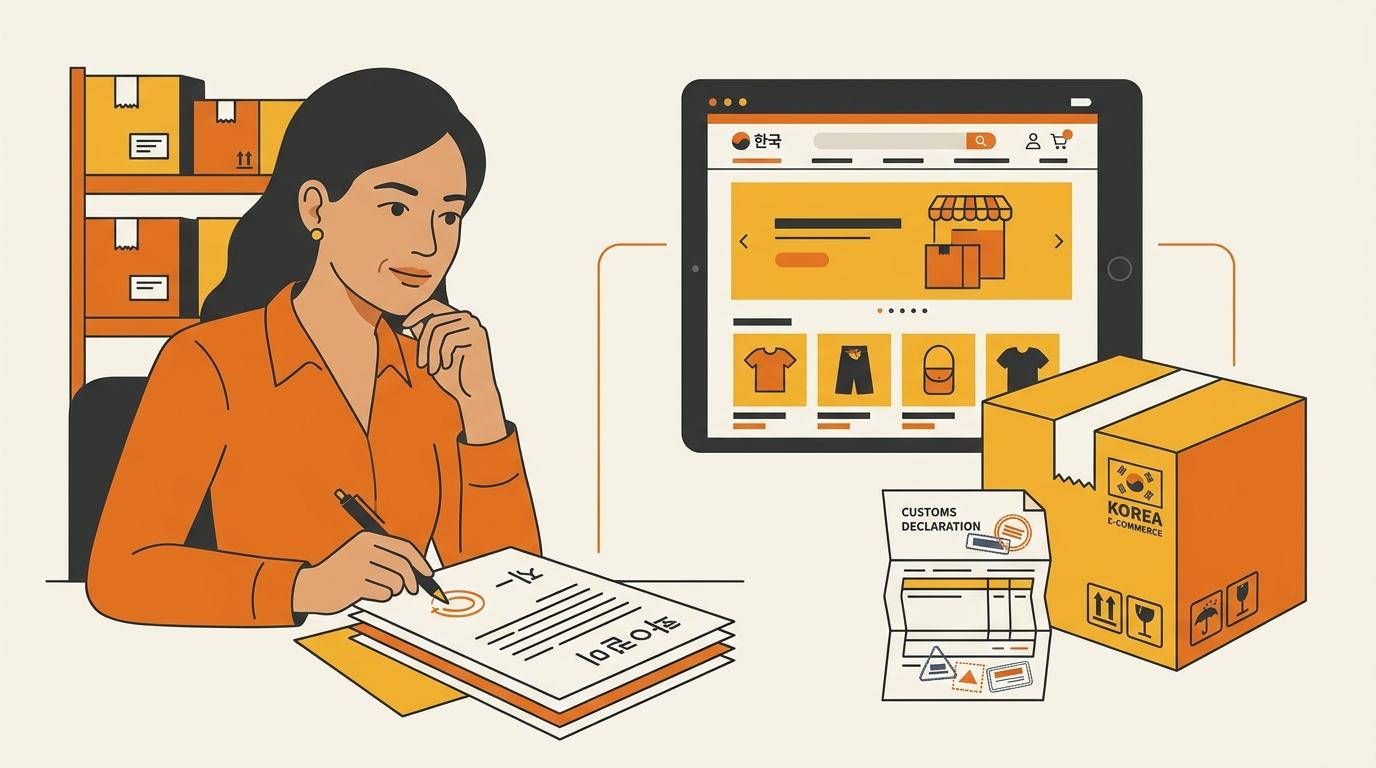
What to List in Korean E-Commerce Incorporation Articles
In the articles, list the online or mail-order sales, importing, distribution, marketing, and fulfillment work your Korean e-commerce company will perform. Add near-term expansion only when the company will really do it. A broad list does not replace a product license or platform approval.
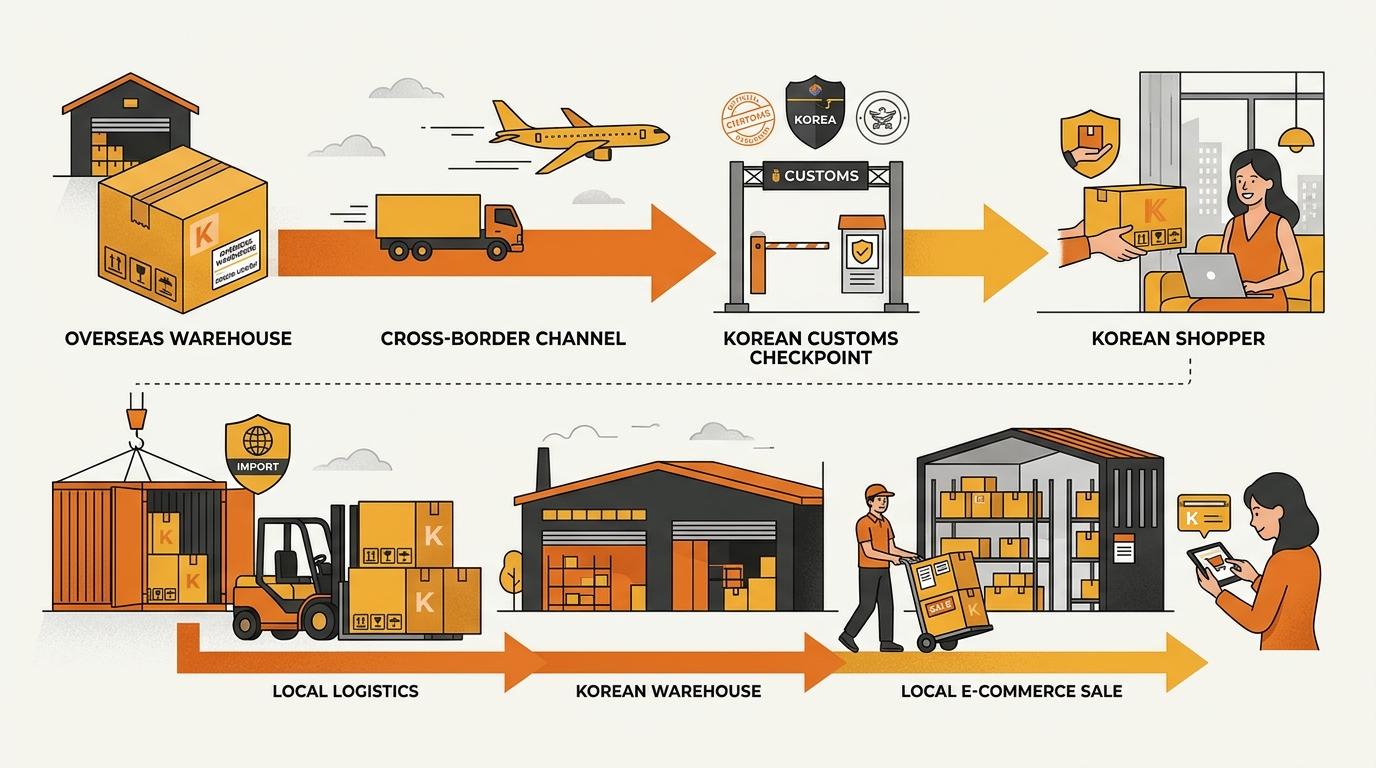
Use one real product as your example. Note who buys it from the supplier and who declares it at customs. Then note who sells it, where it sits, and who handles the return.
Start with the selling model, not a template
The same brand can need different clauses because it can sell to a Korean shopper in two different ways.
With Direct, the brand is the seller and exporter on its own Coupang cross-border seller account. Coupang Global Fulfillment (CGF) stores stock outside Korea. It clears the shopper’s personal import, delivers in 3–5 days, and handles returns and Korean-language support. Direct accepts sellers shipping from the US, Europe, Japan, mainland China, or Hong Kong. Your Korean company is not the importer for that sale.
Local selling changes the answer. If your Korean company imports cartons into Korea, it may be the Importer of Record (IoR). The IoR is the entity named on the import declaration. It is responsible for import duty and import value-added tax (VAT). The company may then sell on Coupang, send stock to Rocket Growth, or sell to Korean trade buyers. Its purpose list should cover the work it actually performs.
If another Korean company is the importer and legal seller, do not list those activities as if your company performs them. For local stock, decide who will import the goods before drafting the articles. That importer must be the entity named on the customs declaration. The two common ownership choices are covered in Importer of Record in Korea: Who Can Be One and What It Takes.
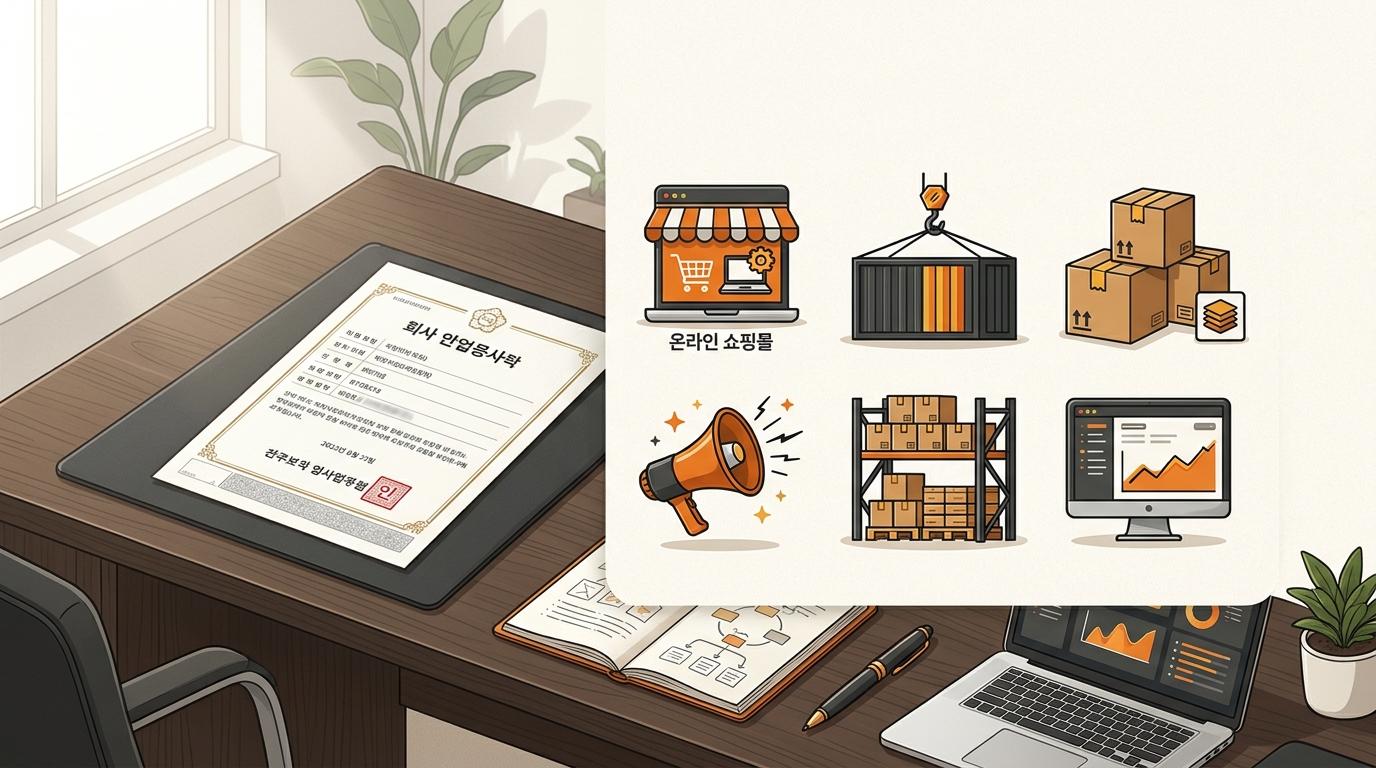
List the activities your company will actually perform
There is no single English sentence for every Korean company. The registry uses Korean wording. The tax office and Coupang may use different business categories. Start with a plain-English operating list. Then ask a Korean filing professional to turn it into accepted Korean corporate-purpose wording.
| Planned work | Purpose to discuss | Use it when |
|---|---|---|
| Online sales | Online retail, e-commerce, or mail-order sales | The company sells its own goods through Coupang, its own store, or another online channel |
| Bringing stock into Korea | Import and, if needed, export of goods | The company imports stock or expects to re-export goods and returns |
| Selling to businesses | Wholesale and distribution | The company sells cartons to retailers, distributors, event buyers, or other businesses |
| Korean pages and advertising | Marketing and advertising of the company’s goods | The company buys, creates, or manages Korean product pages and ads |
| Storage and packing | Warehousing, packing, or fulfillment | The company runs storage or provides these services to other brands |
| Making products | Manufacturing or assembly | The company will make or assemble goods in Korea |
| Software or a platform | Software, platform, or digital-content activities | The company will sell software or operate a platform, not merely use Coupang |
The first four rows cover many local e-commerce companies. Add the last three only when the Korean company will really do that work. Using Coupang’s warehouse does not automatically make your company a warehousing business. Selling your own products does not automatically make it a translation agency.
Do not add manufacturing, consulting, or third-party logistics just to make the list look broad. Add a near-term activity when you can name the product, customer, or service it covers. If the company later starts a genuinely new line, plan an articles amendment and a business-registration update before starting it.
Suppose the Korean company buys cartons, imports them, owns the stock, and sends it to Rocket Growth. Its list should cover online retail, import, and distribution. It should not add third-party logistics unless it stores or packs goods for another brand.
The English list is only the planning step. A Korean filing professional must check whether each phrase fits the company type, tax registration, and product category. Keep entity-structure and filing-sequence questions separate from this list. The Yuhan-Hoesa Setup Cost and Timeline for 2026 guide covers those setup topics.
Match the articles to Coupang, Korean pages, and Rocket Growth
The purpose list is useful only when it matches the work that follows incorporation.
Coupang seller setup. A local seller application uses the company’s legal name, business registration details, representative, settlement bank information, and product information. Coupang may also ask for labels or category documents. Keep these details consistent across the articles, business registration, bank file, and seller application. The articles do not create a Coupang account or guarantee approval.
Korean product pages. A Korean product detail page (PDP) is part of selling the product. If your company writes Korean copy and prepares pages for its own catalog, that work supports online retail and marketing. It does not turn the company into a translation business. If the company will sell Korean page creation or translation to other brands, add that service only if you really plan to sell it. See How to Localize Product Pages for Korean E-commerce for the page work that follows the company decision.
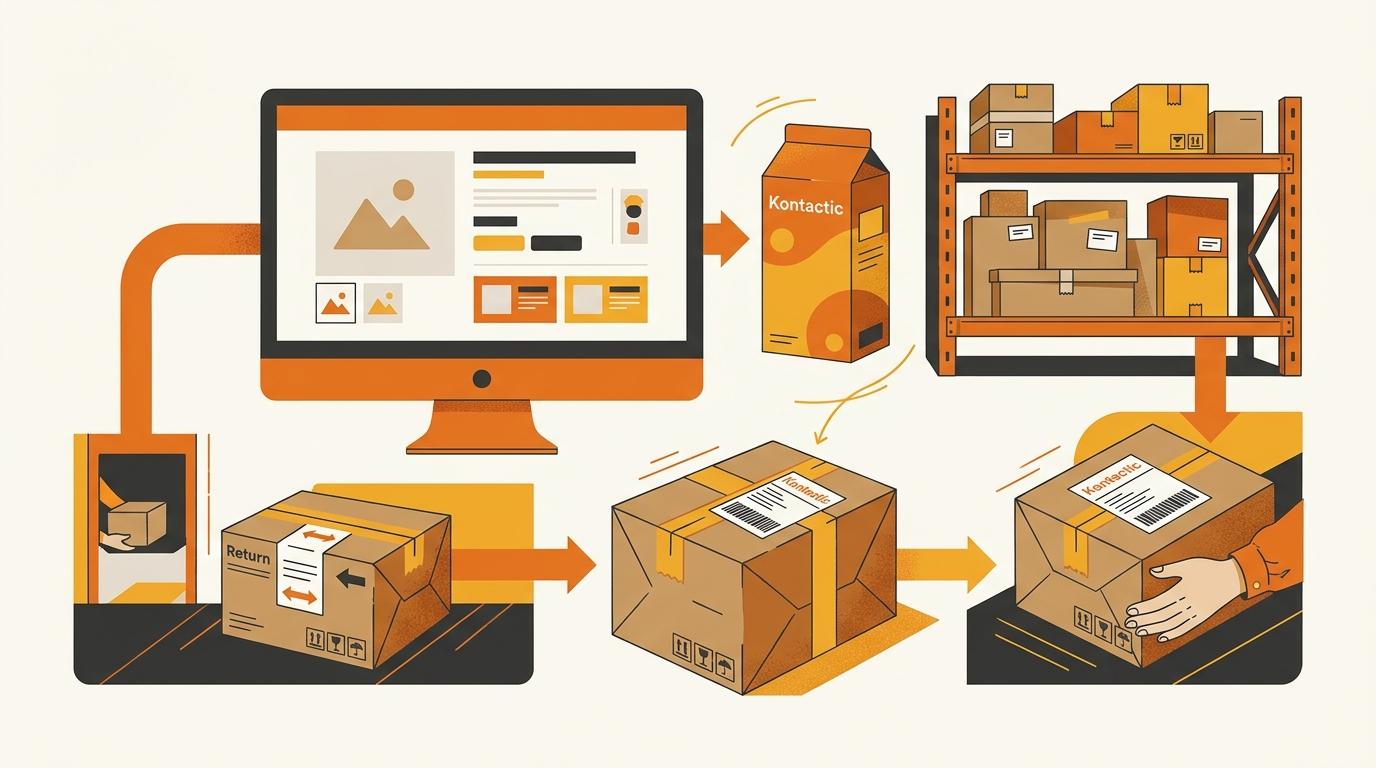
Rocket Growth and returns. Rocket Growth is Coupang’s fulfillment service inside Korea. It provides storage, delivery, and returns processing. You still own the inventory. If your company only sends its own stock into Rocket Growth, online retail, import, and distribution usually describe the sale. If your company stores, packs, or processes returns for other brands, discuss a separate warehousing or fulfillment purpose and any extra registration. See What to Ship to Coupang Rocket Growth—and Who Owns It for the stock-owner question.
Import and product checks. If your company imports, it must be the entity named in the import declaration. The articles do not create IoR status. Customs filings, Korean labels, product permits, and product conformity rules still apply. Electrical, household, children’s, and radio products may fall under Korea’s KC conformity system. Food, supplements, and cosmetics can have their own registrations and local roles. Review those requirements before writing a clause that says the company will sell the category.
Adding import to the articles does not make the company an Importer of Record. The named entity still needs the customs, labeling, product, and platform steps for the specific goods.
Keep company purposes separate from licenses and registrations
Three checks are easy to mix up:
- Articles of incorporation: what the company says it may do.
- Business and mail-order registration: what the company reports it does as a business.
- Product and platform approval: whether a specific product may be imported and sold through a specific channel.
A home-goods company can list online retail, importing, and distribution in its articles. That does not clear a regulated electrical product for sale. The product may still need Korean labels, KC work, and Coupang’s product review. A clause also does not replace an import declaration or a category registration.
Online selling often brings a separate Korean mail-order business registration. Ask the filing agent early which documents the registration needs. The list may include a business certificate, identity documents, and proof of payment. See the Korea Mail-Order Registration: Documents You Need guide for the filing checklist.
Setup fees do not determine which activities belong in the articles. The Korea setup fee guide covers that separate question.
The safest list is not the longest one. It is the list that describes the exact company selling, importing, localizing, storing, and supporting your products in Korea.
Check your Korean company purpose list before filing
Have a planned Korean sales model but are unsure whether the articles cover the importer, Coupang, or fulfillment work? Contact Kontactic to review the activity list before filing.
About the author
Korean and global e-commerce operators with 15+ years of cross-border experience, led by CEO Isaac Lee — KOTRA-certified consultant and official lecturer for Seoul City and the Korea Customs Service. We run Korea market entry for overseas brands every day; this blog records what we learn in the field.
Meet the Kontactic team →Related Articles
Coupang Inbound: Three Checks Before Shipping
Before shipping stock for Coupang inbound, Kontactic Seller Center runs a SKU through three review stages and saves the result in English, Chinese, and Japanese.

Korean Dividend Withholding Tax for Foreign Parents: 22%
Korean dividend withholding tax is usually 22% for a foreign parent. Learn how treaty relief, company approval, tax documents, and bank checks affect payment.

Korean Commercial Lease vs Virtual Office: Which Fits?
Korean commercial lease vs virtual office: choose the address that matches your company’s real work, import role, Coupang plan, and banking needs in Korea.