What to Ship to Coupang Rocket Growth—and Who Owns It
Under Coupang Rocket Growth, you ship legally imported, barcoded units to an assigned fulfillment center on a booked inbound plan. You keep ownership of the stock the entire time it sits in the warehouse. Coupang provides storage, pick, pack, and last-mile Rocket delivery as a service; it does not buy your inventory.
That single distinction is the thing most foreign brands get wrong: seller-owned stock fulfilled by Coupang, not stock Coupang purchased. Get this wrong, and your cash forecasting and inventory risk model collapse.
The rest of this article walks the inbound side of Rocket Growth in the order it actually happens: what has to be true before a unit can ship, exactly what you physically supply, and what changes hands (and what doesn't) once Coupang receives the goods. Returns and refunds are out of scope here — they are their own process, handled separately once a unit re-enters your inventory.
The two prerequisites before a single unit ships
Rocket Growth is a domestic fulfillment service, not an import service. That means two things have to already be true before you book any inbound plan.
First, the goods must be legally imported and cleared into Korea. Rocket Growth stores and ships inventory that is already sitting in the country as domestically available stock. Getting it there is a separate, upstream job: you need a Korea-resident Importer of Record accountable to the Korea Customs Service, customs clearance (통관) completed, and any product-specific certification finished before customs will release the cargo. Depending on the category, that certification might be KC safety certification under KATS, an MFDS import food declaration, or another regime entirely. And this is a recurring obligation: every replenishment batch — not just your first shipment — has to be legally imported and cleared, not a one-time gate you clear and forget. Coupang's fulfillment center is the last stop, not the border.
Second, the listing has to exist first. You cannot inbound units against a SKU that Coupang's system doesn't recognize yet. Products are created through Coupang's WING seller console or its Open API — category matching, purchase options, and the mandatory product-disclosure attributes (고시정보) that Korean e-commerce law requires — before any inventory can be mapped to them. The listing defines the SKUs; the inbound plan fills them.
Both prerequisites are the part brands underestimate. The freight is straightforward. The clearance and the listing setup are what determine whether your units are even eligible to reach a fulfillment center.
What you physically supply on the inbound
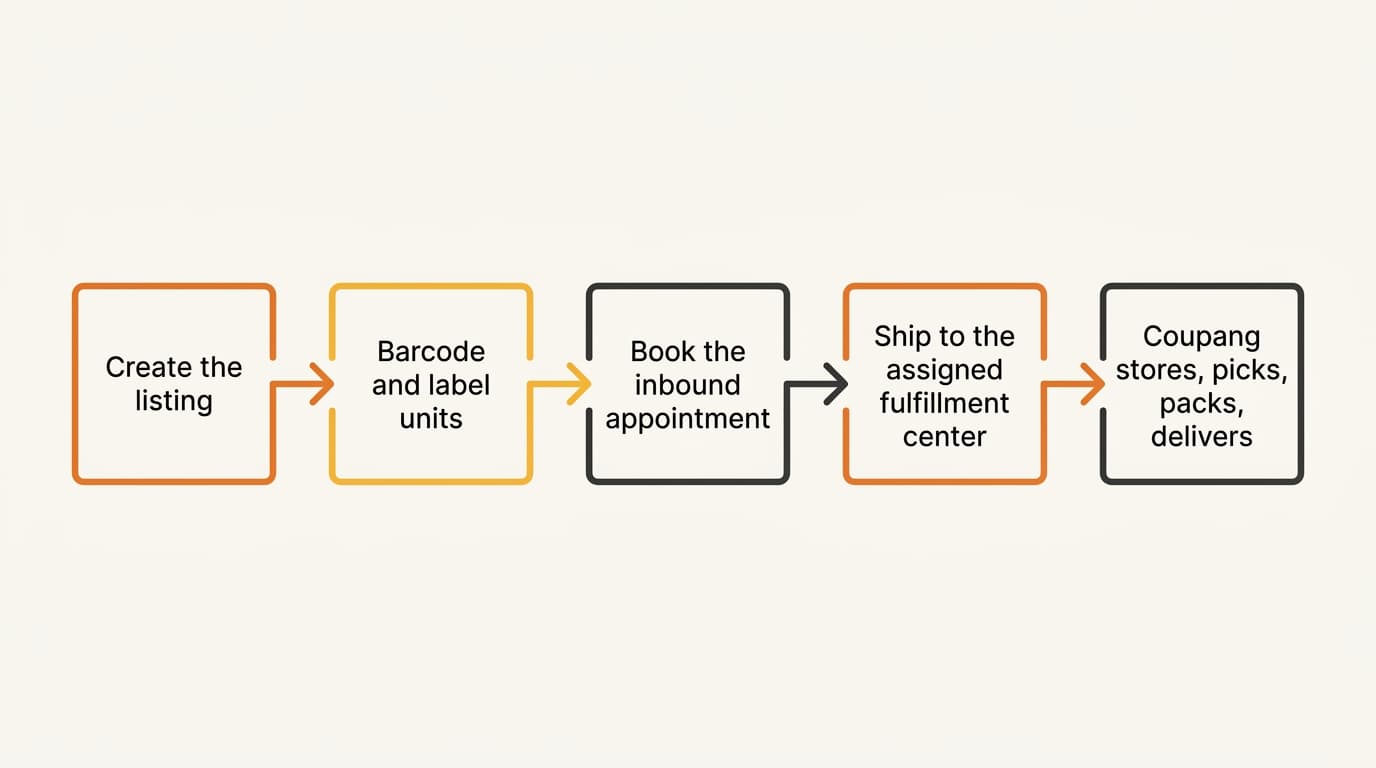
Once the product is cleared and the listing is live, the inbound itself is a defined, sequenced process. You are not shipping loose cartons to a general warehouse. Instead, you are fulfilling an assigned plan against known SKUs.
- Create the listing. Build the SKU in WING or via the Open API with category, options, and 고시정보 disclosure attributes complete.
- Barcode and label units. Each unit and SKU must be identifiable to Coupang's system through barcode/SKU mapping, and packaged to Coupang's inbound requirements.
- Book the inbound appointment. Coupang assigns the destination fulfillment center (물류센터) and a receiving window through its system. You do not pick the warehouse.
- Ship to the assigned fulfillment center. Send the announced quantities to the assigned destination within the booked window.
- Coupang stores, picks, packs, delivers. Received stock is warehoused, then fulfilled to customers under the Rocket delivery promise.
The two steps foreign brands stumble on are the labeling and the appointment. Units have to be barcoded and grouped into the quantities Coupang's fulfillment-center API expects — mislabeled units, or a SKU the system can't read, get flagged at receiving. And stock has to arrive on a booked inbound plan to a Coupang-designated center; unannounced or misrouted shipments risk rejection at the dock rather than a quiet re-shelve. In practice, treat the barcode/SKU mapping and the inbound booking as gating steps, not paperwork: a shipment that clears customs perfectly can still be rejected at the fulfillment center if the units aren't labeled to spec or weren't announced through an inbound plan. Verify Coupang's current inbound requirements in its official developer documentation before you print a single label.
Practically, there is also a low floor to get started — Rocket Growth accepts as little as one unit per SKU inbound, so the constraint is rarely minimum volume. The constraint is getting the upstream import and listing done correctly.
Who owns the inventory: seller-owned, not a wholesale buy
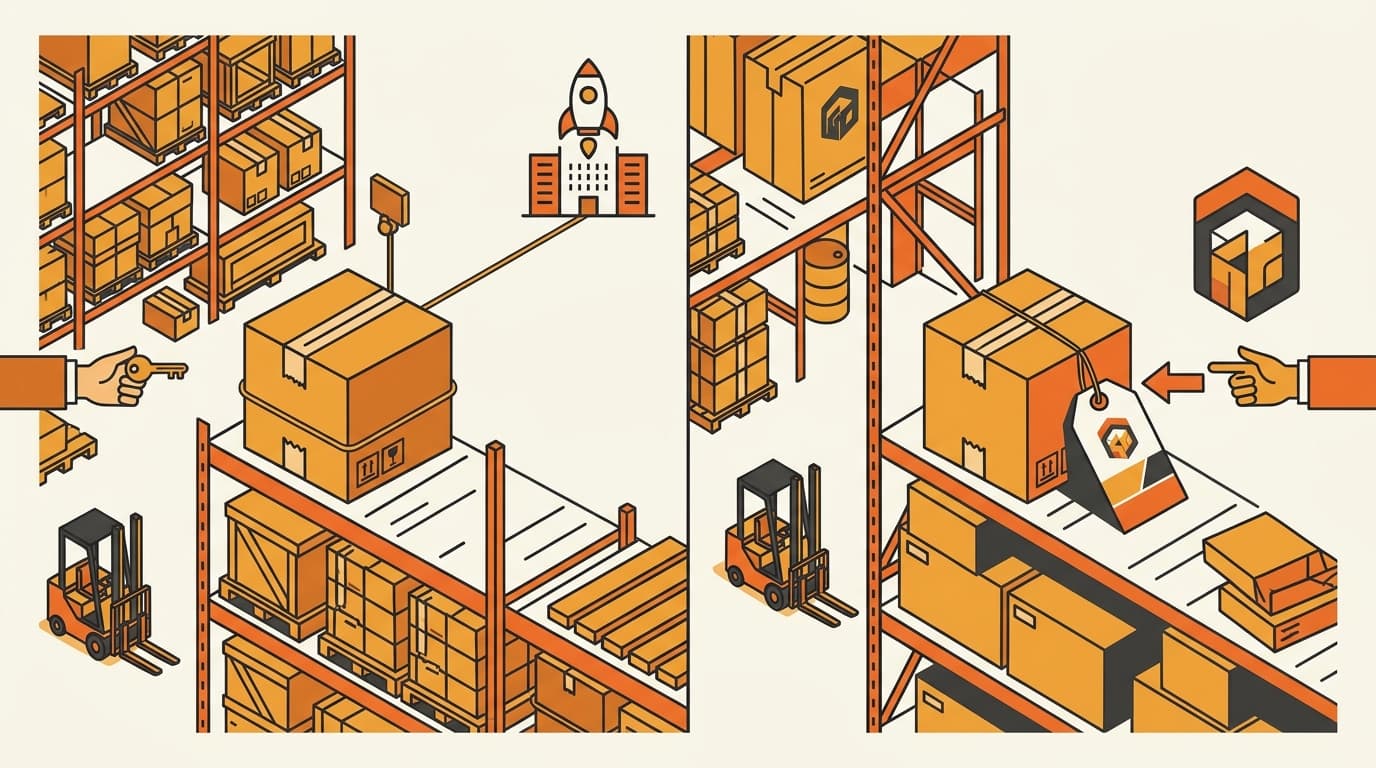
Here is the point that changes your cash forecasting and your risk model: under Rocket Growth, you keep title to the stock the entire time it sits in Coupang's fulfillment center. Coupang never buys it. It stores, picks, packs, and delivers your goods as a fee-based service, and you continue to bear the inventory risk and the economic exposure until a unit actually sells.
That is deliberately different from a Rocket wholesale arrangement, where Coupang purchases your stock outright and takes title — at which point the inventory risk, and the goods, become Coupang's. Confusing the two is the single most common Rocket mistake we see foreign brands make.
Rocket Growth (로켓그로스) is a fulfillment service for seller-owned inventory: Coupang warehouses, picks, packs, and delivers stock you still own. A Rocket wholesale buy is a purchase: Coupang buys your goods, takes title, and carries the inventory itself. Same "Rocket" delivery badge to the shopper; opposite ownership underneath.
The distinction drives three practical decisions:
- Inventory risk. Under Rocket Growth, unsold and slow-moving stock is your problem, not Coupang's. You forecast replenishment and you eat the carrying cost of anything sitting too long. Under a wholesale buy, that risk shifts to Coupang once title passes.
- Cash forecasting. With seller-owned inventory, you finance the goods, the freight, the duties, and the import taxes up front, and you recover that capital only as units sell through. A wholesale buy converts inventory to cash at the point of sale to Coupang instead.
- What stays yours. With Rocket Growth you still own replenishment forecasting, accurate listing and 고시정보 disclosure data, and continued legal-import compliance for every batch. Coupang handles the physical fulfillment; you handle everything that decides whether there's sellable, compliant stock in the building.
If you have proven cross-border demand and are deciding how to fulfill locally, the ownership model is a big part of that call — worth reading alongside an operator's framework for Rocket Growth versus cross-border selling.
Common questions
Does Coupang own my inventory under Rocket Growth? No. Under Rocket Growth you retain ownership of the stock while it sits in Coupang's fulfillment center. Coupang provides storage, pick, pack, and delivery as a service. Ownership only transfers to Coupang under a separate wholesale (Rocket) purchase arrangement.
Can I ship to a Coupang warehouse before my product clears customs? No. Rocket Growth fulfills inventory that is already legally imported and domestically available. Customs clearance and any product-specific certification — KC, MFDS food declaration, or another regime — must be complete before cargo is released, and only then can it be inbounded.
Do I need a listing before I inbound stock? Yes. Products are created in the WING seller console or via Coupang's Open API — with category matching, purchase options, and mandatory 고시정보 disclosure attributes — before units can be mapped and inbounded against those SKUs.
Can I ship to any Coupang warehouse I want? No. Coupang assigns the destination fulfillment center and a receiving window through a booked inbound plan. Unannounced or misrouted shipments risk rejection at receiving.
Where can I verify the current inbound rules? Check Coupang's official developer and seller documentation for inbound labeling and appointment requirements, and confirm your import obligations with the primary regulators — the Korea Customs Service for clearance, and MFDS (식약처) or KATS for category-specific certification.
Planning your first Rocket Growth inbound?
Kontactic handles the upstream import, listing setup, and inbound sequencing so your first shipment isn't rejected at the dock. Talk to us about getting cleared, listed, and inbounded correctly.
About the author
Korean and global e-commerce operators with 15+ years of cross-border experience, led by CEO Isaac Lee — KOTRA-certified consultant and official lecturer for Seoul City and the Korea Customs Service. We run Korea market entry for overseas brands every day; this blog records what we learn in the field.
Meet the Kontactic team →Related Articles

Can a Korean Coupang Page Replace a Cosmetic Label?
A Korean Coupang page can explain an English-only cosmetic, but it cannot replace required Korean details on the bottle, tube, jar, or box before sale in Korea.
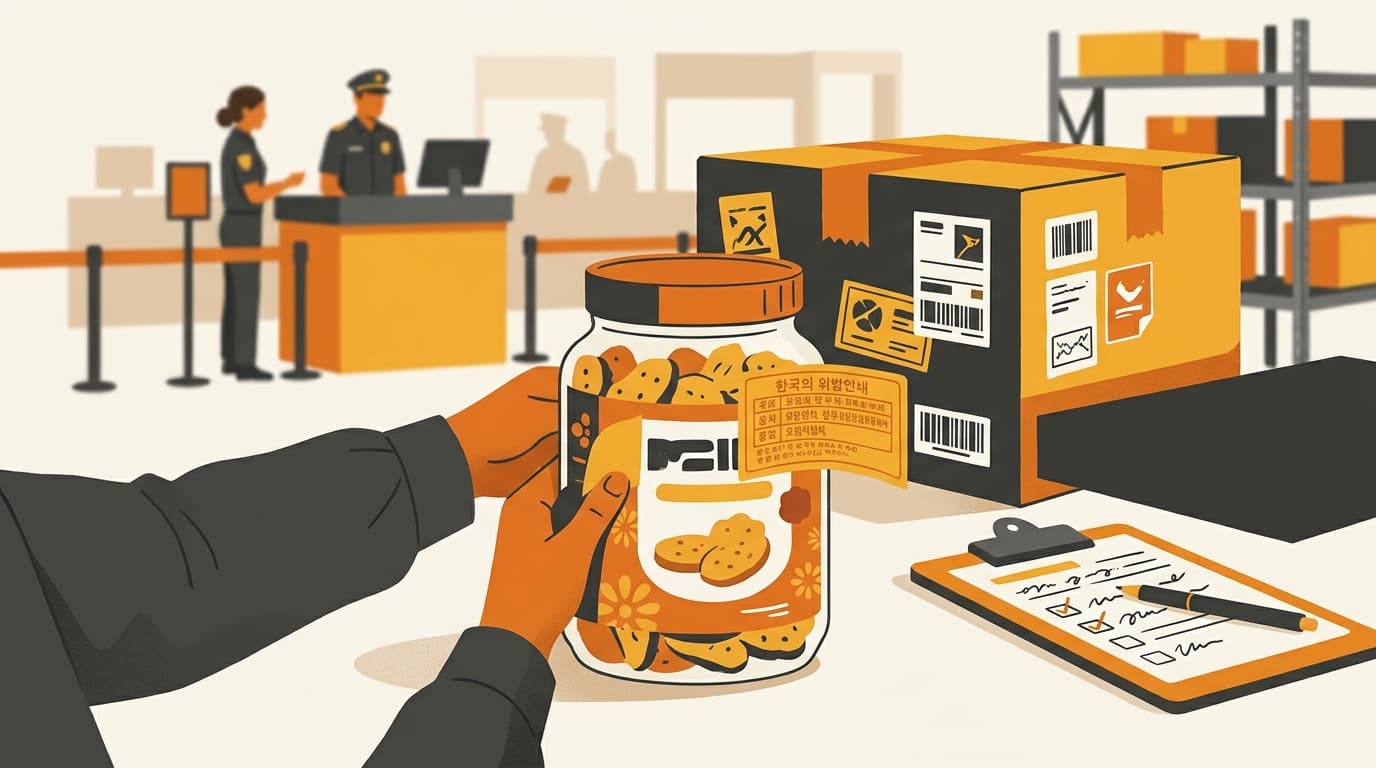
Imported Food Labels in Korea: Can Stickers Work?
Imported food labels in Korea can use a Korean sticker on the consumer unit before sale, but only when current MFDS rules allow it for that product and package.
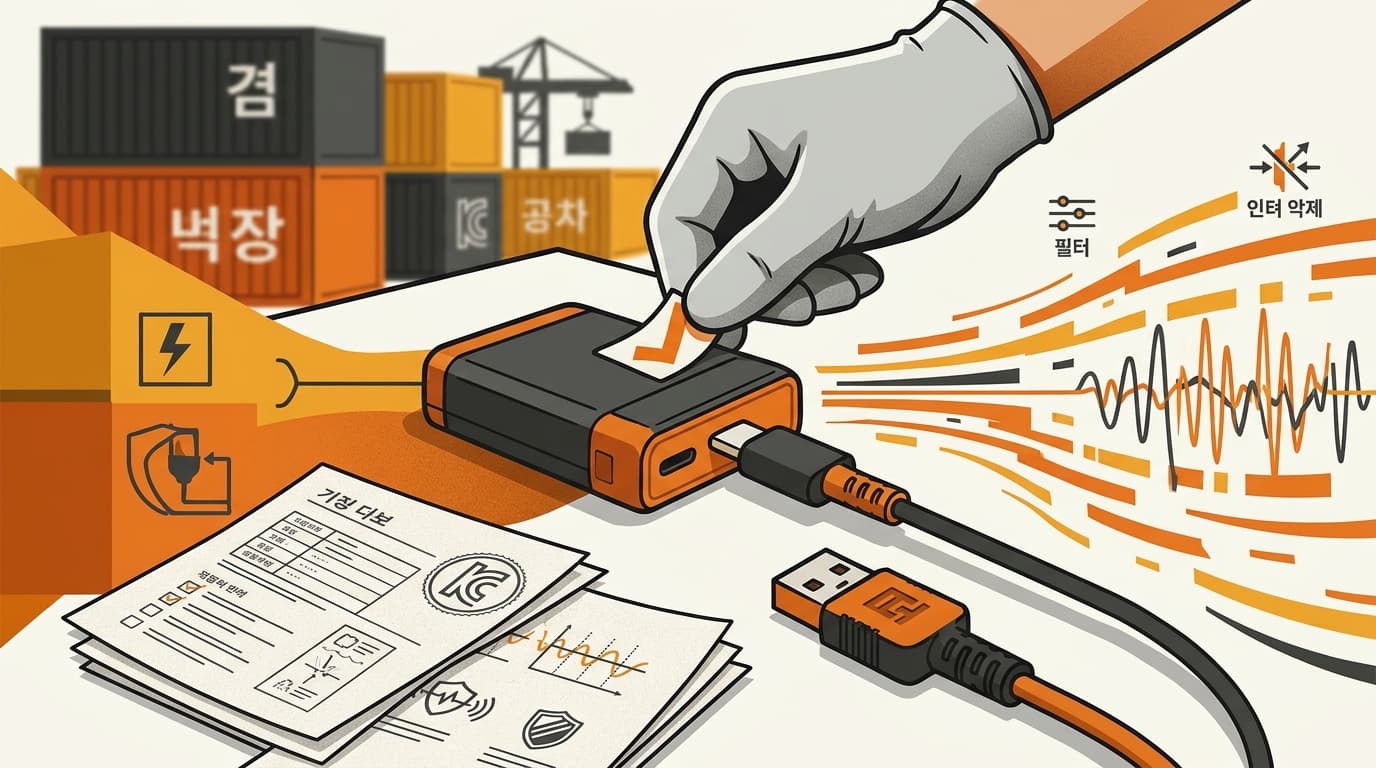
Can USB-Powered Products Avoid Korea’s KC Safety Rules?
USB power does not automatically avoid Korea’s KC rules. Learn how KATS safety review, RRA EMC checks, and customs timing affect your shipment before import.