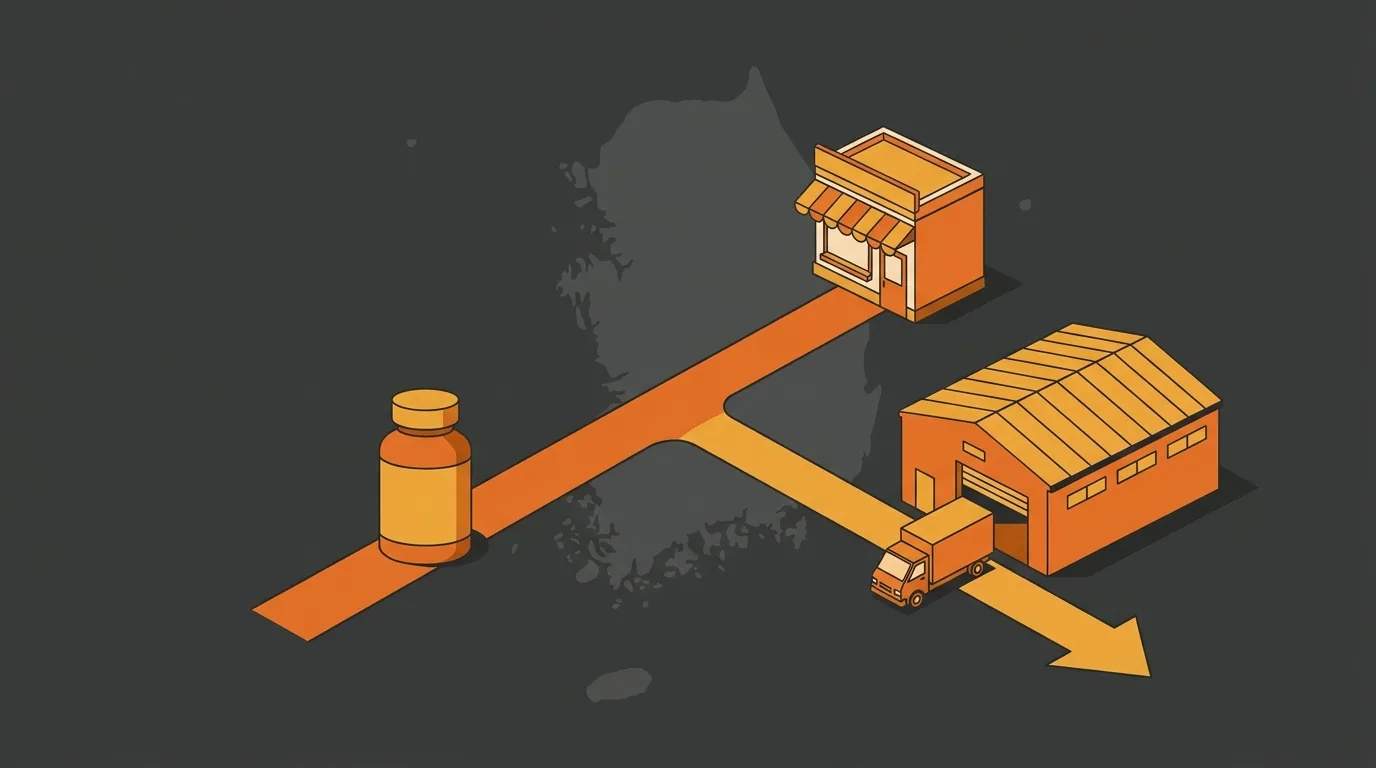
Korea Market Entry for Supplement Brands: A Decision Guide
If your US supplement brand already ships orders to Korean buyers cross-border, you don't have a market validation problem. You have a routing problem: which Korea entry path matches your regulatory class, your timeline, and your appetite for local infrastructure.
This guide is written for that reader. It skips the generic "why Korea" pitch and goes straight into the operational decisions that determine whether your launch works.
What "existing Korean customers" really tells you
When Korean consumers are already buying your supplements through Amazon Global, iHerb, or your Shopify with international shipping, three things are usually true at once.
First, your product fits a Korean wellness use case strongly enough to overcome friction — a 7–14 day shipping wait, no Korean-language CS, no local returns, no Coupang availability. Second, your repeat-purchase rate from those buyers is probably worse than it looks, because Korean shoppers churn back to local sellers as soon as a comparable option appears. Third, your addressable market is bigger than your current cross-border revenue suggests. We've written about this in detail in why cross-border orders understate your Korea opportunity — the short version is that going local typically multiplies the cross-border baseline several times over once friction is removed.
So the question isn't "should we enter Korea." It's "which entry mechanism fits the maturity of our demand and the regulatory class of our product?"
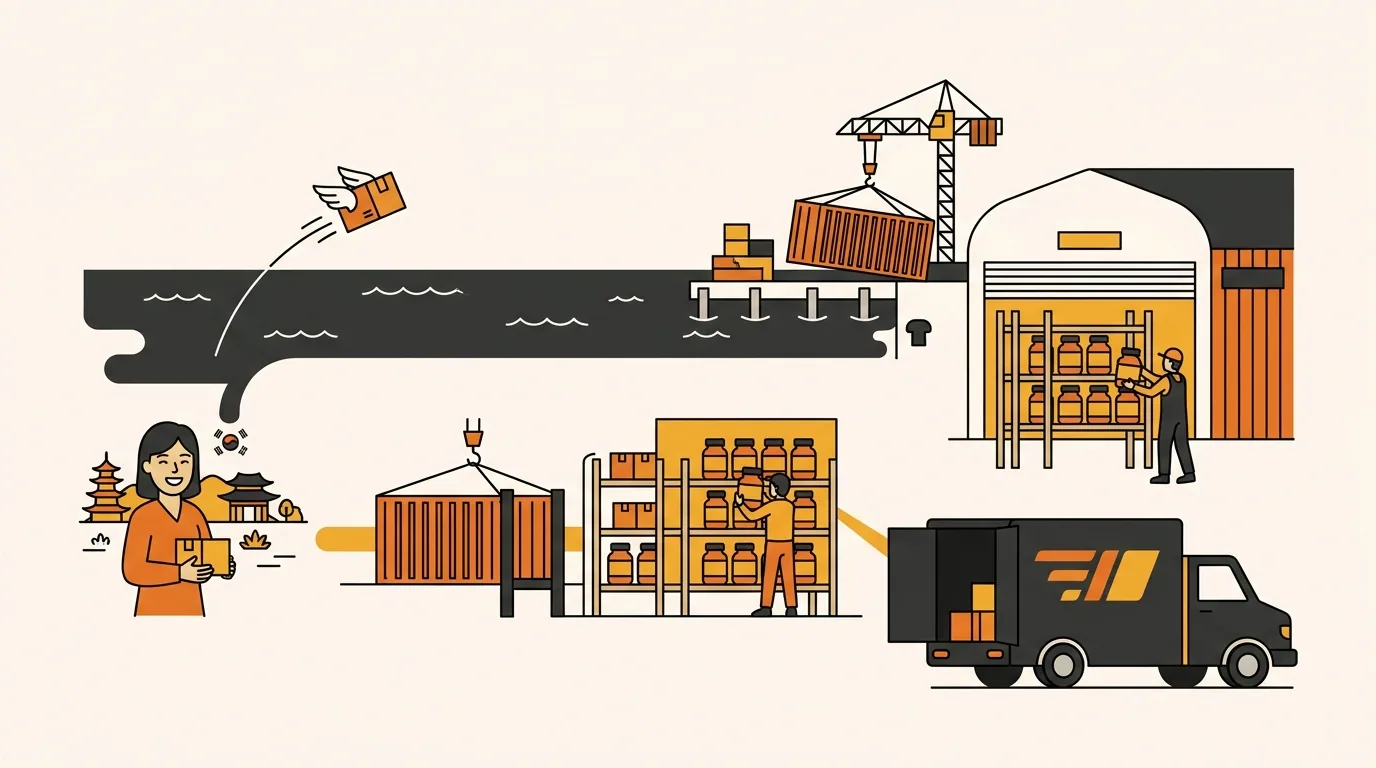
The two real options (and a third most articles ignore)
Most market-entry pages collapse this into "cross-border vs. local." That framing is fine as a starting point, but it hides a third path that many foreign brands never consider.
Option 1 — Stay cross-border, optimize. You keep selling through iHerb, Amazon Global, or your own international Shopify — and you can add Coupang through its cross-border program, Coupang Global Fulfillment (CGF), which Kontactic runs as Direct for brands shipping from the US, Europe, Japan, mainland China or Hong Kong. You don't deal with Korean entity setup, KC-related compliance, or VAT registration. You also don't get next-day local delivery, and you don't get the trust signals that local Korean shoppers expect. For most supplement brands with proven demand, this leaves the majority of revenue on the table.
Option 2 — Go fully local with your own Korean entity. You incorporate a Korean limited company (유한회사), become your own Importer of Record and Seller of Record, register with the Ministry of Food and Drug Safety where required, and operate on Coupang directly. This is the right end state for any brand that takes Korea seriously. It is also slower and harder to set up than the agencies' brochures suggest — see why setting up a Korean entity as a non-resident foreigner got harder for the current reality with tax-office and bank KYC.
Option 3 — Use a partner's Korean entity as your Importer of Record and Seller of Record. This is the option most foreign brands don't realize exists in a clean form. A managed entry operator's own Korean entity becomes the IoR and SoR; you sell locally in KRW without setting up your own legal entity, while keeping control of pricing, your brand, and what happens to unsold stock — and you're paid for what sells. We've covered the mechanics in sell skincare in Korea without a Korean entity: the IoR path — the model is the same for general supplements that qualify for standard food import, with category-specific caveats addressed below. Who can use it depends on the operator: at Kontactic, selling on Coupang under our entity is open only to Coupang-approved sellers in mainland China (Spark Subscription); for other brands we use the same structure for a defined project, such as supplying Korean wholesalers or retailers (Spark Project, quoted per project).
The right choice depends almost entirely on your product's regulatory class.
Supplement compliance: the part that actually decides your timeline
Here is where most "Korea market entry" pages stop being useful for supplement brands. "Supplements" is not one regulatory category in Korea. It is at least two, and which one you fall into determines your timeline, your cost, and which entry option is even possible.
General-purpose food supplements — like basic multivitamins or certain protein products — typically import as standard food. The Importer of Record files a food import declaration with the Ministry of Food and Drug Safety (MFDS / 식약처), and the product needs Korean-language labeling that meets local requirements. This is the lighter path.
Functional health foods (건강기능식품) — anything making a functional health claim, or using ingredients on Korea's functional ingredient list, falls under a separate licensing regime. The seller needs a 건강기능식품 distribution/sales license, and product registration is a distinct process from general food import. This is materially heavier than the general-food path, and not every IoR partner is set up for it. If you're selling cordyceps, probiotics with claims, omega-3s, or anything in the "functional" bucket, you need to confirm this upfront with whoever you're considering.
For a deeper view on how MFDS-regulated categories actually work in practice, importing food and hygiene products into Korea walks through the registration mechanics without sugarcoating the edge cases.
A note on KC certification: KC (KC 인증) is a product-safety certification regime that primarily covers electrical, electronic, and certain children's products. Most supplement SKUs are not subject to KC. If your product line includes a device alongside the supplement (a connected dispenser, a USB-powered diffuser, a battery-powered tester), that component may trigger KC scope — see KC certification and Coupang for how that interacts with selling locally.

The Korean PDP problem (the part that decides your conversion)
Even brands that get the regulatory work right often underestimate what a Korean Product Detail Page is. On Coupang, the PDP is not a paragraph of bullet copy with three product photos. It is a vertically scrolling visual document — typically around 20,000 pixels tall — built section by section: hero, problem statement, ingredient story, lifestyle, comparison, certifications, FAQ, reviews scaffold.
For supplements specifically, Korean shoppers expect:
- A clear, visual ingredient breakdown with unit dosages
- Country-of-origin and manufacturing facility imagery
- A "who is this for" section (age, lifestyle, concern)
- Trust signals — third-party test results, brand history, founder photos
- Comparison panels against locally familiar reference products
A literal English-to-Korean translation of your existing US PDP will not perform. The information density, the visual rhythm, and the trust signals are different. We've written about this sequencing trap in operational readiness before ad spend — running ads to a US-style PDP in Korean is one of the most common ways foreign brands waste their first 90 days.
PDP creation is generally a one-time, design-and-copy deliverable separate from operations. Whichever entry partner you pick, ask whether PDPs are in scope, who designs them, and how many revision rounds are included. The variance in quality across providers is enormous.

What foreign brands underestimate after launch
In our experience, the gap between "we launched on Coupang" and "we're selling profitably on Coupang" is where most US brands burn the most money. Three things tend to be the culprits.
Settlement timing. Coupang's default settlement runs roughly 60 calendar days from sale. If you're funding inventory, ad spend, and platform operating fees against revenue that hasn't landed yet, you can run out of working capital before your first profitable cohort closes. Coupang settlement timelines: monthly vs weekly vs fast walks through the actual cycles and the conditions for accelerated settlement.
Margin shift from local fulfillment. Moving from cross-border to Coupang Rocket Growth changes your unit economics in both directions: per-unit margin usually drops as platform fees, 3PL handling, and returns processing show up; order volume usually rises substantially. How Coupang IoR and 3PL change your Korea margins lays out the typical magnitude. If your business case assumes US gross margins, redo it.
Item matching and trademark exposure. Coupang automatically merges what it considers the same item across listings. Foreign brands without Korean trademark protection or local representation can find their listing absorbed into someone else's, with limited recourse. How Coupang item matching triggers trademark complaints covers the structural issue.
VAT is the easy one to forget but the simplest to plan for. All sales into Korea are subject to a 10% Value Added Tax.
A decision framework, not a service comparison
Most "Korea market entry services" pages end with a generic "contact us" pitch. Here is a more useful frame.
If your supplement is general-food class, you have proven cross-border demand, and you want to be selling on Coupang in months, not quarters, the fastest routes are the ones that skip the entity: selling cross-border on Coupang through CGF, or a partner IoR/SoR where one is open to you. You skip the entity setup, you skip 건강기능식품 licensing complications (assuming your SKU genuinely doesn't need it), and you can still incorporate later if you choose.
If your supplement is functional health food (건강기능식품), you almost certainly need to set up your own Korean entity sooner rather than later, because the licensing attaches to the entity holding the distribution rights. The right partner here is one that runs your Korean entity's administration and Coupang operations end to end while you stay focused on supply and brand — at Kontactic, the Blaze model, which also covers growth strategy and marketing.
If you're still validating — Korean orders are trickling in but you haven't seen a real signal — keep selling cross-border, but use this period to lock down trademark filings and to study the competitive PDPs in your category. Reading the Korean ecommerce market through high-engagement user data is a useful lens for thinking about which subcategories actually have headroom.
The pattern across all three: separate what can move fast (listings, IoR-based selling, basic localization) from what needs full local infrastructure (entity, functional licensing, dedicated CS, growth marketing). Don't let a service provider sell you the heavy stack when the light stack would prove the channel first — and don't let them sell you the light stack when your regulatory class genuinely requires the heavy one.
The best Korea market entry service for a US supplement brand isn't the one with the longest service menu. It's the one that correctly classifies your product, matches your demand maturity, and is honest about which work needs to happen in what order.
What to ask any Korea market entry partner before signing
A short, blunt checklist:
- Is my product general food or 건강기능식품 under Korean classification, and what evidence supports that call?
- Are you the IoR and SoR, or am I? If I am, what's the timeline to entity setup with current bank and tax-office conditions?
- Who designs the PDP? How many revisions? Is it scoped separately from monthly operations?
- How is settlement timing handled, and how does that affect my working capital?
- Who owns the Coupang seller account, the inventory, and the trademark filings — and who controls pricing and unsold stock? (The trademark filings should be yours, and so should control of pricing and unsold stock. Under a partner's IoR/SoR, the partner's entity holds the seller account and is the importer of the goods.)
- If we start with your IoR and later set up our own entity, how does the transition work?
If a provider can't answer those crisply, they're not the right partner for a supplement brand with real Korean demand on the table.
Talk to Kontactic about your Korea entry
If you have Korean customers already and want a frank read on whether your supplement is general-food or functional-food class — and which entry path that points to — we'll walk through it with you.
About the author
Korean and global e-commerce operators with 15+ years of cross-border experience, led by CEO Isaac Lee — KOTRA-certified consultant and official lecturer for Seoul City and the Korea Customs Service. We run Korea market entry for overseas brands every day; this blog records what we learn in the field.
Meet the Kontactic team →Related Articles
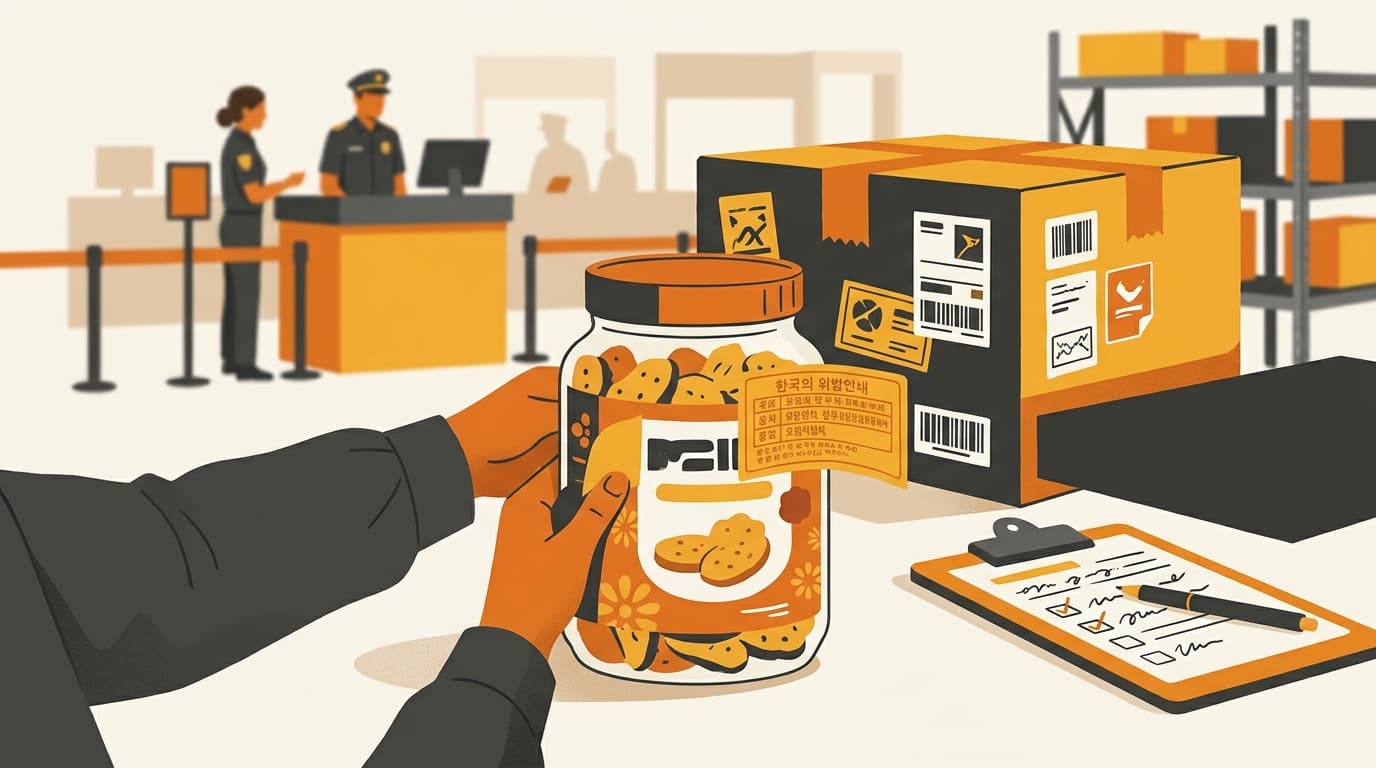
Imported Food Labels in Korea: Can Stickers Work?
Imported food labels in Korea can use a Korean sticker on the consumer unit before sale, but only when current MFDS rules allow it for that product and package.
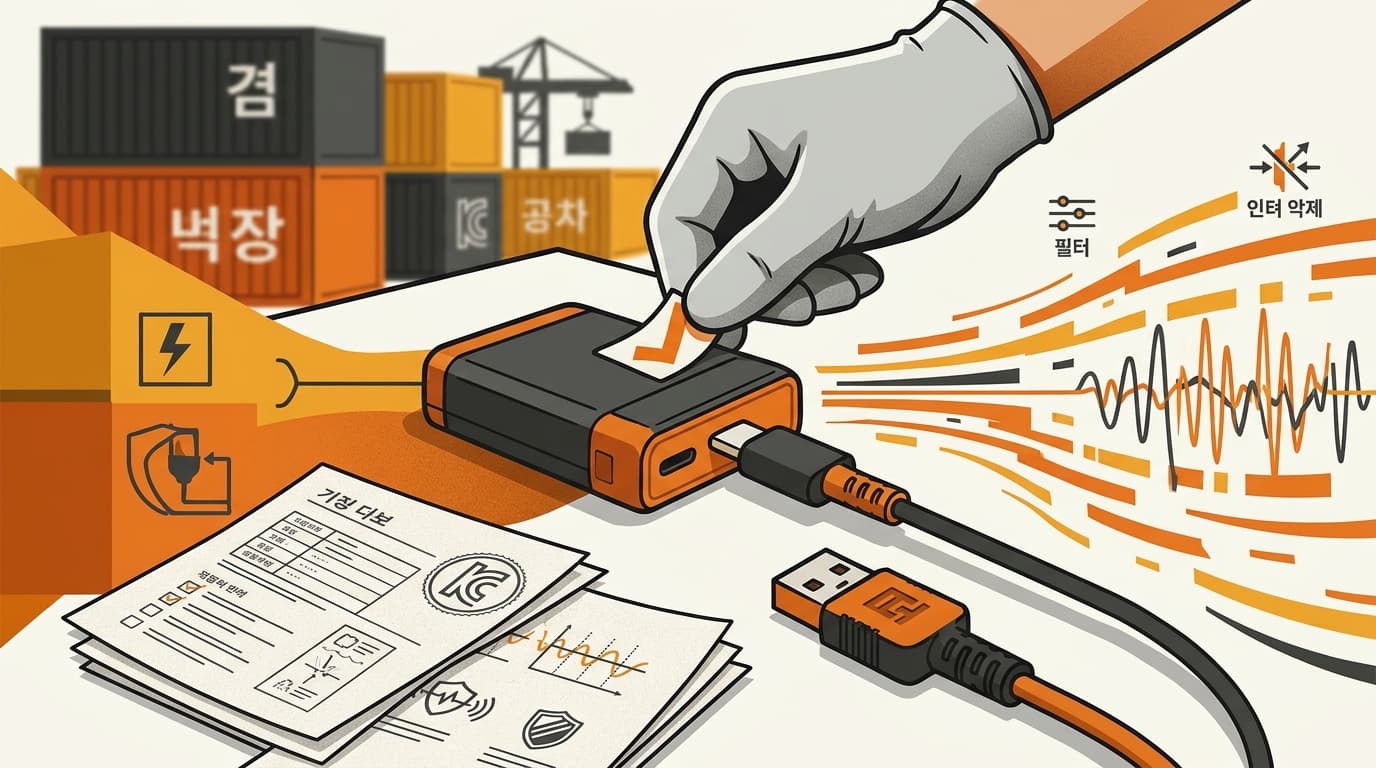
Can USB-Powered Products Avoid Korea’s KC Safety Rules?
USB power does not automatically avoid Korea’s KC rules. Learn how KATS safety review, RRA EMC checks, and customs timing affect your shipment before import.
Can Coupang Buyers Pay Two Charges With Free Shipping?
On Coupang, free shipping can still leave the buyer paying two return charges: the original delivery cost and the cost of sending the parcel back to the seller.