
Korea De Minimis: What the USD 150 Threshold Means
South Korea's USD 150 de minimis threshold lets cross-border parcels clear duty-free — but only for personal-use imports in the express regime, and only until you go local. Below the line, goods generally clear without customs duty and without import VAT. Above it, duty and 10% VAT apply, and the importer of record carries the filing obligation.
That is the short answer. The longer answer — and the one that actually matters if you are testing a foreign brand into Korea in 2024 — is that the USD 150 line is narrower than most brands assume, it is being squeezed globally, and it stops mattering the moment you decide to go local on Coupang.
What Korea's de minimis threshold actually covers
The USD 150 threshold applies to personal-use imports cleared through the express (목록통관) regime — typically what a Korean consumer receives when they buy direct from a foreign site and the parcel arrives by international courier. The shipment must be declared as personal use, addressed to an individual recipient, and within the value cap.
A separate set of rules applies to travelers. Korea Customs Service publishes a personal-effects allowance for arriving travelers — the total must be under 40kg, the overseas acquisition price under KRW 100,000, and the goods must pass quarantine. That is a separate carve-out and is not the threshold cross-border e-commerce brands rely on.
A few important nuances:
- Per shipment, not per order. If a buyer places one Coupang Global / direct-from-brand order that arrives split across two parcels, each parcel is evaluated separately.
- CIF value, not item price. The USD 150 is the customs value including freight and insurance to Korea. A USD 130 product with USD 25 shipping is already over the line.
- Category exclusions apply. Health functional foods, cosmetics with functional claims, certain electronics, and other regulated goods do not get a free pass at low value. They still need MFDS notification, KC certification, or category-specific clearance depending on what they are.
- Bulk and B2B imports do not use this threshold at all. The moment you ship a pallet to your own Korean entity or to a 3PL, you are in formal customs clearance with duties, VAT, and HS-code-driven scrutiny.
Two different thresholds people confuse
This is where most "Korea de minimis 2024" guides muddle two unrelated regimes. One threshold is for commercial cross-border parcels. The other is for travelers returning to Korea with goods in their luggage. They have different legal bases, different value caps, and different enforcement, and most English-language guides conflate them.
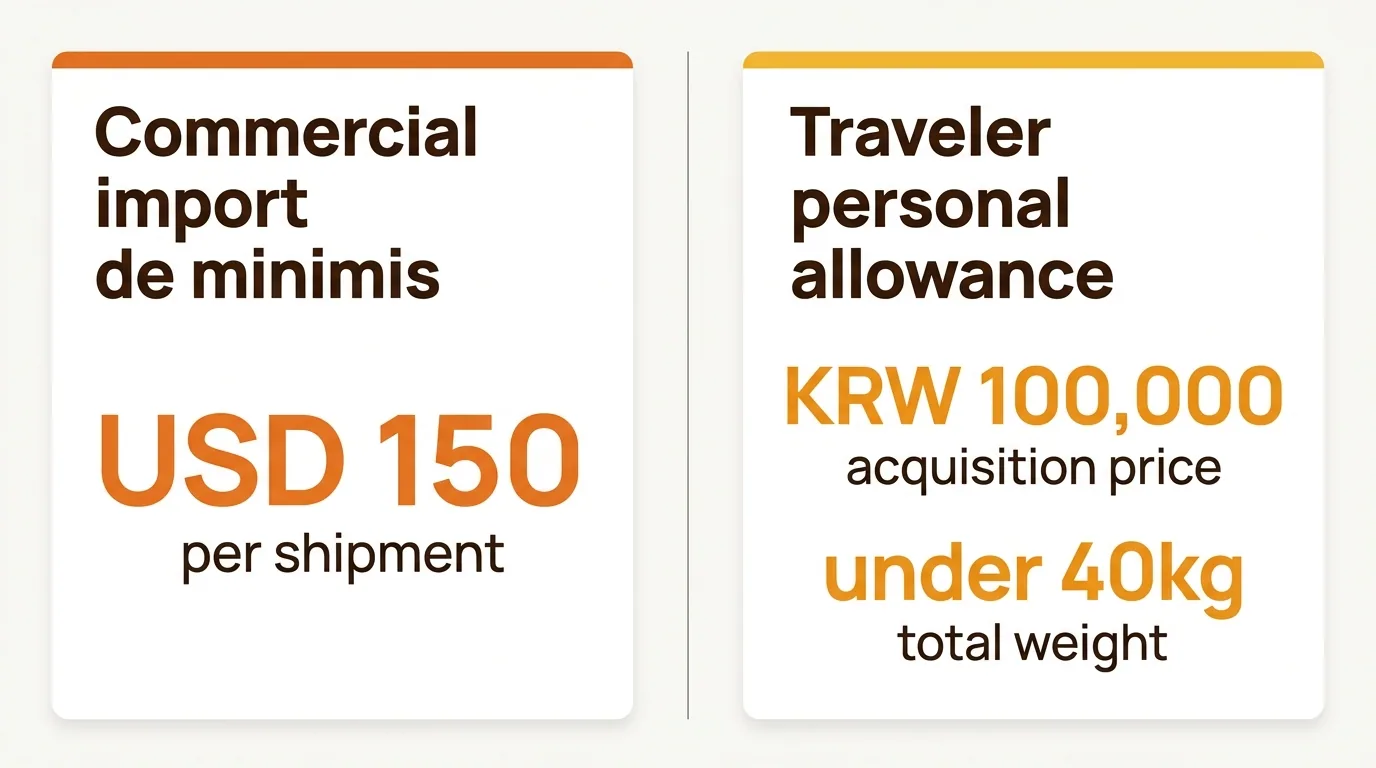
In practice, only the USD 150 commercial threshold is relevant if you are a brand evaluating cross-border DTC into Korea. The traveler allowance shows up in a lot of search results because it is the only Korean customs number with English-language documentation that is easy to find — but it is for individuals returning from overseas, not for inbound parcels from your warehouse.
Why the threshold matters less than founders think
The de minimis question comes up early in market evaluation because it shapes unit economics for low-AOV products. The reasoning sounds clean: keep AOV under USD 150, ship DDP, and you avoid duty and 10% VAT on the way in.
In our experience, three things break this plan.
First, the math gets thin once shipping is included. USD 150 CIF is not USD 150 retail. After international shipping, your price ceiling is more like USD 110–125. A single oversized parcel can cross the line.
Second, low-AOV cross-border has a delivery problem, not just a duty problem. Korean consumers expect Rocket Delivery. That means same-day or next-day. A cross-border parcel from the US or EU takes 5–10 days even on a good lane, and the de minimis savings rarely beat the conversion loss from a slower checkout experience.
Third, the rule is being squeezed. The US ended its USD 800 de minimis exemption in August 2025. A wider re-evaluation of low-value parcel regimes is underway across major economies. Korea has not announced changes to its USD 150 line, but the direction of travel is clear: low-value duty-free is no longer a strategic moat to build a business on.
This is why we usually steer brands toward the same conclusion we wrote about in Local vs Cross-Border Korea Fulfillment: Cost Math — once order volume is real, the unit economics of local fulfillment on Coupang Rocket Growth beat cross-border, even with duty and VAT priced in.
What changes when you go local
Once you import in bulk to a Korean entity and fulfill domestically, the de minimis question disappears entirely. You are no longer in the express regime. You are a formal importer.
That shifts the operating model in five concrete ways:
- You pay 10% VAT on import, but you also reclaim it as input VAT when you file. Cash flow effect, not margin effect.
- Customs duty applies at the HS-code rate — for most non-luxury consumer goods, roughly in the 6–8% band, but this varies and the FTA between Korea and your country of origin can drop it to zero. Check the HS code.
- KC Certification (KC 인증) becomes mandatory for any product in a regulated category — small appliances, electronics, kids' goods, certain home goods. This is the largest single thing foreign brands underestimate. We covered the practical sequencing in KC Certification and Coupang: A Korean Entity?.
- Rocket Growth (로켓그로스) becomes available. Coupang's 3PL handles warehousing, last-mile, and returns. The returns operation in particular is what cross-border brands cannot replicate — Korean shoppers return aggressively, and a foreign return address kills conversion.
- You need a real Product Detail Page in Korean. This is the gap top de-minimis articles never close, and it is the single highest-leverage thing on the list.
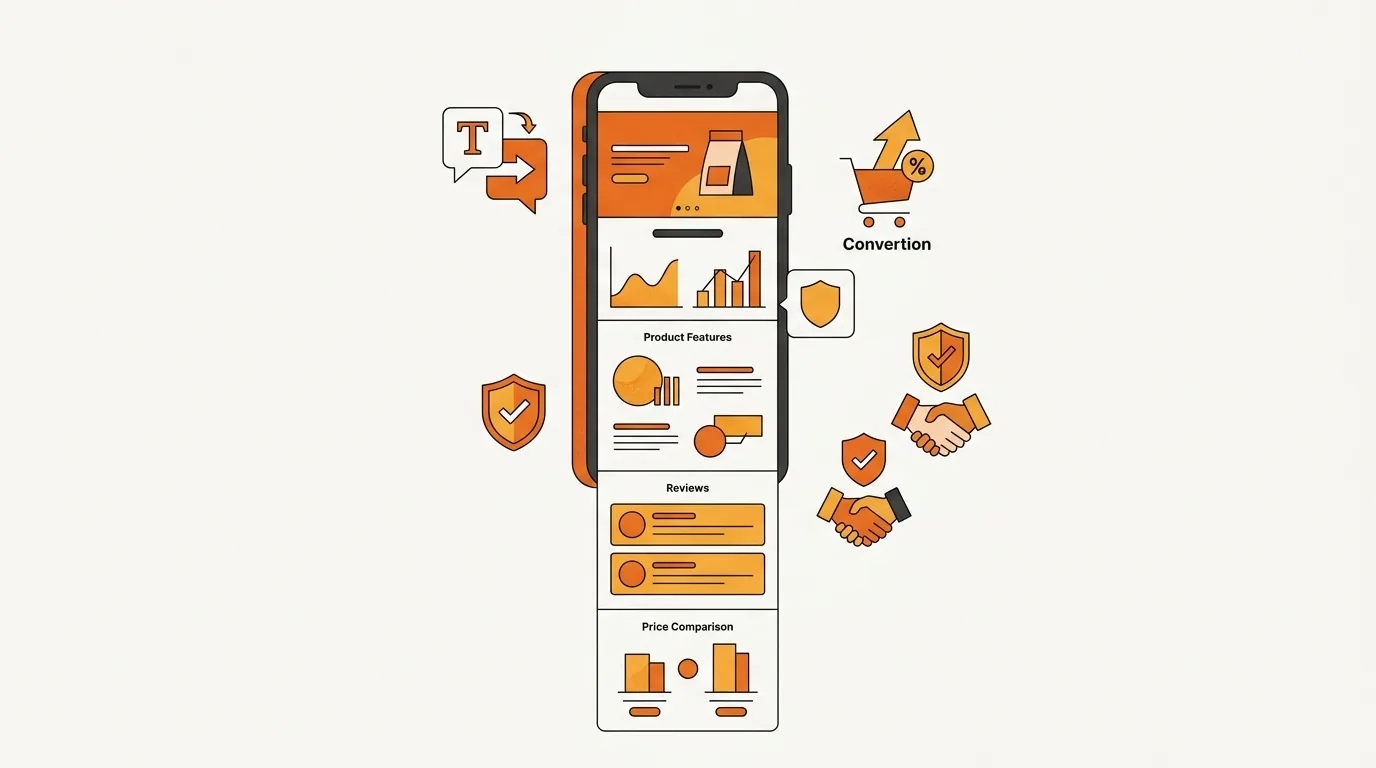
The de minimis threshold is a checkout-stage question. Whether a Korean consumer will buy in the first place is a Product Detail Page question. Most foreign brands lose the second battle long before customs becomes relevant.
The Korean-language PDP is the real conversion lever
A Coupang Product Detail Page is not a translated Shopify page. It is a roughly 20,000-pixel-tall visual asset — closer to a long-form landing page than a product listing — built for mobile-first Korean readers who skim vertically and decide in seconds.
The components Korean shoppers expect on a PDP:
- A Korean-language hero block that names the use case, not just the product
- Comparison shots, lifestyle imagery, and size references in cm and Korean units
- Trust signals: KC certification badge if applicable, MFDS notification number for cosmetics, country of origin
- Q&A-anticipating sections that resolve objections before the review section is reached
- Local CS contact and return policy stated explicitly
A machine-translated PDP loses on every one of these. It reads as foreign, it does not pre-empt the questions a Korean shopper has, and it leaves Coupang's PDP scoring (which influences placement) underweight.
“Brands ask us about de minimis when they should be asking about PDP conversion. One is a 10% line item. The other is the difference between selling and not selling.”
Kontactic — Operations team
KC certification and timeline: what you can do fast vs. what you cannot
Brands looking at the USD 150 threshold often hope to use cross-border as a way to skip certification. That works only as long as you stay in the personal-use express regime and your category does not require certification regardless of channel.
The moment you import in bulk for local sale, KC certification is non-negotiable for in-scope categories. Practical points worth knowing in advance:
- Electrical safety KC for products with a Korean plug — full certification, Korean lab testing, sample submission. Plan 6–12 weeks.
- EMC-only requirements for USB- and battery-powered devices — sometimes a foreign EMC report can support a Korean Declaration of Conformity. We wrote up the specifics in KC Certification for USB and Battery-Powered Devices.
- Cosmetics and HFF — handled by MFDS, not KC. Different timeline, different filings.
- KCS for security products — single government lab, no appeals process. Pre-test before you apply.
Here is the realistic split for a brand that walked in this morning asking about the USD 150 threshold.
Fast (weeks):
- Test cross-border DTC into Korea with parcels priced under USD 150 CIF
- Ship DDP if you can — see DDP vs DAP When Selling to Korean Consumers for why this matters at checkout
- Run a small ad spend to validate Korean demand signal before any local infrastructure
Slow (months):
- Korean entity setup and corporate bank account
- KC certification or MFDS registration where applicable
- Coupang seller account, Rocket Growth onboarding, and inventory inbound
- A real Korean-language PDP built for Coupang's format
- Local CS and returns handling
The mistake is thinking the fast track is a strategy. It is a validation step. The brands that scale in Korea use cross-border to read the demand signal, then commit to local infrastructure — which is exactly the framing in Rocket Growth vs. Cross-Border Selling in Korea and the broader point in Why Cross-Border Orders Understate Your Korea Market Opportunity.
So what should you actually do in 2024–2026?
If you are reading this because you want to know whether to keep your products under USD 150 to clear duty-free in Korea: yes, that threshold exists, and yes, it works for personal-use express parcels. Use it to validate demand cheaply.
But do not build a Korean business around it. The structural advantage in Korea is not duty avoidance — it is being available on Coupang with same-day delivery, a Korean-language PDP, and local returns. That requires going through the slow door: entity, IoR, KC where applicable, and a real localized storefront.
The brands that get this right treat the USD 150 line as a starting gun, not a finish line.
Planning a Korea launch beyond the de minimis threshold?
We help foreign brands move from cross-border testing to Coupang Rocket Growth — entity setup, KC certification, Korean PDPs, and operations under one roof. Tell us where you are and we'll map the realistic path.
About the author
Korean and global e-commerce operators with 15+ years of cross-border experience, led by CEO Isaac Lee — KOTRA-certified consultant and official lecturer for Seoul City and the Korea Customs Service. We run Korea market entry for overseas brands every day; this blog records what we learn in the field.
More about Kontactic →Related Articles
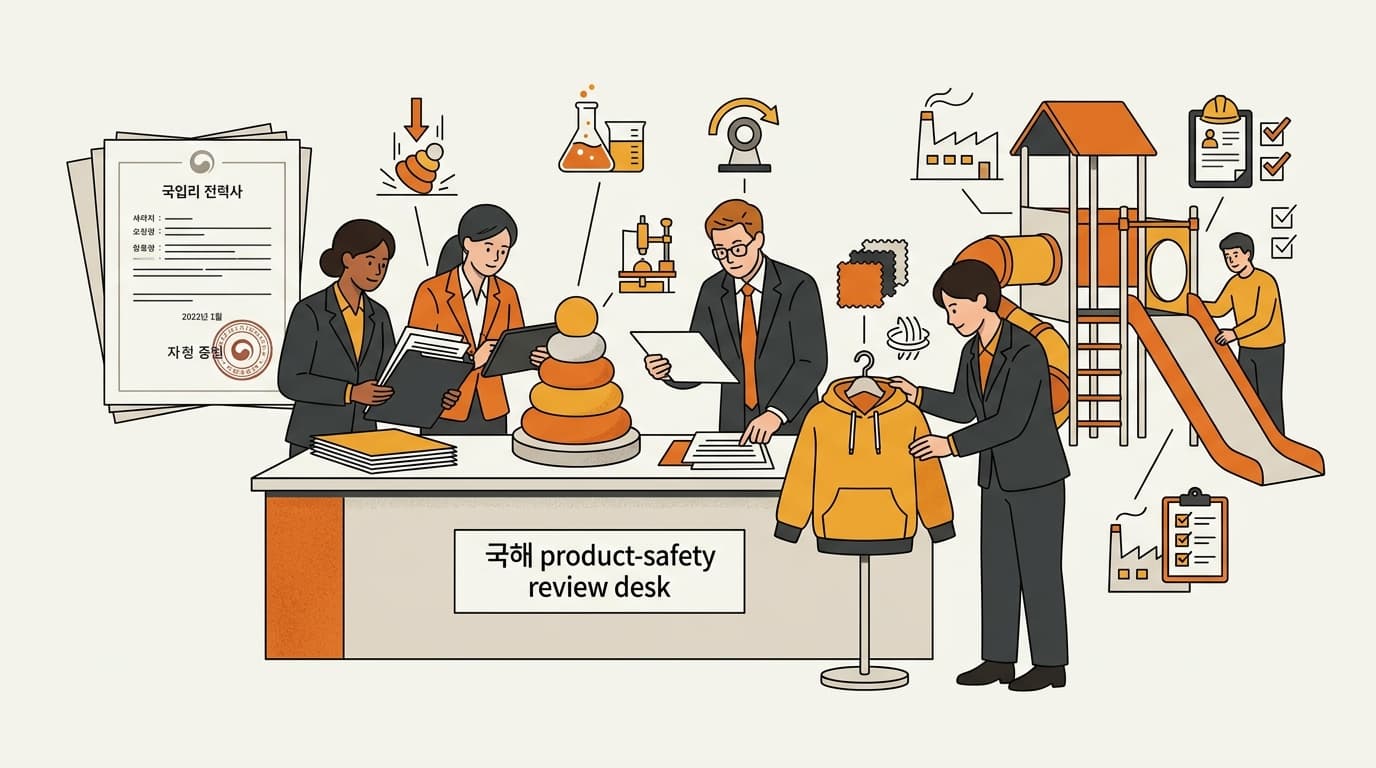
Korean Children's KC: Do Toys and Hoodies Differ?
Toys and hoodies can follow different Korean KC paths. Korea may require product testing, factory inspection, a filing, or a supplier declaration before sale.
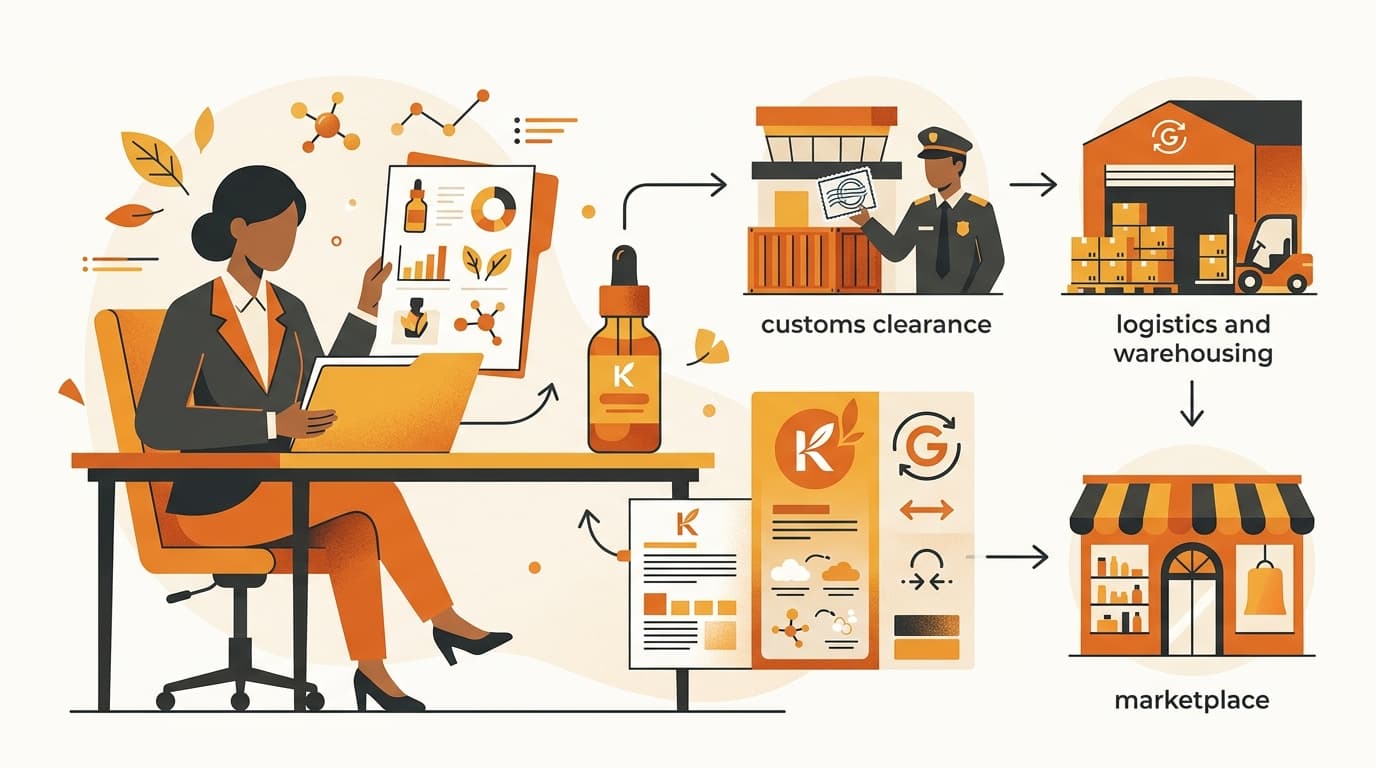
Korean Cosmetics Responsible Seller: Who Takes the Role
Imported cosmetics need a Korea-registered responsible seller before sale; learn who can take the role, what the Korean label must show, and what to verify.
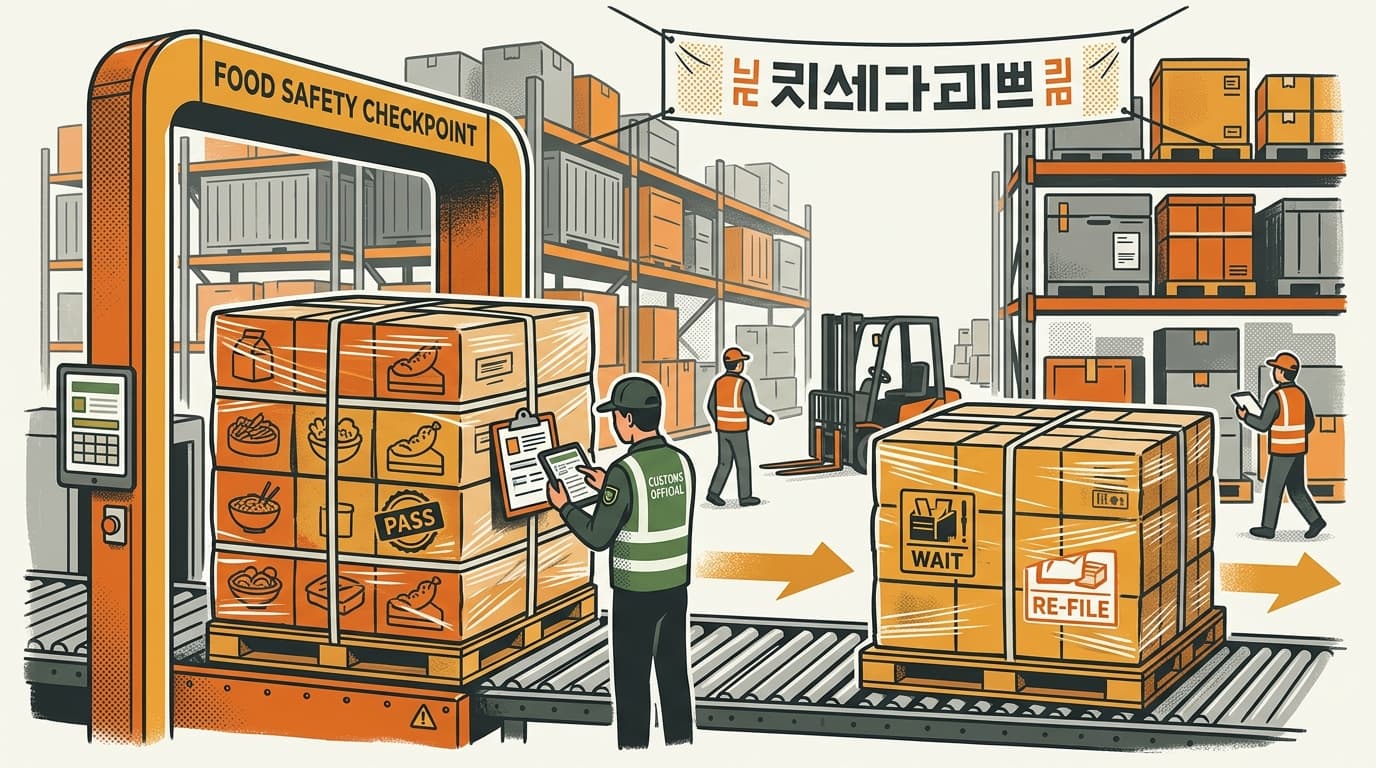
Korea Food Import Declaration: File Every Shipment
Korea food import declaration rules apply to one shipment only, so MFDS requires a new declaration for every reorder and later checks may delay stock in Korea.