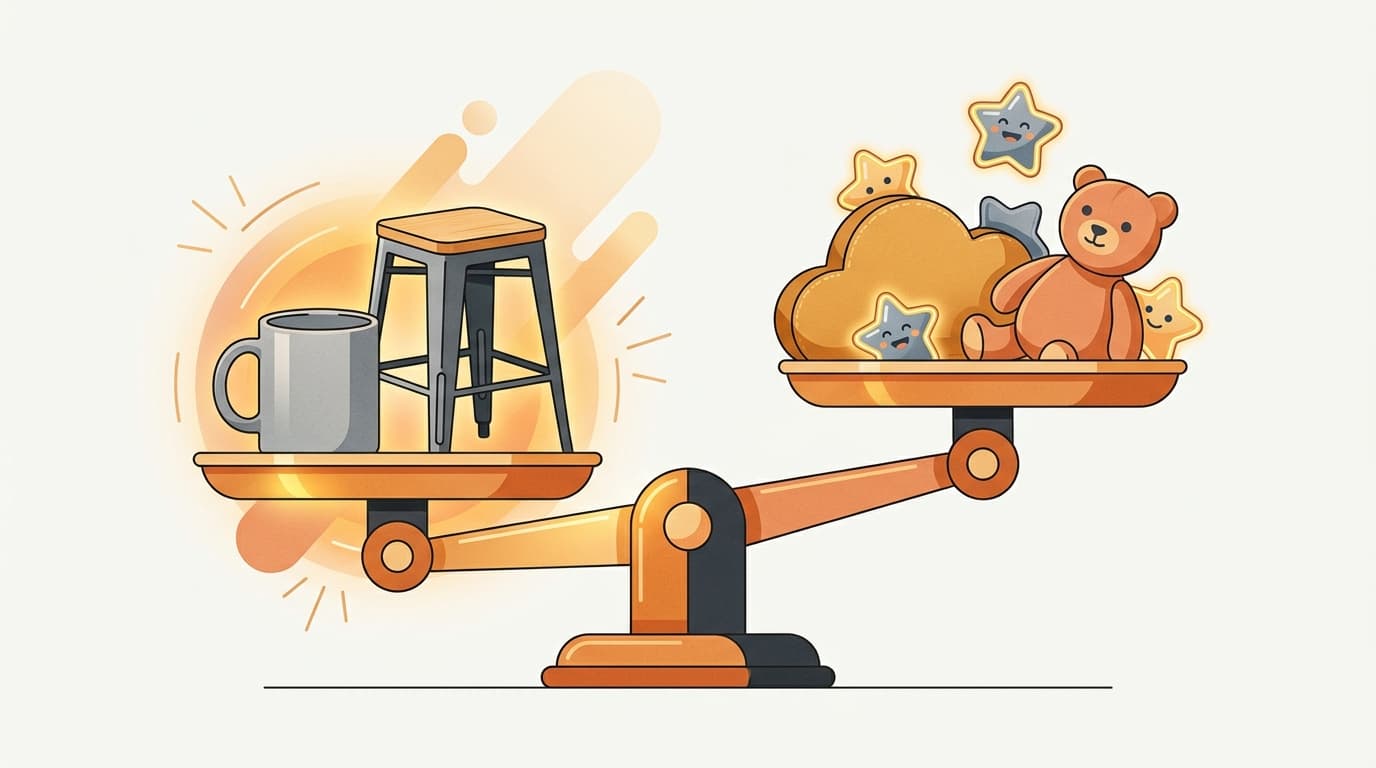
Why Korea Calls Adult-Looking Items "Children's Products"
Korea decides whether your item is a "children's product" by looking at the product itself — its size, design, function, and how a child is realistically likely to use it — not at whether you marketed it to kids. Under the Special Act on the Safety of Children's Products (어린이제품 안전 특별법), administered by the Korean Agency for Technology and Standards (KATS / 국가기술표준원), an item counts as a children's product when it is intended for use by children 13 and under — and "intended" is judged by objective characteristics, not by your stated target audience.
That is the trap most Western brands walk into. They assume that because they never advertised to children, the standard KC consumer-goods path applies. It often doesn't. An adult-framed product with childlike design signals can be pulled into the stricter children's-product regime, which means the lighter certification you completed is the wrong one — and the shipment can be blocked or delisted for missing the children's-product safety confirmation.
"Intended for" is a design test, not a marketing test
The classification hinges on a single word — "intended" — and Korea reads it through the product's attributes, not your copy.
The logic is closer to a reasonable-observer standard than to a label check. If a reasonable person would look at the object and conclude a child aged 13 or under is a likely user, the item can fall inside the regime regardless of how you position it. Marketing claims are one input, but they are not decisive, and they cannot override what the physical product plainly signals.
Children's product (어린이제품): under Korea's Special Act on the Safety of Children's Products, any product intended for use by children aged 13 and under — where "intended" is determined by the item's design, size, function, and reasonably-foreseeable use, not solely by the brand's marketing.
This is why the age-13 line is only half the story. We covered the threshold itself in our piece on when Korean law classifies a product as a children's product; this post is about the harder question that comes after the threshold — how the "intended for" determination actually gets made when your product sits in a gray zone.
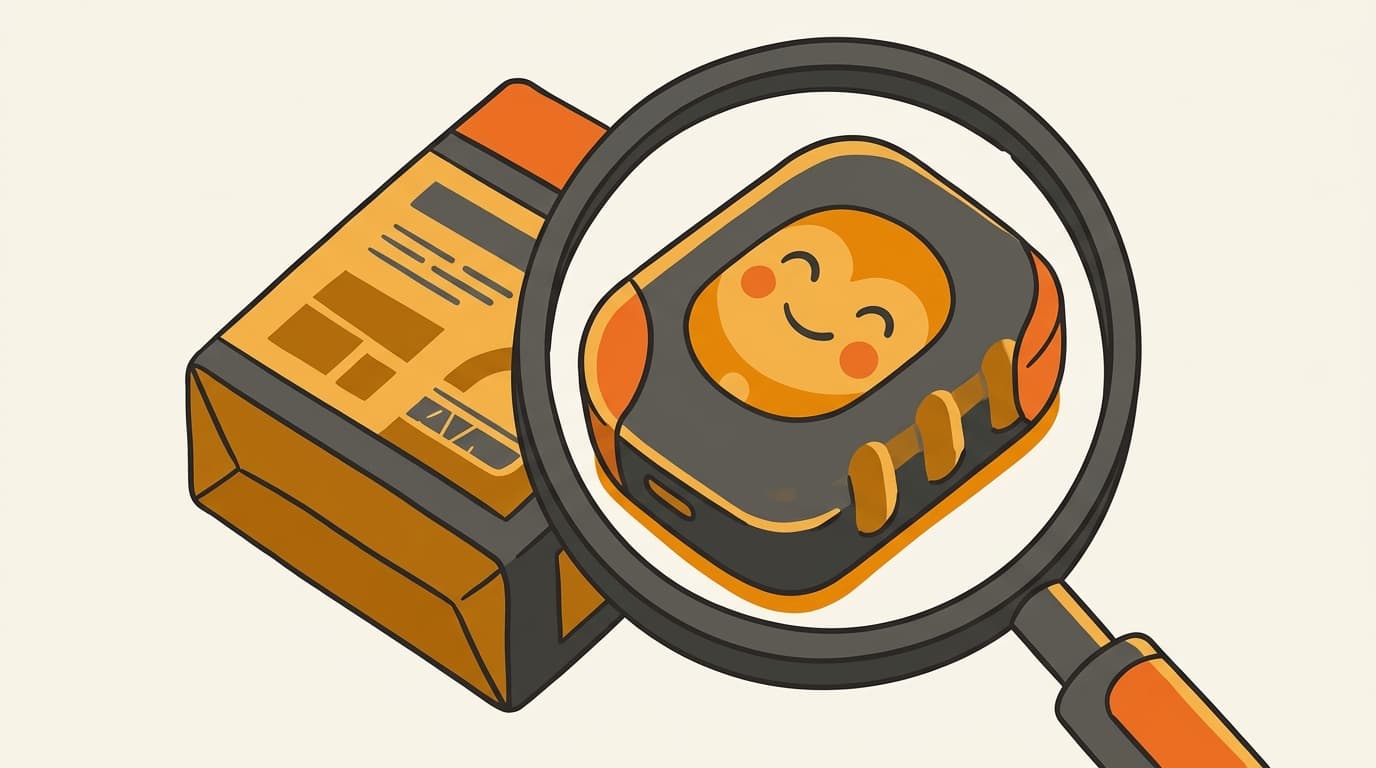
The factors Korea weighs — and how to self-assess
Before you commit to a certification path, run your product through the same attributes KATS considers. None is decisive alone; they combine.
- Physical size and scale. Small, graspable dimensions or kid-sized proportions signal child use. A low stool at a child's seat height reads differently than a full-height chair.
- Decorative theme. Cartoon, character, or juvenile motifs push an item toward the children's category even on otherwise neutral homeware.
- Materials and hazard parts. Small detachable parts, coatings, and surface materials matter because the children's regime carries heightened limits on hazardous substances — certain phthalates and heavy metals in coatings and materials, for example.
- Function. What the object is for. A learning, play, or craft function points toward child use more than a purely decorative or utilitarian one.
- Price point and presentation. Positioning that a family would treat as a child's item feeds into the read, even when nothing on the box says "for kids."
- Reasonably-foreseeable use. The most important and most missed factor: not just how you expect the item to be used, but how a child would plausibly handle it in a real household.
That last factor is where brands most often misjudge themselves. You know the intended adult use case. Korea also asks the question you didn't: what happens when a six-year-old picks it up?
"We won't market to kids, so we'll avoid the classification" does not work. Because the test is driven by product attributes and foreseeable use, an adult disclaimer or grown-up framing does not exempt an item whose design plainly signals child use. You cannot copy-write your way out of a physical characteristic.
The gray-zone items that surprise Western brands
The products that get reclassified are rarely obvious toys. They are "general" consumer goods a brand assumed were outside the regime entirely.
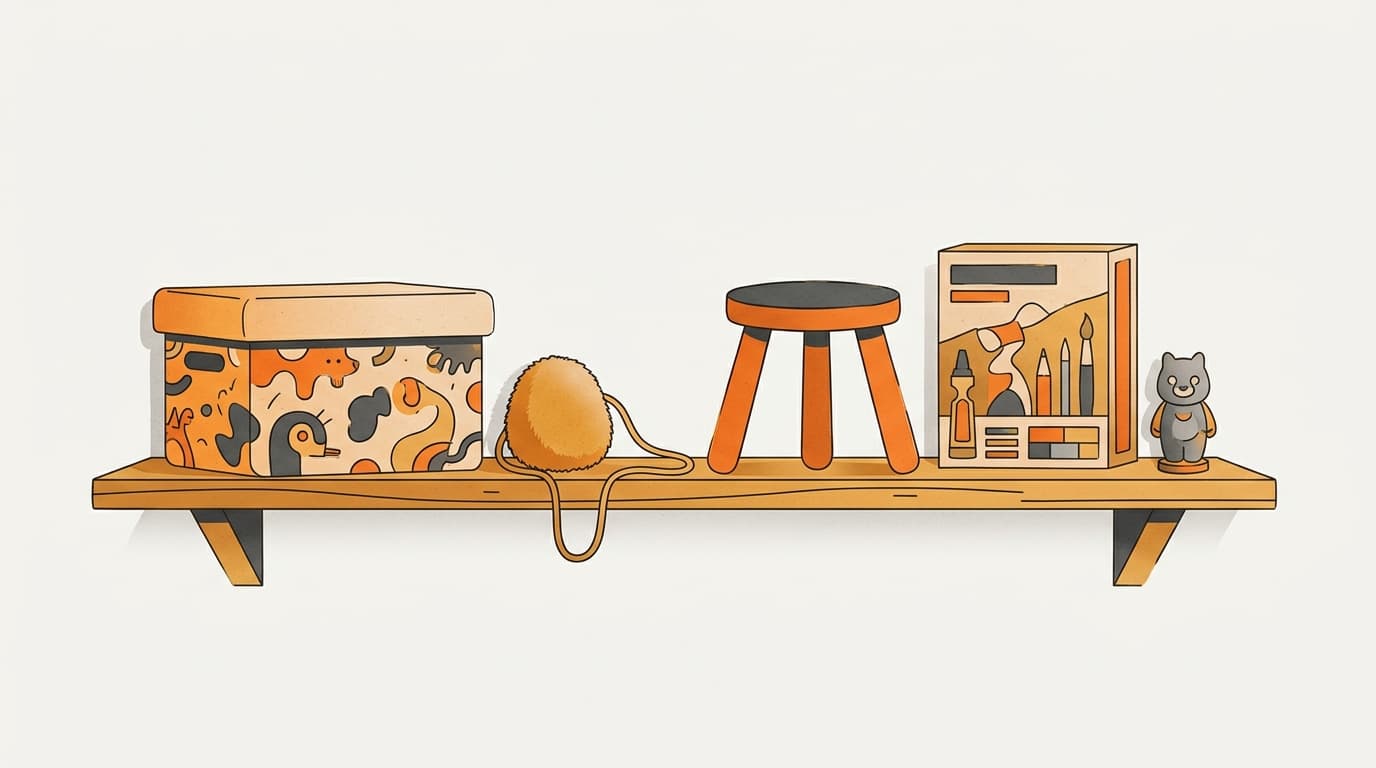
- Character-themed homeware and stationery — a storage bin, mug, or notebook carrying a cartoon motif can read as a children's item.
- Small plush or novelty accessories — a plush keyring or a small stuffed trinket sits close to the toy line.
- Kid-sized furniture — a low stool, small table, or child-height shelf, even sold as "family" furniture.
- Art and craft kits — anything with a make-and-play function, especially with small parts or paints and coatings.
- "Family" items a child would plausibly use — products framed for everyone but realistically handled by children.
None of these need to be advertised to children to land inside the regime. The design and the foreseeable-use pattern do the work. This is also why "Korean certification" is never one checkbox — different SKUs map to different laws, which is the whole point of mapping each SKU to its exact Korean regulation before you ship.
Why the wrong classification changes your whole path
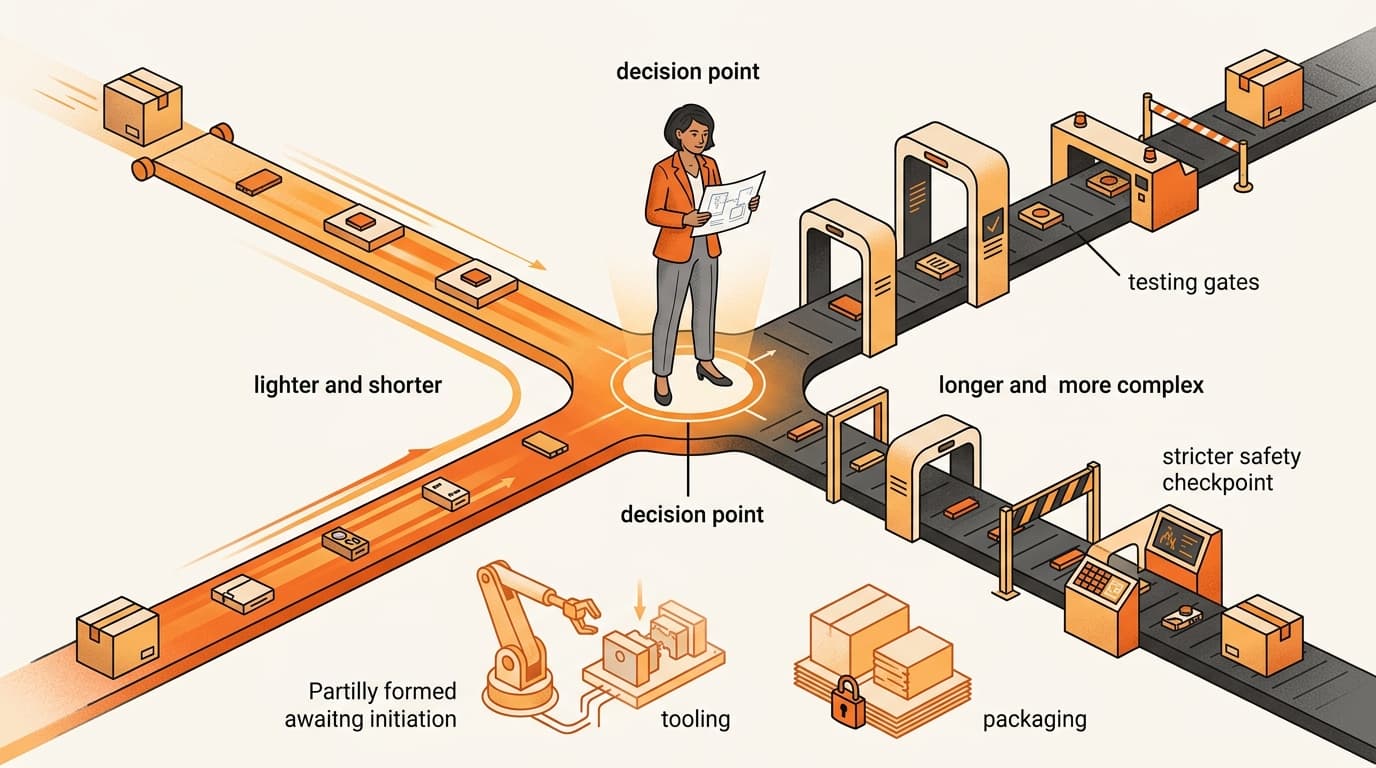
Getting the classification wrong is not a paperwork nuisance. It routes you down a different, lighter certification path and leaves a gap that surfaces at the worst time.
Children's products face a dedicated, stricter safety-confirmation regime rather than the general consumer-goods route. In practice that means a different testing scope, tighter limits on hazardous substances in materials and surface coatings, potentially different accredited-lab requirements, and a different KC mark obligation. The children's-product KC mark is its own thing — it is not interchangeable with the general consumer-goods mark. If your product is a children's product but carries general-goods certification, the mismatch can be caught at inbound verification, at listing review, or later as a delisting.
It helps to remember that KC certification is not a single obligation to begin with — it splits into distinct tiers with different evidence burdens, as we lay out in our breakdown of Korea's three KC certification tiers. The children's-product regime sits on top of that structure with its own, stricter requirements.
The category you map to matters too. "Children's product" is an umbrella; underneath it, toys, children's apparel, and childcare articles each carry their own safety-standard requirements. Confirming the specific standard your item falls under is part of getting the classification right, not a separate step you can defer.
Resolve classification before tooling is locked
The single most useful action is to answer the classification question before production tooling and packaging are finalized — not after your first container is on the water.
Here is why timing is the whole game. If you classify late and get it wrong, a reclassification forces re-testing against the stricter standard, and sometimes design or material changes to meet the tighter hazardous-substance limits. That is exactly the kind of rework that pushes a Coupang launch back by weeks or months. Deciding early lets you budget the right testing scope, choose compliant materials and coatings up front, and design packaging that carries the correct KC mark from the first print run. This is the same logic behind screening every SKU for Korean certification before it ships — classification is a pre-sourcing decision, not a customs surprise.
Common questions
Does adding an "adults only" disclaimer keep my product out of the children's regime? No. The classification is driven by the product's objective characteristics and reasonably-foreseeable use. A disclaimer or adult framing does not exempt an item whose design signals child use.
My product is sold as "family" or "for everyone." Is it a children's product? Possibly. If a child aged 13 or under is a realistic, foreseeable user given the item's size, theme, and function, it can fall inside the regime even when it is framed for all ages.
Is "children's product" a single certification? No. It is an umbrella that covers different safety-standard categories — toys, children's apparel, childcare articles — each with its own requirements. You need to confirm the specific standard your item maps to.
Where can I verify how my item would be classified? Start with KATS / 국가기술표준원 guidance on the Special Act on the Safety of Children's Products (어린이제품 안전 특별법) and Korea's official product-safety information channels, and read the statute text on law.go.kr. Because gray-zone calls can turn on a single design attribute, confirm the specific safety-standard category before you lock production.
Not sure which KC path your product actually needs?
Kontactic screens each SKU against Korea's children's-product and general-goods rules before you tool up. Talk to us about getting the classification right the first time.
About the author
Korean and global e-commerce operators with 15+ years of cross-border experience, led by CEO Isaac Lee — KOTRA-certified consultant and official lecturer for Seoul City and the Korea Customs Service. We run Korea market entry for overseas brands every day; this blog records what we learn in the field.
Meet the Kontactic team →Related Articles
Can USB-Powered Products Avoid Korea’s KC Safety Rules?
USB power does not automatically avoid Korea’s KC rules. Learn how KATS safety review, RRA EMC checks, and customs timing affect your shipment before import.
Can Coupang Buyers Pay Two Charges With Free Shipping?
On Coupang, free shipping can still leave the buyer paying two return charges: the original delivery cost and the cost of sending the parcel back to the seller.
Coupang Product IDs: One ID Cannot Cover Every Variant
One Coupang product ID cannot cover every ERP variant; keep your brand SKU as the main key and map listing, option, edit, and order values to each SKU.