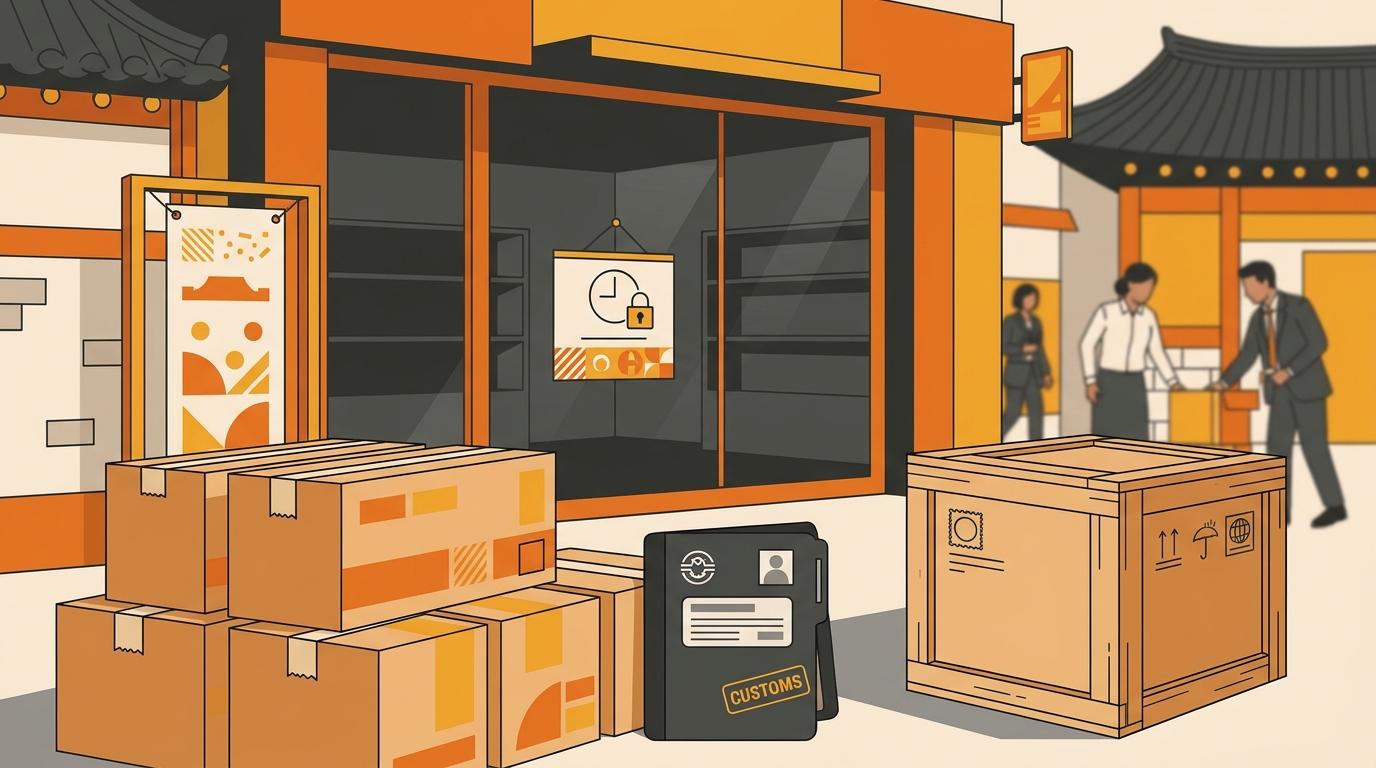
What Happens to Unsold Stock After a Korea Pop-Up Store?
Before shipping, decide what will happen to the leftover stock. A Korean seller can sell it, or the brand can return, re-export, or dispose of it at its own cost.
Closing a temporary shop does not end customs or seller duties. Someone must still store, sell, move, or dispose of every unit left in Korea.
Decide the stock exit before the shipment moves
Treat the stock exit as part of the import plan, not as clean-up after the event. Put four answers in writing before the first carton ships:
- Who is the Importer of Record (IoR)?
- Who is the Seller of Record (SoR) at the counter?
- Who pays duty, import VAT, freight, storage, and local handling?
- What happens to goods that remain when the event closes?
The plan should also name the storage location, the return address, the deadline for choosing an exit, and the person who counts the remaining stock. These details affect the quote and the customs paperwork.
If no one makes the decision before shipping, the venue may close while the inventory stays in Korea. Storage, handling, return freight, and disposal costs still need a payer. The brand should not assume that the venue, event organizer, or freight company will take the goods automatically.
A venue booking is not an inventory plan. Do not ship until the project says who imports, who sells, and where the unsold stock goes.
Why a pop-up still needs an importer and a seller
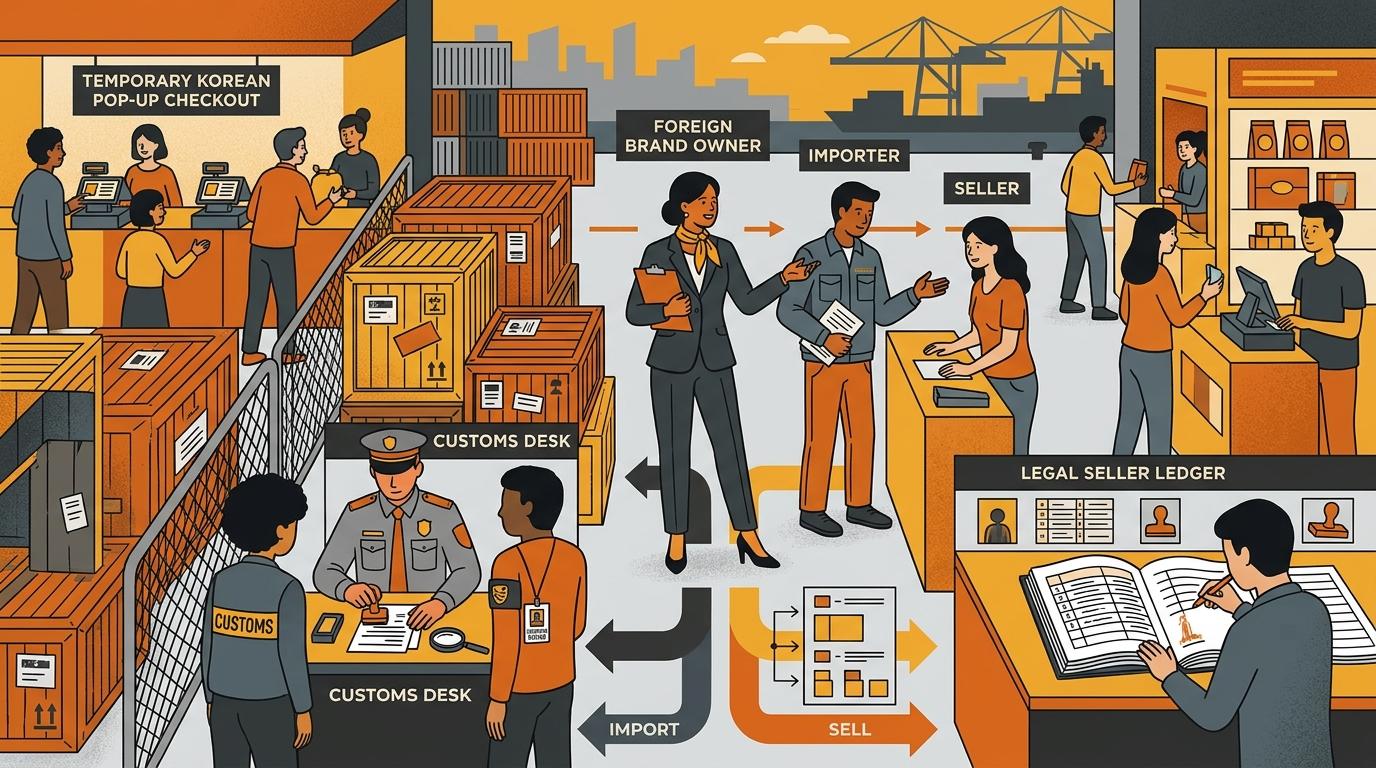
A short event still has two legal roles. The Importer of Record is the Korean party named on the customs declaration. The Seller of Record is the legal seller to the shopper. The SoR is responsible for the sale, the sales money, and the customer-facing duties agreed for the project.
The brand that makes or owns the product is not automatically the Korean importer or seller. A venue provides space. A point-of-sale operator may take payment. A logistics company may store cartons. A customs broker may submit a declaration. None of these facts alone makes that party the IoR or SoR. A customs broker cannot become your importer of record merely by filing the declaration.
The IoR and SoR can be different parties. If so, write down who imports and who sells. Also name whose name appears on the receipt and who handles returns and customer questions after the event. The goods must complete the import process before the Korean seller can sell them.
A Korean entity may act as the importer, seller, or both. Assign the roles, payer, and stock exit before shipment. Costs depend on the product and route. Set these roles before the stock leaves the factory, not when event staff begin selling.
How import duty and import VAT are paid
When goods are cleared for domestic circulation, import duty and import VAT are normally handled at customs clearance. They do not wait for each unit to sell at the pop-up counter. This is why Korea does not wait for each consignment unit to sell before assessing import duty.
The IoR makes the customs declaration, directly or through a customs broker, and the project must say how the charges are funded. The agreed payer must fund operating costs. The Korean entity or broker may pay first. Before release, write down how the brand will fund and reimburse that payment.
Do not budget only for the product, freight, and booth. Ask for the full list of costs:
- import duty and import VAT;
- customs broker work and local delivery;
- storage before, during, and after the event;
- local movement to the event and back to storage;
- return or re-export freight; and
- lawful disposal if no buyer or return plan exists.
The amount varies with the product, customs classification, origin, shipment details, and compliance work. There is no honest single event rate. Use those details to prepare the estimate.
If a shipment was cleared for local sale and some cartons remain, those goods are still part of the Korean import record. Closing the event does not make the unsold cartons foreign goods again. If the brand sends the stock out of Korea, ask the broker to confirm the export steps and customs rules before moving it. Do not build the budget on an assumed automatic refund.
The import decision happens when the shipment is cleared. The stock decision happens when the event closes. Plan both before the goods leave their origin country.
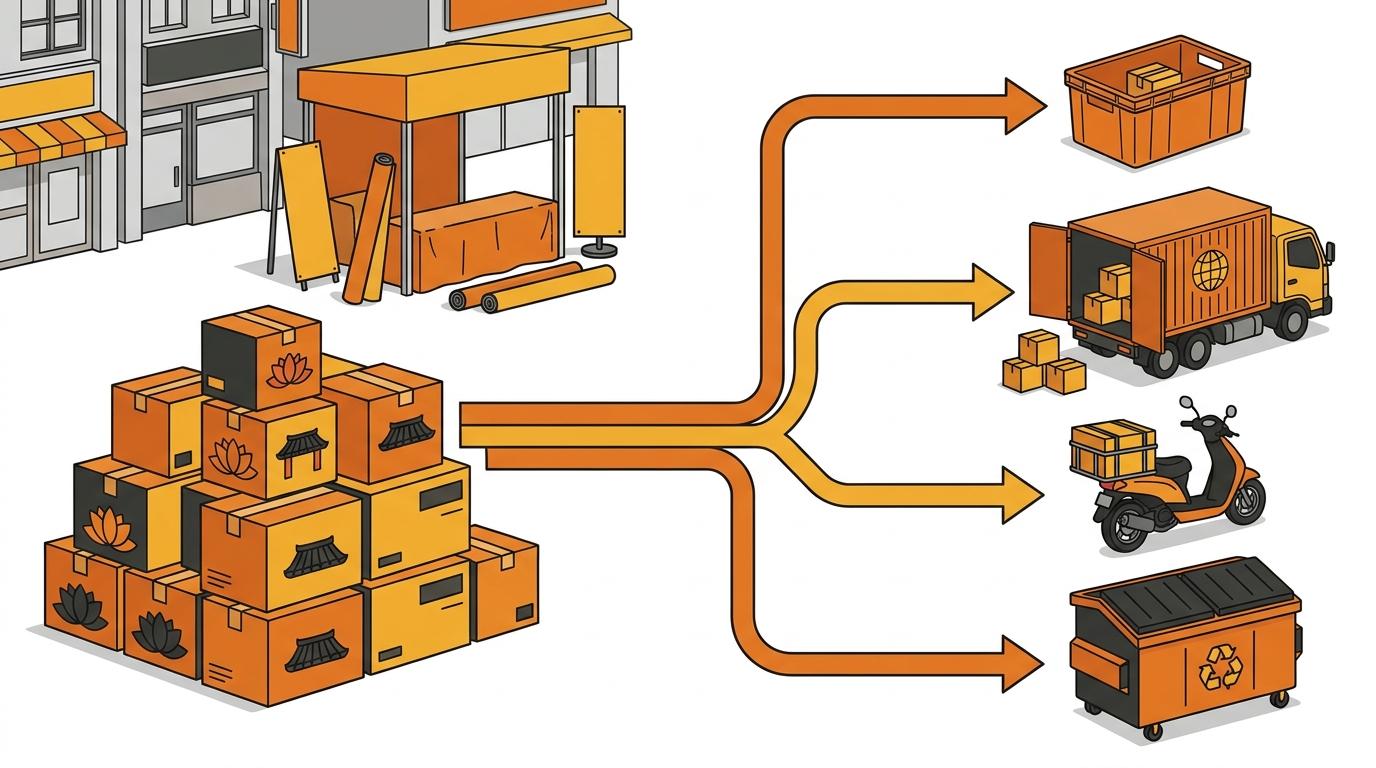
Four ways to handle unsold stock after the event
The right option depends on the product, the seller, and the brand’s next market. It should be written into the project plan before the event starts.
Sell the remaining stock in Korea
The brand can keep the goods in Korea for another sale that meets Korean rules. It can transfer them to a Korean wholesaler or retailer, or sell them through its Korean entity. Selling to Korean trade buyers is different from listing the goods on a marketplace. The buyer, seller, invoice, storage location, and product documents must be agreed before the transfer.
Holding stock for a later event is also a sale plan, not a free pause. Someone must store the goods, protect the packaging, count the units, and remain responsible for a later sale. If the seller changes after the pop-up, update the paperwork before the next transaction.
Return the stock to the brand
The goods can be shipped back to the brand’s warehouse or another location chosen by the brand. This needs a return address, a carrier, packing instructions, an export booking, and a person who checks the cartons before pickup. The brand should budget for freight, handling, storage, and any local work needed to prepare the shipment.
A return does not erase the original Korean import declaration. The customs broker should confirm the correct export process before anyone moves the stock. The project should also say what happens if the brand delays the pickup.
Re-export the stock to another country
The brand may send the goods from Korea to a different market instead of sending them back to their original country. That creates two separate tasks: export the goods from Korea and import them into the next country. The receiving party must check that market’s labels, product rules, and customs documents.
A Korean event plan cannot assume that the next country accepts the same packaging or claims. The brand needs a named receiver and a new destination plan before the cartons leave Korea.
Dispose of the stock in Korea
If the goods cannot be sold or moved, the brand may need to arrange disposal in Korea at its own cost. The method can depend on the product. Food, cosmetics, electronics, batteries, children’s goods, and household chemical products may need extra care, so the operator should confirm the local handling method before disposal.
Do not leave the stock with the venue or ask a warehouse to discard it without written instructions. Even if the brand records the goods as a loss, it still pays the handling cost and should keep proof of disposal with the import and sales papers.
Compliance does not end when the pop-up ends
An item sold from a temporary counter is still a product sold in Korea. If the same unit later goes to a wholesaler, retailer, or online buyer, the applicable product rules still matter.
Korea’s KC (Korea Certification) safety system is not one approval for every product. Each product code (SKU) needs its own check, which may also cover radio equipment, food, cosmetics, children’s products, or household chemicals. Mapping each SKU to the right Korean regulation should happen before the shipping plan is final.
Physical packaging matters too. Where Korean disclosure information is required, the unit or package needs the correct Korean label before sale. A Korean product page cannot replace a required label on a bottle, box, pouch, or device. See the practical guide to Korean-language labeling for products sold in Korea.
If the remaining stock moves online, prepare a Korean product detail page (PDP) for the exact product. The page should match the model, size, contents, instructions, warnings, and claims on the stock that will ship. Putting the page in Korean is not only a translation task. A page that changes the product facts can create a new problem even when the original event sale was allowed.
Importing the goods does not give the brand permission to sell every remaining unit through every channel. The event, the product documents, the Korean label, and the later sales page must describe the same item.
Will Coupang solve the leftover-stock problem?
Not automatically. A pop-up uses stock that has already entered Korea. Coupang has cross-border and local selling models, and they use different seller and inventory setups.
A cross-border model keeps stock in a fulfillment warehouse outside Korea. Korean shoppers import each order for personal use. This route applies to brands shipping from the United States, Europe, Japan, mainland China, or Hong Kong. It does not turn stock already cleared into Korea for a pop-up into cross-border stock.
A local Coupang sale needs a Korean seller, product documents, a Korean product detail page, inventory setup, and a returns plan. Some local Coupang programs are limited to Coupang-approved sellers in mainland China and use a dedicated account held by a Korean entity. They are not a general outlet for any foreign brand’s leftover cartons.
A brand’s own Korean entity can operate on Coupang and other Korean channels. It remains the party that pays, remits money, and signs in its own name. If the brand wants to move remaining stock to Coupang after the event, discuss and scope that online sale before the goods arrive. Do not assume an offline seller arrangement includes a marketplace account or listing.
Whichever model applies, seller onboarding, product documents, Korean PDP work, inventory setup, and returns still need attention. Importing a product into Korea does not guarantee Coupang sales. Decide the online fallback before shipping, not after the event has closed.
Confirm the stock exit before shipping
Use this six-step checklist before the first carton ships:
- Freeze the product list. Give the operator the exact SKUs, product descriptions, origin, expected quantities, packaging, and event dates.
- Assign the two legal roles. Decide who will be IoR, who will be SoR, who operates the checkout, and who answers customers after the event.
- Screen compliance before shipping. Check the product category, required documents, Korean label, claims, and any KC or other category work. Do this per SKU, not only per brand.
- Choose the stock exit. Select a local sale, transfer to a Korean trade buyer or retailer, return, re-export, or disposal. Name the storage location, receiver, deadline, and payer.
- Prepare the sales setup. Confirm the receipt name, payment method, Korean product information, customer instructions, and any later Coupang or other channel plan.
- Close the event with a stock count. Match the remaining cartons to the import and sales papers, then execute the agreed exit instead of leaving the decision to the venue.
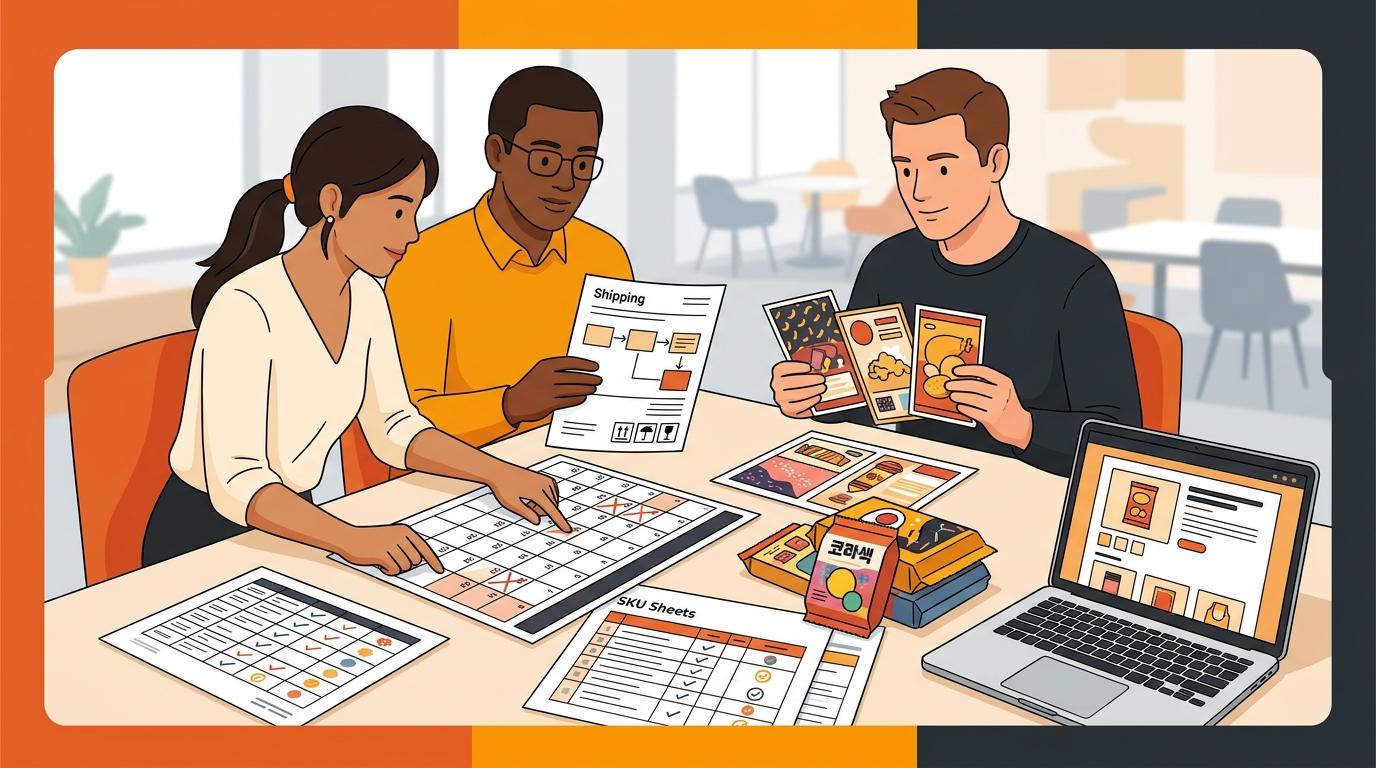
Plan the full life of your Korea event stock
Share your product list, origin, event dates, and post-event stock plan. Kontactic can review whether the project needs an importer, a seller, or both, then scope the work and quote it per project.
About the author
Korean and global e-commerce operators with 15+ years of cross-border experience, led by CEO Isaac Lee — KOTRA-certified consultant and official lecturer for Seoul City and the Korea Customs Service. We run Korea market entry for overseas brands every day; this blog records what we learn in the field.
Meet the Kontactic team →Related Articles
Can One Korean Importer Sell to Several Buyers?
Yes—one Korean importer can clear a shipment and resell it to several Korean buyers. Set the seller, tax invoice, labels, and compliance roles before it ships.
KC Testing in Korea: Can You Submit a Prototype?
Can you submit a prototype for KC testing in Korea? Use an early prototype for design checks, but formally test a matching production-intent sample for sale.
Coupang Global Fulfillment Reviews: Do They Carry Over?
Coupang Global Fulfillment reviews stay with the cross-border listing. Learn what resets when the same product moves to a Korean entity, seller, and listing.