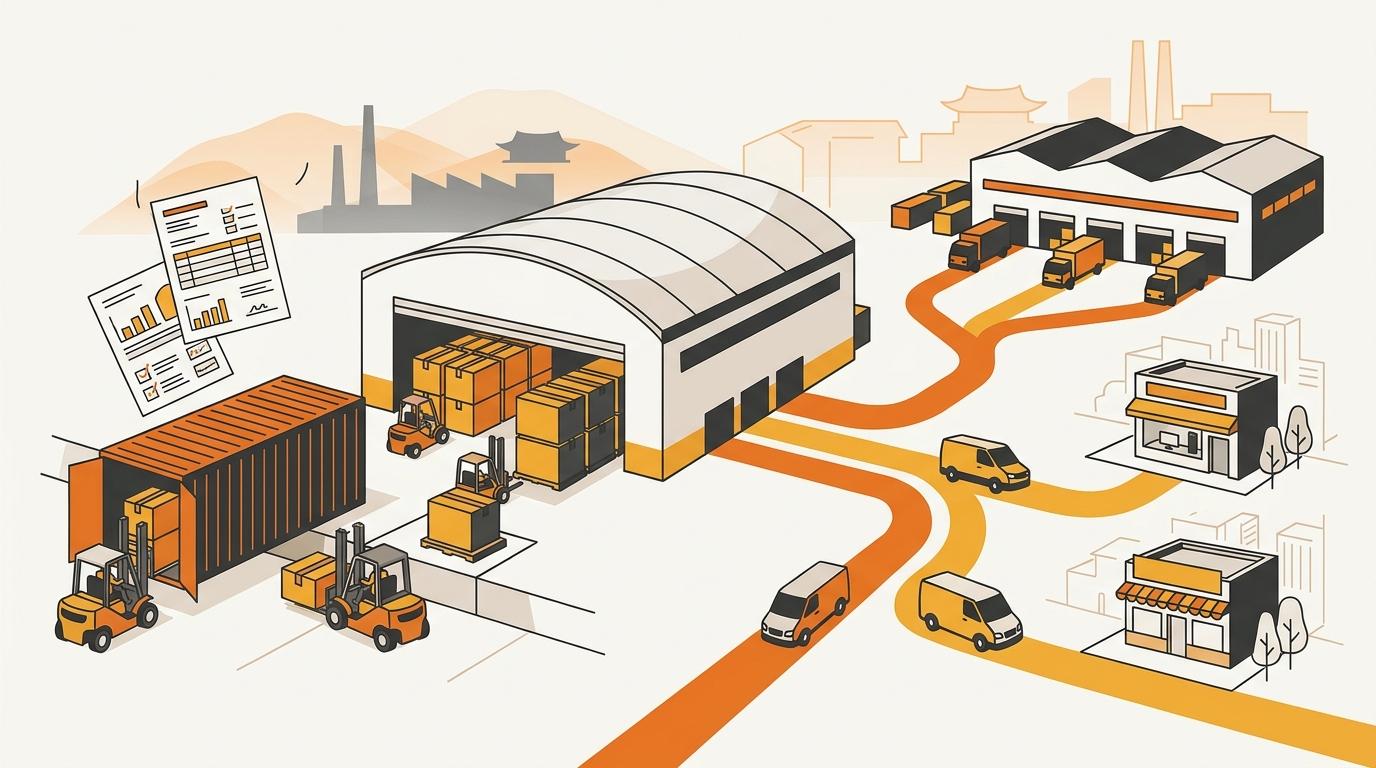
Can One Korean Importer Sell to Several Buyers?
Yes. One Korean company can usually import one consolidated shipment, clear it through customs, and then sell separate quantities to several named Korean wholesalers or retailers. The Korean company must be named as the Importer of Record. For the domestic business-to-business sale, it must also be the Seller of Record. Agree each buyer's quantity and the required labels and documents before shipping.
One customs clearance is not the same as one sale. The importer can clear the goods once, then the Korean seller can issue separate domestic invoices and delivery documents for each buyer after release.
Who imports, who sells, and who invoices?
The customs role and the sales role are connected, but they are not the same job.
An Importer of Record (IoR) is the entity named on the import declaration. It gives customs the shipment details, pays the import duties and import value-added tax (VAT), and remains responsible for the import. A Seller of Record (SoR) is the legal seller in Korea. It sells the goods to the Korean buyer and issues the domestic sales documents, including the Korean tax invoice.
A customs broker can prepare and submit the customs filing for the importer. The broker does not become the importer just because it files the paperwork. This is why it helps to start with who can legally import your products into Korea, rather than starting with the freight company.
The Korea Customs Service describes import clearance as the importer declaring the goods to customs. Its Import Declaration Guideline explains that customs accepts the declaration when it meets the Customs Act and other applicable rules. The U.S. International Trade Administration also notes that the import declaration is normally prepared by the importer in Korean in its South Korea import requirements guide.
For a local business-to-business (B2B) project, the roles normally look like this:
| Party | Job in the project |
|---|---|
| Foreign brand | Exports the goods and provides the commercial invoice, product information, and supporting documents. |
| Korean importing company | Acts as IoR, completes the import, pays customs charges, and receives the goods. |
| Korean selling company | Acts as SoR, sells to each named buyer, and issues the Korean tax invoice. This can be the same Korean company as the IoR. |
| Wholesaler or retailer | Buys the goods inside Korea and receives its quantity from the Korean seller. |
| Customs broker | Helps prepare and file the import declaration. It is not automatically the IoR or SoR. |
If Korean buyers are meant to own the goods before import and carry the customs responsibility, name them as the importers. A partner should not simply put its name on a customs form while the contract says that somebody else is the real importer. The commercial contract, import documents, and domestic sale should describe the same arrangement.
For a business-to-business distribution, event, or one-off import, state the Korean entity's role in the contract. Say whether it is the Importer of Record, Seller of Record, or both. The contract should list the buyers, goods, fees, delivery terms, and insurance.
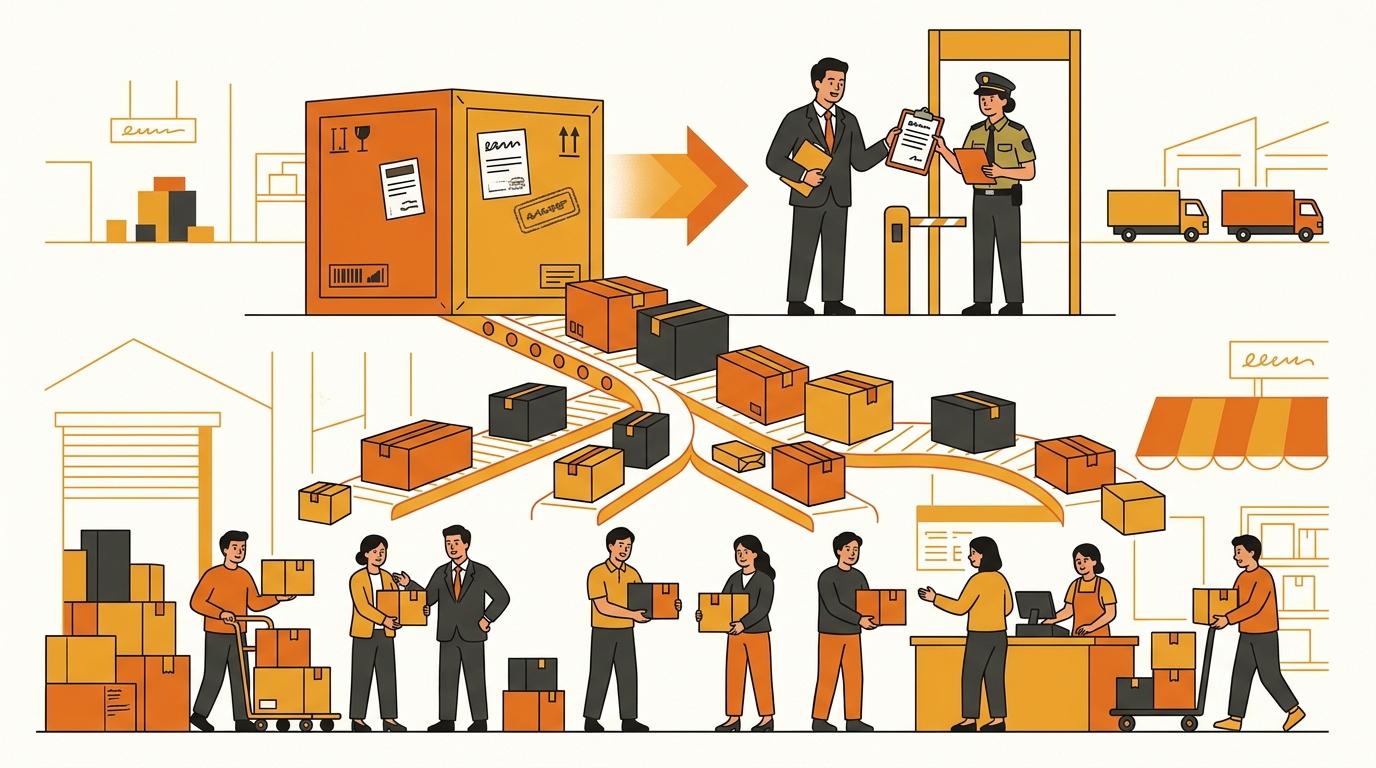
What Korean buyers expect from the local seller
A customs release does not prove that a product is ready for every domestic sale. Korean wholesalers and retailers usually want four things from the local seller.
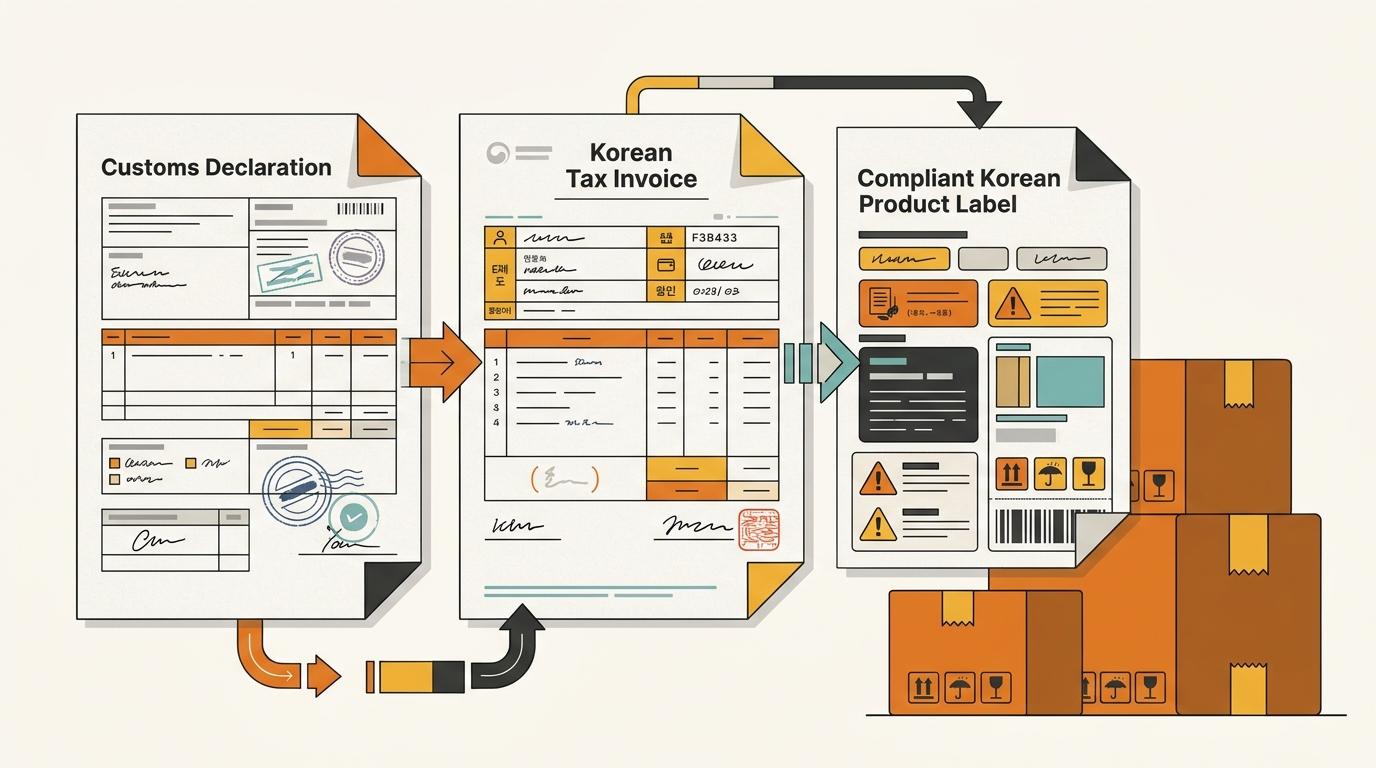
1. A Korean tax invoice
The foreign brand's commercial invoice helps support the import. It is not the same as the Korean tax invoice that a Korean business expects when it buys stock from a local seller.
The Korean SoR should issue a separate tax invoice for each domestic sale. The standard Korean VAT rate is 10%, but the exact treatment can depend on the product and transaction. Set the VAT treatment with the Korean tax accountant before you quote the buyer or print the invoice.
This also answers a common confusion: the import bill and the domestic sales invoice are different documents. The IoR pays the customs bill. The SoR invoices the Korean buyer after the goods are released and sold inside Korea. When one company performs both roles, the same company handles both steps but still keeps the documents separate.
2. Korean product information and labels
A buyer may accept an English package for a private sample and reject it for Korean retail stock. If Korean law requires information on the consumer unit, bottle, box, or other package, the label plan must be ready before the goods ship.
A Korean product detail page can explain the product online. It cannot always replace a required physical disclosure on the product or package. The label may need product information, instructions, warnings, or other category-specific details. The exact rule depends on the product, its use, and the way it is sold.
3. The certificates or registrations that match the product
Do not treat “certificate” as one universal document. KC certification (KC 인증) covers several Korean conformity systems, including electrical and household product safety, children's product safety, and radio or electromagnetic compatibility conformity. Other categories, such as food, cosmetics, or household chemicals, can have separate registrations or import controls.
The documents must match the exact product variant. A stock-keeping unit (SKU) means that exact variant. A report for another model, factory, formula, or package may not cover it. A buyer may also ask for test reports, declarations, origin documents, or a category registration even when customs has already released the shipment.
4. A clear delivery and return plan
The buyer needs to know when its quantity will arrive, where it will arrive, and what happens if units are damaged, short, or returned. A purchase order, packing list, and delivery note help the Korean seller connect the imported quantity to each buyer's delivery.
The exact paperwork changes by product category. The important point is timing: check labels, certificates, and the invoice format before the shipment leaves. Do not wait until a retailer's receiving desk finds a missing Korean disclosure.
Customs can release a product before every domestic-sale requirement is complete. The product may still need a Korean label, category permit, or matching conformity document before sale.
The six steps from one shipment to several invoices
Set buyer quantities before freight, import under the right Korean entity, then sell each quantity after release.
-
List each buyer and its quantity before freight. Write down the Korean business name, product SKU, quantity, delivery address, requested date, price, payment terms, and return terms. A buyer list helps the importer plan, but it is not a substitute for a purchase order or a signed commercial agreement.
-
Choose the Korean importer and seller. Decide whether the Korean entity will be both IoR and SoR. If it will be IoR only, name the party that will make the domestic sale and issue the tax invoice. Put that answer in the contract, not in an informal email.
-
Check the product before booking transport. Before booking transport, confirm the product's Harmonized System (HS) customs code, category, label, certificate, registration, and buyer documents. A buyer allocation does not remove a product rule. Some shipments may also need more than one customs filing, so the broker should confirm the filing plan from the actual goods and shipment.
-
Import the shipment under the Korean entity. The foreign brand exports the goods to the Korean importer. The importer provides the import documents and pays the assessed duties and import VAT. The customs broker can handle the filing work, but the Korean entity remains the party responsible as IoR.
-
Receive the goods and split the quantities. After customs release, the Korean seller can send each buyer its agreed quantity. It can deliver directly to several addresses or use a Korean warehouse first. The delivery documents should show which quantity went to which buyer.
-
Issue a separate domestic invoice to each buyer. The Korean SoR issues the tax invoice for each sale. The foreign brand is paid under the commercial contract. That contract should also say who pays storage, local delivery, insurance, returns, and the cost of stock that a buyer does not take.
Here is a simple example. A brand has three Korean retailer purchase orders for 120 units in total. The Korean entity imports and clears all 120 units. It then delivers 40 units to the first retailer, 30 to the second, and 50 to the third. The Korean seller issues three domestic invoices. It does not ask each retailer to act as the importer after the goods have already cleared under the Korean entity.
If the second retailer delays its delivery, the goods can remain in Korean storage if the contract allows it. The contract must say who pays that storage and who carries the stock risk. A named buyer does not automatically have to take the goods unless the commercial terms say so.
Where the sale uses a conditional purchase with right of return (특약매입), the Korean selling entity may hold title to the goods for customs and tax purposes. The brand sets the price, carries the inventory risk, takes back unsold stock, and is paid for goods that sell. Put those terms in the contract. Do not infer them just because several buyers are named.
Cross-border consumer sales are different
Consumer cross-border selling leaves shoppers as the importers and does not create a Korean seller for domestic B2B invoices. For that separate comparison, see Coupang Global Fulfillment reviews and local listings and local versus cross-border Korea fulfillment.
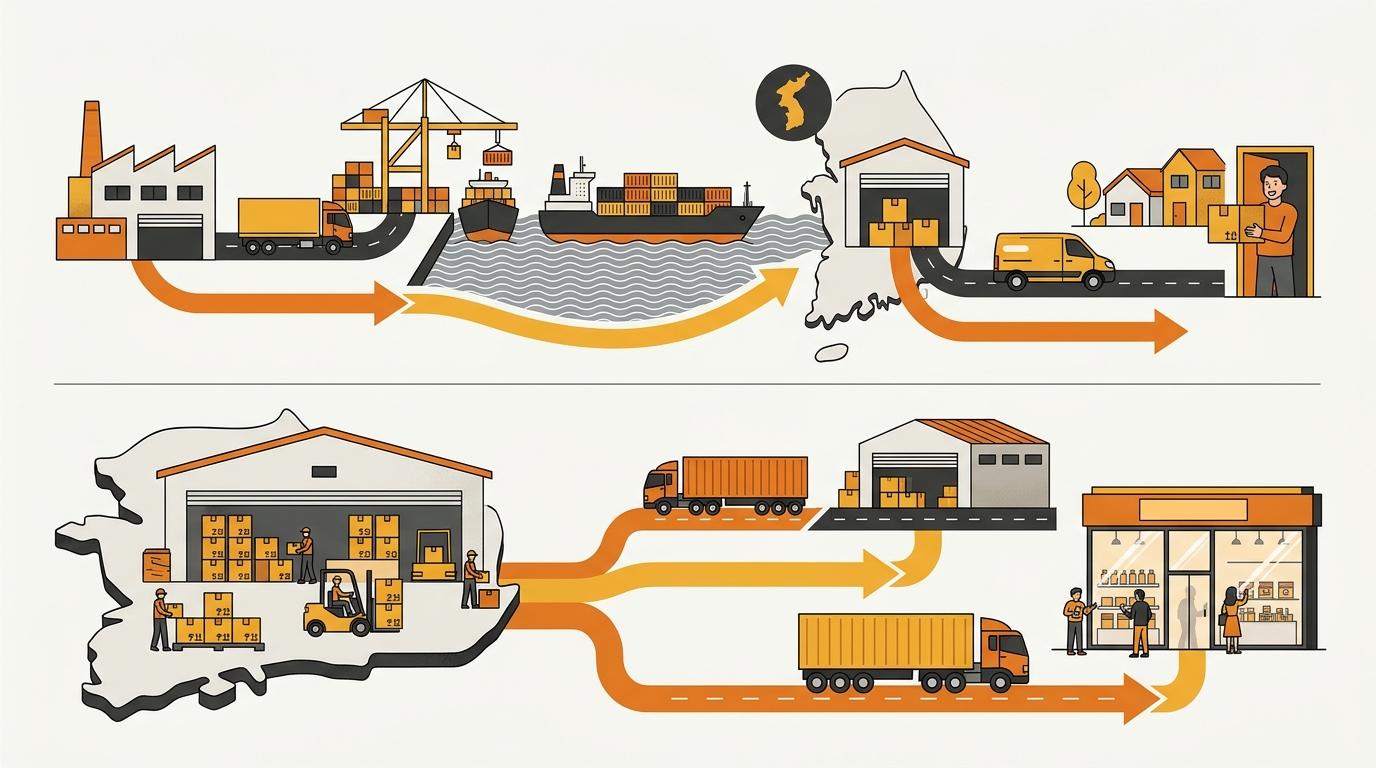
Prepare each buyer before the freight arrives
The importer question is only one part of the plan. A shipment can clear and still sit in a warehouse if buyers cannot receive it or the sales documents are not ready.
For wholesale and retail buyers
Prepare the Korean label, buyer-facing product sheet, certificate packet, price list, delivery dates, and return instructions before the shipment leaves. Give each buyer the SKU and quantity it ordered. If several buyers will receive different variants, use the Korean SKU names consistently on the purchase orders, cartons, and invoices.
Decide whether wholesale stock will go directly to buyers or first to a Korean warehouse. If some units are reserved for retail sales, keep those units separate on the stock plan. The local seller should know which goods are committed and which goods remain available.
Consumer listings are separate from this B2B sale. how to localize product pages for Korean e-commerce covers product-page work. who pays for what in Korea covers freight, taxes, platform fees, and advertising. Neither changes who imports the goods or issues B2B invoices.
Confirm these points before the shipment leaves
Use this checklist with the brand, Korean importer, buyer, customs broker, and tax accountant:
- Roles: Which Korean legal entity is named as the IoR? Is it also the SoR, or does another Korean seller issue the domestic invoices?
- Buyer allocations: Which named buyer receives each product variant and quantity? Does each buyer have a purchase order or signed commercial terms?
- Labels and category documents: Are the Korean labels, certificates, permits, and registrations ready for the exact product variant?
- Tax invoices and VAT: Has the Korean tax invoice format and VAT treatment been checked?
- Receiving and delivery: Where will the importer receive the shipment, where will each buyer receive its quantity, and who handles shortages or damage?
- Costs and returns: Who pays import duties, import VAT, freight, storage, local delivery, insurance, and returns? What happens if a buyer delays, cancels, or refuses part of the shipment?
- Unsold stock: Who owns, stores, pays for, or returns goods that a buyer does not take?
Four points must be clear. The Korean entity is responsible for the import. The domestic seller can issue Korean tax invoices. The labels and documents match each product variant. The contract says who receives, stores, pays for, or returns each quantity after release.
Plan the importer and buyer structure before shipping
Share your SKUs, buyer locations, expected quantities, and preferred sales channel with Kontactic. We can review whether a one-project Korean import and domestic resale structure fits your shipment.
About the author
Korean and global e-commerce operators with 15+ years of cross-border experience, led by CEO Isaac Lee — KOTRA-certified consultant and official lecturer for Seoul City and the Korea Customs Service. We run Korea market entry for overseas brands every day; this blog records what we learn in the field.
Meet the Kontactic team →Related Articles
KC Testing in Korea: Can You Submit a Prototype?
Can you submit a prototype for KC testing in Korea? Use an early prototype for design checks, but formally test a matching production-intent sample for sale.
Coupang Global Fulfillment Reviews: Do They Carry Over?
Coupang Global Fulfillment reviews stay with the cross-border listing. Learn what resets when the same product moves to a Korean entity, seller, and listing.

Korean Biocide Approval: Is a Dirt-Only Cleaner Covered?
A dirt-only surface cleaner usually avoids Korean biocide approval, but it may still need Korea’s safety check and report before commercial import for sale.