
US Pet Food to Korea: Landed Costs Guide
Landed cost for US pet food entering Korea is not one number — it is a stack. At minimum, you are paying ocean or air freight, an average Korean import duty around 8%, 10% VAT on the CIF-plus-duty value, APQA (Animal and Plant Quarantine Agency) inspection, customs broker fees, and — if you are selling locally — Coupang platform fees and Rocket Growth fulfillment costs on top. The headline duty rate is the smallest piece of the puzzle.
Most guides on this topic stop at the customs line. That is a problem, because for a US pet food brand the operational cost of selling the inventory in Korea — onboarding to Coupang, producing a Korean product detail page, handling returns through Rocket Growth — is often larger than the import duty itself. This article walks through the real cost stack and the operating decisions that move it.
The headline number: duty and VAT on landed value
The short answer is that Korea applies an average import duty of around 8% on commercial goods valued above USD 150, and a flat 10% VAT on top of the CIF value plus duties. The exact duty rate depends on the HS code Korea Customs assigns your specific product — pet food, treats, dental chews, and supplements can all sit in different tariff lines.
A few things to keep in mind before you model the number:
- The USD 150 threshold is a commercial de minimis. For personal postal imports the threshold is KRW 150,000 (roughly USD 110), and VAT still applies even when duty is waived. Commercial pallets do not benefit from either threshold.
- VAT is 10% of (CIF value + duty + any other applicable taxes). For VAT-inclusive Korean revenue, the VAT portion equals 1/11 of gross sales — roughly 9.09%.
- VAT paid on import is recoverable through your Korean entity at quarterly filing, but only if you have one. Brands selling cross-border without a Korean entity cannot reclaim it.
The recoverability point matters more than founders expect. We cover the funding flow in more detail in Who Pays for What in Korea: Operating Costs Explained.

Freight: the largest variable in the landed-cost stack
The shipping leg drives most of the variance in your landed cost per unit. Pet food is dense, heavy, and bulky, so the freight choice almost always lands on ocean — but the gap between full-container and shared-container economics is wide.
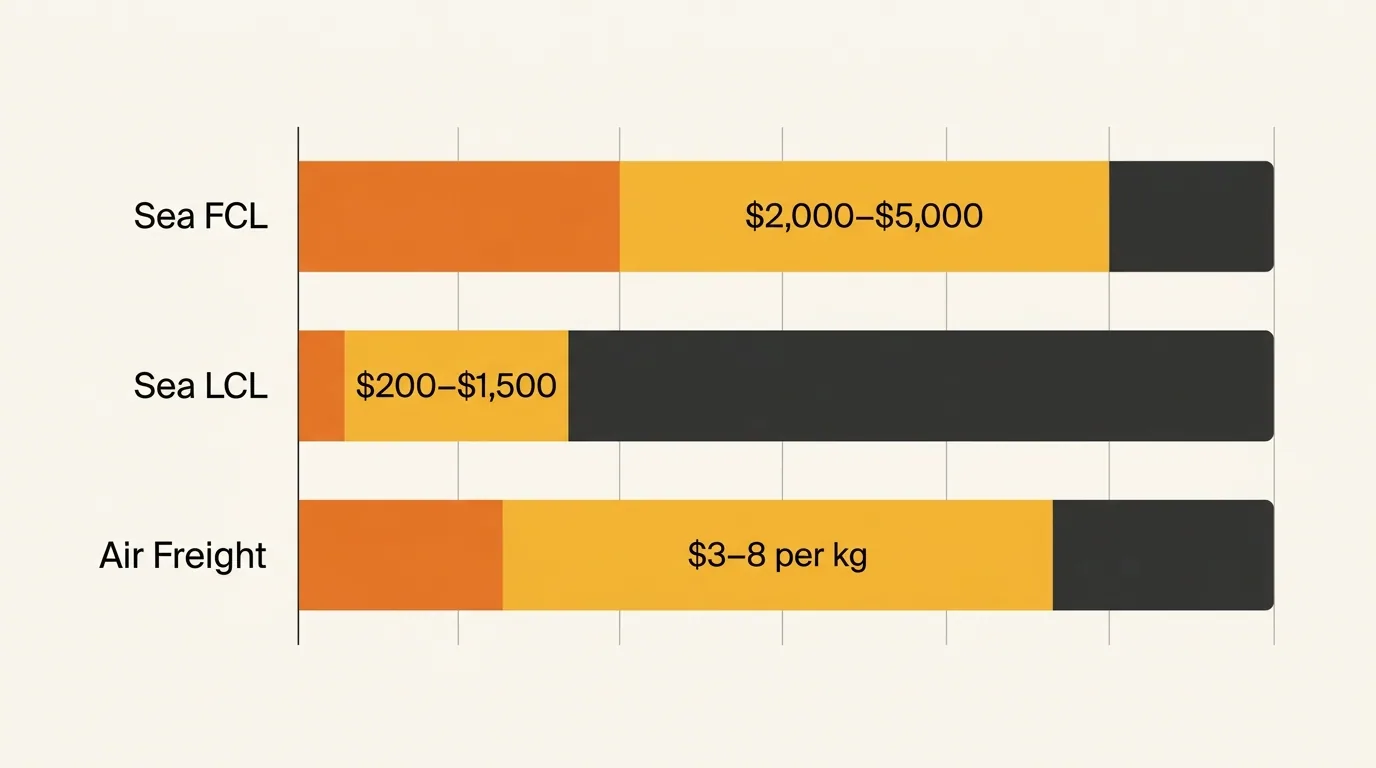
Typical 2024–2025 ranges from public forwarder data:
- Sea FCL (full container, 20ft or 40ft): USD 2,000–5,000, 20–40 days
- Sea LCL (less-than-container, shared): USD 200–1,500, 25–45 days
- Air freight: USD 3–8 per kg, fast but rarely viable for pet food
For a US brand testing the Korean market with a few pallets of dry kibble or treats, LCL is usually the entry point. Once you are doing 10+ pallets per shipment, FCL is cheaper per unit and faster to clear. For a worked example of the all-in landed cost on a single pallet, see Pet Food Pallet Shipping Cost: US to Korea DDP.
One thing top guides usually skip: pet food shipped to Korea must clear APQA, which has its own inspection fee and document checklist (health certificate, ingredient declaration, manufacturing facility approval). APQA registration is product- and facility-specific, and a single missing line on the health certificate can hold a container at port for days of demurrage. Budget for that timeline risk, not just the fee. We unpacked the full sequencing in Korea Pet Food Entry: Costs & Compliance 2024.
Cross-border vs. local: the decision the search query implies
When a US pet food founder searches for "landed costs and duties for importing into Korea," they are usually trying to decide between two paths:
- Cross-border: keep shipping individual orders from a US 3PL to Korean consumers. No Korean entity, no APQA registration for the bulk channel, but every parcel pays full duty and VAT at the consumer's doorstep above the personal threshold.
- Local import: ship pallets DDP into a Korean warehouse, clear customs once, list on Coupang in KRW, and ship domestically to consumers.
Cross-border is the lower-commitment path, but the unit economics get worse as volume grows: per-parcel duties stack up, delivery is slow (5–10 days versus next-day in Korea), and returns are functionally impossible. Local import has higher fixed costs — entity, KC where applicable, APQA, PDPs — but lower marginal cost per order and access to the majority of Korean shoppers who only buy on local platforms.
The Korean pet food import market gives you a sense of the scale on the table. According to USDA FAS, in 2023 Korea's imports of dog and cat food reached USD 307 million, with a year-on-year decrease of 11.45 percent. That dip is volatility, not retreat — the underlying premium pet category continues to favor imported brands.
For a structured way to think about the switch, Rocket Growth vs. Cross-Border Selling in Korea: An Operator's Decision Framework walks through the trade-off, and How Coupang IoR and 3PL Change Your Korea Margins shows the typical per-unit margin shift.
Coupang setup: the cost layer most guides miss
Once you are local, your "landed cost" includes Coupang. The platform isn't just a marketplace — for pet food at any meaningful scale, it is the channel. To sell on it, a US brand needs:
- A Korean Seller of Record (SoR) — either your own Korean limited company (유한회사) or a partner entity acting on your behalf
- A Coupang Wing seller account registered against the entity's business number and a bank account in the entity's name to receive settlement
- Product listings with Korean titles, descriptions, and Coupang-SEO-tuned keywords
- A Rocket Growth (로켓그로스) inbound plan if you want next-day "Rocket" delivery
The SoR path is covered in Selling Pet Food on Coupang: Korean SoR Requirements, but the key point: there is no path to local pet food sales on Coupang without one.
Coupang's platform fee is a percentage of gross sales deducted at settlement, and Rocket Growth adds its own line items: inbound handling, storage per cubic meter per month, outbound fulfillment per order, and returns processing per returned unit. Returns are particularly relevant for pet food, because a Korean buyer who receives a torn bag or mistakes the size variant will return — and the platform fee on the original sale is generally not refunded to you. For the 2025 policy changes that reset those return economics, see Three Coupang Policy Changes That Reset Rocket Growth Margins.
Returns for pet food on Coupang are higher than most US founders model. The buyer can return for "change of mind" within 7 days under Korean e-commerce law, and Rocket Growth will charge handling for the reverse logistics. Build a 5–10% return cost line into your unit economics from day one.
The Korean PDP: not a translation, a conversion asset
The other cost most landed-cost guides ignore is the Product Detail Page (PDP) — the long, image-heavy, approximately 20,000-pixel vertical scroll that Korean consumers expect on Coupang. A translated Amazon listing will not convert. The PDP carries the brand, the ingredient story, the feeding guide, the country-of-origin claim, and the reviews-anchor design that Korean shoppers actually read.
PDP production for pet food typically involves Korean copywriting (often by a writer who knows the category), photography or rendering of bag-front and feeding scenes, infographic-style sections on ingredients and life-stage suitability, and trust elements like APQA clearance callouts and country-of-origin markers. It is a one-time cost per SKU that materially affects conversion rate — and therefore the breakeven volume on your import.
“Founders often arrive with a freight quote and an HS code lookup, and ask why their unit economics look bad. The answer is usually that they have not yet priced the PDP, the Coupang fees, and the return rate. Those three lines are bigger than the duty.”
Isaac Lee — CEO, Kontactic

Building the full cost stack: KC, compliance, and the complete breakdown
KC certification (KC 인증) is Korea's category-specific mandatory safety regime. Plain dry pet food itself usually does not require KC, but adjacent SKUs in a typical pet brand catalog often do:
- Battery-powered or USB-powered pet feeders, water fountains, and toys — EMC scope, sometimes electrical safety
- Pet grooming devices with cords — electrical safety + EMC
- Heated pet beds and pads — electrical safety, EMC, and sometimes additional safety standards
If your pet food line-up bundles any of these accessories, scope KC early. The certification timeline can run 6–12 weeks and adds a per-model fee. For the principle of how to assess what KC actually applies, KC Certification and Coupang: A Korean Entity? is a useful starting point.
For pet food itself, the binding compliance is APQA registration of the manufacturing facility plus a per-shipment health certificate from USDA. Korea has, at times, extended grace periods on new pet food import requirements, so check the current APQA notice for your product type before quoting timelines to your team.
Here is what you actually pay on a single US-to-Korea pet food import:
- EXW or FOB price of the goods from your US co-packer
- Outbound US freight + export documentation
- Ocean freight — USD 200–1,500 LCL or USD 2,000–5,000 FCL
- Insurance — typically 0.3–0.5% of CIF
- Customs duty — averaging 8%, but verify the HS code
- VAT — 10% on (CIF + duty), recoverable if you have a Korean entity
- APQA inspection + customs broker fees
- Inbound trucking to your Korean 3PL or Rocket Growth fulfillment center
- Rocket Growth inbound + storage + fulfillment per order
- Coupang platform commission on each sale
- Return handling — assume 5–10% of orders
- PDP + listing localization — one-time per SKU, amortized over expected sell-through
The first seven items are the "landed cost" most articles describe. Items 8–12 are what determine whether the unit is actually profitable in Korea. Treating them as separate problems is how brands end up with healthy import margins and unprofitable Coupang accounts.
Brands that model only the customs duty and VAT typically miss 60–70% of the true cost-to-serve a Korean order. Build the operational stack into your pricing before you commit to a first shipment.
Where to start
If your US brand already has cross-border Korean orders coming in, that is the strongest signal that the local-import math will work. Use the cross-border data to size your first FCL or LCL, scope APQA, and design the PDP before the inventory arrives — not after. The brands that get to a profitable Coupang run-rate fastest are the ones that sequence the operational work to match the freight ETA.
Model your full Korea landed cost with us
If you are a US pet food brand evaluating Korea entry, Kontactic can map your specific HS code, APQA path, Coupang setup, and Rocket Growth fees into a single unit-economics model. Talk to our team to see what your real landed cost looks like.
About the author
Korean and global e-commerce operators with 15+ years of cross-border experience, led by CEO Isaac Lee — KOTRA-certified consultant and official lecturer for Seoul City and the Korea Customs Service. We run Korea market entry for Western brands every day; this blog documents what we learn in the field.
More about Kontactic →Related Articles
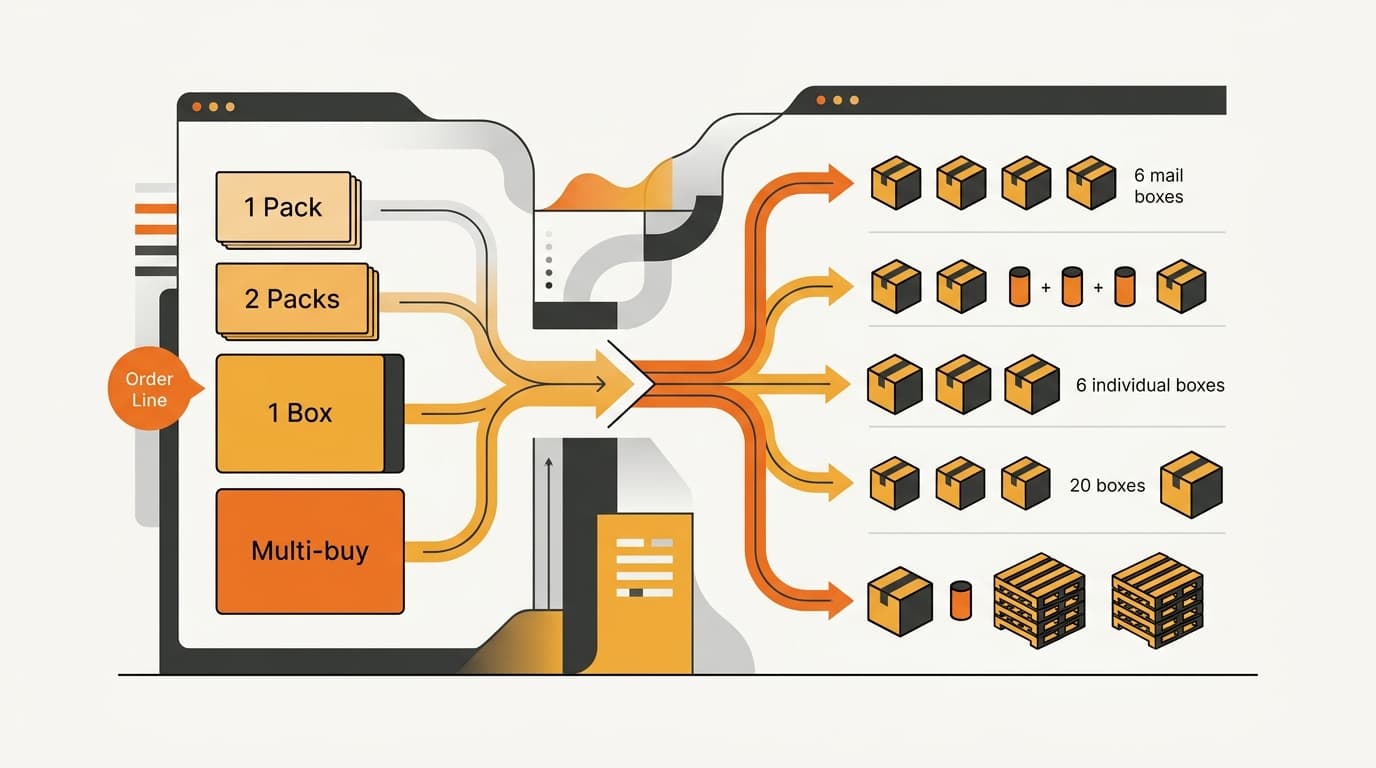
Coupang Order Lines: One Line Is Not One Unit
A Coupang order line can represent a generated quantity option, so your connector must map it to a base SKU and physical quantity before stock movement.
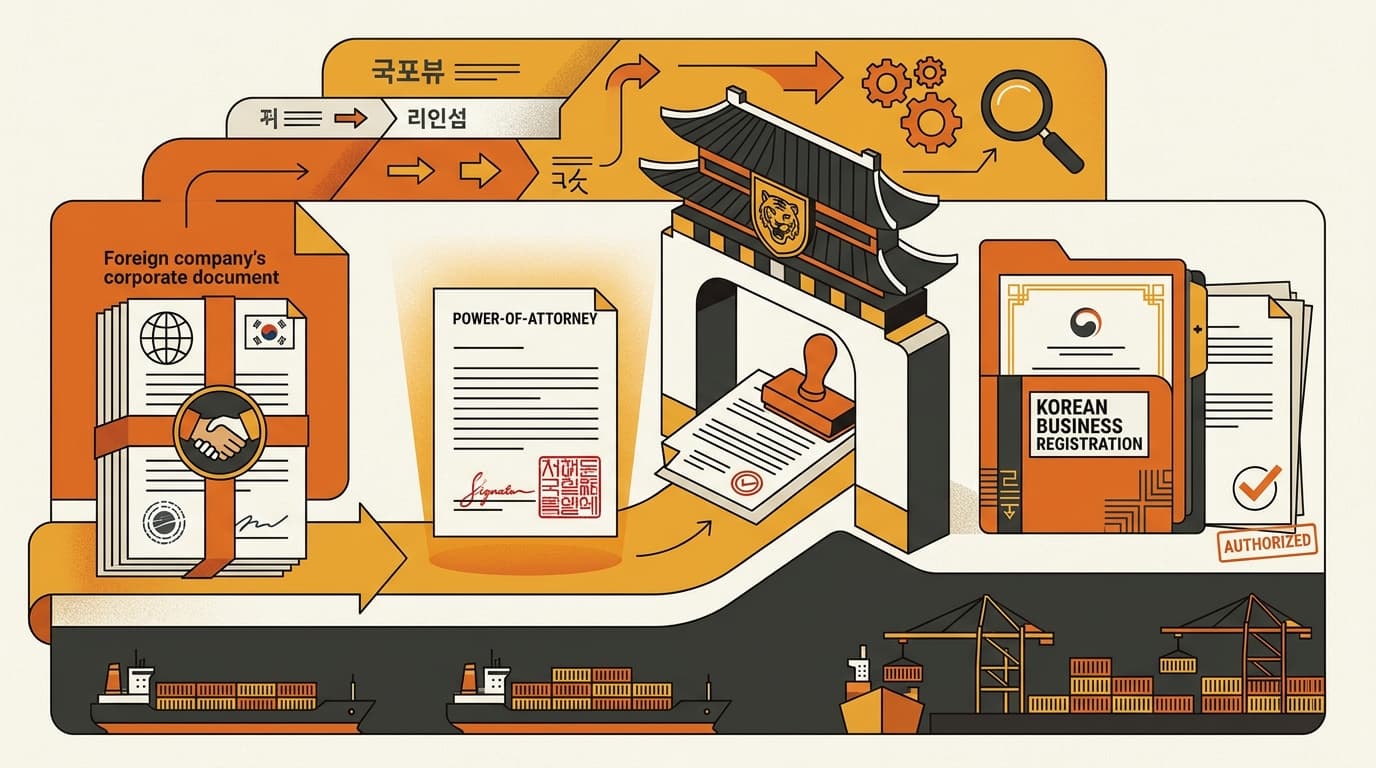
Korean Importer Registration: Why a POA Is Not Enough
A power of attorney cannot establish Korean importer registration; corporate-authority proof and Korean importer records are still required for the filing.
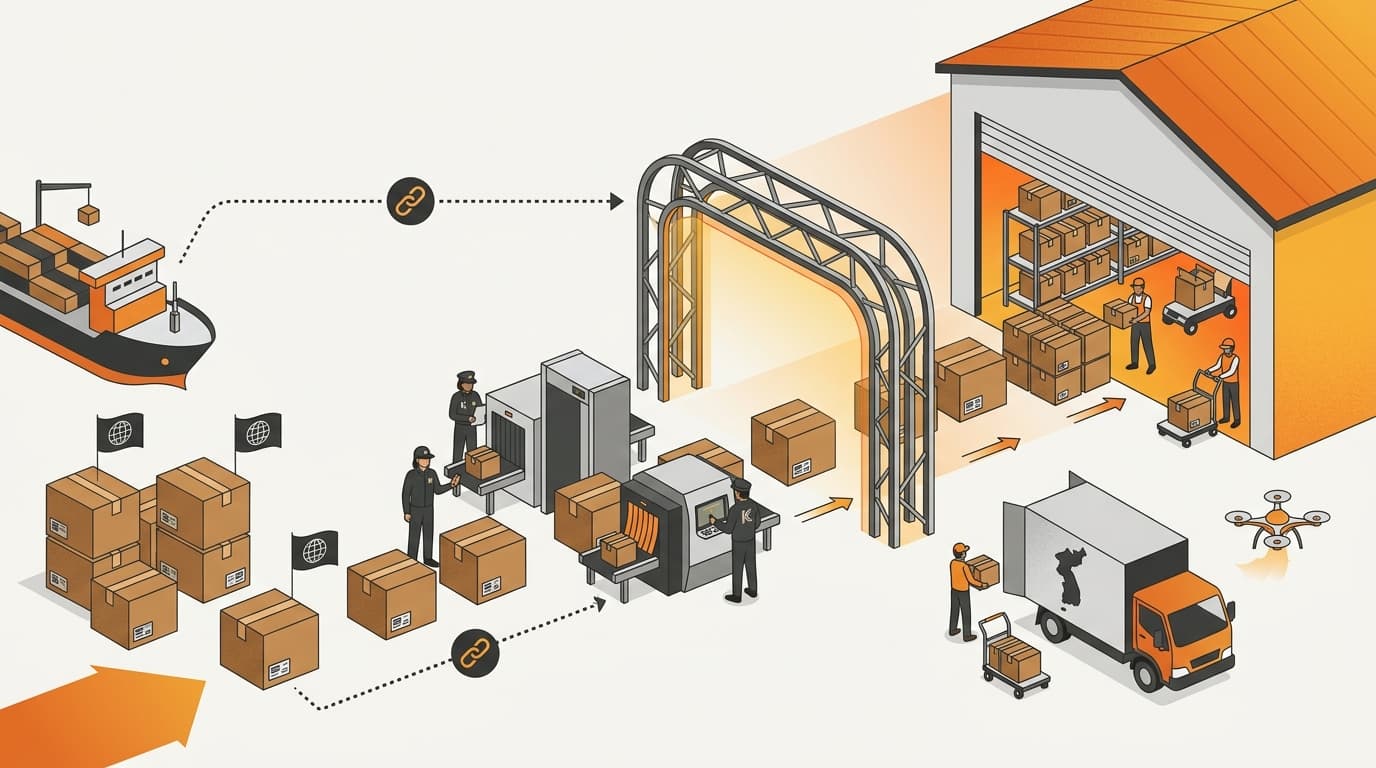
Can You Delay Korea Import Duty on Consignment Stock?
No. Korea import duty and import VAT are normally assessed when consignment stock is cleared for domestic circulation, not when a Korean customer buys one unit.