
Securities Acquisition Filing in Korea: Funding Steps
If a foreign shareholder pays for new shares in a Korean company, the investor usually needs a foreign-investment filing before sending the money. Confirm and file it before the capital transfer. A normal bank wire does not replace it.
The filing tells the bank or authority who invests and which Korean company receives the money. It also states the amount and the share terms. It does not open a Coupang seller account, make the company an importer, or clear a product for sale.
What the securities acquisition filing in Korea covers
The phrase “securities acquisition filing” is used loosely. First identify what the money buys:
| What the money buys | Who receives the money | The first question to ask |
|---|---|---|
| Newly issued shares | The Korean company | Is this a foreign investment filing for acquiring stocks or equity interests? |
| Existing shares | The current shareholder | Is a notification for acquiring pre-issued securities required? |
| No shares; a shareholder loan | The Korean company | Which foreign-exchange and loan filings apply instead? |
New shares are the usual case when an overseas parent funds its Korean subsidiary. The Korean company increases its capital and issues new shares to the foreign shareholder. That is not the same as buying shares from an existing owner. In the second case, the company may receive no new working capital.
A shareholder loan is different again. The Korean company receives money, but the foreign investor does not receive new shares. Do not send a loan and describe it as share capital. The bank may ask you to correct the documents, payment purpose, or both.
Invest Korea’s Foreign Investment Report guidance covers a foreigner’s purchase of existing shares in a company listed on KOSPI or KOSDAQ, Korea’s main public stock markets. That is a different case from a private company receiving a new-share capital injection. The English Financial Investment Services and Capital Markets Act helps with public-market questions. It does not identify the filing for every private-company funding transfer.
The bank handling the transfer or Invest Korea must confirm the current form and filing office. The English foreign-investment form for acquiring stocks or equity interests shows the information banks often request. Check the current version because an old form may use a different checklist.
Older guides may tell you to obtain an Investor Registration Certificate (IRC). Korea’s Financial Supervisory Service stopped issuing new IRCs on 14 December 2023. Ask the bank how it now identifies the investor instead of copying an old checklist.
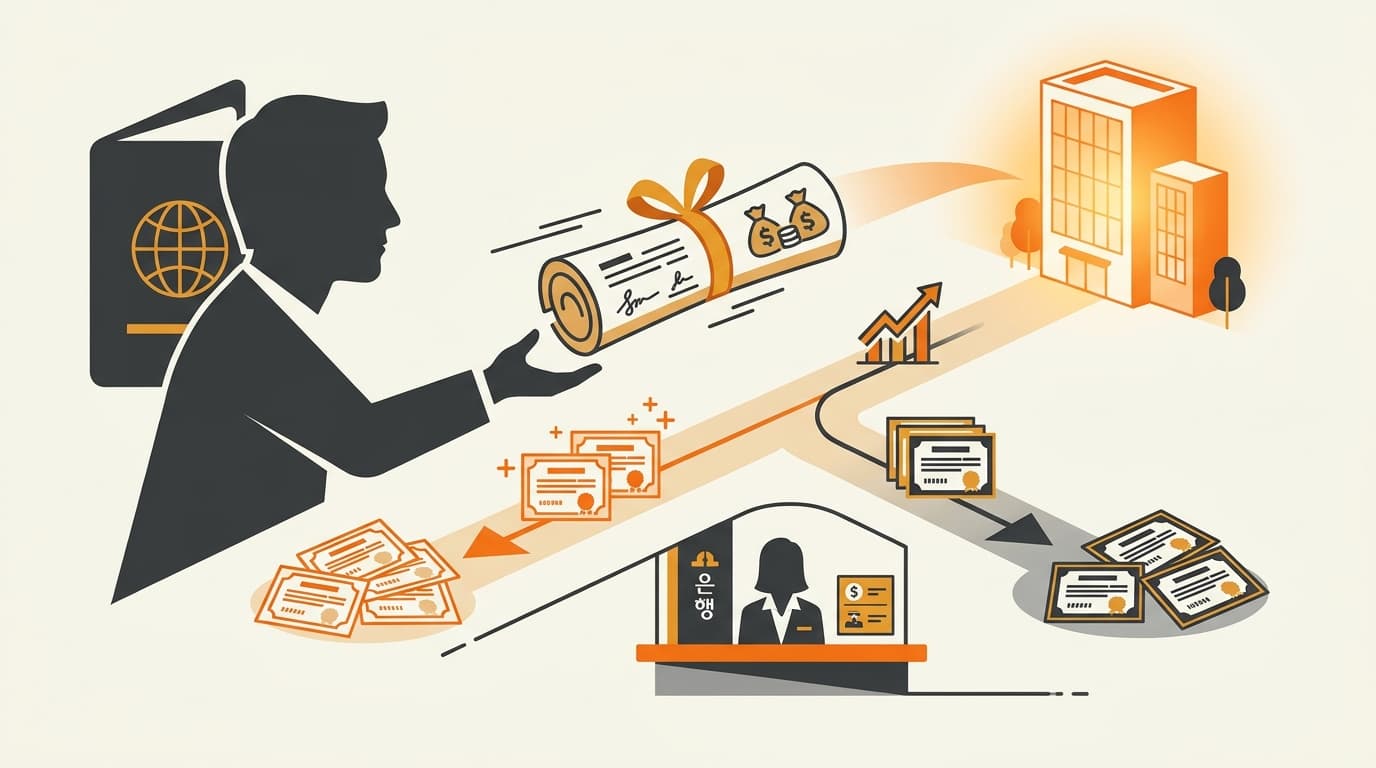
File the transaction before the money moves
Use this order for a foreign shareholder funding a Korean company.
-
Describe the deal in one sentence. For example: “Our UK parent will subscribe for new shares in our Korean company to fund local operations.” If the investor buys an existing owner’s shares, that is a share purchase. If the parent lends money, that is a loan. Each may need a different filing.
-
Ask the receiving bank which filing applies. Ask for the current form name, the accepting office, the required foreign-exchange report, and the post-payment documents. A bank designated to handle foreign-exchange transactions is often involved, but the bank must confirm whether it will accept your case. Invest Korea or the Korea Trade-Investment Promotion Agency (KOTRA) can also explain the foreign-investment filing channel.
-
Set the share terms before signing. Record the exact legal names of the investor and Korean company. Then record the amount, currency, share class, number of shares, issue price, and post-issue ownership. Keep the purpose simple and consistent with the board resolution and the wire description.
-
Prepare and submit the filing before remittance. The foreign investor or its authorized representative signs the investor section. The Korean company supplies its company documents and the resolution or subscription document that supports the new issue. The accepting bank or authority decides whether the packet is complete.
-
Send the money from the correct account. The sender name, receiving company, amount, currency, and payment purpose should match the accepted filing. Use the Korean company’s corporate account, not an employee’s personal account. Keep the wire confirmation and any bank message.
-
Finish the company work after payment. The Korean company then completes the share issue and the post-payment filings requested by the bank or authority. It should update its shareholder list and corporate register and keep the signed resolution, payment proof, and new-share documents together.
For example, a US parent may plan to fund a Korean subsidiary as equity. If its internal approval says “new shares” but the wire says “shareholder loan,” the receiving bank may stop and ask which transaction is real. Decide the legal nature of the money before the first transfer.
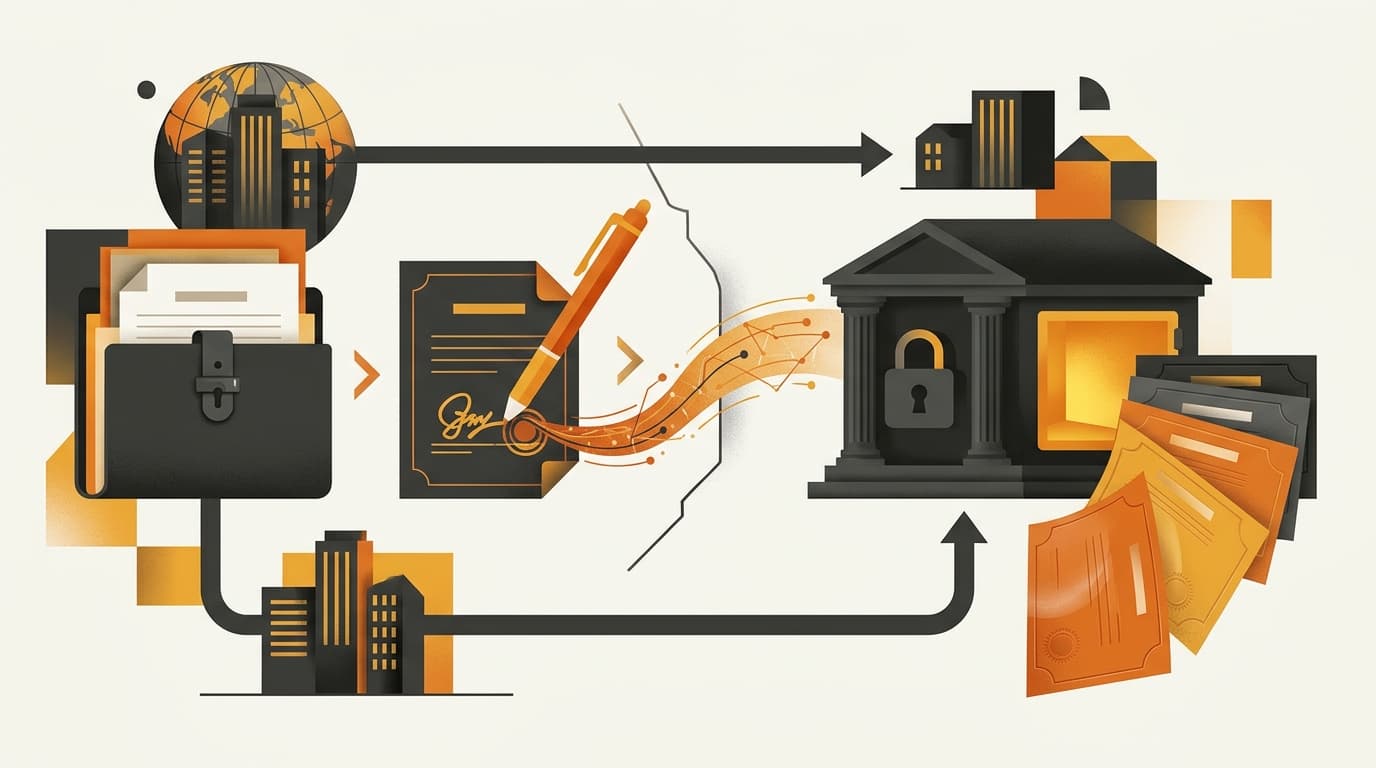
Documents, signatures, and in-person attendance
The exact checklist depends on the investor, the Korean company, the bank, and the type of share transaction. A common packet may include:
- the current foreign-investment or securities-acquisition form;
- a passport for an individual investor, or a certificate of incorporation and authority documents for a corporate investor;
- the Korean company’s business registration and corporate registration documents;
- a board resolution, subscription agreement, or other document showing the share issue terms;
- the investor’s name, amount, currency, share class, share count, and ownership after the issue;
- the Korean corporate bank details and the planned remittance information; and
- the share-transfer agreement and seller information if the deal buys existing shares instead of new shares.
The bank may ask for Korean translations, notarization, an apostille, legalization, or original documents. The country where the foreign company is formed can change that request. Ask for the document checklist before ordering certifications. An apostille on the wrong version still wastes time and money.
The foreign shareholder or its authorized corporate signatory normally signs the investor documents. The Korean company’s representative signs its resolutions and company forms. An appointed agent may be able to submit documents if the bank accepts a power of attorney.
In-person attendance has no single answer. The accepting bank decides whether an investor, representative, or agent must appear with original documents. Opening the corporate account and completing identity checks may require a separate visit. Do not promise that the foreign shareholder can complete every step by email. Do not book travel until the bank confirms who must attend.
Ask for a document checklist before filing: document name, signer, original or copy, Korean translation, authentication, submission channel, and post-payment deadline. This gives your finance team a short list to check.
How long the filing takes and what it costs
There is no single honest number for the full timeline. The bank or authority decides how long it needs to review the packet. The timeline also changes if the investor buys existing shares or documents need authentication. It can change again if the Korean company must update its capital and shareholder documents.
Plan around four checkpoints instead of one promised date:
- the foreign investor and Korean company documents are ready;
- the accepting bank or authority confirms the filing packet;
- the capital transfer reaches the Korean corporate account; and
- the company completes the share issue and any post-payment submissions.
A new corporate bank account can have bank-set transfer rules. Account opening, daily transfer limits, and approval of a foreign capital payment are separate bank decisions. Korean corporate bank account guidance explains why the account question should be checked before the funding date.
There is no single filing fee for a securities acquisition filing. Budget for the costs that the transaction creates:
- bank wire charges and foreign-exchange conversion;
- company-document issuance;
- translation, notarization, apostille, or legalization if requested;
- legal, accounting, tax, or filing-agent help;
- Korean corporate work for the capital increase or share transfer; and
- later costs for imports, product compliance, seller onboarding, and local operations.
Ask the accepting bank whether it charges a service fee. Keep that question separate from the cost of setting up and running the Korean company. A low-cost filing does not make the later import or sales work free.
Why the filing does not finish selling in Korea
Funding a Korean company answers who owns the shares and how the money enters the company. It does not approve a Coupang seller account, name the importer for each shipment, clear customs, or approve a product for sale. Seller onboarding, customs, and product compliance are separate steps. These separate questions are covered in the complete guide to selling on Coupang as a foreign brand. The guides on who needs a Korean business registration number to be the importer of record and why a customs broker is not the importer of record explain importer and customs roles. Korea Certification (KC) and Coupang are covered in the KC certification and Coupang are separate decisions. The guide on importing a product does not guarantee Coupang sales covers the limits of product approval.
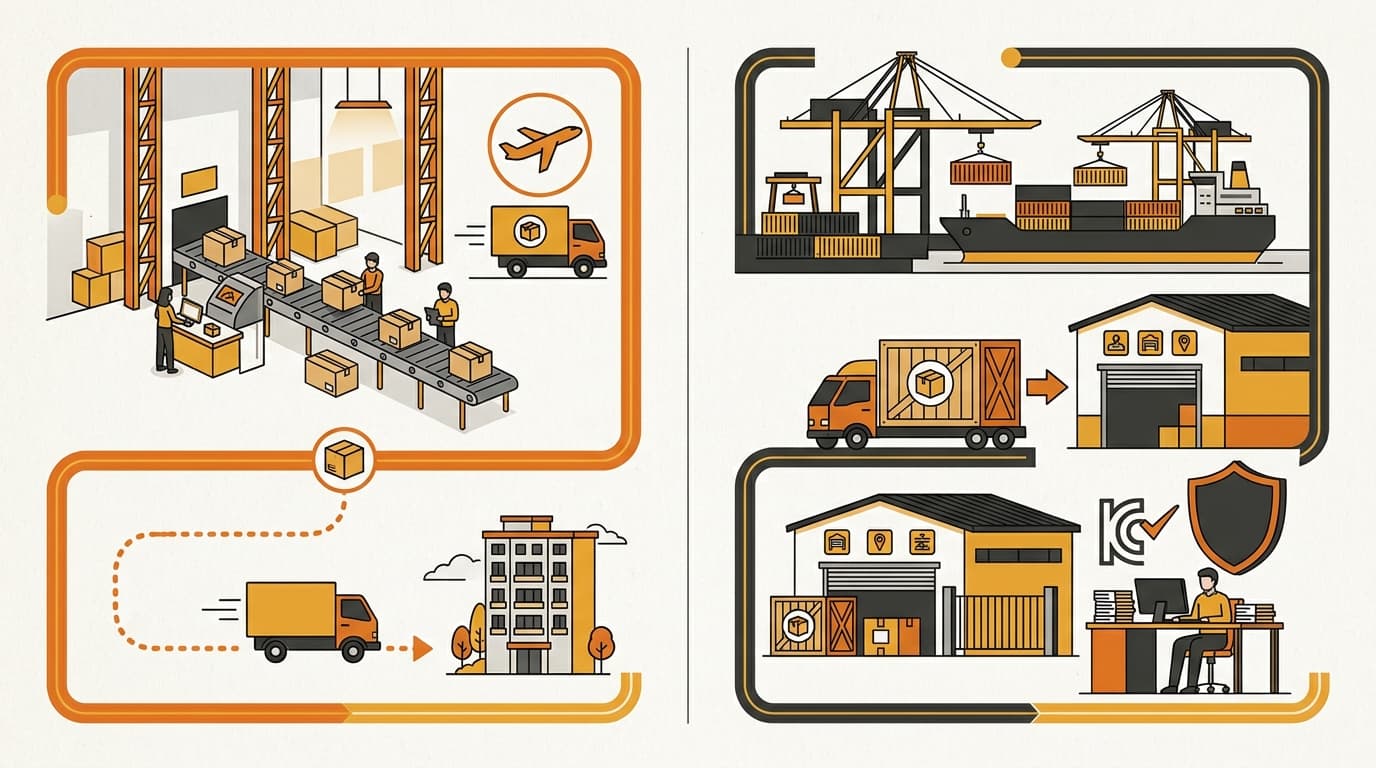
Questions to send before you submit
Before the foreign shareholder signs or wires money, ask the receiving bank or filing agent these questions:
- Is this a new-share subscription, an existing-share purchase, or a shareholder loan?
- What is the current name of the required filing, and which office accepts it?
- Which documents need Korean translation, notarization, an apostille, legalization, or originals?
- Who must sign or appear in person, and can a power-of-attorney holder submit the packet?
- What payment description, sender name, and receiving account should the wire use?
- What must the Korean company submit after the money arrives and the shares are issued?
- Which later tasks remain for Coupang onboarding, customs, Korea Certification (KC), labels, and product approval?
Those questions help prevent shareholder funding from being mistaken for a loan, a secondary share purchase, or a complete Korea sales launch.
Check the funding path before you wire the money
If you are funding a Korean company or comparing it with cross-border selling, Kontactic can help you map the filing, importer, seller, and product-compliance questions before the transfer.
About the author
Korean and global e-commerce operators with 15+ years of cross-border experience, led by CEO Isaac Lee — KOTRA-certified consultant and official lecturer for Seoul City and the Korea Customs Service. We run Korea market entry for overseas brands every day; this blog records what we learn in the field.
Meet the Kontactic team →Related Articles

Korea Setup Fee: What Costs Extra After Year One?
Korea setup fee: USD 3,000 includes first-year bookkeeping; after year one, bookkeeping, phone bills, taxes, and office-address renewals are separate costs.

Korea Mail-Order Registration: Documents You Need
What documents do you need for Korea mail-order registration? Use this checklist for the business certificate, ID, payment proof, timing, and filing cost.
Can I Upload Korean Registration Paperwork as One PDF?
Upload Korean registration paperwork as one PDF: Seller Center separates pages, matches review items, and keeps the tax payment confirmation with the packet.