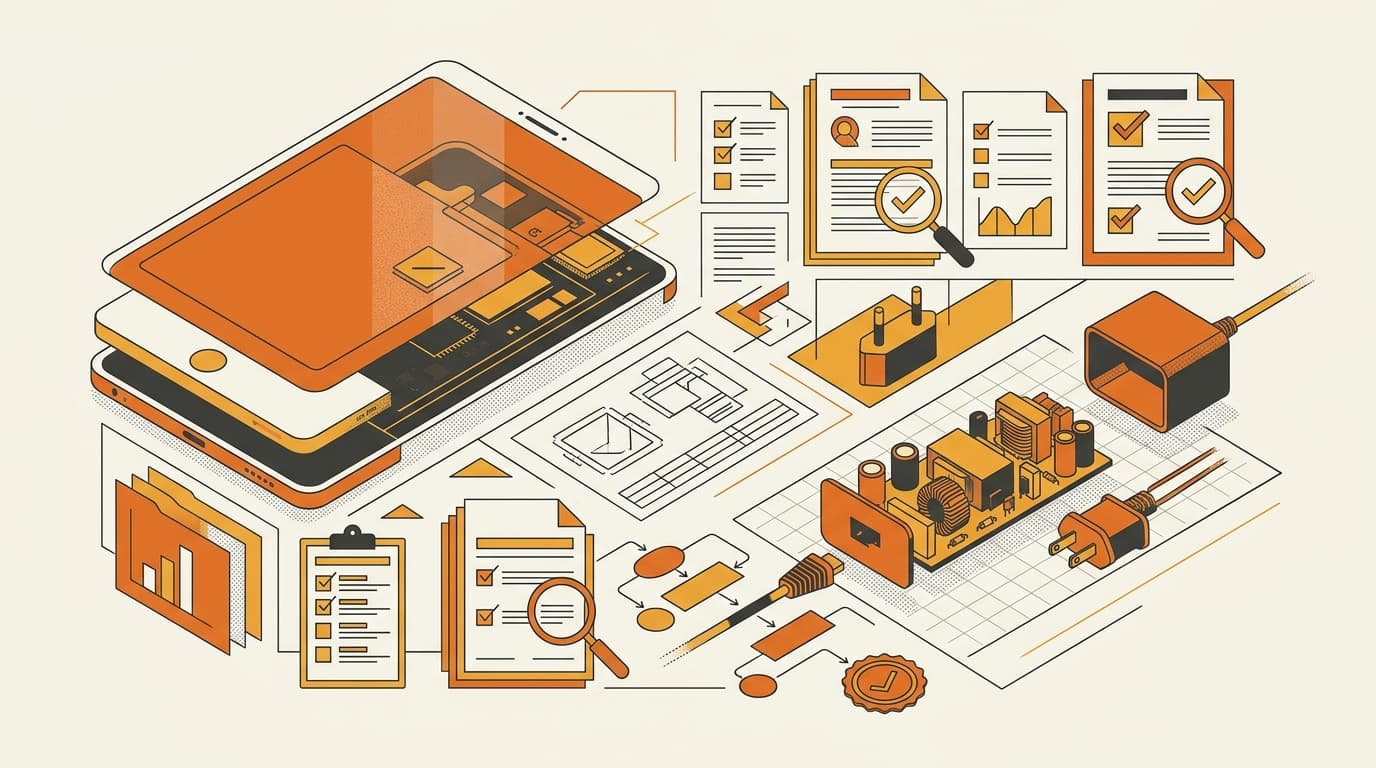
Korean KC for a Detachable Device Charger: Not Automatic
No—not automatically. A detachable AC/DC adapter supplied with an electronic device is a separate Korean compliance question. Its construction, ratings, intended use, and supply arrangement determine the applicable route. That route may be a KATS safety path or another review. The host device’s KC record is not blanket evidence for a charger model that was not assessed or does not match the Korean SKU.
Why a bundled charger is not automatically covered
The bundle is one commercial purchase, but that does not make every physical component one regulated product for every purpose. A detachable charger can be a separately regulated electrical appliance, while the host device can have its own product classification and conformity obligations. Whether the adapter is included in the host device’s evidence depends on the scope of the assessment and the exact configuration that evidence describes.
Three common changes create a new compliance question:
- Replacing a US or EU power adapter with a Korea-specific adapter.
- Adding a USB-C charger to the box even though the original product was sold without one.
- Sourcing a replacement adapter from a different manufacturer, even when the connector and advertised output look similar.
None of these changes automatically means that a new Korean certificate is required in every case. Each does mean the commercial configuration needs to be reviewed again. The change may affect the product classification, the evidence that supports the classification, the EMC assessment, or the Korean marking and documentation supplied with the SKU.
The words used in a product listing do not decide the result. “USB-C charger,” “accessory,” and “low-voltage output” describe a product commercially or technically; they do not, by themselves, select a KATS route. Review the complete product facts. That includes the adapter’s construction, ratings, intended load, and route into the Korean market.
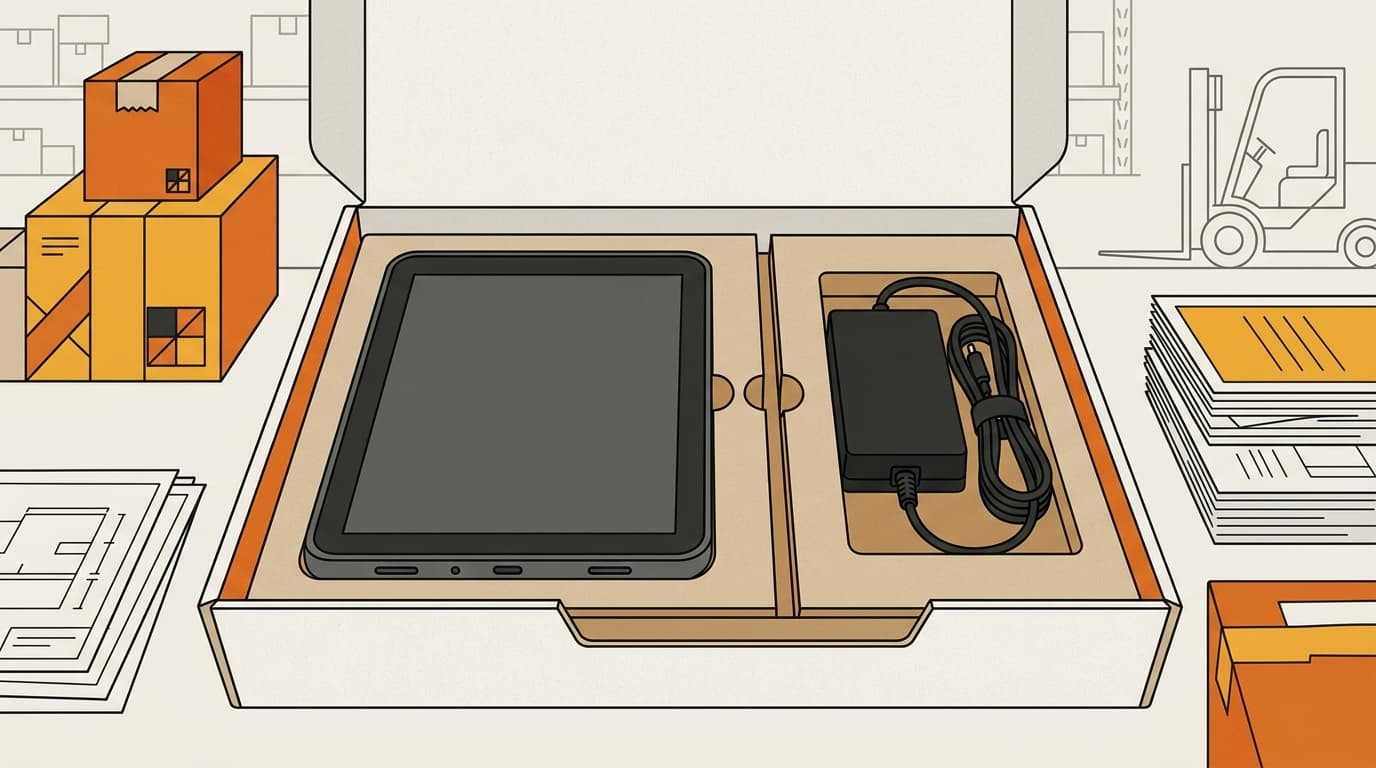
Exact commercial configuration means the host model and the adapter that will actually be supplied in the Korean SKU, including the adapter model and manufacturer, input/output ratings, plug, cable, electrical design, and whether it is bundled or sold separately.
That is the unit to map before shipment. If the adapter in the Korean box is different from the adapter described in the available evidence, treat the difference as a compliance change to review—not as a harmless packaging substitution.
What determines the adapter’s KATS safety route
A detachable adapter may fall under a different KATS safety route from the device it powers. Depending on the classification, the applicable path may be safety certification, safety confirmation, a supplier’s declaration, or no KC route. Those outcomes are not interchangeable, and the name printed on the box is not a substitute for classification.
The review should consider at least five questions:
- What is the electrical construction? Examine the complete adapter rather than only the connector at the output end.
- What are its ratings? Record the input and output ratings for the exact model intended for Korea.
- What is its intended use? The product’s function and the equipment it is designed to power can affect how it is understood.
- How is it supplied? A charger bundled with one host device, offered as an optional component, and sold as a replacement SKU are different commercial forms to examine.
- What evidence exists for that exact model? Confirm the model and manufacturer instead of relying on a generic family description or a visually similar unit.
KC safety route means the Korean product-safety path applicable to the classified electrical product. The route can differ by product category and may be safety certification, safety confirmation, a supplier’s declaration, or no KC route.
A USB-C interface does not answer these questions. Neither does the fact that the adapter produces a lower-voltage output. A detachable supply can still require its own product-scope review even when the host device is the item consumers think of as the main product.
For a broader explanation of how Korea’s product-safety tiers differ, see KC Safety Certification: Which of Korea’s 3 Tiers Fits Your Product. The important point for a bundled charger is narrower: do not assign the adapter the host device’s route until the final combination and the adapter’s own facts have been checked.
The official starting points are the current text of the Electrical Appliances and Consumer Products Safety Control Act on law.go.kr and product-category guidance in KATS’s Safety Korea portal. Use those sources to verify the current classification and route rather than treating a supplier’s shorthand description as a Korean legal conclusion.
Why the evidence must match the final Korean SKU
Compliance evidence is useful only when its scope matches the product being imported and sold. For a bundled electronics SKU, that means the evidence review cannot stop at the host device’s model number. The adapter is part of the physical configuration that the Korean customer will receive.
Before the shipment is approved, freeze the following information:
| Configuration field | What to verify |
|---|---|
| Host device | Exact model, product function, and the version that will be sold in Korea |
| Adapter | Exact model, manufacturer, input rating, and output rating |
| Physical connection | Plug, cable, connector, and whether the adapter is detachable from the host |
| Commercial form | Included in the box, optional bundle component, or standalone replacement/accessory |
| Compliance evidence | Korean evidence applicable to the actual device and adapter configuration, plus any applicable EMC or RRA evidence |
| Korean presentation | Marking and documentation that describe the products actually supplied |
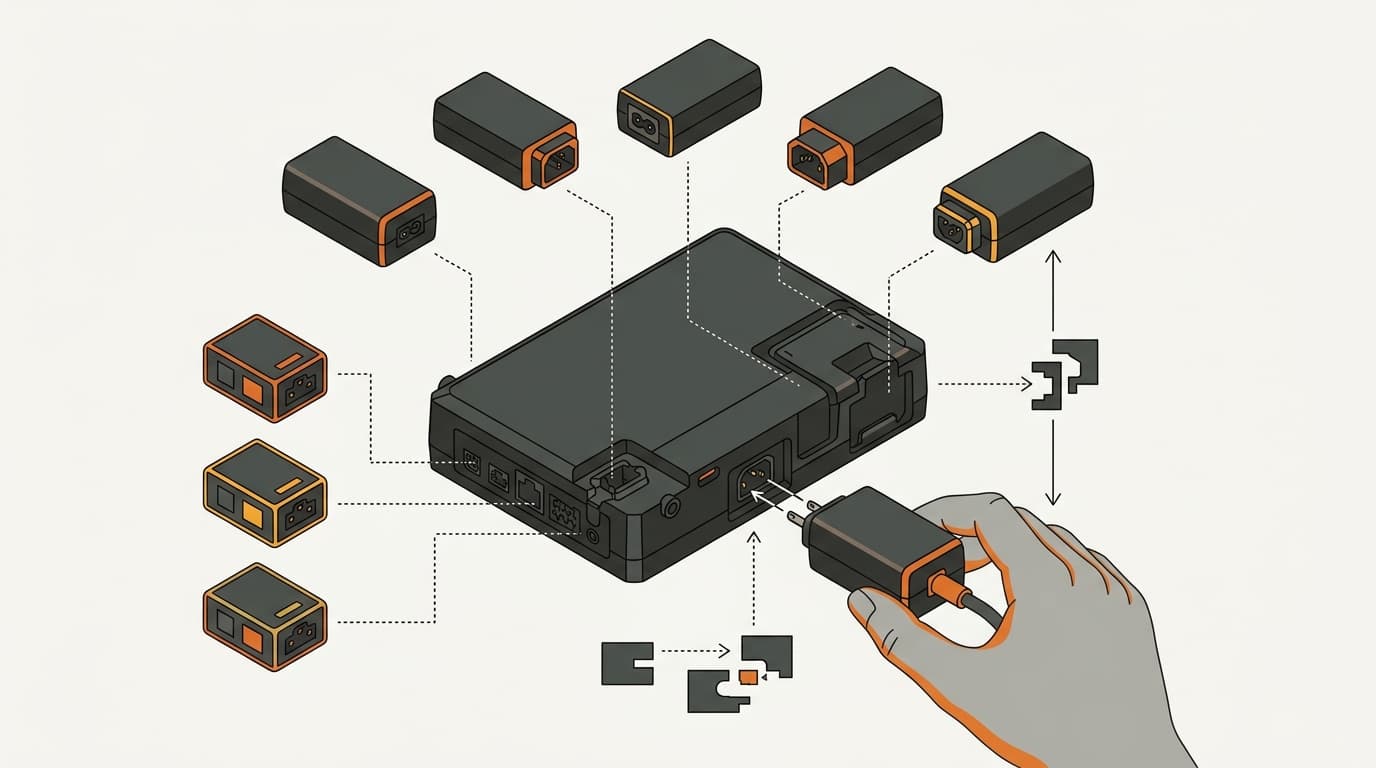
Changing the adapter model or manufacturer is an obvious difference. Less obvious changes can matter too: a different input or output rating, a different plug, a different cable supplied as part of the adapter, or an electrical design change. A shared USB-C connector or similar advertised wattage does not establish that two adapters are the same for compliance purposes.
This is where Western brands often create a mismatch without intending to. The engineering team approves one power supply, the sourcing team substitutes another, and the Korean box is assembled around the substitute. The main device model has not changed, but the imported SKU has.
A device certificate cannot cure an unassessed or mismatched charger after shipment. If the supplied adapter is not the one reflected in the Korean compliance record, the problem is a configuration mismatch that should have been resolved before commercial import.
Foreign documentation can be useful background for the review, but it should not be treated as proof that the Korean configuration is covered. For the related question of whether overseas marks replace Korean conformity, see Korea KC Certification: Can CE, FCC, or UL Replace It?.
Keep KC safety and RRA conformity as separate checks
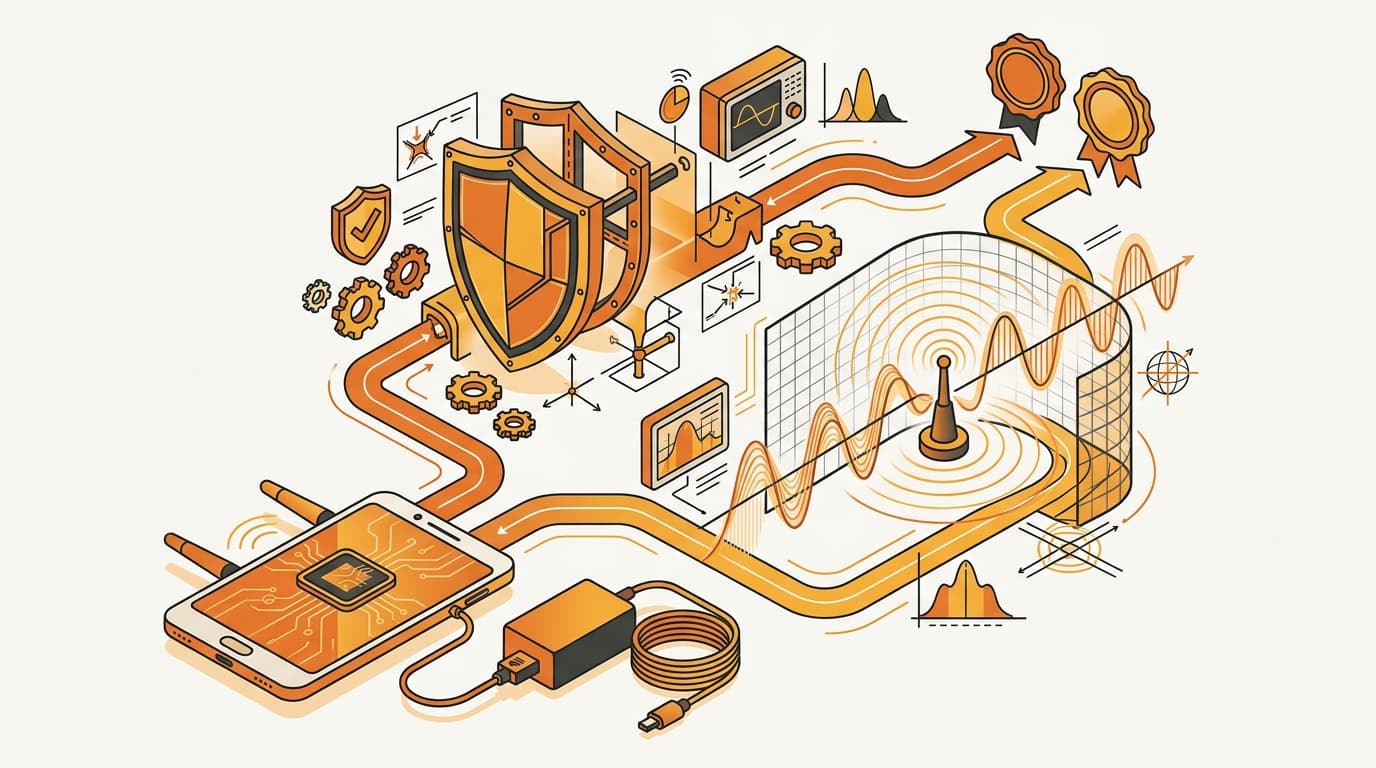
KC safety and RRA conformity assessment are separate checks. A product can require a KATS safety review for one reason and an RRA conformity review for a different electronic or wireless function. One track does not automatically replace the other.
The host device and the adapter therefore need separate questions in the compliance map:
| Commercial situation | Questions to keep separate |
|---|---|
| A wireless host is sold with a detachable adapter | Does the host fall within an RRA conformity route, and does the adapter have its own KATS safety or applicable EMC question? |
| A non-wireless host uses a detachable AC/DC adapter | What safety route applies to the host, what route applies to the adapter, and does the adapter require an EMC review? |
| The adapter is also sold as a replacement | What is the adapter’s standalone product scope, marking, documentation, and applicable evidence? |
An adapter does not need a wireless function to raise an EMC question. The absence of Bluetooth or Wi-Fi is not, by itself, a complete answer to whether the electrical design needs an EMC or other conformity review. Conversely, a host device’s RRA status does not automatically cover the separate adapter supplied in the box.
This distinction matters particularly when a brand adds a USB-C charger late in the launch process. The connector may be familiar, but the adapter still has its own electrical design and its own relationship to the host. Review the two paths together without collapsing them into one certificate assumption.
For a related explanation of how safety and EMC can coexist for a wireless product, see Does a Wireless Device Need Both KC Safety and EMC?. For electronic devices that use USB power or batteries, KC Certification for USB and Battery-Powered Devices: When a Foreign EMC Report Is Enough covers the separate EMC evidence question in more detail.
A pre-import sequence that prevents a charger mismatch
Use a configuration-first sequence. The objective is not to collect the largest folder of certificates; it is to make sure the evidence, product, and Korean commercial presentation describe the same thing.
- Freeze the final bill of materials. Record the host model and the exact adapter model, manufacturer, input/output ratings, plug, cable, and connection. State whether the adapter is included, optional, or also sold separately.
- Map the product scope. Review the host and adapter as separate physical items, then document how they are supplied together. Determine whether each item has a KATS safety route, a supplier-declaration route, or no KC route based on its classification.
- Match the available evidence. Ask whether the Korean evidence names or clearly covers the exact adapter model, manufacturer, and configuration. If a document refers to a product family, confirm its scope instead of assuming every substitute is included.
- Run the EMC and RRA review separately. Check the host’s electronic or wireless functions and the adapter’s electrical design on their own tracks. Where the applicable category requires RRA conformity assessment, treat that as a separate gate from KC safety.
- Prepare Korean marking and documentation. Make sure the required Korean marking and supporting documents correspond to the actual device and adapter that will be in the box. Do not finalize packaging around an adapter that is still being treated as interchangeable.
- Gate the shipment and control later changes. Do not approve commercial import until the final bundle matches the reviewed configuration. If a supplier, model, rating, plug, cable, or electrical design changes later, reopen the scope review before the next shipment.
The timeline depends on the route, any testing required, factory-review needs, and whether the final adapter already has valid Korean evidence that actually covers the configuration. A generic lead-time promise is not useful until those facts are known.
Verify the position against current KATS and Safety Korea product-safety materials and the Electrical Appliances and Consumer Products Safety Control Act on law.go.kr. If the device or adapter raises an RRA question, also check RRA’s official conformity-assessment information. For import filing and clearance mechanics, confirm the current requirements with the Korea Customs Service. These sources are the right place to resolve classification; a supplier email or a marketplace listing is not a substitute for the applicable Korean review.
If the adapter is sold as a standalone accessory
Review the adapter again in its standalone commercial form. A charger included with a host device may be considered in relation to that host configuration, but a replacement or accessory SKU has its own product presentation, packaging, model identification, and sales context.
That means the review should ask:
- Is the standalone adapter the same model and manufacturer as the bundled one?
- Is it sold with the same plug, cable, and ratings?
- Does its standalone packaging and documentation match the evidence?
- Is the applicable Korean marking still correct for the separate SKU?
- Does the standalone sale create a different product-scope or EMC question?
Do not transfer the treatment of a bundled component to a separately sold product without checking the standalone form. The fact that the adapter was acceptable inside one Korean bundle does not, by itself, establish that every separate accessory listing or replacement shipment is covered.
Common questions about Korean KC and detachable chargers
Does a USB-C label mean the charger is outside KC?
No. USB-C describes an interface and does not determine the KATS classification or whether a safety route applies.
If the host device has KC evidence, can we swap the adapter later?
Not without a scope review. A change to the adapter model, manufacturer, ratings, plug, cable, or electrical design can make the original evidence no longer match the final Korean configuration.
Can an adapter with no wireless function skip EMC review?
There is no automatic skip. A non-wireless adapter may still raise an EMC question, while the host device may separately require RRA conformity assessment where its functions fall within that route.
If the same charger was included in another Korean product, can we reuse its documentation?
Only after confirming that the model, manufacturer, configuration, and evidence scope match the new use. Documentation for another bundle is not blanket coverage for a different host device or Korean SKU.
Can we import the device and fix the charger paperwork after arrival?
Do not plan on that sequence. The final configuration should be reviewed before commercial import because a mismatch can create import, marketplace, or market-surveillance issues, and the host device’s certificate does not cure an unassessed charger.
Review your final Korean device configuration
If you are preparing an electronics SKU for Korea, contact Kontactic to discuss the host device, detachable adapter, and compliance evidence before commercial import.
About the author
Korean and global e-commerce operators with 15+ years of cross-border experience, led by CEO Isaac Lee — KOTRA-certified consultant and official lecturer for Seoul City and the Korea Customs Service. We run Korea market entry for Western brands every day; this blog documents what we learn in the field.
More about Kontactic →Related Articles
Can Coupang Handle Every Korean Buyer Inquiry? No—Seller Duties
Coupang may handle platform and fulfillment contacts, but sellers still own product questions, cancellations, returns, exchanges, and order exceptions.

Rocket Growth: Why Outbound and Return Locations Matter?
Rocket Growth stores and ships inventory, but sellers still need outbound and return records before product registration; each has a distinct seller-side role.
Korean HS Code: Can You Reuse US/EU HS Codes? Not Always
A US or EU HS code is a useful starting point, not a portable Korean classification. Learn how Korea’s HSK affects duty, FTA treatment, and import controls.