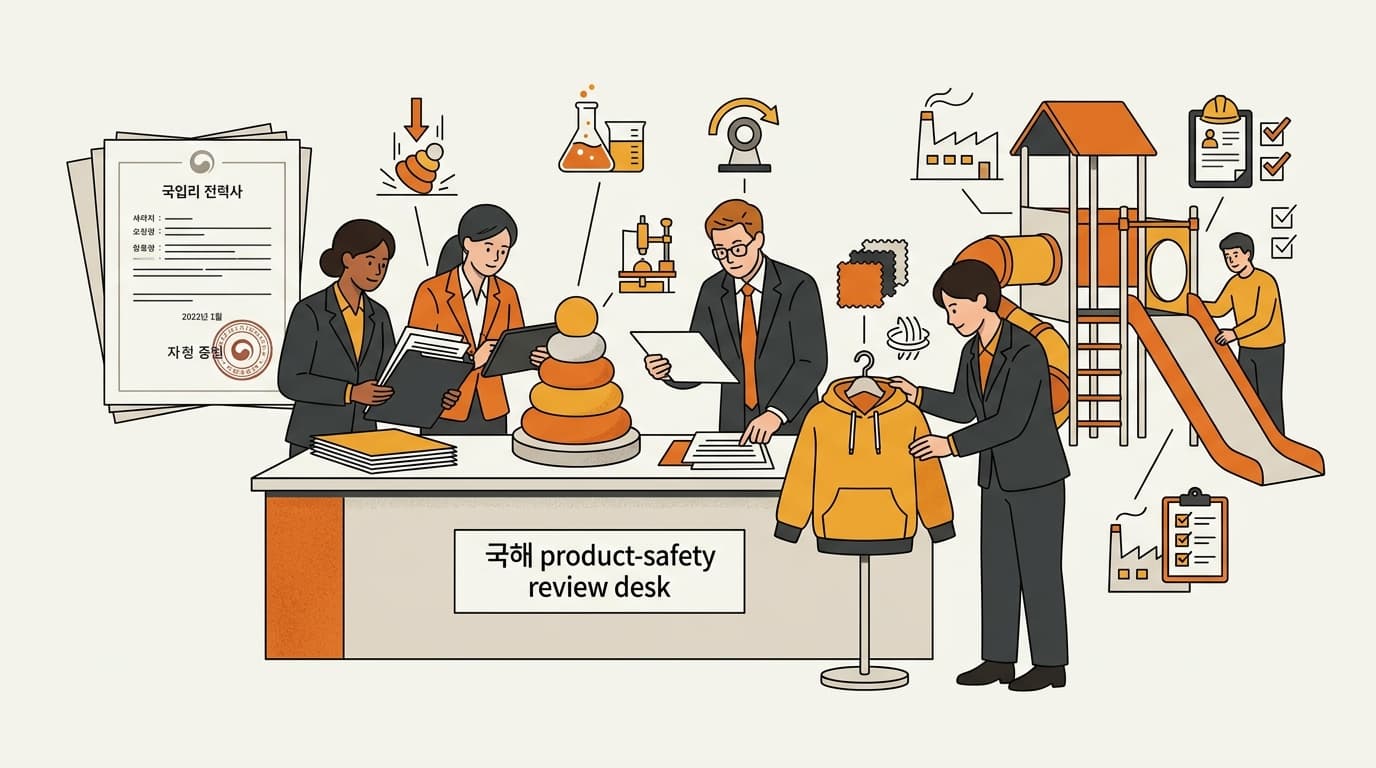
Korean Children's KC: Do Toys and Hoodies Differ?
No. A children's toy and a children's hoodie do not automatically use the same Korean product-safety path. Korea places each covered children's product into one of three Korea Certification (KC) paths: safety certification, safety confirmation, or supplier's conformity confirmation.
The product type determines which steps you must complete before importing and selling it. A toy commonly uses safety confirmation, many children's textile products use supplier's conformity confirmation, and higher-risk play or water-play equipment can require safety certification. These are common patterns, not permission to guess; the current KATS category for the exact model controls.
Why Korea has three children's KC paths
The Special Act on the Safety of Children's Products does not create one blanket approval for every product used by children. KATS, the Korean Agency for Technology and Standards, assigns listed products to a safety category and Korean standard.
Use KATS's Safety Korea product-safety portal to check the current target lists and notices before choosing a test. The list covers more than toys. It can cover children's apparel and other textiles, strollers, ride-on products, sports or protective gear, and play or water-play equipment.
The hazards differ by use. A child may mouth a toy or small part. A textile product can touch a child's skin and may need checks for chemical exposure. A ride-on or play item can create fall, pinch, or breakage hazards. One certificate would not ask the same questions of every product.
If you are not sure whether your item is a children's product at all, start with Is Your Product a Children's Product Under Korean Law. That decision comes before choosing one of the three KC paths.
Start with the product, not the certificate. Write down the model's intended use, materials, parts, and included accessories. Then match those facts to the current KATS target list and Korean safety standard.
What the three Korean KC paths actually mean
These names are not three labels for the same paper. Each path requires different steps before a product reaches Korean buyers.
| Korean path | What happens before sale | Who handles it |
|---|---|---|
| Safety certification (안전인증) | An authorized safety body tests the product and inspects the factory. The required approval is completed before import and sale. | Authorized safety body, with the manufacturer or importer |
| Safety confirmation (안전확인) | The product is tested to the Korean safety standard. The manufacturer or importer files the confirmation. | Manufacturer or importer, using the required product test |
| Supplier's conformity confirmation (공급자적합성확인) | The manufacturer or importer checks or arranges the required checks, confirms that the product meets the standard, and makes the required declaration. | Manufacturer or importer |
Safety certification is the path with a direct factory inspection. An authorized safety body tests the product against the Korean safety standard and inspects the factory. A supplier declaration does not replace those steps when the current category requires safety certification.
For safety confirmation, the product must be tested and the manufacturer or importer must file the confirmation. The product must meet the Korean safety standard before it is imported and sold. Toys commonly appear in this group, but the current KATS list still controls.
Supplier's conformity confirmation uses a supplier declaration, but the declaration is still mandatory. It records the responsible party's conclusion that the product meets the Korean standard. It does not mean an authorized safety body issued a safety certificate or inspected the factory. The product remains inside the children's KC system.
For a compact comparison of the three names, see Korea's 3 Children's-Product KC Types: Which Fits Your Item.
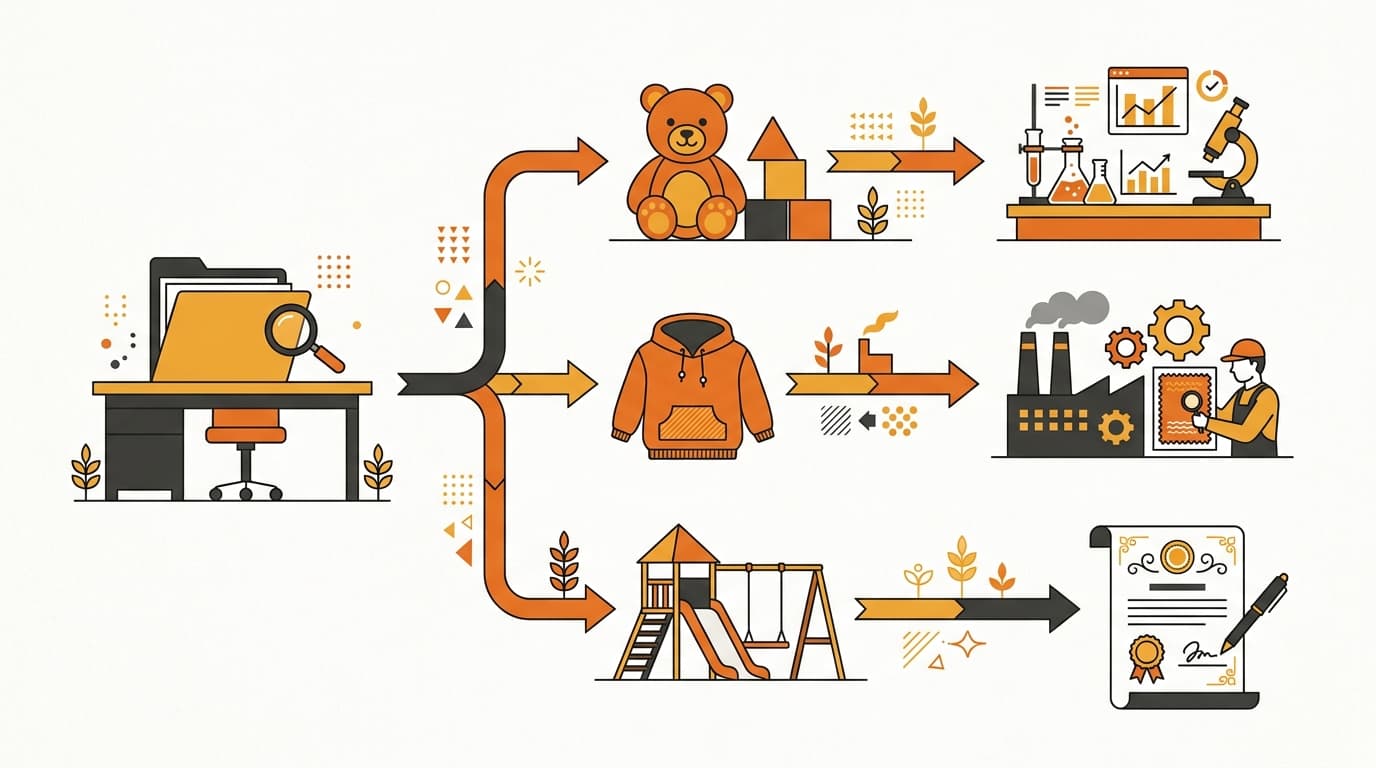
A toy, a hoodie, and play equipment can need different steps
Use this as a starting map, not as the final classification for a product.
| Example product | Common pattern on KATS product lists | Steps that may be required |
|---|---|---|
| A children's toy | Toys commonly use safety confirmation | Product testing to the Korean standard and a confirmation filing |
| A children's hoodie or other textile item | Many infant and children's textile products use supplier's conformity confirmation | Required checks and a supplier declaration |
| Higher-risk play or water-play equipment | Can require safety certification | Testing by an authorized safety body and a factory inspection |
Imagine one brand preparing these three products for Korea. The toy may need a Korean-standard test and a confirmation filing. The hoodie may need the manufacturer or importer to complete the required checks and make a supplier declaration. The play or water-play item may need an authorized body to test the product and inspect the factory.
The word commonly matters. It means the example describes a pattern on KATS lists, not a shortcut that replaces classification. A stroller, ride-on product, or sports protector must be matched to its exact current category and standard. Do not classify a product from a broad label such as “gear.”
For example, a brand may group a hoodie, a ride-on product, and a water-play item under one internal label such as children's outdoor goods. KATS does not classify products by that internal label. It looks at what the child does with the product, what the product is made of, which parts it has, and which accessories are included.
The same brand can therefore have different KC requirements for different models. A toy's path does not carry over to the brand's hoodie. A hoodie declaration does not cover a ride-on product. Each model needs its own match to the current list.
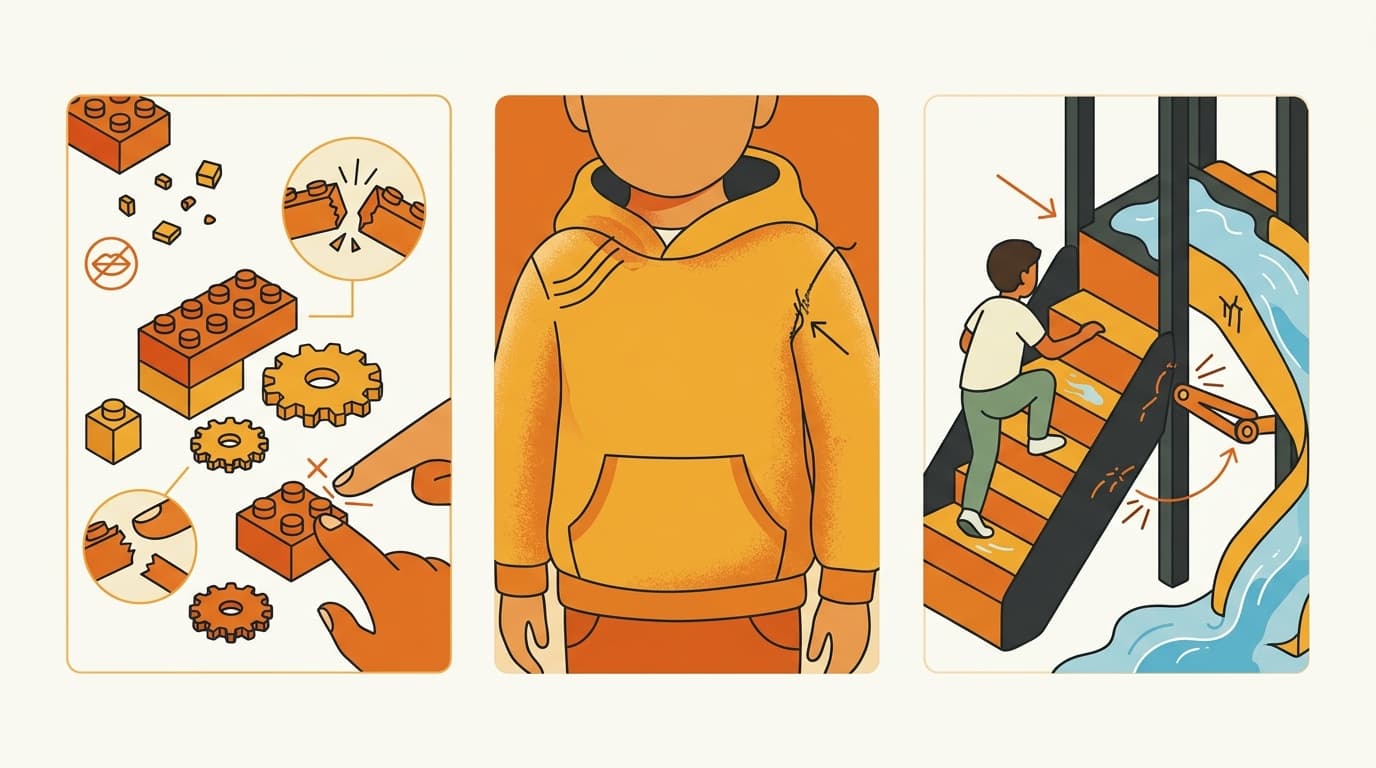
Match the product facts before ordering tests
Before shipping samples, importing stock, or booking testing, write down the facts that describe each model.
- Intended use. Write down how a child uses the item: wearing it, playing with it, riding on it, using it in water, or using it for protection. Do not rely only on an internal stock-keeping unit (SKU) name.
- Materials. List the materials used in the product and identify surfaces that may touch a child's skin or mouth. The material description should cover the actual Korean model.
- Parts. List the parts that make up the item. Small parts, fasteners, wheels, handles, and other construction details can matter when the Korean standard asks about how a child uses the product.
- Included accessories. List every accessory sold with the model. Do not classify only the main body while leaving an included part out of the product description.
- Korean category. Compare the full description with the current KATS target list and the Korean safety standard. That comparison decides whether the model needs a factory inspection, product testing plus a confirmation filing, or a supplier declaration.
This prevents an expensive mistake: ordering a test for the wrong product category. A familiar overseas product name does not prove that Korea uses the same category. The Korean list and standard decide the steps you need.
If your range has several colors or sizes, do not assume that one model's paperwork automatically covers every version. See Children's Product KC: Are All Colors and Sizes Covered? before treating variants as one item.
What the Korean product page must show before sale
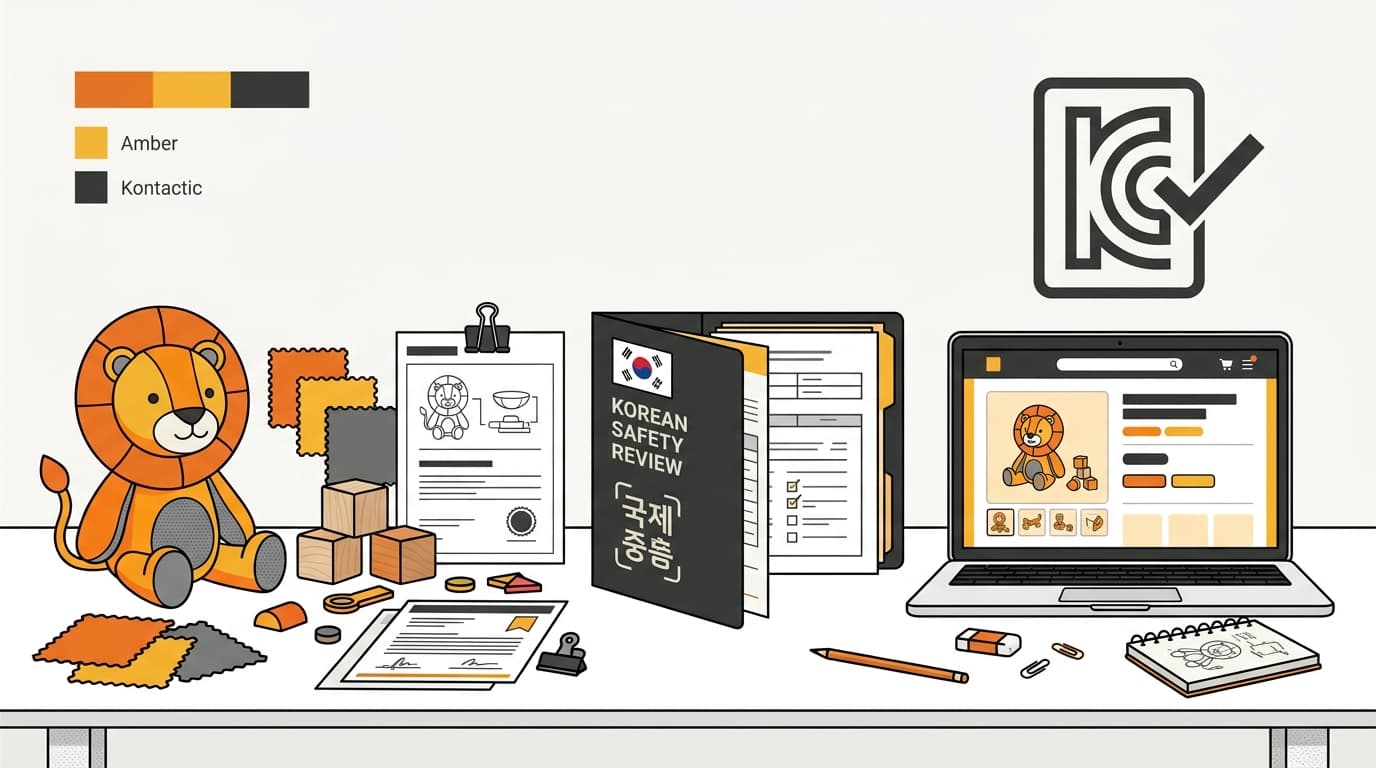
Finishing a test or declaration is not the last step. For an item covered by one of Korea's children's-product paths, the Korean online listing must carry the required KC mark and product details before sale.
The listing must include the following:
- the model;
- the manufacturer or importer;
- the country of origin; and
- the certification or confirmation information required for that model.
Keep these entries tied to the product you are actually selling. A page for one model should not point buyers to certification or confirmation information for a different model. The required KC mark should appear with the required product details, not as a substitute for them.
This is where the supplier's conformity confirmation path is often misunderstood. A supplier declaration is not an official safety certificate, but it is still a required pre-sale step. Calling it supplier's conformity confirmation does not exempt the product from KC requirements or product-page duties.
Do not publish while the required test, factory inspection, confirmation filing, or supplier declaration is still pending. For a covered children's product, complete the required test, inspection, or filing before importing and selling it. For the supplier's conformity confirmation path, complete the declaration before commercial sale.
If the product's KC steps are unfinished, read Can You Sell a Children's Product With KC Pending?.
Common questions about Korean children's KC paths
Can one brand use more than one children's KC path?
Yes. The path applies to the product category and model, not to the brand as a whole. One brand can have a toy under safety confirmation, a textile item under supplier's conformity confirmation, and another product that needs safety certification.
Is supplier's conformity confirmation the same as no KC?
No. It is a supplier-declaration path inside the children's-product safety system. The required checks, supplier declaration, KC mark, and product-page details still apply.
Does every stroller or ride-on product require safety certification?
Do not decide from the product name alone. Match the exact stroller or ride-on category to the current KATS target list and Korean standard. The list decides whether that model needs safety certification, safety confirmation, or supplier's conformity confirmation.
Can a brand import or sell while confirmation is pending?
For a covered children's product, no. Complete the required testing, factory inspection, filing, or declaration before the product is imported and sold. For supplier's conformity confirmation, the supplier declaration must be complete before commercial sale.
What should we prepare before asking which path applies?
Prepare the model's intended use, materials, parts, and included accessories. Those facts let you compare the actual product with the current KATS list instead of guessing from a label such as toy, apparel, or gear.
Check the KC path before you test
If you are preparing a children's toy, textile item, or play product for Korea, contact Kontactic to discuss the model facts and the required Korean safety steps before you ship stock.
About the author
Korean and global e-commerce operators with 15+ years of cross-border experience, led by CEO Isaac Lee — KOTRA-certified consultant and official lecturer for Seoul City and the Korea Customs Service. We run Korea market entry for overseas brands every day; this blog records what we learn in the field.
More about Kontactic →Related Articles
Korean Cosmetics Responsible Seller: Who Takes the Role
Imported cosmetics need a Korea-registered responsible seller before sale; learn who can take the role, what the Korean label must show, and what to verify.
Korea Food Import Declaration: File Every Shipment
Korea food import declaration rules apply to one shipment only, so MFDS requires a new declaration for every reorder and later checks may delay stock in Korea.
Can a Factory's KC Certificate Cover Your Brand?
Factory KC paperwork covers your private-label product only when the approved model, factory, and version match. Wireless products need a separate RRA check.