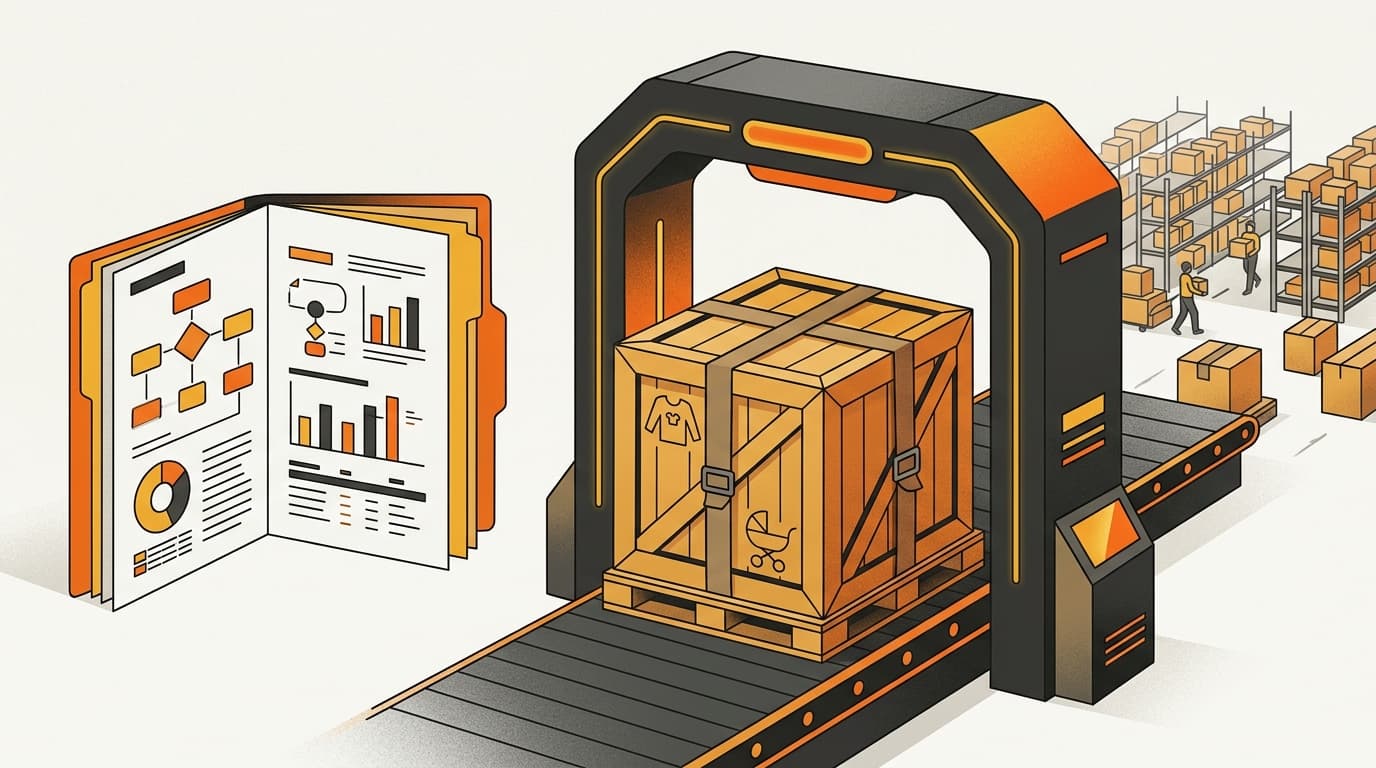
Can You Sell a Children's Product With KC Pending?
No. For an in-scope children’s product, a submitted application, unfinished test, or factory promise does not authorize ordinary commercial sale. Complete the applicable route before the relevant commercial step: Safety Certification and Safety Confirmation before the applicable manufacture or import, and Supplier’s Conformity Confirmation before placing the product on the Korean market.
Launch rule: Treat a pending application as a stop status for ordinary commercial inventory. A receipt shows submission, not completion of the Korean safety obligation.
Pending status is not a legal launch status
The phrase “KC pending” compresses several very different situations into one vague label. For a launch decision, that is not precise enough. You need to know whether the required Korean route is complete, not merely whether someone has started it.
These statuses are not interchangeable:
- Application submitted: the process has been filed, but the applicable safety obligation may still be incomplete.
- Testing underway: the required Korean evidence has not yet been completed.
- Factory inspection or review scheduled: a future appointment is not the same as a completed inspection or certification.
- Customs released: the shipment has passed an import-clearance step; that does not replace the product-safety requirement.
- Marketplace listing or inbound accepted: the platform has accepted an operational step; that does not establish statutory conformity.
The distinction matters because a brand can move a product through one system while still being blocked by another. A shipment can clear customs without that clearance becoming a children’s-product safety approval. A marketplace can accept listing data without taking responsibility for the brand’s pre-market obligation. A factory can promise that it will obtain the required Korean document later without giving you permission to release today’s inventory.
The controlling legal source is Korea’s children’s-product safety legislation, which you can verify through the Korean Law Information Center (law.go.kr). For current product categories and conformity-assessment guidance, check KATS (국가기술표준원) rather than relying on an old supplier template or a generic “KC” statement.
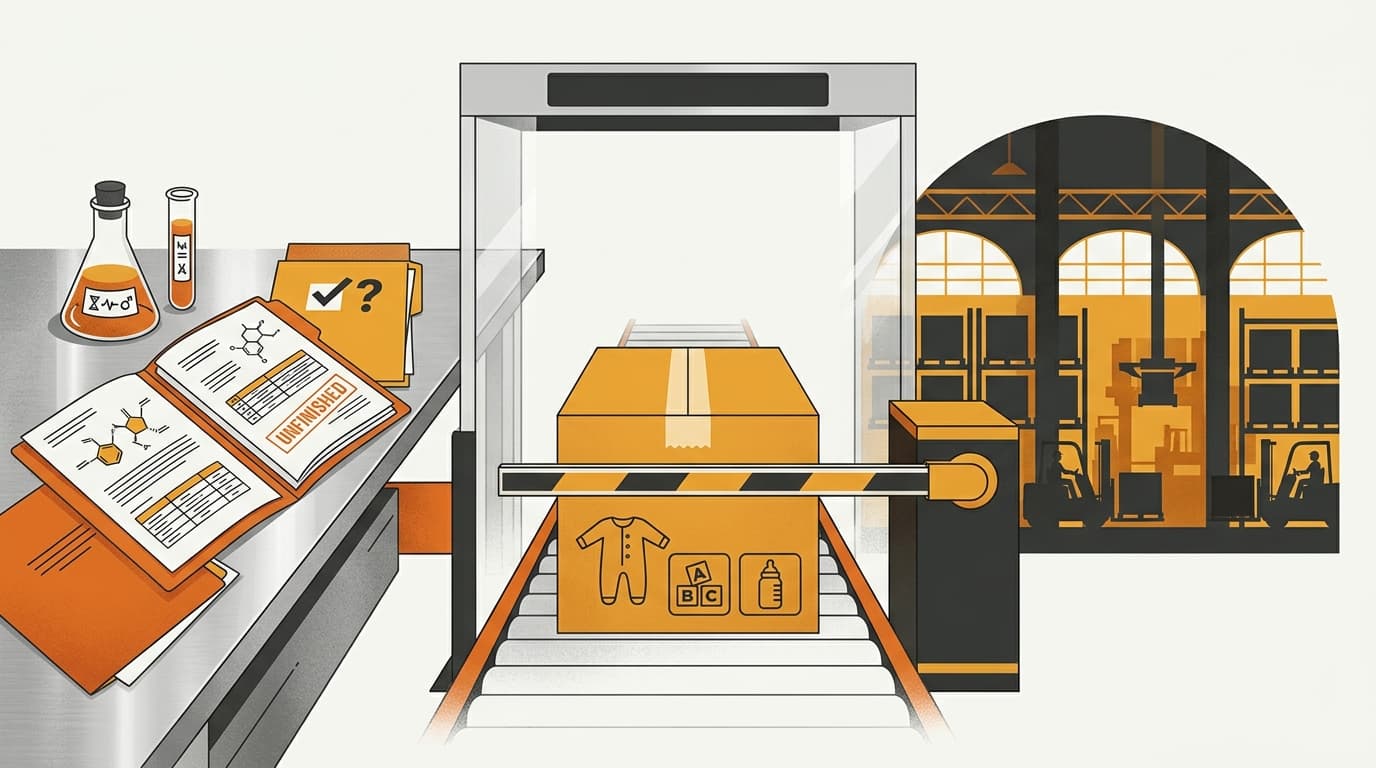
The trigger is the product’s use, not whether it is electrical
Korea’s children’s-product regime is separate from the assumption that KC matters only for powered goods. Designated child-use articles can include relevant children’s apparel, textiles, childcare articles, and gear, as well as toys. A product does not need a plug or battery to fall within the regime.
That is why “it is not electrical” is not a sufficient classification decision. An overseas safety mark or test report does not automatically satisfy the applicable Korean route. A KC result for another product or regulatory track does not transfer either.
Start with scope before asking when the shipment can move. Record the exact model and intended product category, then confirm which Korean route applies. If you are unsure whether the item is in scope, start with Is Your Product a “Children’s Product” Under Korean Law?. Then use Korea’s 3 Children’s-Product KC Types: Which Fits Your Item to compare the routes.
A children’s apparel item, textile, or childcare article can therefore face a launch gate even when the team has never considered electrical certification. The correct question is not “Do we have a familiar certificate?” It is “What does Korean law require for this exact child-use product, and has that requirement been completed for the product we intend to import or sell?”
Scope check: Non-electrical does not mean outside the children’s-product regime. Confirm the designated category and applicable conformity route for the exact product before treating inventory as launch-ready.
What “complete” means under each Korean route
The three routes use different evidence. That difference is the reason a certificate number is not always the right test for readiness.
| Applicable route | What must be complete | What a pending status does not establish |
|---|---|---|
| Safety Certification | The required Korean safety-certification body has completed product testing and the required factory inspection, with certification in place before the relevant manufacture or import. | An application receipt, testing appointment, unfinished test, overseas report alone, or factory promise is not the completed certification. |
| Safety Confirmation | The required Korean testing and the safety-confirmation report have been completed before the relevant manufacture or import. | A Safety Certification number is not interchangeable with the required Safety Confirmation report. |
| Supplier’s Conformity Confirmation | The manufacturer or importer has completed the conformity confirmation and retained the supporting evidence before placing the product on the Korean market. | The absence of an agency-issued certificate number is not a blanket exemption from the conformity obligation. |
Safety Certification requires completed product testing and a completed factory inspection. Certification must be in place before the relevant manufacture or import. A brand should not treat a filing receipt or a test report that has not produced the required Korean certification as permission to import ordinary saleable stock.
For Safety Confirmation, the required Korean testing and the safety-confirmation report are the decisive completion points. Do not solve a missing report by attaching a different safety-certification record. The routes are related, but they are not interchangeable labels for the same document.
For Supplier’s Conformity Confirmation, there may be no agency-issued pre-approval certificate to wait for. That changes the evidence format, not the launch discipline. The manufacturer or importer still has to complete the confirmation and retain the supporting file before placing the product on the Korean market.
KATS is the appropriate official source for checking the current route language and product-specific requirements. In practice, the most useful internal question is: Which route applies, what event completes it, and where is the evidence tied to this exact product?
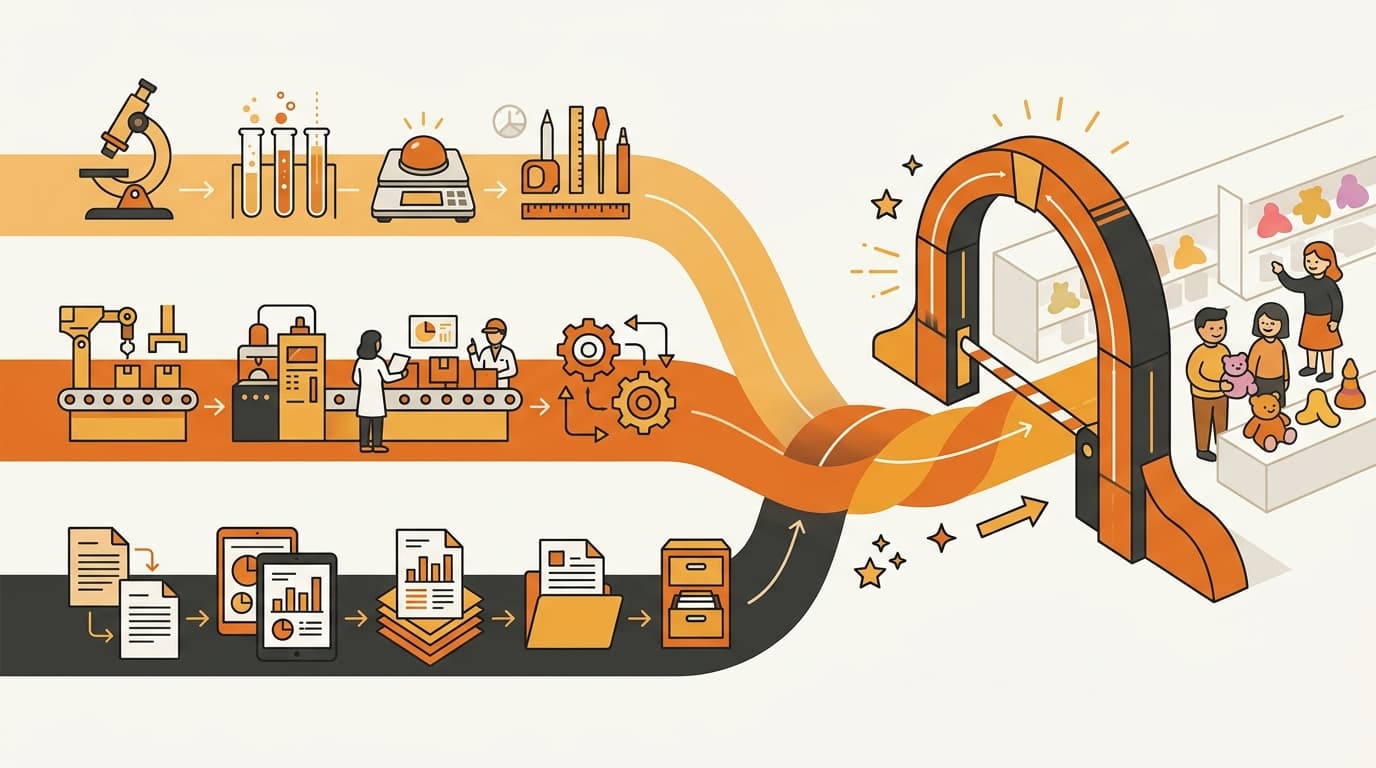
Keep samples and commercial inventory in separate lanes
Testing units, samples, and exhibition movements are not the same as ordinary inventory intended for sale. A narrowly defined treatment for one of those purposes should never be used as a general launch workaround.
Before moving anything, label the operational purpose of the shipment:
- Testing unit: sent for the work needed to establish the applicable Korean evidence.
- Sample or exhibition unit: moved for a limited non-standard purpose that must be checked against the applicable conditions.
- Commercial inventory: stock imported, manufactured, warehoused, or made available with the intention of selling it in Korea.
The third lane is the one that must wait for the relevant launch gate. Do not send a full commercial shipment to a Korean warehouse and describe it as samples because the application is still pending. Do not activate ordinary marketplace availability and rely on the fact that a few units were originally used for testing. Keep the paperwork, physical stock, and marketplace status aligned with the actual purpose of the movement.
If your logistics team believes an exception applies, verify the exact condition against current Korean official guidance before shipping. Confirm the permitted purpose, the specific product and quantity covered, and what cannot be done with those units. The exception question is separate from the commercial-sale question; it is not a shortcut around completed safety conformity.
This separation also prevents a common accounting and operations error: treating a customs event as a product-release event. Import clearance answers whether the goods can move through the customs process. It does not answer whether the goods can be commercially placed on the Korean market under the children’s-product safety regime.
Run this pre-release gate before importing or activating sales
Use the following sequence for every in-scope product. It is deliberately operational: each step should produce a record that another person can check before stock or a listing is released.
- Confirm the product scope. Record the exact model and the reason it may fall within the designated children’s-product regime. Do not close the review merely because the item is non-electrical or sold as an adult product in another market.
- Name the applicable route. Write down whether the item follows Safety Certification, Safety Confirmation, or Supplier’s Conformity Confirmation. If a supplier says only “KC is in progress,” ask which of these routes it means.
- Close the route-specific requirement. For Safety Certification, verify completed product testing, completed factory inspection, and certification in place. For Safety Confirmation, verify the required Korean testing and completed report. For Supplier’s Conformity Confirmation, verify completed confirmation and retained supporting evidence.
- Match the evidence to the shipment. Align the exact model, factory or manufacturer, responsible Korean importer, and supporting technical file. If a factory, model, or importer changes, pause and check whether the existing evidence still matches instead of assuming it transfers automatically.
- Prepare the Korean safety information. Before release, align the required Korean safety marking and product information with the approved product and the documents supporting it. A translated listing alone is not the same as completing this product-information step.
- Separate the release decisions. Keep test, sample, exhibition, and commercial inventory statuses distinct. Authorize the route’s relevant commercial manufacture, import, or market placement only after the applicable gate is complete.
Use the Korea Customs Service to verify the import-clearance side of the shipment, but keep that check separate from children’s-product conformity. Platform workflows are a separate layer. Coupang inbound verification: label and certification review explains why a marketplace may request evidence. An inbound or listing decision still does not replace the statutory safety step.
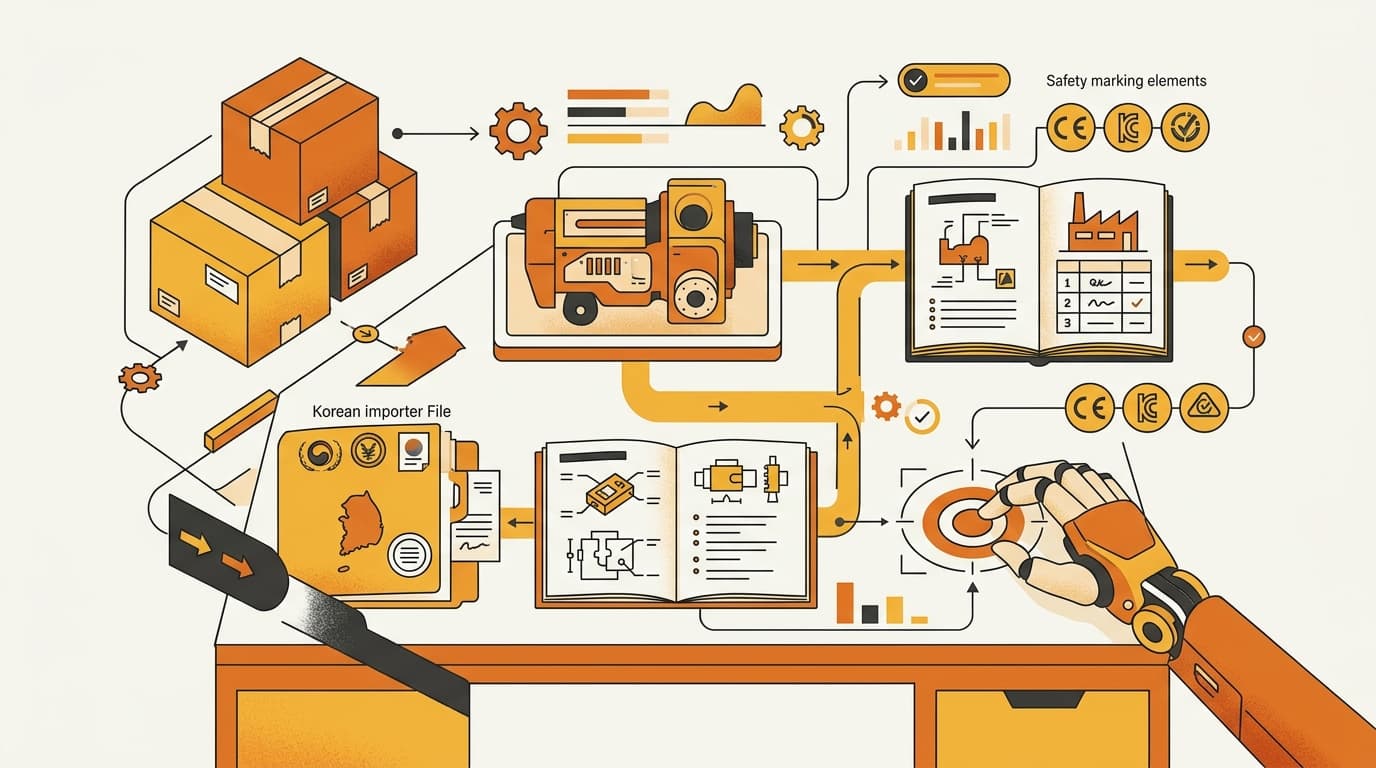
Common questions about selling while KC is pending
Can I import stock if the KC application has been filed?
Not as ordinary commercial inventory when the applicable route requires completion before manufacture or import. A filing proves submission; it does not prove completed certification, a completed safety-confirmation report, or completed supplier conformity. A narrowly defined sample, testing, or exhibition movement must be checked separately and cannot be treated as launch permission.
Does an overseas test report count as Korean safety completion?
No, not by itself. It does not prove that the Korean route is complete for this product and its responsible parties. Depending on the route, you still need certification after testing and inspection, a completed Safety Confirmation report, or completed Supplier’s Conformity Confirmation.
If there is no KC certificate number, is the product exempt?
No. Supplier’s Conformity Confirmation may not result in an agency-issued pre-approval certificate, but the manufacturer or importer still has to complete the confirmation and retain supporting evidence before placing the product on the Korean market.
Can Coupang accept my listing or can customs release mean I can sell?
No. Marketplace acceptance and customs release are separate operational events. Neither substitutes for the applicable children’s-product safety step.
What if the factory, model, or Korean importer changes after testing?
Pause the release and check the scope of the evidence against current KATS guidance. The exact model, factory or manufacturer, and responsible Korean importer must match. The technical file, Korean safety marking, and product information must match too.
Check the launch gate before stock moves
If you are unsure which children's-product route applies or whether your documents match the exact product and importer, contact Kontactic for a practical review of the launch sequence.
About the author
Korean and global e-commerce operators with 15+ years of cross-border experience, led by CEO Isaac Lee — KOTRA-certified consultant and official lecturer for Seoul City and the Korea Customs Service. We run Korea market entry for overseas brands every day; this blog records what we learn in the field.
Meet the Kontactic team →Related Articles
Can USB-Powered Products Avoid Korea’s KC Safety Rules?
USB power does not automatically avoid Korea’s KC rules. Learn how KATS safety review, RRA EMC checks, and customs timing affect your shipment before import.
Can Coupang Buyers Pay Two Charges With Free Shipping?
On Coupang, free shipping can still leave the buyer paying two return charges: the original delivery cost and the cost of sending the parcel back to the seller.
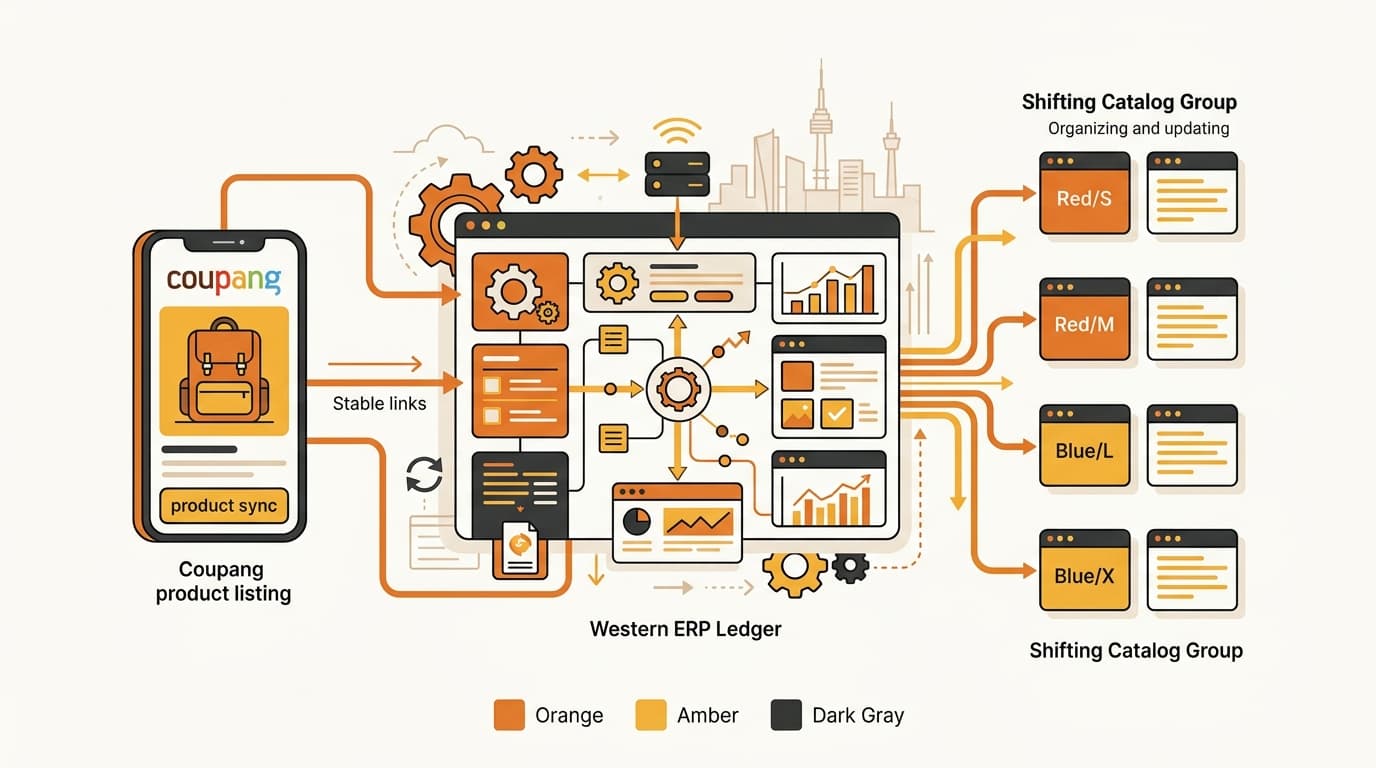
Coupang Product IDs: One ID Cannot Cover Every Variant
One Coupang product ID cannot cover every ERP variant; keep your brand SKU as the main key and map listing, option, edit, and order values to each SKU.