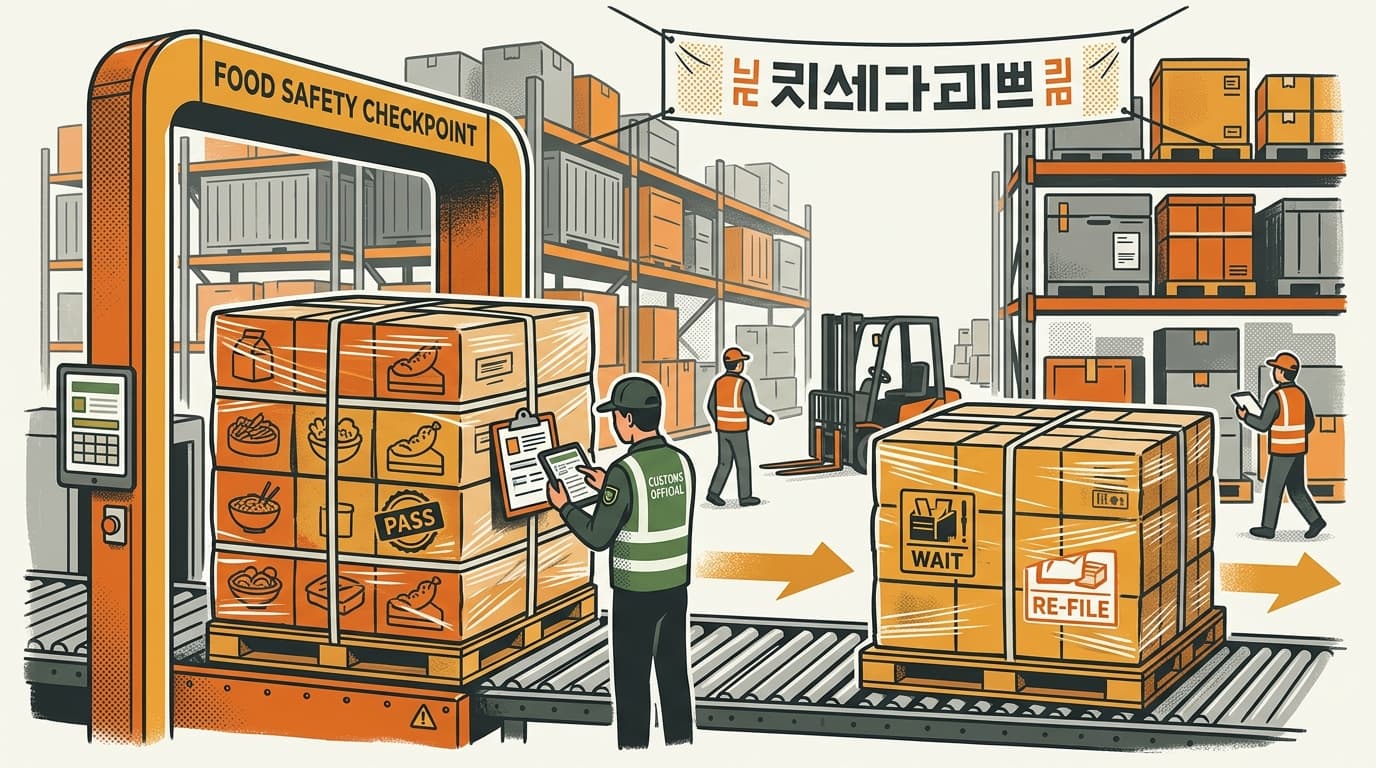
Korea Food Import Declaration: File Every Shipment
An accepted food import declaration is not a permanent pass in Korea. For each food shipment sold in Korea, the Korean importer must file a new declaration with the Ministry of Food and Drug Safety (MFDS). The importer must complete that filing before customs releases the goods, and MFDS may choose a different check next time.
Imagine a US beverage brand that clears its first shipment and puts the product on Coupang. The next shipment has the same product name and the same demand, but it still needs its own MFDS declaration. A document check may be enough. MFDS may instead ask for a field or physical check, laboratory test, or random sampling. Until that shipment completes that step, the seller cannot treat the incoming goods as stock available for sale.
MFDS import declaration: A notice that the Korean importer submits to MFDS for food imported for sale. It applies to one shipment, not future reorders. It is not a permanent pass.
The first clearance covers one shipment, not future reorders
The first accepted declaration shows that one shipment completed the required import step. It does not mean every later shipment will be released without a new filing.
Reordering the same recipe from the same manufacturer still requires a new filing. Korea does not attach the first result to every future box made under the same product name.
Keep these facts separate:
- The product was made in the same factory before.
- One shipment passed Korea’s import process.
- A later shipment has been declared and released.
An earlier shipment from the same factory and its clearance do not show that this shipment has been declared and released.
Use the MFDS imported-food portal and the current Food Sanitation Act on law.go.kr to check the official rule and current filing requirements. A Coupang listing cannot replace either source.
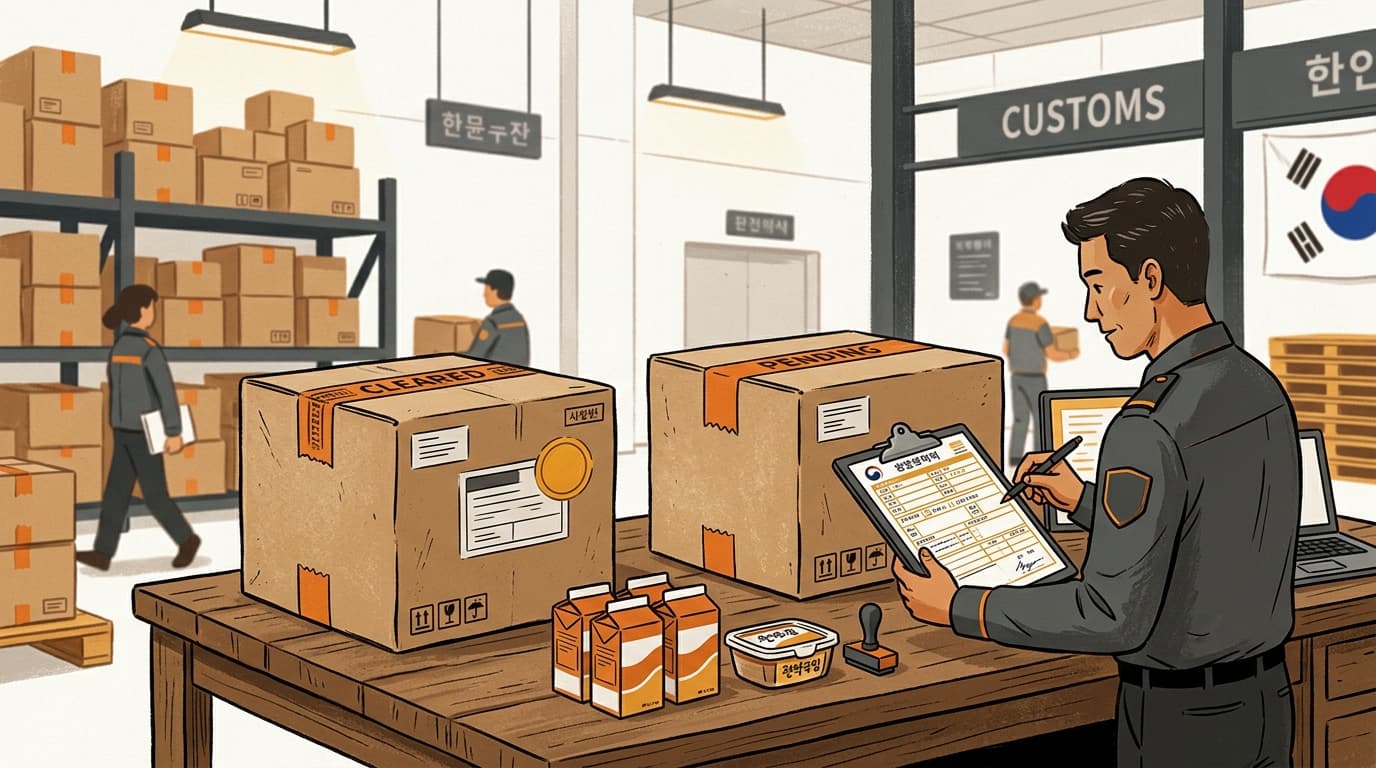
The Korean importer files for each physical shipment
The importer of record is the Korean entity that files the MFDS declaration for the shipment. It may be different from the company that sells the food in Korea. The importer submits the declaration and responds if MFDS asks for more information or finds a problem with the shipment.
The overseas brand still has a job. It must give the Korean importer truthful, current details about the product and its manufacturer. A clearance in the brand’s home country does not replace the Korean filing. Neither does an old declaration from an earlier shipment.
For a reorder, the filing follows the goods in the cartons, not the product page on Coupang. In practical terms, the brand should provide current product and manufacturing information before the shipment leaves the supplier. The importer then files a new MFDS declaration for that physical shipment before customs release.
The local importer role is separate from the marketplace account. Who Is the Importer of Record When You Sell on Coupang? explains why that role matters. Korean Importer of Record Needs a Business Registration Number covers the local registration point.
The basic sequence is simple:
- The brand confirms which product and manufacturing details match the incoming cartons.
- The brand sends those current details to the Korean importer.
- The Korean importer files a new MFDS declaration for the shipment.
- The shipment completes any required MFDS check before customs release.
A foreign brand cannot treat its own home-country paperwork as a substitute for step three.
A repeat shipment can face a different MFDS check
The same product does not guarantee the same check. A repeat shipment may receive only a document check. MFDS can also require a field or physical check, laboratory test, or random sampling.
These checks can look different on the ground:
- Document check: MFDS reviews the information submitted for the shipment.
- Field or physical check: An inspector checks the actual goods or their packaging.
- Laboratory test: Samples are tested before the shipment can complete the required review.
- Random sampling: MFDS selects a shipment or sample even though an earlier shipment passed.
Passing the first time does not promise a document-only review next time. A later laboratory test also does not automatically mean the first shipment was non-compliant. It means MFDS required a different check for the later shipment.
For example, a cereal brand may clear its first shipment after a document review. The next shipment may be selected for sampling. The purchasing team should not count those cartons as immediately available just because the earlier cartons cleared and sold.
Why Korea Inspects Every Food Shipment, Not Just Your First explains why a previous pass does not remove later checks. The planning point is simple: leave time for the check MFDS actually requests.

A recipe or label change can change the next filing
Matching the earlier product details does not remove the new filing. MFDS can still choose a different check for the later shipment.
A package or label change can change the declaration. MFDS may also review the goods differently, even if the product name stays the same.
Check these details before calling a shipment a reorder:
- recipe
- flavor
- manufacturer
- country of origin
- package
- label
Suppose a French snack brand changes its manufacturer to a factory in Poland. It also changes from sea-salt flavor to barbecue and updates the package. The sales team may call this a normal reorder because the brand and product category stayed the same. The Korean importer sees different product and manufacturing details and should check the shipment before dispatch.
The rule is not that every change automatically blocks import. Tell the importer before the goods leave. Let the current Korean requirements decide what the shipment needs. Do not assume that an old declaration covers a changed product.
A label change can be easy for an e-commerce team to overlook. The new box may look almost the same in a warehouse photograph. If the label or package changed, send the current version to the importer instead of reusing old information without checking.
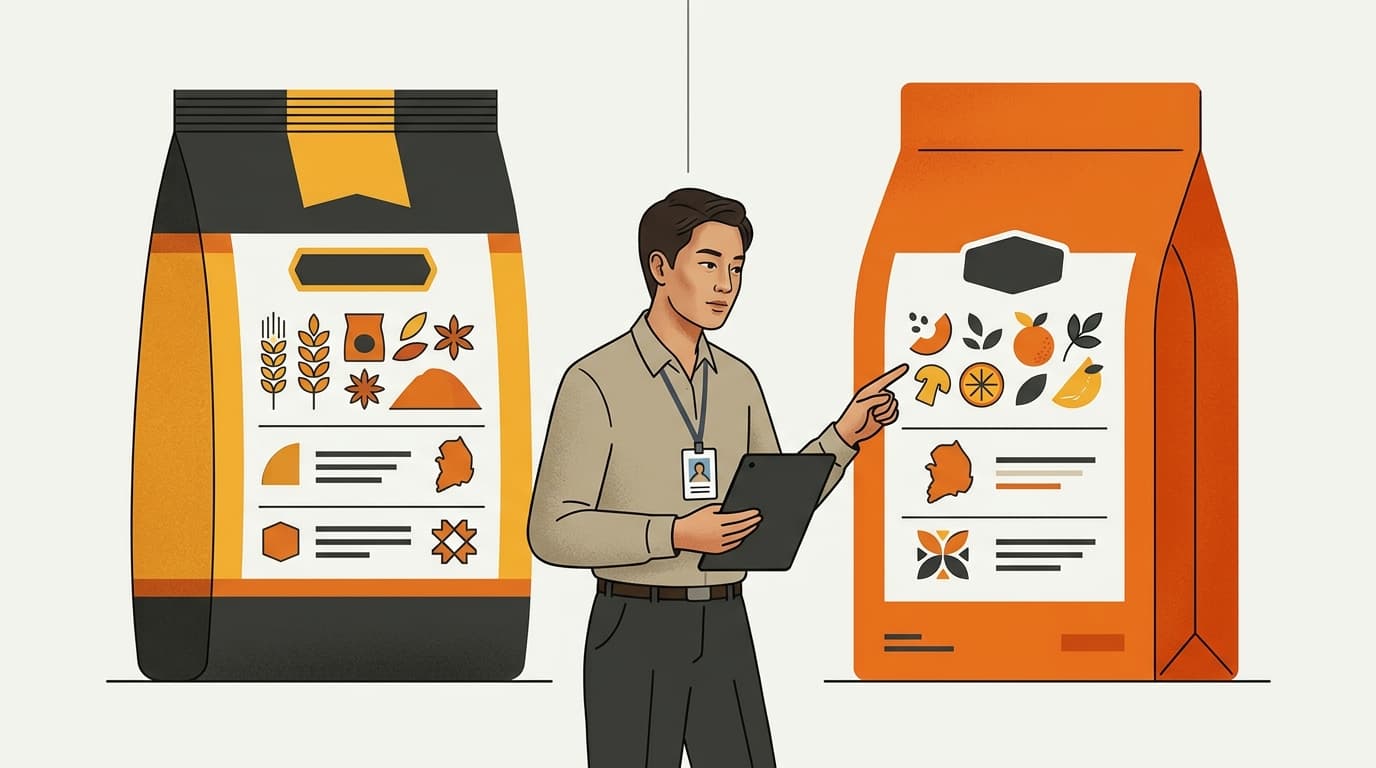
Plan every reorder around a new declaration
Build two separate dates into every replenishment plan: when the supplier dispatches the goods and when the shipment is released in Korea for sale. The first date comes from the factory. The second depends on the new declaration and any MFDS check.
Use this checklist before sending the next order:
- Compare the incoming goods with the last shipment that cleared Korea.
- Confirm whether the recipe, flavor, manufacturer, country of origin, package, or label changed.
- Send truthful, current product and manufacturing details to the Korean importer.
- Confirm that the importer will file a new MFDS declaration for this shipment.
- Keep the stock plan flexible if MFDS requests a physical check, laboratory test, or random sampling.
- Treat the live Coupang page as a demand signal, not as proof that the inbound stock has cleared.
Do not schedule the last local units to sell out on the same day the next shipment is expected to arrive. A later shipment can need more work than the first one. The listing can stay live while MFDS reviews the shipment. Customers may see the product page even though the seller has no stock to sell.
The exact supporting information can vary by product. The shipment-by-shipment declaration is the part that should stay fixed in your calendar.
A live Coupang listing is not import clearance. It shows that a product page exists. It does not prove that the next physical shipment has completed the MFDS and customs steps needed for sale.
Check your next Korean food shipment before it leaves
Planning a Korean food, beverage, or dietary supplement reorder? Contact Kontactic to discuss the shipment details, importer role, and MFDS filing questions before dispatch.
About the author
Korean and global e-commerce operators with 15+ years of cross-border experience, led by CEO Isaac Lee — KOTRA-certified consultant and official lecturer for Seoul City and the Korea Customs Service. We run Korea market entry for overseas brands every day; this blog records what we learn in the field.
More about Kontactic →Related Articles
Can a Factory's KC Certificate Cover Your Brand?
Factory KC paperwork covers your private-label product only when the approved model, factory, and version match. Wireless products need a separate RRA check.

Can You Reject a Coupang Exchange? Only Two Reasons
Coupang exchange rejection is limited to SOLDOUT or WITHDRAW. Learn when each code applies—and what to do when a seller simply prefers a refund instead.
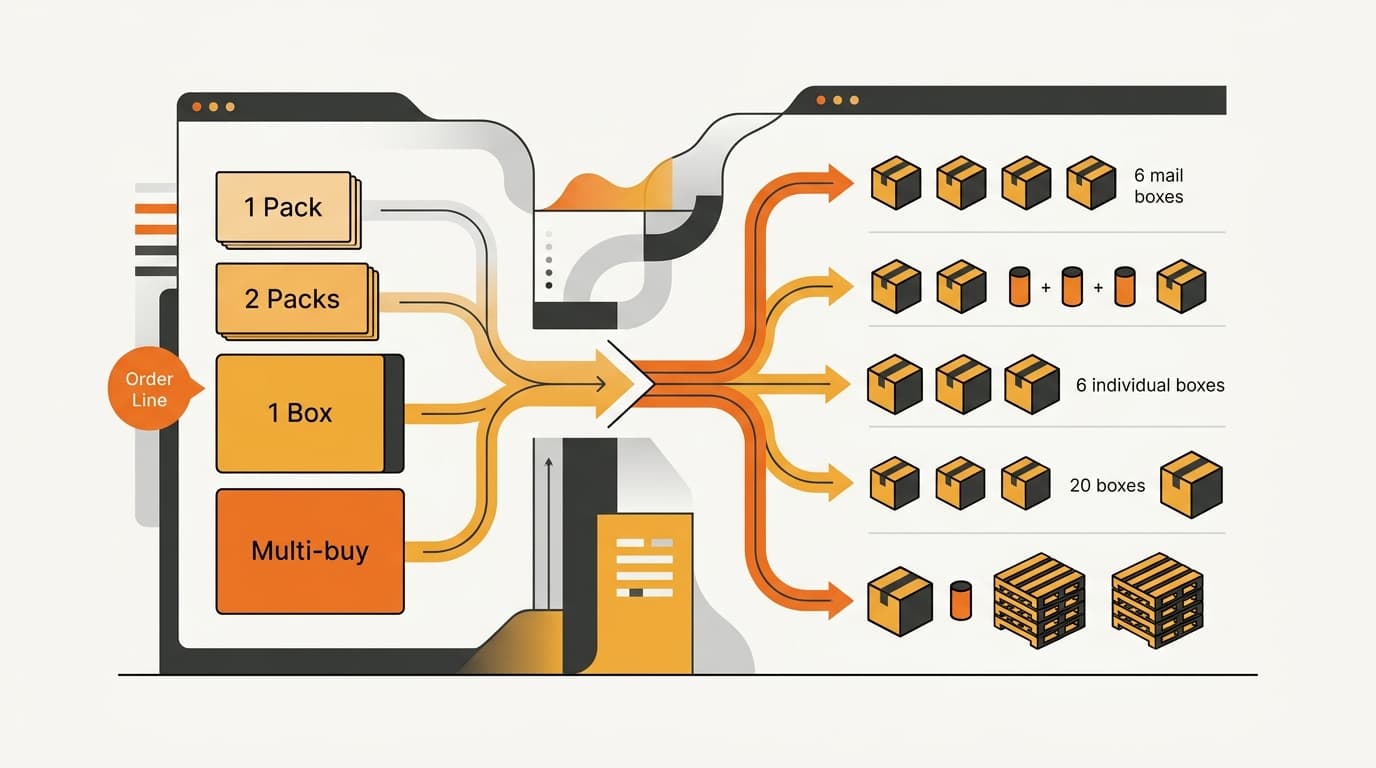
Coupang Order Lines: One Line Is Not One Unit
A Coupang order line can represent a generated quantity option, so your connector must map it to a base SKU and physical quantity before stock movement.