
Is Your Product a "Children's Product" Under Korean Law?
The short answer is that Korea classifies a product as a children's product (어린이제품) based on who it is intended for — generally children roughly age 13 and under — not on what product category it belongs to. That single determination, not the item's general safety profile, is what pulls an otherwise-ordinary toy, garment, or piece of gear onto a stricter, separate certification regime under Korea's Special Act on the Safety of Children's Products, administered by KATS (국가기술표준원). Get this first call wrong and you run the wrong tests, apply the wrong KC mark, and risk a blocked or recalled listing on Coupang.
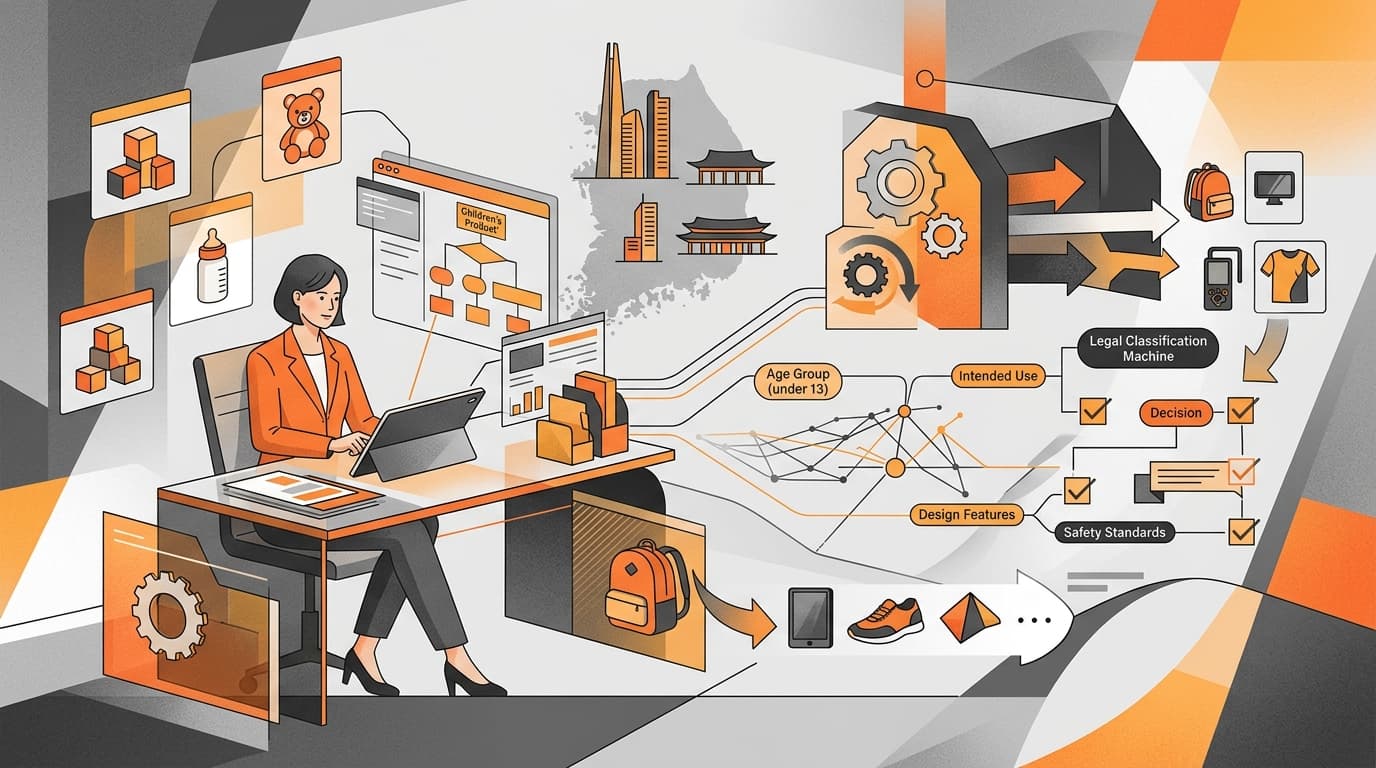
Most Western brands miss this because the logic runs backward from what they expect. They ask, "What kind of product is this, and what certification does that category need?" Korea asks first, "Is this product intended for children?" If the answer is yes, the product jumps tracks — before you ever get to category-specific testing.
The threshold test is intended user age, not product category
The trigger is intended use by children. Korea's Special Act on the Safety of Children's Products captures goods that are meant to be used by children — a group commonly understood as age 13 and under — and that classification overrides the usual category-first instinct.
This is the part that surprises brands. A product does not need to be an obvious toy to fall in. A backpack, a water bottle, a set of bedding, a nightlight, a small piece of furniture — if it is designed for, marketed to, or realistically used by children in that age band, the children's-product regime can apply. The determining factor is the intended user, established through how the product is designed, packaged, marketed, and sold.
Children's product (어린이제품): a product intended for use by children — commonly understood as age 13 and under — which places it under Korea's Special Act on the Safety of Children's Products rather than the general consumer-goods safety framework. The classification follows the intended user, not the product category.
Because the test is about the user and not the shelf, you cannot answer it by looking up an HS code or a product type alone. You have to make an evidence-based determination for each SKU about who it is for. That is why the intended-user call is the true first step of the compliance plan — everything downstream inherits it.
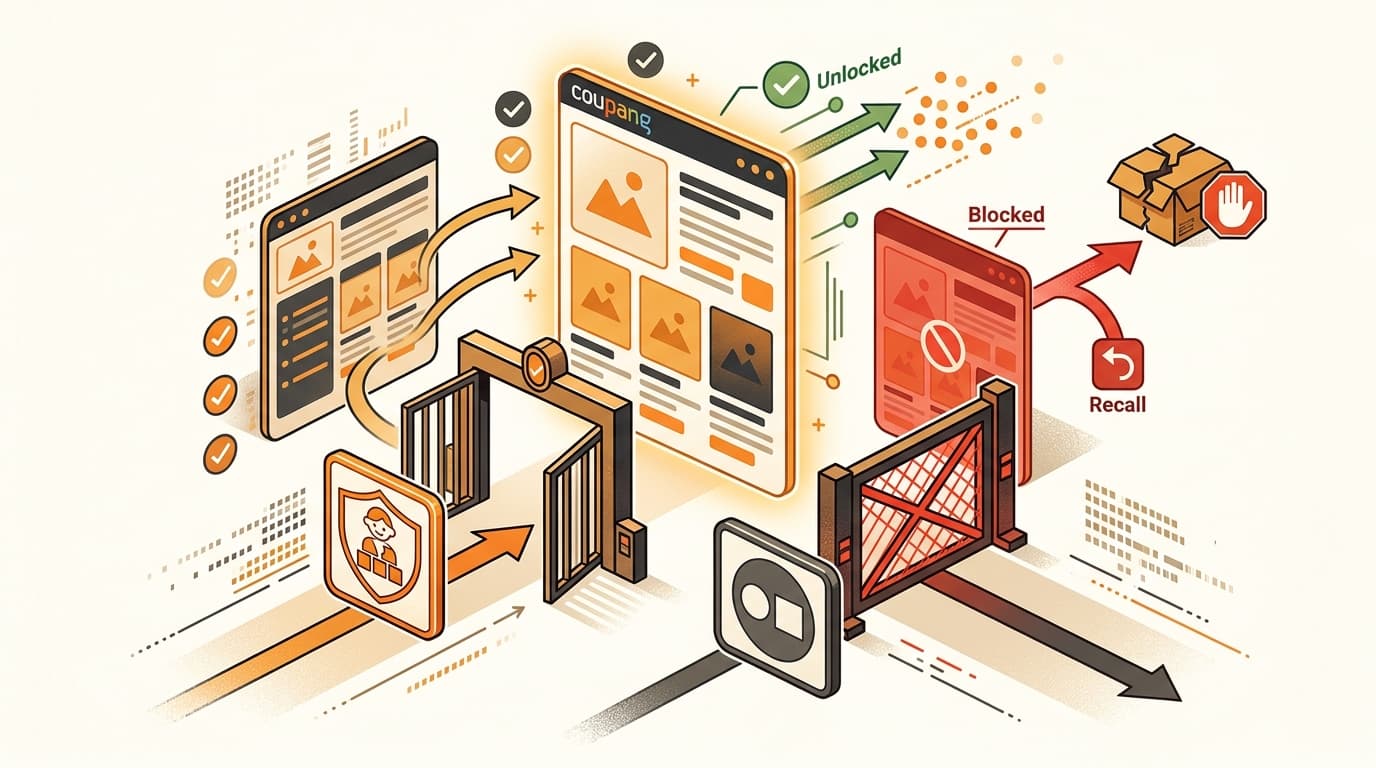
Why Korea keeps a separate regime for children's products
Korea treats children's products as a distinct risk class, and that is the whole reason a separate law exists. Choking hazards from small parts, chemical exposure from paints, coatings, and plasticizers, and mechanical hazards from moving parts or sharp edges present a different risk profile for a small child than for an adult. So instead of folding these concerns into the general consumer-goods safety rules, Korea gives children's products their own statute and their own certification tiers.
That design choice has a practical consequence for you: the standards, the tests, and the mark are calibrated to child safety specifically. A product that would pass an ordinary consumer-goods safety check can still fail the children's-product standard because the thresholds — for extractable heavy metals, for small-parts geometry, for phthalate content — are set with a child user in mind. Passing the general regime does not mean you have passed the children's one. They are separate gates.
This is also why you should not assume one certification process covers a mixed catalog. If part of your line is intended for adults and part for children, those SKUs travel different paths from the very first step.
How classification changes the certification path
Once a product is classified as a children's product, it is sorted into risk-based conformity tiers, and the tier determines your testing scope, your mark, and your timeline. This is the operational core of why the threshold call matters so much.
Broadly, the regime works like this:
- Higher-risk items require third-party certification with mandatory testing before sale. This is the heaviest path — independent lab testing against the applicable Korean children's-product standard, with certification issued before you can legally mark and sell.
- Lower-risk items follow lighter conformity routes, with less onerous testing and self-declaration or supplier-declaration mechanisms depending on the item.
Which tier a product lands in drives how much lab work you commission, how long the process takes, and how much it costs — none of which you can scope until the intended-user question is settled. In practice, the sequence is: confirm the product is a children's product, identify the applicable standard and risk tier, run the required testing, then apply the correct KC mark. Skipping straight to "let's just get KC" without the classification step is how brands end up paying for the wrong tests.
A general consumer-goods KC mark on a product that legally qualifies as a children's product is not "close enough." It is the wrong mark under the wrong regime — a compliance gap that Korean authorities and Coupang can treat as a violation.
If you want to see how a single SKU gets mapped to its exact obligation before shipping, we walk through that logic in how we map each SKU to the right Korean regulation, and the general certification cost and timeline picture is covered in our KC certification cost and timeline guide.

The certifying body is KATS — not MFDS
The children's-product regime is administered by KATS (국가기술표준원), Korea's national technology and standards body — not by the MFDS (식약처), which handles cosmetics, food, and health functional foods. This matters for any brand with a mixed catalog.
If you sell skincare and children's accessories, or supplements and kids' gear, you are dealing with two different authorities, two different bodies of standards, and two different marks. The process that clears your cosmetics through the MFDS does nothing for your children's products under KATS, and vice versa. Assuming one process covers everything is one of the more expensive assumptions a Western brand can make on the way into Korea.
You can verify the framework at primary sources rather than taking any agency's summary on faith. The statute text and enforcement decree for the Special Act on the Safety of Children's Products are published on Korea's national law portal, law.go.kr. KATS publishes the applicable safety standards and the KC certification structure. And Coupang's official seller and developer documentation sets out the listing and labeling requirements you must meet before a product goes live.
What this means for a Coupang launch
Before a children's product goes live on Coupang, the correct children's-product KC mark and labeling must be in place. Coupang enforces category-linked compliance at the listing stage, and a product that legally qualifies as a children's product but carries only a general consumer KC mark is a live compliance gap. That gap can surface as a listing takedown, a hold, or — if it reaches a regulator — a recall.
The failure mode is almost always the same. A brand certifies a product under the general regime, lists it, sells for a while, and then a review or a complaint flags that the item is actually a children's product carrying the wrong mark. Now the fix is retroactive: re-test under the children's-product standard, re-mark, and re-label — while the listing sits blocked and inventory sits idle. Resolving the classification before testing is far cheaper than resolving it after a takedown.
This is why the intended-user determination is not a paperwork detail. It is the decision that shapes your entire compliance and launch plan.
Common questions
Does a product marketed to adults but used by children count as a children's product? This is the classic gray zone. Classification looks at intended and realistic use, so a product openly marketed to adults but designed and realistically used by children in the 13-and-under band can still be captured. Dual-use and borderline items are genuinely contestable — resolve them deliberately, before you commission testing, rather than assuming the adult framing settles it.
If my product already passed a general KC safety check, am I done? No. The general consumer-goods regime and the children's-product regime are separate gates with different standards. Passing one does not clear the other. A children's product needs the children's-product standard, tier, and mark.
Who decides which risk tier my children's product falls into? The tier follows the applicable Korean children's-product standard for that item type, which determines whether it needs third-party certification with mandatory testing (higher-risk) or a lighter conformity route (lower-risk). You establish this by matching the SKU to its specific standard after confirming it is a children's product.
Where can I verify all of this myself? Start with the Special Act on the Safety of Children's Products on law.go.kr, the KATS (국가기술표준원) standards and KC certification pages, and Coupang's official seller documentation for listing and labeling requirements. Those are the primary sources — treat any third-party summary, including this one, as a pointer to them.
What is the very first thing I should do? Document the intended-user determination for each SKU. That single call drives every downstream requirement — the regime, the standard, the tier, the testing, and the mark. Where an item is a borderline dual-use case, resolve it up front.
Not sure which regime your SKUs fall under?
Talk to Kontactic about classifying each SKU before you test. We map the intended-user call, the KATS standard, and the correct KC mark so your Coupang launch clears the first time.
About the author
Korean and global e-commerce operators with 15+ years of cross-border experience, led by CEO Isaac Lee — KOTRA-certified consultant and official lecturer for Seoul City and the Korea Customs Service. We run Korea market entry for Western brands every day; this blog documents what we learn in the field.
More about Kontactic →Related Articles
Can You Reject a Coupang Exchange? Only Two Reasons
Coupang exchange rejection is limited to SOLDOUT or WITHDRAW. Learn when each code applies—and what to do when a seller simply prefers a refund instead.
Coupang Order Lines: One Line Is Not One Unit
A Coupang order line can represent a generated quantity option, so your connector must map it to a base SKU and physical quantity before stock movement.
Korean Importer Registration: Why a POA Is Not Enough
A power of attorney cannot establish Korean importer registration; corporate-authority proof and Korean importer records are still required for the filing.