Can a Factory's KC Certificate Cover Your Brand?
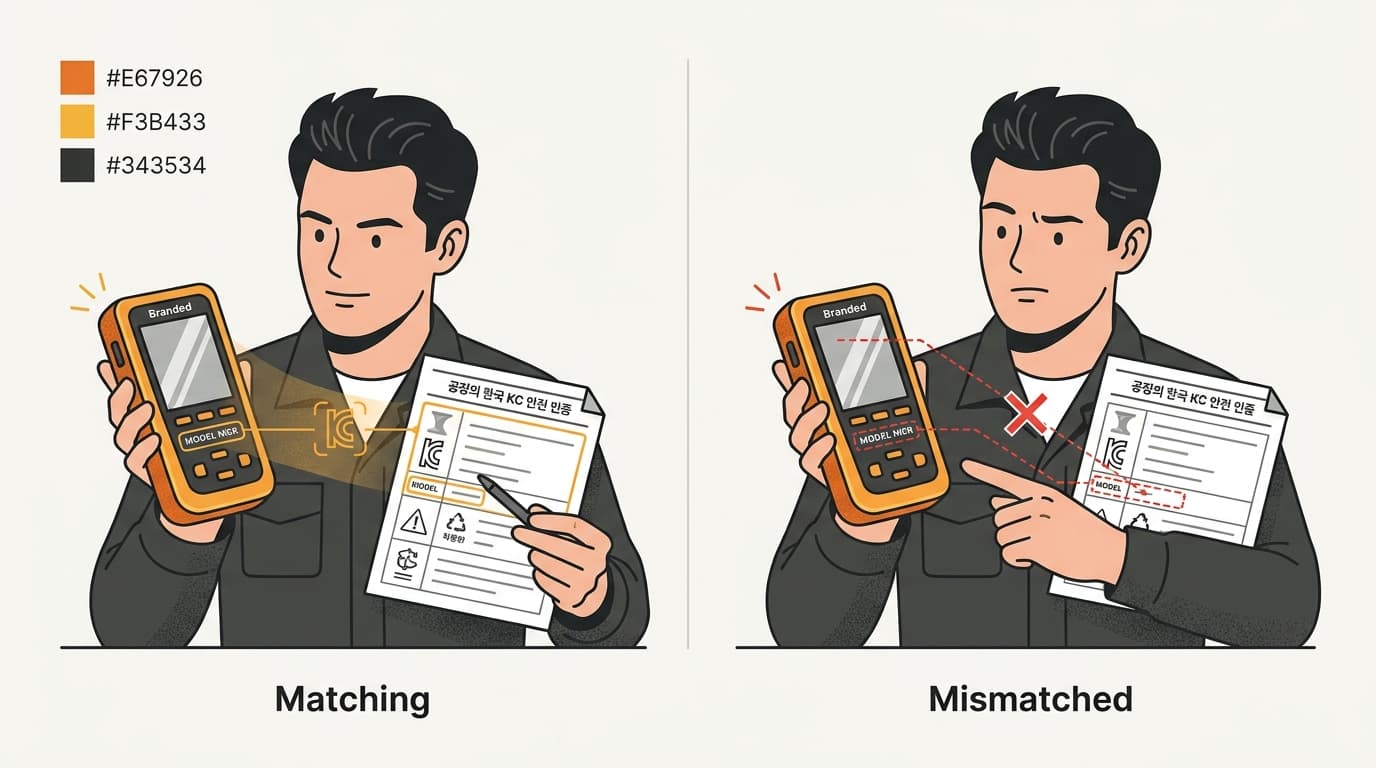
A factory's Korean KC certificate does not automatically cover your private-label product. The brand, model, manufacturer, factory, electrical ratings, and version must match the Korean paperwork. A product with Bluetooth or Wi-Fi may also need a separate radio or electromagnetic-compatibility filing in Korea. Korea's National Radio Research Agency (RRA; 국립전파연구원) handles radio approval and electromagnetic-compatibility (EMC) checks.
Consider a USB-C charger. A factory has Korean KC paperwork for its own charger, Model A. You buy the same electronics, add your brand, and rename it Model B. The factory says the circuit did not change. That statement does not show that Model B is covered. The paperwork may still cover your product, but the designated Korean safety body must tell you whether you need a change filing, extra documents, more testing, or a new application.
KC safety paperwork covers the product details filed in Korea, not every product made in the same factory. The same circuit helps with the comparison, but it does not prove that your brand and model are covered.
What a Korean KC document actually covers
KC is Korea's product-safety mark and conformity system for covered products. It is not a certificate of general approval for a factory's entire output.
Depending on the product category, Korea may require formal safety certification, safety confirmation, or a supplier's safety declaration. The category tells the supplier which filing or declaration to make. For formal certification or safety confirmation, a safety body designated by the Korean Agency for Technology and Standards (KATS; 국가기술표준원) handles the certificate or filing. For a supplier-declaration product, the supplier makes the declaration.
Those requirements matter when you change a private-label product. Depending on the change, Korea may accept a change filing, ask for more documents or tests, inspect the factory, or require a new application. A full retest is not automatic. A factory's assurance is not enough to choose the required filing, test, or application.
The name on the Korean paperwork matters as well. Look for the applicant or certificate holder. Check whether the document identifies the brand, model, manufacturer, production site, or product version. The details listed on the Korean document depend on the product category, so one factory certificate may not cover every customer brand.
Use KATS's official site to check the product-safety filing and designated-body information. You can also search the current Korean product-safety rules on the Korean Law Information Center. A CE, FCC, or UL document may help the reviewer, but it does not replace the Korean KC or RRA filing required for your product. See whether CE, FCC, or UL can replace Korean KC for that separate question.
Compare your private-label product with the factory paperwork
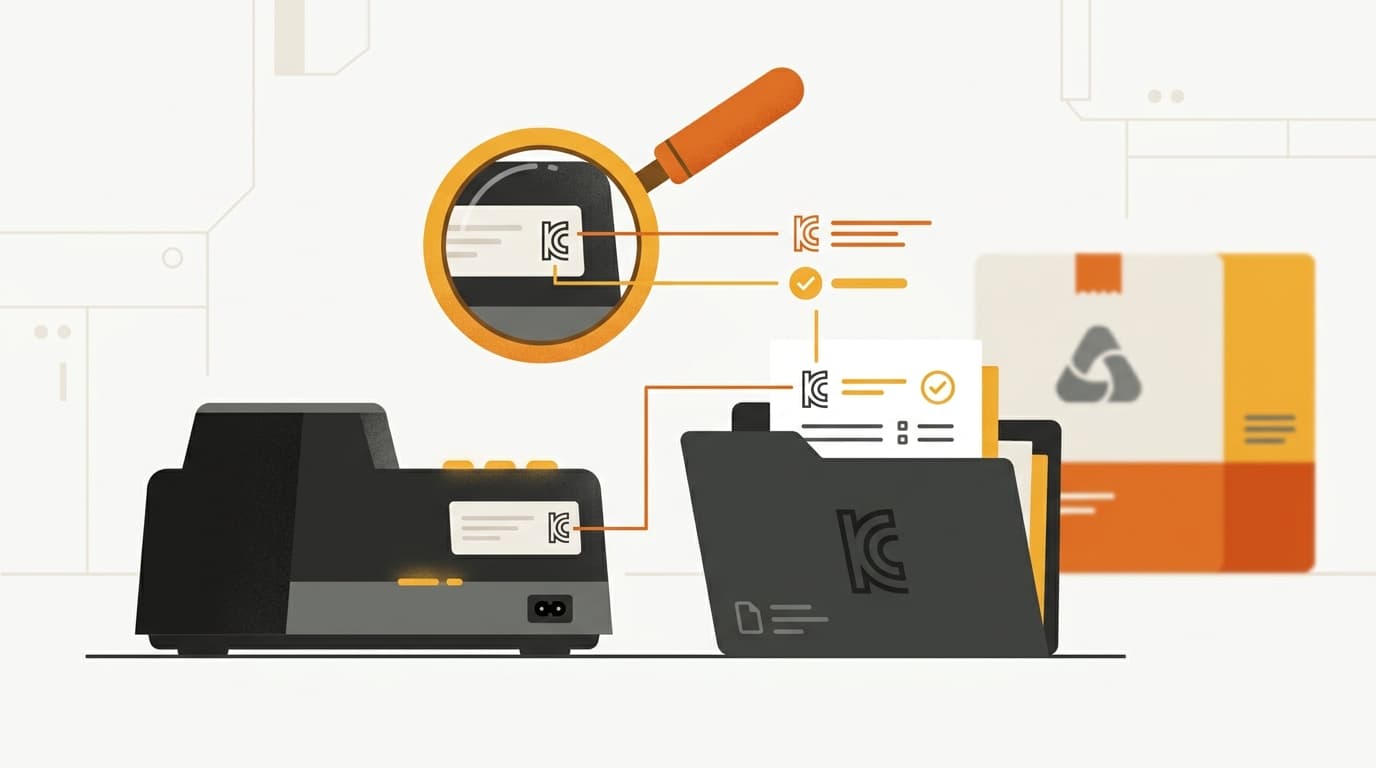
Do this comparison before you book Korean inventory. Use the factory's actual Korean certificate or filing, not only a test summary or an email saying that the product is unchanged.
| Check | What to ask |
|---|---|
| Applicant or certificate holder | Whose name is on the Korean document? Does it cover your branded model? |
| Brand and model | Does the product, box, and online listing use the same brand and model shown on the paper, if those fields appear? |
| Manufacturer | Is the legal manufacturer the same one named in the Korean paperwork? |
| Factory and country | Was the product made at the same production site and in the same country shown on the document? |
| Electrical ratings | Do the input, output, power, voltage, and other listed ratings match? |
| Key safety parts | Are the power supply, battery, charger, plug, enclosure, and other safety-related parts the same? |
| Version and labels | If the product has software, does its version match? Do the Korean mark and number appear on the confirmed product and package? |
The exact fields can differ. If a field is missing from one document, do not assume it has no effect. Ask the designated body which product details it checks before deciding whether the filing covers your product.
The USB-C charger example shows why this check matters. Model A may be the model named in the factory's paperwork. Your box and listing may show Model B. The factory may have used the same production line and circuit. The designated safety body must still decide whether Model B is covered or needs a change filing. If the power supply or another safety-critical part also changed, the body may request more documents or testing. Do not rely on the factory's verbal comparison.
A charger can also be sold as a bundle. If the Korean product includes a detachable adapter, cable, or battery that was not part of the reviewed configuration, check the complete Korean commercial product. The detachable-device charger example explains why the final bundle matters.
Do not treat a logo change as a universal exception. The safety body may treat a logo, model number, package, or software change differently. Ask whether the final product still matches the details in the Korean paperwork.

KC and RRA are separate checks for wireless and EMC requirements
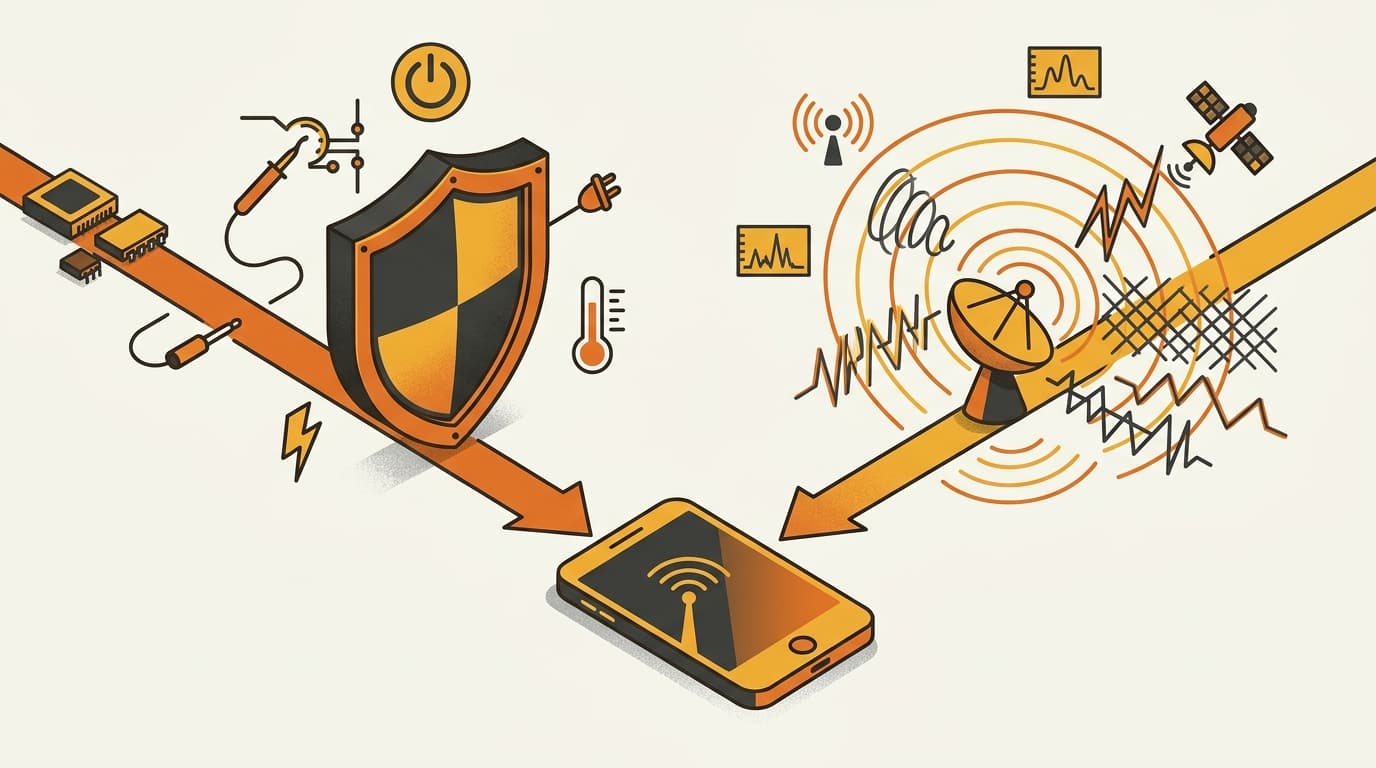
KC does not answer every Korean compliance question for an electronic product. Check the radio side separately.
EMC means electromagnetic compatibility: the device should not create harmful interference and should work around other electronics. RRA paperwork is separate from KC safety paperwork.
This matters for a product with Bluetooth, Wi-Fi, cellular, or another radio function. A product may keep the same outer case and still change its antenna, radio module, circuit, or software. Any of those changes can require a change filing or a new RRA filing. That does not mean every software update automatically requires a new approval. It means you should ask RRA what the specific change does to the confirmed model.
A non-wireless product may still need EMC checks or another Korean filing, depending on its product category. Do not skip the RRA question merely because the factory says the device has no antenna. Confirm which Korean checks apply to the final product.
The roles are different. KATS sets the product-safety rules and works through designated safety bodies. RRA handles the radio and EMC side. The Central Radio Management Office (중앙전파관리소) handles field enforcement for radio matters. A KC document does not replace RRA paperwork, and RRA paperwork does not replace KC safety paperwork.
Check RRA's official site for the radio and EMC process. You can also read whether a wireless device needs both KC safety and EMC before you approve a private-label change.
Use this order before shipping to Korea
The order matters. Do not start with a shipment date and ask about the model later.
- Freeze the Korean product version. Write down the brand, model, manufacturer, production site and country, electrical ratings, safety-related parts, and exact package. If the product has software or firmware, record its version.
- Collect the factory's Korean paperwork. Ask for the KC certificate or filing, the RRA paperwork for a wireless product or other product with an RRA filing, related test reports, and the documents that identify the applicant or certificate holder. Do not rely only on a claim that the hardware is the same.
- Compare the paperwork with the finished product. Check the product, label, box, instruction material, and online listing. Mark every difference, including a model change, factory change, rating change, component change, radio change, or software change.
- Ask the right Korean body about the exact change. Send the difference list to the designated KC safety body. For radio or EMC questions, ask RRA or the body handling that filing. If the product uses a supplier's safety declaration, confirm which supplier must make the declaration.
- Complete the required action. That may be a change filing, extra documents, additional testing, a factory inspection, or a new application. Do not choose the shortest option before the designated body confirms it.
- Apply the confirmed Korean marks and numbers. Put the required information on the confirmed product and package. Make the shipment documents and online listing use the same confirmed model.
- Release inventory only after confirmation. Do not schedule Korean inventory around an assumption that the factory's old paper is enough.
There is no single timeline for this work. A simple name or paperwork update may be quick. A new test or factory inspection adds laboratory and review time. The designated body must decide which case applies to your product.
What happens when the goods and paperwork do not match
Korean Customs may ask for proof or hold the shipment when the product, label, or documents raise a question. Keep the Korea Customs Service's official site available when your importer or customs broker checks the import file.
Customs release is not the same as permission to sell an unmatched product. A shipment can clear and still have a problem if the brand, model, factory, version, or Korean label does not match the approval. The import desk and the product-safety question are related, but they are not the same decision.
Later, KATS or the radio authorities in charge may require corrected labels, a stop-sale, a recall, or another enforcement action. The exact response depends on the product, the mismatch, and the authority's review. Customs clearance alone does not prove that a private-label product is covered.
This is also why the product page must match the box. If the paperwork covers Model A but your Coupang listing shows Model B, the listing and the Korean paperwork do not match. Correct the model on the product, box, and listing before shipping.
Common questions about factory KC certificates
We changed only the logo. Can we use the factory's KC certificate?
Not automatically. Ask the designated KC body whether it covers your branded product and model. Ask whether the label or model change needs a filing or another step.
The hardware is identical. Does that make the certificate transferable?
No. Identical hardware can support the comparison, but it does not decide whether the Korean paperwork covers your brand. The manufacturer, factory, model, applicant or certificate holder, product version, and required labels still need review.
Does using the same factory make my brand covered?
No. The factory is only one part of the product description. A factory can make products for several brands and models, with different Korean paperwork or different filed details.
Does a model-number change always require a new test?
No. A full retest is not automatic, but a new test is also not ruled out. The designated body must decide whether the change needs a simple update, more documents, testing, an inspection, or a new application.
If Customs releases the shipment, can we sell it?
Not on that fact alone. Customs release does not confirm that the brand, model, factory, version, and label match the Korean safety or radio paperwork.
How long will the approval change take?
There is no universal timeline. A simple paperwork update may be quick, while testing or a factory inspection adds time. Get the designated body's answer before you set the Korean inventory date.
Can a CE, FCC, or UL report cover the Korean product instead?
Those documents may help a Korean review, but they do not replace the Korean KC or RRA filing that applies to the product. Confirm the Korean requirement for the exact product you will sell.
Check your Korean product before shipping
Need a second review of your private-label product, KC paperwork, and separate RRA questions? Contact Kontactic before you commit Korean inventory.
About the author
Korean and global e-commerce operators with 15+ years of cross-border experience, led by CEO Isaac Lee — KOTRA-certified consultant and official lecturer for Seoul City and the Korea Customs Service. We run Korea market entry for Western brands every day; this blog documents what we learn in the field.
More about Kontactic →Related Articles
Can You Reject a Coupang Exchange? Only Two Reasons
Coupang exchange rejection is limited to SOLDOUT or WITHDRAW. Learn when each code applies—and what to do when a seller simply prefers a refund instead.
Coupang Order Lines: One Line Is Not One Unit
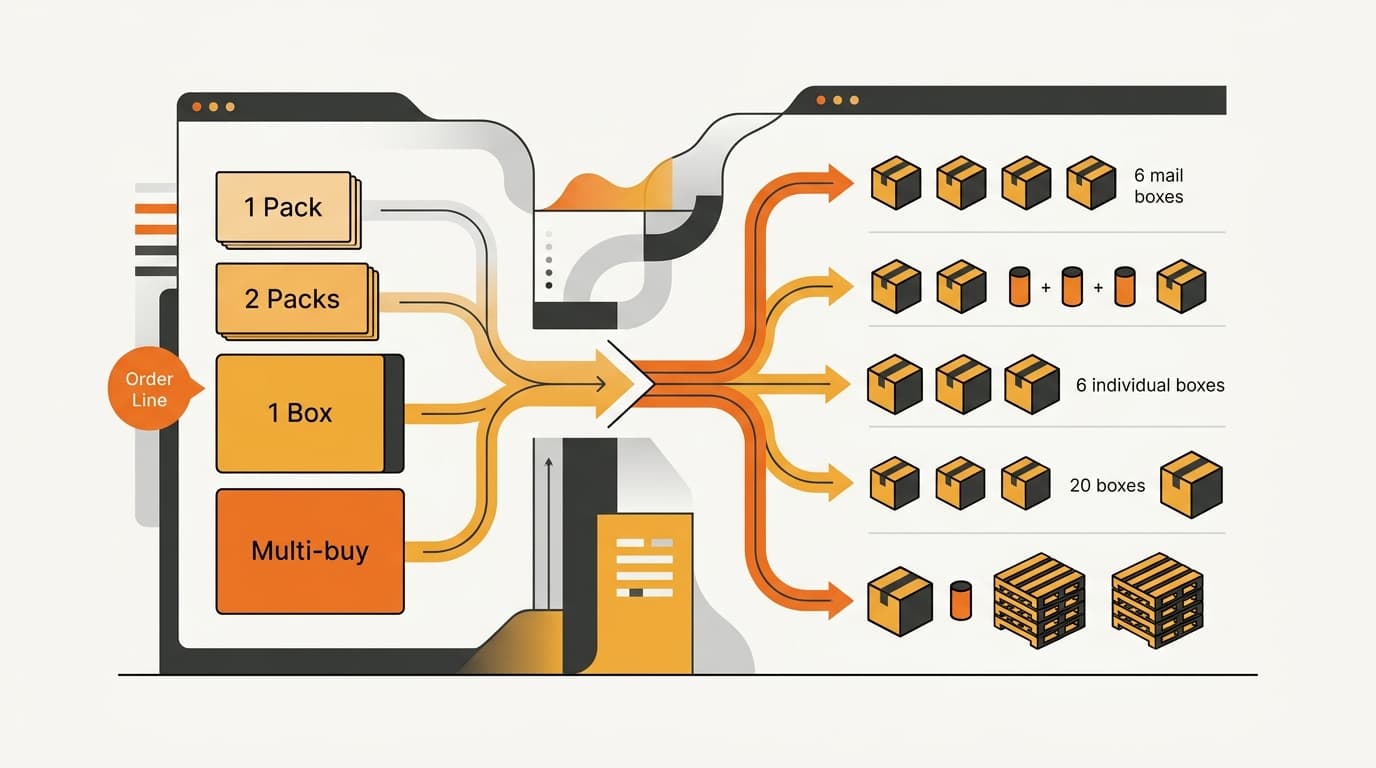
A Coupang order line can represent a generated quantity option, so your connector must map it to a base SKU and physical quantity before stock movement.
Korean Importer Registration: Why a POA Is Not Enough
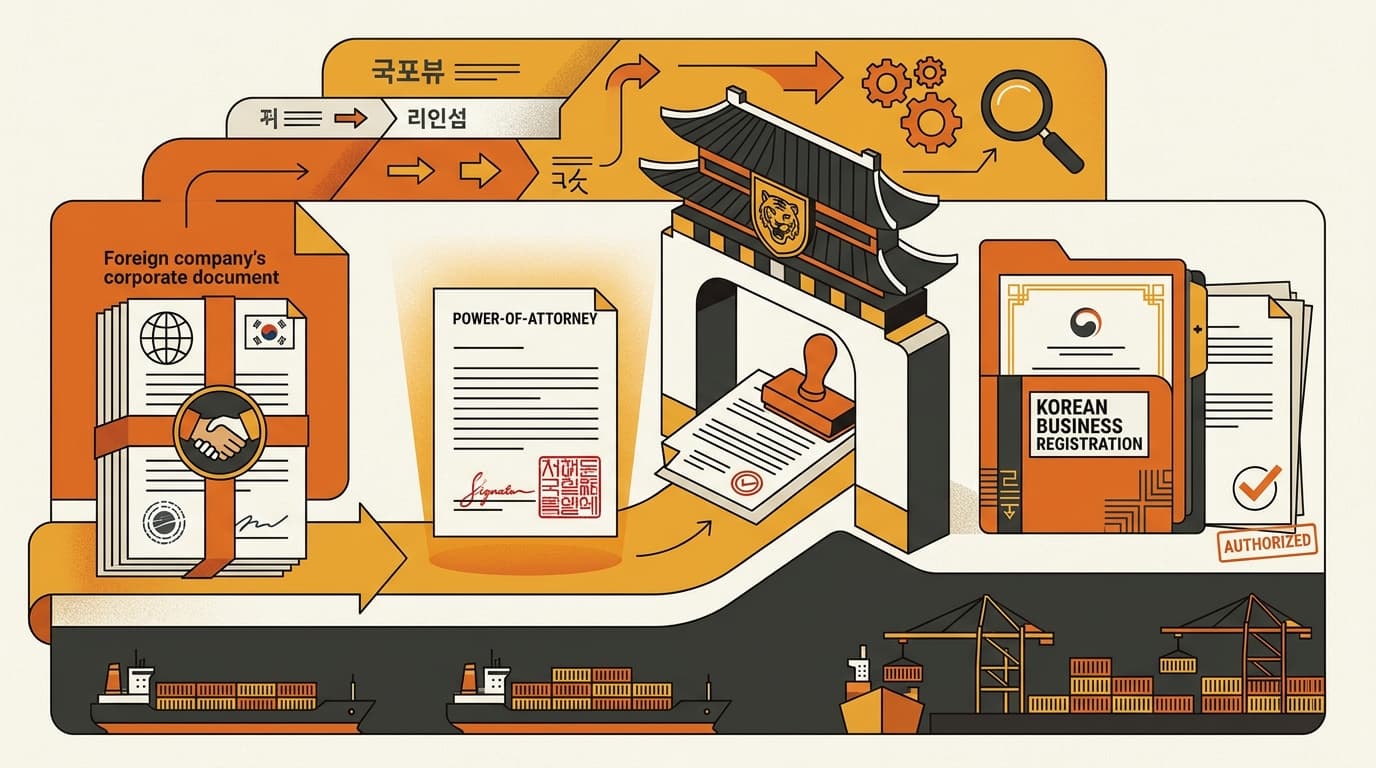
A power of attorney cannot establish Korean importer registration; corporate-authority proof and Korean importer records are still required for the filing.