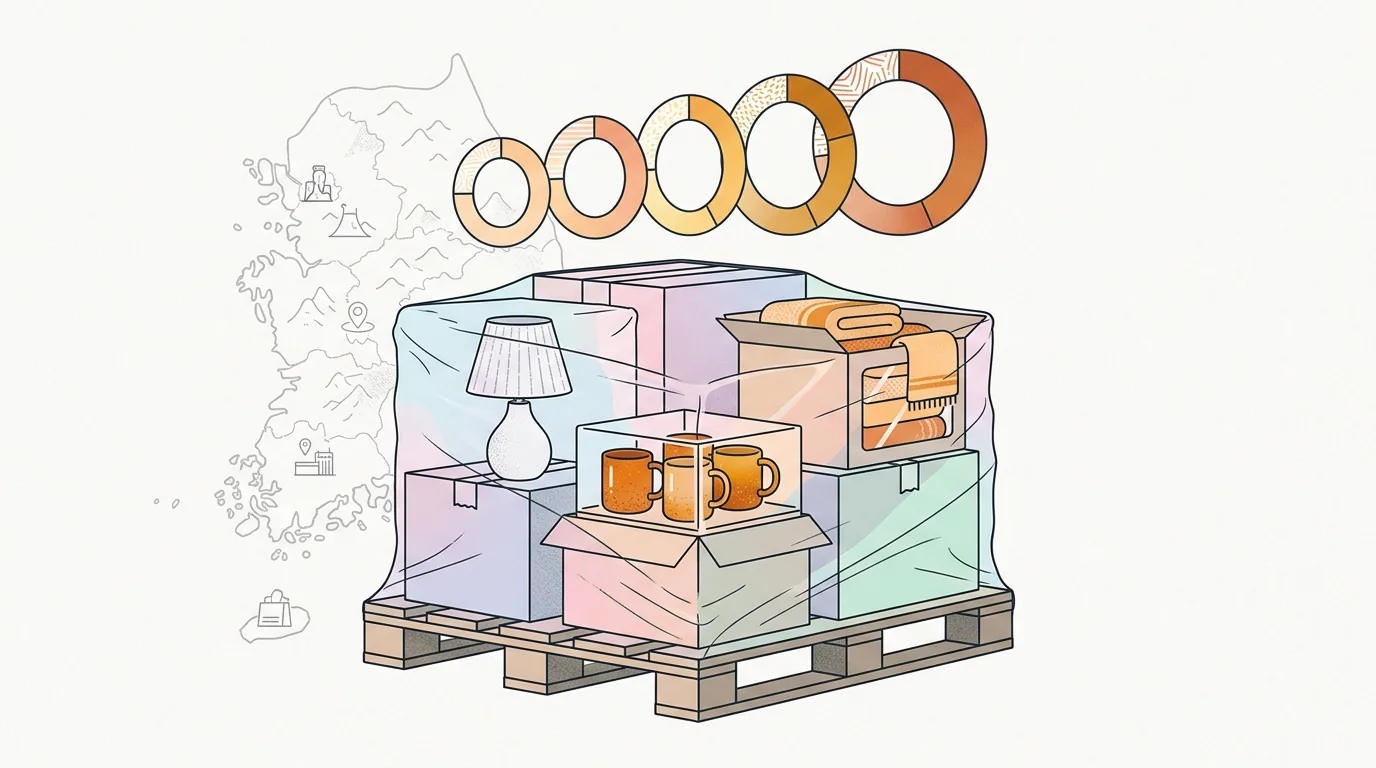
DDP 500kg Home Goods Europe to Korea: Full Landed Cost
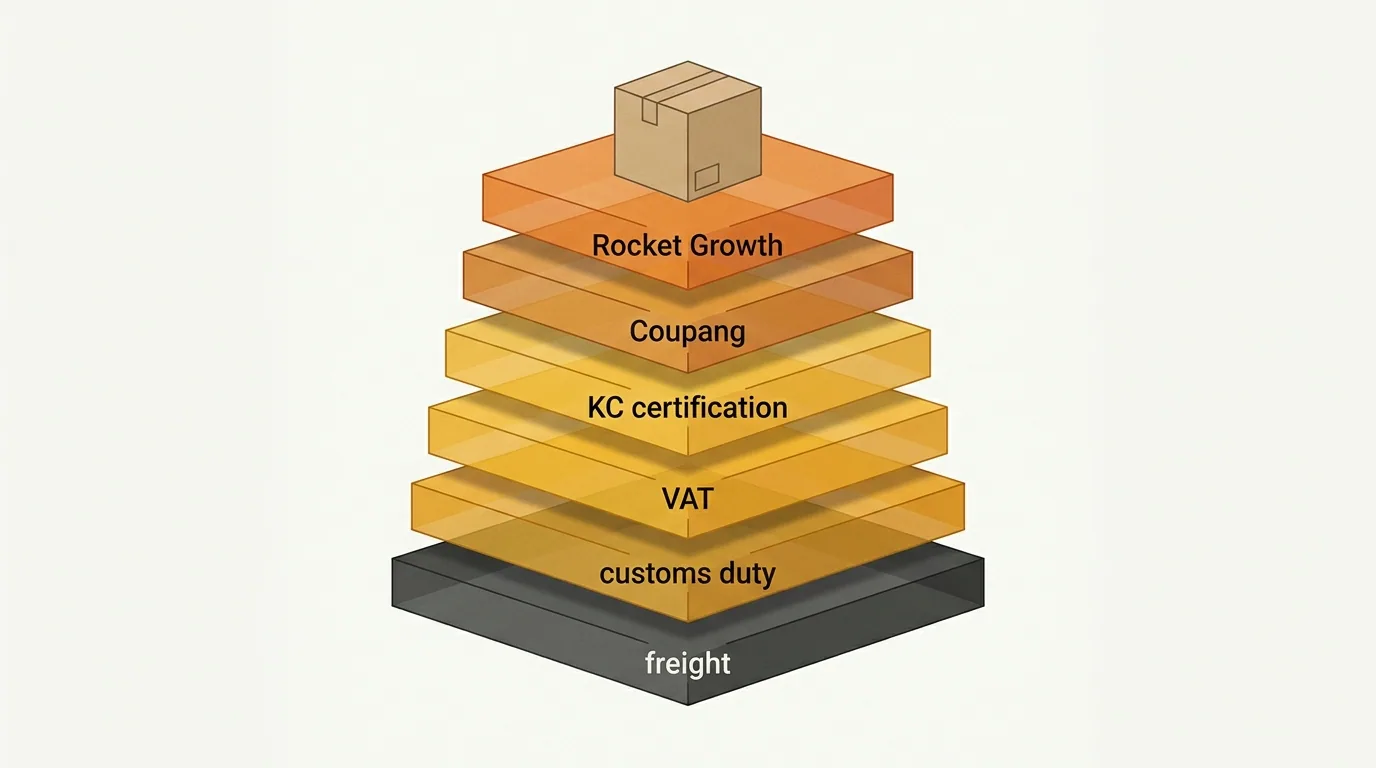
A 500kg DDP shipment of home goods from Europe to Korea typically lands in three cost tiers: the freight and customs tier (duty, 10% VAT, broker, last-mile), the compliance tier (KC certification and labeling for relevant categories), and the commerce tier (Coupang setup, Rocket Growth fulfillment, returns, and a Korean-language product detail page). Most "landed cost" guides only price the first tier. The other two are usually larger over the first 12 months.
This article walks through all three, in the order they actually hit your P&L.
What DDP actually covers for a Europe-to-Korea shipment
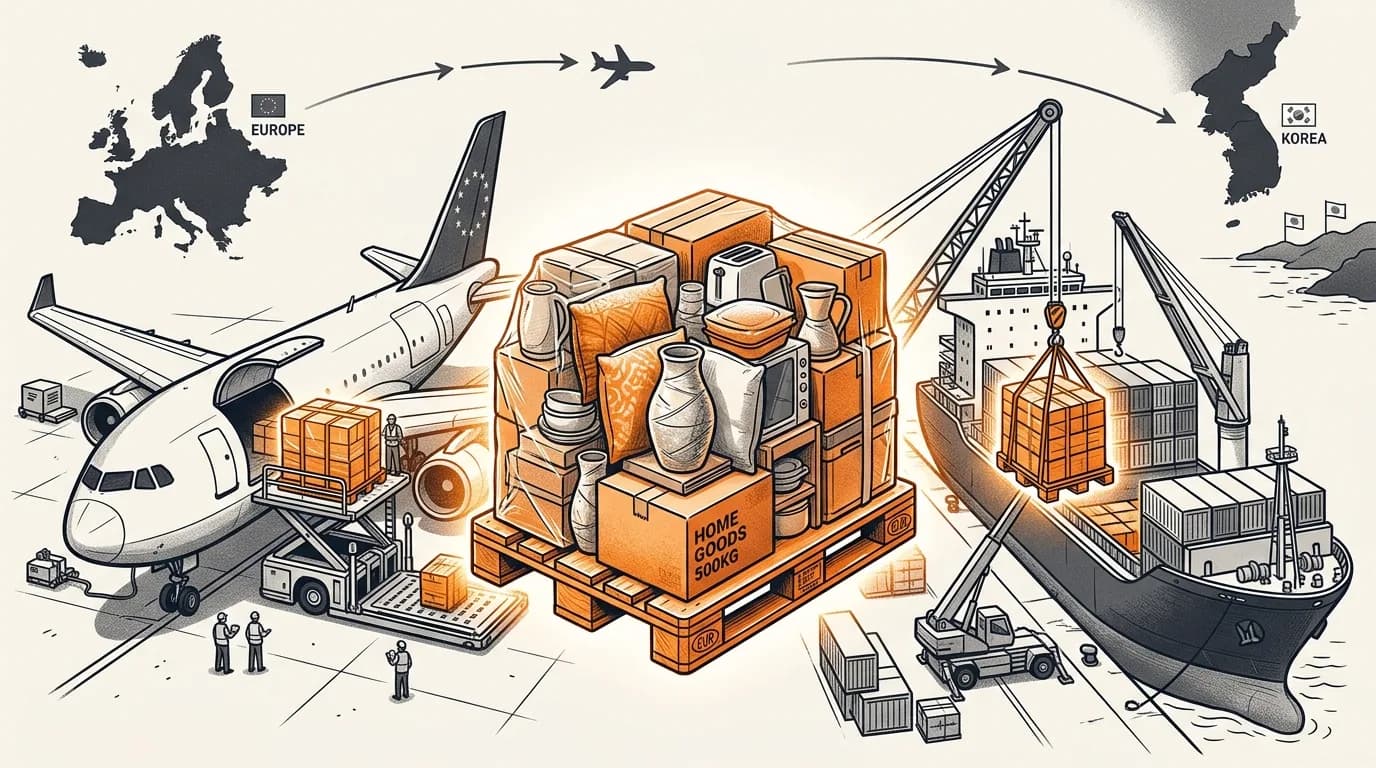
DDP (Delivered Duty Paid) is the Incoterms 2020 term where the seller — that's you, the exporting brand — bears all costs and risks of getting the goods to the buyer in Korea, including freight, insurance, customs duty, and import taxes. For a 500kg home goods shipment out of, say, Rotterdam, Hamburg, or Milan, the DDP scope normally includes:
- Pickup from your warehouse and export clearance in the EU
- Main-leg freight (air or sea) to Incheon Airport (ICN) or the Port of Busan
- Import clearance in Korea (HS classification, duty assessment, VAT collection)
- Customs duty payment
- 10% Korean VAT collection and remittance
- Last-mile trucking to the consignee's warehouse or to a Coupang Rocket Growth (로켓그로스) inbound center
What DDP does not cover, even though founders often assume it does: product compliance (KC certification, labeling in Korean), marketplace onboarding, and any cost of being a registered seller in Korea. DDP is a transport term, not a market-entry term.
A freight forwarder quoting "DDP all-in" is quoting the box getting from your warehouse to a Korean address. They are not quoting your right to sell that box on Coupang, or the certification required for the SKU to be legally distributed in Korea.
The freight + customs tier for ~500kg
Home goods is a broad category. A 500kg shipment of folded textiles is volumetrically very different from 500kg of ceramic tableware or flat-pack furniture. So freight cost depends much more on cubic meters (CBM) and HS classification than on the raw weight. In practice, this is where most early estimates go wrong.
A few things to model honestly:
Mode of transport. Air freight is faster (3–7 days door-to-door) but the per-kg cost is several multiples of sea LCL. Sea LCL (less than container load) is typically the right choice for 500kg of home goods unless you have a real launch deadline. Sea FCL only makes sense from roughly 12–15 CBM upward.
Origin port and routing. European mainland → Busan via the Suez Canal is the standard ocean lane. Routings have shifted recently due to Red Sea disruption, which extends transit and adds surcharges. Get the forwarder to itemize: ocean freight, BAF/CAF fuel and currency surcharges, ENS/ISF filing, port handling at origin and at Busan, customs broker fee, inland trucking.
Customs duty. Korean import duty varies by HS code. For many finished consumer home goods, the MFN duty rate sits in a low-to-mid single-digit range, but several categories (ceramics, certain textiles, certain wood products) sit higher. The Korea–EU FTA can drop duty to 0% if your goods qualify and you provide a valid origin declaration on commercial invoice. This is one of the biggest single-line savings available and it is routinely missed.
VAT. Korea applies a flat 10% VAT on imports. The base is CIF value plus duty. If your buyer in Korea is a VAT-registered entity (yours or a partner's), this VAT is recoverable on the VAT return — it is a cash-flow item, not a final cost. If you're shipping into a non-registered consignee, it's a real cost.
Customs broker, port handling, last-mile. Budget for these as fixed-ish line items in the low hundreds to low thousands of EUR per shipment, depending on the broker and whether last-mile is to a single warehouse or split.
In our experience, when founders say "all-in landed cost," they almost always mean freight + duty + VAT + broker + last-mile — and they assume that number is their cost of doing business in Korea. It isn't. It's the cost of having the pallet on Korean soil, nothing more.
The compliance tier most freight guides skip
A pallet of home goods arriving in Korea isn't automatically legal to sell. "Home goods" spans categories with very different compliance rules. The expensive ones for foreign brands are usually:
- Electrical items (lamps, small kitchen appliances, anything with a plug or a battery) — these typically require KC electrical safety certification and, depending on the SKU, KC EMC certification. Process and budget are non-trivial. We've written a separate breakdown of KC certification and Coupang's expectations that's worth reading before you commit to a category.
- Items with food contact (mugs, cutting boards, kitchenware, food-contact ceramics and glassware) — these need MFDS food-contact registration, which is a documentation and lab-testing exercise on the importer side.
- Children's products (anything marketed for children, including some textiles and decor) — KC children's product certification applies, with stricter testing.
- Pure decor / textiles without electrical or food-contact function — usually the lightest compliance burden, mostly labeling-in-Korean and origin marking.
The realistic timeline for a European home goods brand from "KC scoping" to "first sale on Coupang" runs four to seven months in most cases. We laid out the sequence in Coupang launch timeline for home goods and KC certification.
Budget-wise, KC certification is a per-model cost, not a per-shipment cost. So it doesn't change your 2nd-shipment landed cost — but it absolutely changes your first-year landed economics, and that's the number that matters for the launch decision. For a fuller picture, see our Korea entry budget covering KC plus shipping.
“DDP is a transport term, not a market-entry term. The pallet on Korean soil is the cheap part of the journey.”
Kontactic editorial — Commerce Trends desk
The commerce tier: Coupang, Rocket Growth, and returns
This is the layer almost every "landed cost" article misses. If you're selling B2C in Korea — which is the whole point of going DDP into local stock — you're almost certainly on Coupang, with Naver SmartStore as a likely second channel. Each adds real, recurring cost.
Coupang seller onboarding. To sell as a Korean seller on Coupang (versus a cross-border seller), you need a Korean Seller of Record. Either you set up your own Korean limited company (유한회사) and operate the seller account, or you work with a partner whose Korean entity acts as Seller of Record. The choice cascades into bank account setup, VAT registration, and KYC. We compared the paths in Agency vs IoR vs Entity for Korea entry (the framework is the same for home goods).
Coupang commission. Coupang's platform commission varies by category. For most home goods sub-categories it sits in the high single digits to low teens as a percentage of the VAT-inclusive sale price. This is the largest recurring deduction on every order.
Rocket Growth (로켓그로스) fees. Rocket Growth is Coupang's 3PL — they store the goods, pick and pack, deliver next-day under the Rocket badge, and process returns. The fees stack: inbound, storage (charged by volume), per-order fulfillment, and returns handling. These have shifted recently — we tracked the changes in three Coupang policy changes that reset Rocket Growth margins.
Returns. Korean e-commerce returns rates for home goods are higher than most European founders expect. Fragile categories (ceramics, glassware, lamps) have meaningful breakage in last-mile, and Coupang's customer-friendly returns policy means damaged-on-arrival claims are common. Every return is a fulfillment fee, a returns-handling fee, and either restocking or disposal.
Settlement timing. Coupang's default settlement schedule pays sellers on the 20th business day of the following month — close to 60 calendar days from sale. That's working capital you need to fund. We covered this in Coupang settlement timelines.
Cross-border versus local: when does the DDP shipment make sense at all?
A 500kg DDP shipment is a local-stock strategy. You're committing to holding inventory in Korea, which means you've decided the cross-border (overseas direct-purchase) model isn't enough. That decision deserves explicit examination.
The honest test:
- Cross-border (ship one parcel at a time from Europe when a Korean buyer orders) is fine for proving demand. Margins per order can be decent, but you can't sell on Coupang Rocket, your delivery times are 1–3 weeks, and Korean buyers heavily discount the listing on trust grounds.
- Local stock via DDP unlocks Rocket Growth, next-day delivery, the Rocket badge, and Coupang's full-search visibility. Order volume typically multiplies — we walk through the math in how Coupang IoR and 3PL change your Korea margins. The trade-off is that per-unit margin compresses because you've added Rocket Growth fees, KC costs, and Korean-language operations.
For home goods specifically, the local-stock case is strong when (a) your category is search-driven on Coupang (kitchenware, small home decor, bedding accessories), (b) the SKU is small enough that Rocket Growth volumetric storage doesn't crush margin, and (c) you can afford the KC and PDP work upfront. We laid out the full decision in Rocket Growth vs. cross-border selling in Korea.
Localized PDP and Korean-language conversion
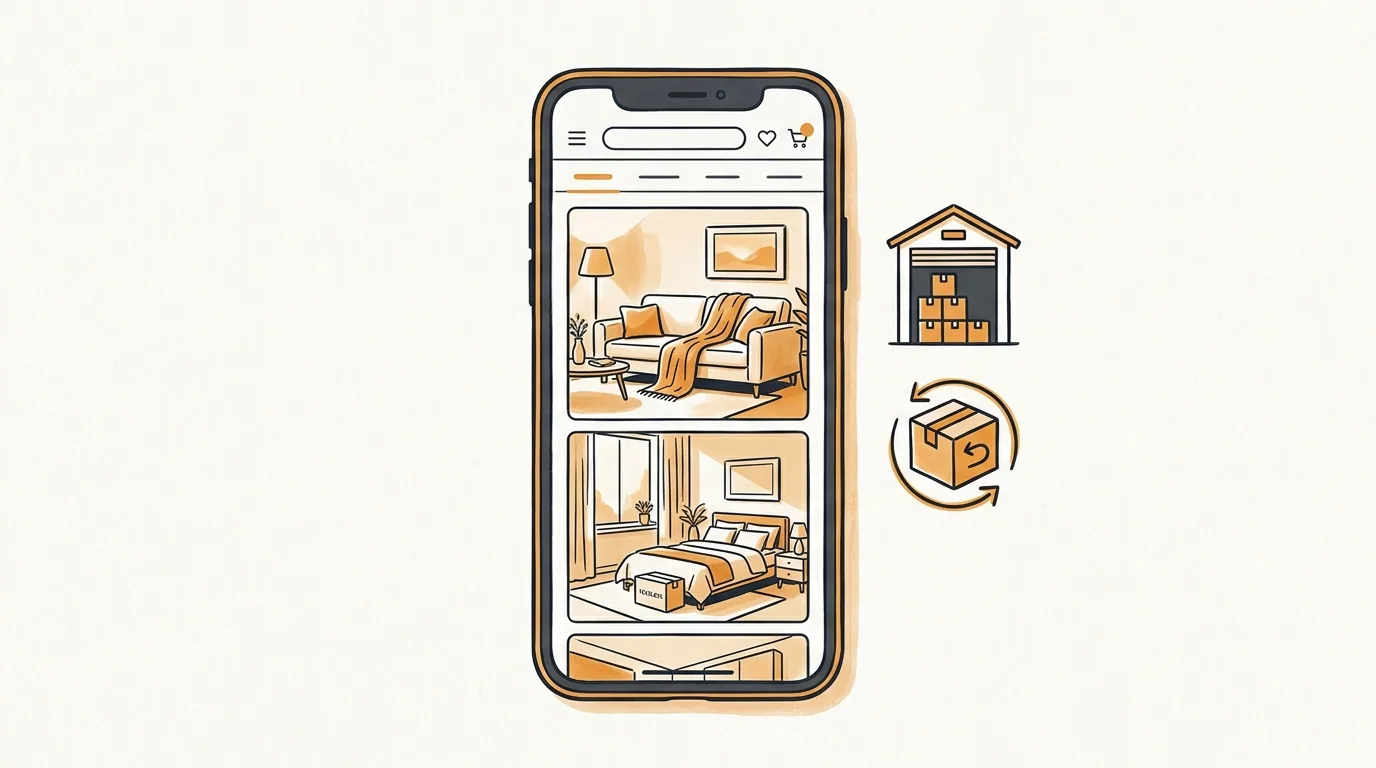
The last cost item is the one founders most often try to skip and most often pay for later. A Korean product detail page (PDP) is not a translated European product page. It's a long vertical visual — around 20,000 pixels tall — built for Korean mobile scrolling, with lifestyle imagery, comparison grids, usage scenarios, and trust signals in Korean text.
A weak PDP doesn't show up clearly in your landed cost spreadsheet. It shows up as low conversion, high return rates ("not as expected"), and ad spend that doesn't compound. For home goods, where Korean buyers heavily evaluate fit-in-the-home, scale relative to other furniture, and material quality, the PDP is the actual product on Coupang.
Budget the PDP as a one-time cost per hero SKU and a smaller cost per follow-on SKU. The localized PDP plus Tier-1 Korean-language customer service together do most of the work of converting a paid click into an order.
Putting it together: what "all-in" really means
If you model the 500kg DDP shipment alone, you'll get a number that looks survivable and gives you false confidence. The number that decides whether the launch works is closer to:
- Freight (EU origin → Korea, mode-dependent)
- Customs duty (HS-code dependent, possibly 0% under Korea–EU FTA)
- 10% Korean VAT (recoverable if you're VAT-registered locally)
- Broker, port handling, last-mile to RG inbound
- KC certification, MFDS food-contact, or children's certification — per model, one-time
- Korean labeling and origin marking — per SKU
- Coupang commission — per order, by category
- Rocket Growth inbound, storage, fulfillment, returns — per order and per CBM-month
- Localized PDP creation — per SKU
- Korean-language Tier-1 customer service — recurring
- Settlement working capital — roughly 60 days from sale
This is also why the model you choose matters. Under Kontactic's Spark service, our Korean entity acts as Importer of Record and Seller of Record, and many of these line items become deductions from settlement rather than upfront cash. Under Flame or Blaze, you operate through your own Korean entity and fund each layer directly. We mapped the funding flows in who pays for what in Korea: operating costs explained.
The right question is not "what does it cost to land a 500kg pallet?" The right question is "what does it cost to land that pallet and convert it into a Korean P&L that compounds?" Those are very different numbers.
If you're sketching a launch budget and want a realistic model — freight, compliance, Coupang, and Rocket Growth, all sequenced — we can build it with you.
Model your real Korea landed cost with Kontactic
Share your SKU mix, target volume, and timing. We'll come back with an honest line-item view of freight, KC, Coupang, and Rocket Growth — not a freight quote pretending to be a launch plan.
About the author
Korean and global e-commerce operators with 15+ years of cross-border experience, led by CEO Isaac Lee — KOTRA-certified consultant and official lecturer for Seoul City and the Korea Customs Service. We run Korea market entry for Western brands every day; this blog documents what we learn in the field.
More about Kontactic →Related Articles
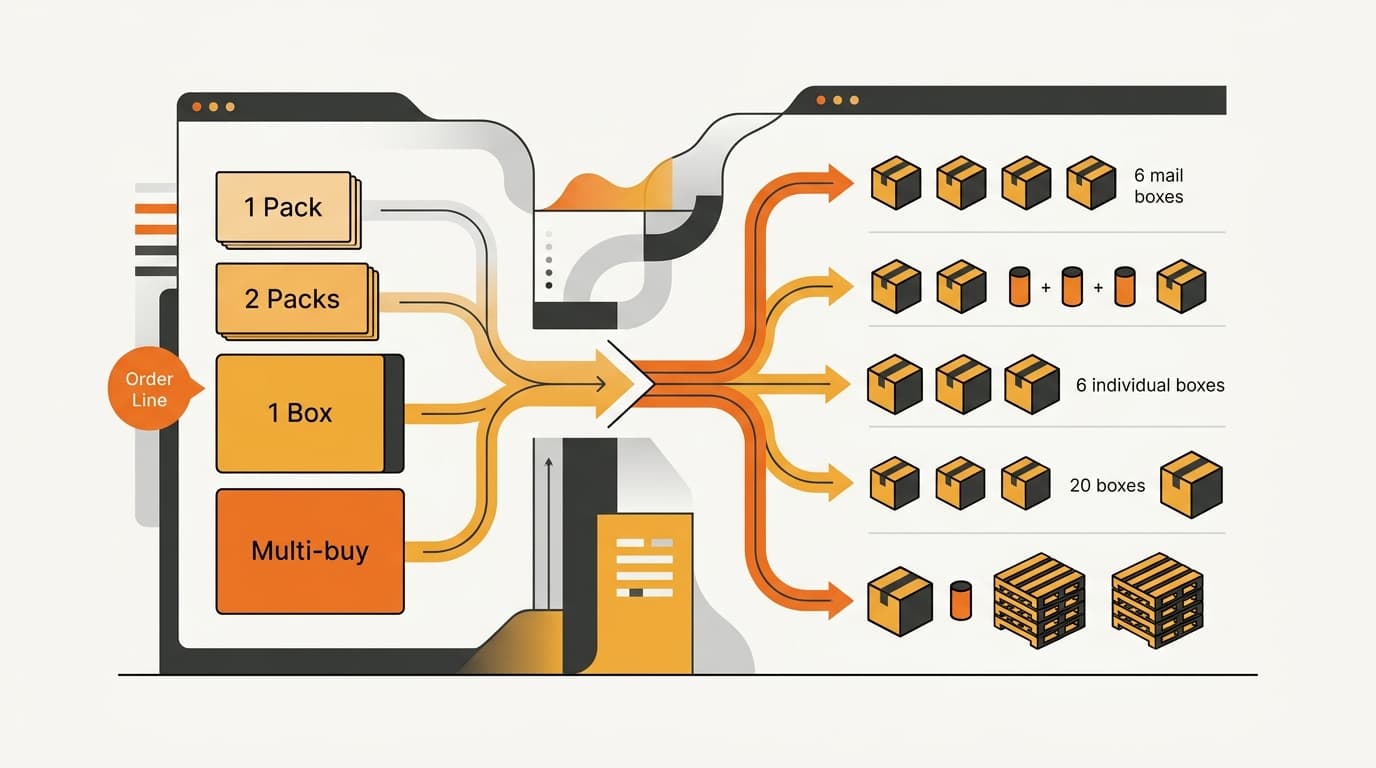
Coupang Order Lines: One Line Is Not One Unit
A Coupang order line can represent a generated quantity option, so your connector must map it to a base SKU and physical quantity before stock movement.
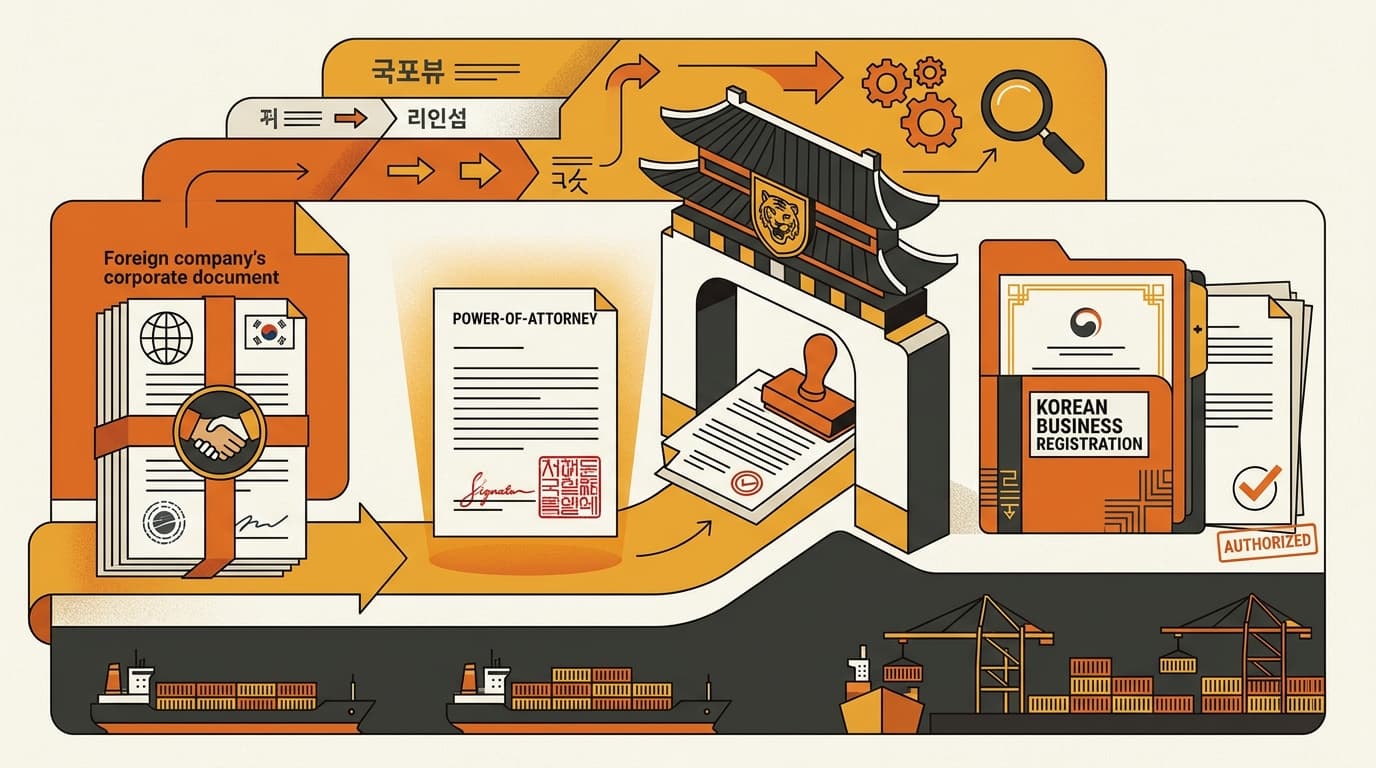
Korean Importer Registration: Why a POA Is Not Enough
A power of attorney cannot establish Korean importer registration; corporate-authority proof and Korean importer records are still required for the filing.
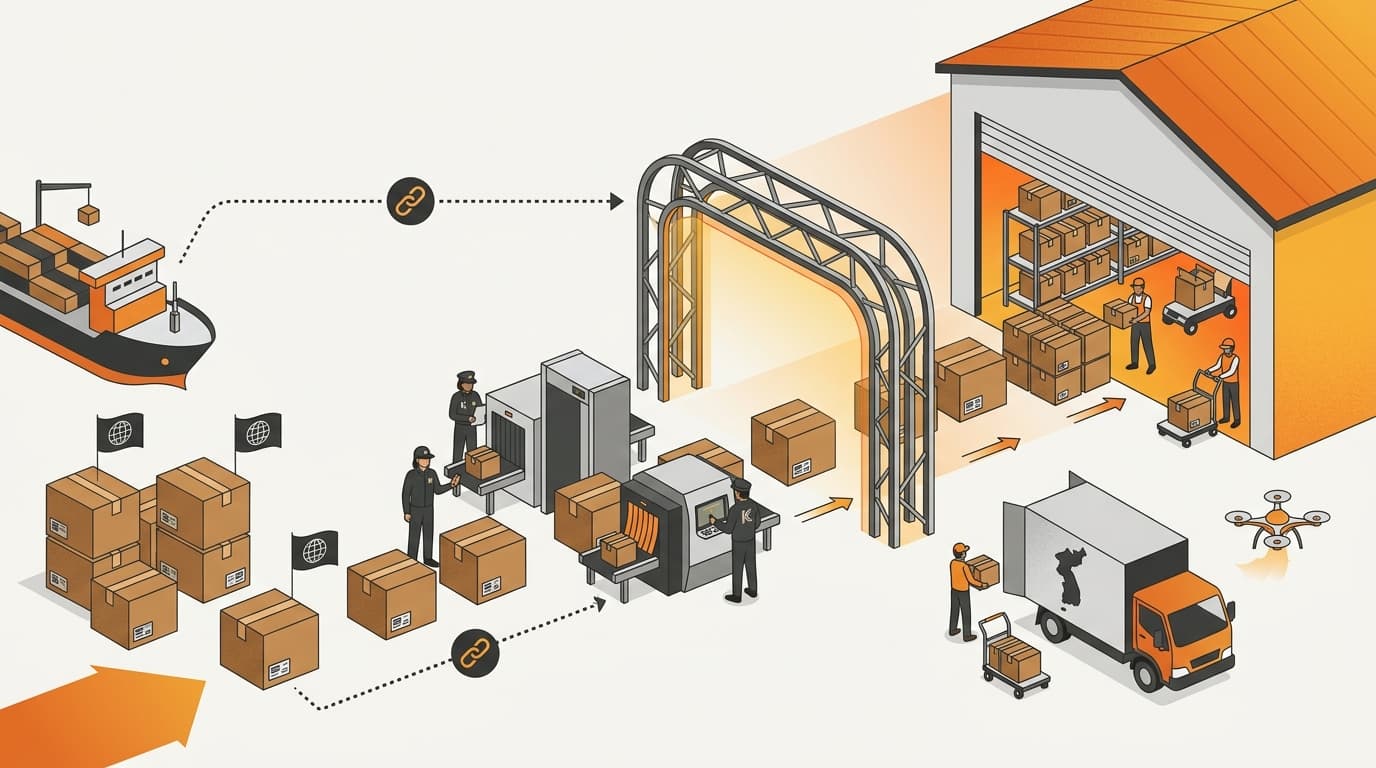
Can You Delay Korea Import Duty on Consignment Stock?
No. Korea import duty and import VAT are normally assessed when consignment stock is cleared for domestic circulation, not when a Korean customer buys one unit.