Skin Repellent or Space Biocide? Korea's Body-vs-Space Line
A personal insect repellent you rub on your skin is a quasi-drug (의약외품) regulated by the Ministry of Food and Drug Safety (MFDS / 식약처) under the Pharmaceutical Affairs Act — not a biocide under Korea's Household Chemical Products and Biocides Act. The deciding factor is not "does it repel or kill pests?" It is where the product acts: on the human body, or on the surrounding space or a surface. That single line decides which ministry owns your product, which pre-market approval you hold, and which label rules you print.
This matters because the two regimes look interchangeable from the outside and are not. A brand shipping a topical mosquito lotion, a room fogger, and a hand sanitizer might reasonably assume all three sit under one chemical-safety law. In Korea they split across two ministries. Guess wrong and you file with the wrong authority, hold the wrong approval, and get stopped at customs — even though the product works identically to the one that would have cleared.
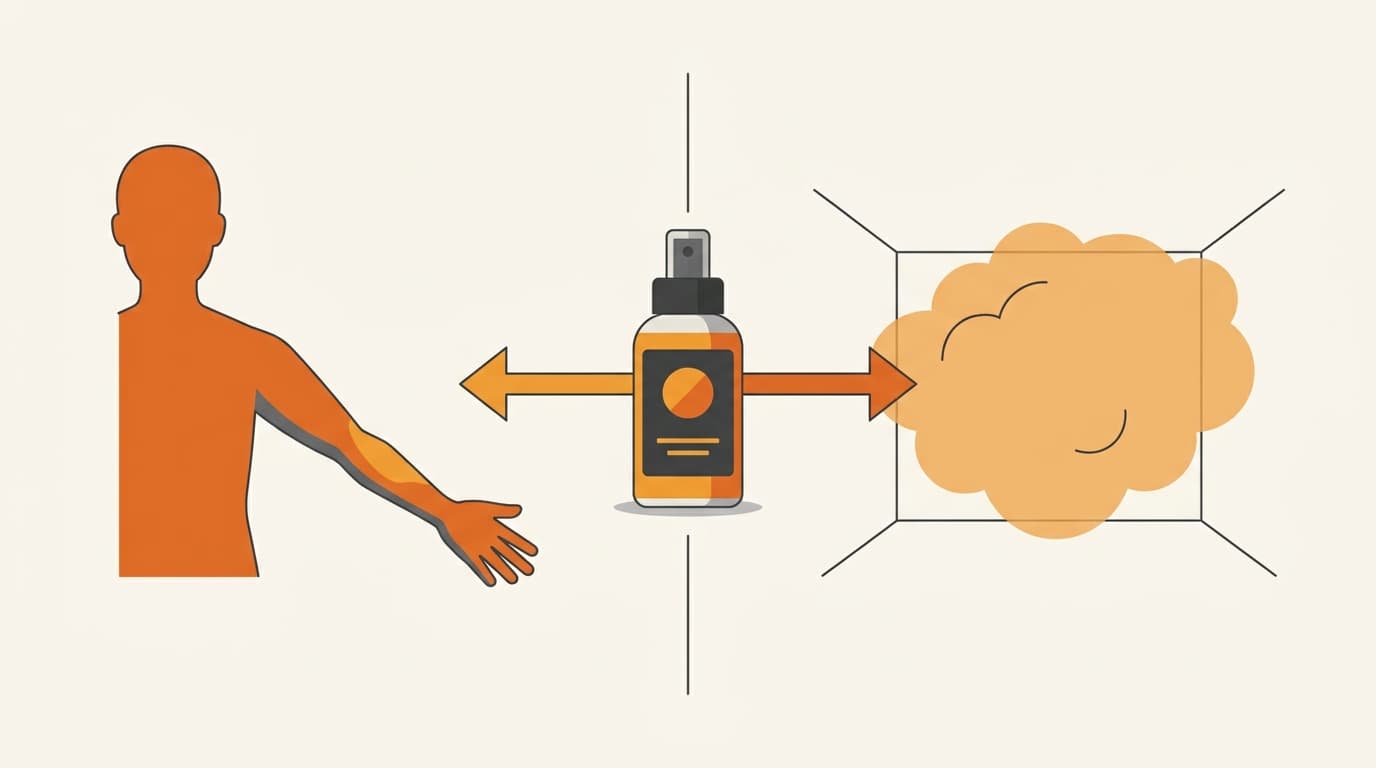
The core test: does the product act on the body or on the space?
The classifier is location of action, and it is remarkably clean once you apply it consistently.
A product that acts on the human body — applied to skin, hands, or mouth to repel, kill, or sanitize — is generally a quasi-drug (의약외품) under the Pharmaceutical Affairs Act, administered by the MFDS. This is the same category that covers things like skin-applied repellents and sanitizing hand products.
A product that acts on the surrounding space or on a surface — a space-diffused insecticide, an area fogger, a surface disinfectant, a treated non-personal article — falls under the Household Chemical Products and Biocides Act (생활화학제품 및 살생물제 안전관리법), administered by the Ministry of Environment.
The body-vs-space test. If the product does its work on a person (skin, hands, mouth), it is a quasi-drug under the MFDS. If it does its work on the air in a room or on a surface, it is a biocidal product under the Ministry of Environment. Same active function, opposite regime.
Note the emphasis: "does its work on." A repellent and a fogger might both kill or deter the same mosquito, and both might contain overlapping active chemistry. The law does not sort them by chemistry or by target insect. It sorts them by the site the product is designed to treat.
Worked example: mosquito products, same insect, opposite regime
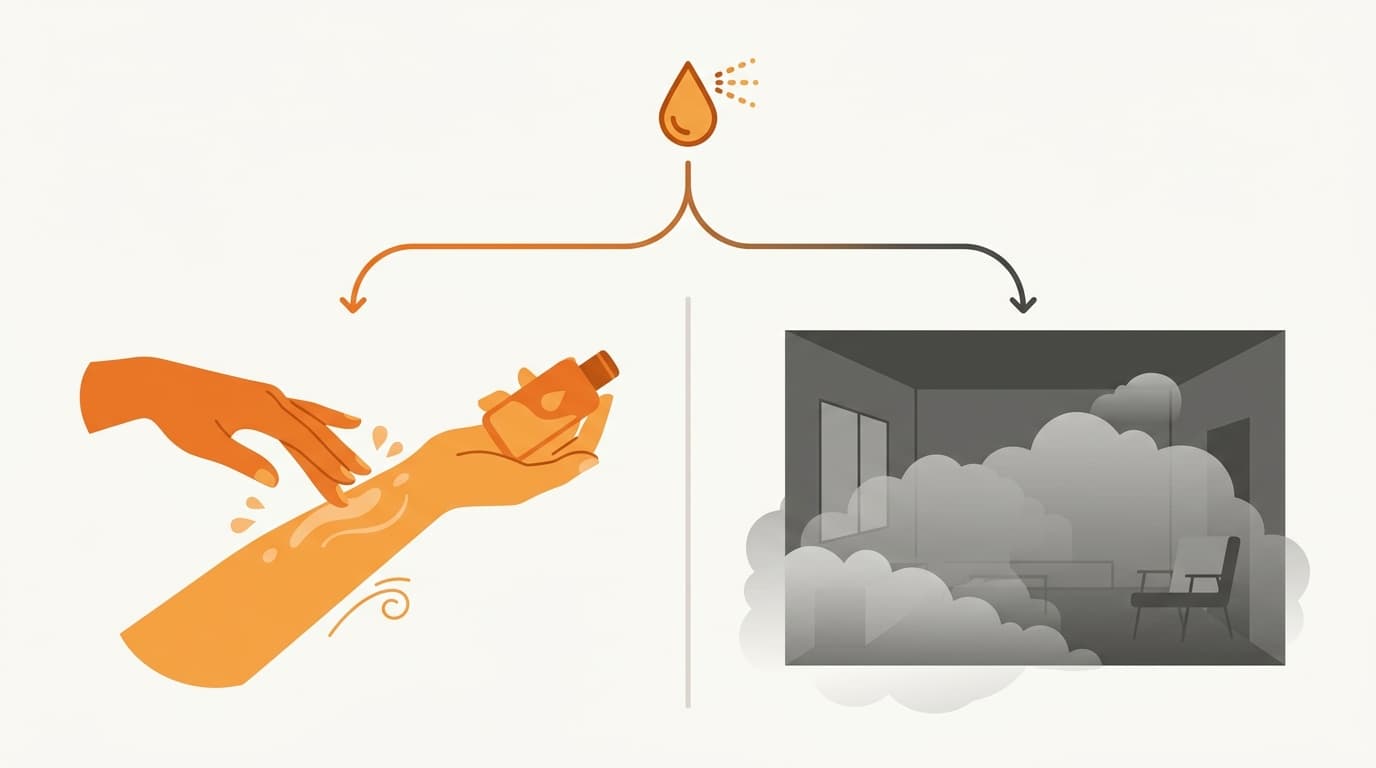
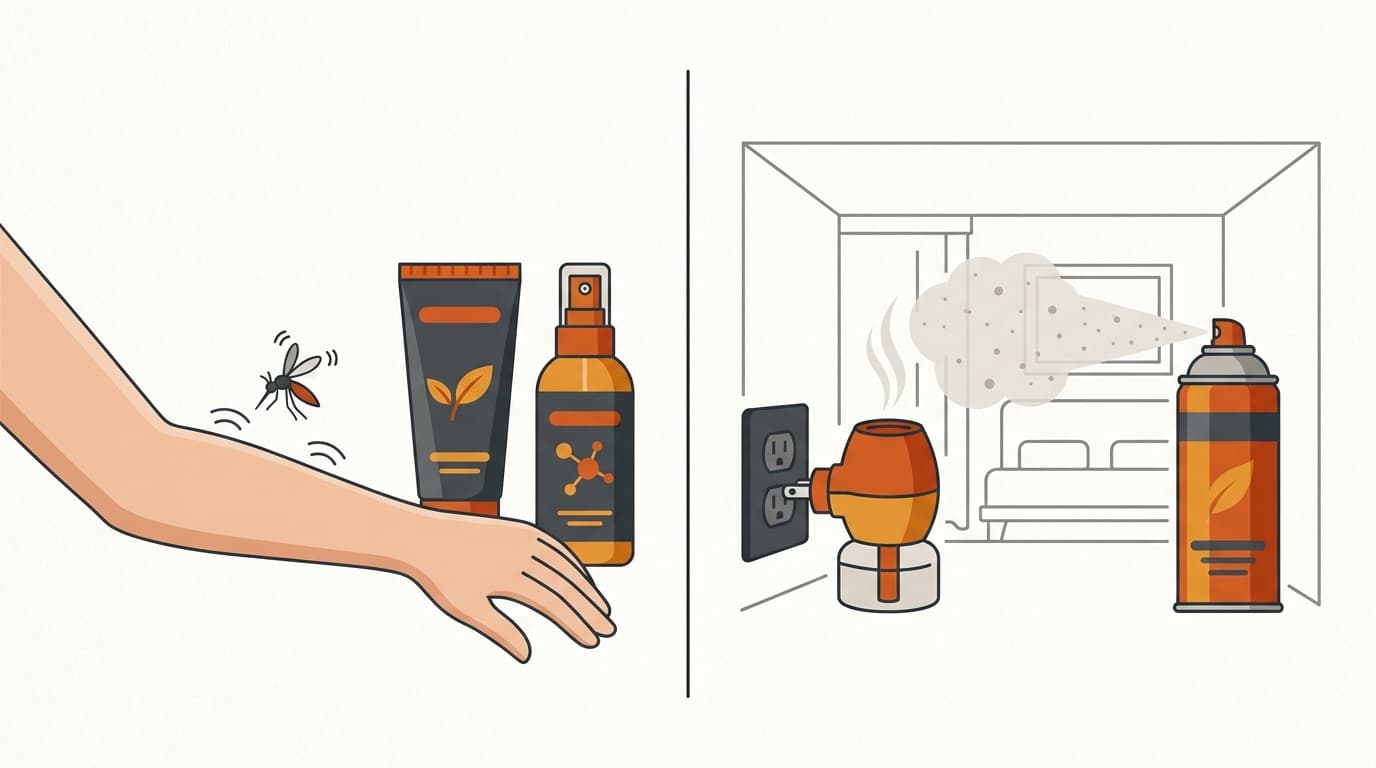
Mosquito products are the cleanest illustration because a single brand often ships both kinds.
- A lotion, spray, or wipe applied to skin that claims to repel mosquitoes "on the body" acts on the person. It is a quasi-drug, and its home is the MFDS.
- A plug-in diffuser, a coil, or an aerosol that treats the room air acts on the surrounding space. It is a biocidal product, and its home is the Ministry of Environment.
Same insect. Same underlying goal — fewer mosquito bites. Two completely separate filings, two label regimes, two timelines. If you import your skin repellent through the biocide track because you filed all your "pest" products together, it does not clear as a biocide — it is the wrong regime for the product. The space-diffused side is the one that belongs on the Ministry of Environment's heavier active-substance approval route, and the reasoning for why space-acting insecticides land there is the same logic that decides whether an air freshener is a biocidal product in Korea.
Worked example: hand products, where the claim moves the line
Hand products show a second twist: even inside the body regime, the efficacy claim on the label — not the formula — can move the classification.
A hand product that claims "살균·소독" (sanitize / disinfect) is making an antimicrobial claim. It acts on the hands to kill microbes and is treated as a quasi-drug under the MFDS.
A hand product that claims only "세정·청결" (cleansing / cleanliness) is not claiming to kill anything. Depending on formulation and presentation, it can instead be a cosmetic. Two bottles with nearly identical contents can sit in different categories purely because one says "disinfects" and the other says "cleanses."
The claim on your label can itself reclassify the product. A "refreshing" skin mist and a "mosquito-repelling" skin mist can be the same liquid in the same bottle — but the repelling claim pushes it toward the quasi-drug regime. Write the claim you can actually support, and understand which regime that claim invokes before you print packaging.
This claim-moves-the-line pattern is not unique to hand products. The same mechanism reclassifies a plain moisturizer into a functional cosmetic once it makes a whitening or SPF claim. In Korean product law, the claim is a regulatory trigger, not marketing garnish.
What the split actually costs you
The two regimes are not two doors to the same room. Each has its own authorization, its own pre-market gate, its own label rules, and its own timeline — and neither can substitute for the other.
- Quasi-drugs (MFDS track): an importer generally needs an MFDS import-business authorization, plus a per-item filing or approval that scales to the product's risk tier. Skin repellents and sanitizing hand products live here.
- Biocidal products (Ministry of Environment track): the biocide regime typically requires approval at the active-substance level and approval of the finished product. Space insecticides, foggers, and surface disinfectants live here.
Because the tracks are separate, holding the wrong one does not get you partway there. An MFDS import authorization does nothing for a room fogger; a biocide product approval does nothing for a skin lotion. If your catalog spans both — which is common for pest-control and hygiene brands — you are running two parallel compliance projects, not one. Mapping this correctly before you ship is exactly the kind of per-SKU regulation mapping that keeps a mixed catalog moving, and it is why brands screen every SKU against Korean rules before cargo leaves.
“The law does not sort a repellent by whether it repels. It sorts it by where it does that work — on the person or on the room.”
Isaac Lee — CEO, Kontactic
The read-order to classify before you commit
Work through the product in this sequence. It gets you to the right ministry before you pick an import path.
- Identify where the product is intended to act — on the body (skin, hands, mouth) or on the surrounding space or a surface. This is the primary fork.
- If it acts on the body, check the claim. A repel / kill / sanitize claim points to a quasi-drug (MFDS). A cleanse-only claim may instead be a cosmetic.
- If it acts on space or a surface, treat it as a biocidal product under the Ministry of Environment and expect the active-substance-plus-product approval track.
- Never assume "pest control" means one ministry. A repellent and a fogger from the same brand routinely split across MFDS and the Ministry of Environment.
Verify the specifics against primary sources, not a supplier's summary. The statute text sits on the national law portal (law.go.kr); the quasi-drug rules and import-business authorization are administered by the MFDS (식약처); the biocide track is administered by the Ministry of Environment; and if a product is misclassified, the practical enforcement point is the Korea Customs Service, which stops the shipment that arrives with the wrong pre-market approval.

Common questions
Is DEET always a quasi-drug in Korea? No — the active ingredient does not decide it. A DEET lotion applied to skin is a quasi-drug because it acts on the body; a DEET-based product designed to treat a space or surface would be evaluated under the biocide regime. Location of action governs, not the chemical.
My hand sanitizer says "kills 99.9% of germs." Which regime? That is an antimicrobial (살균·소독) claim, applied to the hands, so it points to the MFDS quasi-drug track. If you dropped the killing claim and marketed a cleanse-only hand product, it could fall under a different category — but you cannot keep the "kills germs" claim and avoid the quasi-drug regime.
Can I file all my pest and hygiene products under one authority to simplify things? Not if they act in different places. A skin repellent (MFDS) and a room fogger (Ministry of Environment) cannot ride on one filing. Trying to consolidate them under the wrong single authority is precisely how shipments get held at customs.
Where do I confirm the current rules? Read the statute on law.go.kr, confirm quasi-drug and import-authorization requirements with the MFDS (식약처), and confirm the biocide track with the Ministry of Environment. Treat any secondary summary — including this one — as a map, not the territory.
Not sure which ministry owns your product?
Tell us what your repellent, sanitizer, or insecticide actually claims and where it acts, and we'll help you place each SKU in the right Korean regime before you ship.
About the author
Korean and global e-commerce operators with 15+ years of cross-border experience, led by CEO Isaac Lee — KOTRA-certified consultant and official lecturer for Seoul City and the Korea Customs Service. We run Korea market entry for Western brands every day; this blog documents what we learn in the field.
More about Kontactic →Related Articles

Can Coupang Handle Every Korean Buyer Inquiry? No—Seller Duties
Coupang may handle platform and fulfillment contacts, but sellers still own product questions, cancellations, returns, exchanges, and order exceptions.

Rocket Growth: Why Outbound and Return Locations Matter?
Rocket Growth stores and ships inventory, but sellers still need outbound and return records before product registration; each has a distinct seller-side role.

Korean HS Code: Can You Reuse US/EU HS Codes? Not Always
A US or EU HS code is a useful starting point, not a portable Korean classification. Learn how Korea’s HSK affects duty, FTA treatment, and import controls.