
Rocket Growth: Why Outbound and Return Locations Matter?
Rocket Growth handles physical fulfillment, but it does not automatically create or remove the seller-side outbound and return-location records required for product registration. Those records link the listing to its logistics locations and accountable operator. They do not mean your brand packs every order or that every return goes to the registered address.
The confusion comes from treating three separate layers as one. Choosing Rocket Growth addresses the first layer. It does not, by itself, complete the other two.
Short answer: Rocket Growth’s warehouse operation and Coupang’s seller-side logistics records are separate layers. You still need usable outbound and return-location records before registering the product, even when the sellable inventory will be stored and shipped through Coupang’s fulfillment network.
Rocket Growth fulfillment and listing data are separate layers
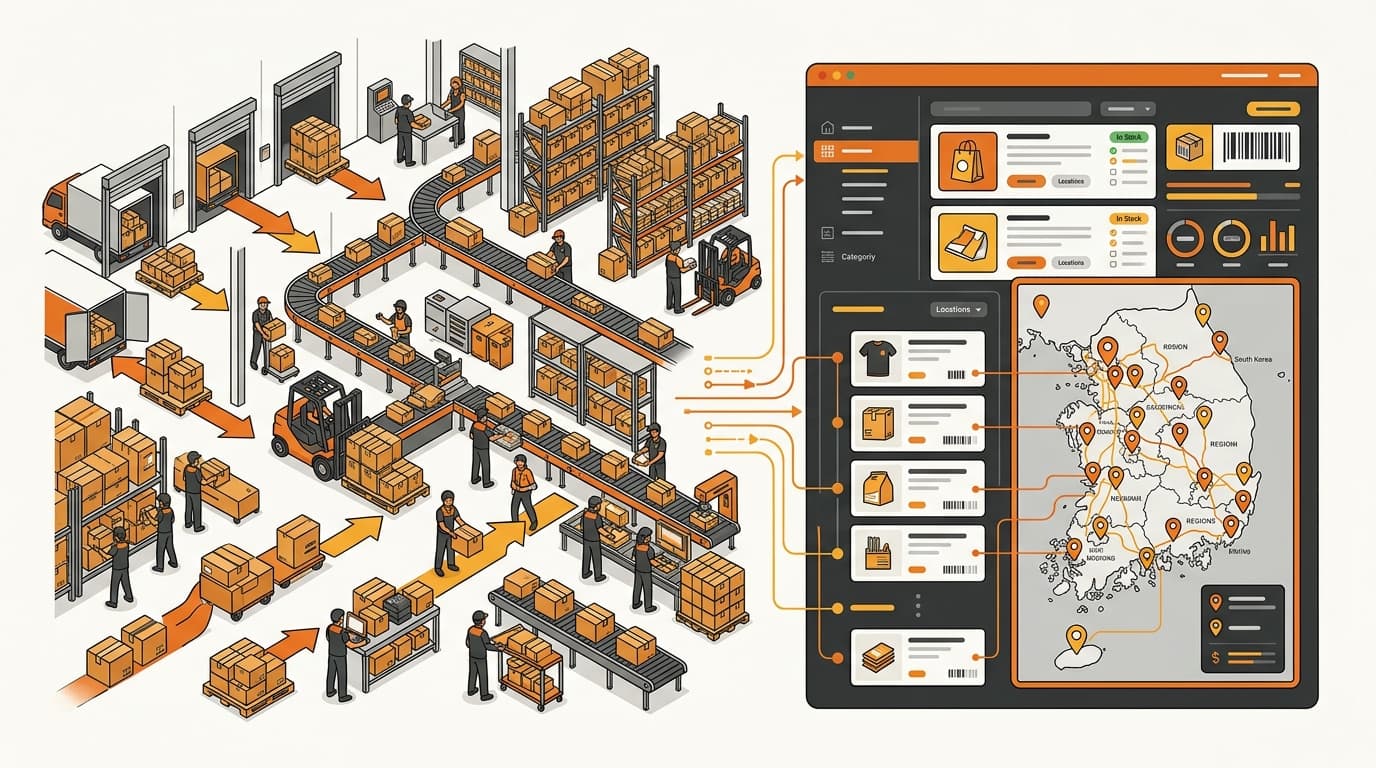
Rocket Growth answers a physical question: where Coupang receives inventory and performs the fulfillment work associated with the service. Product registration asks a different question: which seller-side logistics records are associated with the product and available for the platform workflow.
Sending cartons to a Coupang fulfillment center does not, on its own, populate those records. The fulfillment-center receiving process can be complete while the listing still lacks the outbound or return information required for registration. Conversely, a seller can have location records in the account without having successfully delivered inventory to Rocket Growth. These are related operations, not interchangeable proof points.
A useful way to separate them is:
- Fulfillment-center receiving: inventory is handed into the Rocket Growth network and becomes subject to Coupang’s physical fulfillment process.
- Seller-side product-registration data: the product setup references the outbound and return locations maintained in Coupang’s logistics records.
- Return and exception handling: a named operator has a process for cases that need action outside the normal fulfillment flow.
Coupang’s official developer documentation for the Logistics Center API is the primary source to verify this dependency. The documented workflow treats outbound and return locations as records that must exist before product registration; it is not a description of the physical address of every parcel. For the inventory handoff itself, the practical questions about what reaches Rocket Growth and who owns it are separate from the registration fields. What to Ship to Coupang Rocket Growth—and Who Owns It examines that handoff distinction.
“Outbound and return-location information is needed before product registration.”
Coupang official developer documentation — Logistics Center API workflow
What outbound and return locations mean in plain English
Coupang’s location fields are easiest to understand as operational records, not as a live map of every movement. The two records have different jobs even if the same local operator manages both.
| Coupang field | Plain-English meaning | What it does not mean |
|---|---|---|
| Outbound location (출고지) | The registered outbound or shipping-origin location represented in the seller-side logistics setup. | It does not prove that your brand personally packs every customer order, or that it is the same place as a Rocket Growth fulfillment center. |
| Return location (반품지) | The registered location and operating point associated with return-side handling and exceptions. | It does not, by itself, prove that every Rocket Growth return is physically delivered to that address. |
The outbound location is therefore not a shortcut for saying “Coupang ships the order from its warehouse.” It is the location record Coupang expects the seller-side setup to provide for the outbound logistics context. If a Korean operator or third-party logistics provider handles the domestic handoff before stock reaches Rocket Growth, that party may be involved in supplying or maintaining the relevant operational details. The correct record depends on the actual arrangement and the platform’s current workflow.
The return location is equally practical. It needs to connect to a real process: someone must be able to receive instructions, respond to an exception, and act when a case is not resolved entirely inside the standard fulfillment flow. A warehouse that only receives imported cartons and forwards them to Rocket Growth should not automatically be treated as the return operator. Confirm what that facility actually handles before attaching it to the product setup.
A location record is operational metadata. It associates the seller and product setup with a declared logistics location and accountable process. It is not a promise that every order or return will physically pass through that address.
This distinction also explains why one address should not be copied into both fields merely to make registration easier. One site may serve both roles, but only if the site and responsible party genuinely handle both tasks. Coupang must also accept the configuration. The fields are separate because the underlying responsibilities can be separate.
Why Coupang requires the records before product registration
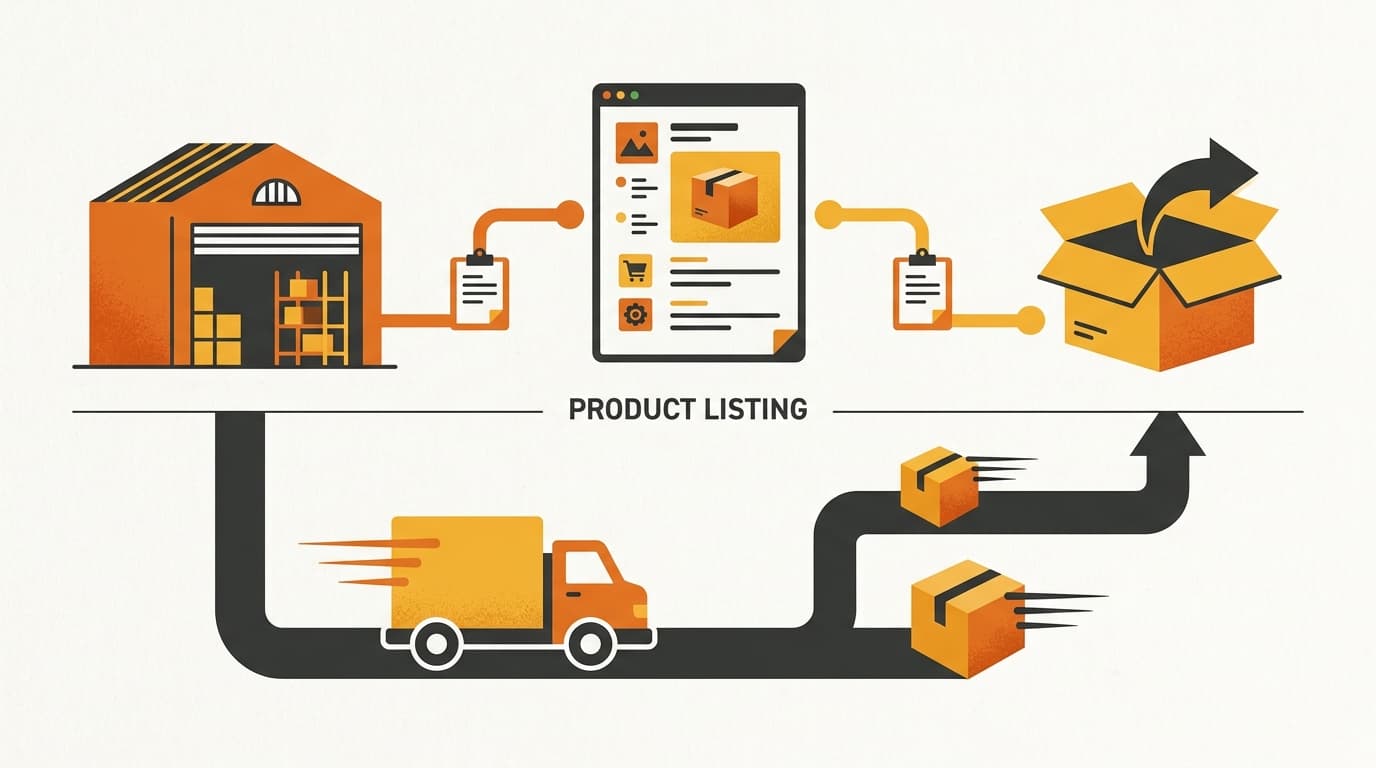
The sequence matters. A product cannot rely on a location record that has not been created, verified, or kept available in the seller-side logistics system. Coupang’s official Logistics Center API workflow describes the locations as maintained records, with operations for creating or registering them, reading or listing them, and updating them.
In practical terms, the setup sequence is:
- Create or register the outbound and return locations using the information required by Coupang’s logistics workflow.
- Read or list the available records so the operator can confirm what exists and distinguish the correct location from an old or similar record.
- Use the appropriate records during product registration rather than assuming the Rocket Growth fulfillment-center address will be inserted automatically.
- Update the records when the operating setup changes, including a change in the warehouse, local operator, or return-handling provider.
The presence of read/list and update operations is operationally important. These are not one-time declarations that can be ignored after the first listing goes live. They are records that need to remain usable as the account’s logistics arrangement changes.
This is also why “the inventory has already arrived at Coupang” is not the same as “the product is fully ready for sale.” Receiving, reconciliation, listing registration, and availability can each require their own check. If stock has reached Rocket Growth but the SKU is not behaving as expected, do not assume that a warehouse receipt corrected the product setup automatically. Why Coupang Rocket Growth SKUs Stay Unavailable covers the separate operational reasons stock can remain unavailable after delivery.
The official developer documentation establishes the platform workflow. It does not, by itself, tell you the physical route of a particular customer return. That question belongs to the current seller-facing WING and Rocket Growth guidance for the relevant case.
What the brand or Korean operator must prepare
A Western brand does not need to personally operate a Korean warehouse to complete this part of the setup. It does need a clear owner for the records and a local process that works when the platform asks for action.
Before product registration, the brand or its Korean operator should confirm six things:
- Accurate location details: provide the usable information required by Coupang’s form or API. Do not use a placeholder or a location that cannot support the work associated with the record.
- A real role for each location: document whether the site handles outbound handoff, returns, exceptions, or only a narrower task such as forwarding stock to Rocket Growth.
- An accountable party: name the brand team, local operator, or 3PL that will monitor instructions and act when a case falls outside the standard fulfillment path.
- Record access: confirm who can create, read/list, and update the location records. A record that no one can maintain is a future launch problem even if it is correct today.
- Listing alignment: verify which outbound and return records are attached to the product or listing. Having records in the account is not the same as confirming that the intended records are used for the SKU.
- A change process: decide what happens when the warehouse, local operator, or returns provider changes. The update should happen before the old record becomes operationally misleading.
The 3PL question deserves particular care. A forwarding warehouse may be the right party for an inbound handoff and the wrong party for customer returns. A returns provider may be able to receive and inspect units but have no role in sending inventory into Rocket Growth. Treat each role as a separate operational decision instead of selecting the address that appears most often in shipping paperwork.
For the same reason, do not assume that the brand’s overseas headquarters can serve as the practical owner of a Korean return record. The useful test is not who owns the product. It is who can receive the instruction, coordinate the physical action, and update the platform-side record when the operating arrangement changes.
Does the registered return location decide where every return goes?
No. The return location is a seller-side logistics record, not a universal instruction that overrides Coupang’s physical fulfillment process. The physical route and disposition of a specific return depend on the current WING and Rocket Growth guidance that applies to that case.
A return may be processed within Coupang’s fulfillment network, or the platform may require action by the seller, local operator, or a third-party logistics provider in an exception scenario. The address on the product record does not let you infer which path applies. It also does not mean that every unit bypasses Coupang and travels directly to the registered return location.
The reverse is also true. Choosing Rocket Growth does not make return accountability disappear. Someone still needs to monitor the case, understand whether the standard process applies, and act when inventory or a return is routed outside that process. The registered return location gives the seller-side setup an operational point of reference; it is not a substitute for checking the live instructions for the transaction.
That boundary is important for inventory planning. The location manager may coordinate inspection, disposition, replacement, or other follow-up. The applicable Coupang workflow—not the address alone—should determine the action. Who Handles Returns Under Coupang Rocket Growth? explains the boundary between Coupang’s customer-facing return process and the seller’s continuing responsibility for returned inventory.
Launch check before you register the product
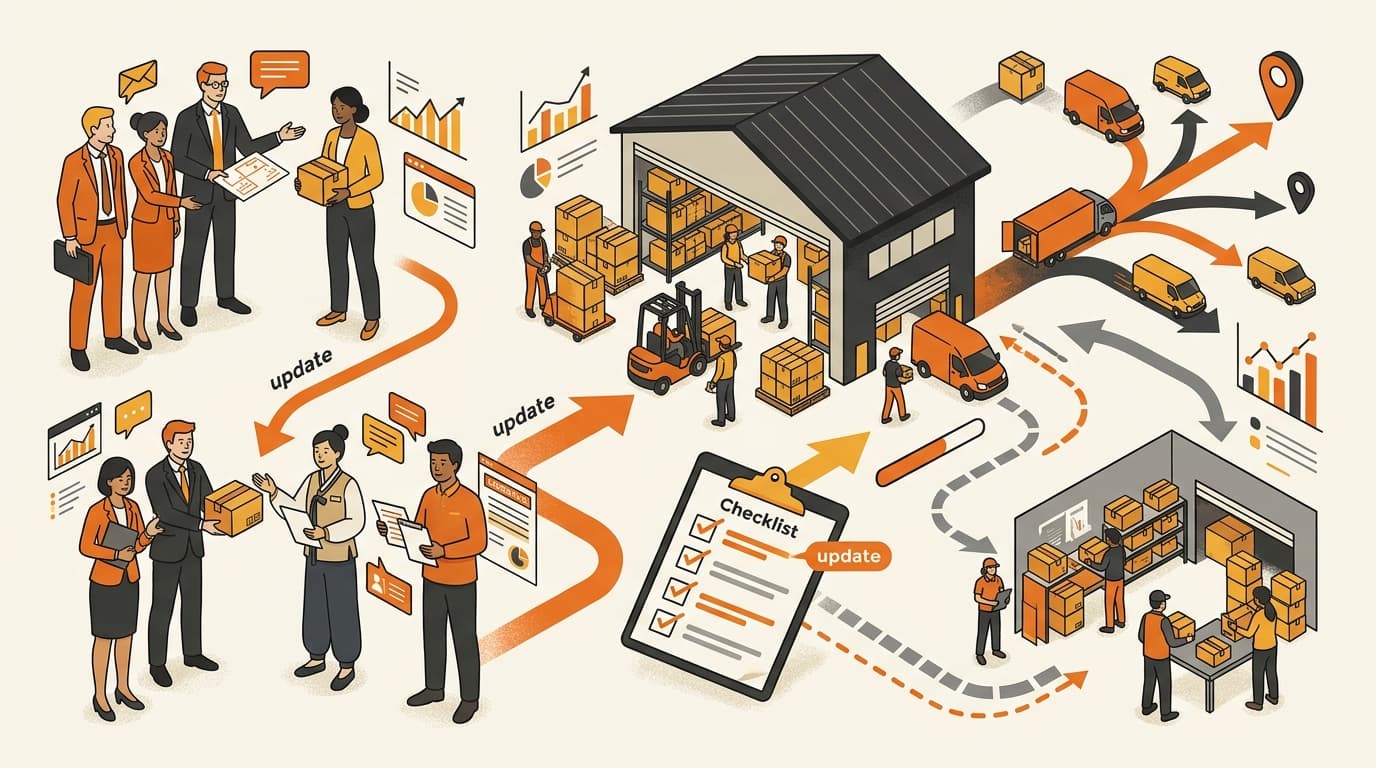
Use this check before treating a Rocket Growth listing as operationally ready:
- Identify the exact records attached to the listing. Confirm the outbound location (출고지) and return location (반품지) selected for the product, not just the records that happen to exist somewhere in the account.
- Validate each role. Ask what the outbound location represents and what the return location can actually handle. If they are the same site, confirm that both responsibilities are real.
- Separate inbound from registration. Confirm the physical handoff into Rocket Growth independently from the seller-side product-registration records.
- Name the operator. Make one person or team responsible for monitoring platform instructions and coordinating return or exception actions.
- Test record access. Verify that the responsible operator can read/list the current records and update them when the setup changes.
- Set a change trigger. Decide who must update the records when a warehouse, local operator, or returns provider is replaced or moves.
- Check the current physical workflow. For a specific return or exception, follow the current WING and Rocket Growth instructions instead of treating the registered address as the routing answer.
Clear answers show that the location records connect the product to an accountable seller-side process. They do not define Coupang’s fulfillment-center operations.
Common questions before launch
Can I use the Rocket Growth fulfillment-center address as the outbound location?
Not by assumption. The outbound location is a seller-side record in the product-registration workflow. Use the location and format required by Coupang’s current instructions, and do not substitute the fulfillment-center address unless the applicable platform guidance explicitly makes it the correct record for your setup.
If Coupang handles Rocket Growth returns, why is a return location still needed?
Because physical fulfillment and seller-side logistics data solve different problems. The return record provides a location and accountable operating point for the seller-side setup and exception process; it does not state that every return must be delivered there.
Can the outbound and return locations be the same?
They can be the same only when one real site and responsible party genuinely perform both roles and Coupang accepts that configuration. Using the same address as a shortcut does not make the records accurate.
Who should maintain the records?
The brand can do it directly, or delegate it to a Korean operator or 3PL. The important requirements are access, a defined responsibility, and a process for updating the records when the operating arrangement changes.
Which official source should I verify?
Use Coupang’s official developer documentation for the Logistics Center API to verify the create, read/list, update, and pre-registration workflow for outbound and return locations. Use the current WING and Rocket Growth seller guidance to determine the physical route and disposition of a particular return; do not infer that route from the address record alone.
Check your Rocket Growth setup before registration
If you are preparing a Korean launch, map the fulfillment-center handoff, the outbound and return records, and the operator responsible for exceptions before registering the product. Contact Kontactic to review the setup with you.
About the author
Korean and global e-commerce operators with 15+ years of cross-border experience, led by CEO Isaac Lee — KOTRA-certified consultant and official lecturer for Seoul City and the Korea Customs Service. We run Korea market entry for Western brands every day; this blog documents what we learn in the field.
More about Kontactic →Related Articles

Korean HS Code: Can You Reuse US/EU HS Codes? Not Always
A US or EU HS code is a useful starting point, not a portable Korean classification. Learn how Korea’s HSK affects duty, FTA treatment, and import controls.

Korean Biocide Approval: Why Coupang Claims Still Count
No. Korean biocide approval cannot be avoided by hiding a “kills bacteria” claim from the bottle; a Coupang listing can still evidence intended biocidal use.
Can You Sell a Children's Product With KC Pending?
An in-scope children's product cannot be sold in Korea while KC is pending; complete the applicable Korean safety route before sales, not after stock arrives.