Can Coupang Handle Every Korean Buyer Inquiry? No—Seller Duties
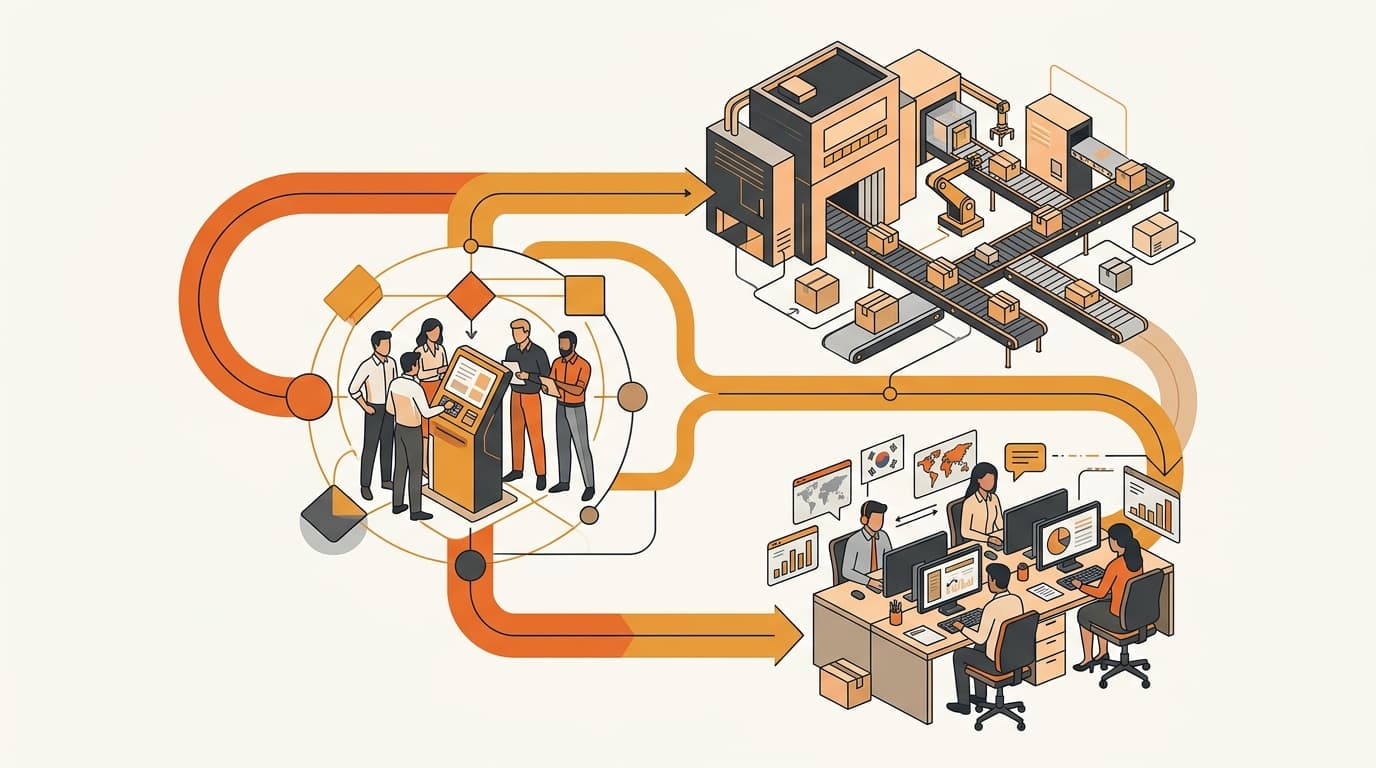
Coupang does not become the responsible owner of every Korean buyer inquiry just because it hosts the listing or fulfills the order. Its platform or fulfillment support may handle standardized delivery and marketplace contacts, but the seller or appointed operator still needs a Korean-capable workflow for product questions, cancellations, returns, exchanges, and order exceptions. You do not necessarily need an in-house Korean call center; you do need a named owner who can understand the request, take the seller-side action in Coupang, and reconcile the result.
Responsibility boundary: Coupang can operate platform or fulfillment steps within its system, but seller-controlled decisions remain with the seller or its appointed operator.
Coupang handles the channel, not every seller decision
“Customer service” is too broad a label for this workflow. It combines at least two different jobs: operating the platform or fulfillment process, and making or executing the seller’s transaction decisions.
Coupang or its designated fulfillment process may provide the delivery status, receive a platform request, process a physical return, or expose the order state in the seller tools. That does not mean every question has been answered or every seller action has been completed. The seller-side owner still has to decide what the product answer is, whether a cancellation can be stopped before dispatch, how an exchange should be handled, and whether the refund or settlement record matches the resolution.
| Buyer situation | Platform or fulfillment side | Seller-side responsibility |
|---|---|---|
| Delivery-status question | Provide tracking or fulfillment status through the platform’s support structure | Monitor unusual delays or exceptions and communicate the relevant next step |
| Product-specific question | Provide the marketplace channel through which the question arrives | Give an accurate answer based on approved product facts and the actual SKU or order |
| Cancellation before dispatch | Show the request and current order or release status | Check eligibility, hold release when appropriate, and complete the eligible stop-shipment action |
| Return or exchange | Use the designated platform or fulfillment process for pickup, receipt, or delivery | Own the seller-side remedy, monitor the case, and ensure the platform record is correct |
| Refund or settlement mismatch | Generate order, refund, and settlement records | Reconcile those records and resolve the buyer-facing exception |
The practical distinction is may handle versus must own. Coupang may handle a standardized platform or fulfillment step. The seller must own product information and seller-controlled transaction decisions. An appointed operator can perform that work, but responsibility does not disappear because the work is outsourced.
Rocket Growth makes this distinction especially visible. The platform can handle the physical fulfillment and customer-return mechanics designated for that service, while the seller still owns the inventory and the commercial outcome. A return can be moving through a platform process while the seller-side team is still responsible for knowing what happened, what the buyer was told, and what the account records show.
You do not need an in-house Korean call center
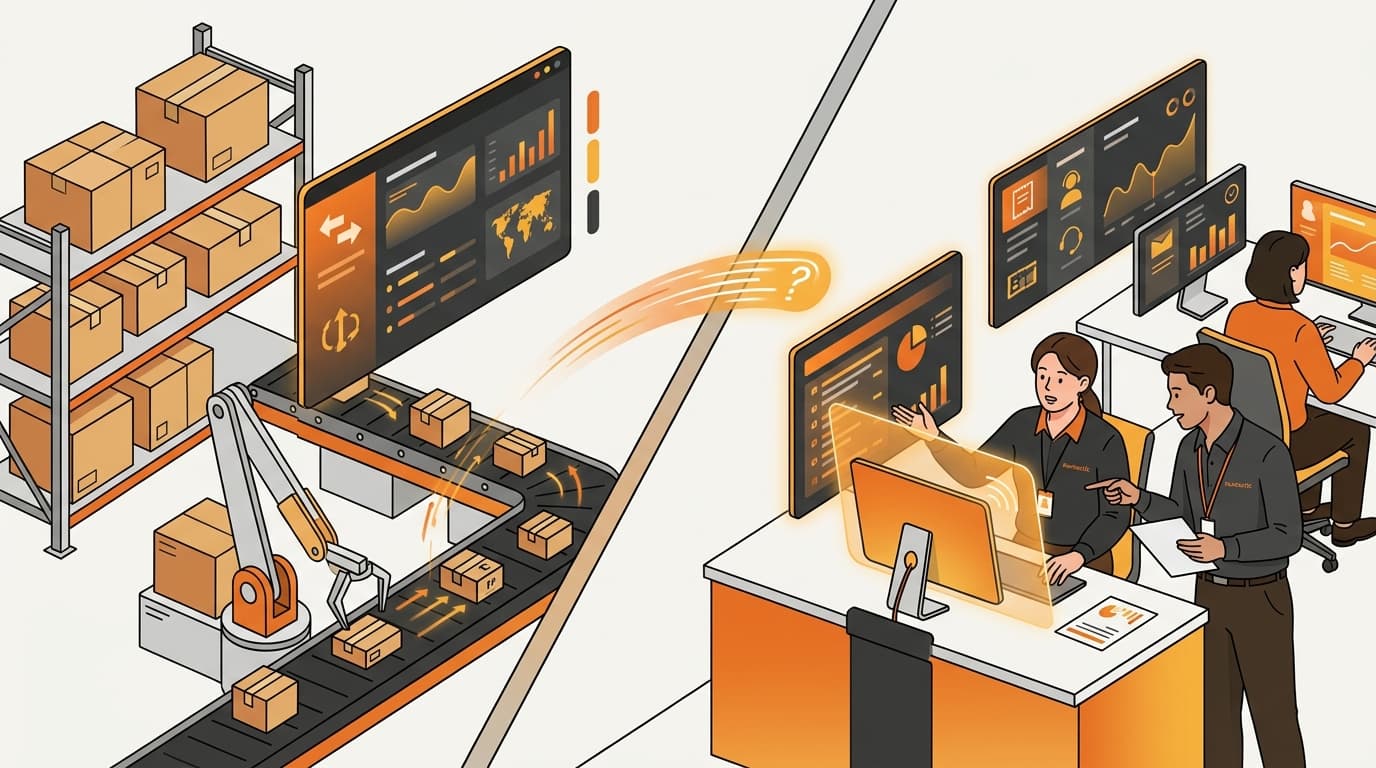
Staffing and accountability are separate decisions. A foreign brand can cover Korean buyer operations with its own Korean entity team, a local operator, an outsourced support provider, or a hybrid team that handles Korean communication while escalating product decisions to the brand.
The model is workable only if the assigned owner can complete the workflow, not merely translate the buyer’s message. Before choosing a support arrangement, confirm that it has these capabilities:
- Korean-language intake and response. The operator can understand the buyer’s request in context, including whether it is a product question, cancellation request, return request, exchange request, or delivery exception.
- Authorized access to the relevant Coupang records. The operator can inspect the order and current request state rather than relying on a forwarded screenshot or an inbox summary.
- A decision and escalation matrix. The team knows which actions it can take, which product answers require brand approval, and when an exception must be escalated.
- Operational coverage. The workflow can monitor requests while an order may still be released or dispatched. A response that arrives after the physical action is complete may be too late.
- A case record. The operator records the buyer’s request, the platform state, the action taken, and the final order, refund, or settlement result.
That leads to a simple handoff rule:
- If the question is about a platform feature, tracking event, or standard fulfillment status, use the relevant Coupang support or fulfillment path and track the outcome.
- If the question depends on the product, SKU, assortment, price, stock, or promised remedy, route it to the seller-side operator.
- If the request requires a cancellation, return, exchange, or other transaction decision, the seller-side operator must inspect the order and complete the required action in Coupang.
- If the issue is shared—such as a delivery exception, wrong item, or refund mismatch—the seller-side operator should open or monitor the platform case while owning the buyer communication and internal escalation.
Forwarding a Korean buyer to Coupang is therefore not a general solution. It may be appropriate for a platform-owned status question. It is not a substitute for answering a product-specific question or completing a seller-controlled cancellation.
A language-only provider is also not enough. Korean fluency matters because an ambiguous request can lead to the wrong action, but system access, authority, product knowledge, and recordkeeping determine whether the buyer’s issue is actually resolved.
Operational test: Ask whether the assigned support owner can move from a Korean buyer message to the correct Coupang order action without waiting for a second team to interpret the case.
A pre-dispatch cancellation is the operational test
The clearest test of the boundary is a cancellation request that arrives before an order leaves the fulfillment process. This is not just a refund instruction. It is a state-dependent fulfillment decision.
A workable seller-side sequence is:
- Capture the request in the seller queue. Record the buyer’s request and the time it arrived. Do not treat a message as complete evidence of the platform action.
- Inspect the current Coupang order state. Check whether Coupang shows a cancellation or return request, whether the order is still in a releasable state, and whether the warehouse or fulfillment process has already moved it forward.
- Take the eligible stop-shipment action. If the order can still be stopped, hold warehouse release and complete the applicable action in the current Coupang workflow. The exact option depends on the state shown in the platform.
- Communicate the outcome accurately. Tell the buyer whether the order was stopped or whether it has progressed too far for a stop. Do not promise a cancellation merely because the request was received.
- Verify the downstream record. Confirm that the order, cancellation or return status, and refund path reflect what the buyer was told. If the state does not change as expected, escalate instead of closing the case.
The cutoff is not a universal time stated in an inbox policy. It is the point at which the order’s actual platform and fulfillment state no longer permits the requested action. That is why a support owner needs access to the live order record and not just a translation of the buyer’s message.
Coupang’s official seller guidance is the primary source to verify the current cancellation and return procedure. Under the guidance relevant to this workflow, when an order with a stop request is shipped anyway, the resulting round-trip return shipping is treated as seller-fault. That makes Korean buyer monitoring part of fulfillment control. It is not merely a translation service layered on top of a warehouse operation.
For the system side, verify the current order, cancellation, return, and settlement resources in Coupang’s official Open API documentation and compare them with the status shown in the seller console. The developer documentation explains the available data and action surface; the current seller guidance governs the operational procedure. Neither should be replaced by an old internal screenshot or a generic marketplace checklist.
Product questions, returns, and exceptions need separate paths
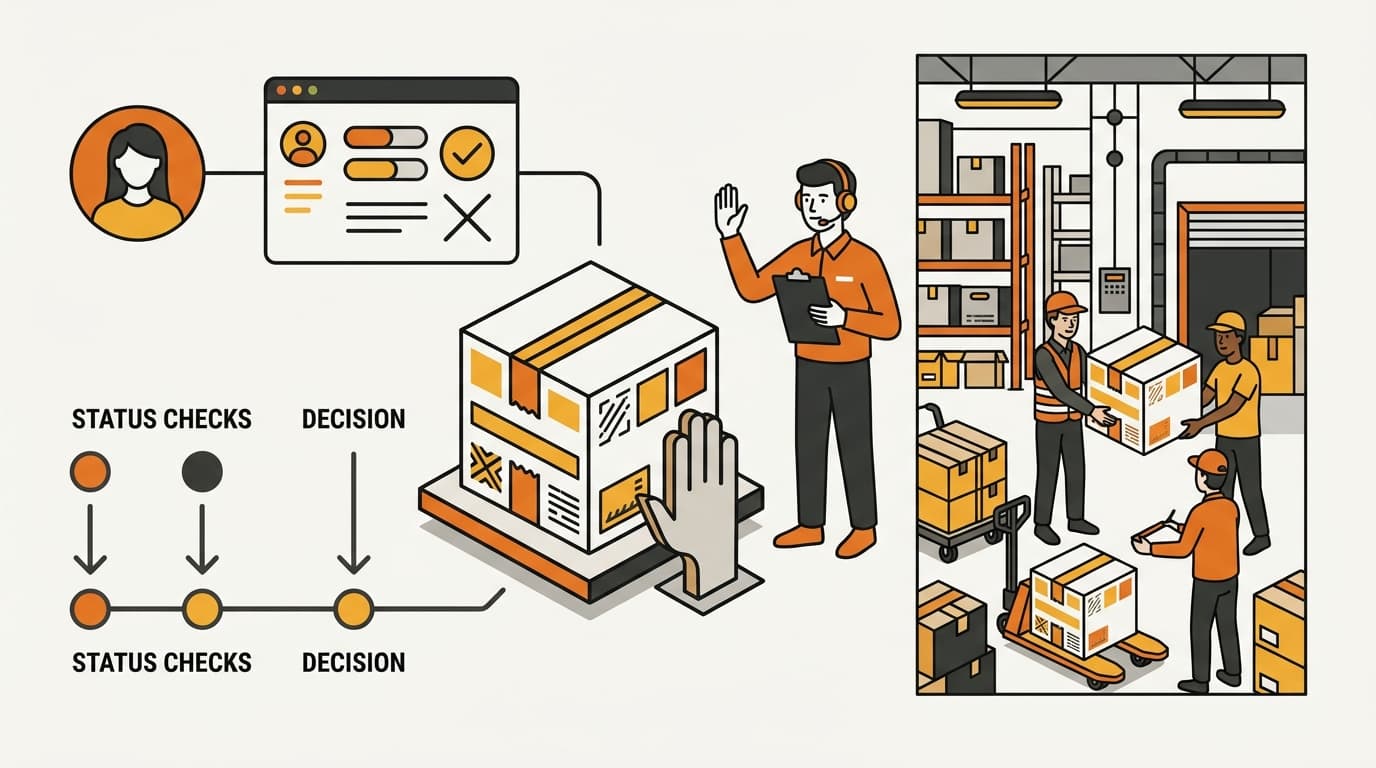
A product question belongs to the seller side because only the brand or its appointed operator can reliably answer what the product is, which variant the buyer ordered, how it should be used, or what the approved remedy is. Coupang can provide the channel and the order context, but a platform representative should not be expected to invent or approve product facts on the brand’s behalf.
The response should be tied to the actual SKU and listing. If the buyer asks about compatibility, contents, size, included parts, or a variant difference, the operator should check the product record before replying. If the answer is uncertain, escalate to the brand rather than filling the gap with a guess. A fast Korean answer that creates a wrong expectation can produce a larger return or refund problem later.
Returns and exchanges have a different boundary. The platform or designated fulfillment service may control the customer-facing pickup, physical receipt, and standard processing. The seller-side owner still needs to monitor the request, understand the reason, confirm what remedy the platform record reflects, and follow up when the physical and financial states diverge. The seller may not directly control every return-processing step, but it remains accountable for the case outcome.
That is the distinction explained in who handles returns under Coupang Rocket Growth: the fulfillment provider can run the return flow, while the seller continues to own the inventory and the decisions around the returned transaction.
Order exceptions should be triaged instead of placed in one generic inbox:
- Platform-owned exception: a missing tracking event, platform display problem, or fulfillment-system issue. Use the platform route, but keep the seller-side case open until the status or buyer communication is resolved.
- Seller-owned exception: an inaccurate product detail, wrong SKU promise, stock problem, pricing issue, or remedy decision. The seller-side operator should investigate and act.
- Shared exception: a wrong item, damaged delivery, delivery dispute, cancellation that crossed a fulfillment state, or refund that does not match the buyer’s understanding. The operator needs both platform follow-up and seller-side escalation.
This classification prevents two common failures. The first is sending every question to Coupang, including questions only the brand can answer. The second is asking the brand to manage a platform fulfillment event without giving it the order state or a person authorized to take the platform action.
Close the case only when the records agree
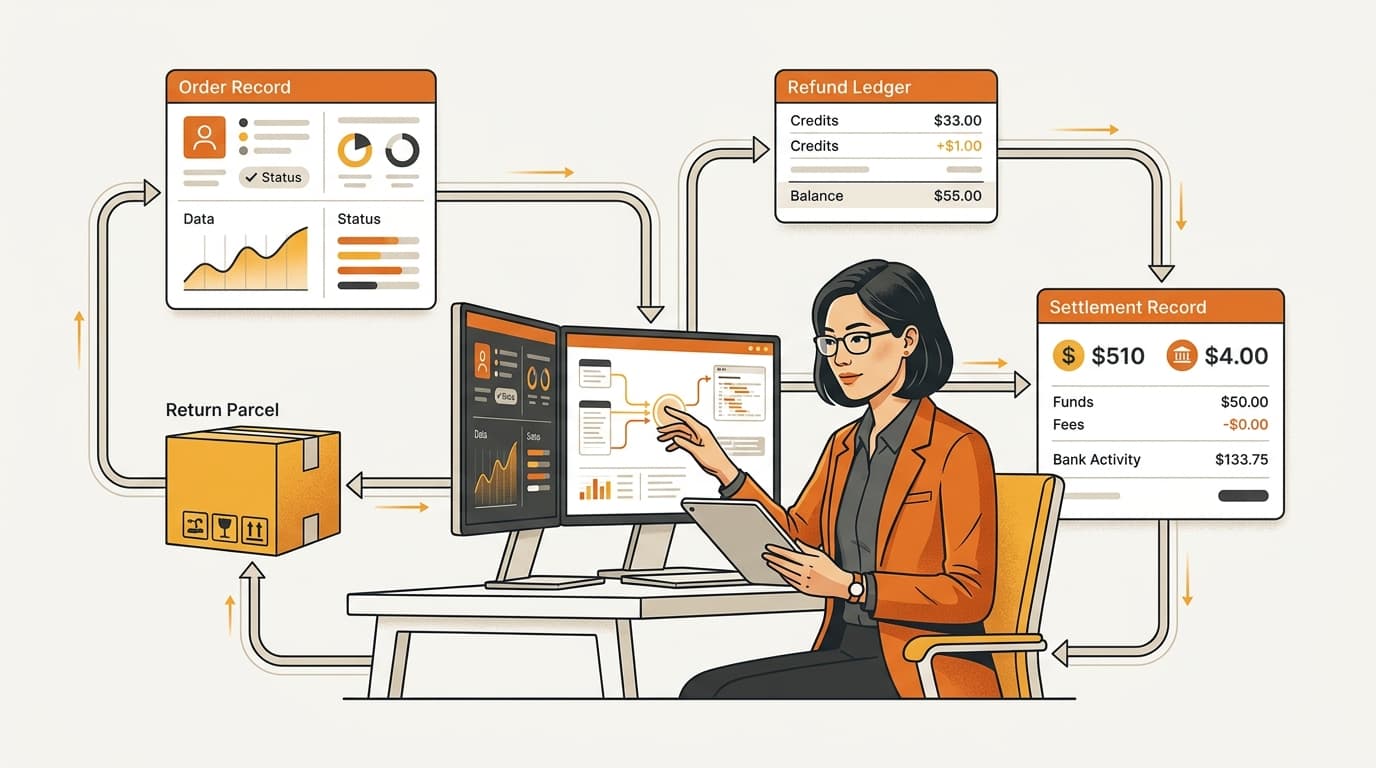
A buyer-facing reply is not the end of the workflow. A case is closed only when the communication, platform state, fulfillment result, and financial record tell the same story.
At minimum, the case record should preserve:
- the order reference, SKU, and quantity involved;
- the buyer’s request in a form the team can review later;
- the Coupang status visible when the request was received;
- the action taken, including when it was taken and by whom;
- the message sent to the buyer and any brand approval required; and
- the final order, return, refund, and settlement result.
This does not require an elaborate call-center system. It requires a traceable operating record. A shared queue, an approved case template, and a defined escalation path can be enough if they connect the buyer’s request to the actual Coupang action.
The financial side deserves particular care. An order can have a buyer communication, a physical return, a refund event, and a settlement entry at different points in the process. Do not mark an issue resolved because the buyer received a message, and do not mark it unresolved solely because the settlement line has not appeared yet. Match the operational event to the platform record and then track the financial consequence.
For that reason, a traceable Korea payment reconciliation workflow is relevant to customer-service operations, not just accounting. It connects payments, invoices, and allocations while keeping confirmed and provisional matches separate. Likewise, when Coupang recognizes a sale as revenue is a separate ledger question from whether a buyer has received a response or whether a return has physically arrived.
Use Coupang’s official developer documentation and the seller console as the current sources for the records your workflow can read or update. If the API, console, and buyer communication appear to disagree, preserve the discrepancy and escalate it. Reconstructing the case later from scattered emails is slower and makes it harder to determine whether the failure was language, timing, fulfillment, or settlement.
Common questions about Coupang buyer support
Does using Coupang or Rocket Growth mean Coupang owns all customer service?
No. Coupang or its fulfillment process may handle standardized platform and physical fulfillment contacts, but seller-controlled product answers, transaction decisions, and exception follow-up still need a seller-side owner.
Does a foreign brand need to hire a Korean call center?
No. It can use a local operator, an outsourced Korean-capable provider, or a hybrid team. The requirement is an accountable workflow with Korean communication ability, authorized access, decision authority, and a record of the completed action.
Can the brand tell the buyer to contact Coupang directly?
Only when the issue is genuinely platform-owned, such as a standard platform or delivery-status question. Sending a buyer to Coupang does not resolve a product-specific question or a seller-controlled cancellation, return, exchange, or order exception.
What should happen when a cancellation request arrives after dispatch?
Do not promise that the order can still be stopped. Check the current Coupang status, use the applicable cancellation or return path, explain the actual next step, and track the case through the refund and settlement records.
What is the most useful test for an outsourced support workflow?
Give it a realistic pre-dispatch cancellation and ask it to show the full chain: buyer request, platform status, stop-shipment action, buyer communication, and final financial record. If the provider can translate the request but cannot complete or evidence that chain, it is not yet an accountable seller-side workflow.
Need to map your Korean buyer-operations workflow?
If you are deciding who should own Coupang inquiries, cancellations, returns, and settlement follow-up, contact us to discuss the operating handoffs before launch.
About the author
Korean and global e-commerce operators with 15+ years of cross-border experience, led by CEO Isaac Lee — KOTRA-certified consultant and official lecturer for Seoul City and the Korea Customs Service. We run Korea market entry for Western brands every day; this blog documents what we learn in the field.
More about Kontactic →Related Articles

Rocket Growth: Why Outbound and Return Locations Matter?
Rocket Growth stores and ships inventory, but sellers still need outbound and return records before product registration; each has a distinct seller-side role.
Korean HS Code: Can You Reuse US/EU HS Codes? Not Always
A US or EU HS code is a useful starting point, not a portable Korean classification. Learn how Korea’s HSK affects duty, FTA treatment, and import controls.

Korean Biocide Approval: Why Coupang Claims Still Count
No. Korean biocide approval cannot be avoided by hiding a “kills bacteria” claim from the bottle; a Coupang listing can still evidence intended biocidal use.