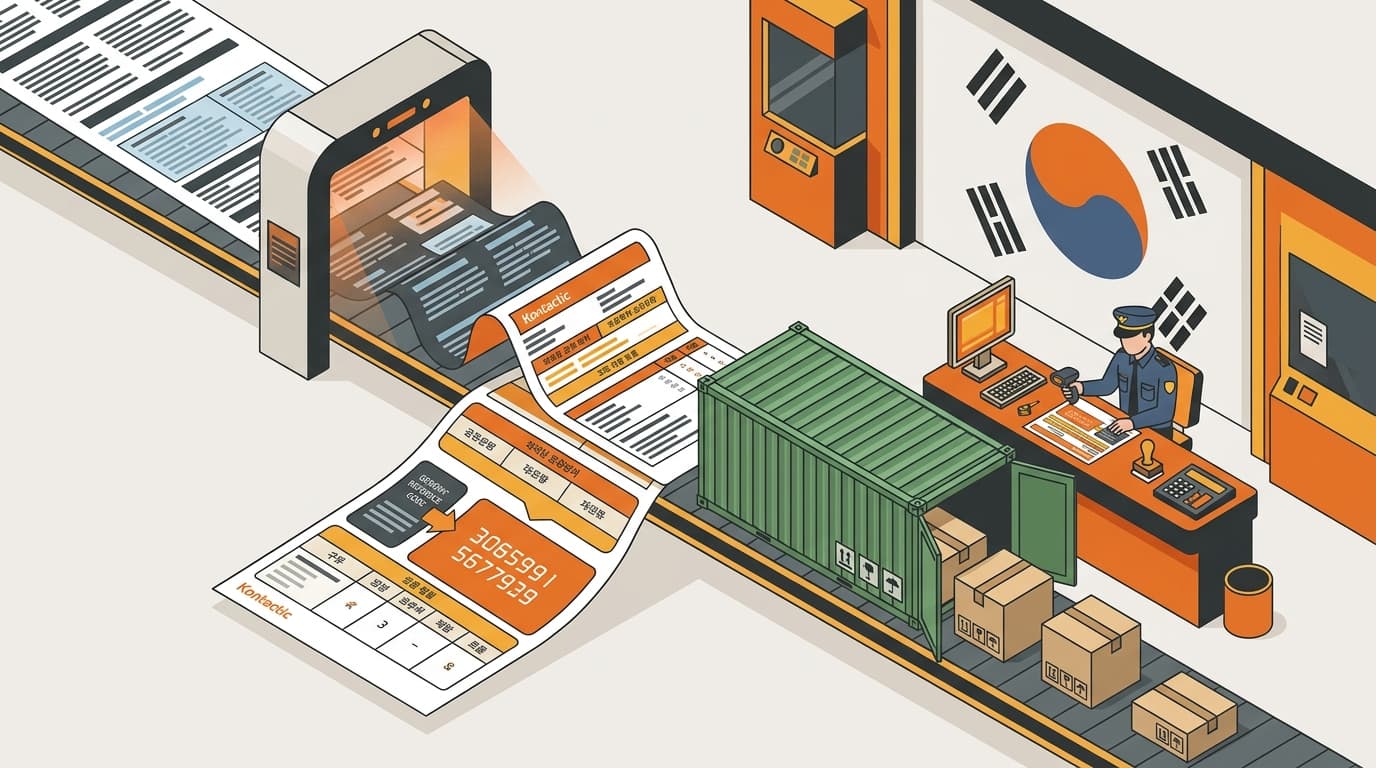
Korean HS Code: Can You Reuse US/EU HS Codes? Not Always
No—not automatically: a US or EU HS code is only a starting reference. A Korean import declaration must use the applicable Korean tariff classification, often called the HSK, for the goods as imported. A different Korean line can change duty, FTA treatment, and import-control or documentation requirements before release.
Portable rule: carry your foreign HS code into the Korean classification file as evidence, not as a code you can paste into the Korean declaration without checking.
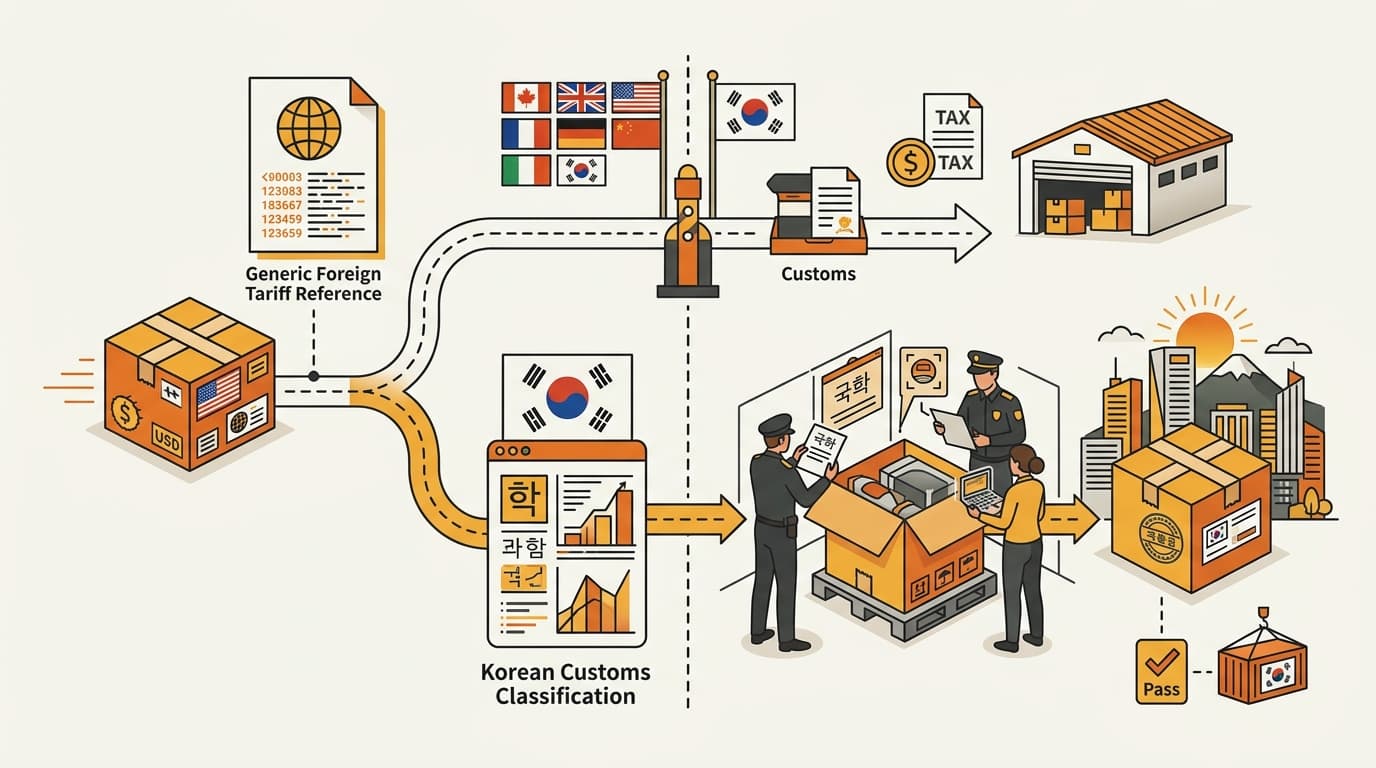
The home-market code is evidence, not a portable Korean tariff line
The Harmonized System shares a common international core. That gives customs administrations a shared starting structure, but it does not make every national tariff schedule identical. The United States and the European Union add their own subdivisions and apply their own classification decisions. Korea does the same through its Korean tariff classification, or HSK.
That distinction matters when a product crosses the border. A national suffix used in the US or EU is not automatically a Korean tariff line. Even when the shared core digits look the same, the Korean subdivision, duty treatment, and related import requirements may not match. Both classifications can be valid in their respective systems while producing different results for the same physical goods.
The practical mistake is treating the code as if it were attached permanently to the product. It is not. The Korean declaration needs a classification that fits Korean tariff rules and the product as presented for import. Your existing code helps the reviewer understand how another customs administration viewed the goods. It does not replace the Korean analysis.
This is also why a desired duty rate is not a classification rationale. Starting with the rate and working backward toward a convenient code reverses the proper sequence. Start with the goods, identify the applicable Korean tariff line, and then calculate the treatment that follows from that line.
For a reader checking the official framework, start with the Korea Customs Service (KCS) tariff schedule and classification resources. The relevant Korean statutory text can be checked through Korea’s National Law Information Center. Those sources are more reliable than a code copied from an overseas commercial invoice or an old export entry.
What determines the Korean classification
Korean classification follows objective facts about the goods. The product’s marketing category, brand positioning, or preferred duty outcome is not a substitute for those facts. The exact analysis depends on the relevant tariff headings and classification rules, but the evidence usually starts with questions like these:
- What is it made of? Capture the material, composition, formulation, and any meaningful components rather than relying on a short commercial description.
- What does it do? Describe the product’s actual function and technical purpose. A product’s use in practice can matter more than the name used in a catalogue.
- How is it constructed? Record the physical structure, operating parts, and relationship between the components.
- How far has it been processed? The degree of processing and whether the item is finished, unfinished, or assembled can affect the analysis.
- How is it presented at import? Packaging, retail presentation, and the condition in which the goods arrive are part of the factual record.
- Is it a set, bundle, or kit? The contents and configuration of a combined offering may require a different analysis from a standalone item.
- What is the relevant intended use? Where the tariff rules make use relevant, document the product’s intended application instead of assuming the consumer-facing category answers the question.
Do not assume that every SKU in a product family shares one Korean code. A formula change, a different material, a new technical function, a bundle configuration, or a different intended use can change the classification analysis. That does not mean every small variation will produce a new tariff line. It means the conclusion should be tested against the actual SKU rather than inherited from the family name.
A useful SKU description is therefore more detailed than “beauty product,” “home accessory,” or “electronic device.” It should let another reviewer understand what the item is, what it does, what it contains, how it is made, and how it arrives in Korea. Product pages can provide context, but technical specifications, composition records, photographs, and packaging details are stronger evidence for classification.
The same discipline applies when a brand sells a core product in several configurations. A single listing may group a standalone unit, a multi-pack, and a set with accessories because that is convenient for merchandising. Customs classification still examines what is actually imported in each configuration.

Why the Korean tariff line changes more than the duty
The Korean tariff line is not just a number used at the end of a landed-cost spreadsheet. It can determine several connected parts of the import analysis:
- Customs-duty treatment. The Korean line controls which duty treatment applies to the imported goods. If the line changes, the duty assumption may change with it.
- Preferential treatment. An FTA analysis can depend on the product rules associated with the tariff line, as well as origin evidence and other conditions. A foreign code that appears to support a preferred rate does not establish that Korean preference requirements are met. The KORUS or Korea–EU FTA duty analysis is a separate exercise from simply copying an overseas code.
- Import controls and documents. The Korean line can affect whether a product falls into a category with additional import-control, declaration, inspection, or supporting-document requirements. Classification should therefore happen before the shipment is planned, not after a document request appears at clearance.
- Landed-cost assumptions. A classification error can distort the duty component of the model. Classification selects the tariff line; customs valuation determines the value used for duty. Both inputs feed the final import calculation. For that distinction, see how Korea assesses import duty on CIF value rather than the invoice alone.
- Post-clearance exposure. If the Korean classification is later changed, the brand may face reassessment, a correction to preferential-duty assumptions, or a clearance delay on a later shipment. Korean customs duty is not necessarily final once a shipment clears, so a classification file should remain available after release.
The important sequence is: classify the goods under the Korean tariff framework, test any preferential treatment or control requirements that follow, and then model the landed cost. Reversing that sequence creates a fragile import plan.
A foreign code that produces the duty rate you want is not evidence that the Korean declaration is correct. The classification must be supported by the goods’ objective facts and the Korean tariff framework.
How to verify the HSK before the first commercial entry
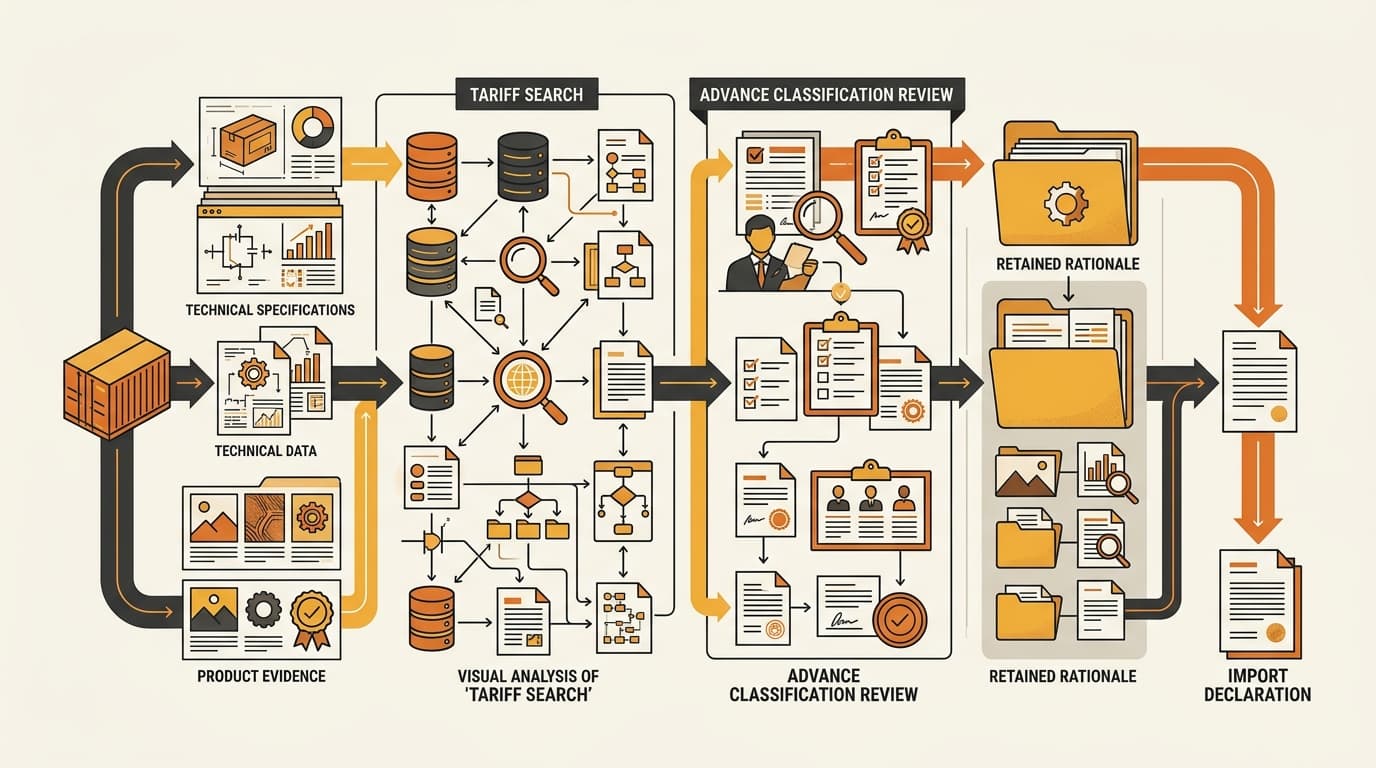
For a commercially material SKU or an uncertain classification, do not use the first commercial shipment as the classification experiment. Build the record before cargo is committed to a Korean entry. A practical sequence is:
- Freeze the SKU scope. Identify the exact model, formula, material, technical configuration, bundle contents, packaging, and intended use that the proposed classification covers. If the same product has variants, list them separately.
- Collect reproducible evidence. Prepare specifications, composition or bill of materials, product photographs, technical diagrams where relevant, intended-use information, and packaging details. The evidence should describe the imported goods, not only the marketing version of the product.
- Search the KCS tariff-classification resources. Use the Korea Customs Service’s official tariff schedule and classification search as the first reference point. Compare the product facts with the Korean headings and subdivisions rather than searching only for the overseas code.
- Use the advance classification review process when the answer is uncertain or material. Submit the question against the exact product and condition of import, supported by the evidence that another reviewer would need to reach the same conclusion. This is particularly important when two Korean lines would produce materially different duty or control outcomes.
- Retain the rationale with the import file. Record the selected HSK, the facts relied on, the source material reviewed, the reason alternatives were rejected, and the scope of the conclusion. If the product later changes, reopen the analysis instead of assuming the prior result still covers it.
The goal is not merely to have a code in a spreadsheet. It is to have a defensible connection between the physical SKU, the Korean tariff line, and the evidence used to select it. That connection makes later customs questions easier to answer and prevents a foreign code from becoming an unexamined assumption.
Build a classification file another reviewer can reproduce
A classification file should answer one question clearly: why does this Korean tariff line fit this exact imported SKU? Keep the following together rather than storing the final code by itself:
- SKU identity and scope: model, version, formulation, material, pack size, bundle contents, and the date or product revision covered by the analysis.
- Technical and commercial facts: specifications, composition or bill of materials, function, construction, degree of processing, intended use, photographs, and packaging.
- Foreign classification history: the US or EU code, if available, with the understanding that it is reference material and not the Korean conclusion.
- Korean source trail: the KCS search results, tariff provisions reviewed, and any advance classification review or other official response used in the decision.
- Written rationale: the facts that drove the conclusion, the alternatives considered, and any limits on the conclusion—for example, whether it applies only to one bundle or formulation.
- Change triggers: a material change, new accessory, reformulation, altered packaging, or changed intended use should prompt a fresh review.
This record also helps separate two questions that are often blended together: “What code did another country use?” and “What code should appear on the Korean import declaration?” The first is historical evidence. The second is the Korean customs decision that controls the entry.
Common questions about reusing a foreign HS code
Can I reuse the code if the core digits match?
Not automatically. Matching the harmonized core does not guarantee that the Korean national subdivision or resulting treatment is the same. Check the Korean HSK applicable to the imported goods.
Is the US or EU code still useful?
Yes. It can provide classification history, product terminology, and a starting hypothesis for the Korean review. Include it in the evidence file, but do not treat it as the Korean answer.
Do all variants in one product family need different Korean codes?
Not necessarily. Some variants may reach the same conclusion, but composition, material, function, construction, processing, presentation, set configuration, or intended use can change the analysis. Review the actual SKU rather than assigning one family code by default.
Should I wait until the shipment reaches Korea to resolve an uncertain line?
For an uncertain or commercially material SKU, no. Use the KCS tariff resources and consider the advance classification review process before the first commercial entry, while the product evidence and shipment scope are still clear.
What happens if the classification changes later?
The brand may need to revisit duty calculations, preferential-treatment assumptions, import-control documents, or later clearance planning. A changed classification can also create reassessment or correction exposure, which is why retaining the original rationale matters.
Need to pressure-test a Korean tariff line?
Share the product facts, existing US or EU code, and import configuration with our team to discuss the Korean classification questions that should be resolved before entry.
About the author
Korean and global e-commerce operators with 15+ years of cross-border experience, led by CEO Isaac Lee — KOTRA-certified consultant and official lecturer for Seoul City and the Korea Customs Service. We run Korea market entry for Western brands every day; this blog documents what we learn in the field.
More about Kontactic →Related Articles

Korean Biocide Approval: Why Coupang Claims Still Count
No. Korean biocide approval cannot be avoided by hiding a “kills bacteria” claim from the bottle; a Coupang listing can still evidence intended biocidal use.
Can You Sell a Children's Product With KC Pending?
An in-scope children's product cannot be sold in Korea while KC is pending; complete the applicable Korean safety route before sales, not after stock arrives.

MFDS Review in Korea: Imported Cosmetics Explained
Most imported cosmetics do not need individual MFDS review in Korea, but statutory functional cosmetics need the applicable examination or report route.